Rwanda confirmed its first-ever Marburg outbreak five days ago with 26 cases and eight deaths registered as of Sunday September 29, 2024.
To control the further spread of Marburg, the Ministry of Health announced on Sunday night that only one caregiver would be allowed per patient at a time.
All healthcare facilities have been directed to implement a protocol for receiving and providing services to clients exhibiting symptoms of Marburg disease through the strict application of infection prevention and control (IPC) measures.
Other new measures introduced include the banning of wakes and home vigils, locally known as ‘Ikiriyo’, in cases of death caused by Marburg.
Additionally, funeral services for those who have died from Marburg will be limited to no more than 50 attendees.
The government also stated that in the wake of the MVD outbreak, open-casket viewings will not be permitted in homes, churches, or mosques. These will only be held in designated areas within health facility premises, and with a limited number of people.
Furthermore, the Ministry of Health emphasized that normal business and activities will continue, with a strong focus on reinforcing personal hygiene measures.
The ministry urged the public to avoid close contact with symptomatic individuals. The main symptoms of the virulent disease are high fever, severe headaches, muscle aches, vomiting, and diarrhoea.
“By diligently following these guidelines, each one of us is making an invaluable contribution to protecting ourselves and each other,” the Ministry stated, adding that additional measures will be announced in the coming days.
Earlier on Sunday, Health Minister Dr. Sabin Nsanzimana said the government had identified approximately 300 people who had contact with infected individuals, all of whom are being tested to determine whether they are infected.
“We have many contacts, and the number continues to grow as we trace them. Nearly 300 people have been identified so far, and that number may increase because the interactions vary. They might have had casual contact, such as greeting each other, or closer contact, like caring for or being a patient,” Minister Nsanzimana added.
The contacts include both those who live with the infected and others from different areas.
The minister urged the public to stay calm and continue their daily activities as usual, reassuring them that the measures being taken to combat the MVD outbreak are promising.
Minister of Health Dr. Sabin Nsanzimana announced a new set of guidelines aimed at curbing the spread of Marburg virus disease (MVD) on Sunday, September 29, 2024.
At least 21 people have been killed and 125 others injured in Israeli airstrikes on the districts of Tyre and Bint Jbeil in south Lebanon, the Lebanese Ministry of Health said Sunday.
'Israeli airstrikes on Bint Jbeil today resulted in three martyrs in the village of Aita al-Shaab and two martyrs in the town of Souaneh,' it said.
In Bint Jbeil, the number of injuries reached 10 in the villages of Kafra, Bani Hayyan, Tebnine and Shaqra.'
Additionally, the ministry noted that Israeli airstrikes on towns in Tyre district led to 16 fatalities and 115 injuries.
The statement emphasized that the airstrikes caused significant damage to Qana Governmental Hospital.
Lebanon's Hezbollah group and Israel have been engaged in cross-border warfare since the start of Israel's war on Gaza, which has killed nearly 41,600 people, mostly women and children, following a cross-border attack by the Palestinian group Hamas on Oct. 7 last year.
The international community has warned that Israeli attacks in Lebanon could escalate the Gaza conflict into a wider regional war.
Rwanda confirmed its first-ever Marburg outbreak five days ago with 26 cases and eight deaths registered as of Sunday September 29, 2024.
To control the further spread of Marburg, the Ministry of Health announced on Sunday night that only one caregiver would be allowed per patient at a time.
All healthcare facilities have been directed to implement a protocol for receiving and providing services to clients exhibiting symptoms of Marburg disease through the strict application of infection prevention and control (IPC) measures.
Other new measures introduced include the banning of wakes and home vigils, locally known as ‘Ikiriyo’, in cases of death caused by Marburg.
Additionally, funeral services for those who have died from Marburg will be limited to no more than 50 attendees.
The government also stated that in the wake of the MVD outbreak, open-casket viewings will not be permitted in homes, churches, or mosques. These will only be held in designated areas within health facility premises, and with a limited number of people.
Furthermore, the Ministry of Health emphasized that normal business and activities will continue, with a strong focus on reinforcing personal hygiene measures.
The ministry urged the public to avoid close contact with symptomatic individuals. The main symptoms of the virulent disease are high fever, severe headaches, muscle aches, vomiting, and diarrhoea.
“By diligently following these guidelines, each one of us is making an invaluable contribution to protecting ourselves and each other,” the Ministry stated, adding that additional measures will be announced in the coming days.
Earlier on Sunday, Health Minister Dr. Sabin Nsanzimana said the government had identified approximately 300 people who had contact with infected individuals, all of whom are being tested to determine whether they are infected.
“We have many contacts, and the number continues to grow as we trace them. Nearly 300 people have been identified so far, and that number may increase because the interactions vary. They might have had casual contact, such as greeting each other, or closer contact, like caring for or being a patient,” Minister Nsanzimana added.
The contacts include both those who live with the infected and others from different areas.
The minister urged the public to stay calm and continue their daily activities as usual, reassuring them that the measures being taken to combat the MVD outbreak are promising.
Minister of Health Dr. Sabin Nsanzimana announced a new set of guidelines aimed at curbing the spread of Marburg virus disease (MVD) on Sunday, September 29, 2024.
Bank of Canada Governor Tiff Macklem on Friday expressed concerns about the potentially disruptive impact of artificial intelligence (AI) on the job market, cautioning that the technology could eliminate more jobs than it creates in the long run.
'As AI becomes more established in the economy and its impacts more transformative, it could end up destroying more jobs than it creates,' he told the National Bureau of Economic Research's Economics of Artificial Intelligence Conference held in Toronto, Ontario.
'And the people who lose their work to automation may struggle to find new opportunities,' he added. 'This is a concern for us all.'
Macklem stressed that understanding and shaping the labor market impacts will be increasingly important as AI continues to advance and diffuse through economies.
He added that AI may also affect how businesses set prices. 'There is already evidence that digitally intensive firms change prices more frequently than less digitally intensive firms.'
AI, in addition, could also affect the level of competition in the economy, although its impact remains ambiguous, according to Macklem.
'Initially, AI-intensive start-ups could seize market share by undercutting incumbents. This would increase competition and lower prices. However, AI could also result in markets dominated by a handful of companies with monopoly power. In this scenario, AI would ultimately lead to less competition and higher prices,' he explained.
Macklem stressed that central banks need to closely understand how AI would affect inflation, both indirectly through overall demand and supply, and directly through price-setting behavior.
He urged academics to work with businesses and policymakers to better understand and predict the impacts of AI.
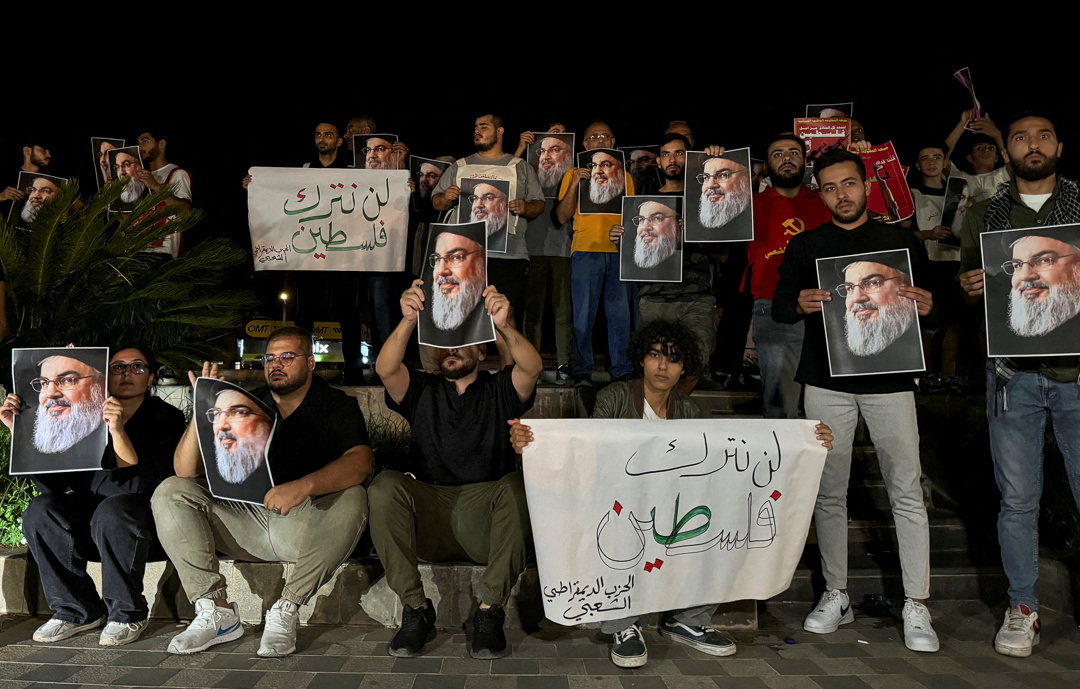
Lebanese Prime Minister Najib Mikati announced on Saturday a three-day national mourning after the assassination of Hezbollah leader Hassan Nasrallah, which has sparked fears of a wider conflict in the region.
Mikati's office in a statement said flags will be lowered at half-mast in all government departments, public institutions and municipalities.
The statement added that public offices will also close on the day of Nasrallah's funeral. Hezbollah, however, has not yet announced the date for the funeral.
Israeli forces began large-scale airstrikes in Lebanon earlier this week, killing hundreds, and displacing thousands. Tensions escalated further after it killed Nasrallah and other commanders in Beirut on Friday. Israeli forces continued to bomb parts of the Lebanese capital on Saturday.
The Ministry of Health confirmed in a statement on Sunday night that two more deaths had been recorded since the last update on Saturday.
Meanwhile, the number of confirmed cases in the country remains at 26. The number of patients in isolation and receiving treatment is 18.
Rwanda confirmed its first-ever Marburg virus disease outbreak on Friday, September 27, 2024, stating that cases had been identified among patients in health facilities across the country.
The government has since announced enhanced measures to prevent the spread of the virus, including contact tracing and testing.
Earlier on Sunday, Health Minister Dr. Sabin Nsanzimana said the government had identified approximately 300 people who had contact with infected individuals, all of whom are being tested to determine whether they are infected.
“We have many contacts, and the number continues to grow as we trace them. Nearly 300 people have been identified so far, and that number may increase because the interactions vary. They might have had casual contact, such as greeting each other, or closer contact, like caring for or being a patient,” Minister Nsanzimana added.
The contacts include both those who live with the infected and others from different areas.
Addressing the media on Sunday, September 29, 2024, Minister Nsanzimana said the Marburg virus is not as alarming as COVID-19 and stressed that there is no need for panic. Instead, he emphasized the importance of maintaining good hygiene, avoiding physical contact, and refraining from touching bodily fluids of those suspected of having the virus.
“People should continue with their lives and work as usual. So far, in the initial three days of contact tracing, we’ve made good progress, and it doesn’t warrant halting daily activities,” Minister Nsanzimana stated.
Dr. Nsanzimana affirmed that Rwanda is well-prepared for the outbreak, given the country’s experience in handling various past epidemics.
“We are always prepared. It is extremely difficult to prevent an outbreak before it happens. Globally, no one can guarantee stopping every outbreak, but the way we prepare ensures that when it occurs, we quickly identify and respond to it before it spreads further. That is what we are doing now,” he added.
“We are confident that within a short period, we will have made significant progress in controlling this outbreak. That’s our goal, as similar outbreaks in other regions didn’t last long, typically two or three months at most. Such outbreaks tend to be fatal, but the challenge is detecting and identifying them early, after which the key is to act swiftly to contain them.”
The Ministry confirmed the Marburg outbreak in Rwanda on Friday, September 27, 2024. So far, 26 cases, including six fatalities, have been confirmed.
Addressing the media on Sunday, September 29, 2024, Minister Nsanzimana said the Marburg virus is not as alarming as COVID-19 and stressed that there is no need for panic. Instead, he emphasized the importance of maintaining good hygiene, avoiding physical contact, and refraining from touching bodily fluids of those suspected of having the virus.
“People should continue with their lives and work as usual. So far, in the initial three days of contact tracing, we’ve made good progress, and it doesn’t warrant halting daily activities,” Minister Nsanzimana stated.
Dr. Nsanzimana affirmed that Rwanda is well-prepared for the outbreak, given the country’s experience in handling various past epidemics.
“We are always prepared. It is extremely difficult to prevent an outbreak before it happens. Globally, no one can guarantee stopping every outbreak, but the way we prepare ensures that when it occurs, we quickly identify and respond to it before it spreads further. That is what we are doing now,” he added.
“We are confident that within a short period, we will have made significant progress in controlling this outbreak. That’s our goal, as similar outbreaks in other regions didn’t last long, typically two or three months at most. Such outbreaks tend to be fatal, but the challenge is detecting and identifying them early, after which the key is to act swiftly to contain them.”
The Ministry of Health has identified approximately 300 people who had contact with infected individuals, all of whom are being tested to determine whether they are infected.
“We have many contacts, and the number continues to grow as we trace them. Nearly 300 people have been identified so far, and that number may increase because the interactions vary. They might have had casual contact, such as greeting each other, or closer contact, like caring for or being a patient,” Minister Nsanzimana added.
The contacts include both those who live with the infected and others from different areas. The cost of treating and caring for all those affected is being covered by the government.
The World Health Organization (WHO) office in Rwanda announced that it would be sending supplies to support Rwanda’s efforts to combat the Marburg virus and ensure that responses reach as many people as possible swiftly.
Additionally, seven international experts specializing in contagious diseases, including Marburg, are being dispatched to Rwanda to join the larger team fighting the outbreak.
Symptoms of Marburg include high fever, severe headaches, often accompanied by body weakness and muscle pain. Nausea, vomiting, abdominal pain, and diarrhoea are also common.
Preventive measures include avoiding contact with infected individuals and enhancing hygiene practices.
Addressing the media on Sunday, September 29, 2024, Minister Nsanzimana said the Marburg virus is not as alarming as COVID-19 and stressed that there is no need for panic.
Gachagua was elected to office on a joint ticket with President William Ruto in August 2022, but differences with the Head of State and Members of Parliament allied to the ruling party are threatening his premature exit from government.
The Deputy President faces accusations of undermining Ruto’s leadership and causing divisions within the ruling administration. Some of the President’s allies accuse Gachagua of being behind the youth-led anti-tax protests witnessed in the country in June. Already, three members of his staff and two MPs close to him are facing prosecution following the conclusion of a probe by the Directorate of Criminal Investigations (DCI).
Ruto’s allies in the National Assembly confirmed to local media that more than 300 MPs had signed a motion to impeach Kenya’s second in command as of Saturday, September 28, 2024.
The signatures, which had largely remained secret over the past few weeks, were reportedly collected by regional caucus whips, who have been holding night meetings to reach a common position.
“There is a stampede; members are moving to sign the motionâ¦It is a matter of when, not if, the motion will be tabled,” Majority Whip Sylvanus Osoro told Kenya’s Citizen TV.
The motion is expected to be tabled in the House on Tuesday, October 1, 2024, for consideration.
To impeach a Deputy President in Kenya, an impeachment motion must be signed by at least 117 MPs before being introduced in the National Assembly. Once tabled in the House, the motion must garner the support of 233 MPs, representing two-thirds of the total 349 MPs, before being transmitted to the Senate for consideration.
The Constitution of Kenya (2010) stipulates that to impeach a Deputy President, the proponents must present watertight grounds, including gross violations of the Constitution or any other law, crimes under national or international law, and gross misconduct.
Gachagua, who brought in significant votes for Ruto from Kenya’s central region, also known as Mt. Kenyaâ”which has produced three of Kenya’s five Presidentsâ”insists that he is clean. He has been traversing the region, cautioning President Ruto against allowing the impeachment plot, saying that doing so would betray the electorate.
“Let us not reintroduce the politics of betrayal,” Gachagua stated recently. “Ruto is a beneficiary of Mt. Kenya’s disdain for betrayal. Our people hate it and are unforgiving.”
President Ruto is yet to publicly comment on the matter. He is currently attending the 79th session of the United Nations General Assembly (UNGA) in New York.
Deputy President Rigathi Gachagua (left) was elected to office on a joint ticket with President William Ruto in August 2022.
In the wake of Sayyed Hassan Nasrallah's killing, Hezbollah faces the enormous challenge of plugging the infiltration in its ranks that allowed its arch enemy Israel to destroy weapons sites, booby-trap its communications and assassinate the veteran leader, whose whereabouts had been a closely guarded secret for years.
Nasrallah's killing in a command HQ on Friday came barely a week after Israel's deadly detonation of hundreds of booby-trapped pagers and radios. It was the culmination of a rapid succession of strikes that have eliminated half of Hezbollah's leadership council and decimated its top military command.
In the days before and hours after Nasrallah's killing, Reuters spoke to more than a dozen sources in Lebanon, Israel, Iran and Syria who provided details of the damage Israel has wrought on the powerful Shi'ite paramilitary group, including to its supply lines and command structure. All asked for anonymity to speak about sensitive matters.
One source familiar with Israeli thinking told Reuters, less than 24 hours before the strike, that Israel has spent 20 years focusing intelligence efforts on Hezbollah and could hit Nasrallah when it wanted, including in the headquarters.
The person called the intelligence 'brilliant,' without providing details.
Israeli Prime Minister Benjamin Netanyahu and his close circle of ministers authorized the attack on Wednesday, two Israeli officials told Reuters. The attack took place while Netanyahu was in New York to speak at the U.N. General Assembly.
Nasrallah had avoided public appearances since a previous 2006 war. He had long been vigilant, his movements were restricted and the circle of people he saw was very small, according to a source familiar with Nasrallah's security arrangements. The assassination suggested his group had been infiltrated by informants for Israel, the source said.
The Hezbollah leader had been even more cautious than usual since the Sept. 17 pager blasts, out of concern Israel would try to kill him, a security source familiar with the group's thinking told Reuters a week ago, citing his absence from a commanders' funeral and his pre-recording of a speech broadcast a few days before.
Hezbollah's media office did not respond to a request for comment for this story. U.S. President Joe Biden on Saturday called Nasrallah's killing 'a measure of justice' for his many victims, and said the United States fully supported Israel's right to defend itself against Iranian-backed groups.
Israel says it carried out the hit on Nasrallah by dropping bombs on the underground headquarters below a residential building in southern Beirut.
'This is a massive blow and intelligence failure for Hezbollah,' Magnus Ranstorp, a veteran Hezbollah expert at the Swedish Defence University. 'They knew that he was meeting. He was meeting with other commanders. And they just went for him.'
Including Nasrallah, Israel's military says it has killed eight of Hezbollah's nine most senior military commanders this year, mostly in the past week. These commanders led units ranging from the rocket division to the elite Radwan force.
Around 1,500 Hezbollah fighters were maimed by the exploding pagers and walkie talkies on Sept. 17 and Sept. 18.
On Saturday, Israel's military spokesperson Lieutenant Colonel Nadav Shoshani told reporters in a briefing that the military had 'real-time' knowledge that Nasrallah and other leaders were gathering. Shoshani did not say how they knew, but said the leaders were meeting to plan attacks on Israel.
Brigadier General Amichai Levin, commander of Israel's Hatzerim Airbase, told reporters that dozens of munitions hit the target within seconds.
'The operation was complex and was planned for a long time,' according to Levin.
DEPLETED
Hezbollah has shown the ability to replace commanders quickly, and Nasrallah's cousin Hashem Safieddine, also a cleric who wears the black turban denoting descent from Islam's Prophet Mohammed, has long been tipped as his successor.
'You kill one, they get a new one,' said a European diplomat of the group's approach.
The group, whose name means Party of God, will fight on: by U.S. and Israeli estimates it had some 40,000 fighters ahead of the current escalation, along with large weapons stockpiles and an extensive tunnel network near Israel's border.
Founded in Tehran in 1982, the Shi'ite paramilitary outfit is the most formidable member of Iran's so-called Axis of Resistance of anti-Israel allied irregular forces, and a significant regional player in its own right.
But it has been materially and psychologically weakened over the past 10 days.
Thanks to decades of backing from Iran, prior to the current conflict Hezbollah was among the world's most well-armed non-conventional armies, with an arsenal of 150,000 rockets, missiles and drones, according to U.S. estimates.
That is ten times the size of the armoury the group had in 2006, during its last war with Israel, according to Israeli estimates.
Over the past year, even more weapons have flowed into Lebanon from Iran, along with significant amounts of financial aid, a source familiar with Hezbollah's thinking said.
There have been few detailed public assessments of how much this arsenal has been damaged by Israel's offensive over the past week, which has hit Hezbollah strongholds in Bekaa Valley, far from Lebanon's border with Israel.
One Western diplomat in the Middle East told Reuters prior to Friday's attack that Hezbollah had lost 20%-25% of its missile capacity in the ongoing conflict, including in hundreds of Israeli strikes this week. The diplomat did not provide evidence or details of their assessment.
A map of Israel's airstrikes on Lebanon from Sep. 21-23.
An Israeli security official said 'a very respectable portion' of Hezbollah's missile stocks had been destroyed, without giving further specifics.
In recent days, Israel has struck more than 1,000 Hezbollah targets. The security official, when asked about the military's extensive target lists, said Israel had matched Hezbollah's two-decade build up with preparations to prevent it launching its rockets in the first place â” a complement to the Iron Dome air defence system that often downs missiles fired at the Jewish state.
Israeli officials say the fact that Hezbollah has only been able to launch a couple of hundred missiles a day in the past week was evidence its capabilities had been diminished.
IRAN CONNECTION
Before the strike on Nasrallah, three Iranian sources told Reuters Iran was planning to send additional missiles to Hezbollah to prepare for a prolonged war.
The weapons that were to be provided included short-to-medium-range ballistic missiles including Iranian Zelzals and an upgraded precision version known as the Fateh 110, the first Iranian source said.
Reuters was unable to reach the sources after the Nasrallah assassination.
While Iran is willing to provide military support, the two Iranian sources said it does not want to be directly involved in a confrontation between Hezbollah and Israel. The rapid escalation in hostilities over the past week follows a year of skirmishes tied to the Gaza war.
Iranian Revolutionary Guards' deputy commander Abbas Nilforoushan was killed in the Israeli strikes on Beirut on Friday, Iranian media reported on Saturday, citing a state TV report.
Hezbollah may need certain warheads and missiles along with drones and missile parts to replenish those destroyed by Israeli strikes across Lebanon last week, a senior Syrian military intelligence source added.
Iranian supplies have in the past reached Hezbollah by air and sea. On Saturday, Lebanon's transport ministry told an Iranian aircraft not to enter its airspace after Israel warned air traffic control at Beirut airport that it would use 'force' if the plane landed, a source at the ministry told Reuters.
The source said it was not clear what was on the plane.
Land corridors are currently the best route for missiles, parts and drones, through Iraq and Syria, with the help of allied armed groups in those countries, an Iranian security official told Reuters this week.
The Syrian military source, however, said Israeli drone surveillance and strikes targeting convoys of trucks had compromised that route. This year, Israel stepped up attacks on weapons depots and supply routes in Syria to weaken Hezbollah ahead of any war, Reuters reported in June.
As recently as August, an Israeli drone hit weapons concealed in commercial trailers in Syria, the source said. This week, Israel's military said its warplanes bombed unspecified infrastructure used to transfer weapons to Hezbollah at the Syria-Lebanon border.
Joseph Votel, a former army general who led U.S. forces in the Middle East, said Israel and its allies could well intercept any missiles Iran sent by land to Hezbollah now.
'That might be a risk they're willing to take, frankly,' he said.
Â
Additional reporting by James Mackenzie in Jerusalem, Laila Bassam in Beirut and Phil Stewart in Washington; Writing by Frank Jack Daniel; Editing by Daniel Flynn.
Google is planning to continue offering its free services in Russia, the company told the Moscow daily Vedomosti. The US tech giant added that it was working to resolve issues with creating new user accounts.
Earlier this week, the Ministry of Digital Development, Communications and Mass Media warned that Russian Google users should create backup copies of their data, saying the tech giant's parent company Alphabet had apparently started preventing them from registering new accounts in the country.
The announcement came shortly after some Google users in Russia experienced problems while trying to verify their identity via SMS, with the service reporting an error. The ministry said users should switch to other methods of two-factor authentication.
'We know that some users in Russia are having issues using Google accounts, and we are working to resolve these issues. We remain committed to keeping our free services available in Russia,'Â Google's press office told the newspaper.
Google operates more than 40 digital services, including the Google search engine, Gmail, Google Drive cloud storage, and YouTube. Some of these are available for users without registration.
The US tech major has been under pressure in Russia for several years, particularly in relation to YouTube's deletion of channels belonging to Russian media outlets, including RT, as well as those of public figures, bloggers, journalists, and artists, who have positions that differ from Western narratives.
The company stopped displaying ads to users shortly after the escalation of the Ukraine conflict in February 2022, having paused monetization for content makers. In July, Russia's media and digital watchdog, Roskomnadzor, said Google had blocked access to more than 200 YouTube channels in Russia.