Author: admin

  • From battlefield to diplomacy: Dr. Richard Sezibera’s journey through war and leadership #rwanda #RwOT

    Born in Ngozi, Burundi, and raised in Uganda, Sezibera was among the youth who made the life-changing decision to leave behind their personal pursuits to join the fight to liberate Rwanda after completing his medical studies.

    At the battlefield, he undertook numerous roles: from wielding a gun and directly confronting the enemy to treating the wounded under dire conditions plus leading his fellow fighters in some incidences.

    After Rwanda’s liberation, Sezibera served in various capacities, including in the government, parliament, foreign missions in different roles and at the World Health Organization (WHO). At one time Sezibera faced health challenges that saw him out of politics for around four years.

    In 2019, Dr. Sezibera suffered a stroke, a serious, life-threatening medical condition that occurs when the blood supply to part of the brain is cut off and can potentially lead to death if immediate medical attention is not provided. The stroke struck unexpectedly, but with the support of his family and the Rwandan government, he is now on the road to recovery.

    In an exclusive interview recently with RBA, Ambassador Dr. Sezibera discussed his current condition and reflected on the journey he has taken since childhood.

    “I was born in Ngozi, Burundi, partly because of Rwanda’s turbulent history. My father was killed in 1963. I was born a refugee in that country, but I grew up in Uganda with my uncle’s family, where I studied until I returned to Rwanda in 1990 with the Rwanda Patriotic Army,” he revealed.

    Despite being born and raised in exile, he always knew that one day he would return home and claim his rights like any other citizen. This belief was the main reason he joined others in taking up arms after peaceful means had failed to liberate the country.

    Determined to regain rights to his homeland, which had been denied to him, he left Uganda amid political difficulties where Rwandans were constantly reminded that Uganda was not their ancestral home.

    “I always thought I would find a way back to my country. Fortunately, the Rwandan Patriotic Front was organizing itself in Uganda, and that gave us hope that we would eventually come back to our country,' he narrated.

    Born in 1964, before joining the army, Ambassador Dr. Sezibera initially practiced medicine in Uganda, first at Mbuya Military Hospital and then in Mbale, where he worked for a few months at Mbale district Hospital for a year.

    He decided to leave a well-paying job in a country with all the necessities to contribute his skills to treating those wounded in an effort to liberate his country.

    “For four years, I practiced medicine in the bush. It was tough because we had no medical supplies and infrastructure, but despite that, medical care was needed. We did our best with what we had. We carried out major surgeries in the banana plantations with basic anesthesia,” he said.

    “It was quite tough to perform surgeries under fire, sometimes in the dark, under torchlight. It was a task that required great dedication,” added Sezibera.

    They also provided medical care to the impoverished local population. “When we were operating in the northern part of Rwanda, one area I remember is there were very poor people. We ended up not only vaccinating our troops but also the surrounding communities. Although we lacked enough equipment and medicines, we shared whatever we had with the local population, which had clearly been abandoned by their government for a very long time,' he said.

    Sezibera recounts that this difficult life taught him many valuable lessons, including the resilience of the youth who were on the battlefield with unwavering determination.

    There were times when a soldier under his care, perhaps just after surgery of battle wounds, would try to escape their sick days before they were fully healed to return to the frontline to help defeat the enemy.

    “The second lesson I learned was the importance of leadership. After major operations in what we called the theater, I would sometimes see President Kagame, who was the commander, appearing to check on the situation, following up on whether we had what the young people needed. Having a leader like that, always aware of what is going on and solving problems, both major and minor,” he said, “taught me the value of leadership. He didn’t need to say anything; all of us just learned from that.”

    When Rwanda was finally liberated, Ambassador Sezibera and his unit were stationed on Jali Hill in 1994, where they fought. On the night of July 3, 1994, Habyarimana’s forces began fleeing the country, retreating from Kigali with haste.

    As the situation improved and Rwanda was liberated, his team thought they would move into the city to assist in other tasks, but they were told it was not possible and that they needed to chase the fleeing forces out of the country.

    “My unit was asked to join others to chase withdrawing forces up to Gisenyi and confirm they had crossed into Zaire. I actually never entered the capital with the rest. I went straight to Gisenyi,” he noted.

    However, after three weeks, he received an urgent message requesting his return to Kigali, where he was appointed Secretary to President Pasteur Bizimungu.
    He served in this role for a few months before being elected in 1995 as one of the six representatives of the army in the Transitional National Assembly, where he served until 1999.

    “I was then appointed Rwanda’s Ambassador to the United States. After completing my tour of duty, I came back to Rwanda and became the President’s Special Envoy for the Great Lakes Region for several years,” he revealed.

    He later became Minister of Health, utilizing his medical background, and served as Secretary General of the East African Community from 2011 to 2016, followed by a stint as a Senator until 2018. In 2018, he was appointed Minister of Foreign Affairs and Cooperation, a role he held until November 2019.

    Overcoming a stroke

    The stroke occurred while he was one of the four Special Envoys of the Commonwealth. When asked how it happened, Sezibera remembers vividly that he was at work as usual and had gone for lunch when the stroke struck.

    “I didn’t have any warning signs. I was in good health, and I was a sportsperson. At the time, I was doing my work, playing tennis as usual, and wasn’t overweight. I was a bit heavier than I wanted to be, but I wasn’t overweight. But today, I am on the path to recovery,” he says.

    Sezibera shared that he is now feeling better and is in the process of recovering fully from the stroke, thanks to the excellent medical care he received, supported by the Rwandan government and his family.

    “I am recovering, but it takes time. Let’s remember that I am not a very young man. If I had been in my twenties, then I would have probably recovered much faster than I have now.'

    In the early months after the stroke, he used a wheelchair for about three months before beginning to walk independently. He mentioned that he was fortunate that his brain was not severely affected, allowing him to retain his ability to speak, remember, and function normally.

    “It was a challenge for my family, but they have been very helpful. My wife and children were always there for me. I received very good support from the president and the government. I was provided with excellent medical care both in Rwanda and outside. It was a difficult time, but I am grateful we got through it.”

    Among the lessons he learned from these challenges was the importance of God, country, and family.

    Regarding future work, Sezibera indicates that he is focusing on his recovery, as that is also a task in itself.

    However, in relation to his appointment as a WHO special envoy for health and education, he occasionally works with the team and writes to fulfill these responsibilities.

    After Rwanda’s liberation, Dr. Sezibera served in various capacities, including in the government, parliament, representing Rwanda in other countries, at the World Health Organization (WHO), and other international roles.

    Born in Ngozi, Burundi, and raised in Uganda, Dr. Sezibera was among the youth who made the life-changing decision to leave behind their personal pursuits to join the fight to liberate Rwanda after completing his medical studies.

    IGIHE

    Source : https://en.igihe.com/news/article/from-battlefield-to-diplomacy-dr-richard-sezibera-s-journey-through-war-and

  • Kagame’s inauguration is done: What next? #rwanda #RwOT

    The colourful ceremony, graced by more than 20 Heads of State, marked the beginning of a new five-year mandate for the RPF-Inkotanyi chairman, who has put Rwanda on the world map with his transformative leadership.

    As he returns to his Urugwiro Village office, his next major task will be to nominate members of his Cabinet who will assist him in implementing his development agenda for the next five years.

    According to the Rwandan Constitution, President Kagame has 15 days to appoint a Prime Minister, who will then assist him in selecting Cabinet members.

    After naming the Prime Minister, the President is required by law to appoint Cabinet members within 15 days, as per guidelines in Article 116 of the Constitution.

    Therefore, Kagame is expected to appoint the Prime Minister by Monday, August 26, 2024, which will mark the end of the 15-day period.

    Both the Prime Minister and Cabinet members serve at the President’s discretion, giving him all powers to either retain all, some, or none of the current members according to his strategic needs.

    Article 118 of the Constitution of Rwanda provides that, before assuming office, the Prime Minister and Cabinet members must take an oath of office publicly before the President.

    The Cabinet is accountable to both the President and Parliament. The members are, among other things, responsible for key roles, including policy development and implementation, administration and oversight of government programs and projects, budget management, and advising the President on various matters.

    The next Parliament is expected to hold its first sitting within 30 days after the announcement of the final election results, which should occur by August 22, given that the results were announced on July 22.

    The biggest task ahead for the new Cabinet will be to develop and implement policies to accelerate Rwanda’s growth in all areas, as pledged by Kagame during his swearing-in on Sunday.

    He pledged 'more hard work' while acknowledging that Rwanda had exceeded expectations in terms of growth over the past 30 years, despite being derailed by the 1994 Genocide against the Tutsi.

    'Our tragic past ignited a fire in each one of us, the fire of hope, resilience, and justice,' Kagame said.

    'From security to health, infrastructure, and jobs for youth, we are taking responsibility for our challenges and offering solutions. That is the mind set that brings us closer together and creates positive change over time for everyone.'

    Wycliffe Nyamasege

    Source : https://en.igihe.com/politics-48/article/kagame-s-inauguration-is-done-what-next

  • At least 28 killed, 46 injured in clashes in W. Sudan #rwanda #RwOT

    “The RSF militia resorted to new massacres after the systematic shelling of markets and civilian facilities, and storming homes of citizens and liquidating them,” he said.

    According to the governor, the Sudanese Armed Forces (SAF) and the joint force of the armed movements in the Darfur region had managed to repulse the RSF attack and inflicted heavy losses on them.

    “El Fasher will remain resilient and steadfast and soon will be free of any rebels,” the governor said.

    The RSF has not issued any comments regarding the attack.

    Since May 10, fierce clashes between the SAF and the RSF have been raging in El Fasher.

    Sudan has been witnessing a deadly conflict between the SAF and the RSF since April 15, 2023, resulting in the loss of at least 16,650 lives. An estimated 10.7 million people are now internally displaced in Sudan, with approximately 2.2 million others seeking refuge in neighboring countries, according to recent UN data.

    Sudan has been witnessing a deadly conflict between the SAF and the RSF since April 15, 2023, resulting in the loss of at least 16,650 lives.

    Xinhua

    Source : https://en.igihe.com/news/article/at-least-28-killed-46-injured-in-clashes-in-w-sudan

  • The 10th anniversary of the HWPL World Peace Summit celebrates a decade of global commitment to peace #rwanda #RwOT

    In 2014, the Heavenly Culture, World Peace, Restoration of Light (HWPL), an international peace organization, convened over a thousand global leaders from politics, religion, women’s groups, youth organizations, and the media from about 140 countries to the inaugural HWPL World Peace Summit in Seoul. The summit addressed the issues of conflict resolution, religious harmony, and the implementation of legal instruments to ensure lasting peace.

    HWPL states that the purpose of the anniversary is to review achievements since 2014 and discuss future plans. The event aims to gather regional talents and establish networks essential for tailored peace strategies, strengthening regional networks to tackle local peace threats and harnessing collective capacities. To achieve this, various sessions will be held in each country at different levels.

    Under the slogan “Let’s have everyone become a messenger of peace,” HWPL advocates for individual responsibility in promoting peace at all levels. HWPL plans to collect messages of peace from people around the world and reveal them at the event representing the desire for peace and unity of people from all walks of life around the world in the name of peace.

    Fostered by the agreements signed in 2014, over the past decade, HWPL, alongside its global partners, committed to addressing global challenges such as military tensions, economic disputes, climate change, and cyber security threats through enhanced regional cooperation and collective action. HWPL’s dedicated to establishing a robust peace governance framework, connecting international organizations, governments, and civil societies.

    Back in the 9th Anniversary in 2023, Chairman Lee Man-hee of HWPL said, 'Why should the lives of young people be sacrificed in war? What is politics, and for whom is it for? When war breaks out, it is young people who are sacrificed. Peace cannot be achieved through words alone. If peace had won in this world, there would have been no regrettable deaths. We must leave peace as a legacy to the global community where our descendants will live.'

    HWPL plans to collect messages of peace from people around the world and reveal them at the event representing the desire for peace and unity of people from all walks of life around the world in the name of peace.

    Chairman Lee of HWPL gives speech at the Global Peace Leaders Conference, 9th Anniversary of World Peace Summit 2023.

    IGIHE

    Source : https://en.igihe.com/news/article/the-10th-anniversary-of-the-hwpl-world-peace-summit-celebrates-a-decade-of

  • Ruto hails Rwanda’s growth as Kagame embarks on new term #rwanda #RwOT

    The Kenyan Head of State praised Rwanda’s tremendous growth in the political, democratic, and economic spheres since the 1994 Genocide that left the country in ruins.

    He made these remarks while congratulating President Paul Kagame after he was sworn in for another term in office on Sunday, August 11, 2024.

    President Ruto was among more than 20 Heads of State who attended Kagame’s inauguration for a fourth term at Amahoro Stadium.

    Taking to X after the event, President Ruto noted that the new term presents an opportunity for Kagame to continue his transformative leadership in Rwanda.

    'Congratulations to my brother, President Paul Kagame, for being sworn in for another term to continue transforming your country, Rwanda,' President Ruto wrote.

    'In the past 30 years, the people of Rwanda have risen from the devastating ashes of the 1994 Genocide and undergone tremendous progress in the political, democratic, and economic spheres.'

    He also lauded Rwanda as a valuable member of the East African Community, the African Union, and the international community.

    President Kagame, who led the Rwandan Patriotic Army to liberate Rwanda in July 1994 was officially first elected president in 2000 after his predecessor, Pasteur Bizimungu resigned.

    The RPF Inkotanyi flag bearer secured a landslide victory in the latest polls held in mid-July, garnering 99.16% of the votes cast. He defeated Frank Habineza of the Democratic Green Party of Rwanda, who got 0.5% of the vote, and independent candidate Philippe Mpayimana, who managed a minute 0.32%.

    In his inauguration speech, the Head of State acknowledged that much has been achieved over the past 30 years, surpassing expectations. He pledged to continue efforts to build and advance the country.

    'Our focus now returns to the future. For the last thirty years, our country has been a good work-in-progress. This new mandate means the beginning of even more hard work,' he told thousands of citizens and other dignitaries who attended the colourful ceremony.

    President Ruto was among more than 20 Heads of State who attended Kagame’s inauguration for a fourth term at Amahoro Stadium.

    Wycliffe Nyamasege

    Source : https://en.igihe.com/news/article/ruto-hails-rwanda-s-growth-as-kagame-embarks-on-new-term

  • The Return of Jesus Christ: How the world braced for a doomsday that never came in the year 2000 #rwanda #RwOT

    As the new millennium approached, anxiety gripped the world, driven by religious prophecies, technological fears, and a collective sense of uncertainty.

    Certain religious groups and individuals, armed with biblical convictions or other religious teachings, were particularly inclined to make extreme preparations for the end of the world.

    In countries including Rwanda and elsewhere people with fervent beliefs sold valuables, including land and homes, at bargain prices, convinced they would no longer need them after the supposed end.

    Many donated their proceeds to religious organizations, paid off debts, or disposed of material possessions they believed would become meaningless in the face of an imminent apocalypse.

    As New Year’s Eve of 1999 approached, a palpable sense of dread enveloped the globe. People stayed awake, waiting in confusion and fear for the unknown.

    The clock ticking toward midnight on December 31, 1999, symbolized more than just the arrival of a new year—it was seen as the harbinger of apocalyptic doom.

    Predictions of the end of time had circulated for years, fueled by religious interpretations, technological concerns, and societal anxiety. But when the clock struck midnight, the world did not end.

    The feared doomsday proved to be nothing more than a phantom, leaving the world to grapple with the psychological, social, and economic aftermath of its own self-imposed panic.

    When the year 2000 arrived without significant disruptions, those who had made drastic decisions based on doomsday fears, were left to face the consequences.

    The Y2K bug turned out to be a minor glitch rather than the catastrophic event many had feared.

    Financial hardships followed for many who had sold properties at subsidized prices or made irreversible financial choices. The episode remains a cautionary tale about the dangers of panic-driven decisions rooted in unfounded fears.

    The roots of the millennium panic can be traced to a convergence of religious, technological, and cultural factors. For many, the year 2000 represented a significant milestone in biblical prophecy.

    Edgar C. Whisenant, author of The End: Why Jesus Could Return by A.D. 2000, was among the most vocal proponents of the idea that the second coming of Christ was imminent.

    His book resonated with millions who believed the world was nearing its final days, meticulously interpreting scripture to pinpoint the year 2000 as the likely time for Jesus’ return.

    The religious anticipation extended beyond mainstream Christianity. Figures like Ben Ammi Ben-Israel, founder of the Black Hebrew Israelite religion, also predicted the end would occur in 2000, believing it would mark the beginning of divine justice and redemption for the chosen people.

    The sense of urgency and anticipation was palpable, with communities preparing for what they believed would be a momentous, albeit catastrophic, event.

    Even the academic and technological worlds were not immune to the apocalyptic fervor. The approach of the year 2000 brought with it the Y2K bug, a technological panic based on the fear that computer systems worldwide would malfunction when their clocks rolled over from ’99’ to ’00,’ interpreting the year 2000 as 1900.

    Books like The Millennium Bug: How to Survive the Coming Chaos by Michael S. Hyatt capitalized on these fears, presenting doomsday scenarios where technology would fail, bringing modern civilization to its knees.

    As the year 2000 drew closer, panic spread across the globe. Governments, corporations, and individuals scrambled to prepare for what they believed could be the end.

    In the United States, President Bill Clinton established the President’s Council on Year 2000 Conversion, a task force dedicated to ensuring critical systems were Y2K compliant.

    As the final seconds of 1999 ticked away, the world stood at the edge of the unknown, bracing for a digital apocalypse that never came.

    Companies spent billions on upgrades and contingency plans, while the public stockpiled essentials, bracing for a world where basic services might suddenly vanish.

    Religious communities were particularly active in their preparations. Churches held vigils, prayer meetings, and other gatherings, where believers sought divine protection from the impending apocalypse. Some made pilgrimages to holy sites, hoping to be in the right place when the end came.

    The media played a very significant role in fueling the panic, with news outlets running stories on various doomsday scenarios, from nuclear war to natural disasters, that could be triggered by the turn of the millennium.

    Yet, as midnight struck on December 31, 1999, nothing happened. The Y2K bug turned out to be a minor glitch rather than the catastrophic event many had feared.

    Planes did not fall from the sky as had been earlier anticipated, power grids did not fail, and financial markets did not collapse. The apocalyptic prophecies, too, proved unfounded. Jesus did not return, the chosen people were not delivered, and the new millennium began much like any other year, with fireworks, celebrations, and the usual mix of hope and uncertainty.

    In the aftermath of the non-event, there was a collective sense of bewilderment. For those who had genuinely believed in the prophecies, the absence of catastrophe was disorienting. Some felt betrayed, questioning why the signs they had so carefully interpreted had not come to pass.

    As explored in Leon Festinger’s When Prophecy Fails, people often respond to the failure of their expectations by doubling down on their beliefs rather than abandoning them.

    This was evident after the year 2000, with some believers reinterpreting the events, suggesting that the world had been given a temporary reprieve or that the true end was still to come.

    The economic impact of the millennium panic was significant. The billions spent on Y2K preparations, while arguably necessary to avoid potential disruptions, represented a massive expenditure driven largely by fear.

    Companies that had invested heavily in Y2K compliance found themselves with surplus supplies and systems that, in many cases, were never needed. The public, too, was left with stockpiled goods, a reminder of the hysteria that had gripped the world.

    Culturally, the year 2000 marked a turning point in how society viewed apocalyptic predictions. The panic preceding the new millennium was a testament to the power of prophecy, fear, and the human tendency to expect the worst.

    It also highlighted the complexities of navigating a world where technological and religious anxieties can converge to create a perfect storm of fear.

    As we moved into the 21st century, the lessons of the millennium panic remained, reminding us that while the future is uncertain, it is not something to be feared, but rather something to be appreciated and approached with caution, preparation, and a healthy dose of skepticism.

    Unfortunately, some callous acts in the region that came in the aftermath of this hysteria left sad marks and scars that may never be healed in the world’s history.

    About 130km from the Northern border of Rwanda and Uganda in Kanungu district, a self-styled high priestess Credonia Mwerinde had told her followers that the world was going to end on December 31, 1999 but when this did not happen, the cult leader and her accomplices decided to end it their way.

    On March 16, 2000, over 600 cult members and their families were herded into a church hall named the Ark, in reference to the biblical Noah’s ark, all doors and windows were boarded up and nailed shut, and it was set ablaze.

    Many of Credonia’s followers and even some of the renegade Catholic clerics believed she had spiritual powers following her claims to have seen apparitions of the Virgin Mary who directed her to spread the message of strict adherence to the 10 Commandments to avoid apocalyptic damnation.

    Predictions of the end of time had circulated for years, fueled by religious interpretations, technological concerns, and societal anxiety.

    Théophile Niyitegeka

    Source : https://en.igihe.com/news/article/the-return-of-jesus-christ-how-the-world-braced-for-a-doomsday-that-never-came

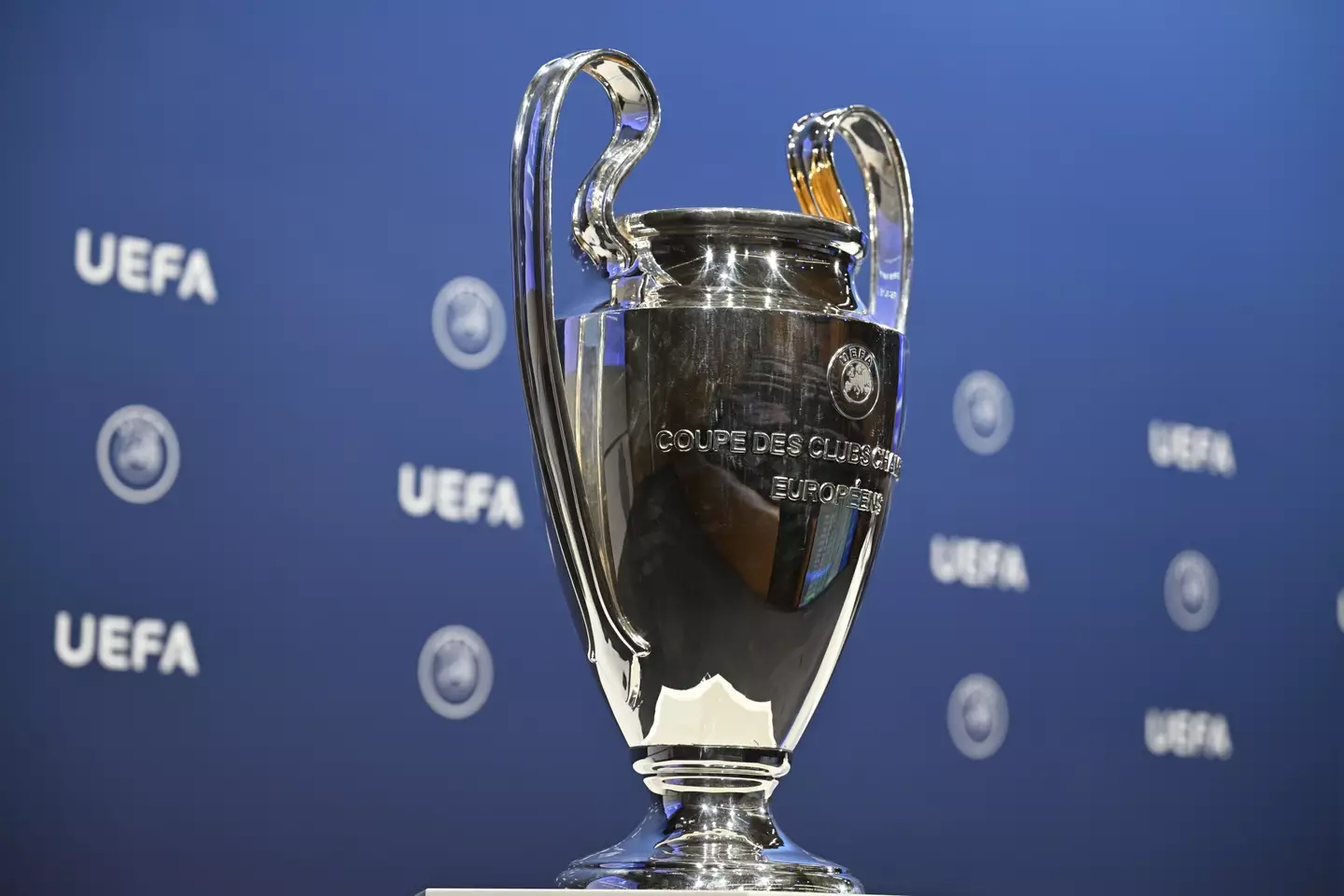
  • UEFA make huge Champions League draw announcement that will see radical changes to the format #rwanda #RwOT

    UEFA have made a huge announcement regarding the Champions League draw.

    As the 24/25 campaign edges ever closer, the Champions League will see its format refreshed.

    A single league of 36 teams will replace the old format of having eight groups of four, with each side playing eight matches during the new group stage. Four at home and four away.

    Following the group stage, all teams will then be formatted into a table with the top eight sides automatically qualifying for the round of 16 while clubs finishing between ninth and 24th will have to enter a play-off phrase for the eight remaining places.

    Once that process is done, the Champions League will proceed as normal with a two-legged round of 16, quarter-final and semi-final before the eventual final.

    Ahead of the new campaign, UEFA have revealed that the old draw format will no longer be in use.

    Instead of drawing each team's opponents by hand, a software is set to be used.

    On their website, UEFA explained: 'The new format requires a new draw concept. In fact, if the old draw concept for the group stage were to be applied to the new league phase format, nearly 1000 balls would be required, with at least 36 bowls on stage, resulting in an unbearably lengthy draw.

    'All 36 teams will be manually drawn using physical balls. For every team manually drawn, a designated automated software will randomly draw eight opponents across the four pots, who will be revealed on screen in the draw hall and on television. The software will also decide which matches will be at home and which ones away.'

    Image

    Getty

    It continued: 'The draw will start with Pot 1, assigning eight opponents to all nine teams, one after the other, and will continue with the other pots in descending order till all teams have been assigned their eight opponents.

    'The software will guarantee total randomness within the framework of the draw conditions stipulated by the regulations (e.g. country protection and no more than two opponents from the same country), while guaranteeing that the draw can be completed for all teams without resulting at any point in a deadlock situation.'

    The post UEFA make huge Champions League draw announcement that will see radical changes to the format appeared first on The Custom Reports.

    Source : https://thecustomreports.com/uefa-make-huge-champions-league-draw-announcement-that-will-see-radical-changes-to-the-format/

  • Kagame vows to accelerate Rwanda’s rebuilding in new term of office #rwanda #RwOT

    Addressing thousands of citizens and other dignitaries who gathered at Amahoro Stadium to witness the momentous occasion, the Head of State began by thanking Rwandans for granting him another term to continue his development agenda.

    'The electoral campaign was a period of joy and satisfaction for all of us. Millions attended rallies, and almost everyone went to vote,' President Kagame commended Rwandans.

    He noted that much has been achieved over the past 30 years, surpassing expectations.

    'Over the past three decades, what Rwandans have managed to accomplish is even more than we expected. Indeed, it is beyond what words can describe, given where we started from,' Kagame said amid chants of jubilations with more than 20 Heads of State in attendance.

    Recounting Rwanda’s rise from the ashes of the 1994 Genocide against the Tutsi, President Kagame revealed that the new term presented another opportunity to achieve even more.

    'Our tragic past ignited a fire in each one of us: a fire of hope, resilience, and justice. This is who we have become as Rwandans,' he noted.

    'Our focus now returns to the future. For the last thirty years, our country has been good work-in-progress. This new mandate means the beginning of even more hard work.'

    He affirmed that with exemplary leadership and collaborations, no goal is beyond reach and all aspirations are achievable.

    'Why not do even better than we have done? That expectation to keep improving is not a dream, it is realistic. We can do it, and we will do it,' President Kagame added.

    Kagame, who led the Rwandan Patriotic Army to liberate Rwanda from the Genocidal regime of Juvénal Habyarimana in 1994, was re-elected with 99.18% of the votes cast in the July elections.

    He ran against two competitors: Dr. Frank Habineza of the Democratic Green Party of Rwanda, who got 0.50% of the vote, and independent candidate Philippe Mpayimana, who managed only 0.32%.

    In the coming days, the newly elected Parliament is expected to take oath and begin its term before which the President will later present his appointed cabinet for approval.

    President Kagame noted that much has been achieved over the past 30 years, surpassing expectations.

    Wycliffe Nyamasege

    Source : https://en.igihe.com/news/article/kagame-vows-to-accelerate-rwanda-s-rebuilding-in-new-term-of-office

  • Peace cannot come by itself: Kagame’s 4th term message on regional security #rwanda #RwOT

    Despite years of diplomatic efforts and international interventions, peace remains elusive, and Kagame’s speech laid bare the fundamental reasons why this is the case.

    'Peace cannot be delivered by anyone from anywhere, no matter how powerful, if the party most directly concerned does not do what is needed,' Kagame said.

    This statement emphasized that peace efforts cannot succeed if the parties directly involved in the conflict do not take the necessary steps. His words were a clear reminder that external forces, no matter how strong, cannot impose peace where there is no commitment from those at the heart of the conflict.

    'You can’t wake up one day and decide to deny whoever you want their citizenship rights and expect to get away with it,' The Head of State warned.

    Over the years, numerous initiatives have been launched to address the security challenges in eastern DRC. Diplomatic interventions, peace agreements, and mediation by regional leaders have all played crucial roles.

    Kagame specifically acknowledged the contributions of Kenya and Angola’s leadership in these efforts.

    'I would like to thank the President of Angola, President João Lourenço, and the President of Kenya, President William Ruto, among others, for everything they have done and continue to do,' he said, expressing gratitude for their dedication to regional stability.

    However, despite these efforts, Kagame pointed out that peace cannot be achieved without a genuine commitment from those directly involved in the conflict.

    'Peace cannot happen all on its own. We all have to do our part, and the right things, in order to achieve and sustain peace,' he emphasized.

    The failure to address fundamental injustices, such as the denial of citizenship rights to certain groups, has been a significant barrier to peace. 'There has to be a meeting in the middle. There has to be a compromise,' Kagame stressed, highlighting the importance of dialogue and mutual understanding.

    Kagame also spoke about the broader global context, criticizing the double standards and unaddressed inequalities that have exacerbated regional conflicts. He called for a more just and equitable approach to international relations, where powerful nations do not impose their will on others.

    'There is no longer room for the powerful to impose their vision about how others ought to live, or to create narratives that falsify the truth. This must always be resisted, even when under pressure,' he cautioned.

    The President also highlighted the role of the African Union in promoting regional security and development. Since its establishment, the African Union has been instrumental in fostering a more integrated and secure Africa.

    Kagame pointed to Africa’s progress in areas such as security, health, infrastructure, and youth employment as evidence that the continent is taking responsibility for its own challenges and offering homegrown solutions.

    'That is the mindset that brings us closer together and creates positive change over time for everyone,' he said, emphasizing the importance of African unity and self-reliance.
    Kagame expressed optimism about the future, both for Rwanda and the broader region, imploring the need for continued hard work and dedication to achieving lasting peace and development.

    'Why not do even better than we have done? That expectation to keep improving is not a dream, it is realistic. We can do it, and we will do it,' Kagame declared.

    Peace has remained elusive in the region despite numerous efforts and while external interventions are important, true peace can only be achieved when those directly involved take responsibility and commit to the necessary compromises and actions.

    The ongoing efforts by regional leaders and the African Union provide a strong foundation, but it is up to the local actors to make peace a reality.

    This fourth presidential term is a challenge for all leaders and citizens to rise to the occasion and work together to build a stable, secure, and prosperous future for all.

    In a powerful and candid inauguration speech on August 11, 2024, President-elect Paul Kagame addressed the ongoing struggles to achieve peace in the region, particularly in the conflict-ridden eastern Democratic Republic of Congo (DRC).

    Sam K Nkurunziza

    Source : https://en.igihe.com/politics-48/article/peace-cannot-come-by-itself-kagame-s-4th-term-message-on-regional-security

  • Pomp and glamour as Kagame takes oath of office (pictorial) #rwanda #RwOT

    Citizens from various parts of the country braved the morning cold to gather at the newly unveiled state-of-the-art stadium before dawn, highlighting their enthusiasm for the inauguration of Kagame, who is credited with spearheading various economic and social reforms that have put Rwanda on the world map.

    Citizens from various parts of the country braved the morning cold to gather at the newly unveiled state-of-the-art stadium before dawn.

    The stadium was adorned with the colours of Rwanda’s national flag, and many attendees wore matching outfits. The blue, yellow, and green of the flag represent happiness and peace, enlightenment, economic development, and hope for prosperity, respectively.

    The stadium was adorned with the colours of Rwanda’s national flag

    For the better part of the morning, attendees were treated to songs and dances as they awaited the official kickoff of the event at around 2:00 p.m., when high-ranking dignitaries began to arrive.

    More than 20 Heads of State graced the event and were treated to a warm welcome befitting their stature.

    The Presidents who attended the event included Andry Rajoelina of Madagascar, João Lourenco (Angola), William Ruto (Kenya), Samia Suluhu (Tanzania), Hassan Sheikh Mohamud (Somalia), Sahle-Work Zewde (Ethiopia), Emmerson Mnangagwa (Malawi), Faure Essozimna Gnassingbé (Togo), Faustin-Archange Touadéra (Central Africa Republic), Denis Sassou Nguesso (Republic of the Congo) and Ismail Omar Guelleh (Djibouti).

    More than 20 Heads of State graced the event.

    Others were Nana Akufo-Addo (Ghana), Wavel Ramkalawan (Seychelles), Mamady Doumbouya (Interim President of Guinea), Mokgweetsi Masisi (Botswana), Emmerson Mnangagwa (Zimbabwe), Umaro Sissoco Embaló (Guinea-Bissau), Salva Kiir (South Sudan) and Filipe Nyusi of Mozambique.

    King Mswati III of the Kingdom of Eswatini, Abdel Fattah al-Burhan, Chairman of the Transitional Sovereignty Council of Sudan, and Brice Oligui Nguema, President of the Transition of the Gabonese Republic, also attended the ceremony.

    At a quarter past 3 p.m., the motorcade of President Paul Kagame and First Lady Jeannette Kagame made its way into the stadium to thunderous cheers from the attendees.

    Thereafter, President Kagame was sworn into office for another five-year term. The oath of office was administered by Faustin Ntezilyayo, the Chief Justice and President of Rwanda’s Supreme Court.

    The Head of State was then presented with ceremonial symbols, including the sword and shield.

    President Kagame proceeded to inspect a guard of honour monted by the Rwanda Defence Forces and the Police.

    Shortly thereafter, the military executed a spectacular display, featuring helicopter manoeuvre that soared through the stadium.

    After approximately an hour of breathtaking performances, the army and police exited the stage, making way for traditional dancers who captivated the audience, keeping them on their feet throughout the exhilarating display.

    At around 5:00 p.m., President Kagame took to the podium to deliver his speech to the enthusiastic crowd.

    Following his speech, a ceremonial RDF convoy advanced with to formally escort and secure the instruments of power, ensuring their safe return to the designated place repository, in accordance with protocol.

    Wycliffe Nyamasege

    Source : https://en.igihe.com/politics-48/article/pomp-and-glamour-as-kagame-takes-oath-of-office-pictorial