Blog

  • US officials expect Israel's counterattack on Iran will come before US Election Day #rwanda #RwOT

    American officials expect Israel will retaliate against this month's Iranian attack before November 5, sources tell CNN — a timeline that would thrust the growing volatility in the Middle East squarely into public view within days of the US presidential election.

    The timeline and parameters of Israel's retaliation against Iran have been subject to intense debate inside Israel's government and are not directly related to the timing of the US election, the sources said.

    Still, Israeli Prime Minister Benjamin Netanyahu — described by senior US administration officials as deeply attuned to American politics — appears highly sensitive to any potential political ramifications of Israel's actions in the US, they said.

    The growing conflict in the Middle East has emerged as persistent issue in the American election. President Joe Biden, and by extension Vice President Kamala Harris, have faced pressure from progressives for their handling of the situation. Meanwhile, Republicans — including former President Donald Trump — have accused the administration of bungling the crisis and sending the world into chaos.

    As the election nears, the administration has begun applying new pressure on Israel to improve humanitarian conditions inside Gaza. In a stern letter revealed this week, Secretary of State Antony Blinken and Defense Secretary Lloyd Austin warned Israel a failure to deliver more aid to the enclave could trigger a cutoff of military assistance.

    But in a sign of the fraught political dynamics, the letter was not signed from the president or the vice president, neither of whom has publicly threatened to cut off aid to Israel, despite pressure from the left. Its deadline for allowing more humanitarian aid into Gaza falls after the election. And the warning came the same week some military personnel and components of the advanced air defense system the US is providing to Israel arrived in the country.

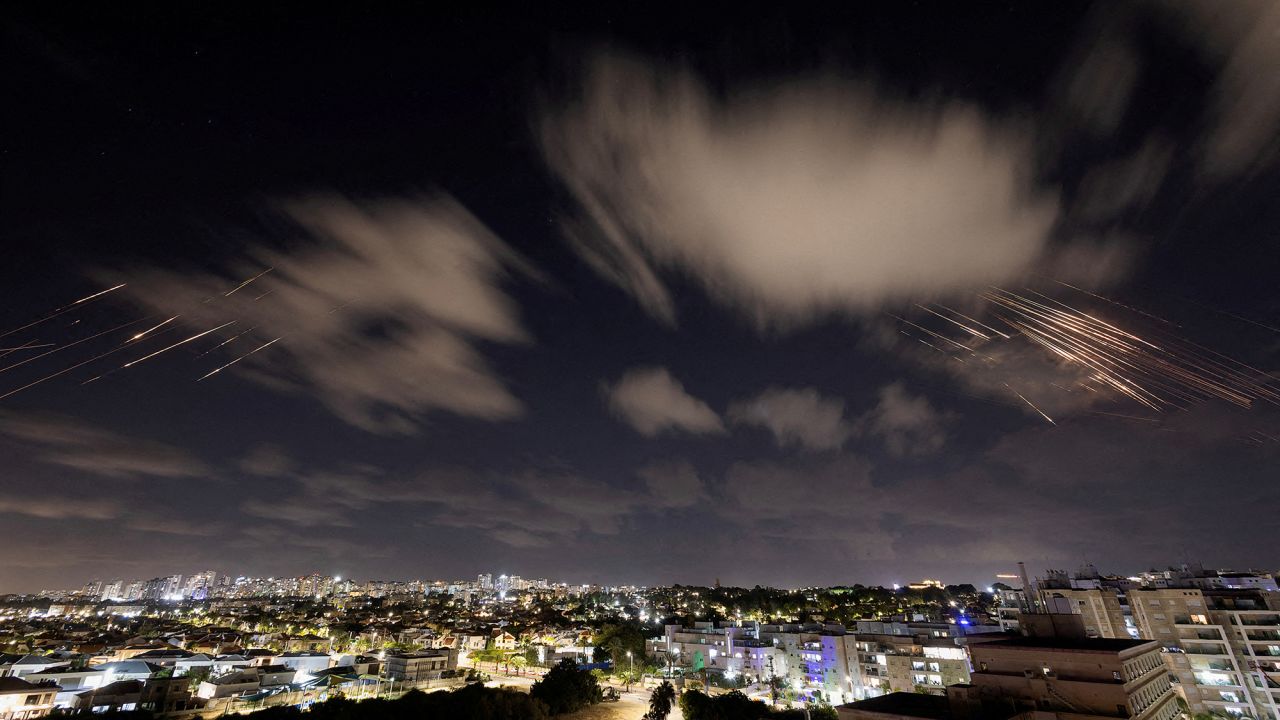
    Israel's Iron Dome anti-missile system intercepts rockets after Iran fired a salvo of ballistic missiles, as seen from Ashkelon, Israel, on October 1.

    The post US officials expect Israel's counterattack on Iran will come before US Election Day appeared first on The Custom Reports.

    Source : https://thecustomreports.com/us-officials-expect-israels-counterattack-on-iran-will-come-before-us-election-day/

  • Inside a secretive Ukrainian drone unit targeting Russian territory #rwanda #RwOT

    The spluttering roar of a propeller punctuates the perfect silence. Car headlights flick on, splitting the darkness. Their beams reveal not just a section of tarmac ahead, but one of Ukraine's most top-secret weapons, controlled by its most clandestine agency.

    Stuck to the nose of the gray machine is a yellow emblem of an owl, wings spread and grasping a sword – the unmistakable logo of Ukraine's defense intelligence, the GUR.

    Two pilots sporting the same owl patches on their fatigues make their final checks inside the car before a thumbs up: 'Let's go!'

    A high-speed, 50-second chase ensues, before the 13-foot long, 23-foot wingspan AN-196 Liutyi drone disappears in an instant into the inky-black Ukrainian night.

    The drone's destination is a target deep inside Russian territory.

    Only two people were authorized to speak on the record, and then only using their callsigns: Serge, the long-range drone operations commander of GUR, and Vector, unit commander. Serge said he had personally overseen more than 500 long-range drone attacks into Russia since its full-scale invasion of Ukraine in February 2022.

    CNN spent two days traveling across the country with the drone unit as it prepared to launch more than 100 drones overnight into September 29 on a mission into Russia. CNN is not disclosing the location of the sites visited for operational security reasons.

    Their target: an ammunition facility, specifically train carriages sitting inside the depot loaded with recently delivered Iranian missiles, according to the Ukrainians.

    Sources told CNN in September that Tehran had recently completed the delivery of short-range ballistic missiles to Russia. Iran has vehemently denied supplying any. 'Iran has NOT delivered ballistic missiles to Russia. Period!' Iran's Foreign Minister Abbas Araghchi recently stated on his X account.

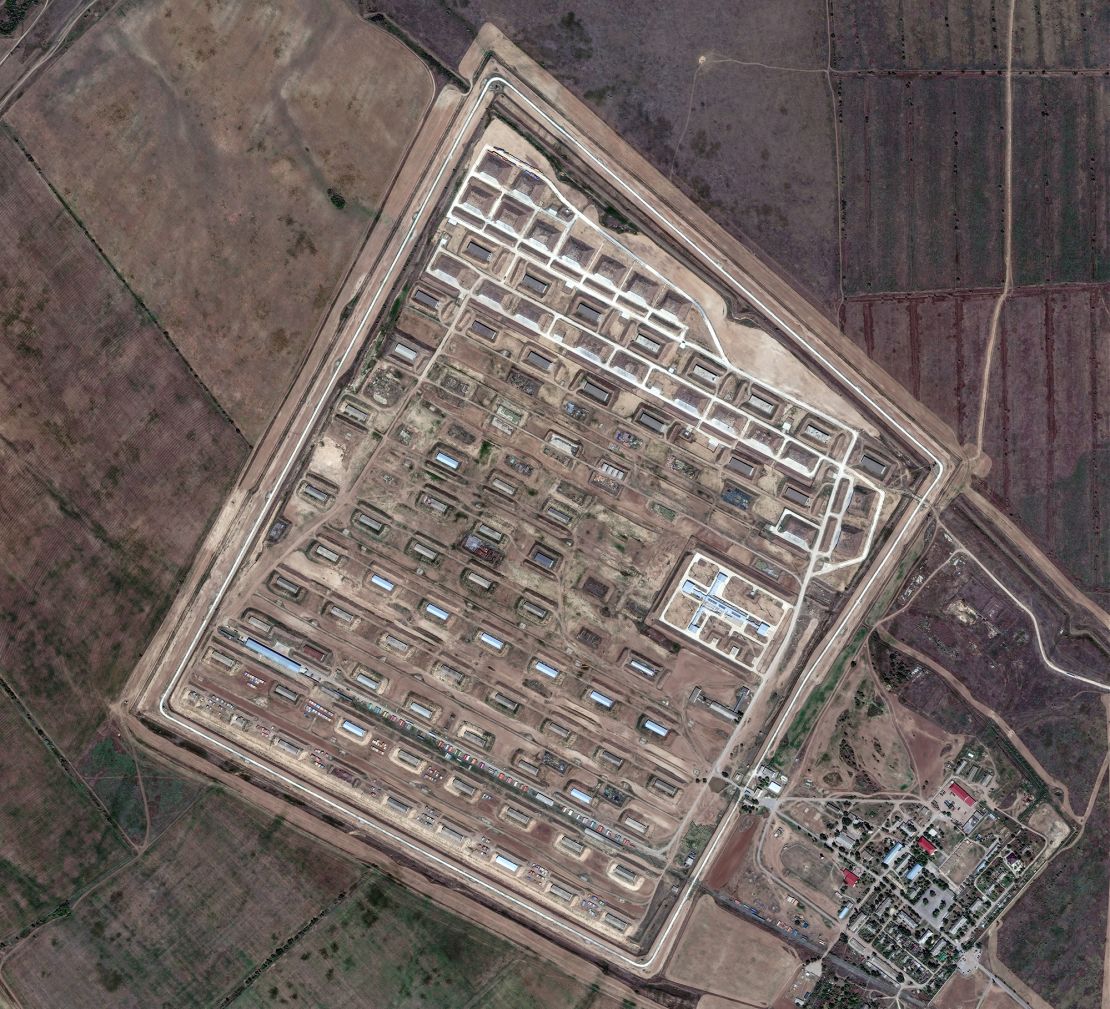
    The facility sits on the outskirts of the tiny village of Kotluban, in the Volgograd region of southwestern Russia.

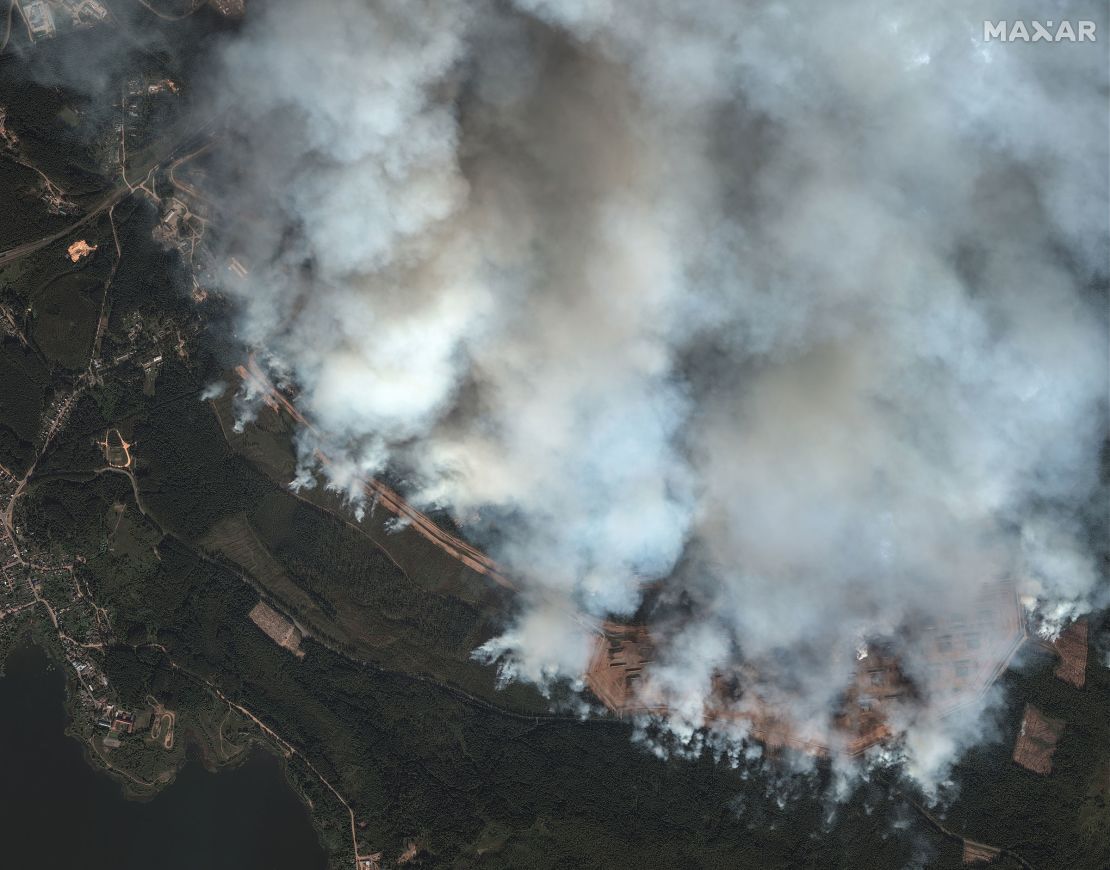
    A satellite image of the Kotublan ammunition depot taken on August 4, 2024.
    A satellite image of the Kotublan ammunition depot taken on August 4, 2024. 

    Maxar Technologies

    Long-range drone attacks have become an increasingly prominent part of the Russia-Ukraine war. As the land war has become more attritional, the air war has gathered speed, with the major development being in drone warfare.

    In September, the unit's drones hit a Russian ammunition depot between Moscow and St. Petersburg, in Tver region. The attack on Toropets, the Ukrainians claimed, resulted in the destruction of a depot storing Iskander tactical missiles, as well as aerial glide bombs and artillery munition. The strike caused massive explosions, visible for miles.

    A satellite image shows smoke rising from multiple explosions at the ammunition depot in Toropets, Tver region, Russia, on September 18, 2024.
    A satellite image shows smoke rising from multiple explosions at the ammunition depot in Toropets, Tver region, Russia, on September 18, 2024. 

    Maxar Technologies

    And in July the Ukrainians say they hit an oil refinery on Russia's Black Sea coast, causing a major fire there.

    But Russian air defenses thwart many Ukrainian drone attacks. The GUR's success rate, the unit tells CNN, could be transformed from 50% to 95% if the United States gave permission to use Western weapons in attacks on Russian soil.

    Russian President Vladimir Putin has warned, however, that Moscow would consider any assault on it supported by a nuclear power to be a joint attack, singling out a mass launching of drones as one potential example.

    Vector said many of Russia's airfields, the origin-point of many of the air raids it conducts against Ukraine, are out of range. His drones, while highly effective, are not always that efficient – swarms of them are required to ensure their targets are hit. 'Of course, we can send the UAVs (unmanned aerial vehicles), and we destroyed many places. But it's not enough,' Vector says.

    'We're not asking only about the permission to send the missiles anywhere in Russia, we speak about the weapons which can help us to move this war from our territory,' Vector adds.

    Inside the mission

    Serge and Vector have been leading their unit's attempts to hurt Putin at home.

    Regardless of targets, their missions follow a rigid set of operating procedures that include meetings at various locations across Ukraine.

    In an underground office with dark brown, seemingly never-ending Soviet corridors, Serge sits across from Vector in a white-walled room. No pictures hang on the wall, even the whiteboard remains blank. The meeting is to the point.

    'There will be about 12 drones,' Serge says to Vector, who has a map in front of him detailing the target and range of the Russian air defense and electronic warfare systems.  They then agree the target approach time of around 3 am and the launch intervals for the drones.

    Vector scribbles two notes before standing abruptly and saying, 'Everything is clear. Ready to complete the task.'

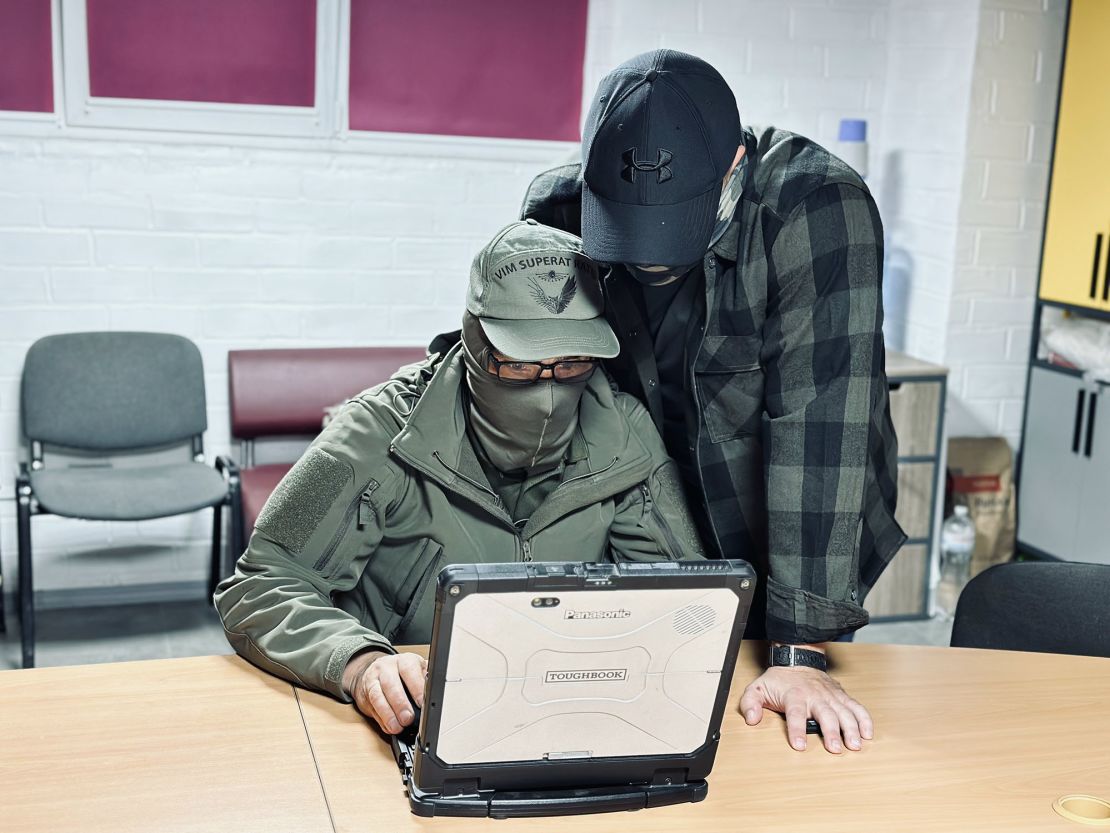
    Planning the routes into Russia is done from a secret location. The routes the Liutyi takes can include more than 1,000 waypoints to avoid detection
    Planning the routes into Russia is done from a secret location. The routes the Liutyi takes can include more than 1,000 waypoints to avoid detection 

    Sebastian Shukla/Daria Tarasova-Markina/CNN

    Outside on the street, Vector climbs into his vehicle. He beckons the CNN team to follow him, phones turned off.

    As dusk draws in, the convoy pulls into a compound, articulated lorries lined up. A tiny room with a desk and two sets of bunk beds serves as the only light source for miles around.

    Men dressed in black, balaclavas over their faces, wait to hear their orders. Vector delivers a short brief, adding that this mission will also involve other units. He orders his men to start preparing the routes and hands over a small USB key containing the information for the mission ahead.

    'Any questions?' he asks. 'None? Okay. Let's get working.'

    As his men scatter across the compound, Vector explains that the planning phase of these missions is critical. 'Planning is maybe 60% part of the success, everything depends on the planning,' he tells CNN.

    He points to the quality of Russia's air defenses, especially over the past 12 months. 'We're successful guys and we find the windows,' he says, but it's a challenge.

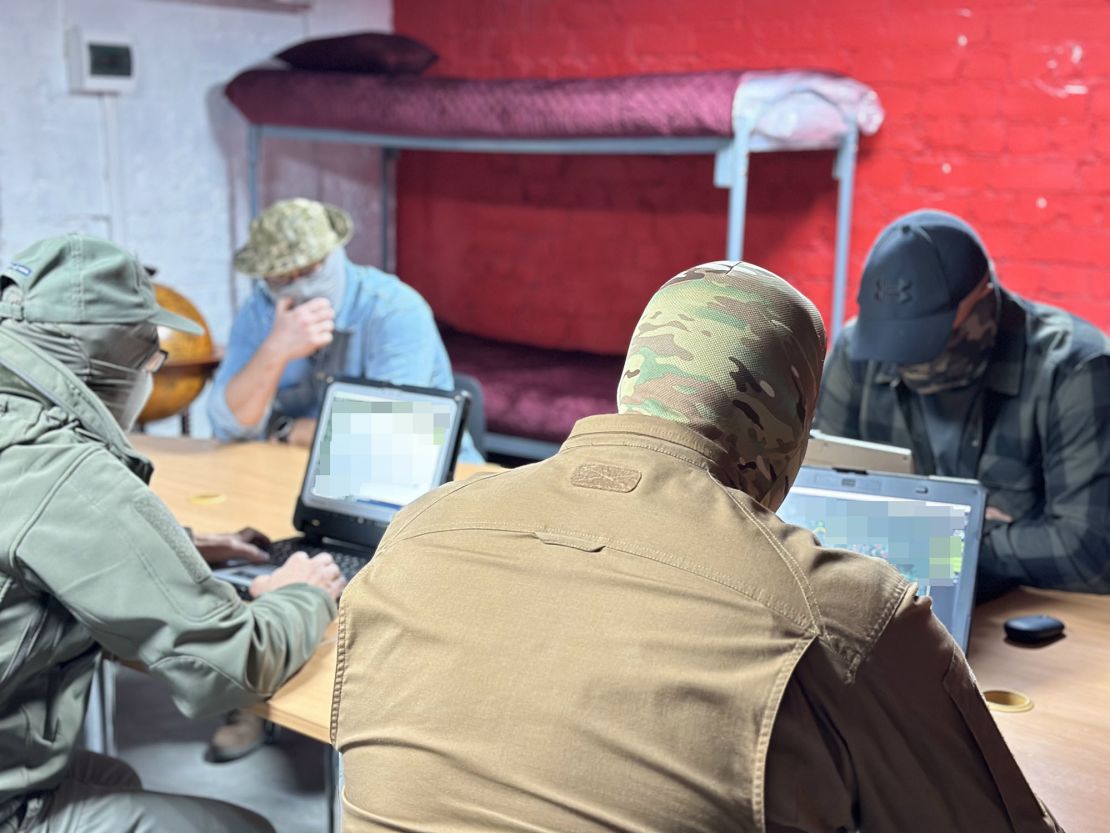
    Route planning is seen underway. CNN has added blurs to this image for security reasons.
    Route planning is seen underway. CNN has added blurs to this image for security reasons. 

    Sebastian Shukla/Daria Tarasova-Markina/CNN

    Each drone will be programmed with more than 1,000 different waypoints, to evade Russia's comprehensive air defense systems. There is tacit acceptance from Vector that some of this resembles a video game.

    'It looks like we play with them,' Vector says jokingly, 'but it's not a game. It's a war.'

    Serge adds that not all men in his unit are career soldiers like him. He has served more than 20 years in the Ukrainian army and began flying drone missions in 2014 as Russian-backed separatists in Ukraine's eastern Donetsk and Luhansk regions split away from Kyiv.

    Decoy machines

    In a warehouse, a Liutyi drone, produced predominantly in Ukraine, wingless for the time being, stands surrounded by green camouflage-painted crates containing multiple Rubaka kamikaze drones.

    Vector explains that these smaller drones are crucial to the success of any mission. The aim is simple: to overwhelm the air defenses and draw Russian fire away from the Liutyi, which often carries a payload as great as 250 kilograms (550 pounds).

    'They're very simple, and we can use them with and without payloads,' he says of the smaller drones.

    Cracking open one of the crates, he pulls out one of the decoy machines. Strips of metal foil have been added to the wings to fool Russian radar.

    'We try to mix them, and we try to send them from different distances, different launch places… they try to destroy them. They send helicopters and missiles, they turn on the radio electronic warfare,' Vector explains.

    Their targets are only military targets, Vector states. 'Russia came inside our country. They destroyed a lot of electricity, a lot of houses, cities, villages.' But, he adds, 'not all of them are stupid, and when they understand that war can come to them like they come to us, they will change something in their country. They will change the politics.'

    One of the many articulated lorries has backed up for loading. In near darkness, drone bodies, followed by wings, are loaded three per truck by men whose faces are totally covered by balaclavas, and strapped down, ready to be taken to their launch sites.

    Pilots make final checks to the drone before launch. They follow the drone at high speed until takeoff, then it flies autonomously to its target. CNN has added a blur to this image for security reasons.
    Pilots make final checks to the drone before launch. They follow the drone at high speed until takeoff, then it flies autonomously to its target. CNN has added a blur to this image for security reasons. 

    Sebastian Shukla/Daria Tarasova-Markina/CNN

    Across other parts of Ukraine roughly 80 other GUR operatives are preparing 90 other drones, not all the Liutyi, for flight.

    Some 30% of all the drones being launched will be on decoy missions, Serge says. The drones have been programmed to fly anywhere between 450 and 550 miles, with the Liutyis being the spearhead, destined for the small town-turned-ammunition hub of Kotluban.

    The men load the warheads carefully into the bodies of the drones. Each compartment is then sealed with the squeal of a drill.

    Serge and Vector, now in full combat uniform, observe the final preparations. This launch is one of the largest Serge has ever conducted, he says.

    'Maybe (the Russian people) don't understand what's going on in Ukraine, but when these UAVs arrive, they understand clearly what we have been living (with) for the past 10 years,' Vector chimes in.

    Tracking the drones' flight

    In total darkness, the drones are pushed into position. The car with the pilots moves in behind. The propeller spurts into life and the pilots ensuring a smooth takeoff begin their high-speed chase down the tarmac. Once airborne the fully autonomous drone starts ticking off the myriad waypoints.

    Vector hurtles after the drone before slamming on the brakes and proclaiming 'perfect.' He turns the car around and blasts a patriotic song from his radio.

    Back at the planning base, the hours tick by and Vector, Serge and others keep tabs on the drones via trackers.

    The success of the mission is monitored in three ways, they say: through human intelligence on the ground, the messages seen on Russian Telegram groups and, later, analysis using satellite technology. Only once all three have been assessed can a mission be deemed a success or not.

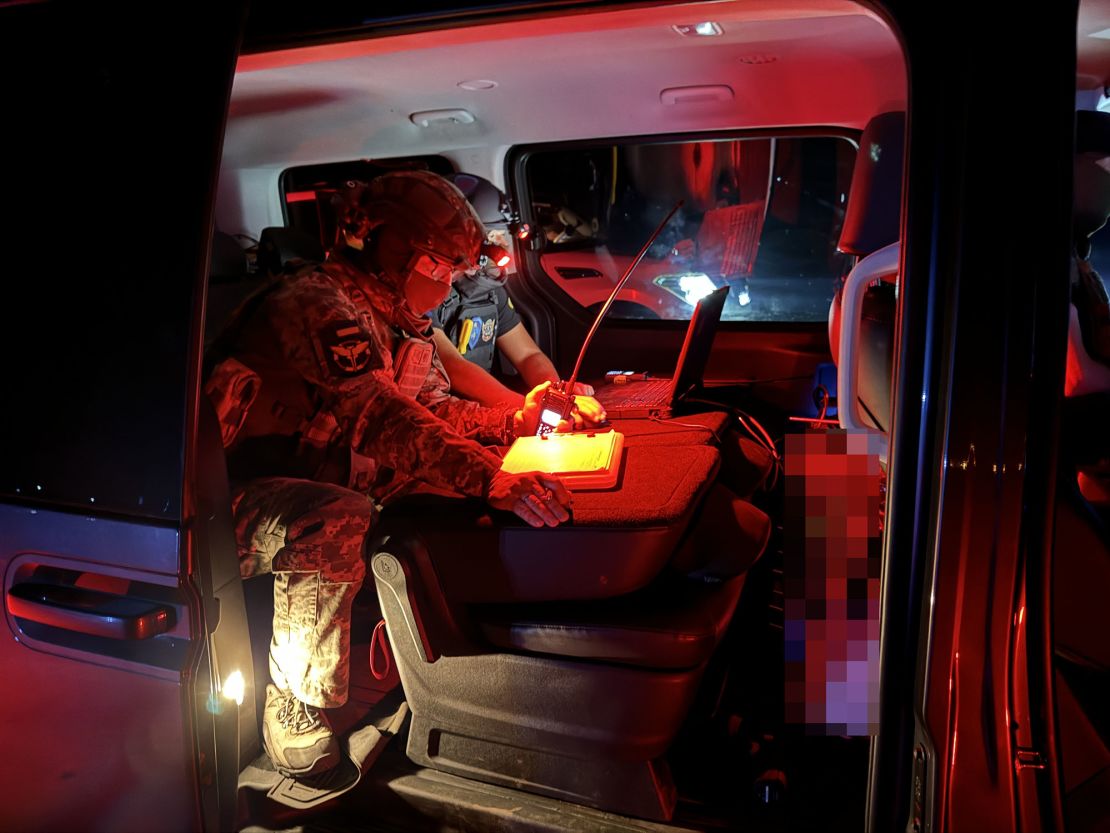
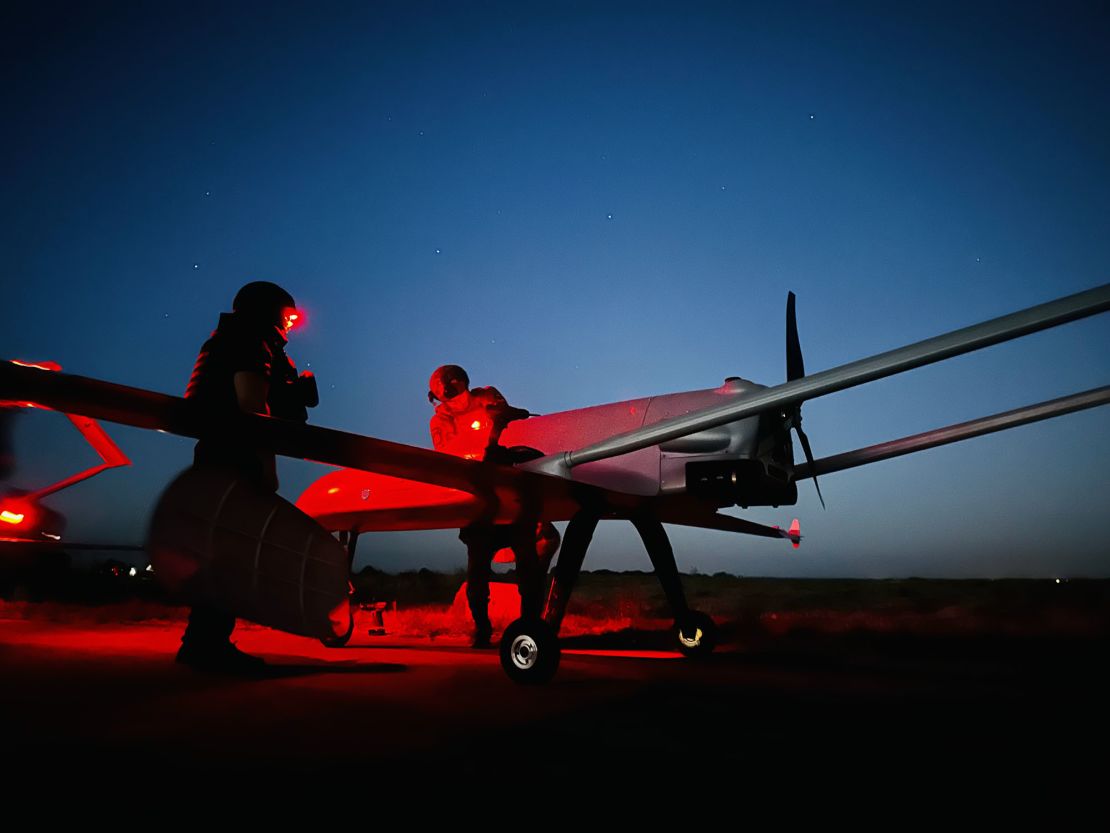
    Preparations for drone launches take place under cover of darkness, with red lights used to minimise the chances of detection by reconnaissance drones.
    Preparations for drone launches take place under cover of darkness, with red lights used to minimise the chances of detection by reconnaissance drones. 

    Sebastian Shukla/Daria Tarasova-Markina/CNN

    As the 3 am arrival window nears, Serge starts reading out messages he is seeing from Telegram channels across Russia. The widespread nature of this attack starts to become clearer. Various cities in southern Russia – Voronezh, Yesk, Rostov and Volgograd – all start reporting drones arriving in their airspace.

    One video from Voronezh shows one of the decoy drones whizzing overhead. An audio clip of a woman in clear distress at what is happening above her head leaves Vector laughing.

    Through these Telegram channels, he says, 'we understand that we are having some success.'

    Initial satellite imagery of the ammunition depot in Kotluban shows scorched fields, a result of burning grass, but seemingly little evidence of major explosions within – apparent signs of a near miss.

    However, the GUR shared with CNN a video from the region of the depot. CNN was able to independently view and verify aspects of the video without a blur to check its authenticity.

    A defense intelligence source told CNN that their knowledge of the camera's location, combined with its distance from Kotluban, allowed them to ascertain that the explosions inside the depot were large.

    The video, sped up, shows 11 explosions all occurring in a 56-minute timeframe between 2:22 and 3:18 am – exactly the period during which the drones arriving from Ukraine were expected to land.

    CNN was able to independently verify, through sources, that a direct hit on the facility had taken place. CNN is not publishing the image to protect the source's anonymity, but it was taken within 72 hours of the attack.

    The image shows a number of objects scattered around the building and a building badly damaged.

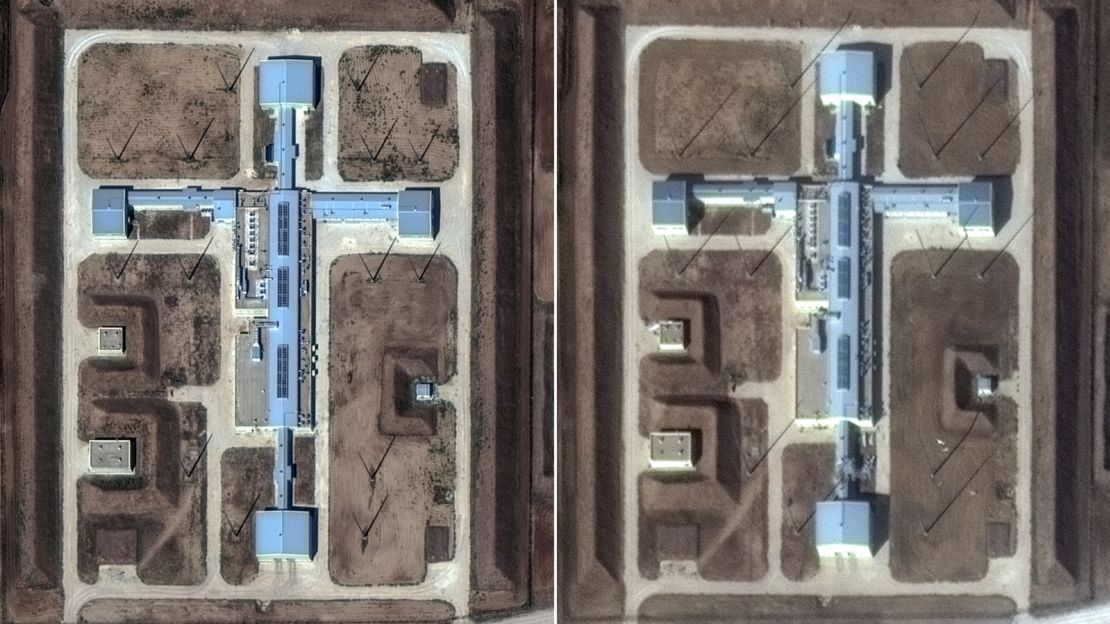
    Close-up before (left) and after (right) Maxar satellite images of the Kotluban facility show damage to a building and scattered debris in the later image, center bottom, taken in early October.
    Close-up before (left) and after (right) Maxar satellite images of the Kotluban facility show damage to a building and scattered debris in the later image, center bottom, taken in early October. 

    Maxar Technologies

    A later Maxar Technologies satellite image, also obtained by CNN, shows less debris in the vicinity – an indication that the Russian military had cleaned up the site – but the same building, heavily damaged.

    The mission to destroy Iranian-delivered missiles was a total success, the Ukrainians insist.

    As the drones were heading towards Kotluban, Serge told CNN: 'We are constantly forcing the enemy to think about what they did in February 2022. They must realize that we are getting stronger every day and we are bringing our victory and their defeat closer.'

    The post Inside a secretive Ukrainian drone unit targeting Russian territory appeared first on The Custom Reports.

    Source : https://thecustomreports.com/inside-a-secretive-ukrainian-drone-unit-targeting-russian-territory/
  • Tiananmen Square: Where China's past, present and power converge (Photos) #rwanda #RwOT

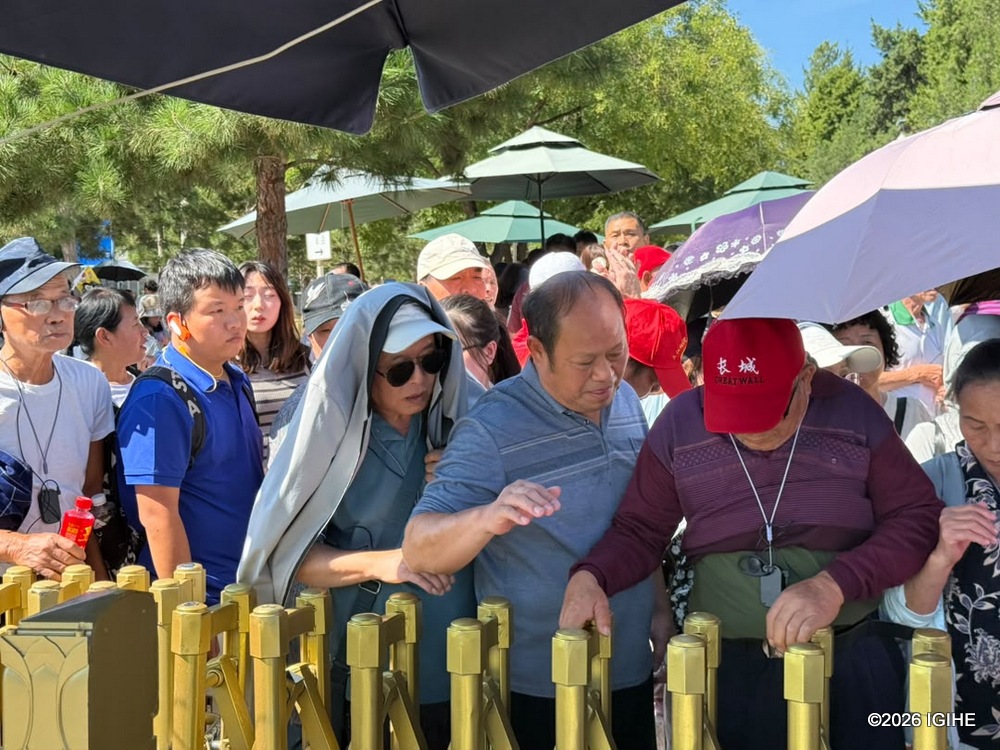
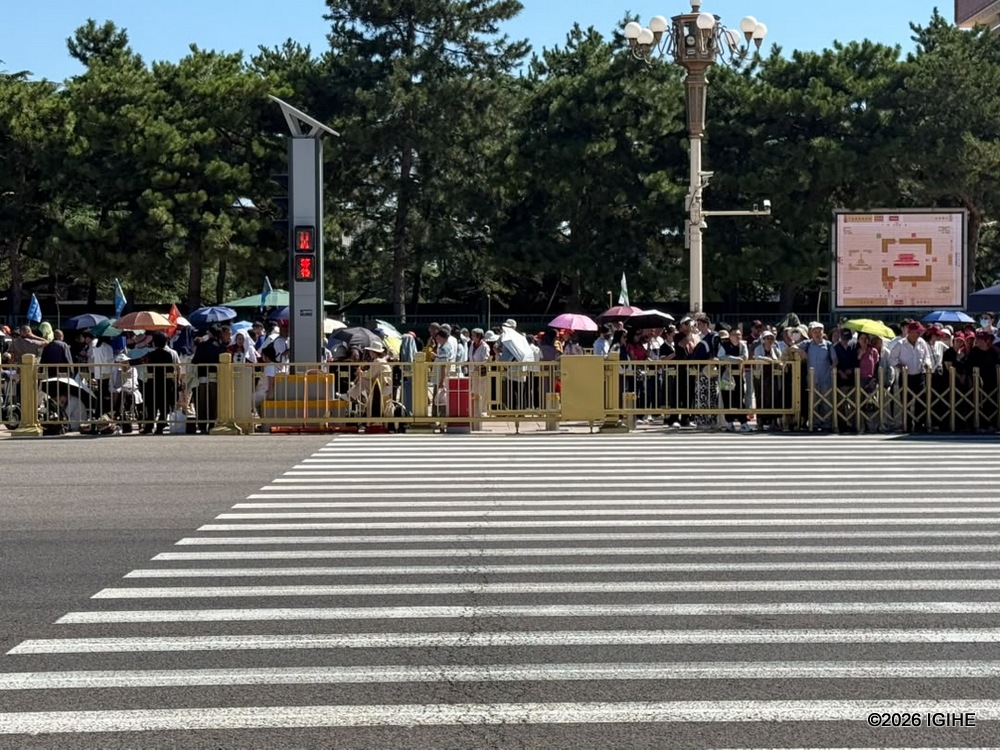
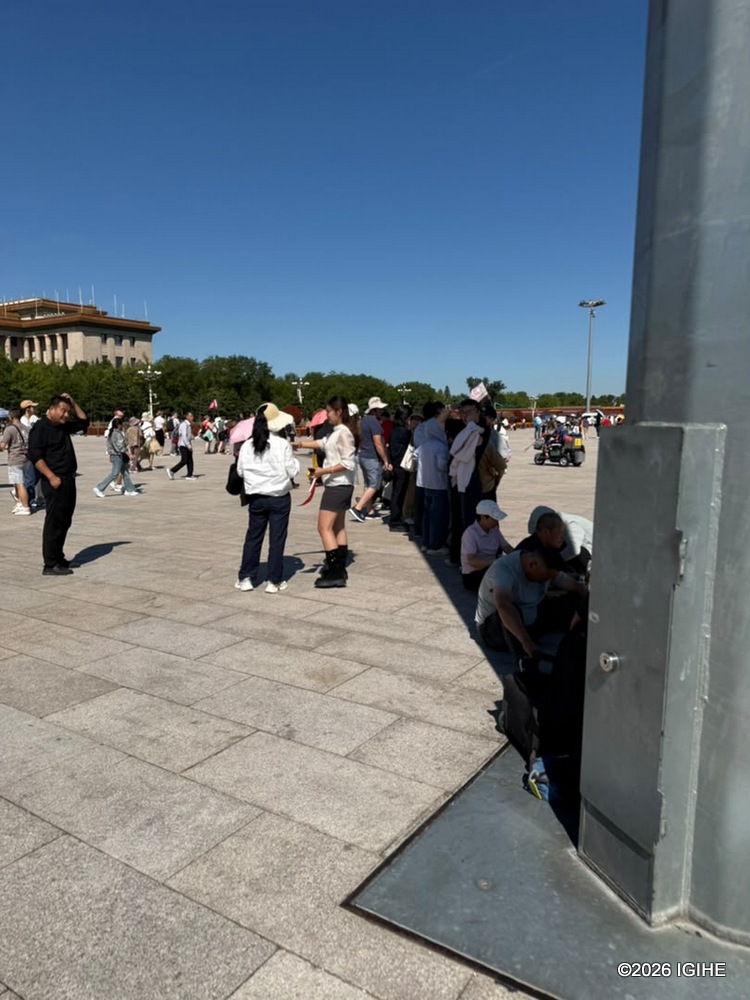
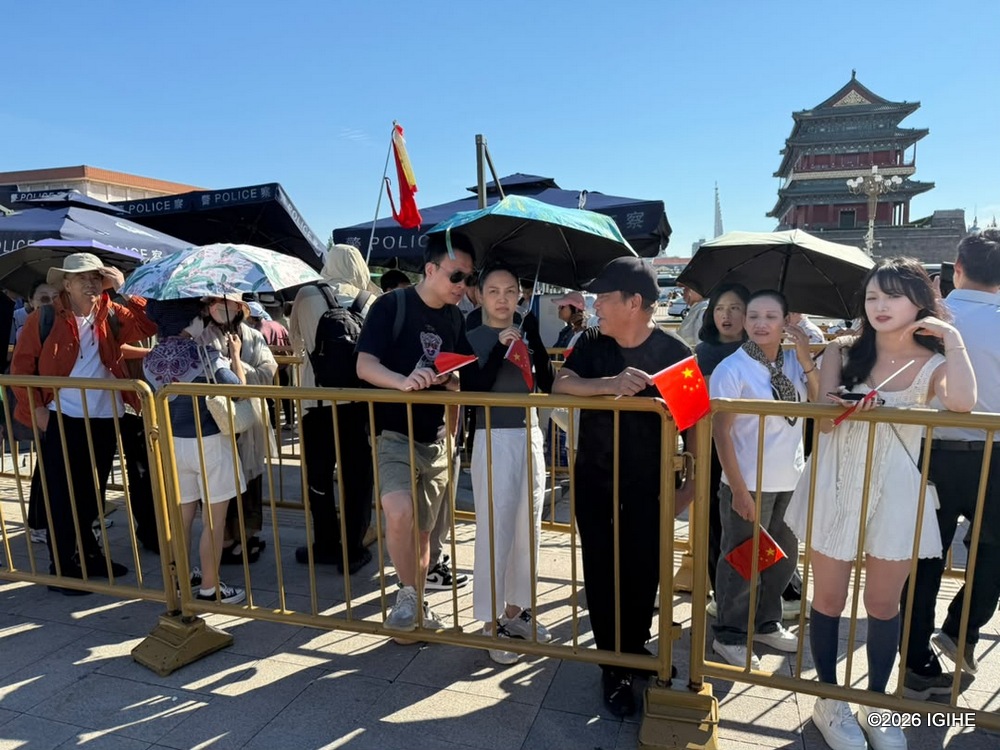
    Soldiers and uniformed guards stand around the entrances, a reminder that this is not simply a tourist attraction but one of China's most carefully protected national and ceremonial sites.

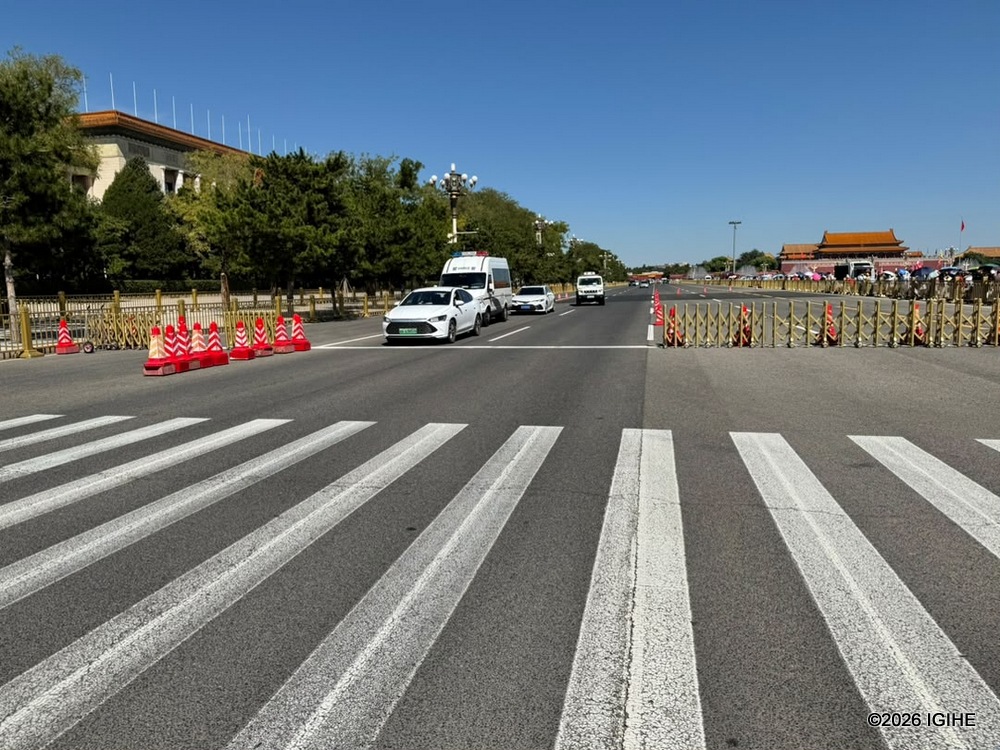
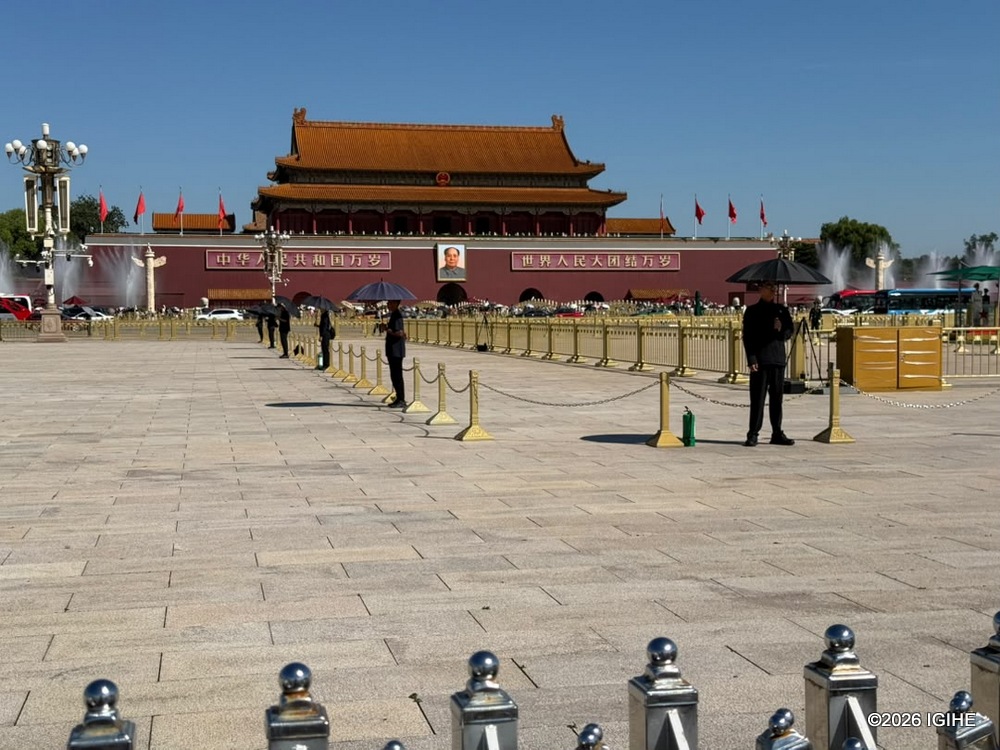
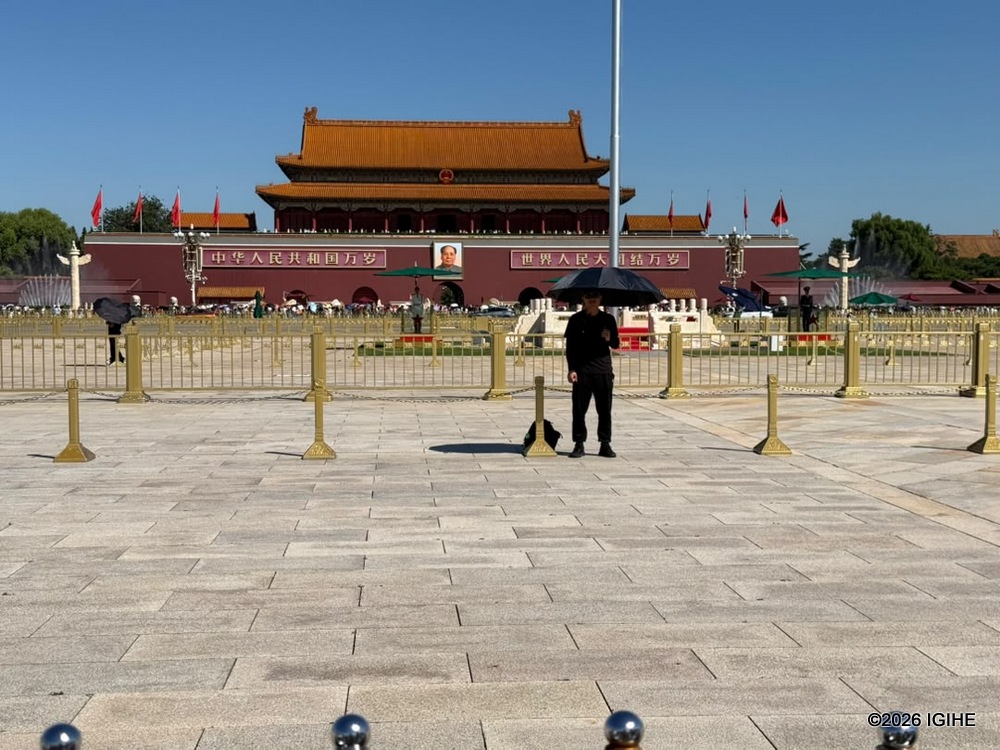
    Located in central Beijing, Tiananmen Square forms part of the city's historic north–south Central Axis. Tiananmen Gate, or the Gate of Heavenly Peace, stands to the north, with the Forbidden City directly behind it.
    Zhengyangmen, commonly known as Qianmen, marks the southern end, while the National Museum of China and the Great Hall of the People occupy the eastern and western sides respectively.

    The square measures about 880 metres from north to south and 500 metres from east to west, covering approximately 440,000 square metres. It can accommodate about one million people during a major gathering.

    Its scale is matched by the number of visitors. The official 2024 annual report of the Tiananmen Area Management Committee recorded more than 57 million visits by Chinese and foreign tourists during the year. The figure covers the wider Tiananmen area rather than the paved square alone. Visitors must also make a reservation before entering, according to current Beijing visitor guidance.

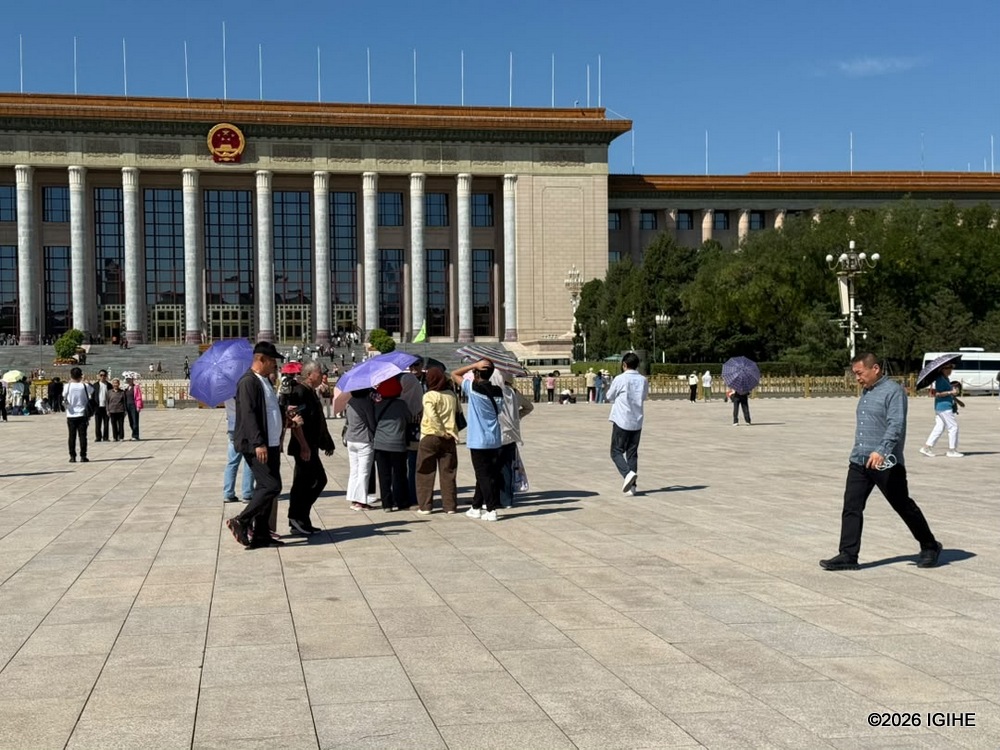
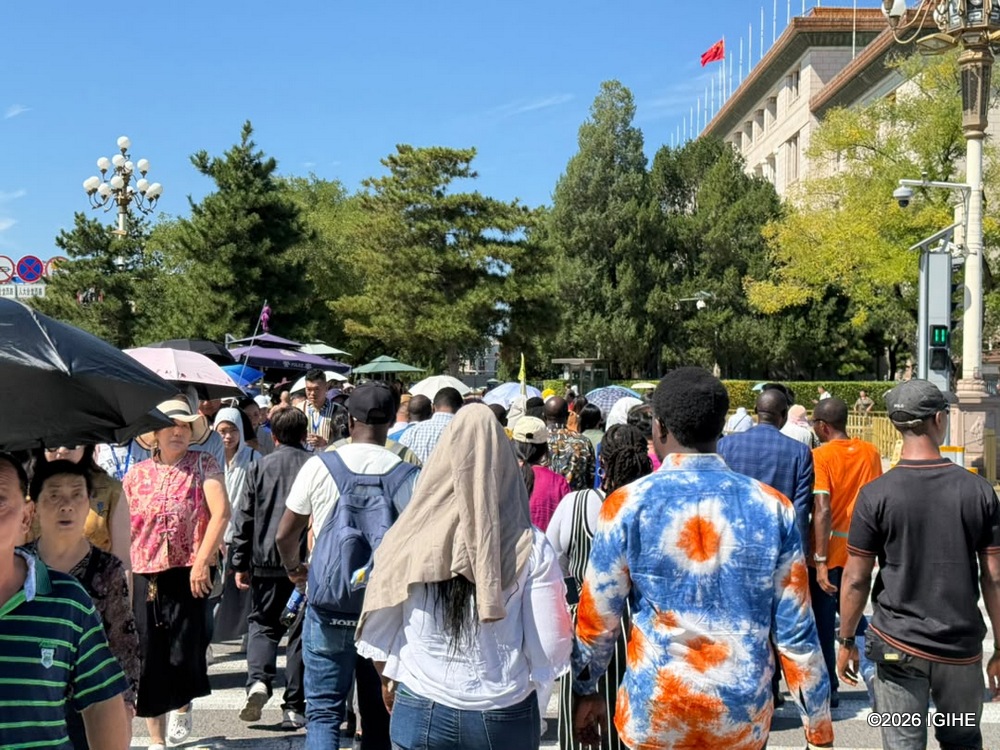
    The Great Hall of the People hosts major political, state and diplomatic events in Beijing.

    From imperial approach to public square

    The history of the site goes back centuries before the establishment of the People's Republic of China.

    Tiananmen Gate was first built in 1417 during the Ming dynasty and was originally known as Chengtianmen. It was rebuilt in 1651 during the Qing dynasty and received its present name, Tiananmen, meaning 'Gate of Heavenly Peace'.

    For centuries, it formed part of the Imperial City and served as an important entrance to the Forbidden City, where Chinese emperors lived and governed. The area was then an imperial approach surrounded by gates, offices and ceremonial buildings rather than the open public square seen today.

    Major changes came in the twentieth century. The Gate of China was demolished in 1954, while construction between 1958 and 1959 created the broad modern plaza. The Great Hall of the People and buildings that later became the National Museum of China were also constructed during this period.

    Tiananmen Gate took on a new role in modern Chinese history on October 1, 1949, when Mao Zedong announced the establishment of the People's Republic of China from its balcony before a large crowd.

    The gate has five doorways and seven bridges, reflecting its imperial history. In front of it stand marble lions and two Huabiao, or ceremonial stone columns, decorated with dragons and clouds.

    The national flagpole at the northern end continues the square's ceremonial role. Every day, the Chinese flag is raised around sunrise and lowered around sunset, attracting visitors who arrive early to watch the ceremony.

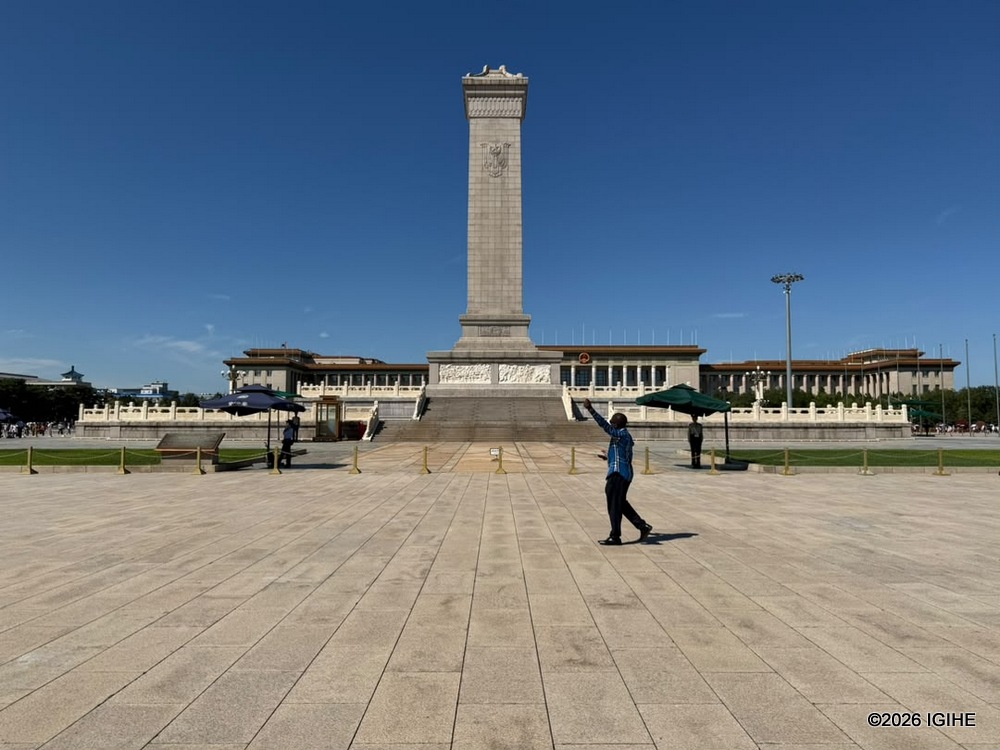
    Tiananmen Square forms part of Beijing's historic north–south Central Axis.

    The landmarks around the square

    On the western side, the Great Hall of the People hosts meetings of the National People's Congress, China's highest legislative body. It is also used for major political, state and diplomatic events and the National Congress of the Chinese Communist Party.

    The building includes a Great Auditorium with around 10,000 seats and a large banquet hall.

    On the eastern side, the National Museum of China connects the square to China's ancient civilisation and cultural heritage.

    According to the museum's official information, it has a construction area of about 200,000 square metres, more than 1.4 million objects and 48 exhibition halls. Its collections include archaeological discoveries, works of art, rare books and other objects from China's long history.

    At the centre stands the Monument to the People's Heroes, a 37.94-metre obelisk built between 1952 and 1958. Its base contains reliefs depicting important episodes in China's revolutionary history. During national ceremonies, leaders and other important guests lay flowers or wreaths there to honour the country's heroes and martyrs.

    South of the monument is the Chairman Mao Memorial Hall. Built after Mao's death in 1976 and completed in 1977, it stands on the former site of the Gate of China. Mao's preserved body is displayed inside, attracting visitors who come to pay their respects.

    Mao was a Chinese revolutionary and Communist Party leader who became the founding leader of the People's Republic of China. His portrait remains above Tiananmen Gate.

    Tiananmen has therefore witnessed imperial ceremonies, the founding of the People's Republic, national celebrations, public mourning, political protests and major state events.

    In 2024, Tiananmen Square and several surrounding historic structures became part of the UNESCO World Heritage property Beijing Central Axis: A Building Ensemble Exhibiting the Ideal Order of the Chinese Capital, recognising the area's importance to Beijing's urban development and China's history.

    For visitors, the square offers more than an impressive backdrop for photographs. Within one vast space, its gates, monuments and surrounding buildings provide a glimpse into centuries of Chinese history.

    The famous portrait of Mao Zedong overlooks Tiananmen Square from the front of Tiananmen Gate.
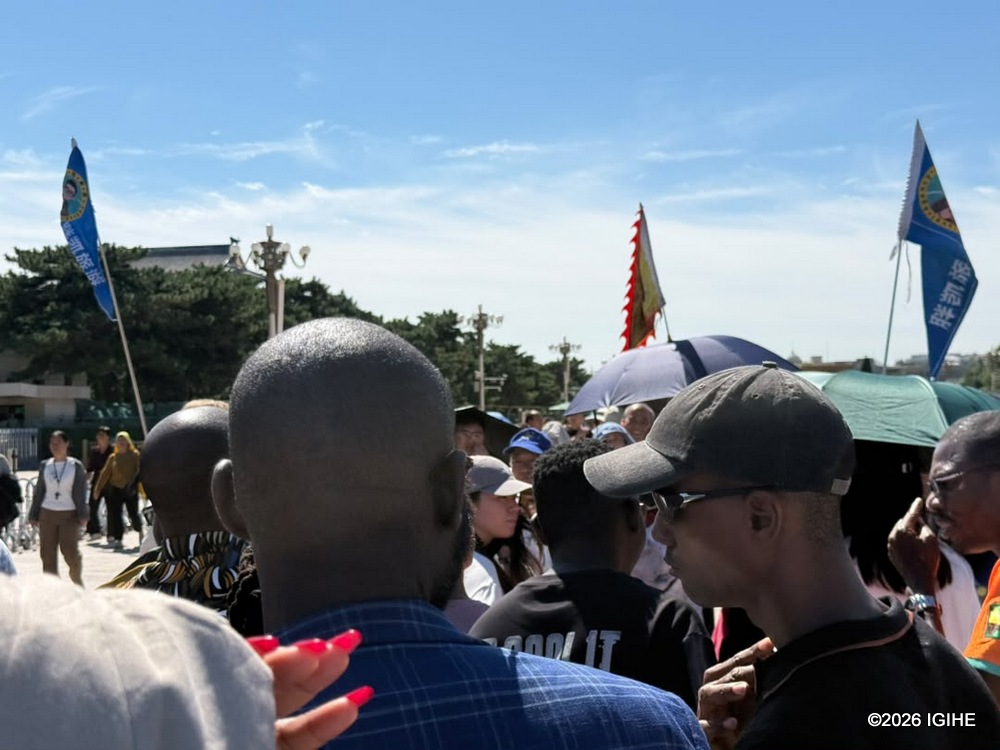
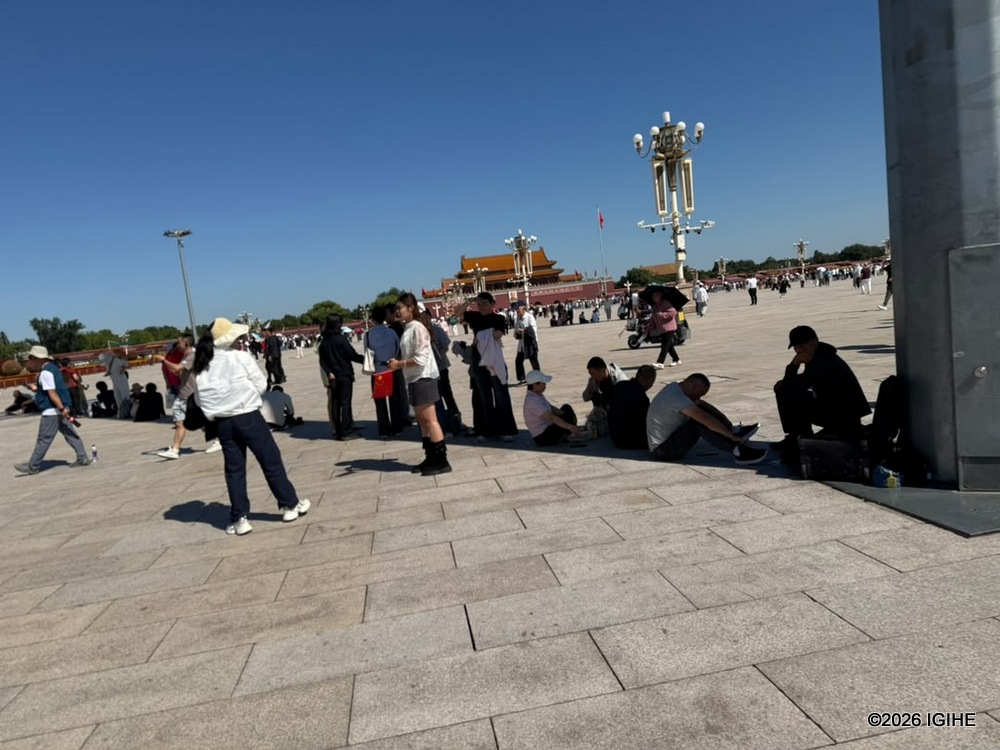
    Visitors walk across Tiananmen Square, one of Beijing's most prominent historic landmarks.

    Source : https://new.igihe.com/english/tiananmen-square-where-chinas-past-present-and-power-converge-photos/

  • Fitch reaffirms Rwanda's 'B+' credit rating with stable outlook #rwanda #RwOT

    The assessment, released on September 11, highlights continued confidence in the country's economic fundamentals and policy framework despite a challenging global and regional environment.

    Fitch expects Rwanda's economy to grow by 7.8% in 2026, down from 9.4% in 2025 but still well above the 4.5% median for countries rated 'B'. Growth is expected to be supported by continued expansion in agriculture, services and construction, including infrastructure projects such as the Bugesera airport.

    The agency expects inflation to average 11.7% in 2026, above the National Bank of Rwanda's 2%-8% target. It noted that the central bank has raised its policy rate by a cumulative 150 basis points to 8.75% since February 2026.

    Fitch forecasts Rwanda's current account deficit to widen to nearly 15% of GDP in 2026, driven by resilient domestic growth, higher imports linked to the Bugesera airport project, and increased fuel and fertilizer costs. The deficit is largely financed through foreign direct investment and official borrowing.

    The agency estimates Rwanda's net external debt will reach 63% of GDP in 2026, compared with a 48% median for 'B'-rated countries. However, it noted that 87% of Rwanda's external debt is highly concessional, helping to mitigate the risks associated with the country's external financing position.

    On public finances, Fitch expects the fiscal deficit to remain broadly stable at 4.5% of GDP in the fiscal year ending June 2027, compared with 4.4% in FY2026.

    The agency said tax reforms implemented since FY2025 helped tax receipts exceed the government's target by 0.6 percentage points of GDP in FY2026. Further gains are expected, although revenue growth could moderate in FY2027 due to the impact of the Iran war, lower grants and weaker non-tax revenues.

    Fitch projects general government debt to decline in FY2027-FY2028, averaging about 65% of GDP, after peaking at around 74% in FY2025. The decline is expected to be driven mainly by strong nominal GDP growth and, to a lesser extent, spending consolidation.

    The agency also expects Rwanda to rely more heavily on external borrowing to finance its fiscal deficit, with external financing remaining largely concessional. Multilateral and bilateral partners are projected to account for about 82% of total external financing in FY2027-FY2028.

    Fitch expects regional security risks to remain elevated, with the conflict in eastern DRC continuing to pose risks to Rwanda's external financing position. However, the agency does not anticipate a sharp escalation in the near term.

    The Ministry of Finance and Economic Planning welcomed the reaffirmation, saying it reflects continued confidence in Rwanda's economic fundamentals and policy framework.

    'The reaffirmation reflects continued progress in strengthening Rwanda's macroeconomic foundations while maintaining a focus on sustainable growth, investment, resilience and fiscal sustainability,' the ministry affirmed.

    The latest assessment comes six months after Fitch revised Rwanda's sovereign outlook to Stable from Negative while retaining the 'B+' rating. At the time, the agency cited improved access to external financing and reduced uncertainty over Rwanda's funding position.

    Fitch Ratings is an American-British credit rating agency and one of the 'Big Three' global rating agencies alongside Moody's and S&P Global Ratings.

    Source : https://new.igihe.com/english/fitch-reaffirms-rwandas-b-credit-rating-with-stable-outlook/

  • One dies, three injured in illicit alcohol brewing accident in Rwamagana #rwanda #RwOT

    The incident happened in the wee hours of Monday, September 14, 2026, in Kiryango Village, Nkungu Cell, Munyaga Sector.

    Munyaga Sector Executive Secretary Munyentwari Damascene told IGIHE that the four had gone into a forest at night to brew the illicit alcohol for sale.

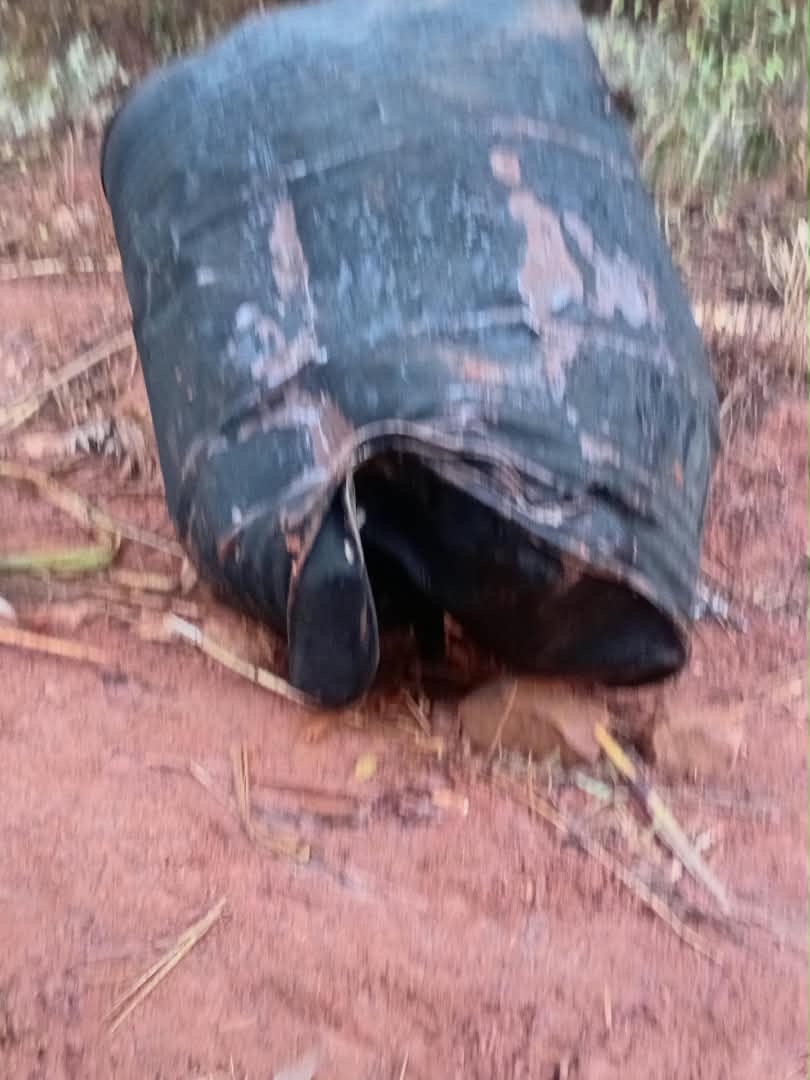
    'They went into the forest at night to brew Kanyanga. The drum then exploded. A piece of metal struck one of them, killing him instantly. The other three are being treated at Rwamagana Hospital. They suffered serious burns,' he said.

    Munyentwari warned residents against producing illicit alcohol, which is prohibited in Rwanda.

    He said producing illicit alcohol is punishable by law and urged residents to avoid activities that could lead to imprisonment and financial losses for their families.

    'We urge residents to sell and consume alcohol that is permitted by Rwandan law. They should stop producing illicit alcohol and other prohibited substances because anyone caught doing so is punished by law. In most cases, they are imprisoned. We urge them to stop and instead consume or sell legally permitted alcohol,' he said.

    The person who died was a 20-year-old man. The three others, aged 14, 16 and 22, were seriously injured and are receiving treatment at Rwamagana Hospital.

    The damaged alcohol-brewing drum at the scene of the incident in Rwamagana District.
    The incident occurred in Kiryango Village, Nkungu Cell, Munyaga Sector, Rwamagana District, in the early hours of September 14, 2026.

    Source : https://new.igihe.com/english/one-dies-three-injured-in-illicit-alcohol-brewing-accident-in-rwamagana/

  • World's largest EV manufacturer Yadea partners with Spiro to accelerate electric mobility across Africa #rwanda #RwOT

    The strategic partnership combines Yadea's global manufacturing and R&D capabilities with Spiro's operational network and battery-swapping ecosystem across seven countries.

    Together, the companies aim to build a scalable, commercially sustainable EV framework serving millions of commercial fleet operators, delivery services, logistics providers, and daily commuters in Africa's fastest-growing mobility markets.

    Under the agreement, Yadea will supply electric two-wheelers and related EV products tailored to Spiro's expanding regional markets, while Spiro will integrate the vehicles into its proprietary battery-swapping and energy infrastructure.

    The companies will also co-develop customized two-wheeler platforms engineered specifically for local road conditions and commercial utility across Africa.

    This partnership deepens the China-Africa connection, pairing Yadea's manufacturing scale with Spiro's battery-swapping network and unique knowledge of African market dynamics to accelerate the continent's transition to affordable electric transport.

    'When we launched Spiro, our mission was to lay the energy and mobility foundation for Africa's green transition. Our strategic partnership with Yadea is a major endorsement of our execution to date and opens fantastic opportunities to jointly pioneer the next era of electric mobility in emerging markets', stated Gagan Gupta, Founder of Spiro and Chairman of Equitane.

    Commenting on the development, Anant Badjatya, CEO of Spiro, said: 'Africa's shift to electric mobility is accelerating and this partnership helps us meet that demand at scale. By bringing together Yadea's manufacturing strength with Spiro's electric mobility ecosystem and operating experience across Africa, we are compressing the timeline to clean transport, helping thousands more riders switch to affordable EVs faster and multiplying our climate impact across the continent.'

    Wang Jiazhong, Senior Vice President of Yadea Technology Group, said Africa represents a major opportunity for zero-emission transport and that the company's mission to reduce carbon emissions had reached a significant milestone through its partnership with Spiro.

    'Together, we are combining global innovation with local infrastructure to deliver scalable and sustainable mobility solutions that serve millions of riders and transform Africa's urban transit,' he noted.

    Founded in China, Yadea is the world's leading manufacturer of electric two-wheelers, with more than 100 million vehicles sold worldwide in over 100 countries and 10 exclusive production facilities globally.

    A strong innovator with more than 2,000 patents registered in electric vehicle technology, Yadea covers a comprehensive range of urban micro-mobility solutions.

    Meanwhile, Spiro is Africa's largest electric mobility company present in seven countries, operating the continent's most extensive and fastest-growing network of battery-swapping for electric two-wheel vehicles.

    The partnership comes as Spiro accelerates its next phase of growth and expansion across Africa following its latest $270 million funding round, which included investment from NewTrails Capital, a Chinese fund.

    The company is building an integrated electric mobility ecosystem combining electric motorcycles with an extensive battery-swapping network, enabling riders to exchange depleted batteries for fully charged ones in minutes.

    With more than 130,000 electric motorcycles, over 2,500 battery swapping stations and more than 50 million battery swaps to date, Spiro has achieved over two billion kilometres of low-carbon travel, transforming mobility and economies by replacing expensive imported fossil fuel-based transportation with affordable, accessible and sustainable solutions.

    The company also has an expanding regional production network, with operational assembly facilities in Uganda, Kenya, Nigeria and Rwanda.

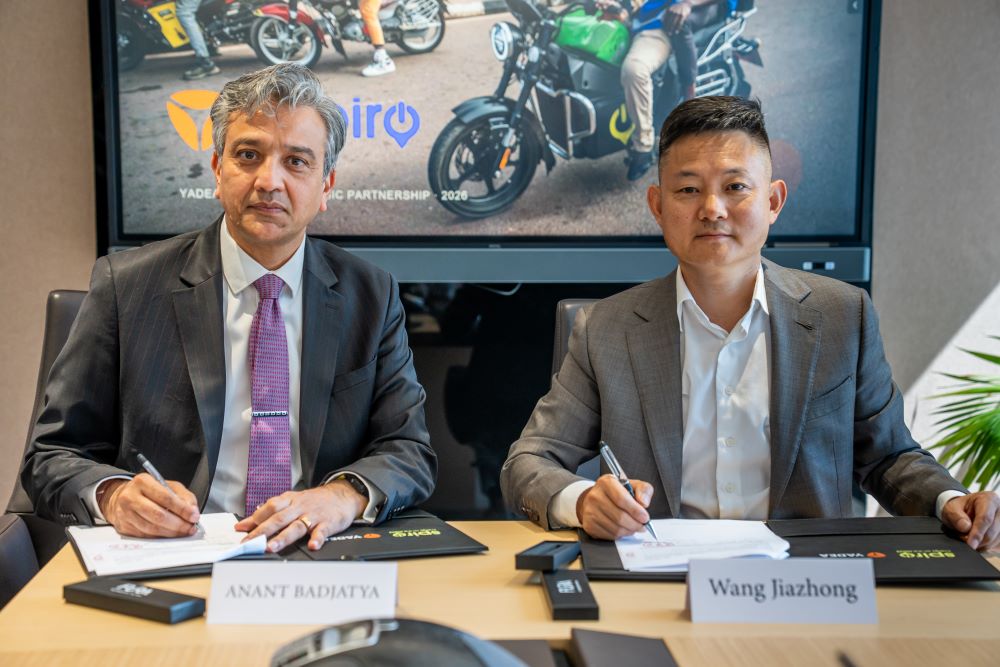
    Yadea and Spiro representatives exchange documents after signing an agreement focused on accelerating the adoption of electric two-wheelers across Africa.
    Yadea and Spiro have partnered to expand electric mobility solutions across Africa, combining Yadea's manufacturing capabilities with Spiro's battery-swapping network.
    The Yadea and Spiro partnership will combine Yadea's electric two-wheeler manufacturing capabilities with Spiro's battery-swapping network and operational experience in Africa.
    Representatives of Yadea and Spiro pose after signing a partnership agreement aimed at expanding affordable and sustainable electric mobility across Africa.

    Source : https://new.igihe.com/english/worlds-largest-ev-manufacturer-yadea-partners-with-spiro-to-accelerate-electric-mobility-across-africa/

  • Snail shells could help reconstruct prehistoric cyclones: study #rwanda #RwOT

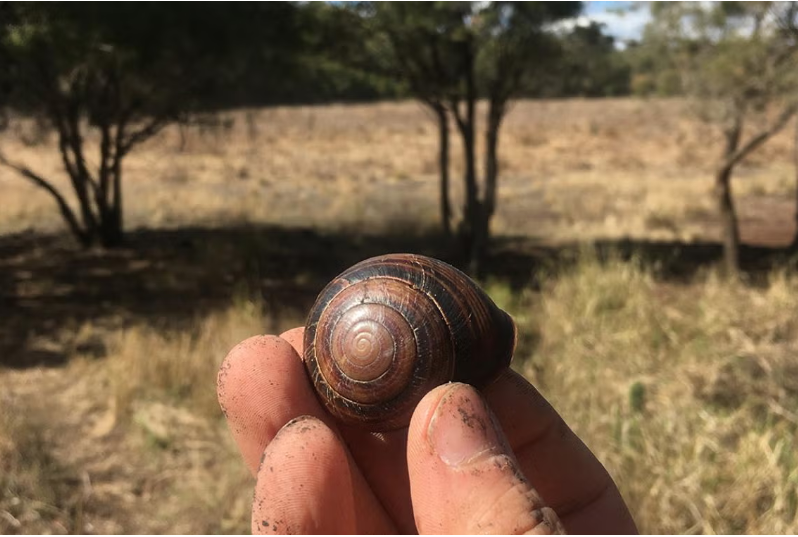
    Researchers examined the rings on the shell of a Biggenden Banded Snail collected from Coalstoun Lakes National Park in Australia's southeast Queensland, linking its bands to weather records, according to a statement released Monday by Australia's University of Queensland (UQ).

    Tiny samples taken from the shell at millimeter intervals were analyzed using high-resolution radiocarbon dating, revealing the age of the snail, when it lived and the weather during its lifetime, said Nicholas Patton, lead author of the study published in The Holocene.

    'It contained elevated levels of radiocarbon from the nuclear tests in Australia in the 1960s, meaning we could date the growth bands and reveal the snail had lived for about 4.5 years,' Patton said, adding that analyzing the oxygen and carbon stable isotopes of the different bands revealed insights into the rainfall the snail experienced.

    Researchers found that the shell did not grow continuously during the snail's life, with periods of rapid growth separated by periods of little or no growth. They initially expected rapid growth to correspond to years of heavier rainfall, making more food available for the snail, but found the snail was responding to extreme rainfall events rather than annual wetness.

    The study showed the growth spurts were linked to periods immediately following cyclones in 2015 and 2017.

    'It shows that snail shells could be used to map extreme weather events for periods before modern meteorological records,' said Honorary Professor Jamie Shulmeister in UQ's School of the Environment.

    'It was surprising and quite exciting that the humble snail could be a tool to reconstruct the paths of past cyclones even in prehistoric times,' he said.

    The researchers' next step is to test the method using shells preserved in different sediment layers and combine the individual shell records to extend this information further back in time.

    Scientists have mapped the composition of a snail shell to weather records.

    Source : https://new.igihe.com/english/snail-shells-could-help-reconstruct-prehistoric-cyclones-study/
  • Pape Thiaw pays tribute to victims of the Genocide against the Tutsi in Kigali #rwanda #RwOT

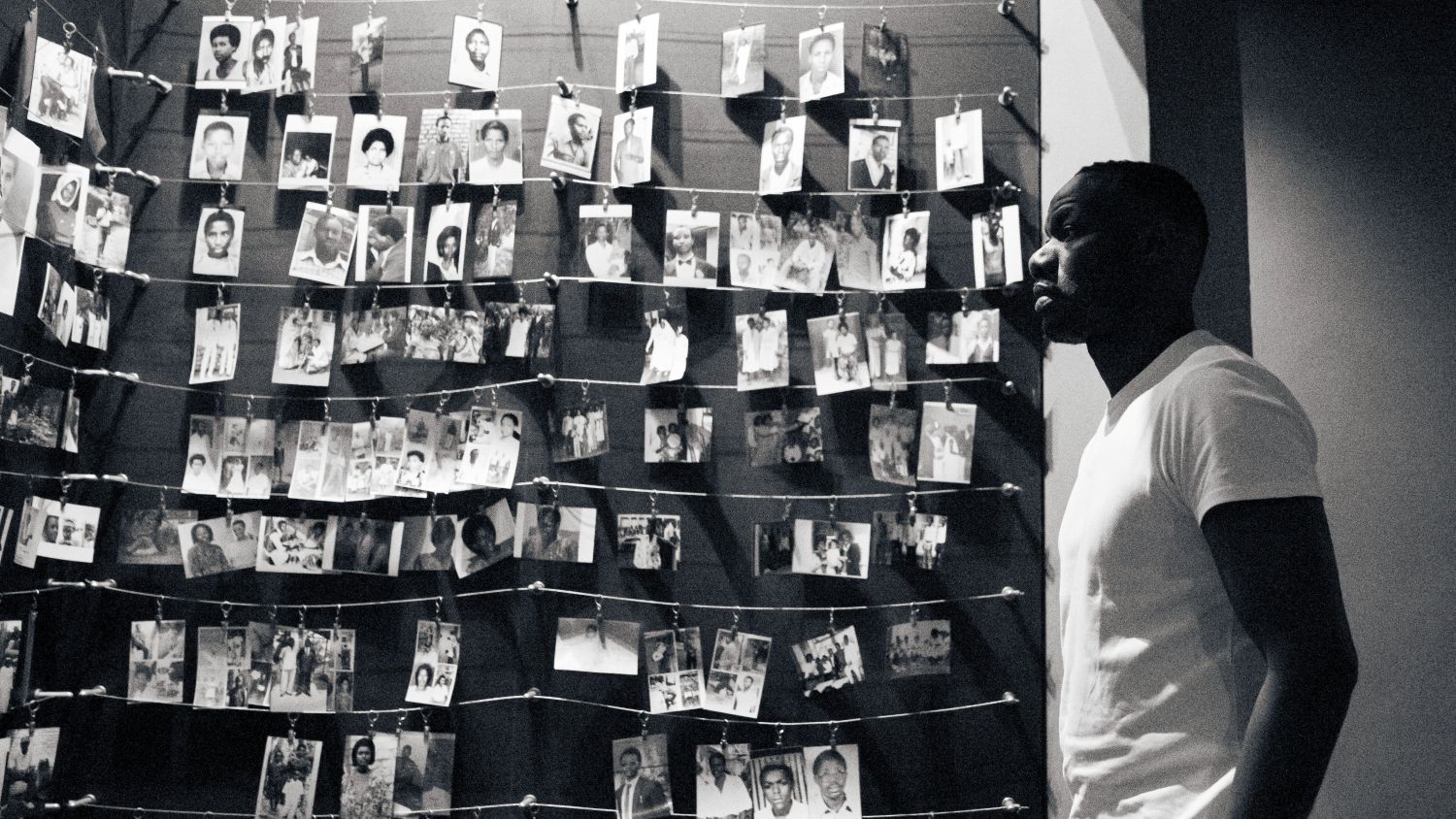
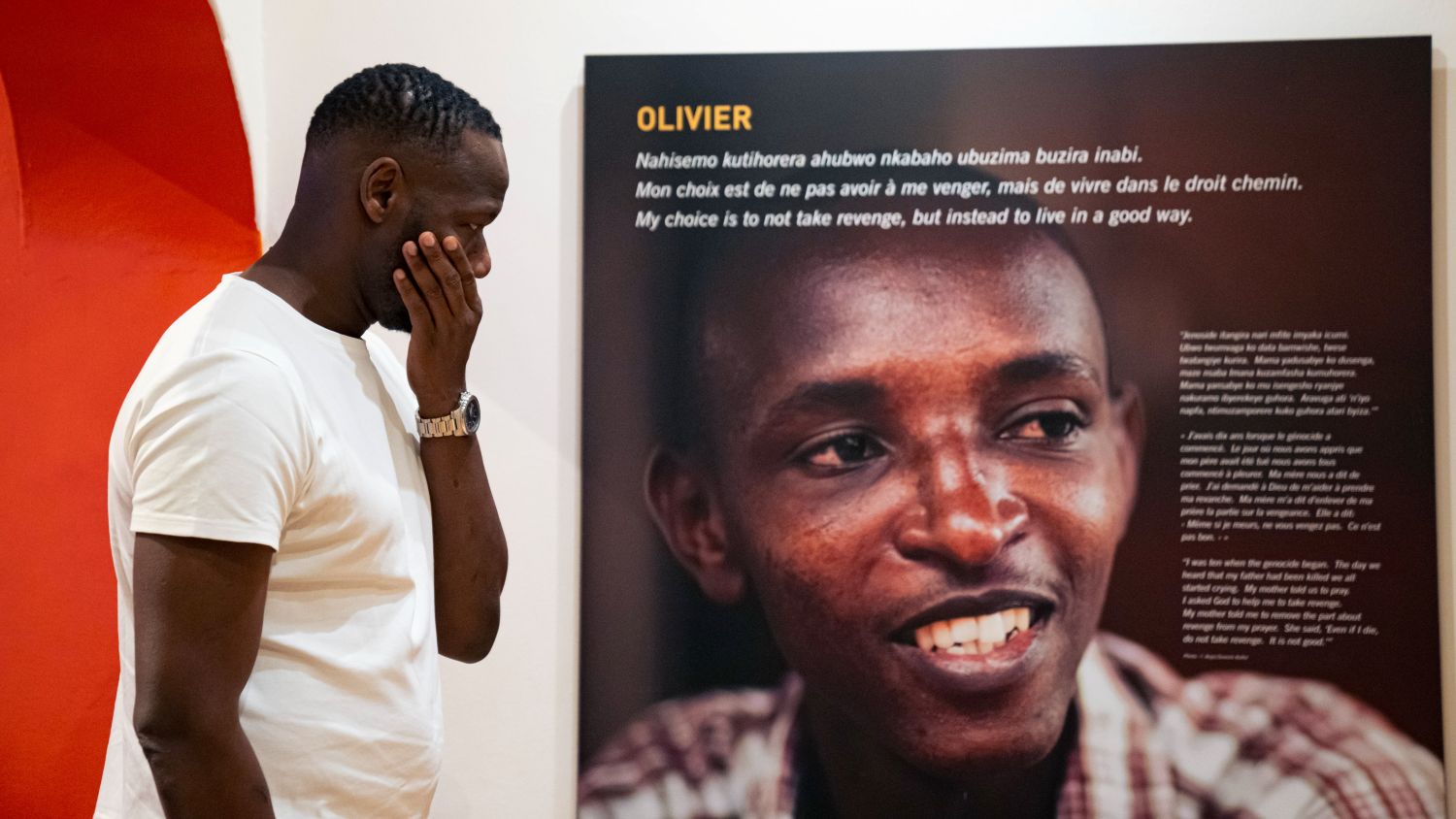
    In a statement on Monday, the Kigali Genocide Memorial said Thiaw honoured the victims and learned more about the history of the Genocide against the Tutsi during a tour of its exhibits.

    Located in Gisozi, Kigali, the memorial is the final resting place of more than 250,000 victims of the Genocide against the Tutsi. It also serves as a centre for remembrance and education, documenting the events of 1994, when more than one million people were killed in just 100 days.

    Thiaw was in Rwanda for the SportsBiz Africa Forum, held at the Kigali Convention Centre on September 10 and 11, 2026, where he joined sports leaders, investors and other stakeholders in discussions on the future of African sport.

    His visit to Kigali came as part of a career that has made him one of the prominent figures in Senegalese football. As a player, Thiaw was part of Senegal's celebrated 2002 generation that reached the quarter-finals of the FIFA World Cup in South Korea and Japan and finished runners-up at the Africa Cup of Nations the same year.

    Thiaw also guided Senegal to a 1–0 victory over Morocco in the 2025 Africa Cup of Nations final in January 2026, although CAF later overturned the result and awarded Morocco a 3–0 victory. Senegal has appealed the decision at the Court of Arbitration for Sport, with a hearing scheduled for October 8, 2026.

    Thiaw also became the first Senegalese footballer to feature in Spain's La Liga. His playing career included spells in France, Switzerland, Russia and Spain, while he earned 16 international caps for Senegal.

    After retiring from playing, he turned to coaching and earned both UEFA A and CAF A coaching licences.

    While in Rwanda, Thiaw met State Minister for Youth and Arts Development Sandrine Umutoni, with their discussions focusing on the role of sports, arts and culture in empowering African youth and expanding economic opportunities.

    They also discussed talent development, entrepreneurship and preparing athletes and young professionals for life beyond their active sporting careers, as well as opportunities for young people to use digital platforms and artificial intelligence to market and showcase their talent internationally.

    Thiaw also met members of the Executive Committee of the Rwanda Football Federation (FERWAFA), led by First Vice-President Me Claudine Gasarabwe, who is serving as acting president. Their discussions focused on Rwanda's efforts to develop and strengthen domestic football structures.

    During his stay, he visited Rwanda's national U-20 team and its technical staff during their training camp, where he shared lessons from his coaching journey and offered mentorship on leadership, resilience and player development.

    At the SportsBiz Africa Forum, Thiaw was among speakers addressing sports leaders, investors and other stakeholders. His discussions focused on leadership and resilience in African sport, the pressures facing coaches, accountability and the need to build sustainable pathways for football development across the continent.

    Located in Gisozi, Kigali, the memorial is the final resting place of more than 250,000 victims of the Genocide against the Tutsi.
    The Kigali Genocide Memorial said Thiaw honoured the victims and learned more about the history of the Genocide against the Tutsi during a tour of its exhibits.

    Source : https://new.igihe.com/english/pape-thiaw-pays-tribute-to-victims-of-the-genocide-against-the-tutsi-in-kigali/

  • Kabila-led coalition accuses Tshisekedi of unilaterally steering proposed dialogue #rwanda #RwOT

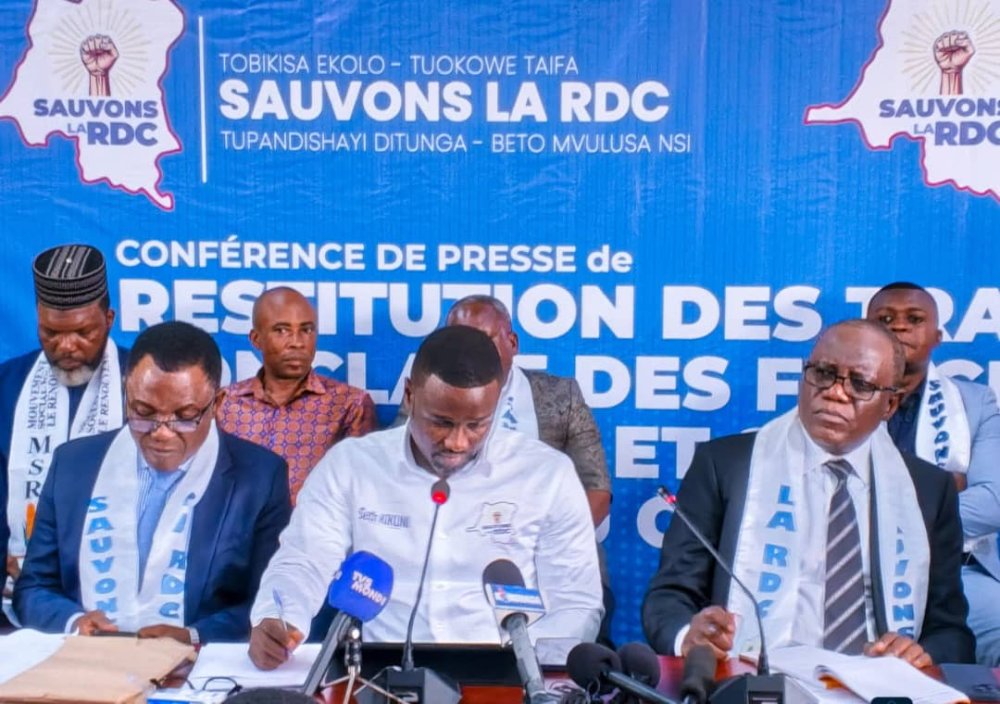
    In a statement issued on September 13, the Sauvons la RDC coalition said a presidential decree establishing the framework for a committee tasked with preparing the dialogue showed that the government wanted to control the process.

    'Based on this decree, Mr Félix Tshisekedi, who has a tendency to grant himself excessive powers, has made himself the Alpha and Omega of the so-called national dialogue,' the coalition said.

    It added that Tshisekedi's influence extended from the selection of members of the organising committee to the conclusions of the dialogue.

    'From the beginning to the end of this dialogue, from the selection of members of the organising committee to the conclusions that will emerge from it, everything, without exception, depends on his will and is based on his power to make decisions as he pleases,' it said.

    The coalition also questioned whether the dialogue would be inclusive, arguing that the president's announcement offered little assurance that different political groups and representatives of Congolese interests would be adequately involved.

    Sauvons la RDC further argued that the dialogue was not primarily aimed at resolving the country's problems but at consolidating the current administration's hold on power and serving Tshisekedi's interests.

    The coalition invoked Article 64 of the DRC Constitution, which provides for citizens to oppose any individual or group that takes power in violation of constitutional principles.

    The coalition has previously made Article 64 central to its political position, particularly in its opposition to any attempt to extend Tshisekedi's stay in power beyond the constitutional framework.

    Tshisekedi announced the national dialogue on August 27, presenting it as an effort to address the country's challenges and strengthen national cohesion. The September 13 presidential decree established the committee responsible for preparing the process.

    The committee is expected to prepare the administrative, material and logistical arrangements for the dialogue and submit a preliminary report to Tshisekedi. A subsequent decree is expected to formally convene the dialogue and set out its principles, stages, representation and mechanisms for monitoring its conclusions.

    Sauvons la RDC has called for independent mediation, the participation of different stakeholders and a credible mechanism to monitor the implementation of any resolutions reached through the dialogue.

    The government has ruled out participation by those fighting against the constitutional order as political components of the dialogue. Discussions involving the AFC/M23 are being handled separately through the Doha process.

    Sauvons la RDC sees little hope in Tshisekedi's proposed national dialogue, accusing the Congolese president of seeking full control.

    Source : https://new.igihe.com/english/kabila-led-coalition-accuses-tshisekedi-of-unilaterally-steering-proposed-dialogue/

  • Indonesia searches for 129 missing after passenger ship capsizes #rwanda #RwOT

    The Virgo Transport 8 was carrying 243 people when it lost contact early Sunday while travelling from Surabaya in East Java to Banjarmasin in South Kalimantan.

    Authorities have rescued 108 people from the vessel, according to Indonesia's National Search and Rescue Agency.

    Rescue teams, including the coast guard and navy, have been working in difficult conditions as strong winds and high waves make it harder to reach the vessel and search for those still missing.

    The rescue agency said it had deployed at least 622 personnel, 17 ships, five helicopters and aircraft as part of the operation.

    However, turbulent seas have prevented specialist underwater rescue teams from beginning a full search around the partially submerged ship.

    Mohammad Syafii, head of Indonesia's national rescue agency, said the conditions remained challenging and that authorities were identifying additional personnel with specialist skills while waiting for the weather to improve.

    The ship was reportedly struck by waves reaching about three metres during the incident.

    Another rescue official said the vessel leaned heavily to one side after strong waves hit its starboard side.

    The capsized ship is located about 80 nautical miles, or nearly 150 kilometres, from the rescue command centre at Trisakti Port in Banjarmasin.

    Rough weather has also made it difficult for rescue vessels to dock near the stricken ship.

    As of Monday afternoon, none of the 129 missing people had been found, according to officials quoted by Reuters.

    The search was continuing despite the difficult conditions.

    Transport Minister Dudy Purwagandhi said the vessel had a capacity of about 500 passengers, indicating that it was not overloaded.

    The exact cause of the accident remains under investigation.

    The incident has raised renewed concerns about maritime safety in Indonesia, an archipelago of more than 17,000 islands where ferries and passenger ships are an important and affordable means of transportation.

    The Java Sea has previously been the scene of major maritime disasters. In 1981, the Tampomas II sank in the region, killing nearly 600 people according to some estimates.

    For families waiting for news of their relatives, the search remains an anxious race against time as rescuers continue efforts to reach those who may still be alive.

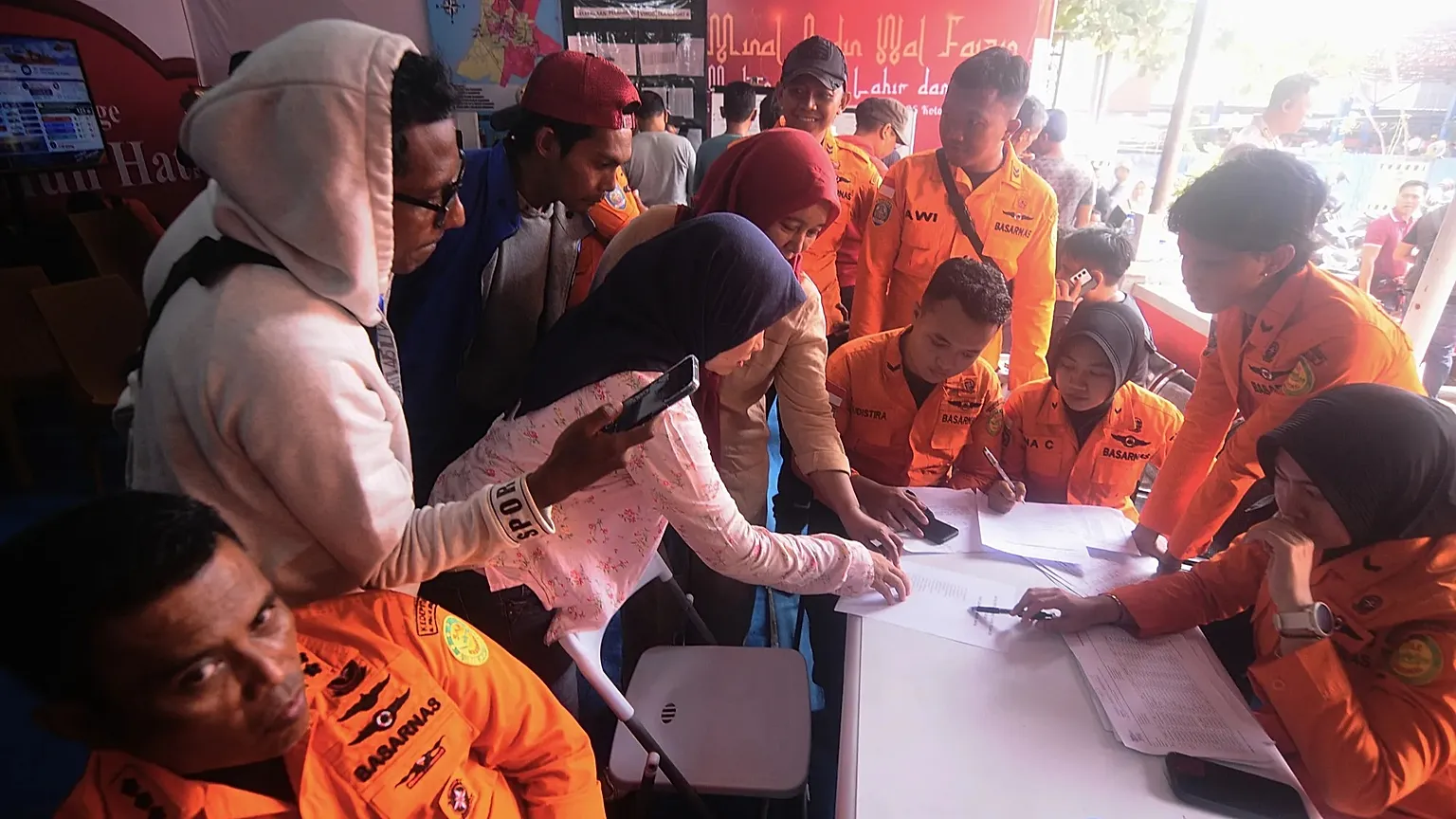
    Indonesian rescuers search for survivors after the Virgo Transport 8 passenger ship capsized in the Java Sea

    Source : https://new.igihe.com/english/indonesia-searches-for-129-missing-after-passenger-ship-capsizes/