Blog

  • The Return of Jesus Christ: How the world braced for a doomsday that never came in the year 2000 #rwanda #RwOT

    As the new millennium approached, anxiety gripped the world, driven by religious prophecies, technological fears, and a collective sense of uncertainty.

    Certain religious groups and individuals, armed with biblical convictions or other religious teachings, were particularly inclined to make extreme preparations for the end of the world.

    In countries including Rwanda and elsewhere people with fervent beliefs sold valuables, including land and homes, at bargain prices, convinced they would no longer need them after the supposed end.

    Many donated their proceeds to religious organizations, paid off debts, or disposed of material possessions they believed would become meaningless in the face of an imminent apocalypse.

    As New Year’s Eve of 1999 approached, a palpable sense of dread enveloped the globe. People stayed awake, waiting in confusion and fear for the unknown.

    The clock ticking toward midnight on December 31, 1999, symbolized more than just the arrival of a new year—it was seen as the harbinger of apocalyptic doom.

    Predictions of the end of time had circulated for years, fueled by religious interpretations, technological concerns, and societal anxiety. But when the clock struck midnight, the world did not end.

    The feared doomsday proved to be nothing more than a phantom, leaving the world to grapple with the psychological, social, and economic aftermath of its own self-imposed panic.

    When the year 2000 arrived without significant disruptions, those who had made drastic decisions based on doomsday fears, were left to face the consequences.

    The Y2K bug turned out to be a minor glitch rather than the catastrophic event many had feared.

    Financial hardships followed for many who had sold properties at subsidized prices or made irreversible financial choices. The episode remains a cautionary tale about the dangers of panic-driven decisions rooted in unfounded fears.

    The roots of the millennium panic can be traced to a convergence of religious, technological, and cultural factors. For many, the year 2000 represented a significant milestone in biblical prophecy.

    Edgar C. Whisenant, author of The End: Why Jesus Could Return by A.D. 2000, was among the most vocal proponents of the idea that the second coming of Christ was imminent.

    His book resonated with millions who believed the world was nearing its final days, meticulously interpreting scripture to pinpoint the year 2000 as the likely time for Jesus’ return.

    The religious anticipation extended beyond mainstream Christianity. Figures like Ben Ammi Ben-Israel, founder of the Black Hebrew Israelite religion, also predicted the end would occur in 2000, believing it would mark the beginning of divine justice and redemption for the chosen people.

    The sense of urgency and anticipation was palpable, with communities preparing for what they believed would be a momentous, albeit catastrophic, event.

    Even the academic and technological worlds were not immune to the apocalyptic fervor. The approach of the year 2000 brought with it the Y2K bug, a technological panic based on the fear that computer systems worldwide would malfunction when their clocks rolled over from ’99’ to ’00,’ interpreting the year 2000 as 1900.

    Books like The Millennium Bug: How to Survive the Coming Chaos by Michael S. Hyatt capitalized on these fears, presenting doomsday scenarios where technology would fail, bringing modern civilization to its knees.

    As the year 2000 drew closer, panic spread across the globe. Governments, corporations, and individuals scrambled to prepare for what they believed could be the end.

    In the United States, President Bill Clinton established the President’s Council on Year 2000 Conversion, a task force dedicated to ensuring critical systems were Y2K compliant.

    As the final seconds of 1999 ticked away, the world stood at the edge of the unknown, bracing for a digital apocalypse that never came.

    Companies spent billions on upgrades and contingency plans, while the public stockpiled essentials, bracing for a world where basic services might suddenly vanish.

    Religious communities were particularly active in their preparations. Churches held vigils, prayer meetings, and other gatherings, where believers sought divine protection from the impending apocalypse. Some made pilgrimages to holy sites, hoping to be in the right place when the end came.

    The media played a very significant role in fueling the panic, with news outlets running stories on various doomsday scenarios, from nuclear war to natural disasters, that could be triggered by the turn of the millennium.

    Yet, as midnight struck on December 31, 1999, nothing happened. The Y2K bug turned out to be a minor glitch rather than the catastrophic event many had feared.

    Planes did not fall from the sky as had been earlier anticipated, power grids did not fail, and financial markets did not collapse. The apocalyptic prophecies, too, proved unfounded. Jesus did not return, the chosen people were not delivered, and the new millennium began much like any other year, with fireworks, celebrations, and the usual mix of hope and uncertainty.

    In the aftermath of the non-event, there was a collective sense of bewilderment. For those who had genuinely believed in the prophecies, the absence of catastrophe was disorienting. Some felt betrayed, questioning why the signs they had so carefully interpreted had not come to pass.

    As explored in Leon Festinger’s When Prophecy Fails, people often respond to the failure of their expectations by doubling down on their beliefs rather than abandoning them.

    This was evident after the year 2000, with some believers reinterpreting the events, suggesting that the world had been given a temporary reprieve or that the true end was still to come.

    The economic impact of the millennium panic was significant. The billions spent on Y2K preparations, while arguably necessary to avoid potential disruptions, represented a massive expenditure driven largely by fear.

    Companies that had invested heavily in Y2K compliance found themselves with surplus supplies and systems that, in many cases, were never needed. The public, too, was left with stockpiled goods, a reminder of the hysteria that had gripped the world.

    Culturally, the year 2000 marked a turning point in how society viewed apocalyptic predictions. The panic preceding the new millennium was a testament to the power of prophecy, fear, and the human tendency to expect the worst.

    It also highlighted the complexities of navigating a world where technological and religious anxieties can converge to create a perfect storm of fear.

    As we moved into the 21st century, the lessons of the millennium panic remained, reminding us that while the future is uncertain, it is not something to be feared, but rather something to be appreciated and approached with caution, preparation, and a healthy dose of skepticism.

    Unfortunately, some callous acts in the region that came in the aftermath of this hysteria left sad marks and scars that may never be healed in the world’s history.

    About 130km from the Northern border of Rwanda and Uganda in Kanungu district, a self-styled high priestess Credonia Mwerinde had told her followers that the world was going to end on December 31, 1999 but when this did not happen, the cult leader and her accomplices decided to end it their way.

    On March 16, 2000, over 600 cult members and their families were herded into a church hall named the Ark, in reference to the biblical Noah’s ark, all doors and windows were boarded up and nailed shut, and it was set ablaze.

    Many of Credonia’s followers and even some of the renegade Catholic clerics believed she had spiritual powers following her claims to have seen apparitions of the Virgin Mary who directed her to spread the message of strict adherence to the 10 Commandments to avoid apocalyptic damnation.

    Predictions of the end of time had circulated for years, fueled by religious interpretations, technological concerns, and societal anxiety.

    Théophile Niyitegeka

    Source : https://en.igihe.com/news/article/the-return-of-jesus-christ-how-the-world-braced-for-a-doomsday-that-never-came

  • UEFA make huge Champions League draw announcement that will see radical changes to the format #rwanda #RwOT

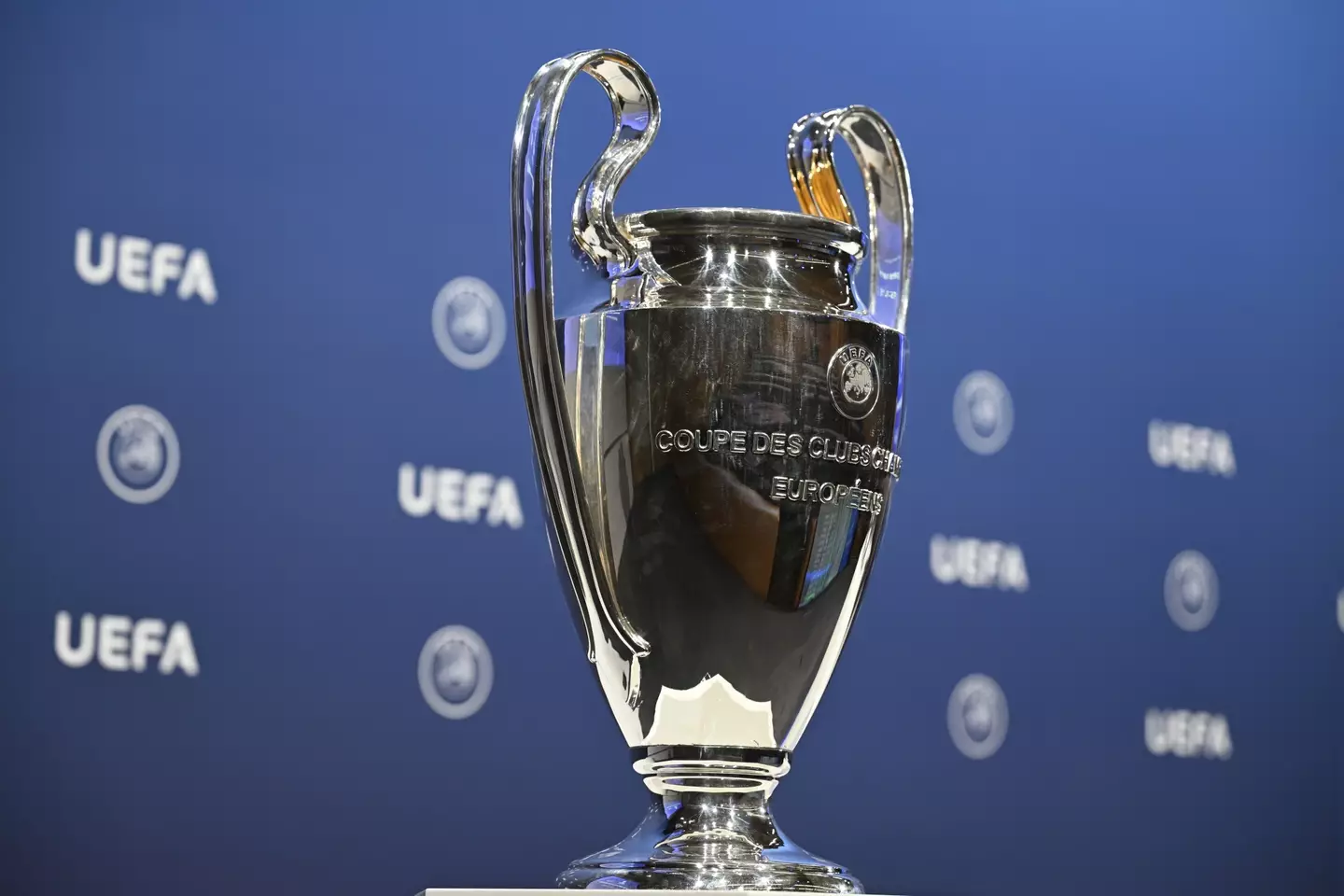
    UEFA have made a huge announcement regarding the Champions League draw.

    As the 24/25 campaign edges ever closer, the Champions League will see its format refreshed.

    A single league of 36 teams will replace the old format of having eight groups of four, with each side playing eight matches during the new group stage. Four at home and four away.

    Following the group stage, all teams will then be formatted into a table with the top eight sides automatically qualifying for the round of 16 while clubs finishing between ninth and 24th will have to enter a play-off phrase for the eight remaining places.

    Once that process is done, the Champions League will proceed as normal with a two-legged round of 16, quarter-final and semi-final before the eventual final.

    Ahead of the new campaign, UEFA have revealed that the old draw format will no longer be in use.

    Instead of drawing each team's opponents by hand, a software is set to be used.

    On their website, UEFA explained: 'The new format requires a new draw concept. In fact, if the old draw concept for the group stage were to be applied to the new league phase format, nearly 1000 balls would be required, with at least 36 bowls on stage, resulting in an unbearably lengthy draw.

    'All 36 teams will be manually drawn using physical balls. For every team manually drawn, a designated automated software will randomly draw eight opponents across the four pots, who will be revealed on screen in the draw hall and on television. The software will also decide which matches will be at home and which ones away.'

    Image

    Getty

    It continued: 'The draw will start with Pot 1, assigning eight opponents to all nine teams, one after the other, and will continue with the other pots in descending order till all teams have been assigned their eight opponents.

    'The software will guarantee total randomness within the framework of the draw conditions stipulated by the regulations (e.g. country protection and no more than two opponents from the same country), while guaranteeing that the draw can be completed for all teams without resulting at any point in a deadlock situation.'

    The post UEFA make huge Champions League draw announcement that will see radical changes to the format appeared first on The Custom Reports.

    Source : https://thecustomreports.com/uefa-make-huge-champions-league-draw-announcement-that-will-see-radical-changes-to-the-format/

  • Kagame vows to accelerate Rwanda’s rebuilding in new term of office #rwanda #RwOT

    Addressing thousands of citizens and other dignitaries who gathered at Amahoro Stadium to witness the momentous occasion, the Head of State began by thanking Rwandans for granting him another term to continue his development agenda.

    'The electoral campaign was a period of joy and satisfaction for all of us. Millions attended rallies, and almost everyone went to vote,' President Kagame commended Rwandans.

    He noted that much has been achieved over the past 30 years, surpassing expectations.

    'Over the past three decades, what Rwandans have managed to accomplish is even more than we expected. Indeed, it is beyond what words can describe, given where we started from,' Kagame said amid chants of jubilations with more than 20 Heads of State in attendance.

    Recounting Rwanda’s rise from the ashes of the 1994 Genocide against the Tutsi, President Kagame revealed that the new term presented another opportunity to achieve even more.

    'Our tragic past ignited a fire in each one of us: a fire of hope, resilience, and justice. This is who we have become as Rwandans,' he noted.

    'Our focus now returns to the future. For the last thirty years, our country has been good work-in-progress. This new mandate means the beginning of even more hard work.'

    He affirmed that with exemplary leadership and collaborations, no goal is beyond reach and all aspirations are achievable.

    'Why not do even better than we have done? That expectation to keep improving is not a dream, it is realistic. We can do it, and we will do it,' President Kagame added.

    Kagame, who led the Rwandan Patriotic Army to liberate Rwanda from the Genocidal regime of Juvénal Habyarimana in 1994, was re-elected with 99.18% of the votes cast in the July elections.

    He ran against two competitors: Dr. Frank Habineza of the Democratic Green Party of Rwanda, who got 0.50% of the vote, and independent candidate Philippe Mpayimana, who managed only 0.32%.

    In the coming days, the newly elected Parliament is expected to take oath and begin its term before which the President will later present his appointed cabinet for approval.

    President Kagame noted that much has been achieved over the past 30 years, surpassing expectations.

    Wycliffe Nyamasege

    Source : https://en.igihe.com/news/article/kagame-vows-to-accelerate-rwanda-s-rebuilding-in-new-term-of-office

  • Peace cannot come by itself: Kagame’s 4th term message on regional security #rwanda #RwOT

    Despite years of diplomatic efforts and international interventions, peace remains elusive, and Kagame’s speech laid bare the fundamental reasons why this is the case.

    'Peace cannot be delivered by anyone from anywhere, no matter how powerful, if the party most directly concerned does not do what is needed,' Kagame said.

    This statement emphasized that peace efforts cannot succeed if the parties directly involved in the conflict do not take the necessary steps. His words were a clear reminder that external forces, no matter how strong, cannot impose peace where there is no commitment from those at the heart of the conflict.

    'You can’t wake up one day and decide to deny whoever you want their citizenship rights and expect to get away with it,' The Head of State warned.

    Over the years, numerous initiatives have been launched to address the security challenges in eastern DRC. Diplomatic interventions, peace agreements, and mediation by regional leaders have all played crucial roles.

    Kagame specifically acknowledged the contributions of Kenya and Angola’s leadership in these efforts.

    'I would like to thank the President of Angola, President João Lourenço, and the President of Kenya, President William Ruto, among others, for everything they have done and continue to do,' he said, expressing gratitude for their dedication to regional stability.

    However, despite these efforts, Kagame pointed out that peace cannot be achieved without a genuine commitment from those directly involved in the conflict.

    'Peace cannot happen all on its own. We all have to do our part, and the right things, in order to achieve and sustain peace,' he emphasized.

    The failure to address fundamental injustices, such as the denial of citizenship rights to certain groups, has been a significant barrier to peace. 'There has to be a meeting in the middle. There has to be a compromise,' Kagame stressed, highlighting the importance of dialogue and mutual understanding.

    Kagame also spoke about the broader global context, criticizing the double standards and unaddressed inequalities that have exacerbated regional conflicts. He called for a more just and equitable approach to international relations, where powerful nations do not impose their will on others.

    'There is no longer room for the powerful to impose their vision about how others ought to live, or to create narratives that falsify the truth. This must always be resisted, even when under pressure,' he cautioned.

    The President also highlighted the role of the African Union in promoting regional security and development. Since its establishment, the African Union has been instrumental in fostering a more integrated and secure Africa.

    Kagame pointed to Africa’s progress in areas such as security, health, infrastructure, and youth employment as evidence that the continent is taking responsibility for its own challenges and offering homegrown solutions.

    'That is the mindset that brings us closer together and creates positive change over time for everyone,' he said, emphasizing the importance of African unity and self-reliance.
    Kagame expressed optimism about the future, both for Rwanda and the broader region, imploring the need for continued hard work and dedication to achieving lasting peace and development.

    'Why not do even better than we have done? That expectation to keep improving is not a dream, it is realistic. We can do it, and we will do it,' Kagame declared.

    Peace has remained elusive in the region despite numerous efforts and while external interventions are important, true peace can only be achieved when those directly involved take responsibility and commit to the necessary compromises and actions.

    The ongoing efforts by regional leaders and the African Union provide a strong foundation, but it is up to the local actors to make peace a reality.

    This fourth presidential term is a challenge for all leaders and citizens to rise to the occasion and work together to build a stable, secure, and prosperous future for all.

    In a powerful and candid inauguration speech on August 11, 2024, President-elect Paul Kagame addressed the ongoing struggles to achieve peace in the region, particularly in the conflict-ridden eastern Democratic Republic of Congo (DRC).

    Sam K Nkurunziza

    Source : https://en.igihe.com/politics-48/article/peace-cannot-come-by-itself-kagame-s-4th-term-message-on-regional-security

  • Pomp and glamour as Kagame takes oath of office (pictorial) #rwanda #RwOT

    Citizens from various parts of the country braved the morning cold to gather at the newly unveiled state-of-the-art stadium before dawn, highlighting their enthusiasm for the inauguration of Kagame, who is credited with spearheading various economic and social reforms that have put Rwanda on the world map.

    Citizens from various parts of the country braved the morning cold to gather at the newly unveiled state-of-the-art stadium before dawn.

    The stadium was adorned with the colours of Rwanda’s national flag, and many attendees wore matching outfits. The blue, yellow, and green of the flag represent happiness and peace, enlightenment, economic development, and hope for prosperity, respectively.

    The stadium was adorned with the colours of Rwanda’s national flag

    For the better part of the morning, attendees were treated to songs and dances as they awaited the official kickoff of the event at around 2:00 p.m., when high-ranking dignitaries began to arrive.

    More than 20 Heads of State graced the event and were treated to a warm welcome befitting their stature.

    The Presidents who attended the event included Andry Rajoelina of Madagascar, João Lourenco (Angola), William Ruto (Kenya), Samia Suluhu (Tanzania), Hassan Sheikh Mohamud (Somalia), Sahle-Work Zewde (Ethiopia), Emmerson Mnangagwa (Malawi), Faure Essozimna Gnassingbé (Togo), Faustin-Archange Touadéra (Central Africa Republic), Denis Sassou Nguesso (Republic of the Congo) and Ismail Omar Guelleh (Djibouti).

    More than 20 Heads of State graced the event.

    Others were Nana Akufo-Addo (Ghana), Wavel Ramkalawan (Seychelles), Mamady Doumbouya (Interim President of Guinea), Mokgweetsi Masisi (Botswana), Emmerson Mnangagwa (Zimbabwe), Umaro Sissoco Embaló (Guinea-Bissau), Salva Kiir (South Sudan) and Filipe Nyusi of Mozambique.

    King Mswati III of the Kingdom of Eswatini, Abdel Fattah al-Burhan, Chairman of the Transitional Sovereignty Council of Sudan, and Brice Oligui Nguema, President of the Transition of the Gabonese Republic, also attended the ceremony.

    At a quarter past 3 p.m., the motorcade of President Paul Kagame and First Lady Jeannette Kagame made its way into the stadium to thunderous cheers from the attendees.

    Thereafter, President Kagame was sworn into office for another five-year term. The oath of office was administered by Faustin Ntezilyayo, the Chief Justice and President of Rwanda’s Supreme Court.

    The Head of State was then presented with ceremonial symbols, including the sword and shield.

    President Kagame proceeded to inspect a guard of honour monted by the Rwanda Defence Forces and the Police.

    Shortly thereafter, the military executed a spectacular display, featuring helicopter manoeuvre that soared through the stadium.

    After approximately an hour of breathtaking performances, the army and police exited the stage, making way for traditional dancers who captivated the audience, keeping them on their feet throughout the exhilarating display.

    At around 5:00 p.m., President Kagame took to the podium to deliver his speech to the enthusiastic crowd.

    Following his speech, a ceremonial RDF convoy advanced with to formally escort and secure the instruments of power, ensuring their safe return to the designated place repository, in accordance with protocol.

    Wycliffe Nyamasege

    Source : https://en.igihe.com/politics-48/article/pomp-and-glamour-as-kagame-takes-oath-of-office-pictorial

  • Over 20 Heads of State attend Kagame’s inauguration #rwanda #RwOT

    The Heads of State began arriving in the country on the evening of Saturday, August 10, 2024, while others jetted in on Sunday morning to witness the momentous occasion.

    The leaders were accorded a guard of honour by the Rwandan Defence Forces (RDF) and a warm welcome by senior government officials at the Kigali International Airport.

    Andry Rajoelina, President of Madagascar arrives in Kigali for President Paul Kagame’s inauguration.

    And on Sunday afternoon, the presidents were escorted to the state-of-the-art Amahoro Stadium, where they joined thousands of ecstatic citizens gathered at the newly refurbished facility to witness the swearing-in of their Head of State.

    It was a spectacular scene at the stadium as the leaders were welcomed to the venue with traditional songs, dances, and cheers from the crowd.

    The Presidents who attended the event included Andry Rajoelina of Madagascar, João Lourenco (Angola), William Ruto (Kenya), Samia Suluhu (Tanzania), Hassan Sheikh Mohamud (Somalia), Sahle-Work Zewde (Ethiopia), Emmerson Mnangagwa (Malawi), Faure Essozimna Gnassingbé (Togo), Faustin-Archange Touadéra (Central Africa Republic), Denis Sassou Nguesso (Republic of the Congo) and Ismail Omar Guelleh (Djibouti).

    Samia Suluhu, President of Tanzania arrives in Kigali for President Paul Kagame’s inauguration.

    Others were Nana Akufo-Addo (Ghana), Wavel Ramkalawan (Seychelles), Mamady Doumbouya (Interim President of Guinea), Mokgweetsi Masisi (Botswana), Emmerson Mnangagwa (Zimbabwe), Umaro Sissoco Embaló (Guinea-Bissau), Salva Kiir (South Sudan) and Filipe Nyusi of Mozambique.

    King Mswati III of the Kingdom of Eswatini, Abdel Fattah al-Burhan, Chairman of the Transitional Sovereignty Council of Sudan, and Brice Oligui Nguema, President of the Transition of the Gabonese Republic, also attended the ceremony.

    William Ruto, President of Kenya arrives in Kigali for President Paul Kagame’s inauguration.

    Malawi, Ivory Coast, and Uganda were represented at the inauguration by Vice Presidents Dr. Michael Usi, Tiemoko Meyliet Koné, and Jessica Alupo, respectively.

    The event was also graced by former Nigerian President Olusegun Obasanjo, Ibrahim Boughali, the Assembly President of Algeria, and Patrice Trovoada, the Prime Minister of São Tomé and Príncipe.

    Ousmane Sonko, the leader of Senegal’s opposition, and Muhoozi Kainerugaba, Uganda’s Army Chief, also attended, underscoring the broad international representation at this momentous occasion.

    Kagame, the flagbearer of the RPF-Inkotanyi, secured 99.18% of the votes cast in the elections conducted in July. His challengers, Dr. Frank Habineza of the Democratic Green Party of Rwanda, came in second with 44,479 votes (0.50%), while Philippe Mpayimana finished third with 28,466 votes (0.32%).

    Wycliffe Nyamasege

    Source : https://en.igihe.com/news/article/over-20-heads-of-state-attend-kagame-s-inauguration

  • President Kagame’s Inauguration: A new era begins #rwanda #RwOT

    This historic event, following his overwhelming victory in the July 14-15 elections, marks the beginning of Kagame’s fourth term as Rwanda’s leader, a testament to his enduring leadership and the country’s remarkable progress under his guidance.

    The inauguration is more than a ceremonial event; it is a powerful statement of Rwanda’s political stability and its rising influence on the global stage.

    Over two dozen heads of state have gathered to witness this momentous occasion, reflecting the immense respect and admiration President Kagame commands both within Africa and internationally.

    “President Kagame is not just a leader for Rwanda; he is a leader for Africa,” remarked President Cyril Ramaphosa of South Africa, emphasizing Kagame’s role in shaping the continent’s future.

    Kagame’s leadership has been characterized by visionary policies that have transformed Rwanda into a model of economic development, infrastructure growth, and social empowerment.

    The political implications of this inauguration are significant for both Rwanda and the broader African continent. Kagame’s leadership has been characterized by visionary policies that have transformed Rwanda into a model of economic development, infrastructure growth, and social empowerment.

    His commitment to innovation and technological advancement has particularly benefited Rwanda’s youth, equipping them with valuable skills that are driving the country’s future.

    “Under President Kagame’s leadership, Rwanda has become a hub of innovation,” noted President Emmanuel Macron of France. “The progress we see here is a testament to what can be achieved with strong, visionary leadership.”

    The inauguration ceremony itself is a vibrant celebration of Rwanda’s cultural heritage, featuring traditional dances and performances that highlight the nation’s unity and pride.
    Testimonies from Rwandans and international leaders alike underscore the impact of Kagame’s leadership on the country’s transformation.

    “Rwanda is a beacon of hope and progress,” said President Uhuru Kenyatta of Kenya. “And President Kagame’s steadfast leadership is at the heart of this remarkable journey.”

    As Rwanda continues to advance, the country’s achievements in women’s empowerment and gender equality stand out as significant milestones.

    Women have taken their rightful place in leadership roles across various sectors, reflecting the nation’s commitment to inclusivity and justice. This progress is not just symbolic; it represents the foundation of Rwanda’s continued growth and stability.

    President Kagame’s leadership has also fostered strong international relationships, with many global leaders expressing their admiration and support.

    “President Kagame’s unwavering dedication to his country is an inspiration to us all,” said Chancellor Olaf Scholz of Germany. “His visionary approach to governance and development sets a powerful example for the world.”

    Today, Rwanda celebrates not just a leader, but the collective achievements of a nation that has risen from its past to embrace a future filled with hope, prosperity, and boundless possibilities.

    The presence of so many esteemed global leaders at this inauguration is a testament to Rwanda’s growing influence on the world stage and the respect Kagame has earned as a leader of immense capability and vision.

    As the country looks ahead to the next five years under Kagame’s leadership, the focus remains on building a future where everyone can thrive. The unity and strength that Rwanda has demonstrated are the cornerstones of its success, and this inauguration is a celebration of that spirit.

    “Congratulations, President Kagame. Your leadership continues to inspire us all,” echoed President Yoweri Museveni of Uganda, capturing the sentiment of a nation and a world that watches Rwanda with admiration and respect.

    This historic milestone is a reminder of the journey Rwanda has undertaken and the bright future that lies ahead. With President Kagame at the helm, the possibilities are indeed boundless.

    President Paul Kagame’s inauguration is more than a ceremonial event; it is a powerful statement of Rwanda’s political stability and its rising influence on the global stage.

    Sam K Nkurunziza

    Source : https://en.igihe.com/politics-48/article/president-kagame-s-inauguration-a-new-era-begins

  • Rwanda outpaces Tanzania and Kenya in broadband internet affordability rankings #rwanda #RwOT

    The firm reports that Rwanda has overtaken Tanzania and Kenya to offer the cheapest rates in the region comprising eight member states.

    Data published by the firm shows that residents of Rwanda are paying a monthly average of $43.22 for broadband internet this year, down from $60.96 last year. This translates to a 29.1% year-on-year drop in the prices.

    Conversely, Tanzania, which previously topped the affordability chart, has seen a slight increase in average costs, now at $43.44 per month. Meanwhile, Kenya’s broadband prices have dipped slightly from $49.13 to $47.73 per month.

    This shift in internet rates reflects a competitive landscape where consumer prices are directly shaped by market forces and regional rivalry.

    Rwanda has in recent years adopted advanced technologies and infrastructure improvements that reduce internet costs. Both public and private investments in fiber optic networks and innovations in mobile internet technology have contributed to lower prices. The government has also encouraged competition among service providers, which often leads to lower costs for consumers.

    The cost of broadband internet remains high in Burundi and the Democratic Republic of Congo (DRC), averaging $304.57 and $170.97, respectively.

    In Uganda, the average cost of broadband internet is $52.59, whereas in Somalia, it is slightly higher at $54.58.

    Meanwhile, residents of Sudan continue to pay the lowest monthly broadband internet rates globally, at $2.40, despite the country’s infrastructure limitations.

    'Despite poor telecommunications infrastructure and improving take-up of mobile broadband services, where available, fixed-line broadband remains cheap in Sudan, if not particularly affordable by the general population,' Cable said.

    Other countries on the top 10 list include Argentina ($5.17), Belarus ($7.03), Ukraine ($7.35), Egypt ($8.31), Romania ($8.60), Vietnam ($8.72), and Kazakhstan ($9.08).

    Data published by UK technology research firm, Cable, shows that residents of Rwanda are paying a monthly average of $43.22 for broadband internet this year, down from $60.96 last year. This translates to a 29.1% year-on-year drop in the prices.

    Wycliffe Nyamasege

    Source : https://en.igihe.com/business/article/rwanda-outpaces-tanzania-and-kenya-in-broadband-internet-affordability-rankings

  • UAE Humanitarian efforts in Gaza #rwanda #RwOT

    The UAE Foreign Ministry has issued information on the volume of aid provided to the Gaza Strip.

    IGIHE

    Source : https://en.igihe.com/news/article/uae-humanitarian-efforts-in-gaza

  • Dignitaries arrive in Rwanda ahead of President Kagame’s inauguration #rwanda #RwOT

    The first to arrive was President Salva Kiir Mayardit of South Sudan, who touched down at Kigali International Airport in Kanombe. His arrival was marked by a warm welcome from the Minister of State for Regional Cooperation, Gen (Rtd) James Kabarebe.

    President Kiir’s visit is yet another testament to the enduring relationship between Rwanda and South Sudan. As the current chair of the East African Community (EAC), President Kiir’s frequent engagements with Rwanda, including his visit in February 2024, highlight the deepening ties within the region.

    Following closely, President Umaro Sissoco Embaló of Guinea-Bissau arrived in Kigali, greeted by the Minister of Finance and Economic Planning, Yusuf Murangwa. A light rain shower, a brief respite after days of dry weather, accompanied his arrival.

    The bond between Rwanda and Guinea-Bissau is steeped in history, with numerous agreements in place, including those related to trade, education, tourism, and air transport, further solidifying their long-standing relationship.

    Gen Muhoozi Kainerugaba, Chief of Defence Forces of Uganda, also arrived in Kigali to represent Uganda at the inauguration. His reception by his Rwandan counterpart, Gen Mubarakh Muganga, reflects the close military ties that bind the two nations.

    Adding to the growing list of dignitaries, President Emmerson Mnangagwa of Zimbabwe arrived in Kigali, where he was welcomed by Francis Gatare, CEO of the Rwanda Development Board (RDB). The relationship between Rwanda and Zimbabwe has flourished under the leadership of both Kagame and Mnangagwa, evidenced by high-level visits and the signing of over 26 cooperation agreements across various sectors, including education, energy, justice, economy, social welfare, and culture.

    Senegal’s Prime Minister Ousmane Sonko, representing President Bassirou Diomaye Faye, was also among the distinguished guests. Upon his arrival, he was received by the Minister of State in the Ministry of Education, Irere Claudette. The strong bilateral relations between Rwanda and Senegal, highlighted by the opening of the Rwandan Embassy in Senegal in 2011 and a series of agreements, including cultural cooperation dating back to 1975, are further strengthened by his presence.

    Ivory Coast is represented by its Vice President, Tiemoko Meyliet Koné, who arrived on Saturday evening. He was also welcomed by the Minister of State in the Ministry of Education, Irere Claudette. His attendance at the inauguration scheduled on Sunday 11th August 2024, signifies the continued collaboration between Rwanda and Ivory Coast, as both nations look forward to furthering their mutual interests under President Kagame’s leadership.

    These leaders are among the many dignitaries expected to attend President Kagame’s inauguration, symbolizing the global recognition and support for Rwanda’s continued progress under his leadership.

    IGIHE

    Source : https://en.igihe.com/news/article/dignitaries-arrive-in-rwanda-ahead-of-president-kagame-s-inauguration