Blog

  • Lessons from Rwanda’s peaceful election campaigns #rwanda #RwOT

    I had the opportunity to follow the campaigns of the candidates during the 22-day campaign period gazetted by the National Electoral Commission (NEC), and the rallies were starkly different from my experiences back home in Kenya, the region, and beyond.

    Since the campaigns started, I did not see a single billboard or poster painted on walls and buildings in my neighbourhood or the city appealing for votes. But this did not make the campaigns any less colourful, vibrant, or exhilarating.

    The candidates and individual parties invested heavily in branding to stand out among the crowded field through merchandise like T-shirts, hoodies, caps, and handheld flyers and portraits.

    RPF Inkotanyi presidential candidate Paul Kagame campaigns in Kicukiro District.

    Rallies were not theatres for bitter exchanges between rival camps as the politicians campaigned with decorum.

    Unlike what we are used to in other countries, where politicians make emotional appeals for votes, campaigns for the RPF Inkotanyi presidential flag bearer Paul Kagame, who is seeking re-election in the July 15 polls, were different.

    The colourful rallies were more like celebrations, dominated by songs and dances with the president focusing more on telling the people about the country’s history and how to jealously guard the gains made over the last 30 years, when the country was derailed by the Genocide against the Tutsi.

    Kagame’s challengers, Democratic Green Party candidate Frank Habineza and independent candidate Philippe Mpayimana, were equally tolerant and focused their campaigns on selling their manifesto to the electorate rather than demonizing their opponents.

    Democratic Green Party of Rwanda chairman and presidential candidate, Frank Habineza, arrives at the Kigabiro campaign site in Rwamagana District on July 13, 2024.

    Political hostility, characterized by intense antagonism, animosity, or aggression between rival individuals, groups, or parties during campaigns in neighbouring countries and even in the ongoing US election campaigns, has not been experienced in Rwanda.

    Candidates had the opportunity to peacefully promote their political ideologies in different parts of the country without being booed or forced to cut short their speeches on what is perceived as strongholds of their political rivals.

    PSD Party Secretary General Jean Chrysostome Ngabitsinze at a past rally. PSD is among eight parties in a coalition with President Paul Kagame’s RPF.

    Cases of barbaric acts such as chaos, sponsored or not, which are common elsewhere, were not reported during the campaign period. This deserves applause from all of us who value democracy in the region.

    The violence, witnessed during the electioneering period have in the past claimed many lives in Uganda, Kenya, Tanzania, the Democratic Republic of Congo, Burundi, and several other countries in our continent.

    Fifty-four people were killed in violent protests in Uganda in November 2020, just two months before the elections. Some of the victims were among a group of protesters condemning the arrest of opposition politician Robert Kyagulanyi, alias Bobi Wine, as he prepared to hold a campaign rally in Luuka, Eastern Uganda. During the confrontation, police opened fire on the protesters, and dozens of other innocent bystanders were killed by stray bullets.

    In Kenya, hundreds of deaths have also been reported in past elections, with some linked to violent confrontations between rival camps.

    Except for 2002, all general elections in Kenya since the country returned to multi-party politics three decades ago have been marred by violence. At least 1,500 people lost their lives during the 2007-2008 Post-election Violence.

    However, the 2022 general election was much more peaceful, except for pockets of violence reported after the announcement of the presidential election results.

    In Burundi, widespread violence were also reported ahead of the 2020 general election with the main National Congress for Liberty accusing the government of arbitrary arrests of more than 600 of its members.

    While the causes of the violence remain debatable, there is a growing consensus that no one deserves to lose their lives during elections in the continent as human life is sacrosanct.

    In Rwanda, the peace and tranquillity experienced during the campaign period are attributed to a unique governance architecture based on the country’s painful history.

    This unique context, which takes into consideration the ethnic animosity that led to the killing of more than a million people by the extremist Hutu-led government, has demystified the heated and aggressive campaigns experienced in many other democracies.

    Unlike what we are used to in other countries, where politicians make emotional appeals for votes, campaigns for the RPF Inkotanyi presidential flag bearer Paul Kagame, who is seeking re-election in the July 15 polls, were different.

    Liberal Party supporters during a rally in Bugesera District. The party is among eight others that have endorsed RPF Inkotanyi flag bearer Paul Kagame for president.

    Wycliffe Nyamasege

    Source : https://en.igihe.com/opinion/article/lessons-from-rwanda-s-peaceful-election-campaigns

  • The Final Countdown: Closing the chapter on election campaigns #rwanda #RwOT

    The campaigns have showcased several unique and notable characteristics that reflect the country’s political culture, democratic maturity, and commitment to development.

    Overall, this season has provided a platform of diverse voices and visions for Rwanda’s future, emphasizing the importance of inclusive and participatory governance.

    Now that the campaign season has come to an end, the focus has shifted to ensuring a peaceful and transparent election, setting the stage for Rwanda’s next chapter in governance and development.

    As Rwandans look forward to a decisive election that will shape the trajectory of the nation, some key aspects and events have stood out.

    There has been diverse political participation by various political parties, including the Rwandan Patriotic Front (RPF-Inkotanyi), Democratic Green Party of Rwanda (DGPR), Social Democratic Party (PSD), and Liberal Party (PL) where each of them presented distinct platforms and visions for Rwanda’s future.

    Generally, the campaigns heavily emphasized ongoing and planned infrastructure projects, such as road construction, energy provision, and technological advancements. Candidates highlighted their commitment to continuing Rwanda’s rapid development trajectory.

    On the last day, Paul Kagame, the RPF-Inkotanyi flag bearer implored the electorate to strive with a singular mission to mainly continue the country’s development agenda without getting bothered by what other people say.

    'I encourage and assure you that you shall be what you want to be, not how others want you to be. Ignore their ill-fated words because they don’t kill. Poverty kills, insecurity kills, ignorance kills but words don’t kill,' he said.

    'As the government, we have made the right priorities by concentrating on what matters most to the people. Your large numbers here today are testimony to this. I have seen throughout the campaigns that you are a people living for a purpose,' he added.

    RPF, known for its significant role in ending the Genocide against the Tutsi in 1994, held its last campaign rally at Gahanga in Kicukiro district.

    The Democratic Green Party of Rwanda is the main opposition party.

    Throughout the campaign, its flag bearer and presidential hopeful Dr Frank Habineza, focused on promoting environmental sustainability, social justice, and several other political reforms

    The Social Democratic Party (PSD) and Liberal Party (PL) joined six other parties to form a coalition and support the RPF candidate for the position of President.

    However, in a bid to vie for parliamentary positions, both parties campaigned on platforms of economic growth, social equity, and enhanced democratic practices.

    On July 13, 2024, when the official campaigns ended, Dr Vincent Biruta, the leader of PSD said that the decision to support RPF was taken after consultative discussions with the electorate.

    'Our position to support RPF was informed by Rwandans who have shown us that they love their president, we also have to accept and support their choice. We are confident that we shall win together,' he said.

    On the last day, Paul Kagame, the RPF-Inkotanyi flag bearer implored the electorate to strive with a singular mission to mainly continue the country’s development agenda without getting bothered by what other people say.

    Sam K Nkurunziza

    Source : https://en.igihe.com/politics-48/article/the-final-countdown-closing-the-chapter-on-election-campaigns

  • We chose to live as we want – Kagame on critics of Rwanda’s democracy #rwanda #RwOT

    During a campaign rally that concluded at the Gahanga site in Kicukiro District on July 13, 2024, Kagame told Rwandans that the achievements of the past 30 years were the result of collective efforts.

    The rally was attended by thousands, mostly members of RPF Inkotanyi. Kagame highlighted that the high turnout at various campaign sites was a sign of Rwanda’s resilience and recovery.

    He said, “I am very grateful for how many of you came, but it’s not just the numbers; it’s a sign of numerous and significant achievements. Therefore, the 30-year journey we’ve traveled, and where we stand now, is truly a testament to Rwanda’s recovery, becoming a Rwanda for all Rwandans, united as one. To put it in a Rwandan proverb, what was once a trickle has become an ocean. The rest is a political achievement.”

    The RPF Inkotanyi candidate addressed foreigners from some countries who do not understand the high participation of Rwandans in such events. He said that if they truly knew Rwanda, they would not criticize its democracy.

    “That is why many do not understand, especially those outside, who are not Rwandans, when they speak of Rwanda. If you don’t know Rwanda, I can’t blame you. But if you want to talk about Rwanda, you should know it. In the past, Rwandans were united, not without differences, but when it came to being Rwandan, they were one. For many years, we were not united, but now we are one again.”

    Kagame explained that the turnout in the campaign activities symbolized the unity of Rwandans, a collective goal to build their country without leaving anyone behind. This is further reinforced by the eight political parties that joined RFP in supporting a single presidential candidate.

    To foreigners who don’t understand, Kagame explained that many come from countries with only two political parties that alternate in power but expect Africa to have countless parties.

    “Where all this comes from, they deceive us. Because there are countries with two parties that alternate in power, one staying in power for a long time until the other replaces it. But when it comes to Africa, to Rwanda, they tell us that there should be many parties without limit, while they have only two that alternate, sometimes combining into one with a common goal of harming other countries, often acting maliciously, not benevolently.”

    He explained that the RPF Inkotanyi’s broad support from Rwandans reflects their choice to live according to their own will, following a history of hardship before the past 30 years, and that no one else should determine their way of life.

    “The reason for this achievement is finding our solutions as Rwandans, reaching this point, making people feel that we have become what they did not want. But in this world, although it’s common, Rwanda chose to be as we want, not as someone else would dictate. This is not just my understanding, it’s not just RPF that understands this. It’s all of you, all of us, even those not in RPF.”

    “When they see you go to 17-18 places, each with no fewer than 200,000 people, reaching up to 500,000 or more like today, this cannot be fabricated unity, fabricated joy, fabricated numbers, unless you’re insane. But even if such fabrication exists, I always tell them, they tried and failed to get people!”

    The RPF Inkotanyi candidate highlighted that Rwanda’s development over the past 30 years is evident and cannot be fabricated, nor would it serve any purpose to do so. “What others say about us, don’t let it distract you. It doesn’t kill, poverty kills, insecurity kills, bad politics kills. But bad-mouthing doesn’t kill. Instead, those involved in bad-mouthing us are the ones killed by sadness. What can I say! Moreover, those people are very few, they are ignorant. What they don’t know, what they should know, is that for the past 30 years until today, the more they do these things to us, the stronger we become!”

    Rwandans living abroad will vote on July 14, 2024. Those in Rwanda will vote on July 15, starting at 7 AM until 3 PM, as disclosed by the National Electoral Commission.

    During a campaign rally that concluded at the Gahanga site in Kicukiro District on July 13, 2024, Kagame told Rwandans that the achievements of the past 30 years were the result of everyone’s efforts.

    The rally in Kicukiro was attended by thousands, mostly members of RPF Inkotanyi.

    IGIHE

    Source : https://en.igihe.com/politics-48/article/we-chose-to-live-as-we-want-kagame-on-critics-of-rwanda-s-democracy

  • Kenya to open market for duty-free EU imports after trade deal takes effect #rwanda #RwOT

    Kenya and the European Union have enforced a trade deal after a decade of negotiations, opening up the domestic market for tax-free goods from the 27-country bloc after 25 years.

    EU-Kenya Economic Partnership Agreement (EPA), which preserves unrestricted access of Kenyan goods to the European bloc except for arms, came into force on Monday, Kenya's Cabinet Secretary for Investment, Trade and Industry Rebecca Miano announced.

    'The EU-Kenya EPA is one of the most ambitious agreements negotiated between the European Union and an African country in terms of promoting economic sustainability. It can serve as a template for other African countries, particularly those in Eastern Africa to adapt,' Ms Miano said in a statement.

    'The agreement includes trade, economic and development cooperation and a chapter on trade and sustainable development which covers provisions on labour issues, gender equality, forestry and environment and the fight against climate change.'

    The pact, the first trade agreement between the EU bloc and a developing country, ensures Kenya's largely agricultural produce such as vegetables, cut flowers, fruits, tea and coffee continue to enter the bloc duty-and quota-free.

    Nairobi, on the other hand, has committed to gradually lower duty on imports from Europe within 25 years after which trade will be liberalised.

    This means no duty will apply for goods from Europe such as machinery as well as mineral and chemical products, while investments from the EU will also be incentivised.

    The EPA deal, however, has a protectionist clause which bars the EU from applying blanket subsidies to agricultural exports to Kenya in the absence of a deepened policy dialogue with Nairobi. This clause is aimed at safeguarding agriculture and food security in Kenya against unfair competition from the EU.

    Trade between the two parties favours the EU, which sold goods worth Ksh223.12 billion ($1.7 billion) to Kenya, while importing Ksh150.08 billion ($1.2 billion).

    The enforcement of the EU-Kenya EPA comes after approval from the European Parliament on February 29, paving the way for heads of State and government to complete the ratification process.

    Some 366 EU lawmakers voted in favour of the deal with 86 members rejecting it, while 56 members abstained.

    Kenyan lawmakers also approved the document for it to become enforceable.

    The document is largely a modification of the text in the stalled EU-East African Community pact, which was first agreed in October 2014 subject to approval by respective parliaments. The major change is the inclusion of clauses around climate change.

    The implementation of the EU-EAC treaty, which Kenya endorsed in 2016, had stalled after the other EAC countries rejected it.

    Rwanda signed but did not ratify, while Tanzania and Uganda refused to approve the pact for various economic and political interests, including the fear of European goods flooding the market.

    Unlike Kenya, which is a lower middle-income country, the other EAC countries are shielded from higher tariffs on exports under the 'everything but arms' trade arrangement for least-developed countries.

    This is provided for under the World Trade Organisation's (WTO's) Special and Differential Treatment (S&D) because they are the least-developed countries (LDCs).

    The refusal to cooperate by EAC peers prompted Nairobi to enter into a temporary special arrangement with the EU, which has allowed Kenya's exports to continue accessing the EU markets duty- and quota-free.

    The EAC Heads of State Summit in February 2021, however, allowed partner members to sign bilateral trade deals on condition that they leave room for other EAC countries to join in future.

    Kenya and the EU have utilised this window to re-engage on the pact, leaving the door open for other EAC member States to join when they choose to.

    This culminated in the signing of the new document last December subject to ratification by respective parliaments.

    The post Kenya to open market for duty-free EU imports after trade deal takes effect appeared first on The Custom Reports.

    Source : https://thecustomreports.com/kenya-to-open-market-for-duty-free-eu-imports-after-trade-deal-takes-effect/

  • Turkey mediating Somalia-Ethiopia talks on port deal -officials #rwanda #RwOT

    Turkey has begun mediating talks between Somalia and Ethiopia over a port deal Addis Ababa signed with the breakaway region of Somaliland earlier this year, according to four officials familiar with the matter.

    The negotiations are the latest attempt to mend diplomatic ties between the East African neighbours, whose relationship soured in January when Ethiopia agreed to lease 20km of coastline from Somaliland, in exchange for recognition of its independence.

    Mogadishu called the agreement illegal and retaliated by expelling the Ethiopian ambassador and threatening to kick out thousands of Ethiopian troops stationed in the country helping battle Islamist insurgents.

    Spokespeople for the Somali government, Turkey's foreign ministry, and Ethiopia's foreign ministry, government and intelligence service did not immediately respond to requests for comment.

    A spokesperson for Somaliland, which has struggled to gain international recognition despite governing itself and enjoying comparative peace and stability since declaring independence in 1991, said it was not involved in the talks.

    The goal of the negotiation was unclear, and expectations of a resolution were low, two of the officials said.

    'Despite rumours that Somalia has softened its stance on refusing to engage in dialogue until Ethiopia withdraws the (agreement), it seems unlikely,' one of the officials said.

    'I don't see a way forward, and I don't expect much will come from these talks.'

    Turkey has become a close ally of the Somali government since President Recep Tayyip Erdogan first visited Mogadishu in 2011, training its security forces and supplying development assistance.

    The two nations signed a defence pact in February under which Ankara will provide maritime security support to Somalia to help the African country defend its territorial waters.

    Turkey has built schools, hospitals and infrastructure and provided scholarships for Somalis to study in Turkey, and in return secured a foothold in Africa and on a key global shipping route.

    The post Turkey mediating Somalia-Ethiopia talks on port deal -officials appeared first on The Custom Reports.

    Source : https://thecustomreports.com/turkey-mediating-somalia-ethiopia-talks-on-port-deal-officials/

  • Space station astronauts forced to shelter as Russian satellite breaks into more than 100 pieces #rwanda #RwOT

    Astronauts on the International Space Station were forced to take shelter last night after a Russian satellite broke into more than 100 pieces.

    The nine astronauts living on the space station were told to shelter in their respective spacecraft, according to NASA, after the debris was spotted.

    NASA astronauts Butch Wilmore and Sunni Williams boarded their Starliner spacecraft, the Boeing-built capsule that has been docked since June 6 in its first crewed test mission on the station.

    Three of the other US astronauts and a Russian cosmonaut went into SpaceX's Crew Dragon capsule that flew them to the station in March.

    The sixth US astronaut joined the two remaining cosmonauts in their Russian Soyuz capsule that ferried them there in September last year.

    The astronauts emerged from their spacecraft roughly an hour later and resumed their normal work on the station, NASA said.

    Russian missile theory

    There were no immediate details on what caused the break-up of the Russian Earth observation satellite, which was declared dead in 2022.

    Experts thought it was unlikely Russia shot it down with a ground-based anti-satellite missile.

    'I find it hard to believe they would use such a big satellite as an ASAT target,' said Harvard astronomer Jonathan McDowell. 'But, with the Russians these days, who knows?'

    Russia sparked strong criticism in 2021 when it struck one of its defunct satellites in orbit with a missile launched from its Plesetsk rocket site.

    The blast, testing a weapon system ahead of Russia's 2022 invasion of Ukraine, created thousands of pieces of orbital debris.

    Mr McDowell and other analysts speculated the break-up could have been caused by a problem with the satellite, such as leftover fuel on board causing an explosion.

    US Space Command, tracking the debris swarm, said there was no immediate threat to other satellites.

    The post Space station astronauts forced to shelter as Russian satellite breaks into more than 100 pieces appeared first on The Custom Reports.

    Source : https://thecustomreports.com/space-station-astronauts-forced-to-shelter-as-russian-satellite-breaks-into-more-than-100-pieces/

  • Jay Slater: British TikTok user dismisses final police search for missing teenager as 'massive PR thing' #rwanda #RwOT

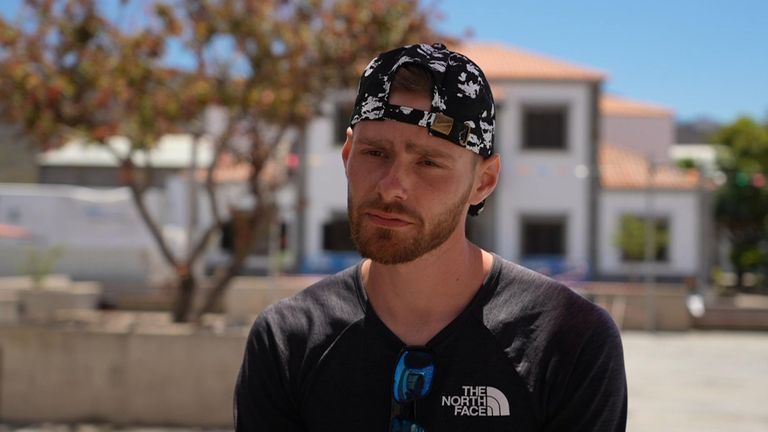
    A volunteer who flew out to Tenerife to help try to find missing Jay Slater has dismissed the final police search for the British teenager as a 'massive PR thing'.

    Paul Arnott, who has been sharing clips of his own search effort on TikTok, told Sky News last week that he flew out to Tenerife when he heard the 19-year-old's family 'needed help'.

    Mr Slater was last seen on Monday 17 June after he told a friend he planned to walk from the northwestern village of Masca to his holiday accommodation in Los Cristianos in the south — a journey that would take 11 hours on foot.

    Police on the island confirmed on Sunday that the search for Mr Slater had been called off nearly two weeks after his disappearance.

    It came a day after police urged volunteers to come forward to help with a large-scale search in the Masca area.

    Recording a TikTok video from the site on Saturday, Mr Arnott said: 'So guys I've literally been waiting for absolutely ages now, this is a massive PR thing I'm telling you now… There's people everywhere, literally people everywhere and nobody is doing anything.'

    He added: 'I've been up here for ages. Yeah there's people everywhere, everyone's still in their cars… I'm going to crack on with the search for Jay in the area where I think he is… I've been so quiet about this. I'm not doing it anymore people, I'm sick of this crap.'

    Paul Arnott, has been sharing clips of his own search for Mr Slater on social media
    Image: Paul Arnott has been sharing clips of his own search for Mr Slater on social media

    In a follow up video, he says: 'I'm so blooming stressed and annoyed about what's just happened. I thought today was going to be so productive, I thought so many people were going to show up.

    'I thought it was going to be really organised… I thought it was going to be massive and it's not.'

    A group of around 30 to 40 volunteers turned up to help rescue teams on Saturday — scouring a huge area of rugged and hilly terrain.

    It came after Mr Slater's mother, Debbie Duncan, his father Warren and brother Zak flew out to help police and mountain rescue teams search for the teenager shortly after he first disappeared.

    Ms Duncan told The Daily Telegraph last week that she has 'every faith' in the police who have been trying to find her son.

    She also said she couldn't 'thank Paul Arnott enough' for his efforts.

    Police said they are keeping the investigation into Mr Slater's disappearance open after they ended their search effort on Sunday.

    However, they added they could yet open up searches in the south of the island, but have not provided an update.

    'I've seen no posters'

    A British man who travelled to the island after Mr Slater's disappearance told Sky News: 'I was a little bit more scared about coming here than I would have been, and (me and my friend) have made sure we have each other's locations, which we wouldn't have done before all this happened.'

    A British woman on holiday on the island said it was 'disappointing' police had ended their search and added: 'He's a young boy that has a family, and to know that he is out there somewhere, it is quite terrifying.'

    Another man from the UK who is holidaying in Tenerife said: 'I've been here a week, I've seen no posters, hardly any police patrols going around, it's like nothing's happened really.'

    The post Jay Slater: British TikTok user dismisses final police search for missing teenager as 'massive PR thing' appeared first on The Custom Reports.

    Source : https://thecustomreports.com/jay-slater-british-tiktok-user-dismisses-final-police-search-for-missing-teenager-as-massive-pr-thing/

  • What to know about renovated Amahoro Stadium inauguration #rwanda #RwOT

    The newly refurbished Amahoro Stadium is set to be inaugurated on Monday, July 1, after a significant two-year facelift that began in mid-2022.

    The inauguration of the ultra-modern 45,000-seat facility was initially slated for July 4, coinciding with the 30th anniversary of Rwandan Liberation Day, but the Ministry of Sports moved the function to July 1 to 'avoid scheduling conflicts.'

    'We decided to separate the two events to avoid having them on the same day,' Zephanie Niyonkuru, the Permanent Secretary of MINISPORTS, told Times Sport on Friday, June 28.

    Here are four things you should know about the stadium inauguration:

    Kagame to grace stadium inauguration

    According to a communique released by MINISPORTS, President Paul Kagame will preside over the official inauguration of Amahoro Stadium.

    The head of state previously held a tour in the stadium on June 15, hours before APR vs Rayon Sports played the first match at the facility since its completion.

    The match served to test the readiness of the facility's crowd control, and other logistical aspects of the stadium which has already secured green light to host international matches as approved by world football governing body FIFA.

    Times Sport understands that some officials from the Confederation of African Football

    (CAF), CECAFA and FIFA were invited to the inauguration event.

    APR FC vs Police FC to play friendly match

    The event will feature a friendly match between 2023/24 Primus National League champions APR FC and Peace Cup winners Police FC. The winner will receive the Amahoro Stadium Inauguration Trophy.

    This will be the second match held at the stadium, following a friendly derby between APR FC and Rayon Sports on June 15. Both teams played out a goalless draw.

    Tickets

    Tickets for the match are on sale since Saturday, June 29. Regular tickets are available via www.ticqet.rw at Rwf 1,000 for both upper and lower bowls, and Rwf 20,000 for VIPs.

    Kick off

    The game will kick off at 5:00 PM Kigali Time but doors will be open at 11:00 AM and close at 3:00 PM.

    The post What to know about renovated Amahoro Stadium inauguration appeared first on The Custom Reports.

    Source : https://thecustomreports.com/what-to-know-about-renovated-amahoro-stadium-inauguration/

  • Presidential election in Rwanda: The youth will vote for unity and peace #rwanda #RwOT

    In Rwanda, as elsewhere, every political party aims to convince this electorate, seeking to speak to them in a language they appreciate and understand. Social media platforms such as TikTok, Instagram, and Twitter (X) are utilized, replacing the campaign flyers our parents were familiar with. Vibrant graphics and language elements are employed, and young activists are put forward to persuade their peers.

    However, I must share this powerful certainty with you after having spent several months on the ground and participated in some campaign events. Rwandan youth—the post-ethnicism and post-genocide generation—do not need all these artifices to turn out on July 15 and cast the right vote.

    Having been born and mostly bred on the continent, in Europe, my voting experiences have always been marked by renunciation and choosing the “lesser evil”:

    Renunciation of any truly egalitarian and supportive project, as these societies mostly lack the basic empathy to end the mistreatment of their elders abandoned in gloomy nursing homes, to end the difficulties of the sick who have to travel miles to find a primary care facility that will only receive them after hours of waiting—even in emergencies—or to end the precariousness of students who line up at soup kitchens, the last step before begging, between two university classes. This context pertains to rich countries.

    Renunciation of any plan for social transformation and revolution, as the common good is never the goal of political regimes behind capitalist and ultra-liberal projects that rely on exploiting large sections of the population for the benefit of a few, based on a social contract that is inherently racial and racist.

    This system underlies the simmering anger manifesting in massive strikes, giving European citizens a sense of demonstrating popular power while politicians respond only with disdain.

    Renunciation of any unity program, as racism is the cement of the capitalist promise; the average European or Anglo-Saxon citizen must always be assured of remaining in a position of dominance over many populations of the Global South to accept not being among the richest 1%.

    Racism also serves as an escape when these same “native” citizens realize, occasionally, that the equation does not work and that their leaders mock them as much as they do the wretched of the earth, both national and international.

    Yet, these same European, Western countries claim to be the judges of human rights worldwide (in non-white regions), while perpetuating its continuous destabilization through war, plunder, and narrative distortions for eternal repetitions.

    Certainly, Rwanda hit rock bottom thirty years ago when the same colonial ideology managed to divide the people based on racial criteria to break all social ties and landmarks: from neighbours to friends, to family.

    During the Genocide against the Tutsi and the preceding decades of violent anti-Tutsi discrimination, this poison destroyed hearts— all hearts. And some bodies and minds of those designated as Tutsi.

    Today, three short decades after the crime of crimes, children play, learn, pray, and argue together without even thinking of these dark practices of the past. Far from any display policies presented by Western media, which often see the current Rwanda only as a massive African startup functioning solely for profit and authoritarianism. The entire society is geared towards the well-being of its children, its youth, and, more broadly, its most vulnerable members.

    The principle that a society’s functioning can be judged by the degree of inclusion of its margins is strikingly real here, in a country where, despite poverty, no one is abandoned by the wayside.

    But since we are talking about the youth, it is essential to understand that they are aware of their historical and regional context and relish the privilege of peace, security, and the path—paved by their elders—toward all possibilities. All young people, without distinction of class or race, live this way: we are the wildest dream of our ancestors.

    If our pragmatic goal is to achieve satisfactory economic progress, it is also to regain our maltreated humanity and then magnify it. To be able to look at our own—with kindness and the feeling of walking together, in the same direction for the same objective.

    The political project of the liberators from the genocide against the Tutsi is one of the struggles for dignity for all. There is no deeper or more exhilarating campaign argument than this truth, both proclaimed and palpable. This is why young people will turn out in large numbers to support the political project of the RPF and the unwavering consistency of its leader, President Paul Kagame.

    In Rwanda, as elsewhere, every political party aims to convince youthful electorate, seeking to speak to them in a language they appreciate and understand.

    Jessica Mwiza

    Source : https://en.igihe.com/opinion/article/presidential-election-in-rwanda-the-youth-will-vote-for-unity-and-peace

  • Kigali ranked among top five favorite tourist destinations #rwanda #RwOT

    Kigali moved four slots from ninth in the World’s Best Awards 2024, behind Morocco’s Marrakesh, Cape Town, Jerusalem, and Dubai respectively. The awards are organized by Travel + Leisure, a travel magazine based in New York City.

    The annual award program considers traveller experiences to rank the top cities around the globe. The parameters used to rate the cities include sights/landmarks, culture, food, friendliness, shopping, and value.

    In the 2024 edition of the awards, voters described Kigali as a beautiful hub, very organized with friendly and helpful residents.

    'Amazingly clean and progressive city! I felt safe walking all over,' wrote a voter. 'There is a wide variety of cuisine available and amazing coffee.'

    The list was dominated by countries from North Africa, led by Morocco and Egypt. Fez in Morocco took the sixth position, with one respondent said to have described the city as 'a treasure trove of culture and history! A must-see if you are in Morocco.'

    The much smaller city of Essaouira still in Morocco was ranked number seven, marking its first reappearance on the list since 2021. Tel Aviv in Israel secured the eighth position, followed by Luxor and Cairo of Egypt.

    Kigali first featured on the list in 2021 as Rwanda continued to position itself as a premier destination for tourism and high-profile conferences.

    In 2023, when Kigali was ranked ninth, the Tourism sector recorded an impressive growth to record $650 million (RWF 832 billion) in revenues. This represented a 35 percent increase in revenue compared to 2022, according to the Rwanda Development Board.

    Rwanda welcomed 25,927 gorilla visitors in 2023, marking a 29.4 percent increase recorded in 2022. This is the highest number of visitors received in the country’s history.

    The city has also featured in several other high profile rankings including last year when it was recognized as Africa’s premier smart city. Thirty cities participated in the assessment, according to the 2023 African Smart City Index.

    In May, the International Congress and Convention Association (ICCA) revealed that Rwanda was named the second most popular destination for international business conferences in Africa for the year 2023.

    ICCA’s 'Country and City Rankings for 2023' placed Rwanda behind South Africa, which hosted 98 international events compared to Kigali’s 32 events.

    Kenya came in third with 29 international events, followed by Egypt and Morocco, which hosted 28 and 26 international conferences and meetings, respectively.

    ICCA has its headquarters in Amsterdam, Netherlands and is the global community and knowledge hub for international association meetings industry, offering data, education, communication channels, as well as business development and networking opportunities.

    Kigali moved four slots from ninth in the World’s Best Awards 2024, behind Morocco’s Marrakesh Cape Town, Jerusalem, and Dubai respectively.

    Wycliffe Nyamasege

    Source : https://en.igihe.com/lifestyle/article/kigali-ranked-among-top-five-favorite-tourist-destinations