Author: admin

  • Shema Fabrice accused of issuing bounced cheques worth Rwf 883.5 million #rwanda #RwOT

    Shema was arrested by the Rwanda Investigation Bureau (RIB) on August 11, 2026. He is facing charges of issuing a cheque without sufficient funds and fraudulently obtaining another person's property.

    His hearing on provisional detention was initially scheduled for the morning of August 26, but the court adjourned it to the afternoon to allow Shema and his lawyer more time to prepare their evidence.

    The hearing began at 3 p.m., with prosecutors telling the Nyarugenge Primary Court that the case arose from a contract between Africa Medical Supply, Shema's company that trades in medical equipment, and ABZL International Trading.

    The agreement, signed on January 23, 2024, required Africa Medical Supply to make payment within 60 days, according to the prosecution.

    Prosecutors said the company failed to honour the agreement and repeatedly delayed payment to ABZL despite demands for settlement. They said Shema eventually promised to pay after ABZL contacted him by email.

    On August 5, 2025, prosecutors said Shema issued ABZL two cheques, one for $400,000 and another for $200,000.

    The prosecution told the court that the bank subsequently confirmed that the cheques were not backed by sufficient funds, noting that the Africa Medical Supply account did not contain enough money to cover them.

    Prosecutors asked the court to remand Shema in provisional detention for 30 days, arguing that there are reasonable grounds to believe he committed the alleged offences and that he is considered a flight risk if released while investigations continue.

    Shema denies charges

    Shema denied the allegations and told the court that Africa Medical Supply had entered into a business agreement with ABZL, a UAE-based company that provides financial support services, and that the two companies had worked together previously.

    He said previous agreements between Africa Medical Supply and ABZL had been successfully completed, with both sides fulfilling their contractual obligations.

    Regarding the agreement at the centre of the case, Shema said his company paid ABZL $400,000 in May 2024 and another $400,000 in December of the same year.

    He said ABZL did not receive the second payment because the bank reported a problem with the account designated to receive the funds.

    According to Shema, Article 6 of the agreement required ABZL to provide an alternative account if there was a problem with the designated account.

    'We asked them to amend the agreement and provide us with another account. We discussed it, and I suggested that while they were resolving the issue, I could give them a cheque, one without a date,' he told the court.

    Shema said a dispute subsequently arose among ABZL shareholders, with the parties disagreeing over which account should receive the money.

    He alleged that one of the shareholders, who is also the complainant in the case, took the cheque, added details to it and requested that it be paid into a US Bank account in the United States. The shareholder also added August 5, 2025 as the date, he said.

    Shema questioned why a cheque intended for payment in Dubai, United Arab Emirates, would later be presented in the United States.

    He also rejected the allegation that he knowingly issued a bounced cheque, saying his previous financial record demonstrated that he was a credible businessman.

    Shema further argued that his position as FERWAFA president demonstrated the level of trust placed in him and said he would not evade justice if granted provisional release.

    'I am a leader who has been entrusted with responsibility, and I have been heading FERWAFA for a year. I have never abused that responsibility for my personal interests, and the charges against me have nothing to do with it,' he said.

    He told the court that he owns assets worth about Rwf 5 billion that could be used as security for his release.

    Lawyer challenges prosecution's evidence

    Shema's lawyer challenged the prosecution's evidence, questioning the timeline surrounding the cheques.

    The lawyer said the bank dishonoured the cheques on July 16, 2025, while Shema is alleged to have committed the offence on August 5, 2025.

    He also told the court that the cheque had originally been intended for payment in the UAE but was later presented to US Bank on June 25, 2025.

    'We believe that one of the reasons I&M Bank rejected the cheques was that the account details had been unlawfully changed,' the lawyer said.

    He argued that the dispute was essentially a commercial matter arising from a contractual relationship rather than a criminal case involving Shema in his capacity as head of Africa Medical Supply.

    The defence also submitted proof of a $600,000 payment through Bank of Kigali (BK) and a document requesting RIB's assistance in ensuring that the money reaches the intended account.

    Prosecution maintains case

    The prosecutor told the court that the case involves two cheques bearing the same number. He said the original cheque did not contain a date, while a copy contained a date that could be either August 5 or August 8, 2025.

    The cheques, he said, had been submitted to the court and bore Shema's signature.

    The prosecutor also said RIB had contacted the bank to establish whether the cheques were backed by sufficient funds at the time. The bank reportedly responded that the account held only slightly more than $1,000.

    He rejected the argument that offering property as security automatically entitled an accused person to provisional release.

    The prosecutor further stressed that issuing a cheque without sufficient funds is a criminal offence separate from a person's failure to meet a contractual payment obligation.

    The prosecution maintained its request for Shema to be detained for 30 days as investigations continue.

    Shema, however, questioned the prosecution's account of the timeline.

    'The prosecution should explain how a cheque can be issued in August and yet be declared invalid by the bank in June. I had no agreement with US Bank that would allow me to make the payment. The willingness to pay is there; it could be resolved within an hour,' he said.

    Shema also told the court that he has a family and children in school, while his wife is employed, and questioned why prosecutors believed he might flee.

    'I do not understand why the prosecutor is concerned that I might flee from justice when I also have other responsibilities entrusted to me by the country,' he added.

    He maintained that he should be released because he had demonstrated his willingness to settle the outstanding amount owed to ABZL.

    The court is expected to rule on the request for provisional detention.
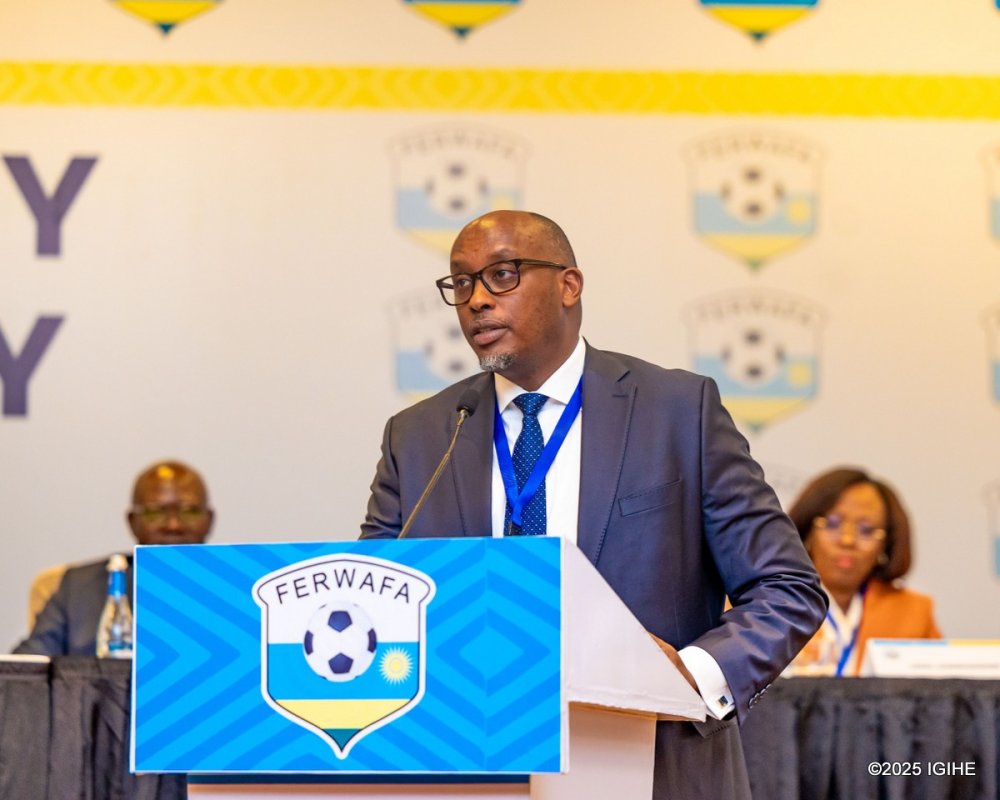
    Businessman and Rwanda Football Federation (FERWAFA) President Shema Fabrice is accused of issuing two cheques totalling $600,000 (about Rwf 883.5 million) without sufficient funds.

    Source : https://new.igihe.com/english/shema-fabrice-accused-of-issuing-bounced-cheques-worth-rwf-883-5-million/

  • Rwanda secures over Rwf 280 billion in new dual-currency loan #rwanda #RwOT

    The two loans have a combined value of more than Rwf 280 billion and will be repaid over 15 years, including a six-year grace period during which Rwanda will not be required to repay the principal.

    The yen-denominated portion marks the first time Rwanda has secured financing in Japanese yen, opening access to a new pool of investors and capital in Asian markets.

    The Ministry of Finance and Economic Planning said the financing is backed by guarantees from the World Bank Group and forms part of Rwanda's strategy to diversify its borrowing sources while securing funding on favourable terms.

    The six-year grace period has been structured so that repayment of the principal begins after Rwanda's existing Eurobond matures. This is intended to prevent a concentration of major debt repayments within the same period and support smoother management of the country's debt obligations.

    The loan proceeds will be used for general budgetary purposes, supporting priority areas including infrastructure, health and nutrition, education, agriculture, social protection and industrial development.

    Finance and Economic Planning Minister Yusuf Murangwa said the transaction demonstrates Rwanda's efforts to explore new financing options while maintaining prudent debt management.

    'This second PBG+ [Policy-Based Guarantee] transaction demonstrates Rwanda's unwavering commitment to innovative, best-practice funding solutions, as we proactively diversify our borrowing sources while maintaining prudent debt management,' Murangwa said.

    The funds secured by Rwanda will be used to finance projects including infrastructure development.

    Source : https://new.igihe.com/english/rwanda-secures-over-rwf-280-billion-in-new-dual-currency-loan/

  • MIT scientists develop AI to simulate extreme weather beyond historical records #rwanda #RwOT

    The new approach could help governments, cities and infrastructure operators prepare for disasters that have never occurred in their region, including storms, floods and other weather events that could be more severe than anything previously recorded.

    The system was developed by MIT mechanical engineering graduate student Kai Chang and Professor Themis Sapsis.

    Their method, known as Extreme Event Aware or η-learning, is designed to overcome a major challenge facing conventional extreme-weather modelling.

    Traditional risk models often rely on historical observations to estimate how frequently extreme events occur and what they might look like.

    But the most dangerous disasters can be extremely rare. This means a region may have never experienced an event severe enough to properly prepare for the possibility of one occurring in the future.

    The MIT researchers use a different approach. Their system combines statistical information about how often certain levels of extreme weather occur with maps showing how weather conditions are distributed across a region.

    The researchers tested the method using 25 years of hourly rainfall data covering the continental United States.

    They trained part of the model using only a relatively short portion of the dataset that contained few or no examples of the most extreme rainfall events.

    Despite this limitation, the system was able to generate detailed maps of rainfall events beyond those contained in the training examples.

    For example, the researchers demonstrated how the method could produce a plausible scenario involving 300 millimetres of rainfall in New York City, even though the highest recorded rainfall level used for comparison was 200 millimetres.

    The potential applications extend beyond rainfall. According to the researchers, similar approaches could eventually help planners examine the possible effects of severe floods, wildfires, heatwaves and other hazards for which there are limited historical records.

    For city authorities, the technology could provide a way to test whether infrastructure such as seawalls, electricity networks and emergency-response systems could withstand events more extreme than those previously experienced.

    However, the researchers stress that the system does not predict that a specific extreme event will definitely happen.

    Instead, it generates statistically plausible scenarios that can help decision-makers understand risks that may otherwise be difficult to visualise.

    MIT researchers have developed an AI method capable of generating plausible scenarios for extreme weather events that have never appeared in historical records.

    Source : https://new.igihe.com/english/mit-scientists-develop-ai-to-simulate-extreme-weather-beyond-historical-records/

  • Study finds genetic link to cholesterol increases on low-carb diets #rwanda #RwOT

    New research suggests that a person's genetic makeup may help explain why low-carbohydrate diets affect cholesterol levels differently from one individual to another.

    The findings indicate that people who are genetically predisposed to higher levels of low-density lipoprotein (LDL) cholesterol may be particularly sensitive to saturated fat while following a low-carb diet.

    The study, presented at NUTRITION 2026 by researchers including Alexa Barad, a postdoctoral scholar at Stanford University School of Medicine, examined data from the DIETFITS trial.

    The original study involved more than 600 adults who followed either a healthy low-carbohydrate or healthy low-fat diet for one year.

    For the new analysis, researchers examined 431 participants who had available genetic information.

    They looked at the relationship between participants' genetic characteristics, their consumption of saturated fat, the type of diet they followed and changes in their LDL cholesterol after six months.

    The results showed a notable pattern. Among people following the low-carb diet, those with a greater genetic tendency toward high LDL cholesterol were more likely to experience an increase in the cholesterol level.

    The increase was particularly pronounced among those who consumed more saturated fat.

    Researchers believe this may help explain why two people can follow seemingly similar diets yet experience very different results.

    While one person may see little change in cholesterol, another could experience a substantial increase.

    The researchers used thousands of genetic variations to create what is known as a polygenic score, allowing them to estimate an individual's overall genetic tendency toward higher or lower LDL cholesterol.

    In the future, such information could potentially help doctors identify people who may be more sensitive to certain dietary changes.

    However, the researchers stressed that genetic testing is not necessary for people to take a practical lesson from the findings.

    Instead, people should pay attention to how their bodies respond to dietary changes and monitor cholesterol levels when making significant changes to their diets.

    For people following a low-carb diet, researchers suggest choosing healthier sources of fat, including nuts, seeds, olive oil and avocado, rather than relying heavily on butter, beef tallow, fatty cuts of meat and processed meats.

    The researchers also cautioned that the findings are preliminary because they were presented as an abstract at NUTRITION 2026 and have not yet undergone the same peer-review process required for publication in a scientific journal.

    Further studies will be needed to confirm the results and determine whether they apply to broader populations.

    A new study suggests that a person's genes may influence how their cholesterol levels respond to a low-carbohydrate diet.

    Source : https://new.igihe.com/english/study-finds-genetic-link-to-cholesterol-increases-on-low-carb-diets/

  • QA Venue Solutions MD elected chair of international stadium committee #rwanda #RwOT

    The appointment was confirmed during the 101st IAVM VenueConnect Annual Conference and Trade Show in Indianapolis, United States, bringing Rwanda's growing venue management industry into the spotlight on the global stage.

    The IAVM represents venue professionals working across stadiums, arenas and convention centres worldwide, with more than 8,000 venue professionals represented through the association.

    Hedderwick's election is being viewed as a significant milestone for Rwanda and Africa as the continent's sports and entertainment infrastructure continues to expand.

    The new role will place the QAVS chief at the centre of global discussions on stadium management, innovation, professional development and industry standards.

    'This is bigger than an individual appointment. It gives us an opportunity to connect Rwanda and Africa's growing venue industry with global expertise, certification and mentorship,' Hedderwick said.

    'Our ambition is to develop world-class venues alongside world-class African professionals to manage them. Through our partnership with IAVM, we want to expand education, certification and mentorship programmes in Rwanda and across the region.'

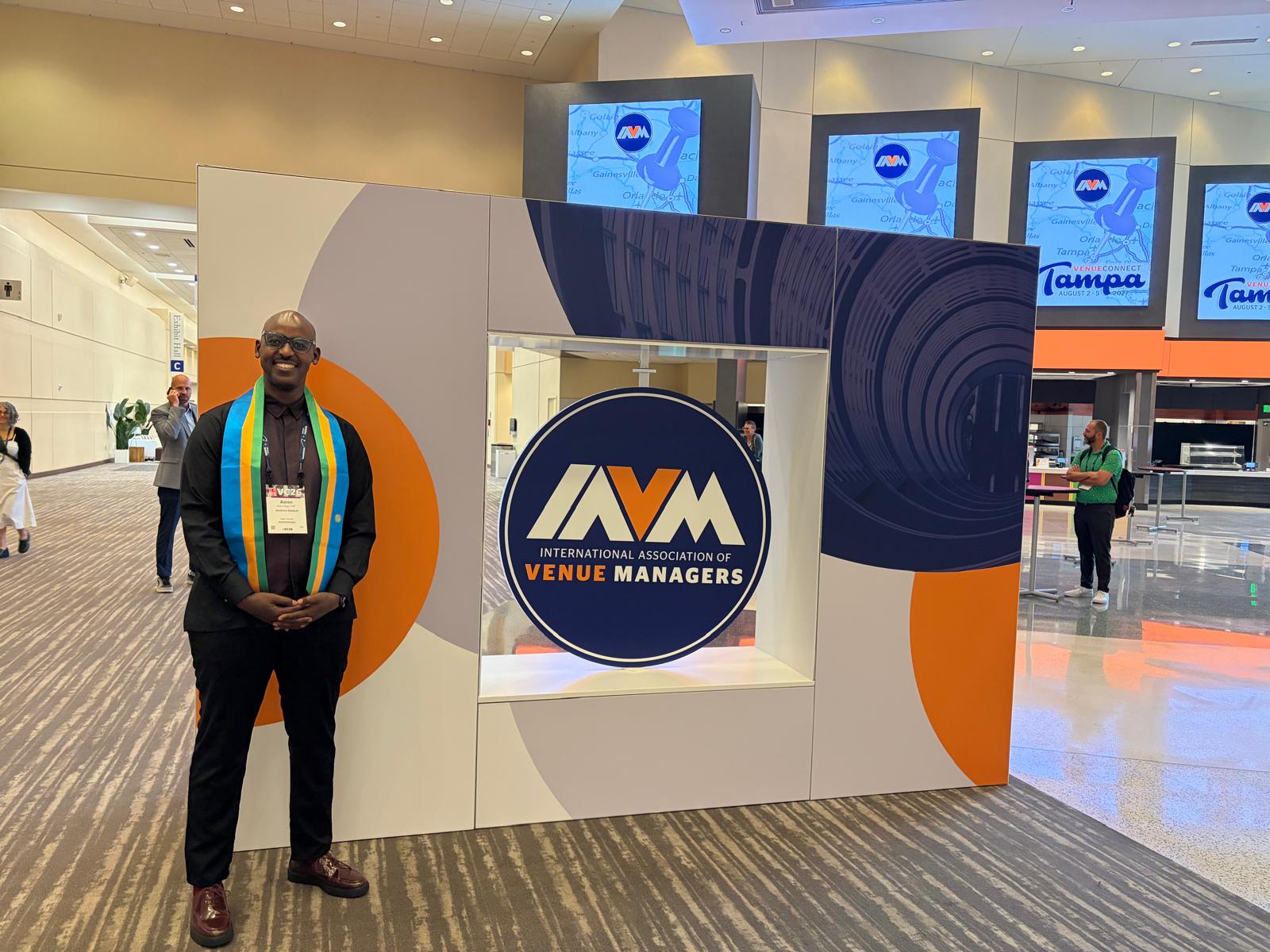
    Hedderwick's appointment came alongside another milestone for Rwanda's venue management sector, with Amahoro Stadium Venue Manager Aaron Gaga earning the Certified Venue Professional (CVP) designation at the same conference.

    Amahoro Stadium Venue Manager Aaron Gaga earned the Certified Venue Professional (CVP) designation at the same conference.

    The CVP is a professional certification for venue management professionals and marks another step in the development of internationally recognised venue management expertise in Rwanda.

    Gaga joined QAVS as a junior staff member and has progressed through the organisation to become Venue Manager at Amahoro Stadium.

    'I joined QAVS as a junior staff member and have grown through the ranks. This certification is a testament to passion, dedication and a commitment to excellence,' Gaga said.

    'More importantly, it reflects the journey we are on as a company and as a country—building world-class venue management expertise as Rwanda positions itself as a regional hub for sports and entertainment.'

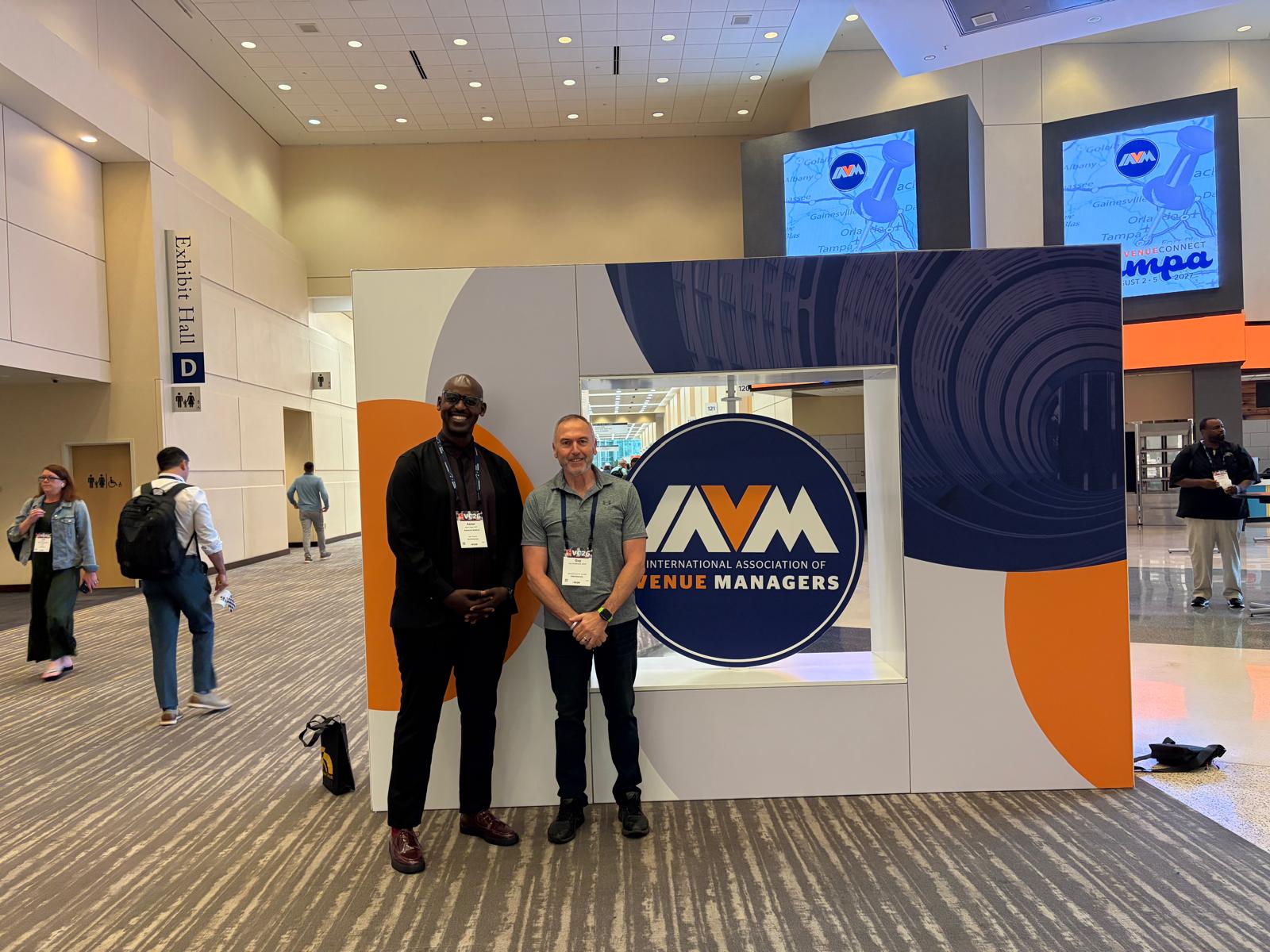
    Gaga and Guy at the conference.

    QAVS said the two achievements reinforce its focus on professional development and succession planning as Rwanda seeks to strengthen its position as a destination for major sports, entertainment and business events.

    The company manages several of Rwanda's flagship sports and entertainment facilities within Kigali Sports City, including BK Arena, Amahoro Stadium and Zaria Court.

    According to QAVS, the precinct represents more than $300 million in government investment and has attracted more than $30 million in private investment. The facilities have hosted more than 600 events over the past six years and generated more than $15 million in sponsorship value.

    The company affirmed that its venue management work supports Rwanda's broader ambitions to grow the sports and tourism economy, create employment opportunities and strengthen local professional skills.

    Building on the two achievements, QAVS and IAVM are expected to explore opportunities to strengthen mentorship, professional certification and capacity-building for venue managers in Rwanda.

    The initiatives could eventually be extended across East Africa and other parts of the continent, as demand for skilled venue professionals grows alongside investment in sports and entertainment infrastructure.

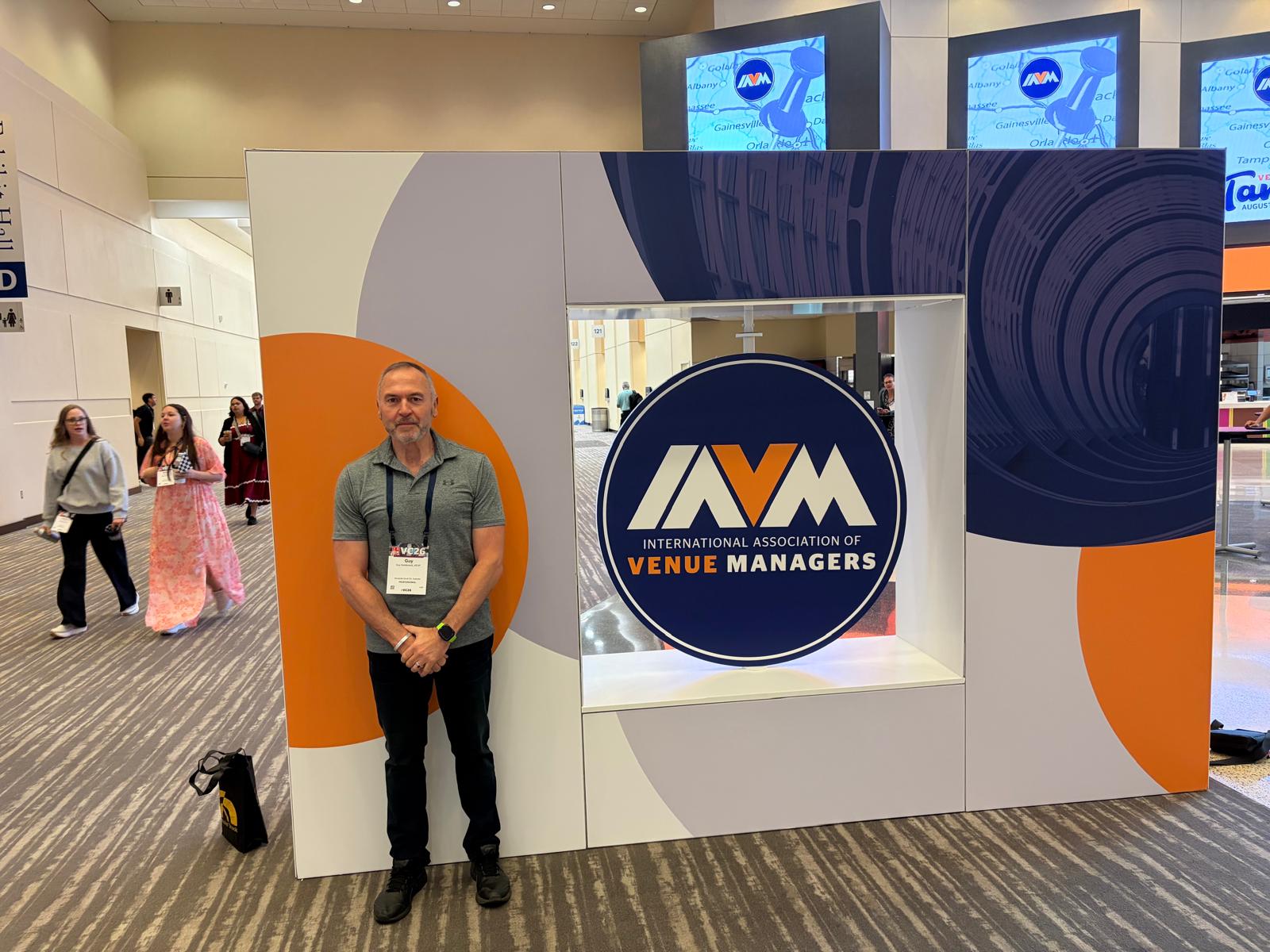
    Guy Hedderwick's election is being viewed as a significant milestone for Rwanda and Africa as the continent's sports and entertainment infrastructure continues to expand.

    Source : https://new.igihe.com/english/qa-venue-solutions-md-elected-chair-of-international-stadium-committee/

  • Celebrities pay tribute to Dolly Parton after her death at 80 #rwanda #RwOT

    Parton died at the age of 80 on August 25, 2026, after a brief battle with cancer.

    Her death was announced by her nephew Bryan Seaver, prompting an immediate outpouring of grief from artists who knew her personally and others who grew up inspired by her work.

    Among the most touching tributes came from Taylor Swift, who described Parton as a rare combination of grace, strength and generosity.

    Swift said Parton encouraged people to remain true to themselves while using her life to inspire others.

    Swift also highlighted Parton's work beyond music, particularly her commitment to children's literacy through the Dolly Parton Imagination Library.

    Swift and Travis Kelce recently donated $2 million to the programme, and Parton had publicly acknowledged the contribution.

    Beyoncé, who brought Parton's music to a new generation through her cover of 'Jolene' on Cowboy Carter, also remembered the country legend.

    She described Parton as a guiding figure whose talent, determination and individuality taught generations of artists how to be themselves. The two also collaborated on songs featured on Beyoncé's album.

    For Miley Cyrus, the loss was deeply personal. Parton was her godmother and had been a close presence in her life for years. Cyrus described her as one of the purest souls and shared her heartbreak after the news of her death.

    Country star Reba McEntire remembered Parton as a longtime friend, thanking her for the love and music she gave the world.

    Kacey Musgraves also expressed her pain, while Maren Morris shared memories of performing with Parton.

    Paul McCartney joined the tributes, recalling his first meeting with Parton in Nashville in the 1970s. He praised not only her musical ability but also her generosity and humanitarian work.

    Hollywood figures also remembered her warmth. Jamie Lee Curtis thanked Parton for everything she gave the world, while her 9 to 5 co-star Lily Tomlin shared a photo of the two together with a simple expression of grief.

    Octavia Spencer, Carol Burnett, Sally Field and Sarah Jessica Parker were among others who celebrated Parton's kindness and extraordinary legacy.

    From country music to Hollywood and global pop culture, the tributes have revealed the remarkable breadth of Parton's influence.

    Dolly Parton is a legendary country music icon whose remarkable career and generosity inspired generations of artists and fans around the world.

    Source : https://new.igihe.com/english/celebrities-pay-tribute-to-dolly-parton-after-her-death-at-80/

  • Military integration blurred the lines between FDLR and FARDC: Ex-combatant reveals how #rwanda #RwOT

    According to former FDLR member Augustin Nshimiyimana, known within the group as Colonel Bora Manassé, the movement's military ties with the Congolese armed forces go back decades.

    Nshimiyimana said the group, initially known as ALiR, did not enter Zaire solely as a refugee population. Instead, its members maintained a military structure similar to that of the former Rwandan army and hoped to eventually return to Rwanda and regain political power.

    Over the years, members of the group developed close relationships with successive Congolese governments and the country's armed forces. Some were eventually integrated into the Congolese military, particularly during the process of incorporating armed groups into the national army following the 2002 Sun City agreements.

    Nshimiyimana told IGIHE that after the Rwanda Patriotic Army's victory in Rwanda, some Ex-FAR and Interahamwe members remained in eastern Zaire while others, including himself, crossed the Congo River and joined the Congolese armed forces, then known as the FAC.

    'During those movements, many joined the FARDC. Many of them remain there today,' he said.

    He identified several former ALiR members whom he said went on to occupy senior positions in the FARDC. Among them, he named Rucyahana Jean Baptiste, known as Colonel Jules Mulumba among the Wazalendo, and Annaclet Nsengiyumva, who rose to the rank of colonel and currently works in the DRC's military intelligence structure.

    Nshimiyimana also cited Mbangu Mbangu, who he said had been a corporal in ALiR but later became a colonel in the FARDC and commanded a regiment in Ituri Province.

    Another former ALiR fighter known as 'Karati,' he said, rose from the rank of corporal to lieutenant colonel in the Congolese army and commands a battalion in Misisi, Fizi Territory, in South Kivu Province.

    He further revealed that other former members of the group occupy positions in different FARDC units.

    'We know each other, we lived together, and there are many of them,' Nshimiyimana said.

    From refugee camps to armed networks

    Nshimiyimana also described how former Rwandan combatants became involved in conflicts involving armed communities in eastern Congo.

    He said that when Ex-FAR and Interahamwe members arrived in eastern Zaire in 1994, they brought with them the ideology and military structures associated with the Rwandan conflict. According to him, they subsequently became involved in local conflicts and provided weapons and training to Congolese combatants.

    'We gave them the guns we had brought with us,' he said.

    Nshimiyimana named several Congolese military figures whom he claimed had received training or support from former Rwandan combatants, including Brigadier General Mugabo Hassan, Major General Mayanga and Brigadier General Davide.

    Blurred lines between the FARDC and FDLR

    Nshimiyimana argues that the presence of former FDLR and ALiR members within the Congolese military has created overlapping networks that make it difficult to distinguish between the FDLR and elements of the FARDC.

    He described some former combatants now serving in the Congolese army as effectively acting as 'FDLR ambassadors.'

    'So who is going to attack the FDLR? It is present within the FARDC, and it is present within the Wazalendo,' he said, arguing that the integration of former combatants has blurred the distinction between armed groups and state forces.

    Commenting on the DRC's claim that the FDLR had agreed to voluntarily lay down its arms, he said the process could be complicated by the involvement of individuals and networks with past ties to the FDLR in operations against the group.

    The former FDLR combatant suggested that stronger international pressure on Kinshasa could encourage the DRC government to more clearly separate its armed forces from the FDLR and take steps toward dismantling the group.

    According to former FDLR member Augustin Nshimiyimana, known within the group as Colonel Bora Manassé, the movement's military ties with the Congolese armed forces go back decades.
    The FARDC and FDLR have been working together for many years and have become deeply intertwined.

    Source : https://new.igihe.com/english/military-integration-blurred-the-lines-between-fdlr-and-fardc-ex-combatant-reveals-how/

  • Eight East African countries push for more investment in agriculture at Kigali forum #rwanda #RwOT

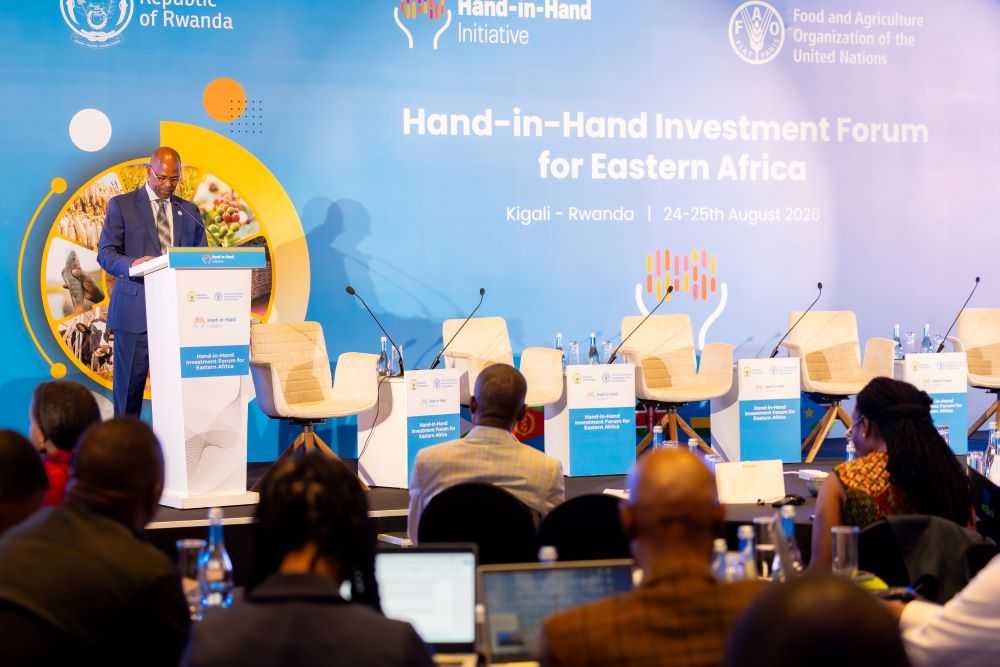
    The Hand-in-Hand Investment Forum for Eastern Africa began on August 24, 2026, bringing together representatives from Djibouti, Eritrea, Ethiopia, Kenya, Rwanda, Somalia, South Sudan and Uganda.

    FAO Representative in Rwanda Mohamed Aw Dahir said the success of the forum would not be measured by discussions alone, but by its ability to turn ideas into concrete investments that benefit farmers, businesses and rural communities.

    'We need to move from discussions to concrete action, and the success of this forum will not be measured only by the discussions, but by our ability to turn ideas into investments that deliver tangible benefits to farmers, the private sector and rural communities,' Dahir said.

    He said the Hand-in-Hand initiative seeks to help countries move beyond projects that rely mainly on aid towards sustainable investments capable of transforming agriculture and food processing.

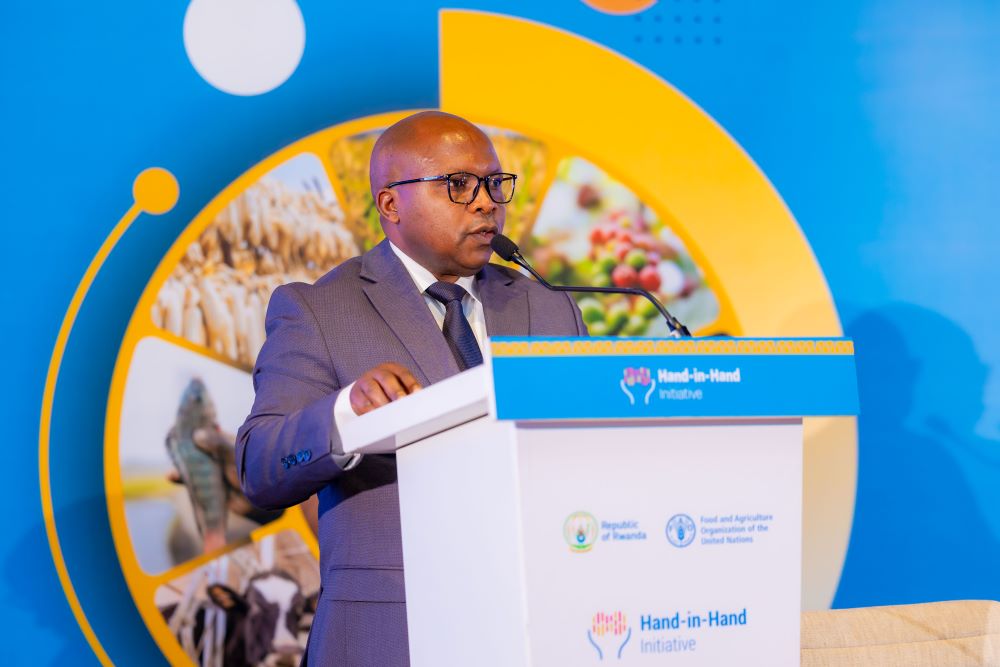
    Rwanda's Minister of Agriculture and Animal Resources, Dr. Telesphore Ndabamenye, said the challenge was not a lack of projects, but ensuring that existing opportunities are converted into profitable investments.

    'The opportunities are there. What remains is to turn them into investments that can generate returns, scale up and contribute to development,' he said.

    Dr. Ndabamenye said Rwanda is working with FAO to identify investment opportunities across agricultural value chains and develop projects that can connect investors with the capital, technology and expertise they need.

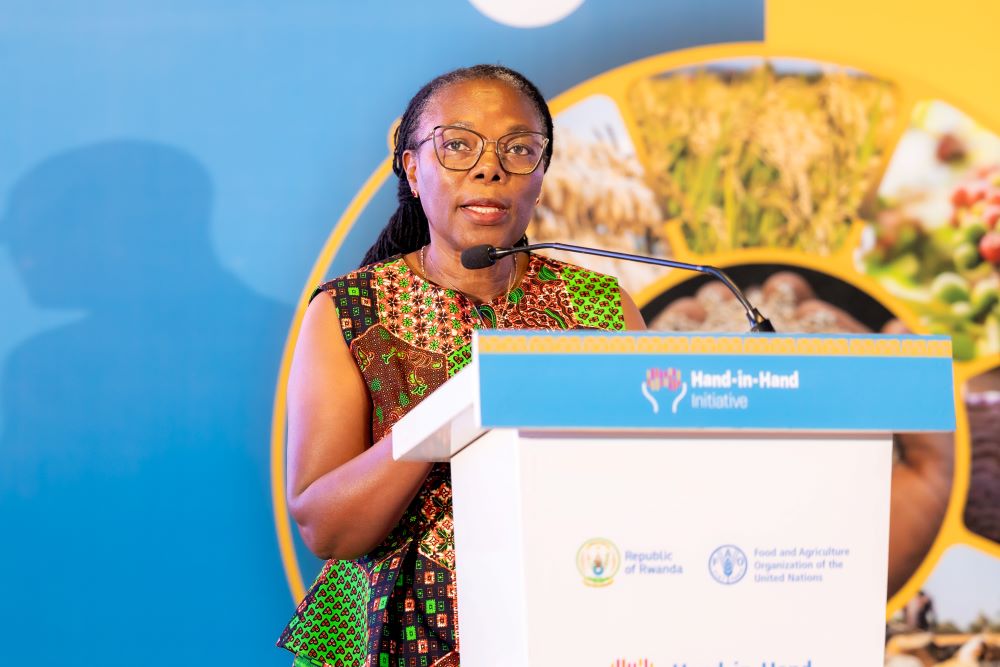
    FAO Subregional Coordinator for Eastern Africa Farayi Zimudzi said opportunities exist in coffee, livestock and dairy, fisheries, horticulture, cereals and oil-producing crops.

    However, she identified climate change, inadequate infrastructure, high transport costs and limited access to finance as some of the challenges constraining agricultural investment.

    Zimudzi called for stronger cooperation among governments, the private sector, financial institutions, development partners and technology experts.

    She said all eight participating countries are part of the Hand-in-Hand initiative, which seeks to attract investment that adds value to agricultural production, expand trade and strengthen regional cooperation.

    The forum aims to showcase investment opportunities, connect investors with project developers and facilitate agreements that can accelerate transformation in East Africa's agriculture and livestock sectors.

    The meeting comes ahead of the Africa Food Systems Summit scheduled to take place in Kigali in the first week of September 2026, as well as the global FAO Hand-in-Hand Investment Forum planned for Rome, Italy, in October 2026.

    Eight East African countries have gathered in Kigali to explore investment opportunities in agriculture, livestock and agro-processing.
    FAO Representative in Rwanda Mohamed Aw Dahir has said rising food demand and the region's young population have created significant opportunities for agricultural investment.
    Agriculture Minister Dr. Telesphore Ndabamenye has called for greater investment to transform Eastern Africa's agrifood systems into engines of economic growth and job creation.
    FAO Subregional Coordinator for Eastern Africa Farayi Zimudzi has described the region as one of Africa's most promising frontiers for agrifood investment.
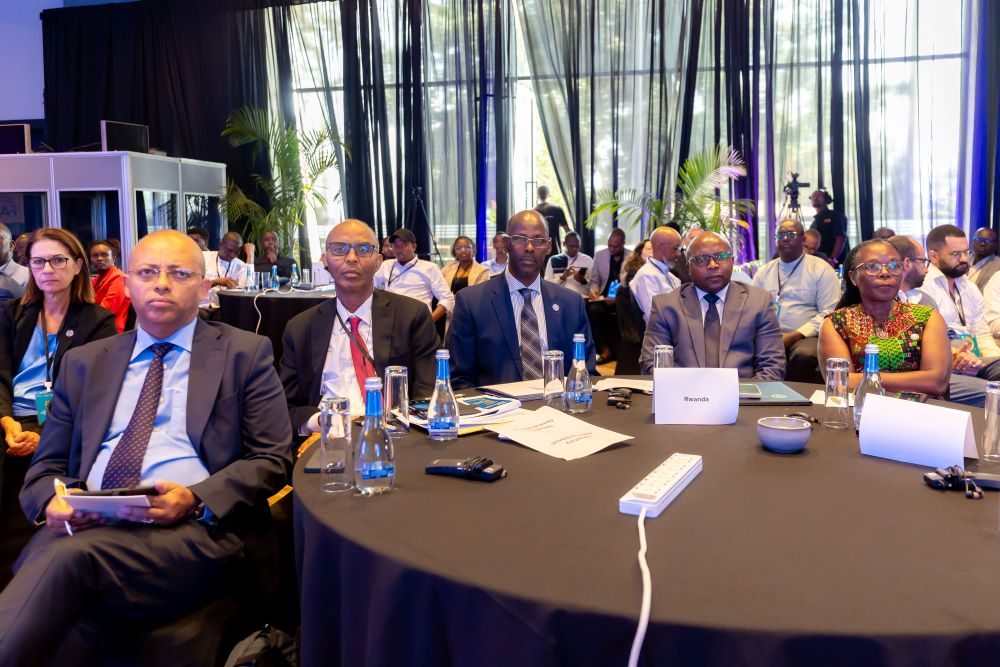
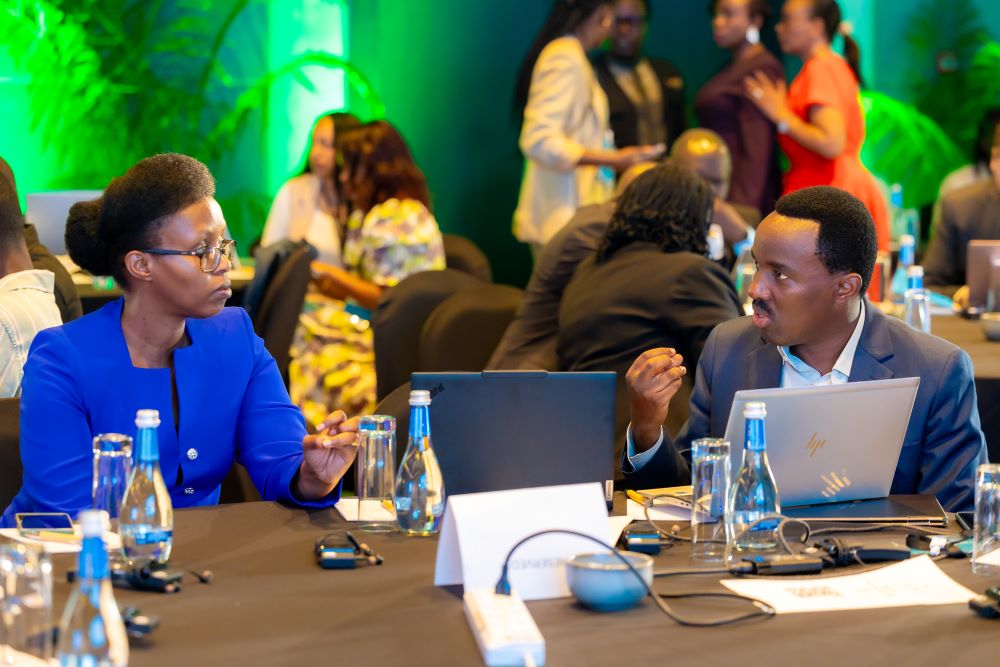
    Participants of the forum posing for a group photo
    The Kigali forum has brought together governments and partners seeking to turn agricultural opportunities into concrete investments.
    The Hand-in-Hand Investment Forum has created a platform for countries to showcase agricultural investment opportunities.
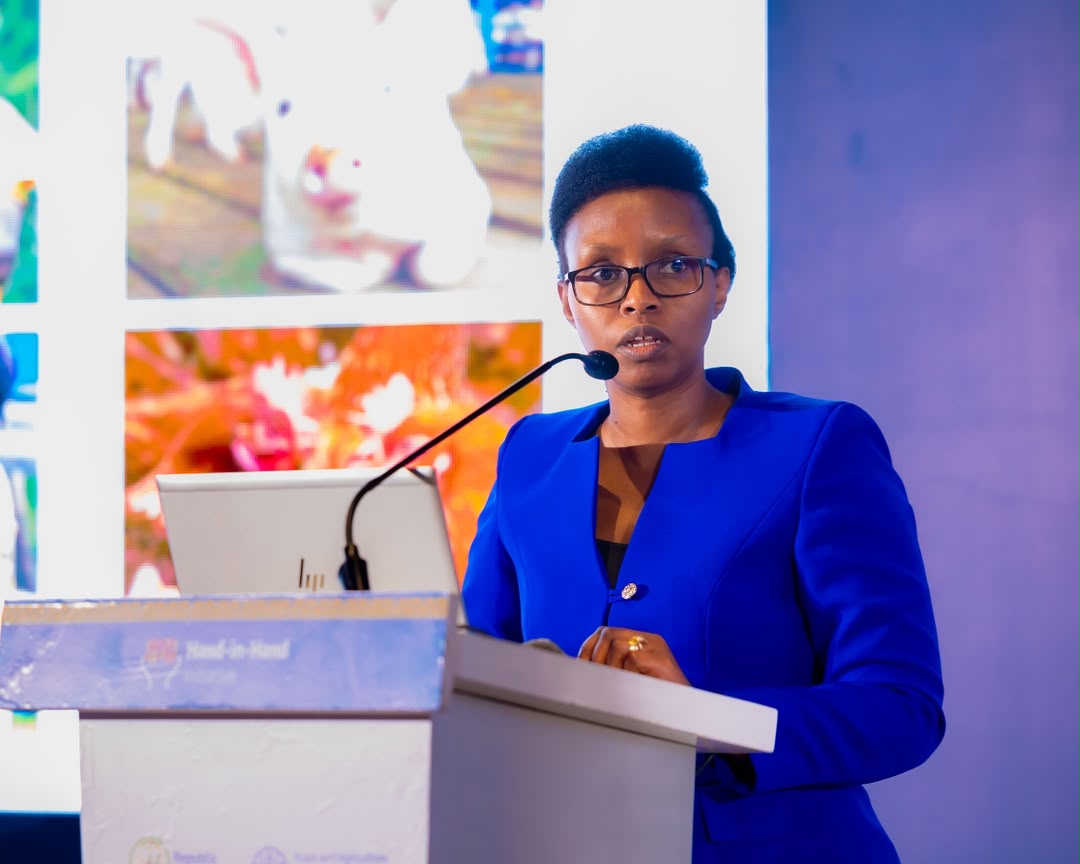
    Dr. Chantal Ingabire, Director General of Planning at the Ministry of Agriculture and Animal Resources, also participated in the Kigali forum as stakeholders sought to showcase investment opportunities across its agricultural sector.

    Source : https://new.igihe.com/english/eight-east-african-countries-push-for-more-investment-in-agriculture-at-kigali-forum/

  • How AfCFTA opens bigger markets for Africa's youth, women and small businesses (Video) #rwanda #RwOT

    For young entrepreneurs, women-led businesses and micro, small and medium enterprises, AfCFTA could open doors to markets far beyond their home countries. However, accessing those opportunities will require more than simply knowing that the agreement exists. Businesses will need quality products, market knowledge, innovation and an understanding of the rules governing cross-border trade.

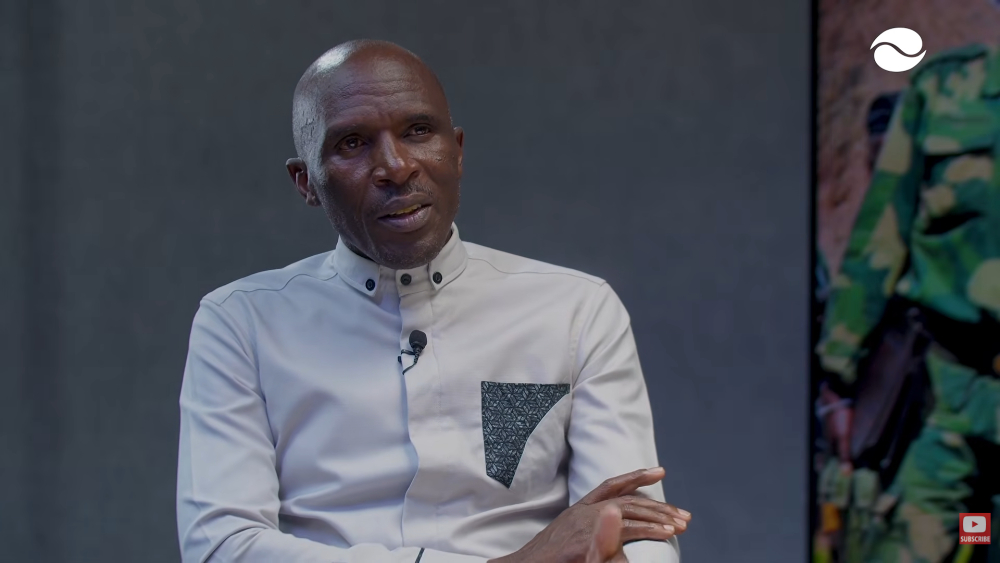
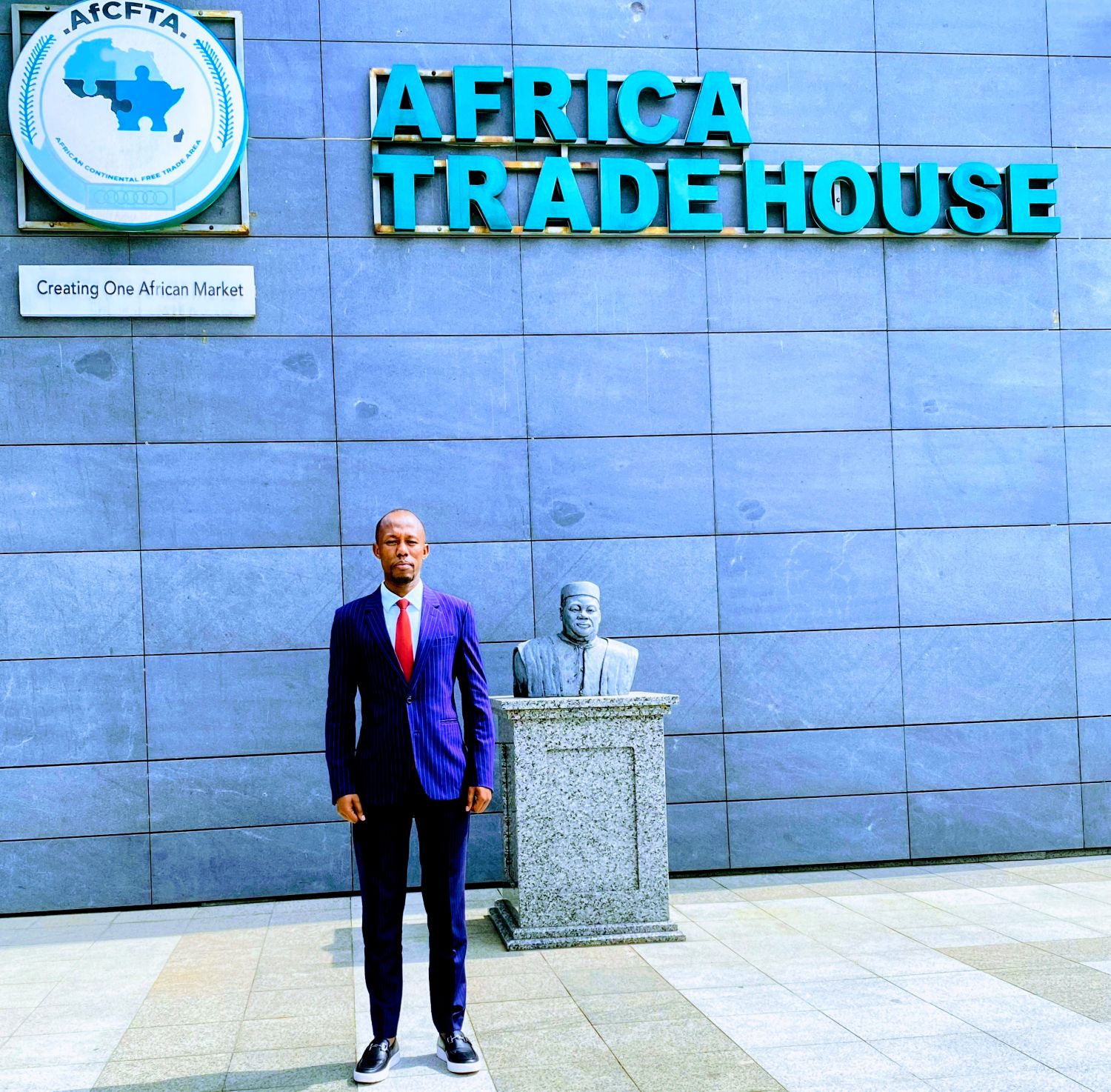
    In an exclusive interview with IGIHE, National AfCFTA Youth and Women Champion Amos Akandwanaho Seromba encouraged young Africans to think beyond their domestic markets and take advantage of the opportunities presented by continental trade.

    Seromba described AfCFTA as an important framework for strengthening trade among African countries by reducing barriers and making it easier for businesses to access markets across the continent.

    'Governments sign agreements; it is businesses that actually trade,' Seromba said, stressing that the success of AfCFTA will ultimately depend on how effectively businesses use the opportunities created by the agreement.

    Trading under the AfCFTA framework began in 2021, marking an important step from negotiations towards practical implementation. The agreement seeks to progressively reduce tariffs, facilitate trade in goods and services and strengthen economic integration among African countries.

    For entrepreneurs, the potential is significant. A business established in Rwanda can seek opportunities in other African markets, provided its products meet the relevant rules, standards and requirements in the countries where it intends to operate.

    Rwanda has played a prominent role in the AfCFTA process. The agreement was signed in Kigali in 2018, placing the country at the centre of an initiative considered one of Africa's most important efforts towards economic integration.

    The country has also worked to improve its business environment and facilitate the establishment and operation of businesses.

    Seromba believes these efforts can provide a foundation for Rwandan entrepreneurs to expand beyond the domestic market.

    He argues that businesses should not view Rwanda as the end of their commercial journey but as a starting point for reaching customers across Africa.

    For young entrepreneurs, this requires a change in mindset. Rather than waiting for opportunities to come to them, they need to identify markets where their products or services can solve real problems.

    AfCFTA is not only for governments and large companies

    Seromba emphasised that AfCFTA is not an initiative meant exclusively for governments or large corporations.

    Young people, women entrepreneurs, innovators and MSMEs have an important role to play in making the continental market a reality.

    The agreement covers areas including trade in goods and services, intellectual property and digital trade, creating opportunities for businesses in a wide range of sectors.

    Preferential tariff arrangements for qualifying products, improved customs procedures and efforts to address trade barriers could make it easier for businesses to reach customers in other African countries.

    But access to a larger market does not automatically translate into success.

    Entrepreneurs must first understand what consumers in their target markets need and whether their products can compete in terms of quality, price, packaging and reliability.

    National AfCFTA Youth and Women Champion Amos Akandwanaho Seromba encouraged young Africans to think beyond their domestic markets and take advantage of the opportunities presented by continental trade.

    Market research remains essential

    Seromba urged African entrepreneurs to conduct proper market research before attempting to enter new markets.

    A product that performs well in Rwanda, for instance, may not necessarily have the same demand in another African country.

    Entrepreneurs therefore need to study consumer preferences, competitors, regulations, standards and purchasing power before investing in a new market.

    Value addition is also critical.

    Africa has significant natural resources, but much of the continent's economic potential remains tied to the export of raw materials. By processing and packaging products locally, entrepreneurs can create greater value and improve their competitiveness.

    Seromba also sees technology as an important tool for young businesses.

    Artificial intelligence and other digital technologies can help entrepreneurs research markets, improve productivity, develop products, reach customers and make better business decisions.

    His message to young entrepreneurs is centred on preparation and competitiveness.

    'Focus first on high-quality products and genuine value addition,' he said, urging businesses to ensure that what they offer can compete in an increasingly connected African market.

    Businesses still face barriers

    Despite the opportunities created by AfCFTA, businesses still face significant obstacles when trading across African borders.

    Non-tariff barriers remain among the challenges affecting intra-African trade. Businesses may encounter different regulatory requirements, product standards, documentation procedures and customs processes from one country to another.

    The movement of people also remains an important issue for entrepreneurs who need to travel to meet customers, establish partnerships and develop markets.

    Insecurity in some parts of the continent can further discourage investment and make the transportation of goods more difficult.

    Seromba also identified limited awareness as a major challenge.

    While many young Africans have heard about AfCFTA, fewer may understand the practical steps required to benefit from it.

    Knowing about the agreement is not enough. Entrepreneurs need to understand issues such as certificates of origin, product standards, market access requirements and procedures for addressing trade barriers.

    Seromba urged African entrepreneurs to conduct proper market research before attempting to enter new markets.

    Governments and businesses must act together

    Seromba believes governments and businesses must work together to ensure that AfCFTA delivers tangible benefits.

    Governments have a responsibility to create supportive policies, simplify trade procedures, improve infrastructure and address barriers that make cross-border commerce difficult.

    The private sector, on the other hand, must develop competitive products, comply with standards and actively seek opportunities in other African markets.

    Regular engagement between policymakers and businesses is particularly important for youth, women and MSMEs because their experiences can help identify barriers that may not always be visible at the policy level.

    'The private sector, particularly MSMEs, must be at the forefront of this opportunity,' Seromba noted, highlighting the importance of ensuring that smaller businesses are not left behind as continental trade expands.

    Kagame calls for action on AfCFTA

    President Kagame recently also stressed that the success of AfCFTA will depend on how effectively it is implemented.

    Speaking during a press conference at the Kigali Convention Centre on Monday, Kagame said the agreement was an important step towards boosting trade among African countries, while acknowledging concerns over the slow pace of progress and persistent non-tariff barriers.

    He called on African countries to work together to address the remaining challenges and deliver on the agreement's ambitions.

    'We can't just keep complaining. We have to find a way of getting together and doing what we have to do,' Kagame said.

    Looking beyond national markets

    Looking towards the next five to 10 years, Seromba hopes to see further progress towards the free movement of people, goods and services across Africa.

    He believes that reducing remaining trade barriers, improving security, closing regulatory gaps and strengthening implementation will be essential if the continent is to realise the full potential of AfCFTA.

    A more integrated market could allow African businesses to expand more easily, increase production, create jobs and contribute to economic growth.

    For Rwanda, the opportunity is particularly relevant to young entrepreneurs and women-led businesses seeking to move beyond a relatively small domestic market.

    For Seromba, the success of AfCFTA will depend on whether African businesses, particularly young people, women and MSMEs, can turn the opportunities created by the agreement into real trade, investment and jobs.

    Source : https://new.igihe.com/english/how-afcfta-opens-bigger-markets-for-africas-youth-women-and-small-businesses/

  • Shingles vaccine linked to 24% lower dementia risk in older adults #rwanda #RwOT

    Researchers found that people who received at least one dose of the recombinant shingles vaccine had a 24% lower risk of dementia compared with those who were not vaccinated.

    The study analysed health records and Medicare data from more than 500,000 adults aged 66 and older who had been admitted to skilled nursing facilities.

    The research focused on 509,926 people admitted to more than 5,500 skilled nursing facilities across the United States between 2017 and 2022. Among them, 8,843 received the Shingrix vaccine.

    After four years of follow-up, dementia was diagnosed in 18.8% of vaccinated participants, compared with 24.6% among those who remained unvaccinated.

    Researchers estimated that the difference could translate to approximately one dementia case potentially prevented for every 17 people vaccinated.

    The study was led by Kaley Hayes, an assistant professor at Brown University's School of Public Health, together with researchers from Brown University, the University of Delaware, the Providence Veterans Affairs Medical Center and other institutions.

    The researchers used a method known as target trial emulation, which attempts to reproduce some of the conditions of a randomised clinical trial using existing health data. Participants were eligible for shingles vaccination and had no previous diagnosis of dementia.

    The findings add to previous research that has also observed a relationship between shingles vaccination and a lower risk of dementia. Scientists say this has raised the possibility that vaccines designed to prevent infections could have additional effects on brain health.

    However, researchers caution that the findings should not be interpreted as proof that the shingles vaccine prevents dementia.

    Because the study was observational, it cannot establish a direct cause-and-effect relationship.

    People who received the vaccine were generally slightly younger and healthier than those who did not, although researchers adjusted their analysis for these differences and found that they did not fully explain the association.

    Further research, particularly clinical trials, will be needed to determine whether Shingrix itself directly reduces the risk of dementia.

    The study was published in the Annals of Internal Medicine. The researchers also disclosed that the study received funding from GlaxoSmithKline, the manufacturer of Shingrix, although they reported that the company had no control over the study's design, analysis or publication decision.

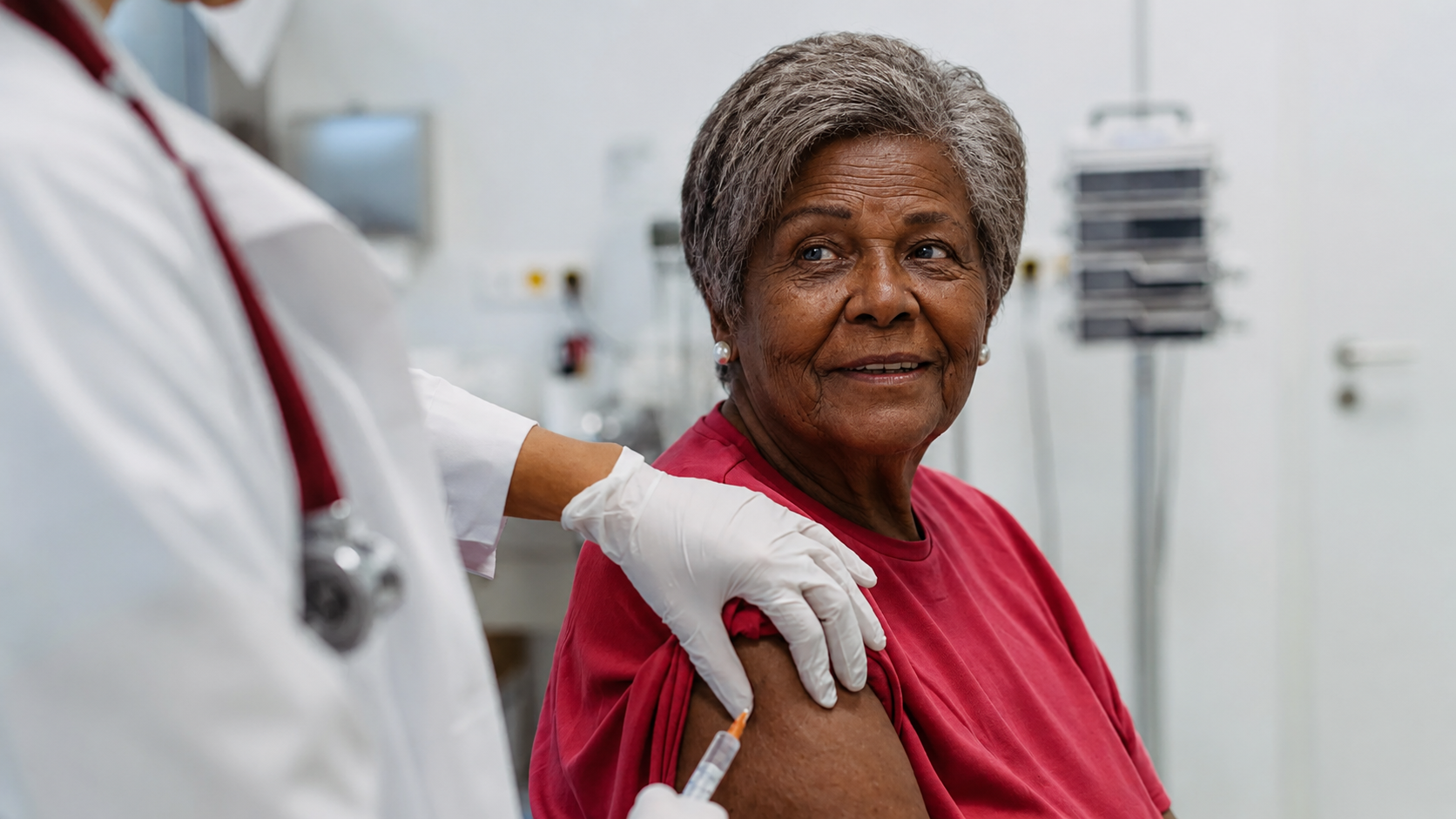
    A new study suggests that the Shingrix shingles vaccine may be associated with a lower risk of dementia among older adults.

    Source : https://new.igihe.com/english/shingles-vaccine-linked-to-24-lower-dementia-risk-in-older-adults/