The Burundi government has begun preparations to facilitate the return of its citizens, including sending buses to Kenya and issuing free laissez-passer documents through its embassy in Nairobi.
'Burundi is preparing to send buses to Kenya, and the Embassy of Burundi in Nairobi will issue free laissez-passer documents to facilitate the return to Burundi for those who wish to leave Kenya,' the Ministry of Foreign Affairs, Regional Integration and Cooperation for Development said.
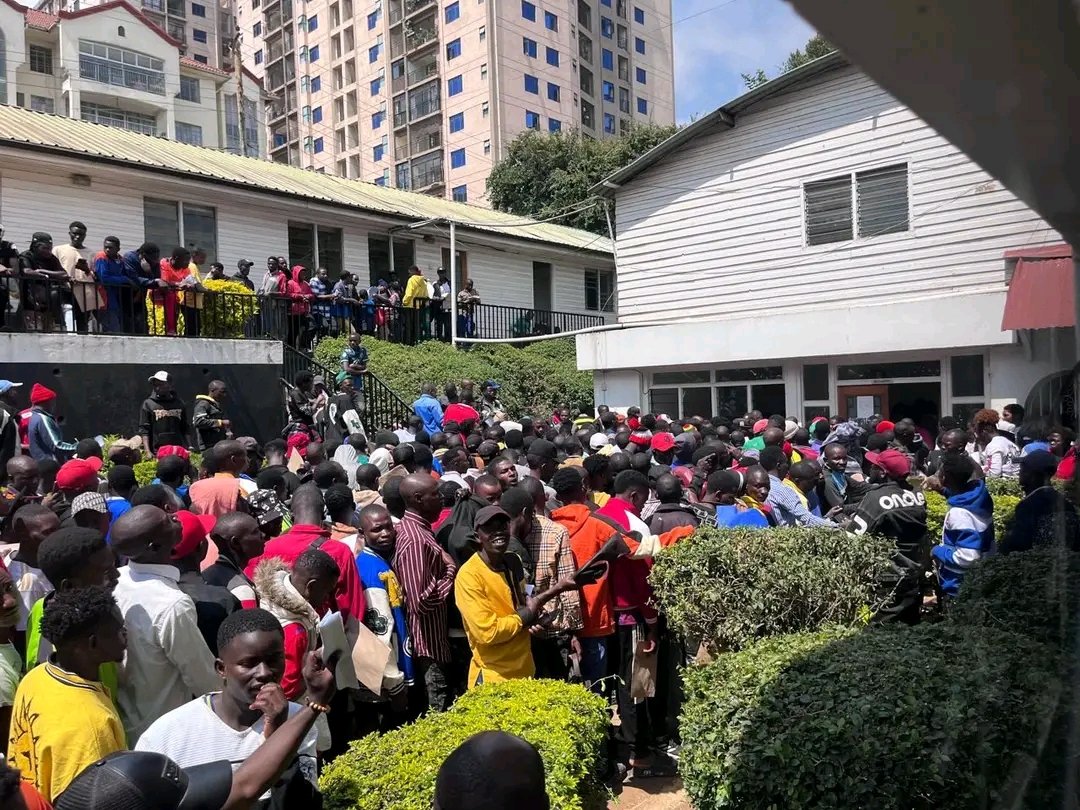
Footage obtained by Kenyan media on Monday, September 7, showed large groups of Burundian nationals with luggage at Nairobi's Machakos Country Bus Station as they sought transport home.
Burundians flock a cybercafé in Kilimani, Nairobi, as they rush to process travel documents amid threats to leave Kenya pic.twitter.com/dMn8pwKhyy
Similar scenes were reported at the Kenya-Uganda border in Malaba, where travellers were scrambling for bus tickets, while others gathered at the Burundi Embassy in Nairobi to obtain travel documents.
The rush follows remarks by Ruto on September 2, when he directed authorities to dismantle small-scale retail and hawking operations run by foreign nationals, effective September 7.
Addressing small-scale traders at State House in Nairobi, Ruto said Kenya remained open to foreign investment but argued that foreign investors should establish businesses that create jobs and expand production rather than compete with Kenyans in small-scale trading.
'It cannot be that a person comes from China or elsewhere to be a hawker or open a small shop,' Ruto said.
Trade Cabinet Secretary Lee Kinyanjui later said most foreign small-scale traders had violated visa or regulatory requirements. Those meeting the relevant immigration requirements, he said, would need an operating licence to resume their businesses.
The directive has particularly unsettled Burundian traders, with their government raising concerns over reports of violence and the loss of property among its citizens, while also fuelling fears of xenophobic attacks similar to those witnessed in South Africa.
The Burundi Foreign Affairs Ministry said several Burundian traders engaged in small-scale businesses had faced dispossession and what it described as unjustified violence.
It also accused Ruto's remarks of worsening tensions.
'The Kenyan government will be held responsible for anything that happens to Burundian citizens, and Burundi reserves the right to take the necessary measures under the framework of reciprocity,' the ministry said.
Burundi, however, said it respected Kenya's right to determine its trade policies, while urging authorities to protect the dignity and safety of its nationals.
The developments have also sparked criticism over the implications of Kenya's crackdown for the East African Community, which promotes the free movement of people and closer economic integration among member states.
Critics argue that targeting foreign nationals engaged in small-scale trade could undermine the spirit of regional integration, particularly as citizens of EAC member states routinely move across borders for work, trade and business.
The issue has also revived concerns about tensions between local traders and migrants from neighbouring countries, with Burundian nationals among those who have faced accusations of competing with Kenyans for jobs and business opportunities.
The EAC comprises eight member states, including Kenya, Burundi, Rwanda, Uganda, Tanzania, South Sudan, the Democratic Republic of Congo and Somalia.
Kenya hosts hundreds of thousands of refugees and migrants, many of whom live and work outside refugee camps. Government figures showed that the country had about 857,000 registered refugees and asylum seekers by the end of June, with nearly 14 percent living in urban areas.
Kenyan law allows refugees to work and operate businesses provided they obtain the required documentation.
Ruto's directive has therefore raised questions over how the crackdown will be implemented and how it will affect foreign nationals who are legally authorised to work or operate businesses in Kenya.
For Burundi, the immediate priority has shifted to facilitating the safe return of citizens who no longer feel secure remaining in Kenya.
Sections of the Burundian community have also appealed to Ruto to reconsider or relax the directive, arguing that the announcement left many traders unprepared for its implementation.
Hundreds of Burundians scramble for emergency travel documents at their embassy in Nairobi as President William Ruto's crackdown on foreign traders sparks panic and a diplomatic row.
Shema, 48, is accused of issuing unfunded cheques and obtaining another person's property through fraud. He denies the charges.
The court ordered his detention on September 2, 2026, citing the ongoing investigation and the fact that the offences he is accused of carry prison sentences of more than two years.
IGIHE has learned that Shema filed his appeal at the Nyarugenge Intermediate Court on September 4. A hearing date has not yet been set.
During the August 26 hearing, prosecutors argued that there were strong grounds linking Shema to the alleged offences and that he could flee if released while investigations were ongoing.
The case relates to an agreement worth more than €1 million between Shema's company, Africa Medical Supplier Plc, and UAE-based ABZL International General Trading LLC. The agreement, signed in January 2024, involved supplying medical equipment under a World Bank-funded contract for the Democratic Republic of Congo.
Prosecutors said Shema's company failed to meet its payment obligations and later issued two cheques worth $400,000 and $200,000 in August 2025. They said the bank confirmed the cheques were not backed by sufficient funds, with the company's account holding only $1,183 during the relevant period.
Shema told the court that the dispute arose from problems with ABZL's bank account and disagreements among its shareholders. He said his company had previously paid $800,000 under the agreement and maintained that he had acted in good faith.
His lawyer, Sangano Yves, argued that the matter was fundamentally a commercial dispute and questioned the evidence surrounding the cheques.
Shema also told the court that he owns assets worth more than Rwf5 billion that could be used as bail security and pledged not to evade justice if released.
Shema Fabrice has appealed a 30-day provisional detention order.
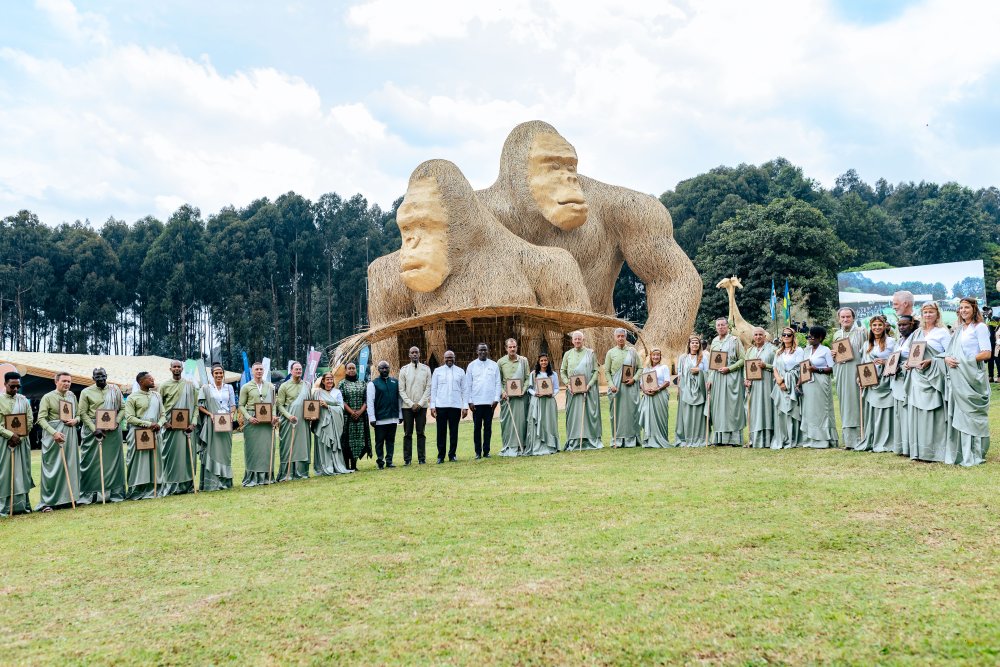
The company was among the sponsors of the 21st edition of Kwita Izina, the annual gorilla naming ceremony held on Friday, September 5, 2026, in Kinigi, Musanze District, where 22 baby mountain gorillas were given names.
Speaking to IGIHE, Spiro Rwanda's Head of Commercial Department, Shanton Ngabire said the company participated in the event because environmental protection is central to its activities.
'The first thing we prioritise as Spiro is environmental conservation, so that we can have a better Rwanda. Every living thing deserves to be protected so that it can live in a clean environment,' she said.
'That is why we came to join everyone else in ensuring that gorillas have a good environment where they can also breathe clean air.'
Ngabire said Spiro is also expanding the availability of electric motorcycles in districts surrounding Volcanoes National Park as part of efforts to reduce pollution from conventional motorcycles.
'In addition to supporting conservation around the Volcanoes, we are working hard to help people switch from fuel powered motorcycles that pollute the environment to electric motorcycles, bringing cleaner transportation closer to them,' she said.
Spiro has expanded its operations in Musanze and other areas near the park. Ngabire said the company currently has 24 battery-swapping stations in Musanze and is continuing to expand towards Rubavu.
'All districts around Volcanoes National Park have branches where Spiro motorcycles are available,' she said.
The company currently has more than 25,000 electric motorcycles operating in Rwanda and more than 350 battery-swapping stations across the country. It plans to continue expanding both its motorcycle fleet and charging infrastructure.
Beyond environmental benefits, Spiro has also become a source of employment in Rwanda. The company currently has 1,650 employees working in various areas of its operations, in addition to the motorcycle riders who use its electric motorcycles.
Spiro was among the sponsors of the 21st Kwita Izina ceremony.Twenty-two prominent figures named baby gorillas born over the past year. Spiro showcased its activities in Musanze during Kwita Izina
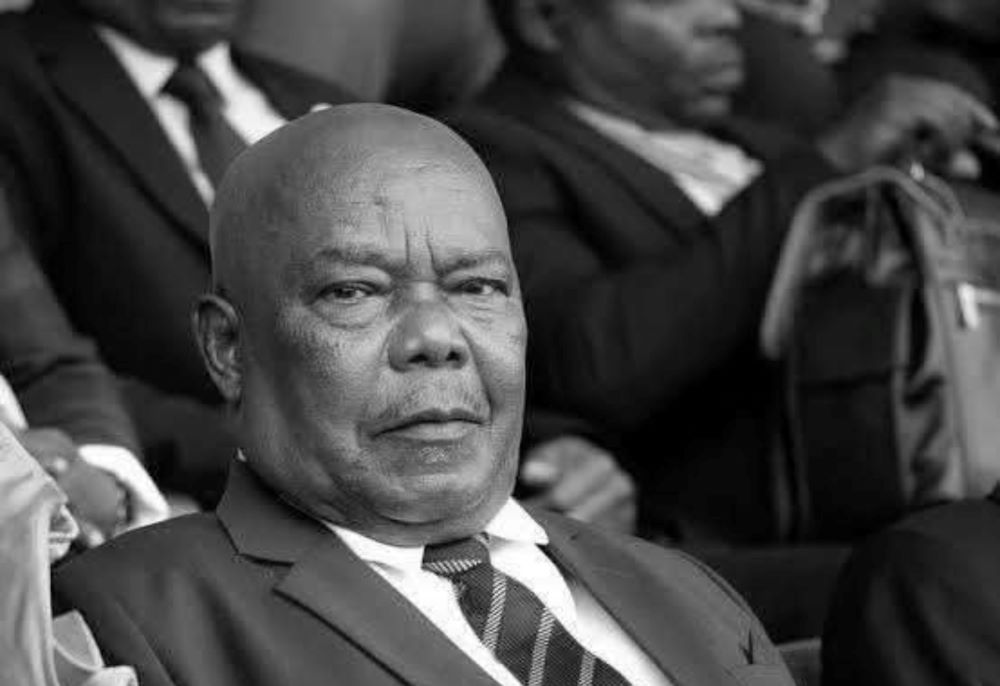
Hassan died at about 8 a.m. at Emilio Mzena Memorial Hospital, where he had been undergoing treatment, Vice President Deogratius Ndejembi announced.
'With great sadness, I inform you of the death of Mr Hafidh Ameir Hassan, husband of the President of the United Republic of Tanzania, Samia Suluhu Hassan,' Ndejembi said.
He offered condolences to President Samia, her family, relatives and friends, as well as Tanzanians, adding that funeral arrangements had begun in Kizimkazi, Zanzibar.
Tributes followed from across the region, including from Kenyan President William Ruto, who said he received the news with 'great sorrow.'
Ruto described Hassan's death as a personal loss for the Tanzanian president and their family.
'President Samia has lost a lifelong companion, her children a beloved father, and Tanzania a distinguished son,' he said.
'Kenya stands with our Tanzanian brothers and sisters in this moment of grief,' Ruto added, wishing President Samia and her family strength and comfort during the difficult period.
The Africa Centres for Disease Control and Prevention also expressed condolences to the Tanzanian president and her family.
Hassan, a Tanzanian agriculturalist, became Tanzania's First Gentleman after his wife assumed the presidency in 2021. The couple married in 1978 and had four children, three sons and a daughter.
Their daughter, Mwanu Hafidh Ameir, is a politician serving in the Zanzibar House of Representatives.
Hassan maintained a relatively low public profile throughout his wife's political career and was rarely seen alongside her at public events.
Hafidh Ameir Hassan, husband of Tanzanian President Samia Suluhu Hassan, has died in Zanzibar while receiving treatment for a heart condition.
The Rwandan champions travelled to Lubumbashi on Sunday, September 6, 2026, for the first-leg match at Frédéric Kibassa Maliba Stadium.
The match was played behind closed doors, with no fans allowed into the stadium, as APR FC sought to avoid exposure to the Ebola outbreak reported in the country.
APR FC's trip ended in disappointment after Sozé Zemanga scored the only goal of the match for Les Aigles du Congo in the 45th minute.
The defeat was compounded by the dismissal of Ssekiganda, who was shown a red card after the final whistle following an altercation with the match officials. The midfielder will therefore miss the return leg in Kigali.
APR FC players and officials were expected to return to Rwanda immediately after the match to begin preparations for the decisive second leg.
The return match will be played at Amahoro Stadium in Kigali on Friday, September 11, 2026, at 3 p.m.
APR FC will need to overturn the one-goal deficit to progress and will also have to avoid conceding at home, which would further complicate their qualification hopes.
The winner of the tie between APR FC and Les Aigles du Congo will face either Egypt's Zamalek SC or Djibouti's AS Port in the second preliminary round, scheduled for October 2026.
APR FC's starting lineup.APR FC lost 1-0 to Les Aigles du Congo in the first leg of the CAF Champions League preliminary round.The match was played behind closed doors, with no fans allowed into the stadium, as APR FC sought to avoid exposure to the Ebola outbreak reported in the country.
Covering nearly 10,000 kilometres from Kigali through Addis Ababa to Beijing, the trip was made possible by my media house, IGIHE, which gave me the opportunity to travel, learn and share the experience with readers. Journalism lets us report from a distance, but some realities only make sense firsthand.
Leaving Kigali for the unknown
At Kigali International Airport, everything felt unfamiliar but exciting. Boarding the Ethiopian Airlines flight, I watched the safety demonstration and felt the aircraft accelerate down the runway, small routines to frequent flyers, but unforgettable to me.
As we climbed, Rwanda shrank beneath the clouds. During the roughly four-hour flight to Addis Ababa, meals were served while I sat thousands of metres above the ground, watching the flight map to track our progress across the continent. Around 9:00 PM, the pilot announced our descent into Addis Ababa.
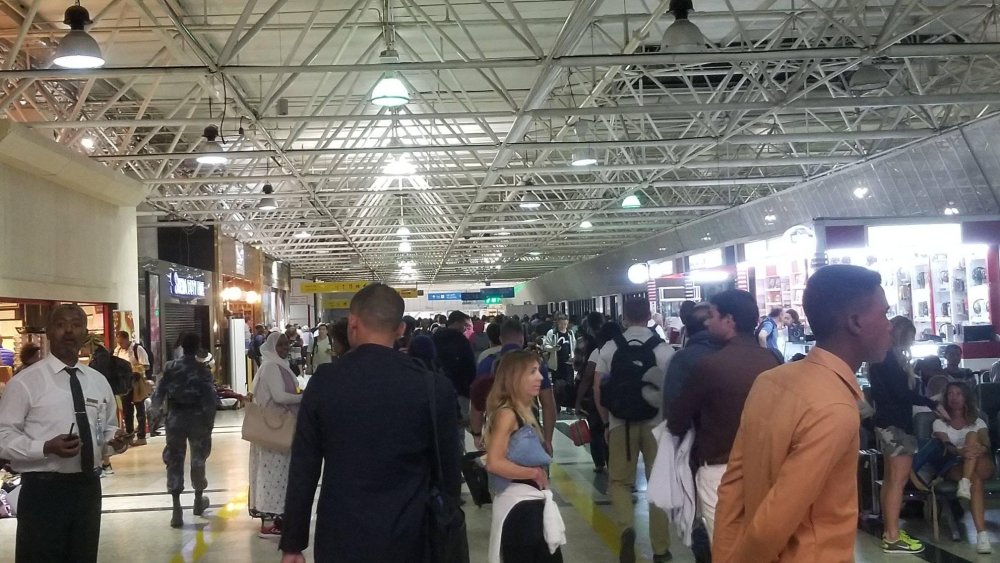
Addis Ababa Bole International Airport revealed the scale of international travel, with passengers from many countries, staff assisting travellers and screens listing destinations across Africa, Asia, Europe and beyond.
Addis Ababa International Airport is always bustling with people.
Finding my connecting flight was difficult in an airport far larger than anything I'd experienced, but I followed signs and asked for help until I found my way. It struck me that airports aren't just transit points, they're where cultures and journeys intersect. Everyone around me was headed somewhere different. Mine was Beijing.
Eleven hours to the other world
The Addis Ababa–Beijing leg, roughly 11 hours on an Airbus A350, a long-haul aircraft that can carry more than 300 passengers, was a different kind of experience altogether. Seeing hundreds of people travelling together inside one machine reminded me how far human innovation has come.
Around me, passengers slept, watched movies or tracked our progress on the map; for me, it was a moment of reflection, leaving Africa by air toward a country of more than 1.4 billion people and one of the world's largest economies. As we approached Beijing, the city slowly revealed itself through the window, with vast roads and buildings stretching further than I had imagined.
Entering China's scale
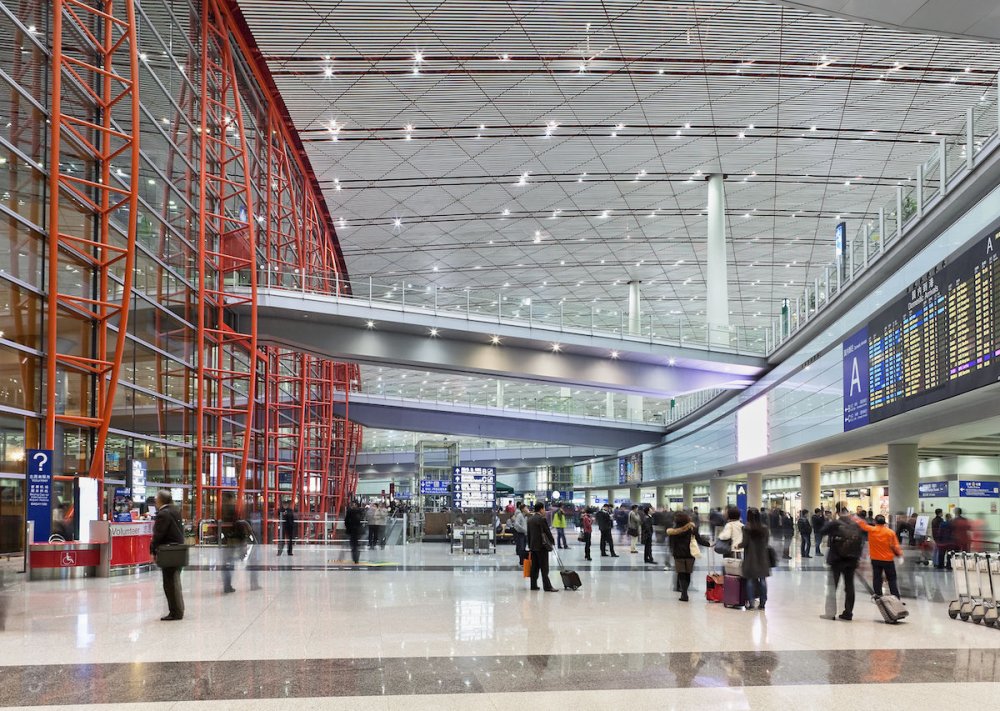
Beijing Capital International Airport felt like a city in itself. My first challenge wasn't its size but finding my way through it. Immigration involved electronic forms, new to me, and demanded patience; guidance beforehand from my friend Liu Qingxia at the Chinese Embassy in Rwanda helped me prepare.
As soon as you arrive at Beijing International Airport, you immediately get a sense of China's sheer scale and grandeur.
Even collecting luggage, on a continuously moving conveyor system, became a small adventure in its own right, one new experience after another.
Discovering China through CIPCC and Renmin University
My journey continued to Renmin University of China, where I joined the 2026 China International Press Communication Centre (CIPCC) program, bringing together 98 journalists from 90 countries across Africa, Asia-Pacific, Europe, Latin America and the Middle East.
Organised by the China Public Diplomacy Association under China's Ministry of Foreign Affairs, the program let journalists learn about China's development and global engagement through direct experience. I'm grateful to CIPCC's leaders and the Chinese government for creating this platform, and to Renmin University, founded in 1937 and renowned in economics, law, social sciences and humanities, for hosting us.
Beijing: A city built around technology
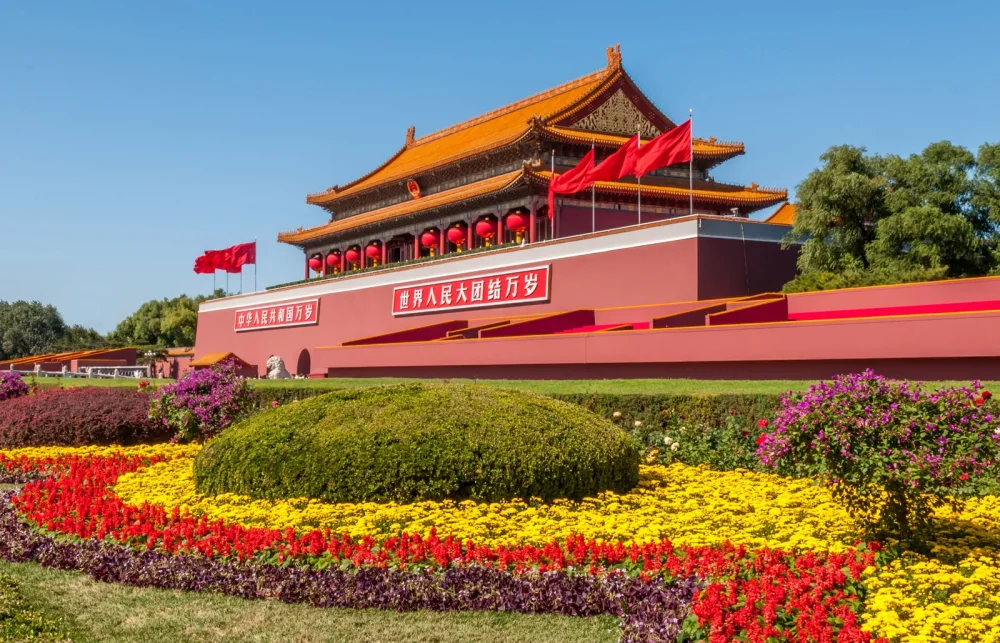
Moving through Beijing's streets gave me my first direct impression of China's development. Beyond being China's political centre, it is a global hub where technology, education and business converge.
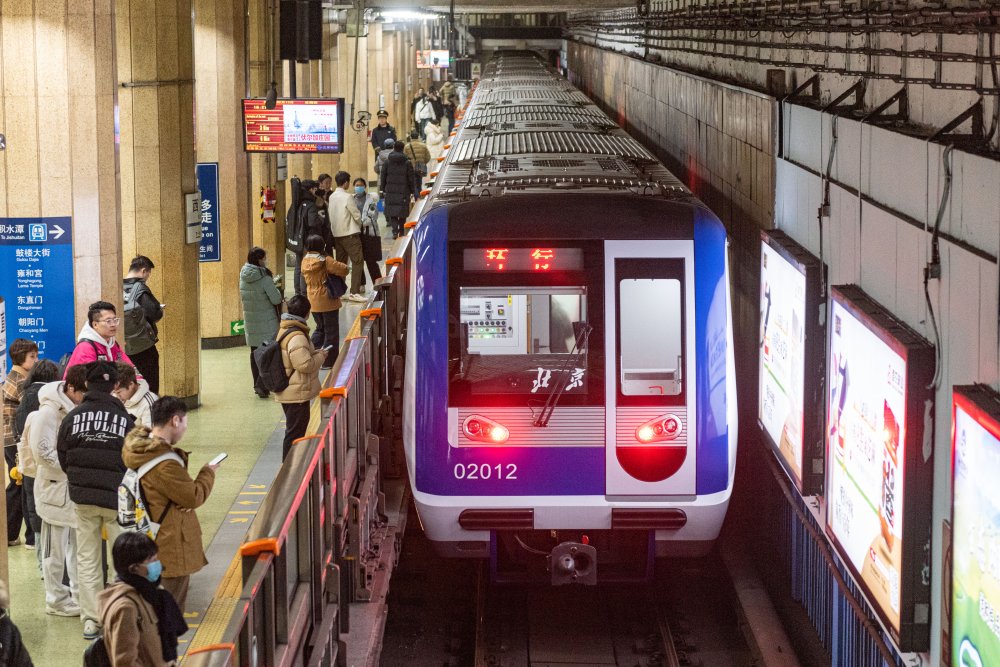
The city is home to one of the world's largest subway networks, stretching more than 800 kilometres, while China also has the world's largest high-speed railway network.
Vehicles are constantly moving through the streets, reflecting the city's fast-paced rhythm.
What struck me most was the balance: despite its huge population, Beijing has parks, green spaces and carefully planned neighbourhoods. Electric buses and vehicles are common, signalling a shift toward cleaner transport.
Technology was the biggest difference I noticed. Digital systems are woven into daily life, from buying food and paying for services to communicating through platforms like Alipay and WeChat Pay.
The idea of a cashless society became real to me. Finding food during my first days required help from colleagues who understood the system better, teaching me that preparation is essential when visiting China. Tools such as WeChat, Alipay, navigation apps and reliable internet access can make the experience much easier.
Travelling by subway to Dingfuzhuang in Chaoyang District, about 40 kilometres from Haidian District, showed me how millions of people move efficiently through a massive city. My colleague Mugisha, more experienced in China, helped me adapt faster.
The subway provides another modern and efficient way to travel between different parts of Beijing.
This first journey from Kigali to Beijing changed how I understand the world, teaching me about adaptation, preparation and the value of seeing development firsthand rather than from afar. China is a place where ancient history sits alongside advanced technology, while Beijing is a city where infrastructure reflects long-term planning.
It was not simply a journey from Kigali to Beijing. It was a journey into a different vision of what the future can become.
China has built an extensive and modern infrastructure network. These buildings may look familiar to many people, having appeared in various films.Many see China as a model of what the future may hold.
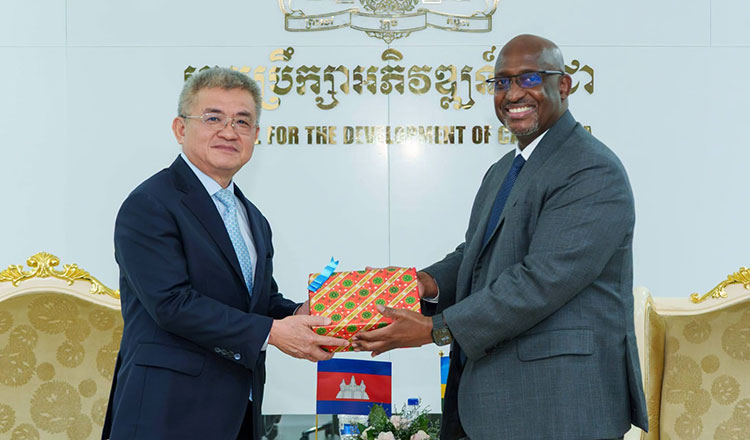
The discussions were held on Thursday during a meeting between Chea Vuthy, Secretary-General of the Cambodian Investment Committee of the Council for the Development of Cambodia (CDC), and Rwanda's Ambassador to Cambodia, Bakuramutsa Nkubito Manzi, and his delegation.
According to Cambodian media, the meeting focused on ways to deepen economic and investment relations between the two countries, with Vuthy highlighting the importance of stronger cooperation to support sustainable economic growth, enhance resilience, and attract quality investment.
Vuthy also commended Rwanda's progress in economic diversification and transformation, investment promotion and private-sector development.
He said the two countries could benefit from sharing experiences and best practices in these areas as they seek to expand economic cooperation.
A key proposal discussed during the meeting was the signing of a Memorandum of Understanding (MoU) between the Cambodian Investment Committee of the CDC and the Rwanda Development Board (RDB).
The proposed agreement would provide a framework for cooperation in investment promotion and business facilitation while helping establish stronger links between the private sectors of Cambodia and Rwanda.
The two sides expressed their commitment to strengthening economic cooperation and turning the proposed initiatives into concrete actions that could generate mutual benefits.
The discussions come as Rwanda continues to seek greater foreign investment and expand economic partnerships with countries beyond its traditional markets.
For Cambodia, closer engagement with Rwanda could provide an opportunity to strengthen its economic presence in Africa while opening avenues for businesses from both countries to explore new markets and partnerships.
Secretary-General of the Cambodian Investment Committee of the Council for the Development of Cambodia Chea Vuthy (L) meets with Rwanda's Ambassador to Cambodia, Bakuramutsa Nkubito Manzi at CDC on Thursday.
By the time the seller responds, the customer may already have moved on.
This is the fragmented reality of social commerce that Zimbabwean fintech ChatCash is trying to change by turning messaging conversations into complete digital storefronts.
The fintech allows small businesses to create online shops, showcase products, communicate with customers and receive payments without forcing buyers to leave the messaging platforms they already use.
Launched in 2023, ChatCash has developed APOMA, an artificial intelligence-powered conversational operating system that enables businesses to create fully automated digital storefronts within messaging applications such as WhatsApp.
Months after expanding into Rwanda and securing a fintech pilot licence, ChatCash is positioning Kigali as a base for its planned expansion into other African markets.
John Sakala, the company's CEO, says the idea is built around a simple observation: much of Africa's commerce is already happening through conversations.
'The future of commerce is conversational, and Africa is where it's beginning,' Sakala told IGIHE in an exclusive interview.
He said businesses and customers increasingly begin transactions through platforms such as WhatsApp, Facebook and other messaging services, but the tools supporting those transactions remain fragmented.
A customer may ask about a product on WhatsApp, make a payment through mobile money or a bank account, and then send a screenshot to prove that the money has been transferred.
ChatCash wants to put those steps in one place.
Turning a chat into a shop
According to Sakala, a merchant can use ChatCash to build an online storefront in about six minutes.
The business owner creates a profile, uploads products and connects an AI-powered assistant to the store.
That assistant acts as a digital salesperson, responding to customers around the clock through messaging platforms.
The system can communicate in local languages, including Kinyarwanda, as well as French and English, according to Sakala.
Instead of directing customers to a separate website, the business can meet them where the conversation has already started.
'When a customer comes to the WhatsApp number linked to your storefront, they are responded to conversationally,' Sakala explained.
Once the customer decides to buy, the payment can also be completed within the conversation.
ChatCash connects different payment options, including mobile money and bank accounts, allowing the customer to complete the transaction without moving to another platform.
For Sakala, that is the difference between traditional e-commerce and what he calls conversational commerce.
An e-commerce platform such as Shopify gives a business a dedicated online store and expects customers to visit that platform.
ChatCash, on the other hand, brings the store to the customer.
'The dynamic in Africa is that your customers are already talking to you on WhatsApp,' he said.
'We're not giving you a platform to trade on or dictating where you should trade. We're helping you communicate in a more organized way, right where your customers already are.'
Sakala says the system can communicate in local languages, including Kinyarwanda, as well as French and English, according to Sakala.
Beyond chatbots
ChatCash's technology goes beyond automated responses to frequently asked questions.
Sakala describes its AI-powered systems as autonomous agents that can make decisions within parameters defined by a business.
For example, an agent can respond to questions about products, manage a shopping cart, verify information, collect a delivery location and operate within price ranges set by the merchant.
That allows the AI assistant to function more like a salesperson than a conventional chatbot.
'The agent represents you when you're not there,' Sakala said.
The company believes such technology could be particularly useful for micro and small businesses that cannot afford dedicated staff to manage online sales throughout the day.
From Zimbabwe to Rwanda
ChatCash began its journey in Zimbabwe, where Sakala says the company built its initial customer base.
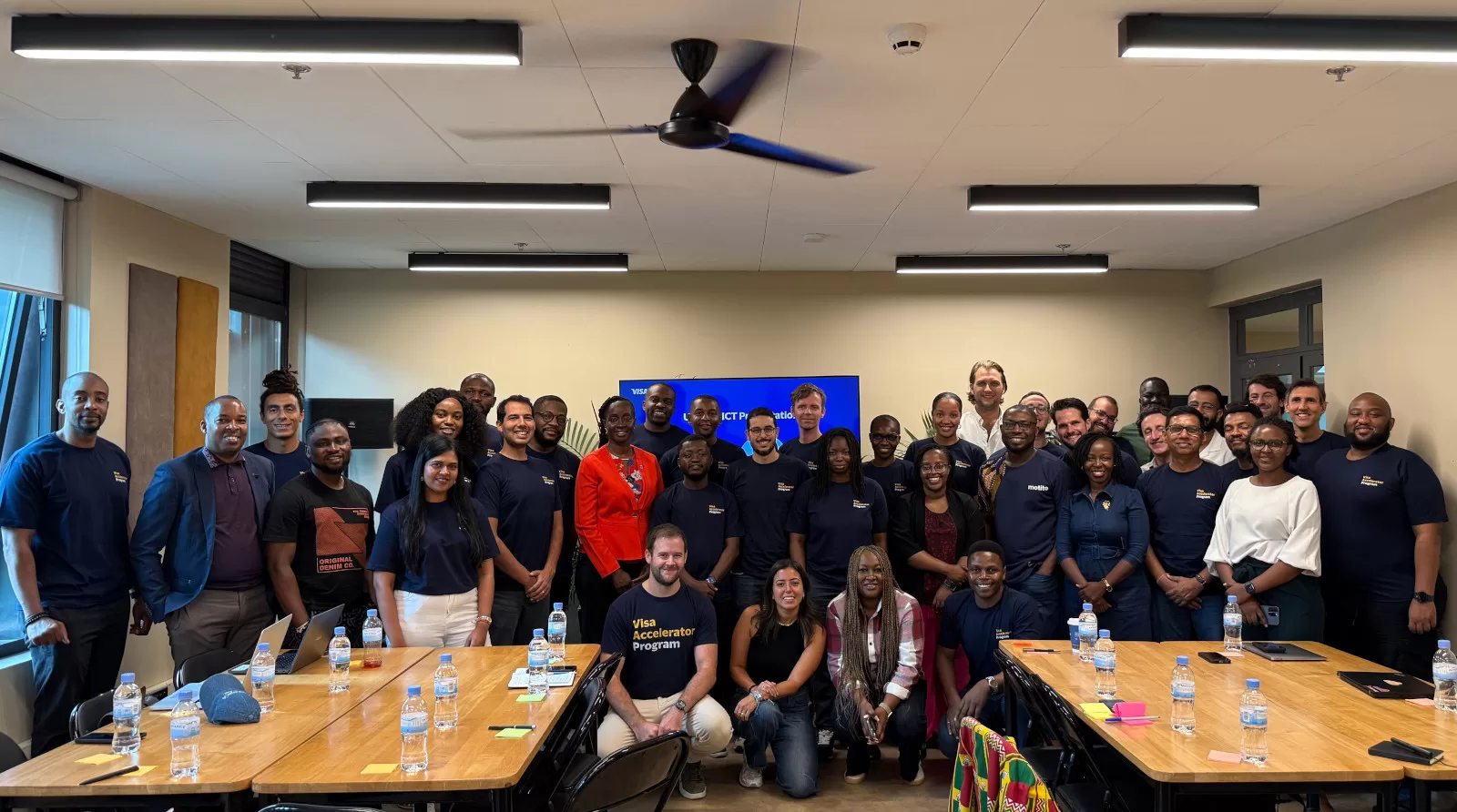
Its move into Rwanda followed Sakala's participation in the Visa Accelerator Programme in September 2025.
The startup was previously selected for the Visa Africa Fintech Accelerator, gaining access to mentorship, product development support and Visa's global investor network.
The programme brought him to Kigali and introduced him to Norrsken House Kigali, where he learned more about Rwanda's business environment.
He returned to Rwanda in December and has since established ChatCash Rwanda as the company's regional headquarters for East Africa.
Sakala says the country's regulatory environment and multilingual market were among the factors that made Rwanda attractive.
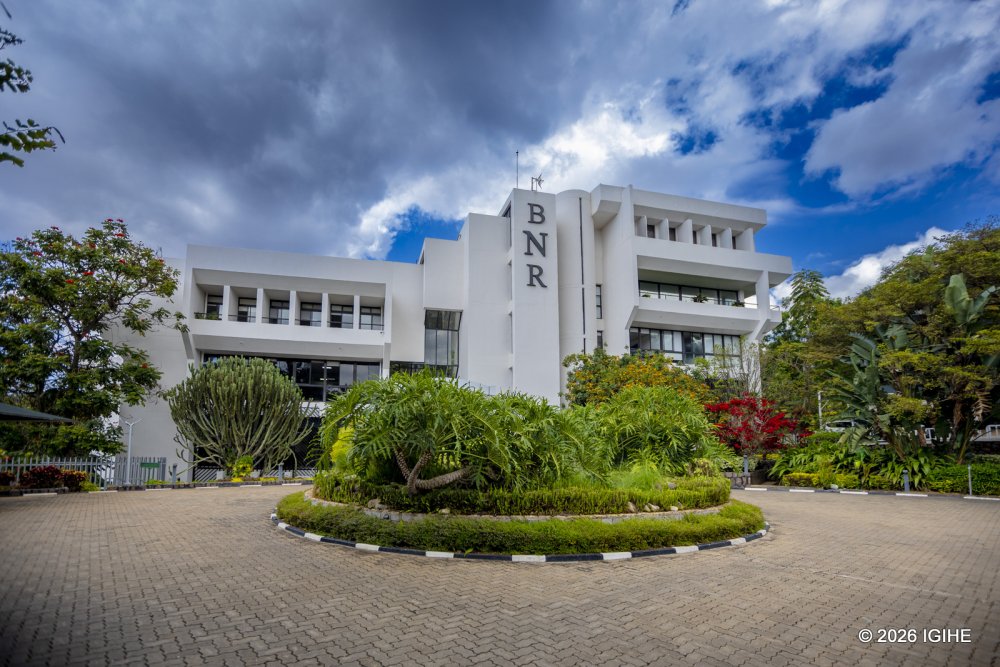
He also points to the ease of registering a business and the support provided by institutions including the Kigali International Financial Centre and the National Bank of Rwanda.
The fintech recently secured a pilot licence from the National Bank of Rwanda, the regulator.
For ChatCash, Rwanda is not simply another market. It is intended to serve as a launch pad for the company's broader African expansion.
Sakala said the company is looking at Ghana and Nigeria as its next markets, while also targeting countries including Kenya and South Africa as part of its longer-term pan-African strategy.
'We believe this is a very good foundation for getting into other markets as well,' Sakala said.
He highlighted the possibility of licence passporting as another advantage of building the business in Rwanda, saying the framework can facilitate expansion into markets such as Ghana and Kenya with reduced onboarding requirements.
ChatCash enters Rwanda's fintech sandbox
ChatCash recently secured a pilot licence to operate as a fintech in Rwanda.
The pilot will initially involve a limited number of businesses and will operate within parameters set by the regulator, including limits on the amount of money that can be held in wallets.
Sakala said the company expects to start with about 100 businesses, despite having a waiting list of nearly 4,000 merchants.
He described the pilot as a controlled environment where the company can test its technology and operations before moving toward a full licence.
Once the process is completed and the limits are lifted, ChatCash plans to serve more merchants, including businesses on its waiting list.
The company has already spoken to more than 3,900 businesses in Rwanda, according to Sakala, while another 1,215 businesses have shown interest in Zimbabwe.
He said merchants have particularly appreciated the ability to bring their existing WhatsApp conversations, products and payments into a single system.
Moving beyond screenshots
One of ChatCash's key propositions is eliminating the reliance on screenshots as proof of payment.
Sakala said the platform creates a verifiable record for every transaction, allowing businesses to see the status of payments rather than relying on customers to send screenshots.
ChatCash has integrated with eKash, Rwanda's interoperable payment system, as well as MTN MoMo and other payment infrastructure.
The company also works with regional players such as Onafriq and Modu Pay.
Sakala said eKash is particularly important because it connects bank accounts and mobile money wallets while reducing the cost of transactions.
He argues that such interoperability could make it easier for fintech companies to build services around Rwanda's financial infrastructure.
From transactions to creditworthiness
ChatCash also sees another opportunity in the transaction records generated by small businesses.
Many micro-merchants operate across cash, mobile money and bank transfers, leaving them with limited formal records of their business activity.
Sakala believes that putting those transactions into a traceable digital system could eventually help merchants demonstrate their business performance to financial institutions.
'Every transaction counts,' he explained. 'The cash is in the chat.'
The platform, he argues, can create a record showing that a merchant has been trading consistently, potentially strengthening their ability to seek financing.
For businesses that have traditionally struggled to demonstrate their income and transaction history, ChatCash hopes its platform can become more than a sales tool.
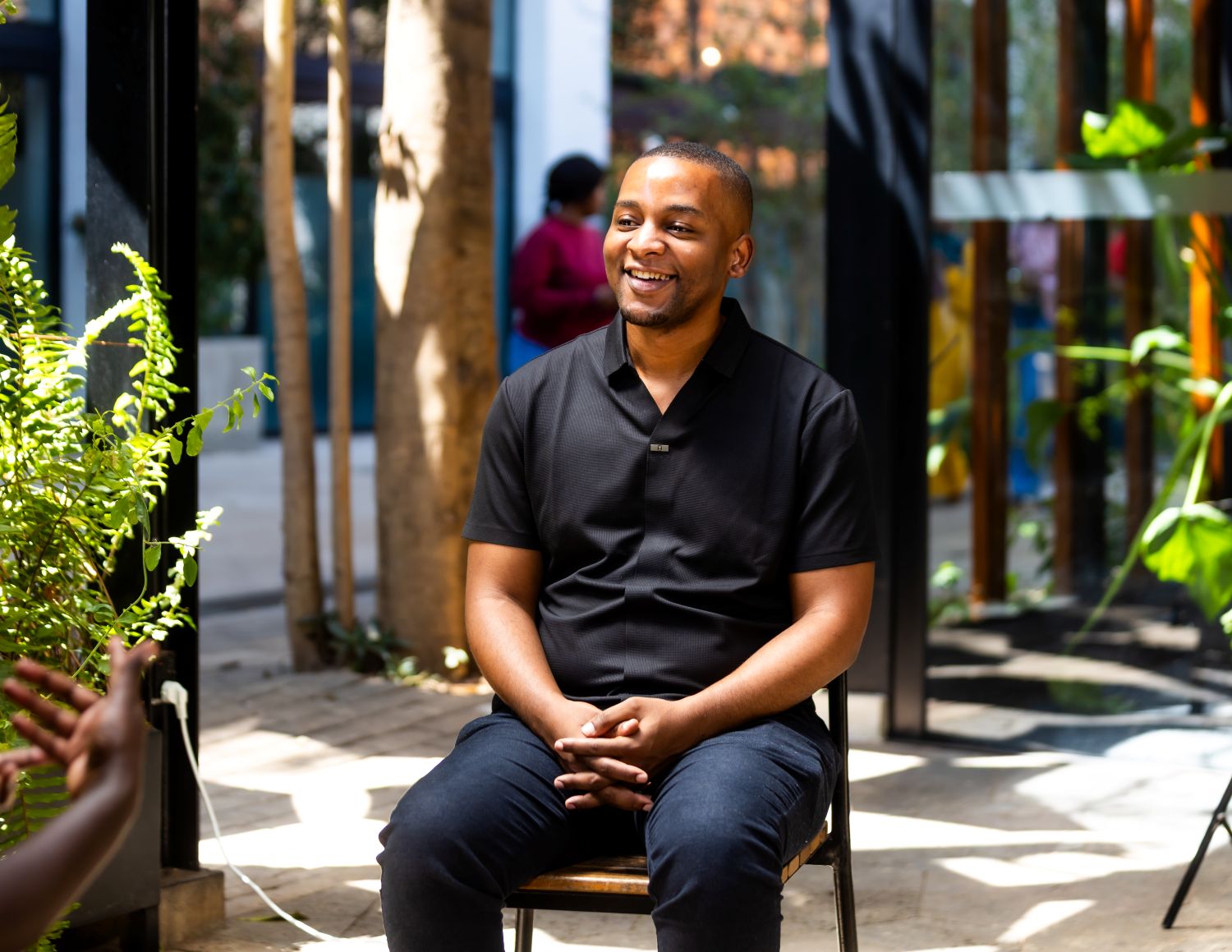
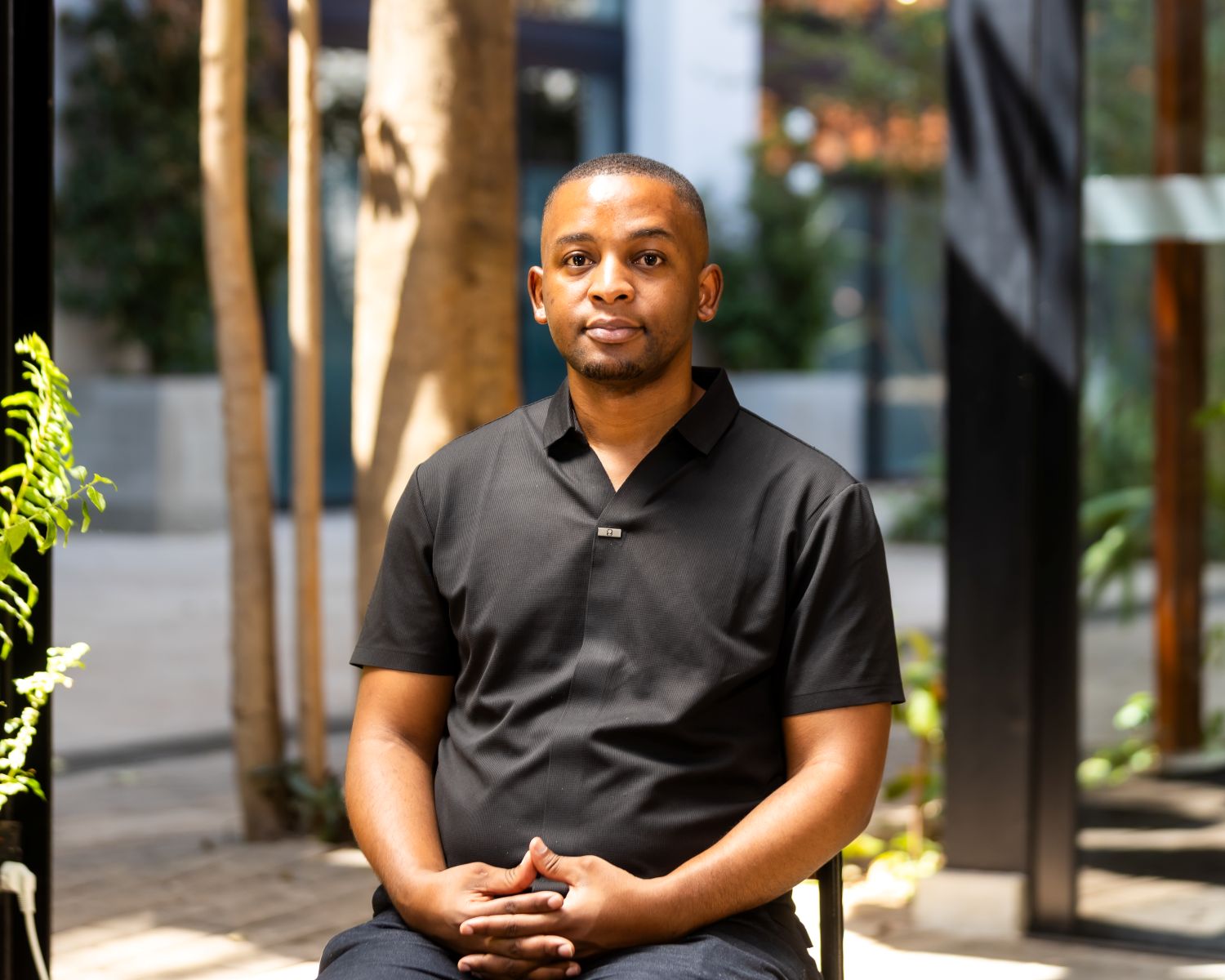
ChatCash CEO John Sakala says the platform can help merchants build transaction records that could strengthen their ability to access financing.
Expansion plans
The company is preparing to raise more capital to support its expansion.
Sakala said ChatCash plans to seek about $5 million in its upcoming fundraising efforts and has been selected as a finalist in a financial inclusion competition organised by FINCA Ventures.
The startup founder will travel to San Francisco and London in October to participate in the FINCA Ventures Final Celebrations and Pitch Event, where the company will compete alongside other leading African startups developing solutions to expand financial inclusion and pitch to investors.
Financing the merchants' marketing
ChatCash's ambitions extend beyond payments and online storefronts.
Sakala said the company is working with local banks on a product that would help merchants finance their digital advertising.
Instead of paying upfront to advertise on platforms such as Facebook or LinkedIn, eligible businesses could receive marketing financing and repay after generating sales.
He expects the product to launch within two months, although the exact timing will depend on the company's rollout.
The data centers, supported by U.S. President Donald Trump, have emerged as a key topic ahead of the 2026 midterm elections. Recent polls have found that more than 70 percent of the public opposes data centers near them, according to The Wall Street Journal, forcing governors and candidates who had previously embraced AI to backtrack on their positions.
Power pressure
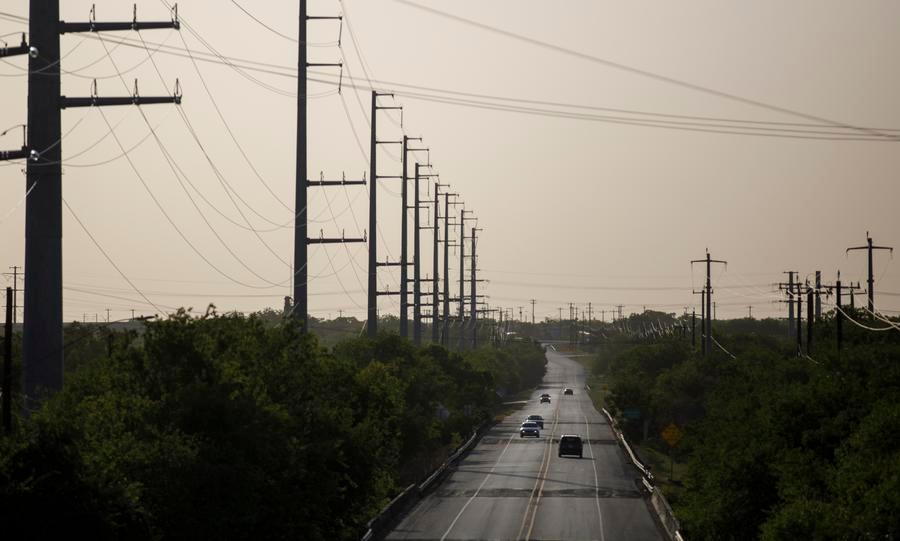
The biggest source of public concern is the strain that data centers place on the power grid, with residents worried that the rapid expansion of such facilities could lead to higher electricity bills.
The concern comes as electricity prices have climbed across the country. Average electricity costs in the U.S. have risen more than 35 percent in the last five years, according to the Bureau of Labor Statistics.
Many consumers are blaming data centers for rising electricity costs, though the industry says it isn't solely to blame, according to the WSJ report.
The pressure is particularly visible in Texas, one of the country's fastest-growing data center hubs. The state recently froze new grid connections for data centers and launched an audit of proposed projects amid concerns over whether the surge in electricity demand can be reliably managed.
In March, major technology companies, including Microsoft, Amazon, Google, Meta, xAI, Oracle and OpenAI gathered at the White House to sign Trump's 'ratepayer protection pledge,' committing to 'paying the full cost of their energy and infrastructure, no matter what.'
However, the Financial Times reported the pledge lacks an enforcement mechanism and remains vague on which infrastructure costs data centers would have to cover.
The biggest source of public concern is the strain that data centers place on the power grid, with residents worried that the rapid expansion of such facilities could lead to higher electricity bills.
Other concerns
Beyond concerns about electricity costs, opposition has also focused on the broader environmental and community impacts of data centers.
In rural Nebraska, The Associated Press reported that residents worried about 'dwindling farmland' and 'declining water supplies' as large technology companies expand data center projects, while residents in East Texas complained of being forced to live in a 'gas cloud' so data centers could get enough electricity.
The report also cited Kardal Coleman, who leads the Democratic Party in Dallas County, criticizing data centers for 'replacing our jobs, polluting our air, and exacerbating the climate crisis, not to mention the noise disturbing our neighborhoods.'
A lack of transparency and public involvement has further fueled opposition to data center projects. In Oklahoma, The Washington Post reported how one person opposing a Google data center project said residents had been 'kept in the dark' about what would be built in their community.
Who benefits?
Trump has strongly supported the expansion of data centers during his second term, citing jobs and national security as reasons for accelerating the build-out.
'If they want to be successful and rich, with far lower taxes and jobs all over the place, let Data Reign,' Trump said on social media, referring to communities that reject such projects.
But some data center activists were wary of politicians and powerful corporations asking people to sacrifice in exchange for economic revitalization that may never arrive, according to The Washington Post.
In West Virginia, resident Shaena Crossland said that she feared data centers could repeat the pattern of industries such as coal mining and logging, which extracted resources from the state while leaving many communities struggling economically.
'Hopefully this cycle of extraction and taking advantage of people will stop,' Crossland said.
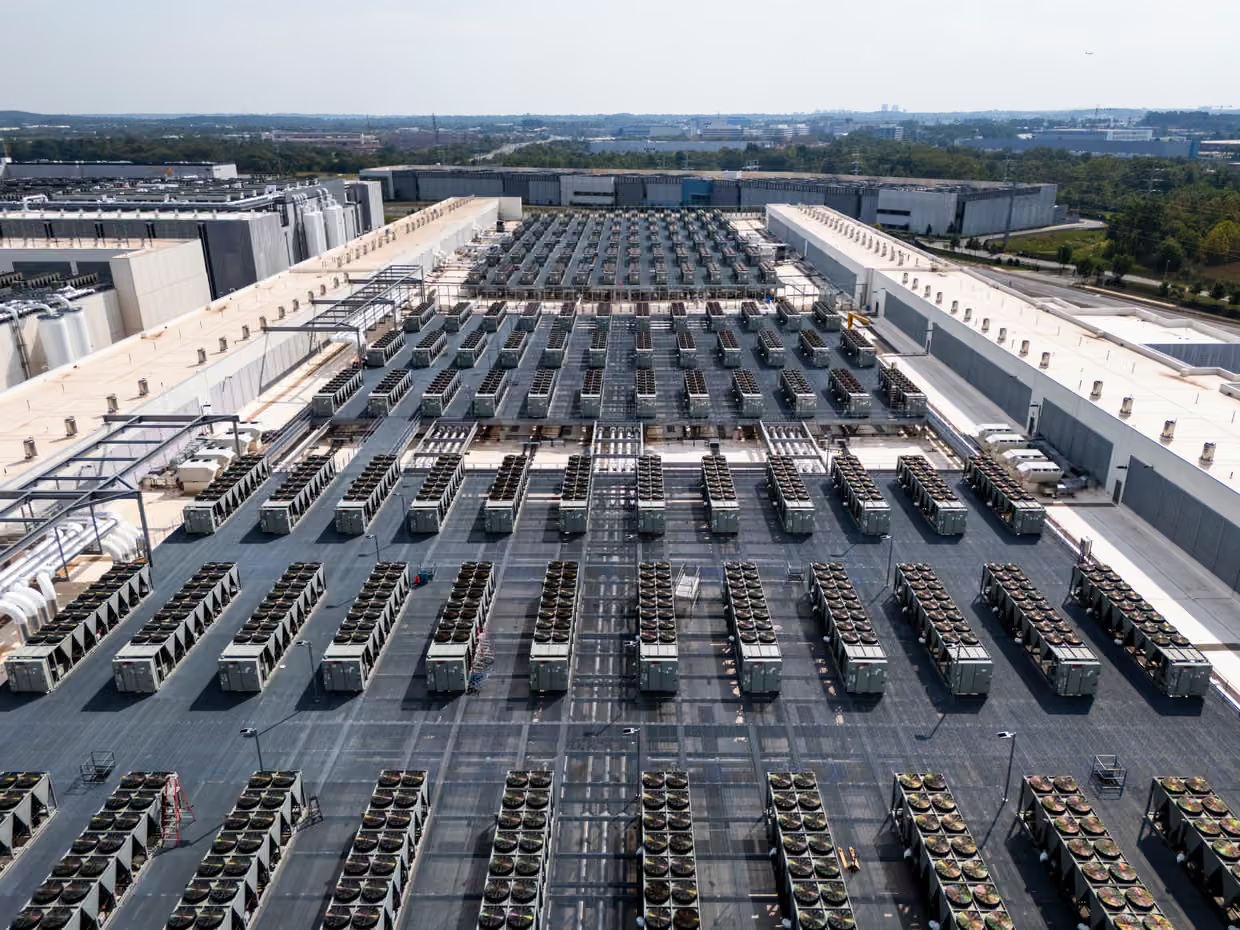
A drone image shows air handling units on the roof of a CloudHQ data center in Ashburn, Virginia.
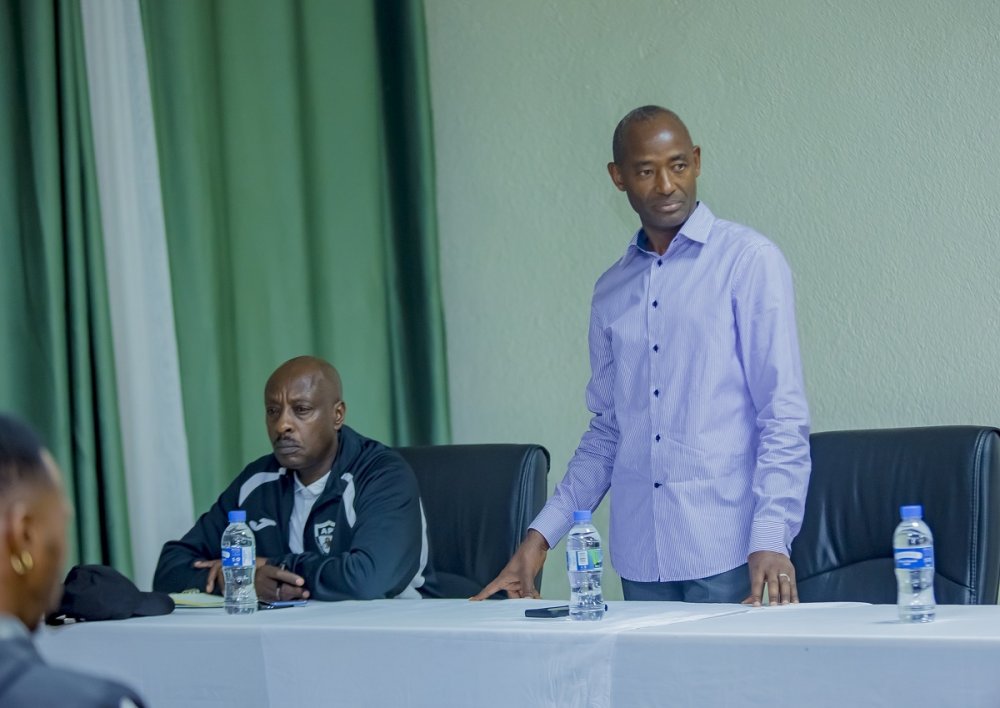
Gen Muganga visited the APR FC squad on Saturday night, September 5, 2026, as the team prepared to travel to the DRC for the first leg of the CAF Champions League first-round qualifier.
Addressing the players, Gen Muganga described the match as one that would require maximum effort, urging them to represent the club and its supporters with pride.
'Fight hard and achieve the mission across the border. You have a game tomorrow, and for us, it is like the final. Victory must be secured there in Lubumbashi. After that, we will meet you at the airport and warmly welcome you for bringing pride to the team and our supporters,' he said.
He also stressed the importance of taking control of the tie in the first leg so that APR FC can approach the return match from a strong position.
'Hopefully, you will perform well in the first leg because that is the key to everything. We should play the second leg having already done our job,' Gen Muganga added.
APR FC departed for Lubumbashi early Sunday, September 6, aboard a chartered aircraft. The match is scheduled for 3 p.m. at Frédéric Kibassa Maliba Stadium.
The Rwandan champions will not spend the night at a hotel in the DRC. Instead, they are expected to travel directly to the stadium before returning to Kigali immediately after the match.
The players travelled to Kinshasa after CAF rejected the club's request to move the first leg from the DRC over security concerns and the Ebola outbreak.
The match will be played behind closed doors, with no spectators allowed inside the stadium due to Ebola concerns.
Players will not be allowed to exchange jerseys after the match, according to the arrangements put in place for the fixture.
Gen Muganga visited the APR FC squad on Saturday night, September 5, 2026, as the team prepared to travel to the DRC for the first leg of the CAF Champions League first-round qualifier.APR FC departed for Lubumbashi early Sunday, September 6, aboard a chartered aircraft. The match is scheduled for 3 p.m. at Frédéric Kibassa Maliba Stadium.