Author: admin

  • German lawmaker urges gov’t to adopt UK’s scrapped Rwanda migration scheme #rwanda #RwOT

    The spokesperson for Germany’s center-right CDU/CSU faction says the government should utilize the preparatory efforts undertaken by the U.K. to enhance their own preparations for the deal.

    According to him, since Rwanda was ready to work with European countries on migration cooperation, the termination of the U.K. deal means more “capacity” for Germany.

    'We should stick to the plan, and make use of the preparations our British partners made for it,' the member of the German Parliament for Heilbronn told a local publication.

    The lawmaker is among members of former Chancellor Angela Merkel’s CDU/CSU faction who have been promoting a proposal for offshore processing of asylum seekers, similar to the scheme adopted by the former UK PM Rishi Sunak’s Conservative Party in the UK. Italy also has a similar plan in the pipeline with Albania.

    Throm’s proposal comes two months after another CDU lawmaker, Jens Spahn, spoke highly of the relations between Germany and Rwanda following his meeting with President Paul Kagame in Kigali, hinting at hopes for future cooperation.

    'We had the great honor of exchanging views with Rwanda’s President Paul Kagame for two hours – discussing current global challenges, the migration agreement with the UK, and the good cooperation between Rwanda and Germany. We aim to further expand this. Thanks for that privilege, Mr President,' Spahn said in a post on X in May.

    Immigration, especially irregular immigration and asylum, is viewed as a major issue in Germany.

    To address the problem, Chancellor Olaf Scholz agreed in principle in late 2023 to explore the idea of offshore processing of asylum claims. Already, the proposal is said to have received support from many senior figures in state government, including the Bavarian Home Affairs Minister Joachim Herrmann.

    However, more effort is needed to secure endorsement of the scheme from two of the three parties in the country’s governing coalition. Both the Greens and Scholz’s Social Democrats oppose the idea, while the center-right FDP is in favour.

    In the UK, the migration scheme aimed to deter illegal migrants from arriving using small boats across the English Channel by moving the migrants to Rwanda. However, the Labour Party differed with the Conservatives over the effectiveness and cost of the plan.

    A day after the new UK prime minister confirmed plans to terminate the agreement, the Rwandan government reaffirmed its commitment to addressing the global migration crisis.

    In a statement released Monday, July 8, 2024, the Office of the Government Spokesperson said that nothing will stand in their way while trying to find solutions to the global migration crisis.

    'We remain committed to finding solutions to the global migration crisis, including providing safety, dignity, and opportunity to refugees and migrants who come to our country,” the Government stated.

    Alexander Throm says the government should utilize the preparatory efforts undertaken by the U.K. to enhance their own preparations for the deal.

    Wycliffe Nyamasege

    Source : https://en.igihe.com/news/article/german-lawmaker-urges-gov-t-to-adopt-uk-s-scrapped-rwanda-migration-scheme

  • Voting in the diaspora to be held in 70 countries #rwanda #RwOT

    The National Electoral Commission (NEC) has confirmed that Rwandans who live in the diaspora will vote at 160 polling stations in 70 countries, including 44 embassies.

    NEC’s Executive Secretary Charles Munyaneza disclosed this to IGIHE ahead of the July 15 polls in which 3 candidates are vying for the country’s top seat.

    They are independent Candidate Philippe Mpayimana, Frank Habineza, the leader of the Democratic Green Party of Rwanda and Paul Kagame, the incumbent president and flag bearer of the Rwanda Patriotic Front (RPF-Inkotanyi.

    Munyaneza said that all election materials have already arrived at the polling stations, and preparations by voters and officials to help in the voting process are already in high gear.

    'Our voters in the diaspora have everything already in place. They are set to conduct their voting. There is nothing that will stop the exercise from running smoothly,' he said.

    Similarly in Rwanda, all polling materials are ready and they will be dispatched to respective polling stations between July 12 and July 14.

    'Printing of the final batch of ballot papers has been completed today. We are waiting for the right time to start dispatching them to the respective polling stations.

    Munyaneza disclosed that civic education has successfully been conducted throughout the country including for students most of whom are first-time voters.

    According to him, final works in the setup of polling centers are underway. They include including the preparation of roads (for easy accessibility) and the installation of electricity (for those who do not have).

    The official register at the National Electoral Commission indicates that 9,071,157 people are eligible to vote including more than 4.2 million males, and 4,845,417 females.

    In the diaspora, 77,138 eligible voters are registered comprising 41,243 males and 35,895 females.

    Rwanda’s presidential and parliamentary elections are a significant event on the country’s political calendar, with candidates presenting their visions for the future and engaging with the electorate to secure support.

    The official register at the National Electoral Commission indicates that 9,071,157 people are eligible to vote including more than 4.2 million males, and 4,845,417 females.

    Sam K Nkurunziza

    Source : https://en.igihe.com/news/article/voting-in-the-diaspora-to-be-held-in-70-countries

  • Rwanda, Burundi foreign affairs ministers to meet over bilateral relations #rwanda #RwOT

    This is one of the resolutions adopted at the recently concluded retreat, which brought together Ministers from eight member states of the East African Community (EAC).

    The talks are expected to be held by October 31, 2024, according to a joint statement signed by the ministers who attended the retreat held in Zanzibar, Tanzania, between July 6 and July 8, 2024.

    The diplomatic row between Burundi and Rwanda has been ongoing for several years and was more recently fuelled by Burundi’s accusations that Rwanda is backing Burundi’s RED-Tabara insurgents operating in the Democratic Republic of Congo (DRC). The Rwandan government has repeatedly denied the accusations.

    RED-Tabara rebel group is considered by the Burundian government as a terrorist movement, with its members being linked to the failed coup attempt to topple former President Pierre Nkurunziza in 2015.

    The accusations led Burundi to close its border with Rwanda in January this year. The strained relations have affected trade and movement between the two countries, disrupting local economies and communities that rely on cross-border trade and interaction.

    During the EAC ministerial retreat, Burundi’s Minister of Foreign Affairs and Development Cooperation, Albert Shingiro, gave the clearest indication that the country was ready to resolve issues with Rwanda through diplomatic means.

    “Diplomatic dialogue is a powerful tool for resolving conflicts, tensions, and paradoxes between states,” Ambassador Shingiro posted the message on his X handle.

    In the same spirit, Rwanda’s Minister of Foreign Affairs Olivier Nduhungirehe and his DRC counterpart are also expected to meet in an effort to find a common ground wake of concerns over the conflict in eastern DRC.

    The two countries have been at loggerheads in recent years over counter accusations of supporting armed groups to destabilise each other’s territories. The Rwandan leadership has often questioned the DRC government’s support for the FDLR militia which comprises remnants of the Interahamwe group that perpetrated the 1994 Genocide against the Tutsi in Rwanda.

    At the conclusion of the retreat, the ministers acknowledged that the most viable path to sustainable peace and security in eastern DRC is through a political process.

    They recommended the convening of a summit of the EAC heads of state to revitalize the political track of the EAC-led Nairobi process in reciprocal coordination with the Luanda process.

    Efforts under the Luanda and Nairobi processes aim to create sustainable peace by addressing these underlying issues through dialogue, regional cooperation, and comprehensive security arrangements.

    During the EAC ministerial retreat, Burundi’s Minister of Foreign Affairs and Development Cooperation, Albert Shingiro, gave the clearest indication that the country was ready to resolve issues with Rwanda diplomatically.

    Wycliffe Nyamasege

    Source : https://en.igihe.com/politics-48/article/rwanda-burundi-foreign-affairs-ministers-to-meet-over-bilateral-relations

  • DRC crisis: Weighing in on the endless insecurity #rwanda #RwOT

    Insecurity concerns in the Democratic Republic of Congo (DRC) have a long and complex history, with roots stretching back several decades.

    For example, during the colonial era between 1885 and 1960, the period of Belgian colonial rule was marked by exploitation and violence, setting the stage for future conflicts.

    Following independence in 1960, the DRC experienced severe turmoil, including the secession of Katanga province and the assassination of the country’s first Prime Minister Patrice Lumumba.

    Similarly, the long rule of President Mobutu Sese Seko was characterized by corruption, repression, and the neglect of the country’s infrastructure, contributing to underlying tensions and instability.

    The first major civil war in DRC began when the Alliance of Democratic Forces for the Liberation of Congo (AFDL), under the command of Laurent-Désiré Kabila led to the overthrow of Mobutu in 1997.

    Then between 1998 and 2003, a conflict involving multiple African nations and armed groups led to widespread violence and humanitarian crises. This came to be known as the “African World War.' It also resulted into the assassination of Kabila on January 16, 2001 by his 18-year-old bodyguard.

    Since then, various regions of the DRC, particularly parts of the Eastern Province, have continued to experience violence and insecurity due to the presence of numerous armed groups, ethnic conflicts, and competition for natural resources.

    Efforts to pacify the region have been ongoing for decades. A combination of military interventions, diplomatic negotiations, peace agreements, and international peacekeeping operations have been attempted but with little success.

    To begin with, United Nations Operation in the Congo (ONUC) was established to maintain order following independence and the secessionist crisis in Katanga but it yielded no results.

    Then Mobutu Sese Seko’s government attempted to maintain control through a mix of authoritarian rule and patronage, but these efforts often led to further repression and corruption rather than lasting peace.

    Soon after, neighboring countries, particularly Rwanda and Uganda, intervened to overthrow Mobutu, resulting in Laurent-Désiré Kabila becoming president. While this ended Mobutu’s rule, it did not bring lasting peace.

    As history has it, various peace agreements, such as the Lusaka Ceasefire Agreement (1999) and the Pretoria Agreement (2002) were signed aimed at ending the conflict. These efforts led to the formation of a transitional government in 2003.

    With the Lusaka Ceasefire Agreement, the United Nations Organization Mission in the Democratic Republic of the Congo (MONUC) was established, later succeeded by the United Nations Organization Stabilization Mission (MONUSCO) in 2010. These missions have focused on peacekeeping, protection of civilians, and support for the DRC government.

    Efforts have been made to stabilize the country through democratic elections (2006, 2011, 2018), though these have often been marred by allegations of fraud and violence.

    Disarmament, Demobilization, and Reintegration (DDR) programs have been undertaken with the hope to disband armed groups and reintegrate combatants into society.

    More so, various international and regional efforts, including the African Union and the International Conference on the Great Lakes Region (ICGLR), have sought to address the underlying causes of conflict but in vain.

    Despite all these efforts, the DRC continues to face significant challenges in achieving lasting peace. So, what exactly is the problem with DRC? Why do efforts to pacify the region continue today with little success? Can the DRC get stability and development amidst the ongoing challenges?

    Understanding the endless insecurity crisis in the DRC requires a very sober mind on all accounts. It requires an authentic analysis of the geographical and geopolitical factors at play.

    Experts say that this is a complex issue with multiple interrelated causes; a multifaceted matter involving historical legacies, natural resource exploitation, weak governance, and regional dynamics.

    Arguably, numerous armed groups and militias, including the Allied Democratic Forces (ADF) and the Democratic Forces for the Liberation of Rwanda (FDLR), continue to operate in eastern DRC. For the most part, these are driven by ethnic tensions, control of resources, and regional politics.

    Secondly, the DRC is rich in natural resources, including minerals like coltan, diamonds, gold, and cobalt. These resources have fueled conflict as various groups vie for control, leading to illegal mining and exploitation.

    The illicit trade of these minerals often finances armed groups, perpetuating the cycle of violence.

    But most importantly, weak governance and widespread corruption hinder effective administration and security efforts. The central government struggles to exert control over the vast and remote regions of the country.

    The lack of infrastructure and basic services exacerbates poverty and insecurity, making it difficult for the state to maintain order and provide for its citizens.

    Consequently, the prolonged conflict has resulted in severe humanitarian crises, with millions displaced and facing food insecurity, lack of healthcare, and other basic needs.

    Sexual violence has been used as a weapon of war, with horrific consequences for women and communities.

    Ultimately, lasting peace has been elusive due to the complexity of the conflict and the entangled interests of local, regional, and international actors.

    To solve this puzzle, coordinated efforts towards peace and stability require comprehensive approaches, including strengthening governance, addressing the root causes of conflict, and promoting economic development.

    Regional cooperation and dialogue among neighboring countries are crucial, given the cross-border nature of many rebel groups and the historical involvement of other nations in the DRC’s conflicts.

    This week, the Ministers responsible for regional and foreign affairs from each of the East African Community member States held a retreat in Zanzibar from 6th to 8th July 2024.

    They took note of the state of interstate relations and the adverse impact on the integration agenda and encouraged the partner states to use existing frameworks provided for in the treaty for the establishment of the East African Community to address interstate disputes.

    Concern was raised on the deteriorating humanitarian and security situation in Eastern DRC where the Ministers appreciated the humanitarian truce negotiated by the government of the United States of America and recommended that the truce be extended indefinitely.

    During the retreat, it was acknowledged that the viable path to sustainable peace and security in this region is through a political process.

    The meeting, recommended the convening of a summit of the EAC Heads of State to revitalize the political track of the EAC led Nairobi process in reciprocal coordination with the Luanda process.

    Whether this time it will work or is just another round of fruitless efforts to pacify Eastern DRC, your guess is as good as mine.

    And while the journey towards peace is ongoing, the commitment of both local and international actors remains crucial in achieving a stable and prosperous future for the country.

    [email protected]

    Sam K Nkurunziza

    Source : https://en.igihe.com/opinion/article/drc-crisis-weighing-in-on-the-endless-insecurity

  • Fare thee well – A tribute to Senator James Inhofe #rwanda #RwOT

    The Republican congressman was the longest-serving U.S. senator from Oklahoma. He served in the Senate for nearly three decades, from 1994 until 2023, when he retired.

    In his long political service, Inhofe is mostly remembered for his opposition to climate science, which often dominated headlines in the Western media.

    He was a strong critic of the idea that human activities, particularly the burning of fossil fuels, drive climate change. He believed that efforts to regulate greenhouse gas emissions would harm the economy without significant environmental benefits.

    “You say something over and over and over and over again, and people will believe it and that’s their strategy,” he said of environmentalists, scientists and public officials who argued that man-made emissions had altered the planet’s climate.

    For many years, this controversial stance on environmental policy made him a prominent figure in debates over climate change in the United States.

    An Army veteran and licensed pilot, Inhofe was also known for his strong support of defence spending and strong ties with Africa and Rwanda in particular.

    Africa’s Friend

    He supported U.S. efforts to enhance security cooperation with African nations, particularly in combating terrorism and extremism and promoting stability.

    In 2018, Inhofe said he had taken more than 140 trips to Africa over about 20 years, and he had a hand in creating U.S. Africa Command.

    He also advocated for increased U.S. support for humanitarian efforts in Africa, particularly during crises such as famines, conflicts, and natural disasters.

    As a testament of his close ties with Africa and Rwanda, President Paul Kagame eulogized the late senator as “a singular friend of our continent, and of Rwanda in particular”.

    “The bonds that Jim fostered between Africa and the United States will remain central to his legacy as a statesman and public servant,” President Kagame said in his tribute.

    Senator Inhofe had a special attachment to Rwanda. He led a delegation of US Senators and Congressmen on a three-day visit to Rwanda in January 2014.

    During the visit, the lawmakers were briefed on peace and security in the Great Lakes region, with particular focus on the Central African Republic, where Rwandan troops have been involved in recent years to help bring stability.

    The delegation also discussed the prospects of increasing trade between Rwanda and the US.

    At the summit of his visit, Inhofe acknowledged the strides Rwanda had taken since the 1994 Genocide against the Tutsi, which had derailed the country, saying that “the USA doesn’t have a better friend than Kagame”.

    'We have been to the countryside and the transformation of this country is incredible. You can’t see it in other countries. We commend Rwanda’s role in peacebuilding and peace creation in the region; in South Sudan, and especially in the Central African Republic,' he said.

    Senator Inhofe also visited Rwanda in 2017 and was once again hosted by President Kagame at his office in Urugwiro Village.

    As a demonstration of strong relations with the late lawmaker, Rwanda hosted a breakfast at its embassy in Washington, D.C. on September 15, 2022, in appreciation of Senator Inhofe’s career and friendship with Africa and Rwanda.

    In a conveyed message, President Kagame said Inhofe’s dedication to Rwanda and the relationship he helped nurture had strengthened ties between Rwanda and the USA.

    'We have watched you invest in learning about and understanding Rwanda and other African countries. We have also watched you educate your peers on the importance of Africa and countries like Rwanda as worthy global allies,' President Kagame stated.

    'You have shown that a productive relationship with the United States is mutually beneficial for our people and contributes to greater security and stronger economies.”

    Vincent Biruta, who served as Minister of Foreign Affairs and International Cooperation beween 2019 to June 2024, and Ambassador of Rwanda to the United States Mathilde Mukantabana presented a gift to Senator Inhofe during the event.

    During the event, a grateful Inhofe reminisced about his first visit to Rwanda and recounted how President Kagame agreed to meet his delegation after midnight.

    'After midnight he (Kagame) agreed to meet with us and he has been meeting with us ever since. We have had opportunities to do things together.' He said.

    Sincerely, Rwanda has lost a true friend. Fare the well Senator James Inhofe.

    An Army veteran and licensed pilot, Inhofe was known for his strong support of defence spending and strong ties with Africa and Rwanda in particular.

    Wycliffe Nyamasege

    Source : https://en.igihe.com/politics-48/article/fare-thee-well-a-tribute-to-senator-james-inhofe

  • Rwandan embassies to start issuing national IDs and passports #rwanda #RwOT

    Rwandans living in foreign countries without national ID cards or passports will now be able to apply and get the identity documents from embassies, according to the Directorate General of Immigration and Emigration (DGIE).

    Announcing the new development on Friday, June 28, the DGIE said that a system that allows Rwandans abroad to apply and acquire national ID cards and e-passports had been developed in collaboration with the National Identification Agency (NIDA) and Irembo, the web portal for government services.

    'This was implemented to facilitate the Rwandan community abroad without national ID cards,' the DGIE said.

    'The biometric data will be captured from the nearest embassy and be used for the processing of both National ID and e-Passport.'

    Before the newly announced development, an applicant's biometric data was collected from the embassy and sent to the DGIE in Rwanda, which then had to mail the identity document to the embassy for distribution.

    The post Rwandan embassies to start issuing national IDs and passports appeared first on The Custom Reports.

    Source : https://thecustomreports.com/rwandan-embassies-to-start-issuing-national-ids-and-passports/

  • Kagame: Youth hold double responsibility of building, protecting Rwanda #rwanda #RwOT

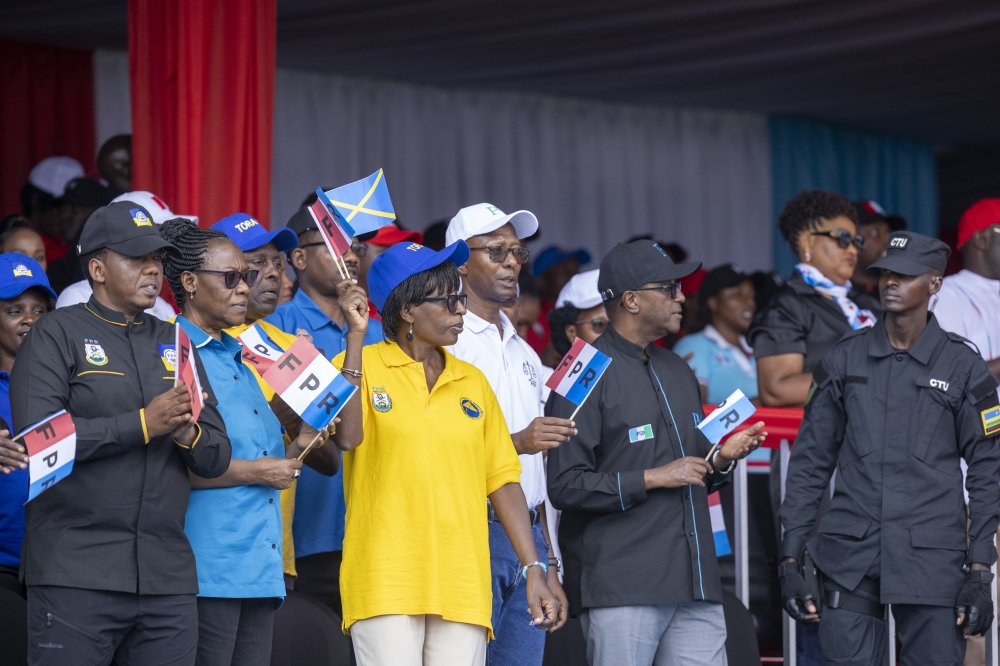
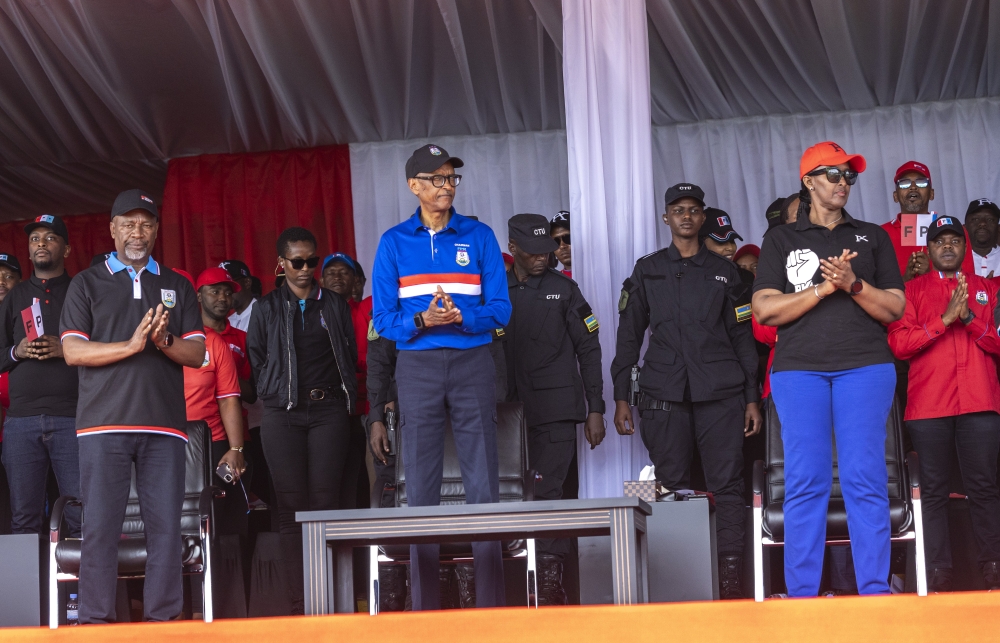
    Paul Kagame, the presidential candidate of the RPF-led collation, on June 28, told Rusizi residents that the country's young people have a double responsibility of building the country — basing on the foundation of what has been achieved so far — as well as protecting it.

    At Rusizi Stadium, thousands of residents in Rusizi District and neighbouring areas of Nyamasheke District cheerfully danced to different electoral campaign songs. Kagame was welcomed by Abasaamyi dance troop from Nkombo island.


    Residents in Rusizi District and neighbouring Nyamasheke District areas welcome the RPF presidential candidate, Paul Kagame by dancing to different electoral campaign songs.
    Residents in Rusizi District and neighbouring Nyamasheke District areas welcome the RPF presidential candidate, Paul Kagame by dancing to different electoral campaign songs.

    In the presidential and parliamentary elections set for July 14-15, Kagame is competing with former lawmaker Frank Habineza of the Democratic Green Party of Rwanda, and Philippe Mpayimana, an independent candidate.

    In his address, the incumbent President said that Rwanda has come from far following the devastating 1994 genocide against the Tutsi, but the RPF brought unity among all Rwandans and all political parties.

    But there is still so much more to be achieved ahead, he acknowledged, noting that the country is relying on the youth's efforts in the journey of development.

    'Young people, our children, you should reflect back and know where Rwanda came from, and where it is now. You have a double responsibility to continue building on what has been achieved, faster, but also protecting the country against whatever that seeks to destroy it.'

    Additionally, he requested the youth to build unity, development and democracy that allows Rwandans to choose who they want and what they want, noting that it is upon the RPF, its leader, and the people to do it.

    Come election day, Kagame said that he knows the people will make the right choice and show their support as they have done during previous elections.

    Jean Paul Ndamwemera, a businessman in Rusizi District, shared a testimony of how he was able to study and turn a family business of cultivating coffee into a more lucrative venture that scaled up to have greater socio-economic impact in the area.


    The New Times

    Thanks to the RPF's visionary leadership and security that has empowered the people, Ndamwemera and some partners built a school that now educates 250 students in the district. Ndamwemera now exports coffee to France, Italy, and UK.

    His coffee won second place in an international competition, he said.

    Under the RPF manifesto for the five-year presidential term, Rusizi District is among the three districts that will receive three ports on Lake Kivu in addition to Karongi and Rutsiro districts. Once completed, Rusizi Port is expected to accommodate 2.3 million passengers and handle 1.3 million tons of cargo, annually.

    Other area development targets include construction and rehabilitation of 1, 091-kilometer roads and 1,626-kilometer feeder roads across the country, advance technology adoption, especially enhancing the use of Artificial Intelligence.

    The ruling party also aims to continue positioning Rwanda as an investment destination and financial hub, increase tourism revenue to $1.1 billion in 2029 from $620 million in 2024, spur mineral revenue growth to $1.8 billion in 2029 from $1.1 billion in 2023, as well as improve green financing.


    The New Times

    The post Kagame: Youth hold double responsibility of building, protecting Rwanda appeared first on The Custom Reports.

    Source : https://thecustomreports.com/kagame-youth-hold-double-responsibility-of-building-protecting-rwanda/

  • 'A Quiet Place'American horror movie starring Rwanda's Eliane Umuhire to premiere in Kigali #rwanda #RwOT

    'A Quiet Place: Day One'—an American horror film starring award winning Rwandan actress Eliane Umuhire and Kenya's prominent actress Lupita Nyong'o, will premiere at Canal Olympia, Rebero, Kigali on Friday, June 28.

    The apocalyptic horror film, directed by Michael Sarnoski, is to be released on June 28, with a running time of 99 minutes. The film is a third installment in the 'A Quiet Place' film series, serving as a spin-off prequel of the first film.

    It tells a story of a woman and other survivors trying to find a way to safety when New York City was under attack from an alien invasion. They soon learn that they must remain absolutely silent as the mysterious creatures are drawn to the slightest sound.

    Umuhire is one of the few Rwandan movie actors/actresses to have made it to the global stage, and her raw talent won her multiple awards in the acting career. She recently co-produced 'Face of Resilience', a documentary that explores how resilience, reconciliation and community-building have shaped Rwanda's transformation over the past three decades.

    Born and raised in Rwanda, Umuhire started acting in 2005 when she was in Butare pursuing her university studies. She however started acting in films in 2014 when she was casted in 'Birds are Singing in Kigali' as her first main role and main character.

    The actress, who was artistically raised by Mashirika with Hope Azeda and Ishyo arts with Carole Karemera, has won multiple awards over the years including Best Actress Award at the 52nd

    edition of the Karlovy Vary International Film Festival, best actress in the short film 'Bazigaga' at the Clermont-Ferrand International Short Film Festival and The Urania award for the Best Performance in leading role among many others.

    She stars in 'Trees Of Peace', a movie that tells the story of four women that created a strong bond in the hiding place they were trapped in during the 1994 Genocide against the Tutsi

    The post 'A Quiet Place'American horror movie starring Rwanda's Eliane Umuhire to premiere in Kigali appeared first on The Custom Reports.

    Source : https://thecustomreports.com/a-quiet-placeamerican-horror-movie-starring-rwandas-eliane-umuhire-to-premiere-in-kigali/

  • An open letter to authors of 'Forbidden Stories': The dogs bark, but the Rwanda caravan passes #rwanda #RwOT

    You boast a lot these days about being a group of 50 journalists working in 17 media outlets in 11 countries. But with two exceptions, these countries are all European, which you always forget to mention.

    Would this embarrass you? I also hear that this investigation cost you six months of effort and two million dollars and I want to have a little fun: all that for that?

    This is the first big lie and it is not by chance that Colette Braeckman of the Belgian daily Le Soir called your media campaign a 'conjuration' before Aline Cateux, her colleague from the same newspaper, rightly repulsed by your negationism, brutally slammed the door. I always wonder why the Western media focuses on Rwanda while remaining silent on Ukraine and so many other challenges their societies face.

    If Black Africa interests them to this extent, don't they know that in neighbouring DR Congo the Tutsi are massacred and eaten and that these scenes of cannibalism where we hear that the Tutsi's flesh is too good, filmed in the middle great cries of joy, continue to go around the world?

    Shame on you! Shame on you!

    Your media conspiracy made you the laughing stock of your colleagues around the world, but the way I felt about it can only be different.

    I, Yolande Mukagasana, a survivor of the genocide perpetrated against the Tutsi in Rwanda in 1994, I ask you this evening on behalf of my beloved husband Joseph who was already an orphan of the 1963 genocide in Gikongoro, cut with a machete on April 13, 1994, then killed with gun at the roadblock of sub-prefect Karera François in Kivugiza in the City of Kigali; I am also calling on you on behalf of my children Christian, Sandrine and Nadine to find out what gives you the right to spit your slime on my grieving memory.

    Above all, do not talk to me about the search for truth because your texts are based on the testimonies of [genocide] deniers despised by all, such as Charles Onana, Judi Rever and Michela Wrong and on those of Rwandans suspected or even convicted of genocide and condemned as such. You know well that no truth will ever come out of these foul-smelling mouths.

    As for you who gave them the floor, do you not have children? I feel like you have no idea what it means to have lost a loved one. I am tempted to ask you to put yourself in my place but I know you are completely incapable of doing so. You are racist and like so many racists, you will defend yourself with indignation. You are definitely very strange creatures, ladies and gentlemen, great humanists. No, you are not racist: you simply don't care that my husband and my children died in such terrible conditions just because they were Tutsi!

    I know that your hatred towards President Kagame does not start today. As soon as I settled in Europe, in February 1995, I noticed that certain Europeans did not stop defaming the Rwandan Patriotic Front (RPF) which single-handedly put an end to the 1994 genocide. Paul Kagame saved me from hell and whether you like it or not he is and will forever be my hero. Your attitude symbolizes that of the West which, after having looked away from the horror that we were experiencing 30 years ago, does not hesitate today to reopen the wounds of the victims.

    I always knew that your only objective was to not give Paul Kagame a minute of respite so that he would not have time to serve his people. But you ended up realising that Kagame is not alone, that he has all the Rwandan youth with him. In Rwanda, when you trample a flower, more than ten others bloom at the same time and in the same place.

    Do you want me to tell you the secret of our success? In our country, as soon as a small opportunist is pushed aside, at least ten serious patriots rise up to replace him. Kagame works as a team, a team that reflects his image.

    'The dancer's sorrow does not prevent him from dancing well.' Allow me to explain to you this Rwandan proverb that you certainly do not know: we survivors who are not ungrateful, despite our pain and our difficulties, we help to rebuild souls but also the economy of this country. We have joined hands to create a rule of law. You don't like it? Well, we don't care about your petty frustrations.

    I, Yolande Mukagasana, am only a Rwandan citizen who has never campaigned in a political party. I am just attentive to the progress of my country since April 7, 1994 and vigilant towards all those who wish us so much harm. I believed them to be evil out of simple ignorance, but today I realize that their cruelty is deliberate and that they will not shy away from any historical falsification to destroy my people.

    It's unbearable in the end. They kept silent when it was necessary to raise their voices and now, they raise their voices when they have nothing more to say. At a time when human rights are increasingly violated in your countries, you claim to be concerned about their respect in other countries. Feigned indignation!

    Thirty years of hatred… My God, what tenacious hatred is yours! Continue to give a voice to the deniers and to all those who are still angry today at not having succeeded in killing all the Tutsi! This will be of no use because no matter what, Rwanda will continue to keep its head high, Rwanda will continue its march forward.


    The author is a survivor of the 1994 genocide against the Tutsi in Rwanda

    The post An open letter to authors of 'Forbidden Stories': The dogs bark, but the Rwanda caravan passes appeared first on The Custom Reports.

    Source : https://thecustomreports.com/an-open-letter-to-authors-of-forbidden-stories-the-dogs-bark-but-the-rwanda-caravan-passes/

  • EAC Heads of State urged to convene summit over Rwanda-DRC conflict #rwanda #RwOT

    Ministers drawn from eight EAC member states were in Zanzibar for a three-day retreat to deliberate on ways to foster sustainable peace, enhance security cooperation, and strengthen relationships among partner states. Rwanda was represented by the Minister of Foreign Affairs and Cooperation, Olivier Nduhungirehe, and the Minister of State in charge of Regional Cooperation, James Kabarebe.

    The ministers expressed concern over the deteriorating humanitarian and security situation in the eastern part of the Democratic Republic of Congo, which has escalated tension between the DRC and Rwanda.

    The two countries have been at loggerheads in recent years over accusations of supporting armed groups to destabilise each other’s territories. The Rwandan leadership has often questioned the DRC government’s support for the FDLR militia which comprises remnants of the Interahamwe group that perpetrated the 1994 Genocide against the Tutsi in Rwanda. On the other hand, the DRC government accuses Rwanda of supporting M23 militia, claims the government has refuted.

    At the conclusion of the retreat, the ministers issued a joint statement acknowledging that the viable path to sustainable peace and security in eastern DRC is through a political process. They recommended the convening of a summit of the EAC heads of state to breathe new life into the EAC-led Nairobi peace process.

    The Nairobi peace process focuses on resolving internal conflict in the DRC, exacerbated by armed groups including the M23 and FDLR. It aims to achieve peace through dialogue between the DRC government and these armed groups operating in the eastern part of the country.

    On the other hand, the Luanda process, led by Angolan President João Lourenço, aims to address the external dimension of the conflict, fueled by the militia counter-accusations. The initiative aims to promote the normalization of diplomatic relations between the two countries.

    As part of efforts to resolve the DRC-Rwanda conflict, foreign ministers from both countries agreed to meet at the earliest opportunity to address the interstate dispute in line with the EAC partner framework.

    The EAC also stated that the ministers of Rwanda and Burundi had agreed to meet by October 31, 2024, to discuss issues affecting their bilateral relations, which resulted in Burundi shutting its border with Rwanda earlier this year. President Évariste Ndayishimiye accuses Rwanda of backing the DRC-based armed group Red Tabara against his government, claims the Paul Kagame-led administration has refuted on several occasions.

    Meanwhile, the EAC ministers also appreciated the humanitarian truce negotiated by the United States of America and recommended that the truce be extended indefinitely.

    Ministers drawn from eight EAC member states were in Zanzibar for a three-day retreat to deliberate on ways to foster sustainable peace, enhance security cooperation, and strengthen relationships among partner states.

    Wycliffe Nyamasege

    Source : https://en.igihe.com/politics-48/article/eac-heads-of-state-urged-to-convene-summit-over-rwanda-drc-conflict