Category: Uncategorized

  • Key features of Tesla’s newly unveiled self-driving ‘Robotaxi’ #rwanda #RwOT

    The electric Robotaxi also referred to as Cybercab will cost less than $30,000 (approximately Frw 40 million), Tesla CEO and tech mogul Elon Musk revealed during the unveiling ceremony held at Warner Bros. Studios in Burbank, California, on Thursday night.

    Musk revealed that, unlike traditional ride-hailing services requiring a driver, the Cybercab will operate fully autonomously.

    'You could fall asleep and wake up at your destination,' Musk stated.

    The Robotaxi will utilize Tesla’s Full Self-Driving (FSD) software, allowing it to autonomously navigate highways, city streets, intersections, and perform tasks like lane changes, parking, summoning, and responding to traffic signals.

    Tesla’s self-driving technology relies on a powerful neural network that gathers data from millions of Tesla vehicles, constantly learning from real-world driving conditions to improve the vehicle’s safety and decision-making capabilities.

    The Cybercab, a two-seater with butterfly wing doors and no steering wheel or pedals, lacks a rear window. Musk mentioned that Tesla has produced 21 of these vehicles and that 50 fully autonomous vehicles were present at the launch.

    Most of the prototypes displayed at the event featured a gold finish. The Cybercab also showcased matrix-style headlights integrated into a front light bar, similar to the Tesla Cybertruck’s design.

    While further details were limited, it’s expected that the Cybercab will be Tesla’s first vehicle to feature wireless induction charging as a standard option.

    However, some experts believe that the self driving technology still faces hurdles.

    Garrett Nelson, a senior equity analyst at CFRA Research, cautioned, 'A car capable of functioning as a self-driving taxi is still several years away, with numerous technological hurdles, safety tests, and regulatory approvals standing in the way.'

    Tesla isn’t alone in the race for autonomous taxis. In China, Baidu is testing its own self-driving taxis on public roads. Meanwhile, Waymo, a subsidiary of Google’s parent company, has been operating driverless taxi services, recently reporting over 100,000 weekly rides in cities like San Francisco, Phoenix, and Los Angeles.

    General Motors’ Cruise resumed its autonomous taxi testing following a previous incident, and Amazon’s Zoox is developing a driverless van without a steering wheel, aiming to launch a paid service soon.

    Tesla CEO Elon Musk revealed that, unlike traditional ride-hailing services requiring a driver, the Cybercab will operate fully autonomously.

    Wycliffe Nyamasege

    Source : https://en.igihe.com/science-technology/article/key-features-of-tesla-s-newly-unveiled-self-driving-robotaxi

  • President Kagame, Dr. Kaseya discuss Rwanda’s preparedness to contain Marburg virus #rwanda #RwOT

    The Rwandan Presidency confirmed the development through its X account, noting that both leaders also “exchanged on various strategies to help enhance disease prevention as well as building increased capacity for manufacturing of vaccines and medical kits on the continent.”

    Dr. Kaseya is in Rwanda where he is attending the African Continental Free Trade Area (AfCFTA) business forum, branded ‘Biashara Africa.’

    During his visit, he reassured the nation of Africa CDC’s commitment to supporting Rwanda in its fight against the Marburg virus.

    In addition to his meeting with President Kagame, Dr. Kaseya also held discussions with Rwanda’s Minister of Health, Dr. Sabin Nsanzimana, commending the government’s proactive approach to controlling the outbreak.

    He expressed optimism that the virus would be contained soon, given the ongoing efforts.

    Rwanda reported its first case of the Marburg virus on September 27, 2024. As of October 11, 58 people have been infected, with 15 having recovered. No new cases have been reported in the last two days.

    Authorities have urged Rwandans to continue following preventive measures, such as avoiding close contact with symptomatic individuals and practicing proper hygiene.

    In response to the outbreak, the government has also rolled out a vaccination program targeting high-risk individuals, with 346 doses administered so far.

    The Marburg virus disease presents symptoms such as severe headaches, weakness, fever, watery diarrhea, and abdominal pain. Anyone experiencing these symptoms or observing them in others is encouraged to report to health authorities immediately.

    Beyond addressing the current outbreak, Rwanda remains committed to long-term solutions for pandemic preparedness.

    The BioNTech vaccine manufacturing plant, which began its first phase in Kigali in December 2023, is part of these efforts.

    Once fully operational, the plant is expected to produce 50 million vaccine doses annually, significantly boosting the continent’s capacity for disease prevention.

    President Paul Kagame has met with Dr. Jean Kaseya, Director General of the Africa Centers for Disease Control and Prevention (Africa CDC) with whom they discussed Rwanda’s preparedness in containing the spread of the Marburg virus.

    IGIHE

    Source : https://en.igihe.com/news/article/president-kagame-dr-kaseya-discuss-rwanda-s-preparedness-to-contain-marburg

  • No travel or trade restrictions needed for Mpox and Marburg outbreaks, WHO advises #rwanda #RwOT

    Mpox broke out in the Democratic Republic of the Congo (DRC) in May 2022, with several cases reported in neighbouring countries, including Burundi, Uganda, Kenya, the Central African Republic, and Rwanda in recent months. Rwanda also reported its first-ever Marburg outbreak late last month.

    In a statement on Friday, October 11, 2024, WHO Director-General Dr. Tedros Adhanom Ghebreyesus noted that the organization had assessed the current Mpox and Marburg outbreaks and determined that no travel or trade restrictions are necessary.

    According to WHO, priority should be given to public health measures and collaborative efforts to contain the outbreaks.

    “Based on the current Mpox and Marburg outbreak risk assessments, WHO advises that no travel and trade restrictions are needed,” the organization stated.

    WHO’s statement follows a condemnation from the Africa Centres for Disease Control and Prevention (Africa CDC) regarding a travel advisory issued by the United States government against Rwanda.

    The Centers for Disease Control and Prevention (CDC), a national public health agency in the United States, issued a Level 3 travel advisory on Monday, October 7, 2024, urging its citizens to reconsider nonessential travel to Rwanda due to the Marburg outbreak.

    During a virtual meeting attended by the Rwandan Health Minister and journalists on Thursday, October 10, 2024, Africa CDC Director General Dr. Jean Kaseya termed the advisory unfair. He emphasized that decisions during the ongoing outbreak must be guided by scientific facts to avoid causing panic.

    'The decision taken by the US government was not fair, and we believe this is not the treatment that Rwanda and Africa deserve,' he stated.

    'By issuing a Level 3 advisory, we are creating unnecessary panic—in Rwanda, in neighboring countries, and even globally,' he protested.

    Dr. Kaseya noted that US authorities had committed to consulting the Africa CDC before making such decisions in the future.

    'We think this is disrespectful to us. I conveyed this clear message to US senior officials. More importantly, we agreed on a way forward, and I believe I received their commitment that in the future, they will not make such decisions again without consulting us,' he added.

    The Africa CDC Director praised the measures implemented by the Rwandan government, stating that the outbreak is under control and there is nearly zero risk of Rwanda spreading the disease to other countries.

    “It’s almost zero risk. I say 'almost’ because we cannot say 100% for sure, but I can say that there is a 95% certainty that there is zero risk for Rwanda spreading the disease out of Rwanda. The mechanisms they have put in place to monitor contacts mean no contact can fly out of Rwanda. This is remarkable because they are monitoring these contacts on a daily basis,' he stated.

    Rwanda has so far confirmed 58 Marburg cases, 13 deaths, and 15 recoveries.

    WHO Director-General Dr. Tedros Adhanom Ghebreyesus noted that the organization had assessed the current Mpox and Marburg outbreaks and determined that no travel or trade restrictions are necessary.

    Wycliffe Nyamasege

    Source : https://en.igihe.com/news/article/no-travel-or-trade-restrictions-needed-for-mpox-and-marburg-outbreaks-who

  • Benin vs Rwanda live match #rwanda #RwOT

    Rwanda's national football team has performed remarkably in some recent fixtures. In 2024, their participation in international friendlies shows good results, such as their 2-0 win against Madagascar and a 0-0 draw against Botswana, highlighting a solid performance in defence, as they did not concede a goal in both games.

    Historically, the team has sought to improve its competitiveness in African football, participating in regional competitions such as the African Cup of Nations, although it has not yet managed to stand out significantly at continental level.

    The Benin national football team has shown significant development in recent years. Their first notable qualification was in 2004, when they managed to participate in the African Cup of Nations (AFCON), although they were eliminated in the group stage after losing all three of their matches. Since then, Benin has continued to compete in AFCON qualifiers, achieving a certain regularity in their participations.

    In the most recent African Cup of Nations qualifying campaign, Benin showed a moderate performance, with a goal differential of -2 and having scored only 2 goals in their matches, highlighting their offensive difficulties. In addition, they conceded 4 goals against, reflecting the defensive challenges they face in the international context.

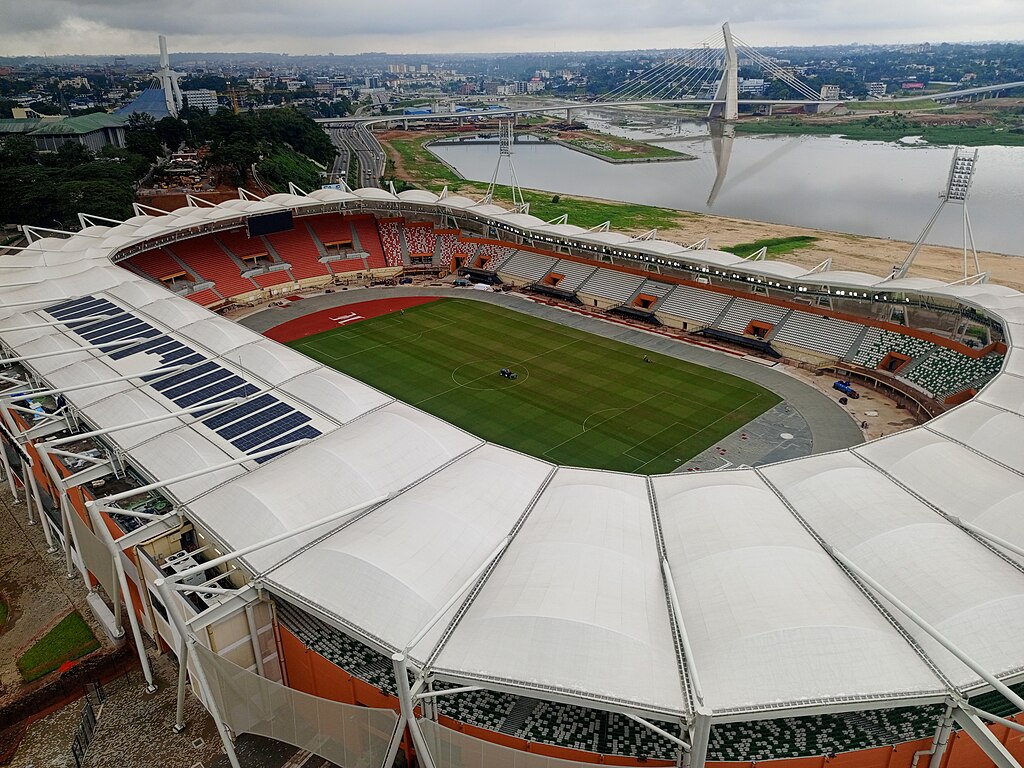
    Stade Félix Houphouët-Boigny

    The Stade Félix Houphouët-Boigny, also known simply as Felicia, is a multi-purpose stadium located in Abidjan, Ivory Coast. It is primarily used for football matches and also has facilities for athletics. It is the home ground of the country's main club, ASEC Abidjan. The stadium has a capacity of 45,000 and is usually the venue for matches of the Ivory Coast national football team.

    The stadium is named after the country's first president, Félix Houphouët-Boigny, who ruled from 1960 to 1993. On 29 March 2009, during a 2010 World Cup qualifier between the Ivory Coast and Malawi, a stampede before the match resulted in the deaths of at least 22 people, when a crowd of people outside the stadium tried to gain access to the already packed stadium.


    The post Benin vs Rwanda live match appeared first on The Custom Reports.

    Source : https://thecustomreports.com/benin-vs-rwanda-live-match/

  • US continues to see Israel's operation across Lebanese border as 'limited': Pentagon #rwanda #RwOT

    Israel is conducting a 'limited' operation across the Lebanese border to remove the Hezbollah group's infrastructure, the Pentagon said Thursday.

    'All indications that we have right now are that Israel continues to conduct limited ground operations across the border to remove Hezbollah attack infrastructure,' Press Secretary Maj. Gen. Pat Ryder told reporters.

    Ryder said long-term security and stability can be achieved through diplomatic means.

    'In terms of their ground operations, what we continue to see is limited in scope,' he stressed.

    The US continues to have conversations with its Israeli partners in terms of the size and scope of what they are doing, he said, 'recognizing… the importance of not only enabling the defense of Israel but also thinking through what's next in terms of regional security and stability, taking civilian safety into account in terms of planning and operations.'

    Israel has been mounting massive airstrikes across Lebanon against what it claims are Hezbollah targets since Sept. 23 that have killed more than 1,323 people and injured nearly 3,700.

    The aerial campaign is an escalation of the year-long cross-border warfare between Israel and Hezbollah since the start of Tel Aviv's brutal offensive on the Gaza Strip, which has killed nearly 42,000 people, mostly women and children, since a cross-border incursion by the Palestinian group Hamas on Oct. 7 last year.

    Despite international warnings that the Middle East region is on the brink of a regional war amid Israel's relentless attacks on Gaza and Lebanon, Tel Aviv expanded the conflict by launching a ground incursion into southern Lebanon on Oct. 1.

    The post US continues to see Israel's operation across Lebanese border as 'limited': Pentagon appeared first on The Custom Reports.

    Source : https://thecustomreports.com/us-continues-to-see-israels-operation-across-lebanese-border-as-limited-pentagon/

  • DR Congo holds funeral for victims of recent ferry accident #rwanda #RwOT

    The burial of 11 identified bodies of Goma residents killed after the ferry “MV MERDI” capsized on Lake Kivu a week ago took place at the Makao cemetery. At least 87 people were killed last Thursday after the ferry capsized near the port of Kituku, according to a provincial government report that did not specify the number of people on board.

    The ferry broke into three pieces and is currently at a depth of about 198 meters in Lake Kivu, said Jean Romuald Lipopo, vice-governor of the province, who was present at the funeral, noting that the methane gas in Lake Kivu has hampered search efforts.

    The ferry, coming from Minova in the province of South Kivu, sank hundreds of meters from the port after failing to withstand the speed of a violent wave, according to sources at the port of Kituku. Local sources reported a “significant overload” of the ferry.

    The land route between Goma and Minova has been cut off for months due to hostilities between armed groups and the DRC military. Cases of shipwrecks are frequently recorded on Lake Kivu due to strong winds and overloading.

    Pallbearers stand in front of coffins during a funeral for victims of a recent ferry accident in Goma, the capital of the North Kivu Province in the eastern Democratic Republic of the Congo (DRC), on Oct. 10, 2024. (Photo by Zanem Nety Zaidi/Xinhua)

    Xinhua

    Source : https://en.igihe.com/news/article/dr-congo-holds-funeral-for-victims-of-recent-ferry-accident

  • Elon Musk unveils his 'Cybercab' robotaxi #rwanda #RwOT

    Tesla CEO Elon Musk unveiled on Thursday his vision of a 'a fun, exciting future,' an 'age of abundance' full of his company's self-driving cars without steering wheels, parking lots turned into parks and robots that will walk among the population — that he once again promised would be available within a few years.

    Whether he can live up to these promises remains to be seen.

    Those plans, and the revelation of the designs for his robotaxis, came at a glitzy event in California, full of the kind of hype that has built Tesla (TSLA) a dedicated fan base for its electric vehicles. The event featured models of the robotaxi as well as a Robovan, a driverless vehicle designed to carry a larger group of people or items.

    The designs were heavy on a metallic, shiny sci-fi aesthetic of the future. Musk himself even referenced the classic science fiction movie 'Blade Runner,' although he said he wanted his version of the coming years to be cheerier than that dystopian noir film.

    Musk is famous for promising near-term targets that take years or more to reach. He had predicted five years ago that his fleet of robotaxis were only a year away. During his presentation at the Warner Bros. studio lot late Thursday, even he admitted: 'I tend to be a little optimistic with time frames.'

    The event unveiling these products, which was livestreamed to millions of viewers on his social media platform X, began 53 minutes late.

    But the delay seemed to matter little to the in-person crowd waiting for the chance to ride in the 50 self-driving vehicles that were cruising around the studio lot. They continued to cheer Musk throughout his relatively short 20-minute presentation.

    Tesla has long offered what it calls Full Self-Driving or FSD, currently priced at $8,000, as an option on its cars. But despite its name, Tesla says drivers need to continue to sit in the driver's seat, ready to take over control of the vehicle, even when in FSD mode.

    Musk said Thursday that Teslas with FSD would be able to operate wherever state regulators would allow without human intervention, predicting that would occur in California and Texas by next year. And he also unveiled the Cybercab, a vehicle without steering wheel or accelerator or brake pedals which is specifically designed to carry passengers without a driver present, which he said should be in production by 2026.

    'It'll be like sitting in a comfortable little lounge,' he said. 'Yeah, it's going to be awesome.'

    He said the Robocab, unlike other electric vehicles, would have no plug but would be charged by driving over a charging plate. And he also showed a larger vehicle that he said could carry up to 20 passengers or goods, which he called a 'Robovan,' although he gave no timeframe for the introduction of that vehicle.

    Musk has insisted that the company's data shows that FSD is already safer than cars driven by humans. But others who have tested that feature question whether that is true. One independent testing service, AMCI Testing, found that drivers needed to take control every 13 miles on average.

    'Overly optimistic'

    This is certainly not the first time that Musk has laid out ambitious time frames for his plans for self-driving cars. In a July call with investors, Musk said he expected to have 'unsupervised (driving) possibly by the end of this year,' adding 'I would be shocked if we cannot do it next year.'

    But he also conceded, 'obviously my predictions on this have been overly optimistic in the past.'

    'I'm the boy who cried FSD. But I think we'll be better than humans by the end of this year,' he said in a call with investors in July 2023, before adding: 'I've been wrong in the past. I may be wrong this time.'

    And even some analysts who believe that Tesla will eventually come up with the technology needed to have driverless vehicles carrying passengers believe that achievement is at least several years into the future.

    'We're looking at disengagements at 3% of miles driven,' said Gene Munster, managing partner at Deepwater Asset Management, about the number of times that a human driver needs to take control, in an interview with CNN earlier this week.

    'While 97% of the way there sounds close, it's not even close. It has to be well above 99%. And to go from 95 or 97% to 99% is really hard. And then there's the question of how many 9's the regulators will want to see. Is it 99.9%, 99.999%?' he added.

    'I think it'll take two years to get the technology right,' Munster said. 'And two to three more years to get the needed regulatory approval.'

    The post Elon Musk unveils his 'Cybercab' robotaxi appeared first on The Custom Reports.

    Source : https://thecustomreports.com/elon-musk-unveils-his-cybercab-robotaxi/

  • Florida officials warn of contractor scams after Milton damage #rwanda #RwOT

    There's an unfortunate reality for victims trying to pick up the pieces after a deadly storm: scammers moving in as a massive storm moves out.

    Officials in Florida are urging residents to be on guard against financial predators in the wake of deadly Hurricane Milton.

    'Many areas in the county have incurred severe property damage because of back-to-back impacts from Hurricane Helene and Hurricane Milton,' Pinellas County Consumer Protection said in a public advisory Thursday, warning residents 'to be cautious when hiring someone to make repairs.'

    'Watch out for 'fly-by-night' contractors who take deposits and do little or no work,' the advisory stated. 'Avoid dealing with anyone soliciting work door-to-door; take the opportunity to check them out first.'

    Authorities also cautioned residents to be wary of contractors who ask for advance payment for services or insist that extensive repairs require no permit. They recommended dealing only with licensed and insured contractors.

    Officials also had a warning for people seeking to help those impacted by the devastating storms: do your research.

    'Do not judge an organization based solely on its name,' the Pinellas County advisory said. 'Many organizations have names that sound like those of reputable organizations but may be fraudulent.

    Florida consumer protection teams recommended prospective donors 'ask for a copy of the charity's financial report to determine how much of your contribution is going toward the cause and how much goes to administrative and fundraising costs.'

    The post Florida officials warn of contractor scams after Milton damage appeared first on The Custom Reports.

    Source : https://thecustomreports.com/florida-officials-warn-of-contractor-scams-after-milton-damage/

  • Moscow comments on reports Ukraine is ready for ceasefire #rwanda #RwOT

    Russia has not received nor seen any signals from Ukraine suggesting that it is ready for a ceasefire, Kremlin spokesman Dmitry Peskov told RIA Novosti on Thursday. He was speaking after Italy's Corriere della Sera claimed that Kiev is leaning toward a truce along the current front line in exchange for Western security guarantees.

    Dmitry Litvin, who serves as a communications adviser to Ukrainian leader Vladimir Zelensky, also denied the allegation, speaking to Ukrainian media. 'We have the 'peace formula' which says clearly what Ukraine views as a just peace,' the official stressed.

    Ahead of the Ukrainian leader's upcoming visit to Rome, part of a tour of several European capitals, Corriere della Sera reported that for political reasons Zelensky cannot officially relinquish Kiev's claim to the Donetsk and Lugansk People's Republics, Zaporozhye and Kherson Regions as well as Crimea, which are all part of the Russian Federation and entirely or partially under Moscow's control. However, the Ukrainian leader 'would be ready for a ceasefire along the current line — without recognizing a new official border — in exchange for some Western commitments,' according to the Italian daily.

    The article alleged that Kiev could settle for US security guarantees, similar to those provided to Japan, South Korea and the Philippines. As for Italy, Germany and France, Zelensky reportedly hopes to receive assurances from these countries that Ukraine will have fast-track accession to the European Union.

    Corriere della Sera attributed the supposed softening of the Ukrainian leader's stance to the accelerating Russian advance in Donbass in September, as well as the fact that the Ukrainian military is currently outnumbered and outgunned.

    On Tuesday, Bloomberg, citing anonymous NATO officials, also reported that Zelensky could have adopted a 'more flexible approach' recently. The article suggested that Ukrainian officials had been more open to the idea of concessions to Russia, though it didn't specify what they might be.

    The media outlet also named the provision of Western security guarantees as one of the prerequisites that would convince Kiev to cease hostilities along the current front line.  

    In his public statements, Zelensky still insists that any talks with the Kremlin can only start after the complete withdrawal of Russian forces from all the territories Kiev has lost to Moscow since 2014.

    Russia has dismissed Ukraine's 'peace formula,' with President Vladimir Putin saying in June that he was ready to declare a truce as long as Kiev recognizes the new 'reality on the ground' and gives a legally binding commitment to neutrality, which would preclude its accession to NATO.

    The post Moscow comments on reports Ukraine is ready for ceasefire appeared first on The Custom Reports.

    Source : https://thecustomreports.com/moscow-comments-on-reports-ukraine-is-ready-for-ceasefire/

  • Has Iran just tested a nuclear weapon? #rwanda #RwOT

    In the late evening of October 5, seismic tremors of a magnitude of 4.6 on the Richter Scale were detected in Iran's Semnan region. Although they could be felt even in the capital Tehran, over a hundred kilometers away from the epicenter, as earthquakes go this was not a major event: It was not terribly strong and caused no casualties. And yet it has attracted global attention. The reason is that we are not sure that it really was an earthquake.

    Since the tremors shook the Iranian desert, speculation that this was, in reality, an underground nuclear test has not been dying down, in some traditional media and in social media everywhere. In Iran itself, according to the Tehran Times — an outward-facing English-language publication — 'seismologists and […] authorities' have denied a nuclear test. The newspaper added that 'CIA Director William Burns also said there is no evidence that Iran has decided to build a nuclear weapon.' Considering that, from long and bitter experience, Iranians do not generally consider the CIA a source of truth, that is an intriguing, maybe tongue-in-check addition.

    It is not hard to imagine plausible reasons why the leadership in Tehran could have an interest in staging a test that it knows leaves detectable traces while at the same time it's officially denying that it has done so: it would, in essence, serve to warn enemies while allowing for a degree of politically flexible deniability. It would also, perhaps, create some strategic ambiguity — that is, uncertainty among opponents — if not about the event itself, then about what exactly the Iranian leadership is intending to do with it.

    Yet it is at least equally realistic to assume that there really was no test. Those discussions of the Semnan tremors that are publicly available seem inconclusive to the non-expert at least, turning on points such as the exact nature of the seismic wave and the location of the epicenter. For now, the only certain conclusion seems to be that we don't know: It may have been just an ordinary earthquake, but a nuclear test cannot be ruled out at this point.

    Let's take a step back: Instead of assessing arguments for one or the other version of what exactly happened at Semnan in Iran on October 5, let's ask two simple questions: Why is it so important and what would it mean if a nuclear test did really occur?

    In some regards, it is obvious why the tremors have reverberated globally: Iran is already embroiled in a de facto war with Israel that is on the verge of escalating further, from increasingly destructive missile attacks into an even larger regional and possibly global war. Beyond the longstanding hostility between the two countries, this escalation is underway for two reasons: First, Israel has already completed a year of committing genocide against the Palestinians and there is no end in sight, while it has also been assaulting multiple countries around it with terror attacks, indiscriminate bombings and, now in Lebanon, also a land invasion. Second, the West has sided with Israel. In a hypothetical world, one in which the West would not have trampled all over international law and elementary ethics and, instead, would have stopped Israel, the current escalation could not have occurred.

    For these two reasons — Israel's complete descent into mass killings and all-round aggression and the West's helping it along — Iran's regional 'Axis of Resistance' has become the key, indeed the one and only international actor that is in the way of the Zionist regime. Given the way Western mainstream media propaganda vilifies this 'axis' as 'rogue' and 'terrorist,' it is ironic that its members are the only ones at least trying to implement the UN 1948 Genocide Convention against the Israeli perpetrators, thus obeying a fundamental obligation of post-World War II international law. The true, monstrous rogue actors are the West and Israel.

    Without the 'Axis of Resistance' under Iran's loose hegemony, the Palestinian resistance would be entirely alone. For Israel, this means that destroying or at least neutralizing Iran is the greatest possible strategic prize. Without Tehran, the 'axis' would not simply disappear. For that, its various elements — for instance, Lebanon's Hezbollah and Yemen's Ansar Allah movement ('Houthis') are too autonomous, not mere proxies. But there is no doubt that they would be gravely, perhaps fatally weakened.

    Against this background, Iran's military capabilities are a crucial factor. While Tehran has a much less modern air force than Israel's, Iran's missile forces are formidable. Despite claims to the contrary, the recent, still-restrained attack of 180 projectiles has shown that Iran can overwhelm Israeli air defenses and the US assistance these get. If it ever were to launch an assault really meant to be devastating — by targeting Israel's economic and political infrastructure — Israel would have to absorb damage as never before in its history. The fact that Israelis have the option of leaving makes this threat all the more powerful: Their country has deliberately sought to make Gaza uninhabitable. As a civilized country, Iran would not resort to the same genocidal cruelty. But it could make it much less comfortable or safe for Israelis to stay in Israel.

    And that is where we get back to the question of why it would be so important if a nuclear test really took place in Iran on October 5: On one side, Israel has threatened to target the country's many nuclear facilities, if not in the next round of strikes then in the one after that. Yet, since the more important ones are deep underground, that is technically difficult, as an American general formerly involved in pertinent planning has just confirmed to the New York Times. But, still, Israel has US support. Even if Washington has mumbled some objections to that particular Israeli insanity, this means very little because the US tends to lie and Israel tends to do what it wants anyhow and then drag the US along, unwillingly or very willingly, as the case may be.

    On the other side, Iran has, of course, been developing its own nuclear program. While its leaders insist that it's entirely non-military, if that were true, they would be idiots neglecting their duty to protect their country. And they are neither idiots nor neglecting their duty.

    What adds a wrinkle of complication is that the possibility of Iran crossing the threshold to possessing nuclear weapons has been exaggerated again and again by Western politicians and media with an obvious intention to create a pretext for yet another Western war of aggression in the Middle East. Indeed, the Wall Street Journal has just published another long article in that genre of 'Look-how-close-they-are.' For those preferring more theoretical outlets, the prestigious journal Foreign Policy has just bluntly set out the 'case for destroying Iran's nuclear program now.'

    So, whenever you hear — at least in the West — that Tehran is close to having nukes, keep in mind that you may well be looking at war propaganda. And yet, there also is a real possibility of Iran acquiring — or perhaps already having acquired — nuclear bombs. That is why it has been so tempting to interpret the seismic shock in the Semnan region as a well-timed nuclear test. If Iran already has built nuclear weapons, then a test could have been a signal, telling Israel and the West that it is now too late for preempting an Iranian breakthrough because it has already happened. That would imply not only that such an Israeli or Western attack is now futile, but also that it has become much riskier since Iran may already be able to retaliate, even with nuclear weapons.

    The scenario outlined above remains speculative as an interpretation of the Semnan seismic tremors on October 5. But what is more important is the fact that even if it has not yet occurred, then it is likely to occur soon. One way or the other, notwithstanding an earlier Iranian religious injunction — fatwa — against weapons of mass destruction often cited in the West, Tehran is likely to become a nuclear-armed power in the near future. In that case, the fatwa will be altered or superseded. If and when that happens, the West and Israel will have only themselves to blame, for three reasons.

    First, we have long known that the West uses the foggy notion of 'rules' and a 'rules-based order' to evade international law and a meaningful role for the United Nations. The rules-based order is a cheap sham for those who prefer that laws do not apply to them. What the Gaza genocide and Israel's other recent crimes have made unmistakably clear is that the 'rules-based order' includes a very special privilege for Israel and the West, namely that of committing crimes against humanity. In such a world, every self-respecting government that takes its elementary duty to defend country and people seriously must think in the-very-worst-case terms. In such a world, in short, you better have nukes.

    Secondly, we have not only learned what exactly the 'rules-based order' is capable of. We have also learned that the alternative norms and institutions of international law cannot stop the 'rules-based' crowd once it has made up its mind: By the findings of the highest court of the UN, the International Court of Justice, also called the World Court, Israel stands as a plausible perpetrator of genocide even now; a full sentencing is likely to follow. Its prime minister and minister of defense have arrest-warrant applications pending at the International Criminal Court. And what is the result? Nothing. Neither Western governments nor Israel have given a damn about the law. Indeed, they are in open contempt and obstructing it shamelessly. Again, in such a world, you better arm yourself as well as you can.

    Thirdly, Iran itself has, of course, been through a long-drawn-out attempt to find a compromise with the West and, de facto, Israel. The Joint Comprehensive Plan of Action — aka the Iran Nuclear Deal — was concluded in 2015. Its essence was simple: Tehran would give up on military uses of its nuclear power and, in return, the West would let go of sanctions and generally normalize its relations with Iran. In 2018, the US reneged because Donald Trump — then president, now recklessly hollering about striking Iran's nuclear facilities — felt like it. The Biden administration then failed to repair the damage and, if anything, made things worse. And neither a future Trump nor a Harris presidency will make them any better.

    In sum, in the West's 'rules-based order' the rules include that Israel and the West may commit genocide, and then some; international law and other laws have no countervailing power and have been discredited; and individual negotiations and compromises lead to being cheated.

    Responsible leaders in Iran, and in other states, have to conclude that their countries must have nuclear weapons as well as the means to deliver them. And, in the case of Iran, this actually means enough to deter Israel and the US. The latter especially must, in the future, face the possibility — as it does already with North Korea — of Iranian nuclear retaliation on its own homeland if Washington either attacks Iran directly or helps Israel attack it. That is the stark logic of deterrence. It is sad that nothing else remains. But, by their outrageous violence and, literally, lawlessness, the West and Israel have left Iran — and others — no choice but to adopt this harsh logic to the full.

    The post Has Iran just tested a nuclear weapon? appeared first on The Custom Reports.

    Source : https://thecustomreports.com/has-iran-just-tested-a-nuclear-weapon/