The two leaders met on the side lines of the ongoing Olympics in Paris, France, on Saturday.
In a brief statement, President Kagame said they discussed their shared commitment to fruitful bilateral cooperation, including strengthening partnerships in trade, sports, technology, and environmental protection.
The UK and Rwanda have been developing a strong commercial relationship in recent years, with growing interest in expanding trade volume.
The UK is a leading investor in Rwanda, particularly in the tea sector. More than 150 British companies are registered in Rwanda.
Additionally, the UK government is actively involved in supporting Rwanda’s business environment through initiatives like the Rwanda Investment Climate Reform Program.
First Meeting
Saturday’s meeting was the first since Starmer’s Labour Party was voted into government earlier this month, ending the 14-year dominance of the Conservative Party.
Starmer’s ascent to the high office was, however, marked by controversy following his decision to scrap the UK-Rwanda migration deal introduced by the Conservative Party.
The UK-Rwanda Migration and Economic Development Partnership was signed in April 2022. The deal aimed to deter unauthorized immigration, especially people arriving by small boats, by referring the asylum seekers to Rwanda.
The migration scheme was set to kick off in July after a two-year delay occasioned by court battles and opposition from a section of Members of Parliament.
Starmer argued that the policy was neither a deterrent nor value for money. He has pledged to tackle the issue ‘upstream’ by getting rid of people-smuggling gangs behind the movements.
In response to the termination of the deal, Rwanda reaffirmed that it was committed to addressing the global migration crisis despite the setback.
'We remain committed to finding solutions to the global migration crisis, including providing safety, dignity and opportunity to refugees and migrants who come to our country,” the Government said.
The two leaders met on the side lines of the ongoing Olympics in Paris, France, on Saturday.
President Paul Kagame and UK Prime Minister Keir Starmer during the meeting on Saturday, July 27, 2024.
Under the theme “Building Resilient and Sustainable Food Systems,” the exposition serves as a platform for stakeholders to exchange knowledge, explore business opportunities, and foster partnerships that can contribute to the growth and development of Rwanda’s agriculture sector.
According to Dr Olivier Kamana, the Permanent Secretary at the Ministry of Agriculture, the show aims to showcase the latest advancements and technologies in the agricultural sector.
'It offers an unequalled opportunity to leverage the showcasing of agricultural technologies and innovations, access to financial and entrepreneurship opportunities to fast track agriculture sector transformation,' he said in a statement.
The Agrishow has become a flagship event in the agricultural sector, attracting farmers, agribusinesses, policymakers, researchers, and international exhibitors.
Agriculture is the backbone of Rwanda’s economy.
This year’s show promises to be bigger and better as it has already started attracting engaging discourse.
Elie Mugisha, a modern farming and communication enthusiast says that sustainable farming and conservation agriculture are some of the issues he is expecting to acquire more knowledge about.
'You will meet expertise in fish farming who are making it a big business nowadays. Do not plan to miss this one,' he said ahead of the event.
The Agriculture show 2024 is expected to unveil the latest advancements and technologies in the agricultural sector.
The organizers have already received an overwhelming response from exhibitors, with various participants registering for the event so far.
They expect a diverse group of participants from within the region and beyond highlighting the international interest and recognition of Rwanda’s agricultural potential.
Visitors will expect a wide array of exhibits, including agricultural machinery, livestock, seeds, fertilizers, agro-processing technologies, and innovative solutions for sustainable farming practices.
The show will also feature live demonstrations, expert presentations, panel discussions, and networking opportunities, making it a comprehensive and interactive experience for all attendees.
Farmers, entrepreneurs, researchers, students, and anyone interested in the agricultural sector are encouraged to seize this opportunity to learn, connect, and explore the future of agriculture in Rwanda.
According to Dr Olivier Kamana, the Permanent Secretary at the Ministry of Agriculture, the show aims to showcase the latest advancements and technologies in the agricultural sector.
Public allegations of sexual harassment are rare in China. Swift responses to punish the accused are rarer still. So a recent case at one of China's top universities, in which a student posted a video online accusing her supervisor of sexually harassing her, leading to his sacking, has created shockwaves.
On 21 July, a woman who identified herself as Wang Di posted an hour-long video on Weibo, in which she accused her PhD supervisor at Renmin University in Beijing, Wang Guiyuan, of physically and verbally abusing her for more than two years. The professor, a former Chinese Communist party representative at the university, threatened to block her graduation prospects, Wang Di said.
Her video included an audio recording of one encounter in which a man is asking to kiss a woman, who repeatedly refuses. 'I am reporting my professor, Wang Guiyuan ⦠for sexually harassing and forcibly molesting me, and requesting to have a sexual relationship with me,' Wang Di said. The audio could not be independently verified.
By the following evening, the student's video had received more than 2m likes and prompted an outpouring of supportive comments. A related hashtag soon surpassed 110m views. Within a day, the university said that after an investigation, the allegations were proven to be true, although the university's statement referred to 'moral misconduct', not sexual harassment. Wang Guiyuan was fired from the university and expelled from the CCP. Local police said they were investigating the claims. Wang Guiyuan did not respond to a request for comment.
But the speed at which the Renmin case was dealt with masks the facts that allegations of sexual harassment and abuse are often dismissed or downplayed if made privately, and that women face enormous risks in speaking out, Chinese feminists and legal experts say.
A supporter of Zhou Xiaoxuan outside Haidian district people's court in Beijing on 2 December 2020. Photograph: Noel Celis/AFP/Getty Images
The Renmin case demonstrates the consequences of a university lacking a proper internal procedure for handling complaints, said Feng Yuan, who founded a helpline for victims of domestic violence. 'It is assumed that the victim must reveal his or her identity and speak out in this way.'
On Weibo, Zhou Xiaoxuan, a screenwriter who goes by the pen name Xianzi, wrote: 'Universities systematically cover up teachers' behaviour and systematically ignore the situation of students. Only a very small number of students who can't stand it, risking slut-shaming and cyberbullying, seek help from public opinion.'
In 2018, Zhou discovered her own uneasy fame after she publicly accused a famous television presenter, Zhu Jun, of forcibly kissing and groping her during an internship. Her lawsuit against him ultimately failed because of insufficient evidence. Sexual harassment cases in China often require 'smoking gun' evidence such as audio or video recordings of the alleged abuse.
Other women have come forward on social media with their own accounts of campus harassment. 'Thank you sister for speaking out. I too was sexually assaulted by my post-doctoral professor 3 years ago and still have no outcome after calling the police and reporting it,' one user wrote on Weibo.
On 24 July, Shaanxi normal university said that it had suspended a professor accused of 'violating teacher ethics' in 2017, adding that it had 'zero tolerance' for misconduct.
The statement didn't provide details about the nature of the allegation: sending explicit photographs to female students.
Feminists have pointed out that Chinese institutions â” schools, courts, the police â” tend to avoid naming sexual abuse directly, preferring instead to treat the matter as a misunderstanding or moral failing between two people. Such a strategy is a way of dealing with gender-based violence 'in a way that does not touch the essence of the problem', Feng said.
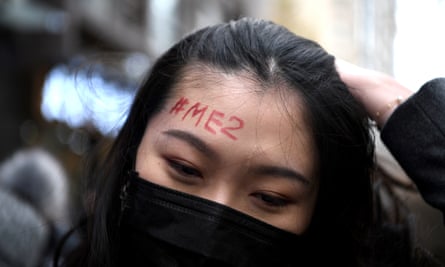
Organised feminist activity has largely been squashed in China, with activists facing severe punishments. In June, Sophia Huang Xueqin, a journalist who reported on China's nascent #MeToo movement, was jailed for five years for inciting state subversion.
Feminism in China has been forced to become 'very decentralised and individualised', said Li Maizi, a veteran activist who is now based in the US. That means that women who speak out against abuse by people in positions of authority shoulder all the risks themselves.
One of those risks is being sued â” by the alleged harasser. In May, a court in Beijing heard a defamation case filed by Li Songwei, a celebrity counsellor, against a woman who accused him on social media of engaging in an inappropriate sexual relationship with her when she was his client.
And Xianzi, the screenwriter, was sued by Zhu for defamation after she made her MeToo accusation against him (he dropped his lawsuit due to poor health last year).
Research by Darius Longarino, Wei Changhao and Yixin Ren of the Paul Tsai China Center at Yale Law School suggests that only 8% of civil lawsuits relating to sexual harassment are cases in which an alleged victim is suing an alleged perpetrator. The majority of lawsuits are lodged by the accused, often for defamation.
But despite the risks, some women will continue to speak out publicly, Li predicts, 'because where there's repression there's resistance'.
A winter's day, 2015, New York. Investigator Victor Burgos turned over the conversation he was about to have in his mind. In the next minutes, he was either going to recruit an ally in the fight against anti-doping or have a hostile, frustrating encounter that would send him back to the drawing board. Chances were it would be the latter. The omertà of dopers matches the mafia. No one talks. Few inform on their peers.
He was meeting a distance runner who was blissfully unaware of what was coming. The man was superb by normal standards, his marathon Âpersonal best well within what might be regarded as world class. In Kenyan terms, though, he was a mid-ranker and never going to be an Olympic superstar. He also had tested positive for 19-Ânortestosterone, a hardcore steroid.
The man appeared. Burgos approached him with a United States Anti-Doping Agency (Usada) business card in hand and a copy of the letter containing all the details of the positive test. Burgos introduced himself and was required to read the athlete his rights, especially regarding the opportunity to check the positive finding by having his B sample tested. (Laboratories always split an athlete's urine sample, test half â” the A sample â” and leave half â” the B sample â” so that it can be used to corroborate the first test with the athlete and advisers present. It almost always produces the same result.) Burgos chose his words carefully. 'This is not the end of the world,' Burgos recalls telling the athlete. 'This doesn't define who you are. If you made a mistake, we can talk about that.'
The way Burgos tells it, he was offering an opportunity to lessen the gravity of his punishment, an opportunity to provide 'substantial assistance' to Usada to help catch other dopers. It is a provision of anti-doping rules open to all but rarely used, because most athletes remain in denial, insisting they have done nothing wrong and that their positive test is mistake. 'He was shocked, and he was dishonest at the beginning,' said Burgos. 'He said: 'I don't know how the substance entered my body, this is a lie.'' 'Why don't we take a walk,' suggested Burgos. 'Let's grab a coffee.'
As they walked, they talked. It was deliberately far removed from the classic good cop-bad cop interrogation scene, sat behind a table in a darkened room. Burgos is chief investigator at Usada and he sees the results of all positive tests in the United States. Something in this one caught his attention. The substance, for one: 19-nortestosterone is a red flag for intentional doping.
Then the athlete's competitive record was intriguing, plying his trade on the US road race circuit, a subgenre of the sport but lucrative, especially for a young African, because you might win $10,000 (£7,750) prize money at a marathon or $5,000 at a 10k race. The races take place in mid-sized American cities, less exalted locations than London, New York and Chicago, and prize money isn't the $55,000 on offer for winning a major marathon. But clock up a few of these wins in a year and it's a decent living. The athlete was unlucky. In many of these lower-level road races, there is no anti-doping. His misfortune was Usada turned up at his event.
Burgos had weighed all this up. An established Olympian with a reputation to lose is less likely to talk; this guy, more so. The final piece of the jigsaw was his address in New York. Burgos lives in the city. So it was not a huge call to go to his apartment.
'Ninety-nine per cent of the time when athletes tests positive an organisation will email them,' said Burgos. 'We send a list of options in a very legalised notice letter and that's the end of it.' That email comes with a blizzard of acronyms and legalese. 'Usada collected a sample, your A sample shows an adverse analytical finding [AAF], which is a potential anti-doping rule violation [ADRV] â¦'
Burgos spoke with Usada's general counsel and asked him to hold off sending the email notification. 'I want to notify him personally,' he told him. 'I'll go to his apartment, tell him face to face.'
After the initial confrontation, the athlete accepted the offer of coffee. 'We walked around Manhattan and I was trying to soften the blow,' said Burgos. 'I don't want him to walk away distraught. People handle bad news in their own way, and I don't want to be the bearer of news that leads to somebody harming themselves. All I know about him is what I've pulled up online.' They went to Starbucks. 'OK. Let's talk it through,' said Burgos. 'Let's talk about where you were before you arrived in the US to compete in this event.'
Burgos knew that he had come from a camp in Kenya and that this athlete trained with a well-known group. (The camp has a strong anti-doping policy and several measures in place to enforce it. Many athletes train there without using performance-enhancing drugs.) Burgos quantified the athlete's responses. 'How much of an investment am I going to make in allowing him to be dishonest? He's not going to spill his guts to me. I just met him. He needs to understand who I am, am I trying to trick him?'
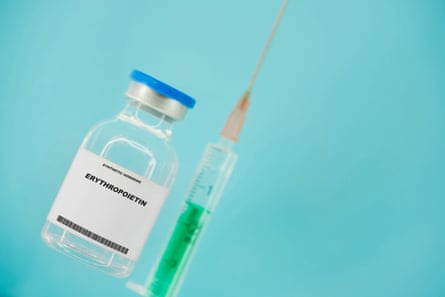
The young Kenyan was preparing for a new training camp with a group in the US where athletes make use of long mountain trails and altitude, which benefits their oxygen-carrying red blood cell production. Many runners go there and do not take performance-enhancing drugs. But some take advantage of the extensive networks of drug dealers operating there with the favoured performance enhancers, EPO â” the drug that increases oxygen carrying red blood cells â” and steroids.
What was on offer was a deal. Go undercover and provide the authorities with information about other dopers he was in contact with and he could keep running. It was more than a week before they met again. By then a formal cooperation deal was on the table and the federal Drug Enforcement Agency was now involved. The performance-enhancing drugs commonly used by distance athletes who dope potentially break US federal law, so the athlete became a DEA undercover informant.
It's the stuff of Hollywood, Donnie Brasco with an anti-doping context, though that shouldn't trivialise the seriousness. A working model became apparent to investigators from the athlete's experience. Young Kenyan athletes were encouraged to the USA, entered in the B-list road races where no anti-doping was expected. They were provided with the means to dope and with their natural talent and pharmaceutical enhancement, they often won. Whether the athletes received all the prize money and how much was deducted for 'expenses' was unclear.
'There's a certain level of desperation in athletes who allow themselves to be sucked into this doping scheme because of the level of poverty, the lack of education and promises to travel outside Kenya,' said Burgos. 'These are the systemic reasons why this happens. The ones we are trying to hold accountable are those who are facilitating this, recruiting these young athletes, promising them the world and doping them, some unwittingly, some not. That's the real layer we want to uncover.'
The athlete was in effect placed back into the training group, with no initial sanction, as that would have attracted suspicion, and he was allowed to compete. (His performances at the races at which he had doped previously would be annulled later when his reduced sanction was applied.) There was one condition: no doping.
'We were actively testing him during that period, so he was not allowed to dope and he was to tell us right away if he did,' said Burgos. 'We had notified the World Anti-Doping Agency [Wada] and the international federation for track and field, and they all signed off.'
But now the drug testers had an inside man. 'It was absolutely not something we could [enter into lightly],' said Burgos. 'I stayed plugged in and we communicated with him regularly to make sure he was mentally OK. And this particular training group was not the only one. There was another training group we spent a lot of time on.'
The benefit for testers is that training time is when doping is rife. 'Intentional dopers who test positive in competition have generally erred or something has gone horribly wrong, like they took too great a dose, too close to competition,' said Burgos. 'Doping occurs during training. It allows you to train harder and to recover from that training and from injury.'
Many drugs have a specific and short window in which a test can detect them. This kind of intelligence means that the anti-doping authorities can target their testing precisely and catch cheats out. However, it isn't just about testing. Anti-doping agencies don't have to have a positive test to ask for a ban. Testimony from whistleblowers, evidence from email chains, possession â” offences known as non-analytical violations â” can also be used to ban an athlete.
The decimation of Kenyan distance running
In May 2015, an athlete living in Albuquerque found himself pulled over in his car by DEA agents. He hadn't known he was under surveillance, but the agents had a good idea of what would they were looking for because of their inside line. With few good options, he consented to their request to search his premises.
What they found was vials of AICAR, a muscle-building, fat-burning drug favoured by cyclists and long-distance athletes. Though a distance runner himself, his best days were behind him. He was supplying elite athletes training in Albuquerque. He would receive a four-year ban and left the US. An associate, also identified and tested by intelligence several years later, received an eight-year ban.
In this period around when the intelligence operations were running, Kenyan distance running was decimated. The image of the Kenyan runner effortlessly striding past European and American counterparts on the back of their clean-living lifestyle and 10-mile runs to school in the high-Âaltitude Rift Valley in one of the most enduring in sport. But it was shattered by Âtarget testing.
The most high-profile Kenyans to face sanctions during that period included Wilson Kipsang, the former marathon world record-holder and 2014 London Marathon winner. He did not fail any drugs tests but received a four-year ban for four 'whereabouts failures' between April 2018 and May 2019, meaning he wasn't at the address he specified to drug testers at the appointed hour he had requested.
That is a condition all elite athletes have to fulfil so that they are available for testing. More than two missed appointments in a 12-month period results in a ban. Kipsang insisted that he had never used prohibited substances or methods and that drug testers had made procedural errors, wrongly rejecting his reasons for missing tests. However, the hearing found against him, concluding he had falsified evidence.
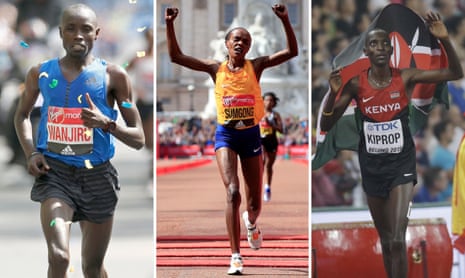
The Kenyan runners Daniel Wanjiru, Jemima Sumgong and Asbel Kiprop have all faced sanctions for drugs offences. Composite: Action Images/Reuters; PA Images; AP Photo
Jemima Sumgong, the 2016 Olympic marathon champion and London Marathon winner the same year, was banned for eight years in January 2019 after World Athletics, the sport's governing body, ruled there was 'compelling evidence' she had fabricated her medical records and lied about her whereabouts after a positive test for EPO in 2017. Sumgong contested the findings and claimed emergency medical treatment was likely responsible for the positive test.
Daniel Wanjiru, the 2017 London Marathon winner, was banned in October 2020 until December 2023 after the blood passport, which athletes have to provide, showed 'abnormalities' which the Athletics Integrity Unit (AIU) concluded were 'highly likely ⦠caused by the use of prohibited methods'. He had been tested 16 times between April 2017 and 2019 and his 14th test had shown elevated levels of haemoglobin concentration. He denied ever using performance-enhancing methods or drugs and his management company expressed their 'disappointment' with the decision.
Asbel Kiprop, 2008 Olympic 1500m champion and triple world champion, was banned for four years in April 2019 after testing positive for EPO, a red blood boosting product. He has consistently protested his innocence.
There are currently 91 Kenyan track and field athletes listed as banned by the AIU, an agency which worked with the Usada intelligence gathering programme. That makes them top nation on the doping list, ahead of India on 90 and Russia on 78. Burgos's informant did eventually receive a sanction and have their races before the dope test annulled from the record but long after the original test, during which time he was an undercover runner.
For some it seems extreme but Burgos insisted: 'Testing is not enough. Just look at the hard numbers. Globally we collect 250,000-300,000 samples annually and less than 0.5% come back positive. That's just not acceptable. This is the level of action you require. You need to get creative. But it comes with a level of risk and many organisations are risk averse. It is just very scary for them to sign off on something like that. Fortunately we have a chief executive in Travis Tygart who is like-minded. Only through the power of investigations are you going to peel back layers of organised doping schemes. That's what we employed in this case.'
It was 1968 at Mexico City that the Kenyans first made their mark on the Olympics, Kip Keino the most-remembered of their three gold medals in an era when their athletes were clean, fuelled only by the Rift Valley mountain air. Their subsequent domination of running and the small fortunes to be made from it means that today's picture seems an awkward juxtaposition with that age of innocence.
For legal reasons and to protect the identity of those involved in undercover operations the Observer has agreed not to name individuals
Rwanda stepped up epidemic response after two cases of two of mpox (formerly known as monkeypox) were confirmed in the country on Saturday, July 27.
According to official, this is the first time the mpox virus has been confirmed in Rwanda.
Rwanda confirmed the outbreak less than two weeks after neighbouring DR Congo confirmed 25 cases in the border city of Goma.
'Rwanda is well-prepared to handle a potential mpox outbreak, leveraging our experience and systems developed during previous health challenges like COVID-19,' said Dr Edson Rwagasore, the Division Manager of Public Health Surveillance and Emergency Preparedness and Response at Rwanda Biomedical Center (RBC),
Rwandans are advised to take precautions to avoid the spread of the viral infection. He said mpox is a viral disease that is contagious but that can still be prevented. The disease can be deadly.
Rwagasore highlighted that the swift identification and isolation of the two cases of mpox within a short period of time demonstrate that the response systems are functioning effectively.
Dr Rwagasore said one of the key aspects of Rwanda's pandemic preparedness is a robust tracking system across health facilities, points of entry, and communities, which was pivotal during the Covid pandemic.
He added that community health workers play a crucial role in this network, enabling early detection and rapid response to potential cases.
'We have trained multisectoral rapid response teams at both national and district levels. These teams stand ready for immediate mobilisation should an outbreak occur.'
Rwagasore noted that a person infected with mpox begins to exhibit symptoms between two and 19 days after exposure. Symptoms include common symptoms such as rash, fever, sore throat, headache, muscle aches, back pain, fatigue, and swollen lymph nodes.
Dr Rwagasore stressed that people with the symptoms of mpox should seek medical attention immediately and inform authorities about anyone they may have exposed to the disease.
These include avoiding physical contact with individuals showing symptoms, refraining from sexual intercourse with those exhibiting signs of mpox, not touching their personal belongings, and practicing thorough handwashing with soap and clean water.
Advanced response systems
Dr Rwagasore also said that the Ministry of Health and RBC's experience with COVID-19 and Ebola preparedness have significantly enhanced their overall capacity to respond to disease outbreaks.
He noted that the systems and protocols they developed are adaptable to various health emergencies and have made substantial investments in laboratory capabilities.
'We can now quickly test and confirm diseases using advanced methods, including genomic sequencing, which is crucial for effective outbreak management,' Dr Rwagasore said.
'While we remain vigilant, these measures give us confidence in our ability to manage potential health challenges, including mpox. We continue to monitor the situation closely and adapt our strategies as needed to ensure the health and safety of all Rwandans.'
He said that the current outbreak has shown to have a low case fatality ratio based on the number of deaths and admissions recorded as of July 27.
'This is the right time to educate Rwandans about the mpox virus. Informing the public is an important step in our health strategy,' he noted.
'We are launching awareness campaigns to help everyone understand what mpox is and how it spreads, the symptoms to watch out for, simple prevention measures we can all take and what to do if a person suspects they have been exposed to the infection,' he noted.
Dr Rwagasore added that people should no panic.
He said that by working together and staying informed, the communities can be protected.
Availability of vaccines
Dr Rwagasore said that there are vaccines approved for prevention of the mpox virus which are recommended for close contacts of mpox cases and high-risk groups.
Some of these vaccines are already available and others are still under clinical trials, he added.
In December 2022, the DR Congo declared an outbreak of mpox and an incident management system has been in place since February 2023, based on the increasing number of reported cases.
Since September 2023, an outbreak of mpox in South Kivu province has spread to North Kivu. A new variant of clade I MPXV has been described in South Kivu.
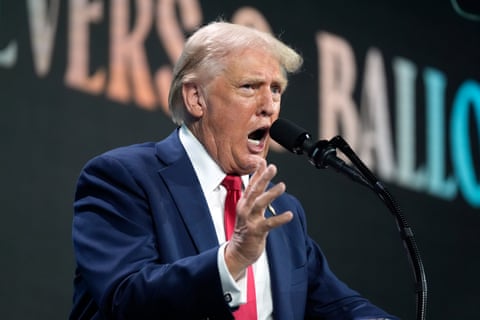
Donald Trump has ignited alarm among his critics after telling a crowd of supporters that they won't 'have to vote again' if they return him to the presidency in November's election.
'Christians, get out and vote! Just this time â” you won't have to do it any more,' the Republican former president said on Friday night at a rally hosted in West Palm Beach, Florida, by the far-right advocacy group Turning Point Action.
'You know what? It'll be fixed! It'll be fine. You won't have to vote any more, my beautiful Christians,' he said with a slight shake of his head and his right hand pressed against the left side of his chest.
He added: 'I love you. Get out â” you gotta get out and vote. In four years, you don't have to vote again. We'll have it fixed so good, you're not gonna have to vote.'
Trump's remarks â” delivered not far from his Mar-a-Lago resort and home â” were immediately met with consternation in some political quarters.
The constitutional and civil rights attorney Andrew Seidel, for instance, replied to video of Trump's comments circulating on X by writing: 'This is not subtle Christian nationalism. He's talking about ending our democracy and installing a Christian nation.'
Actor Morgan Fairchild added in a separate X post: 'But ⦠what if I want to vote again?? I was always raised that we get to vote again! That is America.' And NBC legal commentator Katie Phang said: 'In other words, Trump won't ever leave the White House if he gets re-elected.'
Trump's comments on Friday came months after he remarked that he would be 'a dictator on day one' if given a second four-year term in the White House. He has repeatedly made known his admiration for authoritarian leaders, including Russia's Vladimir Putin, Hungary's Viktor Orbán and North Korea's Kim Jong-un. And a former White House aide reported that Trump once said Adolf Hitler â” whose Nazi regime murdered 6 million Jews during the Holocaust amid the second world war â” 'did some good things'.
Meanwhile, the conservative Heritage Foundation's Project 2025 has detailed plans to aim retribution at Trump's actual and perceived enemies â” whether politicians or bureaucrats â” should he be re-elected.
Experts on authoritarianism warn the public to take Trump seriously when he speaks in that manner. And before Joe Biden halted his re-election campaign on 21 July and endorsed Kamala Harris to succeed him in the Oval Office, the Democratic president repeatedly sought to portray Trump as an existential threat to American democracy.
Trump's supporters have tried to blame that rhetoric for the failed 13 July assassination attempt that targeted the former president at a political rally in Pennsylvania. The FBI said on Friday that a bullet â” whether whole or fragmented â” hit Trump in one of his ears during that day's shooting, which also killed a rally-goer and wounded two other spectators before a Secret Service sniper shot the gunman to death.
Yet many pointed out how Trump's remarks on Friday seemed to be an indication that the Republican nominee for president had no plans to stop making explicit threats against democratic norms, including elections themselves.
'Oh. Trump just cancelled the 2028 election,' liberal political commentator Keith Olbermann wrote on X in a post containing a video clip of the ex-president's remarks on Friday.
Caty Payette, the communications director for Democratic US senator Martin Heinrich of New Mexico, added in a separate X post: 'When we say Trump is a threat to democracy, this is exactly what we're talking about.'
However, not everyone is turned off by the rhetoric to which Trump resorted on Friday. An Ipsos poll published in June and commissioned by the Earth4All non-profit and the Global Commons Alliance found that 41% of Americans believe 'having a strong leader who does not have to bother with parliament and elections' is a very good or fairly good way to govern.
Some younger people and higher earners in particular showed support for that sentiment, according to the poll, said Owen Gaffney, co-leader of Earth4All.
Trump easily clinched the Republican nomination for November's election despite having been convicted in May of 34 felony counts of falsifying business records in the New York state prosecution involving $130,000 paid to adult film actor Stormy Daniels after she alleged an extramarital sexual encounter with him. He has also been grappling with charges of illicitly trying to reverse the outcome of the 2020 election that he lost to Biden â” efforts that were buoyed on 1 July when a US supreme court with three Trump appointees ruled that he enjoys immunity from being prosecuted for any acts deemed official.
And, among other legal issues, he has faced multimillion-dollar civil penalties for fraud and a rape allegation that a judge determined to be substantially true.
A poll released on Friday by the Republican-friendly Fox News network showed Trump in a tight race with Harris, the US vice-president, in key swing states that could decide November's election. Before Biden's withdrawal from the presidential election, polls generally showed Trump had built relatively comfortable leads in a number of key swing states.
Kabarebe made the remarks on Thursday, July 25, 2024, while taking youths from the diaspora on a tour of the Gikoba Liberation Trail in Nyagatare District, a site used by the Rwandan Patriotic Army (RPA) during its liberation struggle from 1990 to 1994.
The Rwandan youths are living in different countries.
At the time, Gen (Rtd) Kabarebe was the commander of the forces protecting the RPA leader Kagame during the war.
During the tour, Kabarebe told the Rwandan youth from various countries that during the early months of the war, there was constant fighting day and night as government forces attempted to dislodge them, but their determination helped them to prevail.
From January to May 1991, the struggle consisted of guerrilla attacks aimed at weakening and confusing the enemy, causing him to disperse his forces.
In June of that year, Kagame, who was the commander of the RPA, decided to send his troops to an area called Muvumba, choosing it because the abundant banana groves provided good cover and food to sustain the troops.
Gen (Rtd) Kabarebe revealed that they were preparing to engage in a new, entrenched form of combat rather than guerrilla attacks.
'He decided to move the troops from the mountains, changed the tactics from mobile guerrilla warfare to positional warfare. He instructed all the commanders and the soldiers to dig trenches just across here. He brought all the military leaders to show them his trench and asked them to dig their own. They were to face the enemy. The enemy well equipped with artillery, with mortars, with APCs, armored personnel carriers, helicopters, and everything,' he revealed.
Kabarebe disclosed that he was the one who dug that historic trench, which is still visible today.
'I was the commander of the force that protected the president and I am the one who dug this trench,' he added.
Gen (Rtd) Kabarebe noted that the battle was tough because then Rwandan President Juvénal Habyarimana had put all his efforts into fighting the RPA forces. However, sustained attacks on the government army forced the former Head of State to give some concessions, allowing for peace negotiations in Arusha, Tanzania.
'There was a time when Habyarimana sent many troops, heavily armed. The fighting was intense. Do you know what the Chief of Staff told us? He said, ‘We will never leave this place, even if we have to dig trenches under those mountains and hide there, but we will stay here.’'
'He wanted to tell us that no matter what happens, we should not leave this area and fight until we win.'
From that time, the RPA forces began to encircle the enemy, digging trenches that surrounded the government forces, cutting off all supply routes for food and other necessities, and also blocking their own escape routes.
Whoever starved first would be forced to abandon their positions.
'There was no point in time when our force ever succumbed and left its defence because of hunger. Our level of resilience was very, very high,' he stated.
The war would go on for more than three years until the RPA forces captured Kigali and ended the 1994 Genocide against the Tutsi.
Meanwhile, during the tour, Gen (Rtd) Kabarebe urged the young people from the diaspora to emulate the patriotism of the youth who sacrificed their lives during the liberation struggle.
Kabarebe made the remarks on Thursday, July 25, 2024, while taking youths from the diaspora on a tour of the Gikoba Liberation Trail in Nyagatare District, a site used by the Rwandan Patriotic Army (RPA) during its liberation struggle from 1990 to 1994.
Police alongside Uganda People Defence Forces (UPDF) and Joint Anti-Terrorism Taskforce (JATT) occupied Kampala streets starting on Sunday evening in anticipation of massive anti-corruption protests.
The heavy deployment followed days of mobilizing people mostly on X to participate in anti-corruption protests which had been dubbed #MarchToParliament. The forces perceived the anti-corruption protests to be a copycat of what is transpiring in Kenya where Generation Z has put President William Samoe Ruto’s government on tenterhooks.
The police spokesperson, Assistant Commissioner of Police Kituuma Rusoke has now given an update revealing that the first week of the protests expected to be held every Tuesday and Thursday like it is happening in Kenya led to the arrest of 104.
According to ACP Rusoke, between July 22 and July 25, demonstrators attempted to march to Parliament in Kampala, leading to significant police intervention. He said on July 22 nine individuals were arrested and charged with common nuisance and traffic regulation violations, all of whom were taken to court.
'One July 23, a total of 75 suspects were apprehended; 74 were subsequently taken to court, while one remains in police custody. On July 24, three individuals were arrested and charged with common nuisance offenses, all of whom were taken to court,' ACP Rusoke said.
Security has further explained that on July 25, sixteen people were arrested of which 13 were taken to court, and three are still in police security. 'Overall, 104 individuals have been arrested during this period, with 100 already taken to court. Among those arrested, 13 had prior criminal charges,' ACP Rusoke said.
President Yoweri Museveni has since dubbed the anti-corruption protests as being bankrolled by foreigners with the intention to destabilize Uganda. He said if the anti-corruption protests were not having hidden intentions, he would have been informed and invited to participate as the chief walker.
According to Museveni, anti-corruption protesters are playing with fire as his regime and security agencies won’t allow anyone to throw the country into anarchy.
Police said mobilization placards that called upon Ugandans to occupy all streets in Kampala as part of their march to parliament was going to result in significant traffic congestion, disruption of trade, and disturbances to public order.
Among those arrested before the protests were Francis Zaake, Hassan Kirumira, and Charles Tebandeke from the opposition National Unity Platform (NUP), along with seven others.
Police in Uganda have confirmed the arrest of over 100 individuals in less than a week during anti-corruption protests.
The meeting occurred on Thursday, July 26, 2024, before the opening ceremony of the Olympic Games, which bring together over 10,000 athletes from various sports disciplines.
'President Infantino and President Kagame met at FIFA’s new offices in Paris 'to discuss ongoing cooperation and new opportunities to further develop football in Rwanda,' reads a statement from the President’s office.
During the 2024 Paris Summer Olympic Games, Rwanda is represented by eight individuals who will compete in cycling, athletics, swimming, and fencing.
Last year, Infantino was re-elected to head the Federation of International Football Associations (FIFA) for a second term running from 2023 to 2027, during the 73rd FIFA Congress held in Kigali.
President Kagame thanked him for his role in the initiative to renovate Amahoro Stadium, which is among the top stadiums in Africa.
President Kagame also received a gift from Infantino.
President Paul Kagame and FIFA President Gianni Infantino have met in Paris, France, where the 2024 Olympic Games are underway and discussed the development of football in Rwanda.
The program was officially inaugurated in Kigali on July 26, 2024, with a focus on promoting inclusive service delivery and the proper use of sign language while interacting with patients with disabilities.
The first cohort of nurses and midwives will commence their training in early 2025, in collaboration with the National Council of Persons with Disabilities in Rwanda (NCPD).
Emmanuel Ndayisaba, Executive Secretary of NCPD, highlighted the importance of having sign language interpreters to bridge communication gaps between deaf patients and healthcare providers.
He noted that these gaps often lead to patients feeling uncomfortable discussing their health issues, which can result in inadequate health care provision.
“We face significant challenges in delivering services to people with disabilities, particularly in the healthcare setup. Patients sometimes struggle to communicate directly with doctors, a situation that should be handled with confidentiality,” Ndayisaba explained.
“Reliance on others for interpretation can lead to embarrassment and incomplete communication about health matters,” he added.
Caroline Ikiriza, an RNMU staff member, expressed enthusiasm for the training program. As one of the few healthcare workers already fluent in sign language, she is eager to share her expertise with her colleagues.
“We are here to learn so that we can train our peers. This initiative is a vital advocacy effort by RNMU to prepare training sessions for nurses and equip them with sign language skills,” Ikiriza said.
RNMU Chairperson André Gitembagara outlined the program’s objectives, emphasizing the need to address challenges faced by people with disabilities in healthcare settings, particularly in rural areas where these issues are more pronounced.
“Consider a woman coming to give birth who cannot speak or hear. Providing appropriate care in such cases is a significant challenge for nurses or midwives,” Gitembagara said.
“In rural areas, the absence of interpreters further complicates communication with healthcare providers. Additionally, some nurses and midwives themselves have disabilities,' he emphasized.
In 2023, RNMU trained 40 nurses in Kigali who work at patient reception services. The current initiative begins with training national RNMU leaders on inclusive service delivery, with plans to extend the training to district-level RNMU leaders, and eventually to hospital and health center staff.
By the end of 2025, RNMU aims to have 200 nurses and midwives proficient in sign language, with ongoing training efforts planned for subsequent years.
RNMU Chairperson, André Gitembagara, highlighted ongoing efforts to ensure quality service for people with disabilities.
NCPD Executive Secretary, Emmanuel Ndayisaba, noted that individuals with hearing impairments often hesitate to discuss their health issues due to a lack of trust in interpreters.
RNMU Secretary-General, Rurangwa Gerard, at the event.
This training aims to enhance the number of healthcare workers who deliver high-quality service to individuals with disabilities.