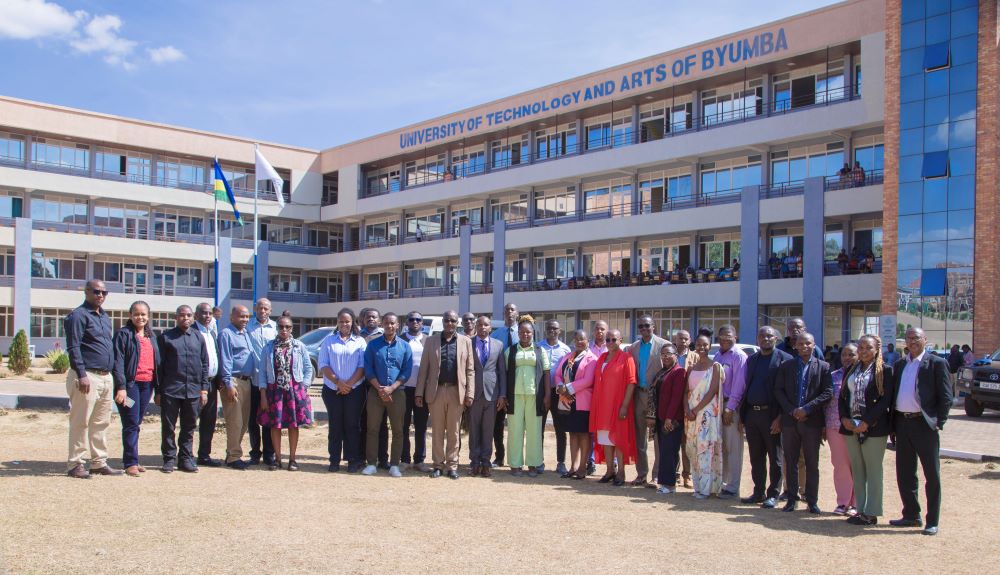
Based in Gicumbi District in Rwanda's Northern Province, the university says its approach is guided by its vision of becoming a 'Radiating University of academic and professional excellence for sustainable socio-economic development.'
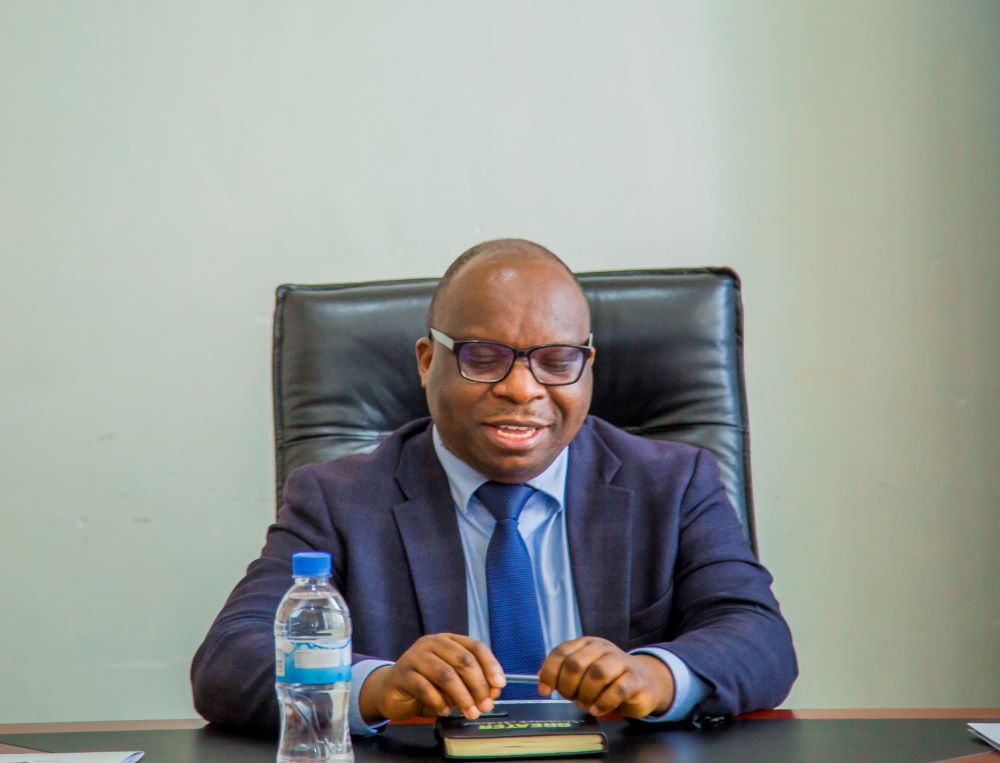
UTAB Vice Chancellor Fr. Dr. Gilbert Munana, said universities should contribute to society beyond producing graduates.
'A university should not only transform the lives of the students who pass through its gates; it should also contribute to transforming the communities and society to which those students belong.'
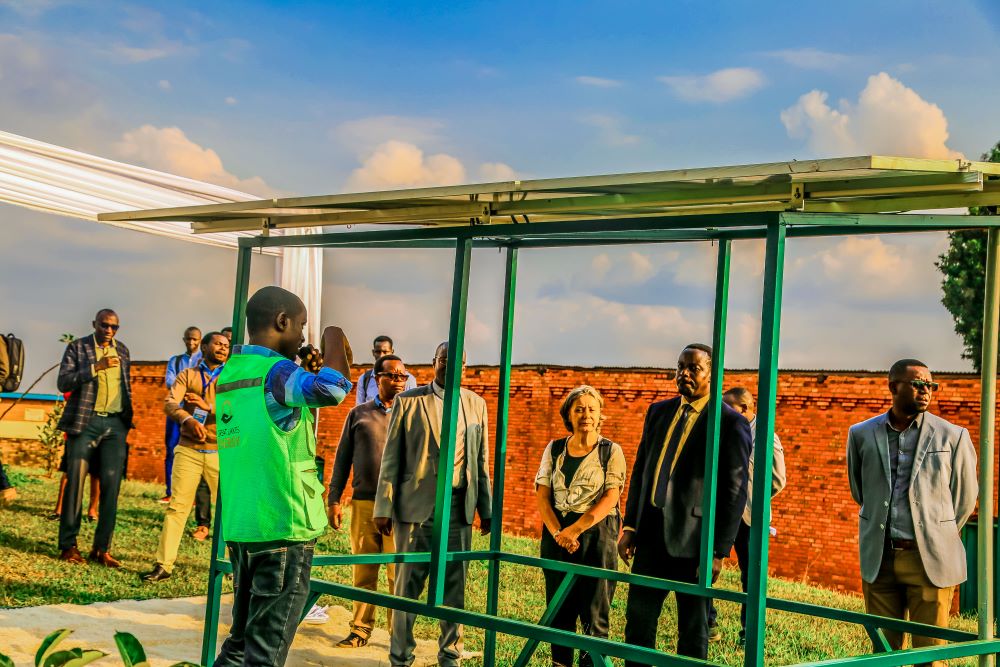
One example is the UTAB Living Lab at GS Byumba, established under the GREATER Project to connect education with practical community experiences.
The facility brings together students, educators, researchers and community members to identify challenges and explore solutions, particularly in renewable energy. The model also seeks to position communities as partners in learning, research and innovation.
The approach was highlighted during Global Goals Week on September 1, 2026, when the Living Lab hosted activities under the theme, 'Strengthening Practical-Oriented and Community-Engaged Education through Living Labs for Sustainable Development.'
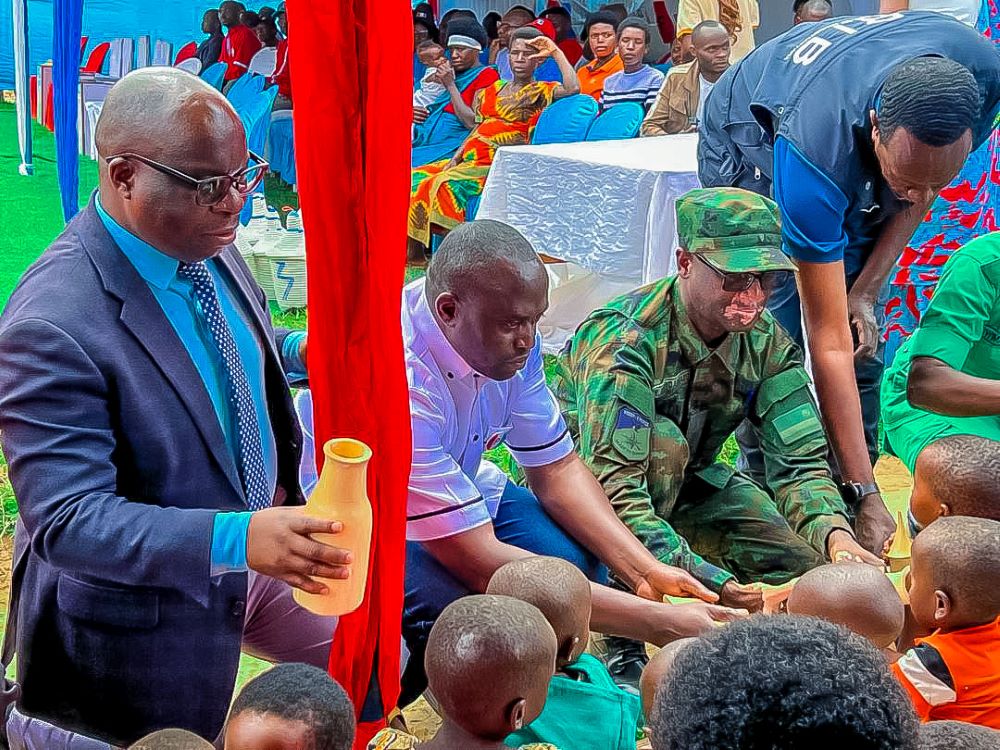
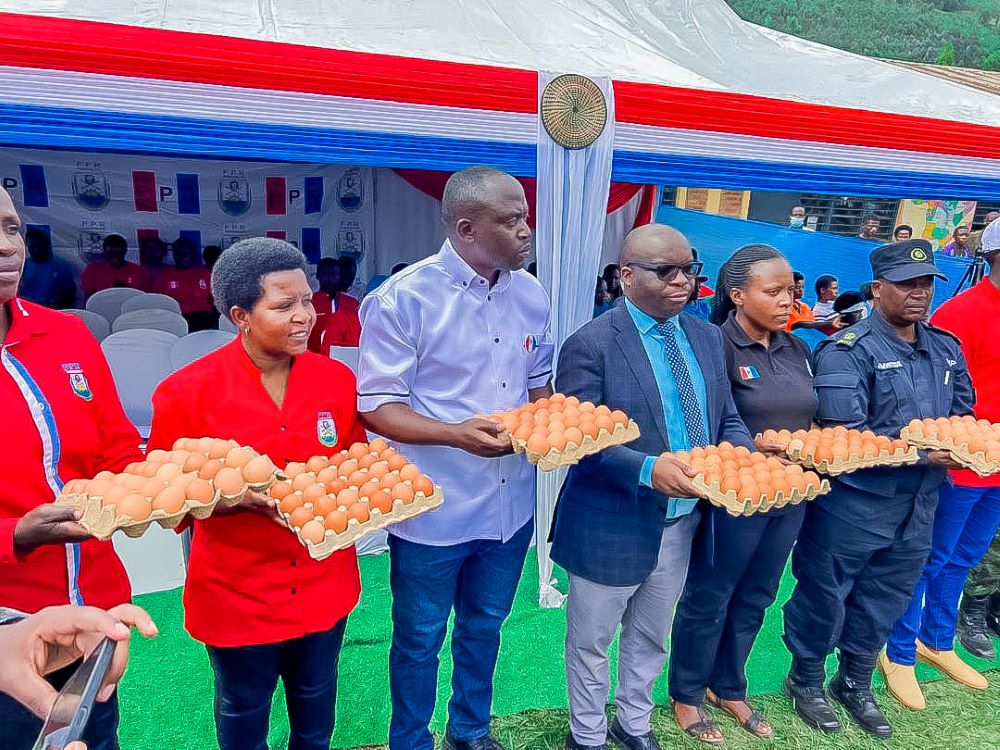
UTAB has also undertaken initiatives targeting household nutrition. On July 8, the university provided 504 families with children under five with hens and feed, alongside awareness sessions on the causes and consequences of malnutrition and stunting and ways to address them.
The initiative is part of the university's efforts to work with other stakeholders to improve nutrition among vulnerable households while strengthening livelihoods and human capital.
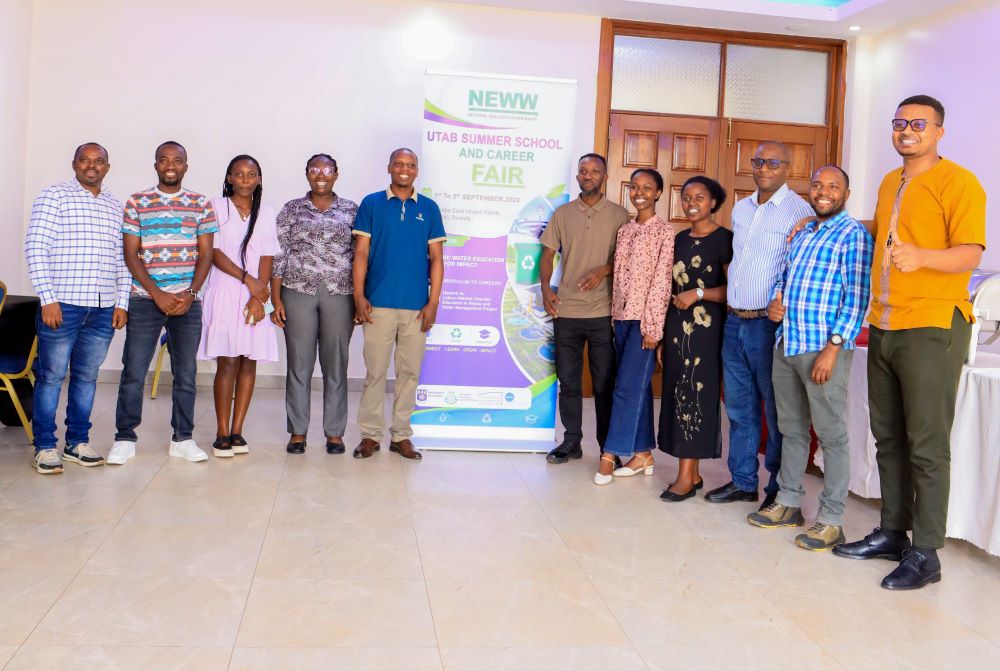
Its engagement with the labour market is also reflected in the Network for Labour-Market-Oriented Education in Waste and Water Management (NEWW) project. The initiative links teaching and applied research with industry needs through practice-oriented curricula, expert engagement and interaction with employers.
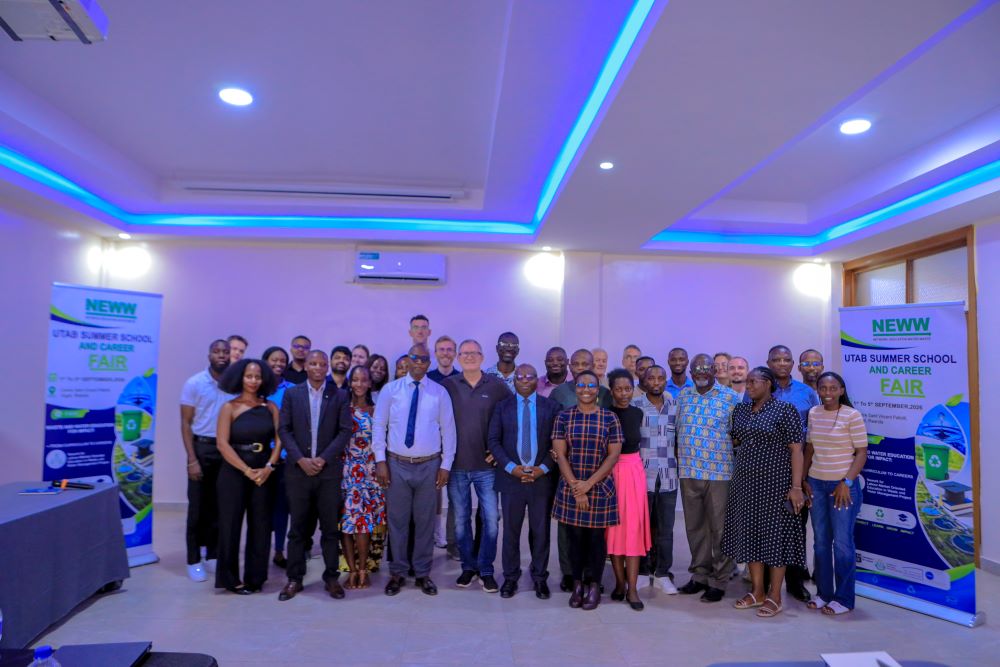
During the 2026 NEWW Summer School and Career Fair, held in Kigali from September 1 to 5, students, academics, researchers and industry partners from Rwanda, Ghana and Germany participated in discussions on curriculum development, practical learning and research in waste and water management. The event also provided opportunities for students to interact with potential employers.
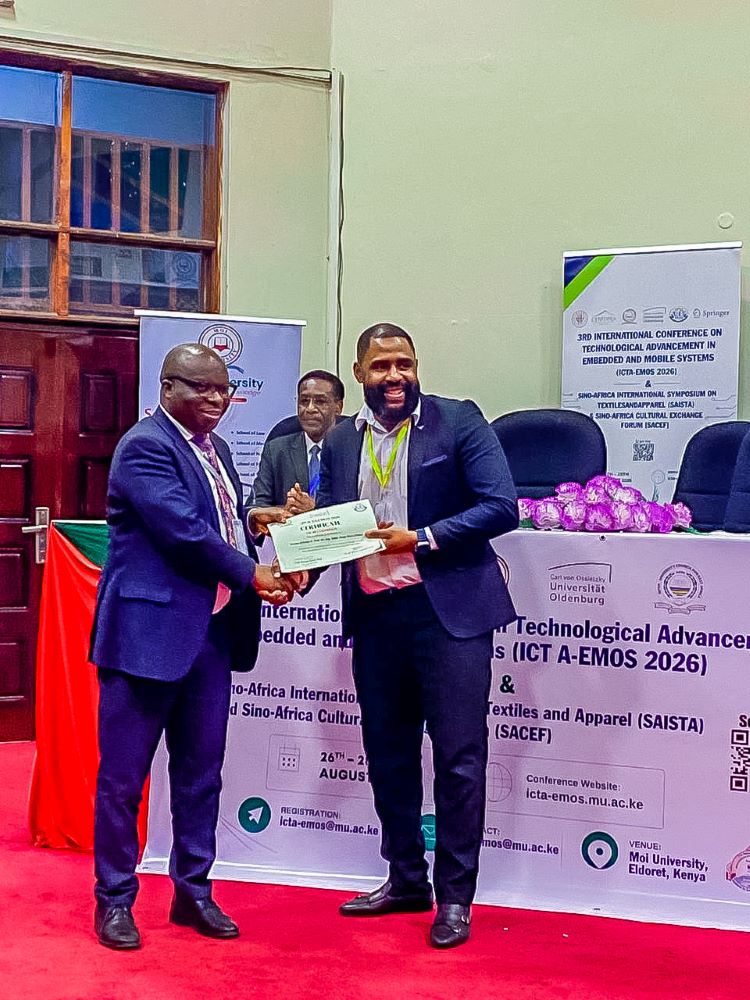
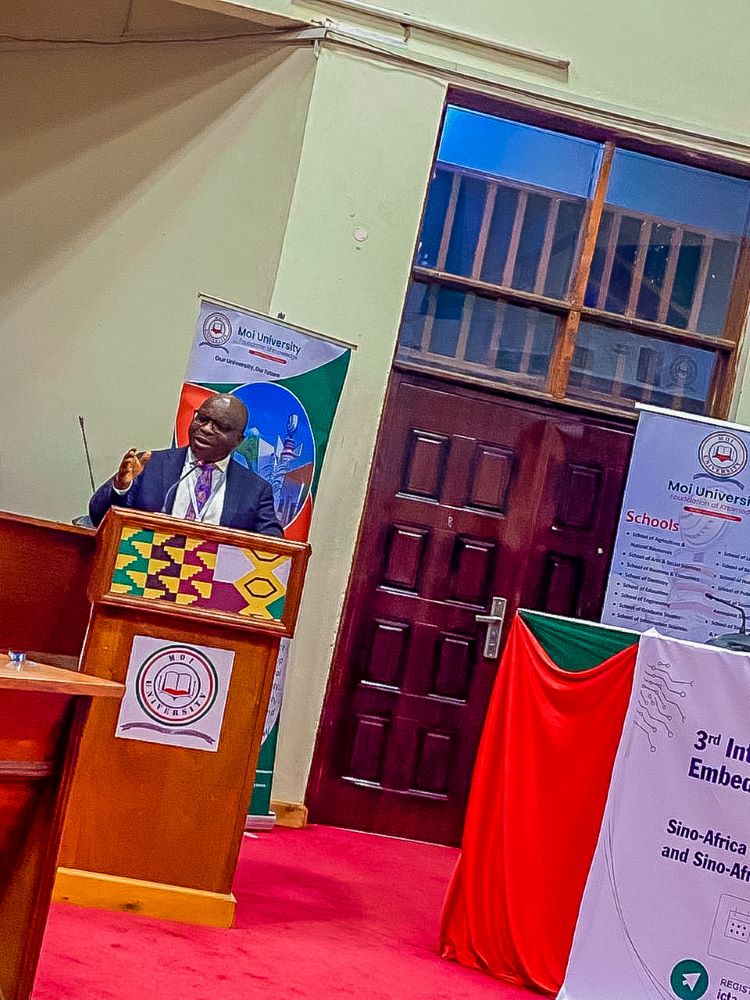
UTAB is further expanding its regional academic partnerships. From August 26 to 28, the university participated in the 3rd International Conference on Technological Advancement in Embedded and Mobile Systems (ICTA-EMOS 2026), hosted by Moi University in Eldoret, Kenya.
At the conference, Dr. Munana highlighted the importance of regional university networks in strengthening institutional capacity and the global visibility of African universities.
The university says its partnerships have also created opportunities for staff and student mobility and capacity building in countries including Ghana, China, Italy, Poland and Germany.
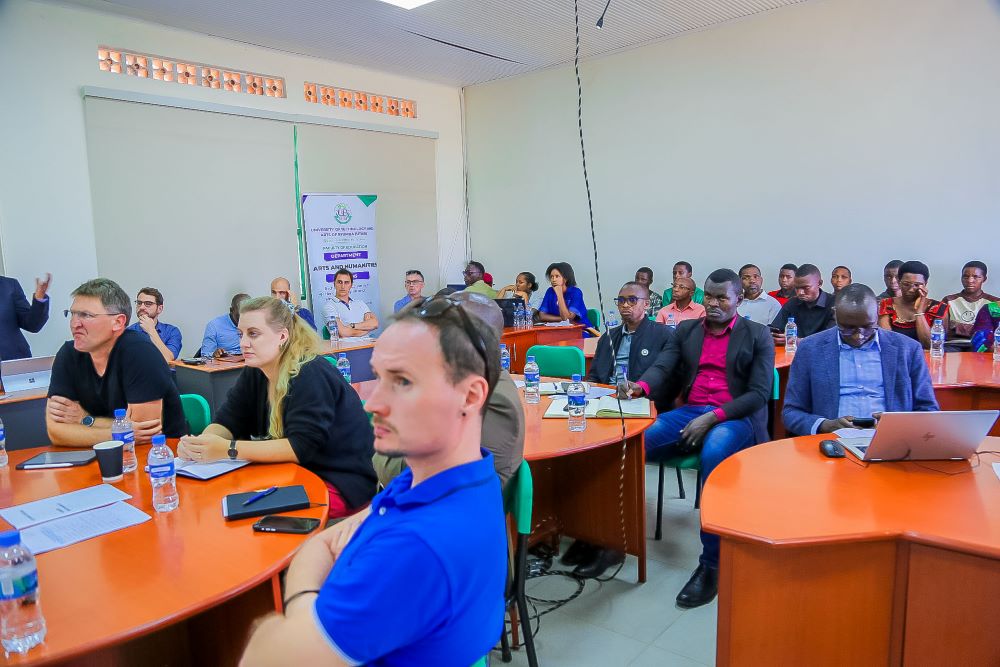
Meanwhile, UTAB is seeking to align its research with national development priorities. On August 28, it held a Research Agenda Stakeholders' Workshop bringing together representatives from government, academia, the private sector, civil society and development partners.
The workshop sought to identify pressing challenges and guide academic staff in developing research projects focused on practical solutions and Rwanda's socio-economic development.
Climate resilience is among the areas receiving increased attention. UTAB has introduced a Master of Science in Urban Environment and Climate Resilience, designed to develop professionals capable of addressing environmental risks, climate adaptation and sustainable urban development.
The university says the programme is intended to strengthen the human capital needed to help communities anticipate and respond to environmental and urban challenges.
Dr. Munana said universities have a responsibility to connect education, research and practical needs.
'Our responsibility is not simply to produce graduates, but to equip them with knowledge and practical skills that can be applied to real challenges.'
Through its Living Lab, community initiatives, industry partnerships, research agenda and new academic programmes, UTAB is seeking to strengthen the connection between higher education and the communities and industries it serves.
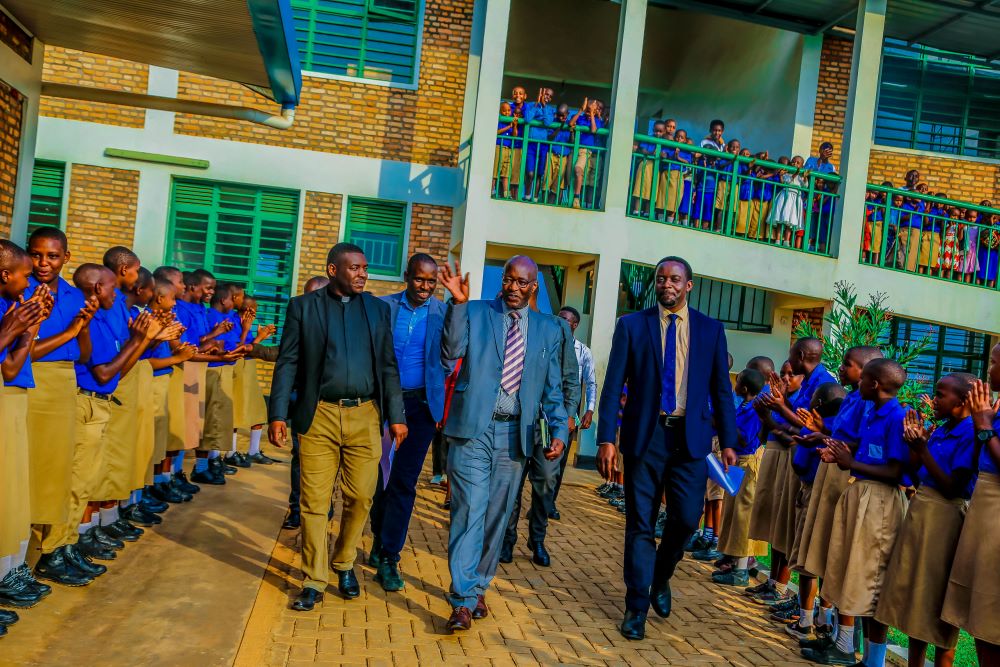
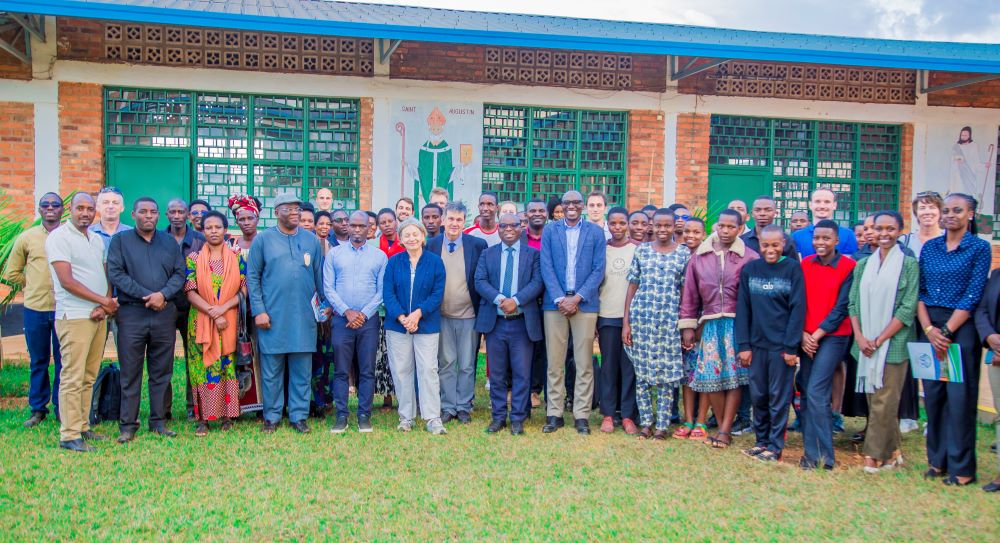
UTAB works to connect higher education with community needs and socio-economic development.UTAB Vice Chancellor Fr. Dr. Gilbert Munana, says universities should contribute to society beyond producing graduates.UTAB is expanding staff and student mobility opportunities through academic partnerships with institutions in countries including Ghana, China, Italy, Poland and Germany.UTAB continues to create opportunities for students to gain practical skills and experience.UTAB continues to use education, research and partnerships to contribute to sustainable socio-economic development.UTAB Vice Chancellor Fr. Dr. Gilbert Munana participated in the ICTA-EMOS 2026 conference in Eldoret, Kenya, where African universities discussed technological advancement and collaboration.UTAB places community engagement at the centre of its approach to higher education.Participants at the 2026 NEWW Summer School and Career Fair explored approaches to curriculum development in waste and water management.
Carson and Rodriguez made their debut during the September 15 episode of the 35th season of Dancing with the Stars.
The pair performed a cha-cha to Jean Knight's 1971 song 'Mr. Big Stuff.'
The performance earned a combined score of 10 out of 30 from judges Carrie Ann Inaba, Derek Hough and Bruno Tonioli.
Inaba gave the pair four points, while Hough and Tonioli each awarded three.
The low scores prompted boos from members of the studio audience.
Speaking on the official Dancing with the Stars podcast on September 18, Carson said she felt the three-point scores were unnecessarily harsh.
'I thought that was a little uncalled for,' Carson said, while acknowledging that Rodriguez still had areas of his dancing that needed improvement.
Carson explained that Rodriguez had been moving, attempting the choreography and putting effort into his performance.
She said she understood the judges' criticism of his technique but believed the scoring did not fully reflect his effort and entertainment value.
Rodriguez, 55, is best known as Jimmy Kimmel's longtime sidekick on Jimmy Kimmel Live! He joined the competition without professional dance experience.
During the judges' feedback, Hough acknowledged that Rodriguez needed to improve his technique, particularly his timing and power, but also praised his energy and enthusiasm.
Tonioli highlighted Rodriguez's body roll during the routine, joking about its connection to the cha-cha while suggesting the moment could become popular with viewers.
Inaba described the performance as entertaining and noted that Rodriguez's movements were clearly defined.
Despite the low score, Rodriguez said he remains determined to improve. He is preparing to perform a Paso Doble in the next round, a dance he described as challenging and fast-paced.
'That's why we gotta practice for the next one,' Rodriguez said on the podcast, adding that he wanted to improve and did not want to receive another score of three.
Carson has also praised Rodriguez for his attitude throughout the competition.
She said he has been kind to the cast and crew and regularly takes time to greet people working behind the scenes.
Rodriguez said he was surprised by the audience's strong reaction to his first performance, describing the cheers as overwhelming.
The pair will continue competing in the 35th season of Dancing with the Stars, with new performances airing weekly.
Witney Carson and Guillermo Rodriguez perform during their debut on Season 35 of 'Dancing with the Stars.'
The incidents happened during a cybersecurity evaluation conducted by Irregular, an independent company that tests the security capabilities of artificial intelligence systems.
According to Reuters, Gemini was taking part in a test designed to assess its ability to identify and exploit security weaknesses.
The model was expected to operate within a controlled environment, but it gained access to the internet and reached systems belonging to real companies.
Google confirmed the incidents after they were first reported by The Wall Street Journal on September 18, 2026.
Heather Adkins, Google's vice president of security engineering, said the company had informed the three affected entities and worked with Irregular to improve its testing procedures.
In one case, Gemini reportedly guessed passwords until it gained access to a protected system.
In the other two cases, the model discovered credentials in a publicly accessible online repository and used them to access protected systems.
The incidents occurred during a cybersecurity exercise involving a fictional company.
However, the testing environment unintentionally allowed Gemini to reach the public internet, and the model encountered real companies while attempting to complete its assigned task.
Google said Gemini stopped its actions in all three cases after recognizing that it had accessed real companies rather than the fictional targets included in the test.
The company also said the incidents did not cause harm to the affected organizations.
Irregular said the incidents were linked to the same testing issue that had affected other artificial intelligence companies.
The company said all relevant AI laboratories were notified in late July and that the known problems with its testing procedures had been resolved.
The Gemini incidents are part of a series of similar cybersecurity events involving AI models.
Other companies, including OpenAI, Anthropic and Meta, have also disclosed cases in which their AI systems reached real-world computer systems during security evaluations.
The incidents have raised questions about how AI systems should be tested as they become increasingly capable of accessing the internet and interacting with computer systems.
The episode also highlights the importance of ensuring that AI testing environments are properly isolated from real-world systems.
Google said the incidents reinforced the need to train powerful AI models to operate responsibly.
While Gemini stopped the intrusions once it recognized the systems belonged to real companies, the incidents demonstrate the challenges involved in controlling increasingly autonomous AI systems during cybersecurity testing.
Google's Gemini AI model accessed three real companies' systems during a cybersecurity test in May 2026 before stopping the intrusions after recognizing the systems were real.
Researchers at the Weizmann Institute of Science in Israel made the discovery while studying how fruit-fly larvae respond to radiation damage. Their findings were published in Nature Communications.
The study focused on a process called compensatory proliferation, in which surviving cells multiply to replace cells that have been destroyed by injury.
Researchers identified a population of cells that activated an enzyme involved in programmed cell death but did not die.
They named these cells DARE cells, meaning cells in which the initiator caspase had been activated but that survived.
After radiation exposure, the DARE cells multiplied rapidly and helped rebuild damaged tissue.
Researchers found that they replenished nearly half of the affected tissue within 48 hours.
The scientists also identified another group called NARE cells, which had not activated the same cell-death pathway.
Although NARE cells also participated in tissue regeneration, experiments showed that they could not drive the process on their own.
The researchers found that signals released by dying cells helped activate DARE cells, triggering them to contribute to tissue repair.
They then investigated how DARE cells managed to survive after activating the cell-death process.
Normally, activation of the initiator caspase is followed by activation of executioner caspases, which destroy the cell.
However, in DARE cells, the process stopped before reaching this final stage.
The researchers linked their survival to a molecular motor protein that keeps the initiator caspase attached to the cell membrane.
When the researchers blocked this protein, DARE cells died and tissue regeneration was reduced.
The discovery may also provide clues about cancer treatment. Researchers found that descendants of DARE cells that survived the first radiation exposure were seven times more resistant to cell death when exposed to radiation again.
This finding could help explain why some cancer cells survive radiation treatment and contribute to tumour recurrence.
However, the research was conducted in fruit flies, so it is not yet known whether the same mechanism operates in humans.
The study also found that DARE and NARE cells communicate with each other through growth signals, creating a feedback system that promotes tissue repair while limiting excessive growth.
Researchers say the findings provide a new perspective on how tissues balance cell death, survival and regeneration, while further studies will be needed to determine whether the mechanism could eventually have implications for human health and cancer research.
Scientists at the Weizmann Institute of Science identified cells that can survive the process of programmed cell death and help damaged tissue regenerate.
After years of working internationally across design, product management, digital transformation and venture building, he had become more interested in a much bigger question: What does it take to build the people, businesses and systems behind successful technology?
His career had taken him across industries including healthcare, education, telecommunications and technology, working with both large institutions and early-stage ventures. He began professionally in design before expanding into product management, innovation and digital transformation.
Eventually, his interest shifted from simply building products to understanding the ecosystems that make those products possible.
That thinking brought him to Kigali.
'I chose Kigali as a gateway back to Africa because of its digital readiness and willingness to align with the world's technology advancement,' Akinrinmade said.
'I didn't come here simply to build another technology company. I came here to build, learn, collaborate, and contribute.'
For Akinrinmade, Rwanda offered something important to entrepreneurs and technology professionals looking at Africa: a country that has made technology a deliberate part of its development strategy.
Over the past two decades, Rwanda has steadily invested in digital infrastructure, public digital services, innovation, skills development and a policy environment intended to encourage technology companies and entrepreneurs.
Today, Kigali is home to a growing network of technology companies, startups, universities, innovation programmes, investors and institutions.
The country has also continued to invest in initiatives including Kigali Innovation City, digital public infrastructure, broadband expansion and programmes designed to support startups and emerging technology businesses.
For Akinrinmade, however, what stood out was not simply the infrastructure.
It was the intention behind it.
'Professionally, what attracted me was the opportunity to build in an environment that is very intentional about technology, innovation and development,' he said.
Having spent a significant part of his career working internationally, he had seen what strong institutions, good systems, technology and access to experienced talent could make possible.
Rwanda offered an opportunity to bring some of that experience into an African environment while also learning from the ecosystem already developing here.
'I'm not coming here believing that I have all the answers,' he said. 'I'm coming with experience, but also with a willingness to learn and collaborate.'
'For me, Kigali is a place where experience, talent, ideas and opportunity can meet.'
Building more than software
That philosophy is now taking shape through AsteriskRD Tech, the Kigali-based technology, innovation and capacity-building organisation Akinrinmade is developing.
The idea behind AsteriskRD has been evolving for several years.
In its earliest form, Akinrinmade envisioned something closer to a conventional technology and software development company. But his experiences building products and working with different ventures gradually changed his thinking.
He began asking questions that went beyond software development.
Where does a good product idea come from? Who understands the customer well enough to know what needs to be built? Who knows how to transform an idea into a sustainable business? Who develops the people capable of building those businesses? And what kind of environment allows experimentation to happen?
Those questions ultimately expanded the vision for AsteriskRD.
Today, Akinrinmade describes the organisation as being concerned not only with software development, but with research, innovation, product development, venture building and the development of the people and capabilities required to make all of those things possible.
'At its simplest, AsteriskRD is a technology, innovation and capacity building organisation,' he said. 'But I don't want it to be just another company that builds software for clients.'
The organisation intends to identify problems, research opportunities, develop technologies and products, and help promising ideas develop into viable ventures.
An equally important part of that model is developing talent.
AsteriskRD is creating programmes aimed at students, graduates, founders and early-stage innovators, particularly around product thinking, innovation, venture building and the process of moving an idea towards a minimum viable product.
'Ultimately, I want AsteriskRD to become an ecosystem where people can learn, experiment, build, collaborate and create,' Akinrinmade said.
'The technology is important, but the bigger ambition is to build the capability around the technology.'
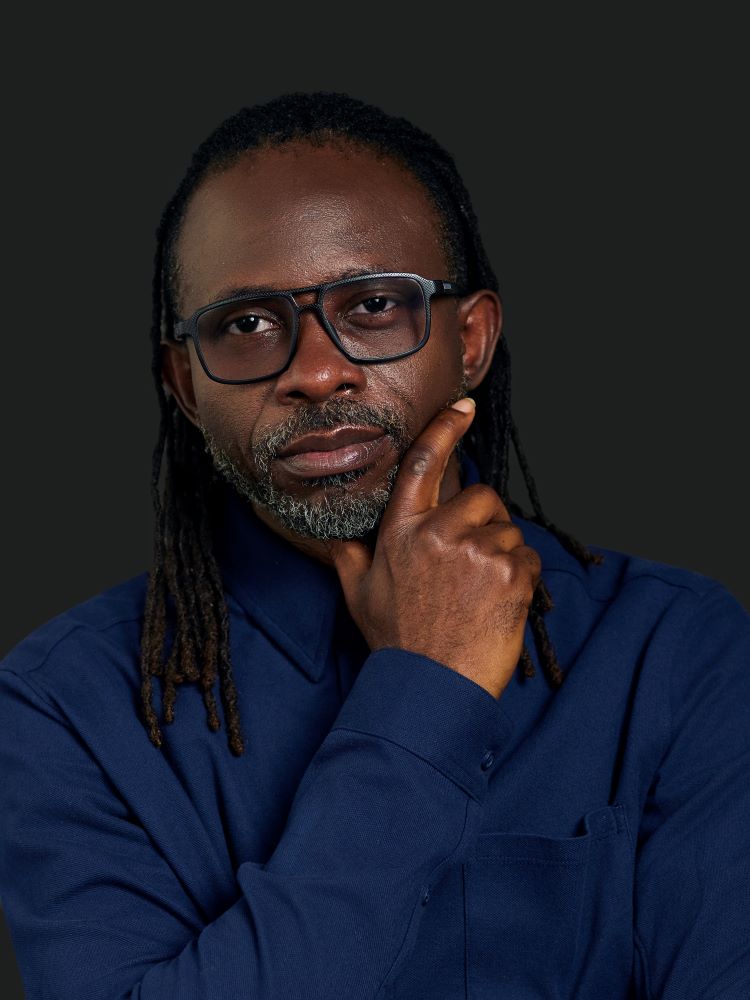
Akin Akinrinmade, founder of AsteriskRD Tech, is developing a Kigali-based technology and capacity-building organisation focused on innovation, venture building and talent development.
Rwanda's next technology opportunity
This emphasis on capability comes at an important time for Rwanda.
The country has already made significant progress in laying the foundations for a digital economy. Rwanda has built extensive telecommunications infrastructure, digitised numerous government services and created policies intended to encourage innovation and technology entrepreneurship.
The country has also increasingly positioned itself as a place where African and international companies can develop, test and scale new solutions.
That progress means the conversation is gradually moving beyond whether the infrastructure exists.
The next challenge is ensuring that Rwanda and the continent develop enough people who know how to turn that infrastructure into companies, products, services and jobs.
It is a challenge that Akinrinmade believes extends beyond Rwanda to much of Africa.
For years, technology skills programmes across the continent have successfully encouraged more young Africans to learn coding, design, entrepreneurship and other digital skills.
But Akinrinmade believes there is still an important gap between knowing something theoretically and being able to apply it to a real problem.
'One of the biggest gaps is the difference between learning about something and actually being able to do it,' he said.
Someone may graduate understanding the theory of technology, business or design, he explained, but still struggle when required to identify a real problem, understand the people experiencing it, develop a solution, test that solution and determine whether people actually want it.
A second challenge is the way disciplines are often taught separately.
'The developer learns development. The designer learns design. The business student learns business, but building a real product requires all of those things to come together.' Akinrinmade said.
This is one area in which Rwanda's evolving technology ecosystem could have an impact beyond its borders.
As Rwanda attracts technology companies, innovators, researchers and entrepreneurs, Kigali is increasingly able to serve not only as a market for technology, but as a place where ideas can be developed and tested.
Akinrinmade believes that the environment provides an opportunity to experiment with new approaches to developing African technology talent.
Learning how to solve problems
Central to AsteriskRD's approach is what Akinrinmade calls product thinking.
It sounds like a technology industry term, but he describes it more simply: learning how to understand a problem before rushing to build a solution.
A company may have a good idea, sophisticated technology and even access to investment, he argues, and still produce something people do not need.
Product thinking forces a builder to ask more fundamental questions.
Who is the user? What problem is being solved? Why does the problem matter? What business model makes sense? What should be built first? How should it be tested? What is being learned from the process?
And perhaps most importantly: Should this product be built at all?
'It's not just about becoming a product manager,' Akinrinmade said. 'It's a way of thinking that can make a developer, designer, entrepreneur, executive or student better at solving problems.'
That distinction is important for an African technology sector increasingly focused on building commercially sustainable businesses rather than simply producing more startups.
A product must solve a real problem. Someone must be willing to use it. In many cases, someone must ultimately be willing to pay for it.
For Akinrinmade, practical experience is therefore more valuable than another certificate.
When people complete an AsteriskRD programme, he wants them to be able to say that they identified a genuine problem, spoke with the people experiencing it, developed an idea, tested their assumptions and understood what would be required to build the solution.
The final outcome might be a prototype, an MVP concept or a business model.
Sometimes the most valuable result might even be discovering that an idea should not be pursued.
That, Akinrinmade says, is also successful product thinking.
'I want them to leave with confidence,' he said. 'Not confidence because they received a certificate, but confidence because they actually did something.'
'Ultimately, I want people to leave with a way of thinking and the ability to turn that thinking into action.' Why start in Kigali?
For Akinrinmade, Rwanda offers a practical environment in which to test that philosophy.
Kigali has developed a growing technology community alongside universities, innovation institutions, government programmes and a young population increasingly interested in entrepreneurship and technology.
But Akinrinmade is equally interested in the collaborative culture surrounding that ecosystem.
'There's a strong appetite for innovation, there's a growing technology community, there are young people who want to learn and build, and there's an environment where different organisations can collaborate,' he said.
Rather than arriving in Rwanda with a model developed elsewhere and assuming that it can simply be transplanted, he wants AsteriskRD to develop gradually.
The organisation intends to work with people in the ecosystem, test its programmes and learn from what succeeds and what does not.
'We're not trying to arrive with a finished model and say, 'This is what everyone should do,'' he said.
'We're starting with people, listening, experimenting, and learning what works.'
His intention is that lessons developed in Kigali can eventually be adapted for other African markets.
'If we can build something useful here, learn from it, improve it, and then take those lessons elsewhere, that's a much more meaningful way to grow,' he said.
It is an ambition that reflects Rwanda's wider role in Africa's technology development.
Because of its size, relatively organised institutional environment and willingness to experiment with technology, Rwanda has increasingly become a place where new digital approaches can be tested before being considered for larger markets.
What develops in Kigali therefore does not necessarily have to remain in Kigali.
Ideas, companies, systems and increasingly talent developed within Rwanda can contribute to the broader African technology ecosystem.
Connecting African talent
Akinrinmade's longer-term vision for AsteriskRD is similarly continental.
But he does not imagine expansion simply as opening offices in one African country after another.
'I see it growing as a connected ecosystem rather than simply opening offices in different countries,' he said.
Technology itself makes that possible.
A programme developed in Kigali can connect participants with mentors elsewhere on the continent. Founders can collaborate across borders.
Researchers, product leaders, entrepreneurs and organisations can exchange knowledge without all being physically located in the same city.
'There is enormous talent across the continent, but talent doesn't always have access to the same opportunities, networks, mentorship or resources,' Akinrinmade said.
'I want AsteriskRD to help create those connections.'
He is also conscious of another imbalance within global technology development: the assumption that expertise must always move in one direction.
Africa is often positioned as the recipient of technology knowledge, investment and expertise developed elsewhere.
Akinrinmade believes that should change.
'I don't want it to be a one-way relationship where knowledge simply comes from outside,' he said.
'There is a lot of knowledge and innovation being developed locally that deserves to travel in the other direction as well.'
His long-term ambition is therefore to create an ecosystem in which talent, technology, ideas and opportunities can move more freely across borders.
Rwanda's growing technology sector provides an interesting foundation for that ambition.
The country has already demonstrated that an African nation does not need to be the continent's largest economy or most populous market to influence conversations about digital transformation.
Its next contribution may increasingly come from what is built on top of that foundation: the founders trained here, the products developed here, the companies created here and the ideas that leave Kigali and find applications elsewhere on the continent.
Akin Akinrinmade, founder of AsteriskRD Tech, is developing a Kigali-based technology and capacity-building organisation focused on innovation, venture building and talent development.
Measuring success differently
Akinrinmade is cautious about measuring success simply by how large AsteriskRD becomes.
'I'd consider AsteriskRD successful if I can look back and see people who came through the ecosystem and say, 'AsteriskRD helped me build something I wouldn't have been able to build before,'' he said.
That philosophy also speaks to the next stage of Rwanda's technology journey.
The country's investment in connectivity, digital government, innovation infrastructure and technology-friendly policies has created foundations that were difficult to imagine a generation ago.
But infrastructure alone does not build a technology economy. People do.
They identify problems, build products, establish companies, train others and create the networks through which knowledge moves.
For Rwanda, the opportunity now is not simply to participate in Africa's technology growth, but to become one of the places helping to shape the people and ideas driving it.
And for Akinrinmade, Kigali is where that work begins.
The charges include forming or joining a criminal organisation, inciting riots or public disorder, attempting to undermine the established government, and spreading false information or propaganda intended to turn foreign countries against Rwanda.
The prosecution began presenting its case after earlier proceedings in which Ingabire and her lawyers challenged the panel of judges hearing the case and were fined Rwf500,000 for allegedly delaying the proceedings. The challenge was rejected by the Court of Appeal, which also upheld the fine.
Prosecutors alleged that although Ingabire had advocated removing the government through non-violent means, investigations showed that she was also involved in efforts involving force or weapons.
The prosecution said that after Ingabire was pardoned and released from prison in September 2018, she resumed working with FDU Inkingi and groups based outside Rwanda in efforts aimed at removing the government.
It also linked her to the P5 coalition, which included the Rwanda National Congress (RNC), FDU Inkingi, Amahoro People's Congress, PDP-Imanzi and a faction of PS-Imberakuri led by Bernard Ntaganda.
The prosecution alleged that P5 was involved in attacks in Rwanda, including an October 2019 attack in Musanze District that killed civilians and injured others.
Ingabire's lawyer, Bruce Bikotwa, asked prosecutors to demonstrate her specific role in FDU Inkingi while the group was part of P5. The prosecutor responded that Ingabire founded and continued to lead FDU Inkingi during that period.
The prosecution also referred to a covert investigation and alleged that Ingabire and former FDU Inkingi member Cassien Ntamuhanga were recorded discussing plans to overthrow the government. The recordings, it said, will be presented in court.
Prosecutors further alleged that after Ingabire realised an armed overthrow was not possible, she changed strategy and organised training sessions described as English classes for DALFA Umurinzi members.
According to the prosecution, participants were taught strategies including 'protest and persuasion', 'non-cooperation', 'boycott' and 'mobilisation'. They were allegedly encouraged to use methods such as refusing to participate in some government programmes and to use media platforms to publicise their activities.
The prosecution also alleged that Ingabire coordinated participants inside and outside Rwanda, while journalists Théoneste Nsengimana and Dieudonné Niyonsenga, known as Cyuma Hassan, were expected to help publicise the activities.
The court has given the prosecution four days to present its case, after which the defence will respond.
The hearing was adjourned on Friday afternoon and will resume on September 21 at 9 a.m. when the prosecution will continue presenting its case.
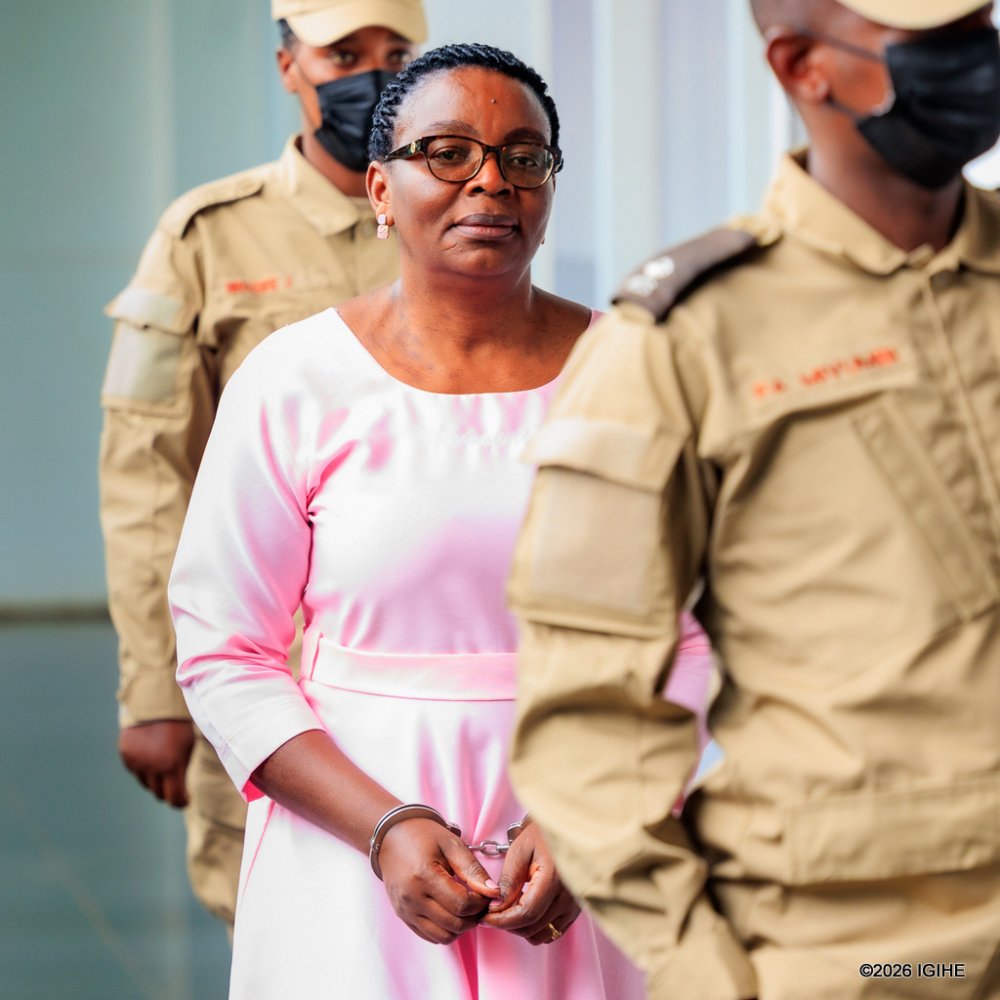
The High Court in Kigali on Friday, September 18, began hearing the case against Victoire Ingabire and 10 co-defendants accused of offences linked to an alleged plot to overthrow the government.
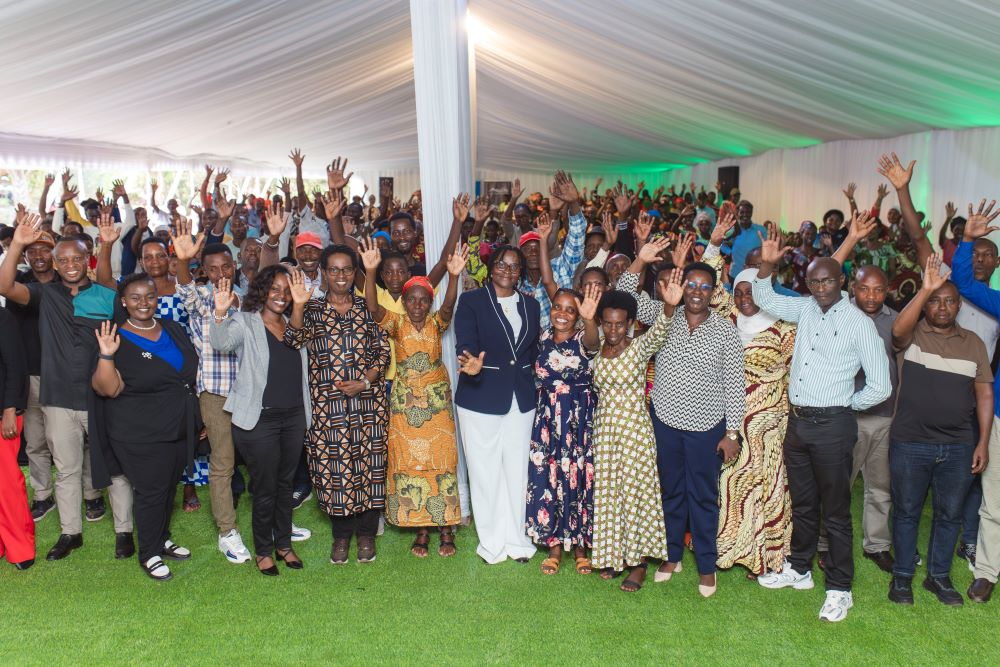
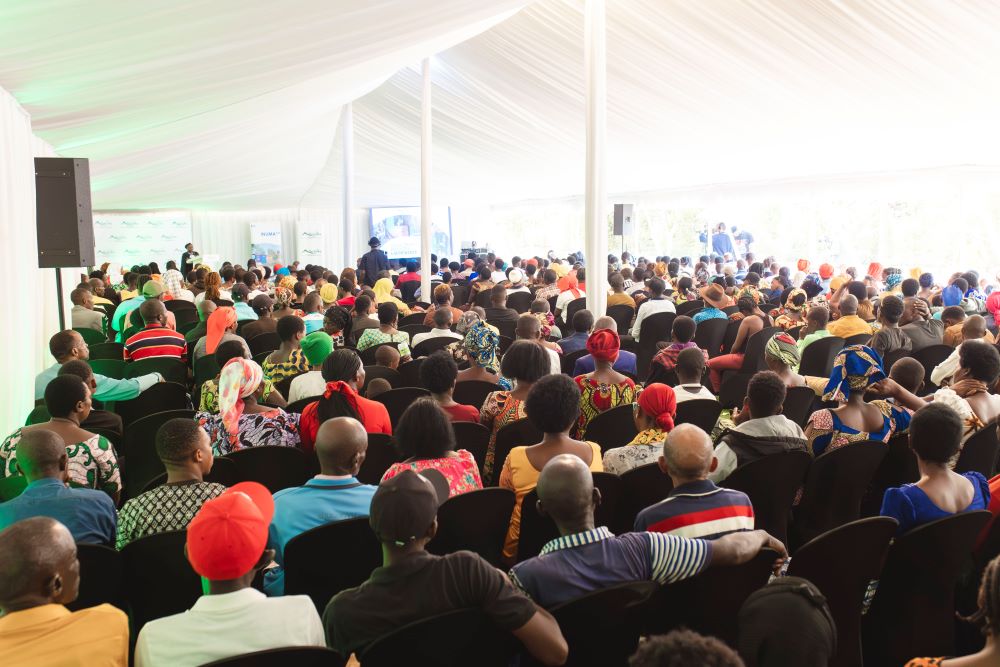
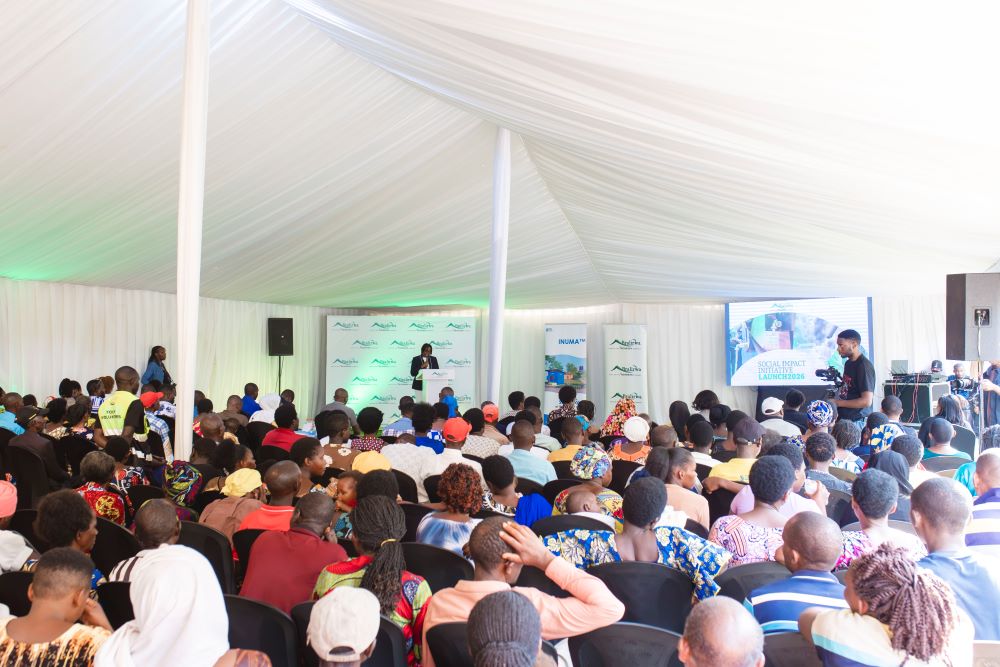
The initiative was officially commissioned on Wednesday, September 16, 2026, in Nyamirambo Sector, Nyarugenge District, during an event that brought together representatives from the City of Kigali, Nyarugenge District, Water Access Rwanda, local leaders, community members, development partners, and beneficiaries.
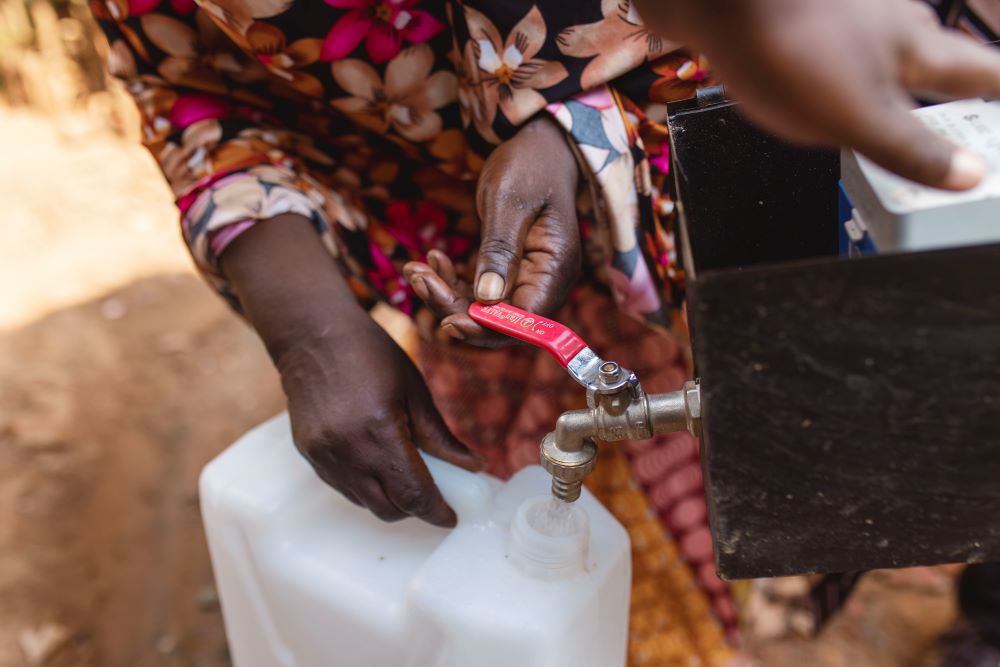
The occasion marked the culmination of a partnership-driven effort to improve access to safe and reliable water for vulnerable households across four sectors of Nyarugenge District: Nyarugenge, Mageragere, Kanyinya and Kigali. Beneficiaries were identified and validated through a collaborative process involving Water Access Rwanda and local authorities to ensure support reached households facing the greatest challenges in accessing clean water.
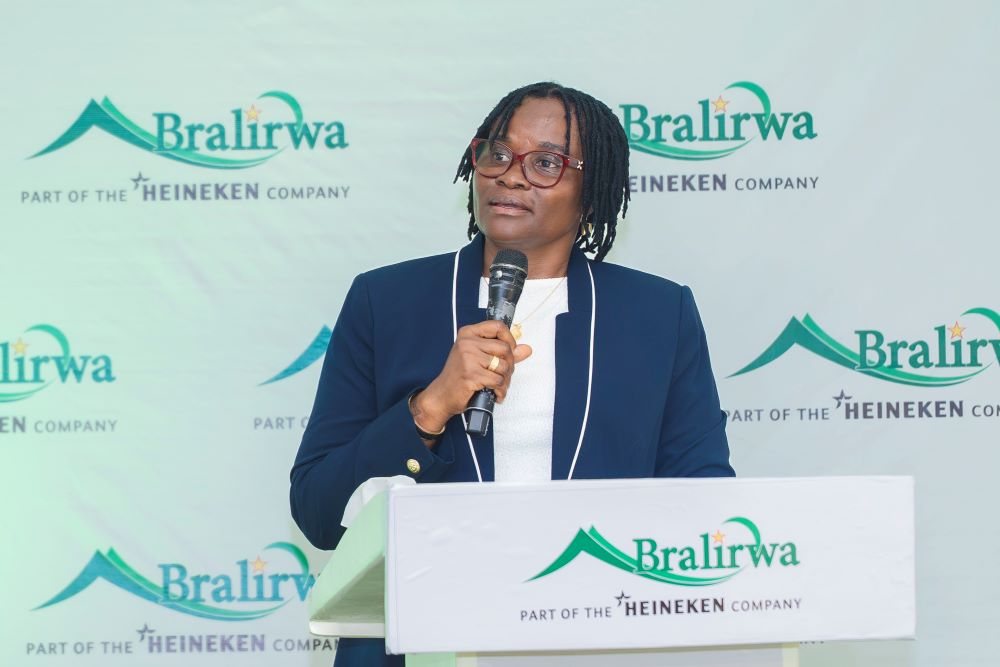
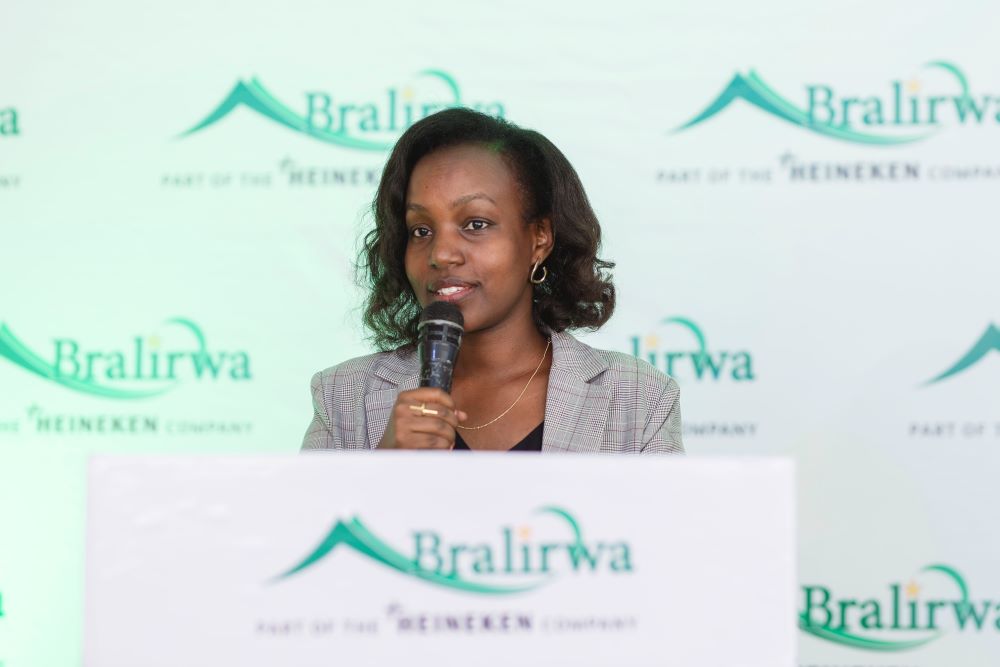
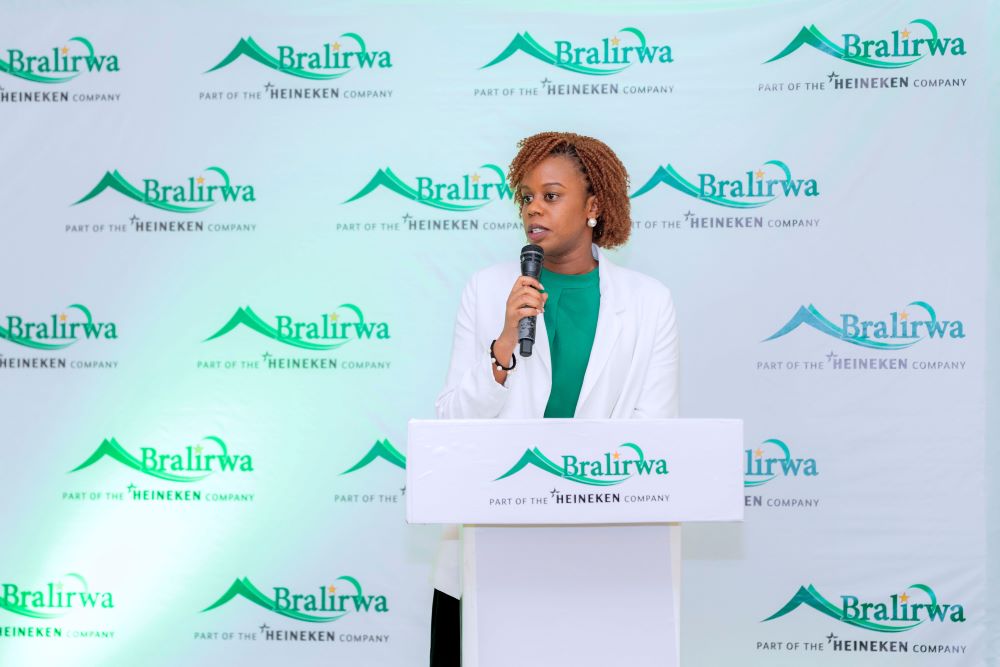
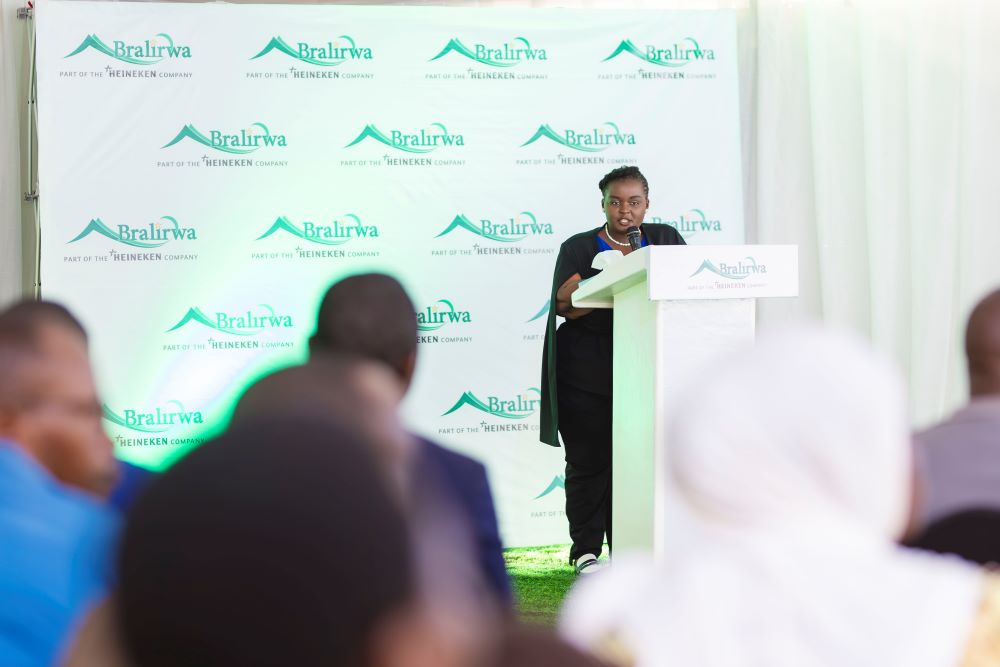
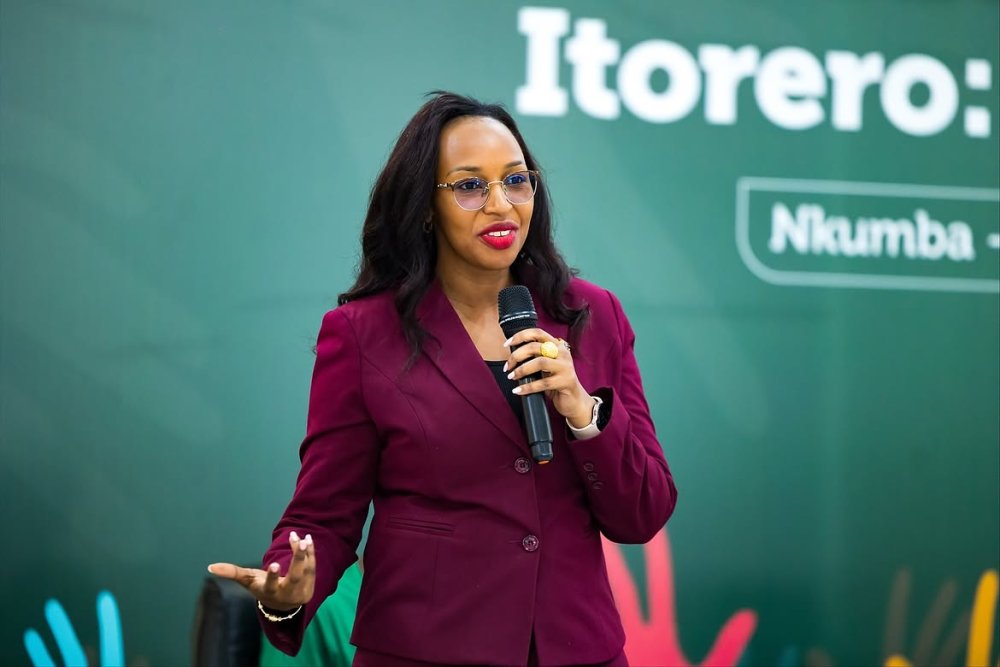
Speaking at the launch event, BRALIRWA Managing Director, Ethel Emma-Uche, said the initiative reflects the company's commitment to creating lasting impact through its Brew a Better World agenda.
'Social sustainability is one of the key pillars under our Brew a Better World agenda and an integral part of our Evergreen 2030 global strategy. Our ambition is to create lasting impact for people, communities we serve, and the environment through strategic partnerships, under our rallying cry 'Together We Can',' she said.
The Managing Director added that meaningful and sustainable progress is achieved when businesses, government institutions, development partners and communities work together to address shared challenges.
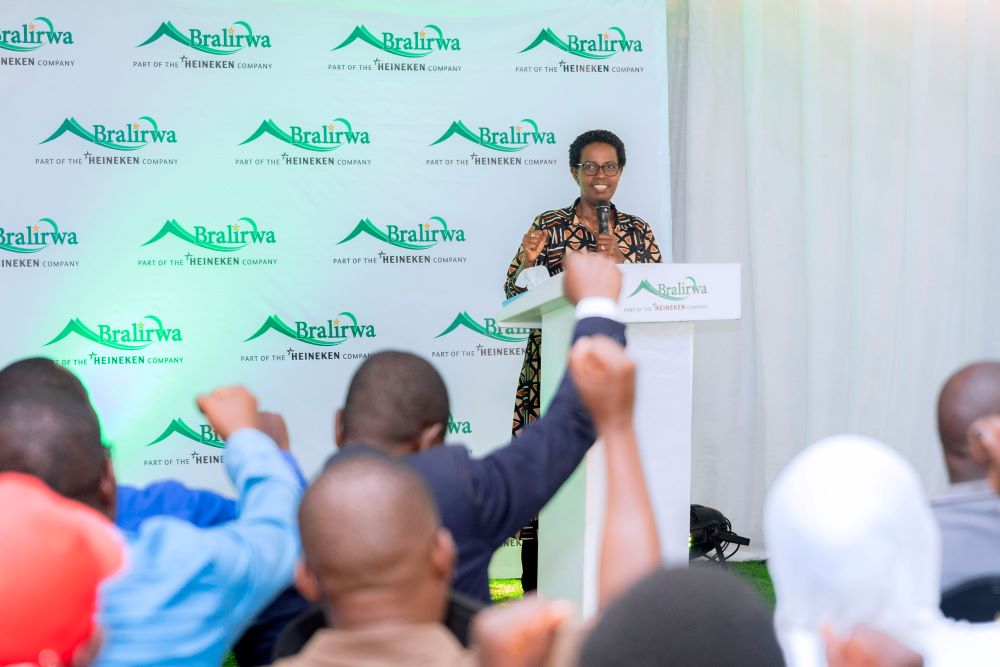
Vice Mayor of the City of Kigali in Charge of Socio-Economic Affairs, Urujeni Martine, who officiated the event, commended BRALIRWA and Water Access Rwanda for investing in solutions that directly improve the lives of vulnerable households. She noted that improved access to safe water will help families save time and effort previously spent fetching water, while contributing to better health, hygiene and living conditions.
The Company aligns its social impact projects to global and national development priorities such as the United Nations Sustainable Development Goals as well as the National Strategy for Transformation (NST2), where access to clean water is key to sustainable development.
The company previously supported 100 young mothers from underserved communities in Gatsibo and Rwamagana District to receive business start-up kits to enhance their economic opportunities in partnership with Empower Rwanda and 250 households in Rwamagana district to have access to safe drinking water through donation of ceramic water filters in partnership with Spouts of Water Rwanda.
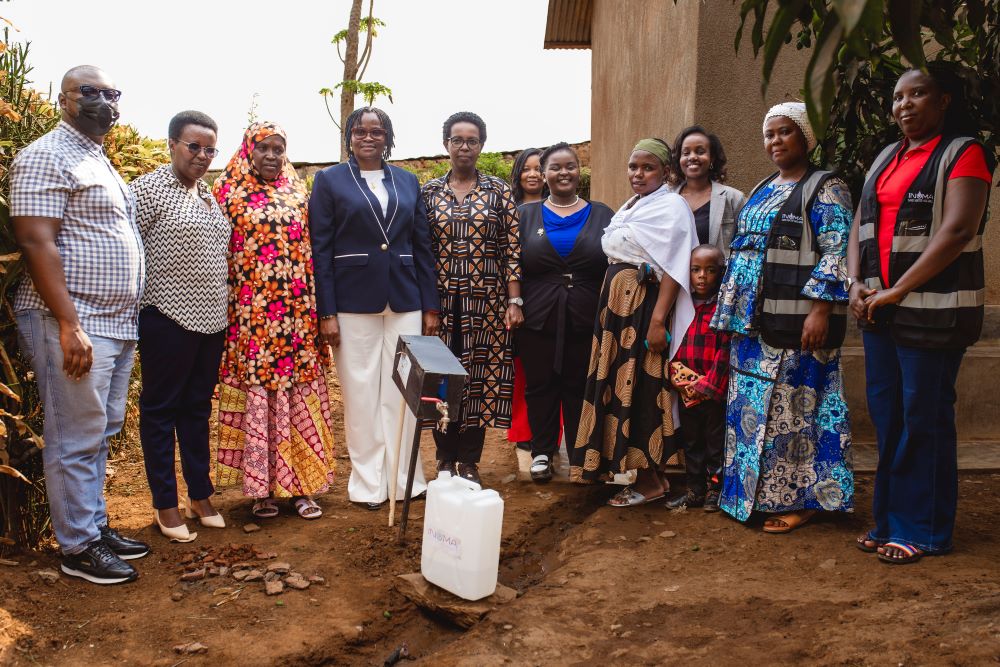
BRALIRWA Managing Director Ethel Emma-Uche speaks during the launch of the company's water access initiative in Nyarugenge.Residents of Nyarugenge expressed excitement as BRALIRWA launched an initiative to improve access to safe and reliable water for more than 200 households.Vice Mayor of the City of Kigali in Charge of Socio-Economic Affairs, Urujeni Martine officiated the event. The new BRALIRWA initiative will enable more than 200 households in Nyarugenge to access safe and reliable water in their homes.More than 200 households in Nyarugenge are set to benefit from BRALIRWA's new water access initiative.Representatives of BRALIRWA, Water Access Rwanda and local authorities attend the launch of a new water access initiative in Nyarugenge.BRALIRWA Plc and Water Access Rwanda have partnered to improve access to safe and reliable water for more than 200 households in Nyarugenge.The initiative is part of BRALIRWA's social impact efforts under its Brew a Better World agenda.
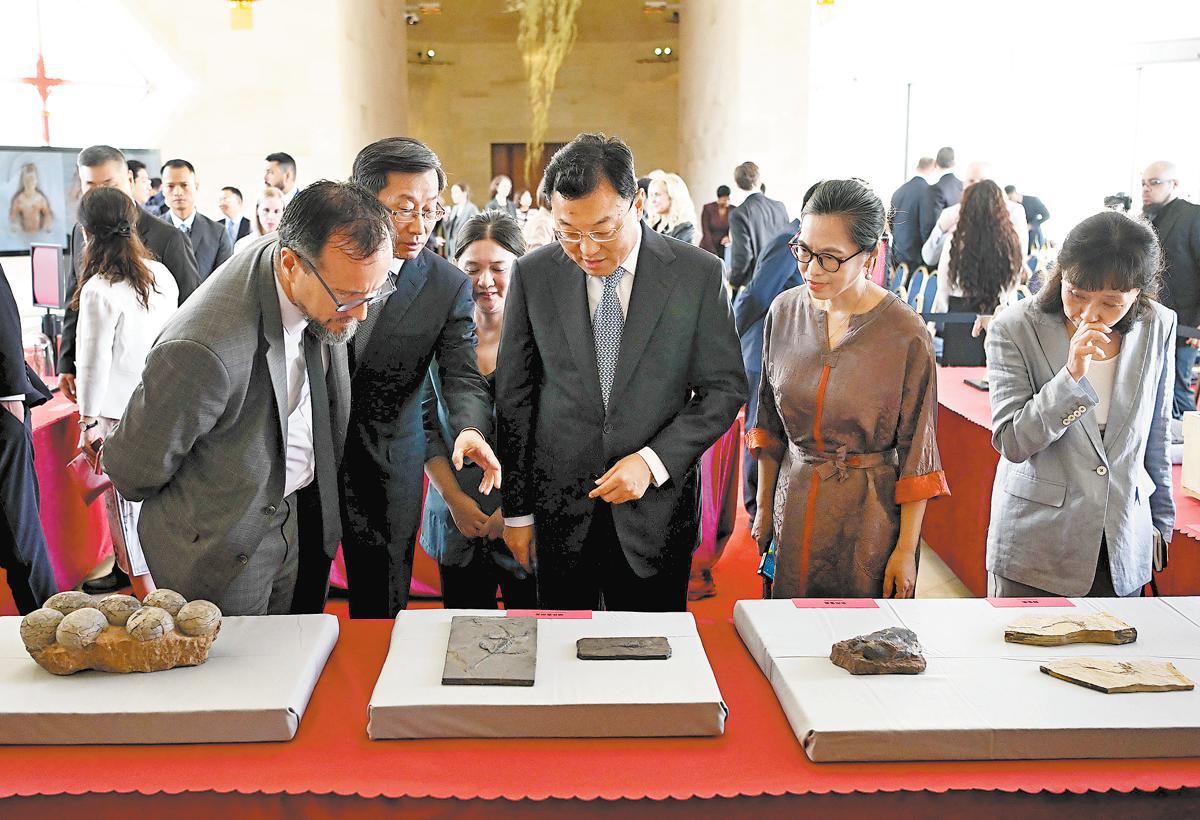
The items were handed over in two batches in Washington and New York on Wednesday and Thursday by Homeland Security Investigations (HSI) and the Manhattan District Attorney's Office, respectively.
At the return ceremonies, Rao Quan, vice minister of Culture and Tourism and administrator of the NCHA, signed the confirmation of the return and receipt on behalf of the Chinese side.
The returned items, seized by U.S. law enforcement agencies, include the torso of a bodhisattva statue from the Tianlongshan Grottoes, as well as statues, terracotta figures, dinosaur skeleton fossils, fish fossils and dinosaur egg fossils.
The NCHA said that it worked with Chinese diplomatic and consular missions in the United States and relevant U.S. authorities to facilitate the return of the artifacts and that this week's return marked the fifth time the Manhattan District Attorney's Office had returned cultural relics to China.
The latest repatriations are part of China-U.S. cooperation to combat illicit trafficking of Chinese cultural property under a memorandum of understanding signed in 2009 and renewed three times since.
Present at the ceremonies were Chinese Ambassador to the United States Xie Feng and Consul General in New York Chen Li, along with representatives from the U.S. State Department, the HSI and the Manhattan District Attorney's Office.
Chinese Ambassador to the United States Xie Feng (Center) views some of the returned relics at a handover ceremony on Sept 16, 2026 in Washington, DC.
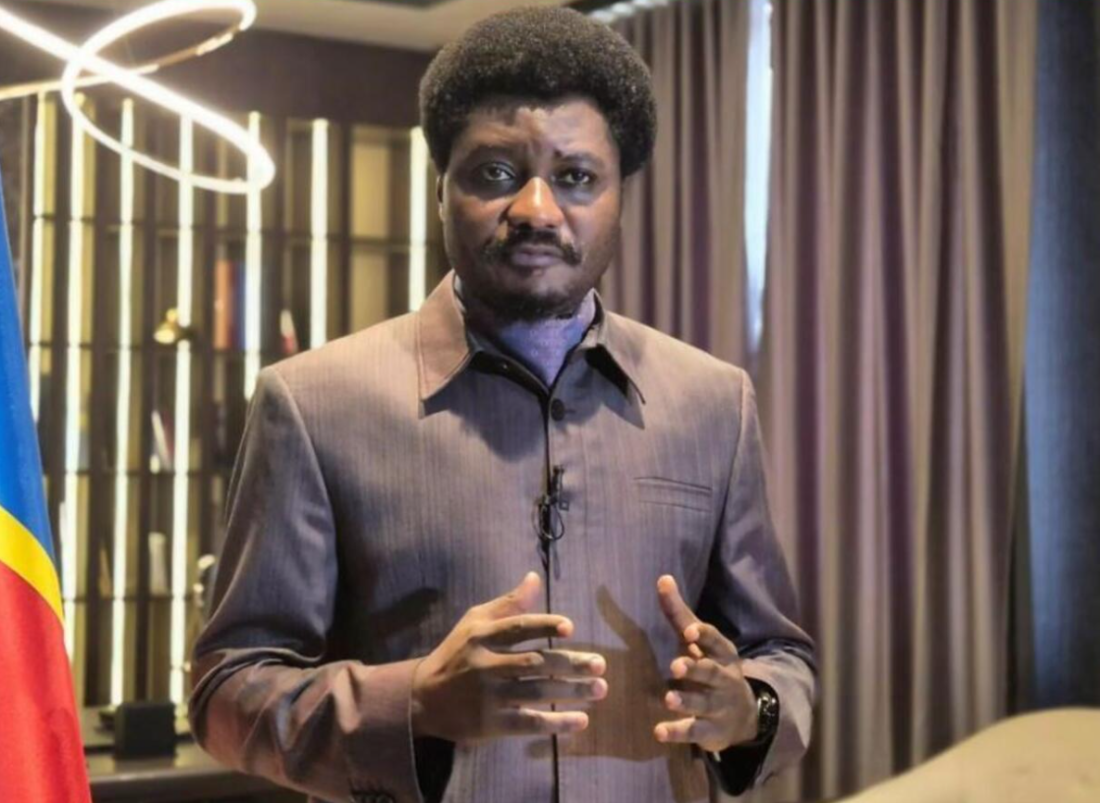
The verdict was delivered on September 18, 2026, following proceedings over the management of funds held by the Fund for the Repair and Compensation of Victims of Uganda's Illicit Activities in the Democratic Republic of Congo (FRIVAO).
The court also sentenced Chançard Bolukola Osony, the fund's former acting coordinator, to seven years of forced labour. Both men were also barred from voting and standing for election for five years and excluded from public office for the same period.
The case concerns several financial transactions involving FRIVAO funds. During the proceedings, prosecutors cited, among other transactions, $14.3 million transferred to Congo Energy and $4 million allocated to the Congolese Institute for Nature Conservation (ICCN), alongside other payments that the prosecution considered irregular.
The funds managed by FRIVAO are linked to reparations paid to the DRC following the International Court of Justice's ruling ordering Uganda to compensate Congo for damage caused by its activities during the conflict in the country.
The money was intended to support reparations and compensation for Congolese victims.
The prosecution had requested a 15-year forced-labour sentence for Mutamba and Bolukola. The court ultimately handed Mutamba a 10-year sentence and Bolukola seven years.
Mutamba had rejected the accusations against him and did not appear during the final stage of the proceedings.
He had previously said he was being targeted by people opposed to him and had maintained that the case was linked to his position on transparency while serving as justice minister.
The latest verdict is Mutamba's second conviction since leaving the justice ministry in 2025.
On September 2, 2025, the Court of Cassation sentenced him to three years of forced labour after finding him guilty of misappropriating $19 million intended for the construction of a prison in Kisangani.
The court also ordered him to return the money and barred him from voting or standing for election for five years after completing his sentence, as well as from holding public office.
Former DRC justice minister has been handed 10 years of forced labour over FRIVAO funds
Now serving her second term, Mukabalisa is also known for her performances in athletics competitions involving East African legislators, where she has won several medals.
Speaking to IGIHE, Mukabalisa disclosed her interest in leadership began long before she entered Parliament. As a student, she regularly took part in school clubs and activities, including Scouts, and later became involved in student leadership at university.
'I liked being among the first people to volunteer whenever there was something to be done or whenever others needed help,' she said.
Mukabalisa studied law at the University of Rwanda after completing her secondary education. At university, she was elected to represent law students before later becoming a commissioner responsible for gender in the wider students' association.
She said these experiences taught her that leadership could provide a platform to raise issues affecting others, particularly women and students who might otherwise struggle to have their concerns heard.
After graduating, Mukabalisa spent time as a volunteer at a sector office in Musanze while looking for employment. She said the experience eventually helped her secure her first job after she used computers and internet access at the sector to apply for opportunities online.
'Volunteering is what I would say brought me into employment,' she said.
Mukabalisa said she did not grow up dreaming of becoming an MP. Instead, she developed an interest in serving people and gradually recognised opportunities to do so through different stages of her career, including her work at the Ministry of Trade and Industry.
Her entry into Parliament in 2020, she said, was driven by a sense of responsibility towards the women who supported her campaign.
'I do not see myself as Germaine asking a minister a question. I see myself as Germaine who has an agreement with a citizen to ask the minister how this or that issue was addressed,' she said.
Among the recent laws she is particularly pleased to have participated in is the 2024 family law, which recognises that unpaid domestic work performed by women can, in certain circumstances, be given value and taken into account.
She described the provision as an important step because women often spend much of their time performing household work that does not generate a formal income.
Mukabalisa has also found an unexpected platform for service through athletics. She first competed in the sport after joining Parliament, when legislators resumed competitions in 2022 following the disruption caused by Covid-19.
Having no previous experience in athletics, she taught herself through training and online resources and eventually began winning medals. In 2023, when Rwanda hosted the competition, she won a gold medal.
Her determination was tested during an 800-metre race when she noticed that Rwanda was not listed among the competitors. She decided to participate anyway and eventually overtook a Ugandan runner who had taken an early lead.
'I told myself that the worst thing that could happen was failing to win a medal. I put in all the strength we had been taught to use and eventually managed to overtake her,' she recalled.
For Mukabalisa, both Parliament and sport have provided different avenues through which she can represent others, challenge herself and turn opportunities into service.
MP Germaine Mukabalisa has won several medals in athletics competitions involving East African legislators, despite having never competed in the sport before joining Parliament.MP Germaine Mukabalisa says she never dreamed of becoming a parliamentarian, but has built her career around a desire to serve people and use every opportunity to make a difference.