The fossil belongs to a previously unknown species of prehistoric animal that lived about 240 million years ago during the Triassic period.
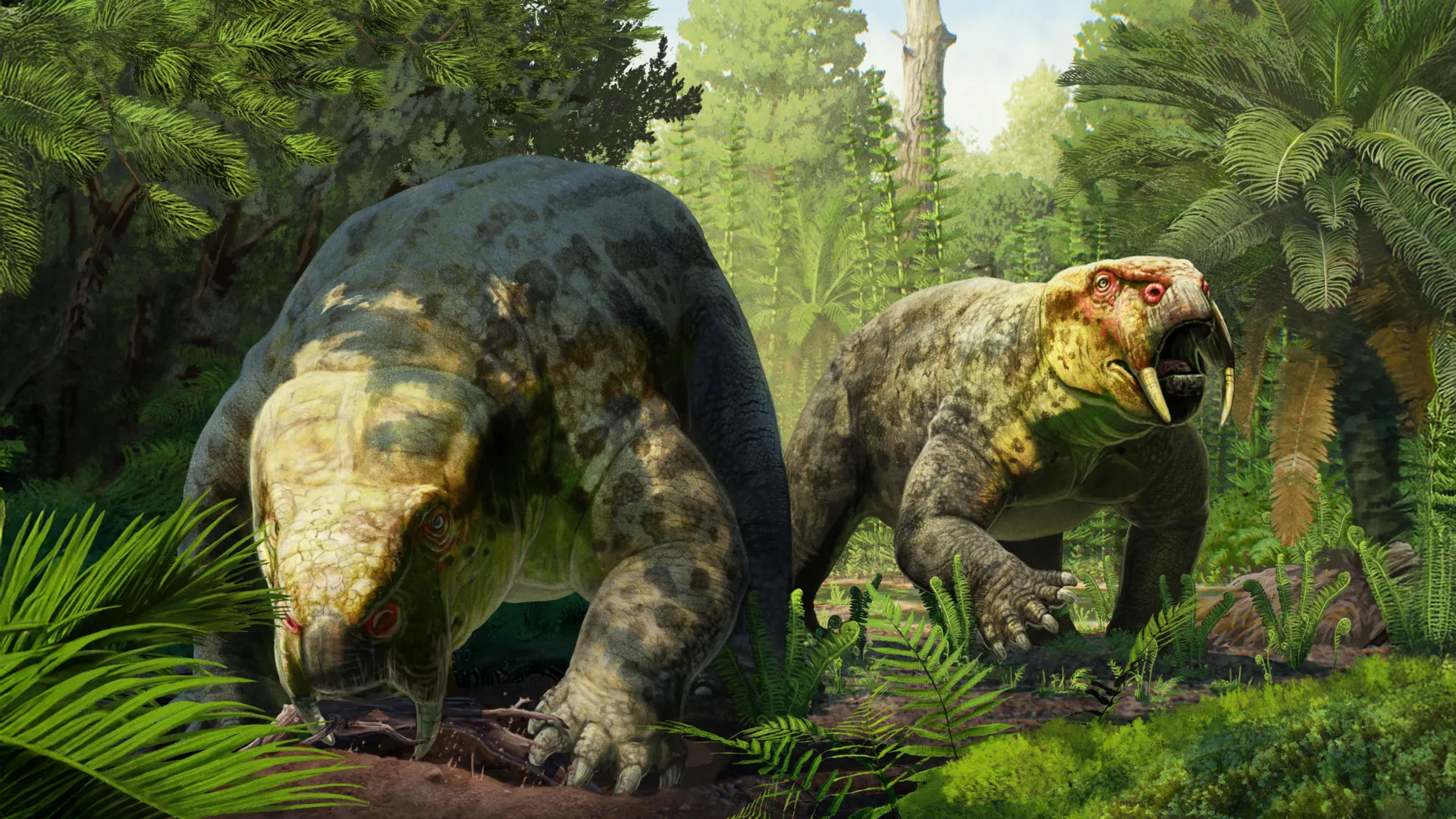
The discovery is particularly important because Dinodontosaurus was previously known only from South America.
Finding the same genus in Tanzania provides scientists with a new connection between fossil-bearing rocks in Africa and South America.
This connection could help researchers determine the age of these ancient geological deposits more accurately.
The story of the fossil began more than 60 years ago. In 1963, a British expedition collected numerous fossils in what is now Tanzania.
Many of the specimens were eventually stored at the Natural History Museum in London. Although scientists studied some of them, other fossils remained only partially understood for decades.
Among these collections was a skeleton belonging to a group of plant-eating animals called dicynodonts.
Researchers recently returned to the specimen and examined it alongside a skull fragment discovered more recently.
Detailed analysis showed that the fossils belonged to Dinodontosaurus and represented a species that had never previously been identified by science.
The discovery has implications beyond identifying a new species. The Tanzanian rocks where the fossils were found also contain fossils that had previously been considered possible evidence of some of the world's oldest dinosaurs.
However, comparisons with South American fossil deposits suggest that these rocks may be younger than scientists once believed.
Recent dating of South American rocks indicates that some of the early dinosaur-bearing deposits may be up to 10 million years younger than comparable rocks in South Africa.
The presence of Dinodontosaurus in both South America and Tanzania provides researchers with another way to compare these geological layers and suggests that some Tanzanian fossils previously regarded as extremely ancient may actually be younger.
The discovery also demonstrates the continuing scientific value of museum collections.
A fossil that had been preserved for more than six decades has now provided new information about life on Earth millions of years ago.
Researchers say much of the Tanzanian fossil remains to be studied.
Future investigations will examine its anatomy, movement and role in Triassic ecosystems, potentially providing even more insight into the world that existed long before dinosaurs became dominant.
Leave a Reply