Author: admin

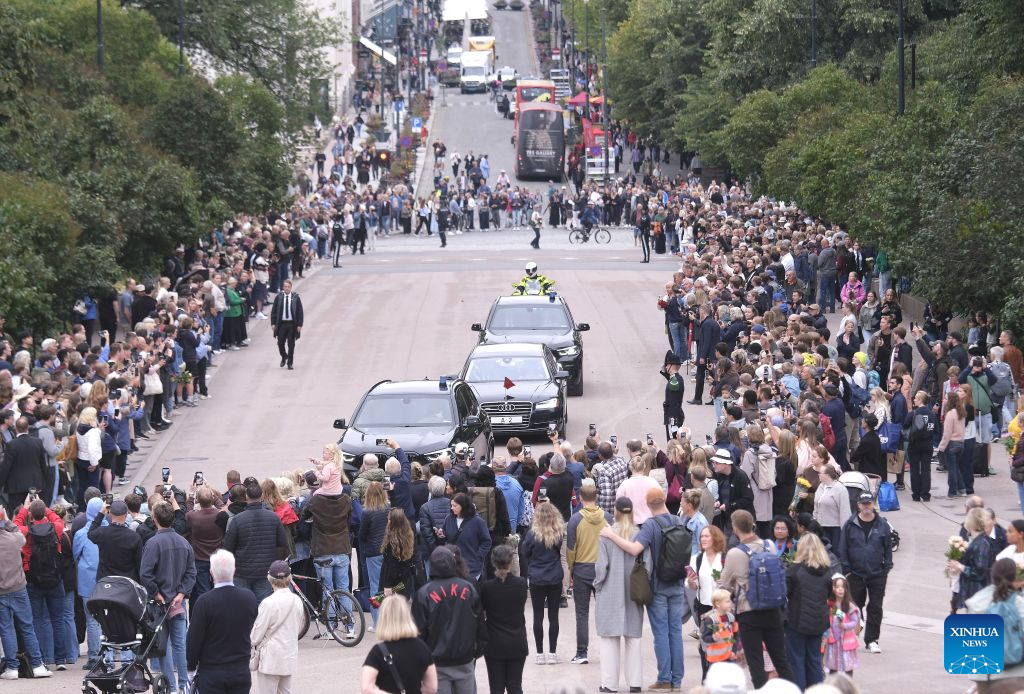
  • Norway's King Harald V dies at 89, Crown Prince Haakon succeeds to throne #rwanda #RwOT

    The king passed away peacefully at Oslo University Hospital Rikshospitalet at 6:35 a.m. local time (0435 GMT), according to a statement issued by the Royal House.

    Under Norway's rules of succession, 53-year-old Crown Prince Haakon immediately succeeded to the throne and became the country's new king. His regnal name and motto have yet to be officially announced.

    Harald was admitted to the hospital on Aug. 17. The Royal House previously said he had received cortisone treatment for hemolytic anemia in recent weeks, which caused fluid accumulation. During his hospitalization, he was also treated with antibiotics for a bacterial infection in his blood.

    The Royal House said Thursday that Harald's health had deteriorated and his condition was 'very serious.'

    Born on Feb. 21, 1937, Harald ascended to the throne on Jan. 17, 1991, following the death of his father, King Olav V. He had been hospitalized several times in recent years and received a permanent pacemaker in 2024.

    Haakon was born on July 20, 1973. He had served as regent on multiple occasions when his father was ill or abroad. Haakon's eldest child, Princess Ingrid Alexandra, is now Norway's crown princess and the heir to the throne.

    The king passed away peacefully at Oslo University Hospital Rikshospitalet at 6:35 a.m. local time (0435 GMT), according to a statement issued by the Royal House.
    The king passed away peacefully at Oslo University Hospital Rikshospitalet at 6:35 a.m. local time (0435 GMT), according to a statement issued by the Royal House.

    Source : https://new.igihe.com/english/norways-king-harald-v-dies-at-89-crown-prince-haakon-succeeds-to-throne/

  • The US and Israel are making a big mistake in Lebanon #rwanda #RwOT

    Robert Inlakesh

    Robert Inlakesh is a political analyst, journalist and documentary filmmaker currently based in London, UK. He has reported from and lived in the Palestinian territories and currently works with Quds News. Director of 'Steal of the Century: Trump's Palestine-Israel Catastrophe'. 

    Israel's US-backed assault on Lebanon, which began with what ex-CIA director Leon Panetta called an act of 'terrorism,' may have dealt a blow to Hezbollah, but it looks like the momentary paralysis has been overcome and now the Israelis are in for a reality check.

    On September 17 and 18, Israel pulled off an indiscriminate attack by detonating wireless communication devices supplied to Lebanese Hezbollah members, killing dozens and injuring thousands. Described around the world as an act of terrorism and a violation of international law, the detonating devices dealt both a psychological blow to the Lebanese people and physical challenge to Hezbollah's chain of command.

    What came next was a series of extreme assassinations, killing a large portion of Hezbollah's first line of political and military leaders. This culminated in the assassination of the group's Secretary General Seyyed Hassan Nasrallah on September 27, using around 75 tons of explosives that pulverized an entire civilian block in southern Beirut.

    This series of attacks amounted to a decapitation of Hezbollah's senior leadership and, despite the indiscriminate nature of the tactics used, the American media praised the ingenuity of the booby-trap attacks and US President Joe Biden celebrated the assassinations in the Lebanese capital.

    Interestingly, if we look back to the 2004 assassination of Hamas leader, Sheikh Ahmed Yassin, US President George W. Bush actually condemned it, due to the indiscriminate nature of the strikes that resulted in nine other civilian deaths. In contrast, the assassination of Hezbollah's leader killed around 300 people, according to Israel's own estimates, and was commended in Washington.

    Despite the Israeli media's gloating over the 'humiliated' and 'weakened' Hezbollah following the pager attacks and assassinations, in addition to the US claiming that the group had been 'taken 20 years backwards,' the tides have begun to turn. As now, near the second month of the Israel-Lebanon war, Hezbollah is beginning to dictate the pace of the ongoing battle.

    While Israel hit Hezbollah with successive blows, which the Lebanese group even admitted were significant, it appears as if Israel gassed itself out too soon and used too many of its cards early. Additionally, the attempted ground incursion by the Israeli army into southern Lebanon has been marred by failures since the very beginning and so far the IDF has failed to take any significant ground.

    As Israeli and American officials gloated over their tactical victories in Lebanon, which defied most analysis, they also began to fall into the trap of their own propaganda and believe their own exaggerations. Then, on October 1, Iran launched its long-awaited retaliatory strikes against Israeli military bases using some 180 ballistic missiles, completely changing the game and handing the strategic initiative back to its regional alliance by scoring a tactical victory itself.

    Benjamin Netanyahu was so emboldened after ordering his assassination of Hezbollah's secretary general, right off the back of delivering an address to the United Nations General Assembly (UNGA), that he published a video vowing to aid Iranian dissidents to overthrow their government in Tehran.

    What also must be noted is that during Netanyahu's speech that night, he held up two visions for West Asia: 'the dream' and 'the nightmare.' His dream was the exact same vision that he set forth in his address to the UN General Assembly one year prior, to establish a normalization deal between Tel Aviv and Riyadh in order to make the India-Middle East-Europe trade corridor come true.

    This new land route was the reason behind US President Joe Biden's insistence on making a Saudi-Israeli normalization deal happen as a top regional policy agenda. That same September, at the G-20 summit hosted in New Delhi, the American president announced the trade corridor as 'a really big deal.'

    The strategic fault in the thinking of the Israeli war effort, which is in reality led out of Washington, is their belief that they can return to a pre-October 7 world through an insane show of force. It is their belief that they can essentially bully the entire region into submission by making an example out of Hezbollah, Hamas and even Iran. It also appears to be the ambition of Benjamin Netanyahu to achieve a victory over the regional Islamic resistance, comparable to Israel's triumph over secular Arab nationalism during the June 1967 war.

    Israel is now dealing with the consequences of the war it initiated against Lebanon, as Hezbollah appears to have quickly recovered, replaced its senior leadership, and continues to deal a series of carefully planned blows against it day by day. At the same time, the Israelis are vowing to strike the Islamic Republic of Iran, despite such an attack being likely to trigger an unwinnable standoff.

    Even in Israel's various war games it has failed to prove an ability to fight on multiple fronts and the largest study carried out on the potential outcomes of a war with Hezbollah, involving over 100 senior officials and military figures, concluded that the best outcome would be a quick stalemate.

    As it stands, the US is either delusional or willing to bet on its opposition bowing down first, while risking the strategic defeat of Israel if all plans go sideways. We are not yet at the stage of an all-out war, but we could very well reach this in the coming weeks and months. US refusal to accept defeat earlier on, clinging to 'the dream' of returning to a pre-Gaza war reality, is the reason for the mess we see today.


    The statements, views and opinions expressed in this column are solely those of the author

    The post The US and Israel are making a big mistake in Lebanon appeared first on The Custom Reports.

    Source : https://thecustomreports.com/the-us-and-israel-are-making-a-big-mistake-in-lebanon/

  • Killing Sinwar: A chance encounter after a yearlong manhunt for the head of Hamas #rwanda #RwOT

    It was around 5:30 in the morning on Thursday in Washington, DC, when senior US officials first got word — and photographs — from their Israeli counterparts: Hamas leader Yahya Sinwar might be dead.

    For more than a year since Hamas attacked Israel last October 7, Israeli forces — with some quiet help from the United States — had been hunting the mastermind behind that day.

    More than once, they had been close, pushing the Hamas chief from one underground hiding place to the next. But Sinwar had moved like a ghost in the endless warren of tunnels dug beneath the streets of Gaza, rarely coming above ground and communicating only through courier to avoid detection by electronic surveillance.

    In the end, it was only by pure accident that a group of Israeli soldiers stumbled on Israel's most wanted man.

    Infantry soldiers from the IDF's Bislach Brigade, a unit that normally trains future commanders, had been tracking several men among the ruins in southern Gaza, pulverized by Israel's punishing bombing campaign. Gunfire broke out. The Israelis fired back from a tank and sent a drone swooping into one of the hollowed-out buildings.

    It was only after the exchange of fire had ended and troops returned the following morning to inspect the rubble that they realized one of the bodies was Sinwar.

    His death marks the end of a yearlong manhunt that had consumed Israeli and US intelligence services — and dominated discussions about what it would take to end the war. The CIA had set up a specific task force to track Sinwar; and after October 7, the US broadly surged intelligence assets to the region to gather information on Hamas and its leader.

    Yet, multiple US officials told CNN, the moment of his death came as a total surprise.

    Israeli and US officials often had some sense of the general area where Sinwar was hiding over the long months. But the elusive Hamas leader moved constantly and made pinpointing his location extremely difficult.

    He eschewed cell phones and other electronic communications entirely, instead sending written notes to convey his directions both to military commanders inside Gaza and to Hamas officials in Doha who were acting as his representatives in negotiations over a possible ceasefire. Interlocutors would sometimes have to wait days or weeks for feedback from Sinwar to give couriers time to relay written messages back and forth.

    Sinwar had not appeared publicly since October 7. His only known direct communication with the outside world was through several letters, most recently last month when he wrote to Hezbollah chief Hassan Nasrallah. The Lebanese militant group said he had written to Nasrallah reaffirming his commitment to fighting Israel and supporting the Iran-backed alliance of regional militants known as the 'Axis of Resistance.'

    For so long, Sinwar had been known to be meticulously careful, even paranoid, about his personal security. It's unclear what drew him above ground on Wednesday — a fateful decision that made him vulnerable.

    'These guys come out of hiding and can never stay comfortable,' one US official said.

    A year of near misses

    Over and over, it seemed that the IDF was always just a step behind Sinwar.

    On at least three separate occasions in 2024, Israeli Defense Forces were able to push into tunnels where Sinwar had only just been.

    In January, according to a top IDF commander, DNA evidence helped Israel confirm that he had been hiding in a tunnel beneath Khan Younis in early October 2023. CNN was unable to independently confirm that analysis.
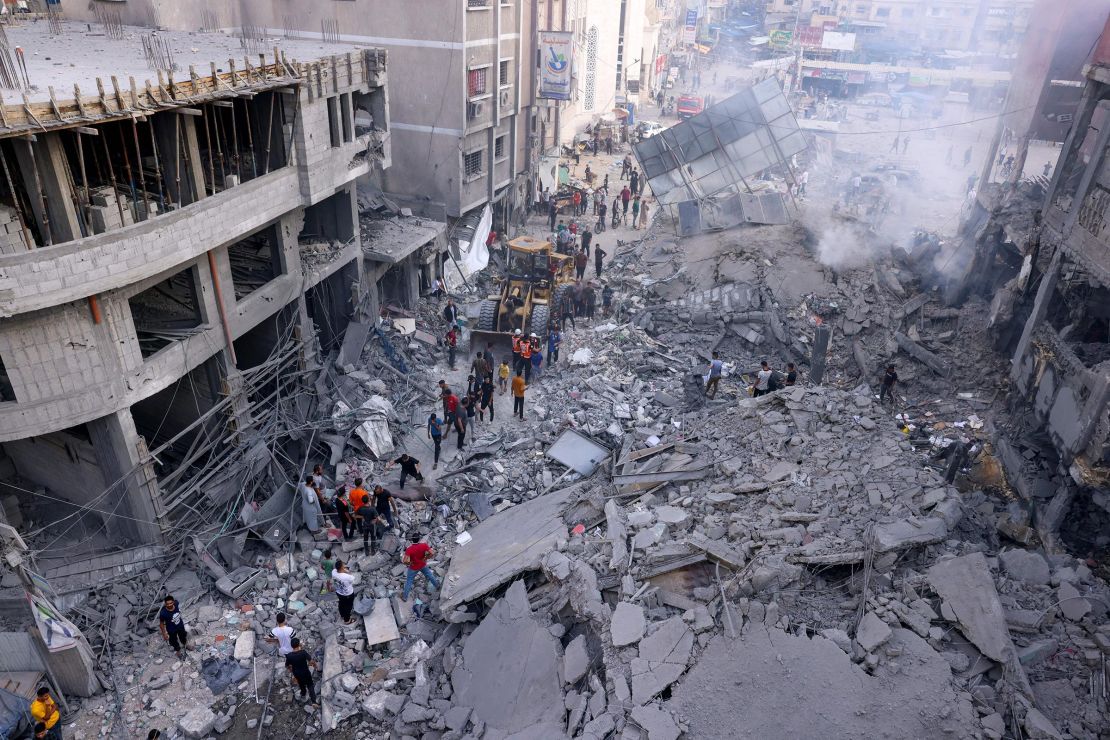
    Palestinian civilians and rescuers help clear the rubble in the heavily bombarded city center of Khan Yunis in the southern Gaza Strip following overnight Israeli shelling, on October 10, 2023.

    International media have been blocked from accessing Gaza independently since the war started. The only way in is with an Israeli military escort, which means reporters are only allowed to see what Israel wants them to see.

    In February, CCTV camera footage purportedly showed Sinwar inside a tunnel in the same area just days after the October 7 attack, moving through a dim tunnel with his wife, children and his brother Ibrahim Sinwar.

    As the IDF began closing in on Khan Younis, the city of his birth, Sinwar appeared to have moved south. The IDF said this week that they found his DNA in a tunnel in Rafah, a few hundred meters from where six hostages were killed in August.

    He was killed on Wednesday not far from that tunnel, in a part of Rafah called Tal Al Sultan that had been squared off by the Israeli military after intensified attacks by two Hamas battalions all summer.

    US intelligence collection was effective enough that officials had some windows into Sinwar's mindset over the long months.

    At one point over the summer, the CIA has assessed that Sinwar, facing blame for the enormity of the suffering in Gaza, was under pressure from his own military commanders to accept a ceasefire deal and end the war with Israel.

    As Israel hunted for Hamas operatives hiding in the vast network of underground tunnels, the IDF at times sent in dogs, ferrets and robots rather than soldiers.

    Sometimes, when a dog would not return back above ground, the IDF wondered whether it was because of a lack of oxygen in some parts of the tunnel that were multiple stories below ground level. At other times, the robots would get shot at — confirming that there was, in fact, Hamas presence.

    But he remained frustratingly beyond reach.

    It seems clear that the IDF did not know he was near Tal Al Sultan until after he was killed; In mid-September, the IDF took CNN and other media to the area. At that time, the IDF gave no indication that Sinwar could be there — and it's unlikely it would have taken reporters to a location where it believed him to be hiding.

    DNA and dental records

    On Thursday morning, top Israeli and American officials stayed in close contact as the IDF worked to confirm with certainty that the body found in the rubble in northern Rafah was, in fact, Sinwar.

    But even before that official confirmation would come some hours later, pictures of Sinwar's body had senior US officials feeling confident that the mastermind of the October 7 attacks had finally been killed.

    By midday in Washington, Israel had used DNA and dental records to confirm the identity of the body, holdings in Israel's possession because of Sinwar's time in an Israeli prison.

    In his final fight, Sinwar, along with two other men, threw grenades and fired weapons at the surrounding Israeli soldiers, who responded with their own gunfire. Sinwar, armed with a vest and a gun and $10,000 in Israeli shekels, fled alone to another building.

    In the moments before his death — which Israeli officials have said was caused by a bullet to the head — Israeli troops flew a drone into the heavily damaged building where he had fled. A video from the drone, released by the Israeli military, offers a silent account of his final moments. It hovers in an upstairs room, where a masked figure sits alone in a chair, surrounded by dust and rubble. The figure holds a piece of wood in his hand, and, a split-second before the video ends, hurls it at the drone.

    This still image from video provided by the Israel  Defense Forces shows a damaged building where a person â€
    This still image from video provided by the Israel Defense Forces shows a damaged building where a person — who the IDF says is Sinwar — is seen. The man's face is obscured and he is seen sitting alone in Rafah, Gaza Strip, on Wednesday, October 16.

    Israel Defense Forces

    Already, Iran has praised Sinwar as a martyr who died fighting, face-to-face with his enemy.

    Over the past several months, American officials came to believe Sinwar had grown increasingly hardened — both in his determination to continue fighting Israel in Gaza but also in his own fatalistic outlook.

    Sinwar did not expect he would survive the war, one US official said. Because he believed he would eventually be killed, he had little motivation to agree to a ceasefire, US officials assessed — leaving talks in a perpetual deadlock.

    Instead of seeking peace in Gaza, American officials suspected Sinwar wanted the conflict to continue without an endpoint, bogging down Israel and damaging its international reputation.

    To the end, US intelligence officials believed that Sinwar was unconcerned with his own mortality, and determined to continue the fight.

    The post Killing Sinwar: A chance encounter after a yearlong manhunt for the head of Hamas appeared first on The Custom Reports.

    Source : https://thecustomreports.com/killing-sinwar-a-chance-encounter-after-a-yearlong-manhunt-for-the-head-of-hamas/
  • Drone Launched Toward Benjamin Netanyahu's House #rwanda #RwOT

    Israel's government said a drone was launched toward the prime minister's house Saturday, with no casualties as Iran's supreme leader vowed that Hamas would continue its fight against Israel following the killing of the mastermind of last year's deadly Oct. 7 attack.

    In Gaza, at least 21 people were killed in several Israeli strikes, including children, according to hospital officials and an AP reporter.

    Sirens wailed Saturday morning in Israel, warning of incoming fire from Lebanon, with a drone launched toward Israeli Prime Minister Benjamin Netanyahu's house in Caesarea, the Israeli government said. Neither he nor his wife were home and there were no casualties, said his spokesperson in a statement.

    In September, Yemen's Houthi rebels launched a ballistic missile toward Ben Gurion Airport when Netanyahu's plane was landing. The missile was intercepted.

    Saturday's strikes into Israel come as its war with Lebanon's Hezbollah — a Hamas ally backed by Iran — has intensified in recent weeks. Hezbollah said Friday that it planned to launch a new phase of fighting by sending more guided missiles and exploding drones into Israel. The militant group's longtime leader, Hassan Nasrallah, was killed in an Israeli airstrike in late September, and Israel sent ground troops into Lebanon earlier in October.

    A standoff is also ensuing between Israel and Hamas, which it's fighting in Gaza, with both signaling resistance to ending the war after the death of Hamas' leader Yahya Sinwar this week. On Friday, Iran's supreme leader, Ayatollah Ali Khamenei, said Sinwar's death was a painful loss but noted that Hamas carried on despite the killings of other Palestinian militant leaders before him.

    'Hamas is alive and will stay alive,' Khamenei said.

    Since Israel claimed Sinwar's death Thursday and a top Hamas political official confirmed the death Friday, Hamas has reiterated its stance that the hostages they took from Israel a year ago will not be released until there is a cease-fire in Gaza and a withdrawal of Israeli troops. The staunch position pushed back against a statement by Netanyahu that his country's military will keep fighting until the hostages are released, and will remain in Gaza to prevent a severely weakened Hamas from rearming.

    Sinwar was the chief architect of the 2023 Hamas raid on Israel that killed some 1,200 people, mostly civilians, and kidnapped another 250. Israel's retaliatory offensive in Gaza has killed over 42,000 Palestinians, according to local health authorities, who do not distinguish combatants from civilians but say more than half the dead are women and children.

    More strikes pounded Gaza on Saturday. The Palestinian Health Ministry said in a statement that Israeli strikes hit the upper floors of the Indonesian Hospital in Beit Lahiya, and that forces opened fire at the hospital's building and its courtyard, causing panic among patients and medical staff. At the Awda hospital in Jabaliya, strikes hit the building's top floors, injuring several staff members, the hospital said in a statement.

    In central Gaza, at least 10 people were killed, including two children, when a house was hit in the town of Zawayda, according to the al-Aqsa Martyrs Hospital where the casualties were taken. An Associated Press reporter counted the bodies at the hospital. Another strike killed 11 people, all from the same family, in the Maghazi refugee camp, according to the al-Aqsa Martyrs Hospital in Deir al-Balah, where they were taken. An Associated Press journalist counted the bodies at the hospital.

    The war has destroyed vast swaths of Gaza, displaced about 90% of its population of 2.3 million people, and left them struggling to find food, water, medicine and fuel.


    The post Drone Launched Toward Benjamin Netanyahu's House appeared first on The Custom Reports.

    Source : https://thecustomreports.com/drone-launched-toward-benjamin-netanyahus-house/

  • Obama Recalls Viral Moment During McCain's 2008 Campaign: 'Some Values Transcend Party' #rwanda #RwOT

    Barack Obama reflected on late Sen. John McCain, his opponent in the 2008 election, and a now-viral moment from the Republican's campaign that showed how his 'character' compares to Donald Trump on Friday.

    The former president, in a speech at a Kamala Harris campaign rally, cautioned that he didn't want to 'over-romanticize' his relationship with McCain and noted that the 2008 GOP presidential nominee was a 'conservative to put it mildly.'

    'But you know what, he understood that some values transcend party,' said Obama while campaigning for the current Democratic nominee in Tucson, Arizona.

    'He believed an honest argument and hearing the views of other people. He didn't demonize political opponents.'

    He then referred to McCain's response to a woman at a 2008 town hall-style event in Lakeville, Minnesota after she declared that she couldn't 'trust' Obama and pushed a baseless claim that he was 'an Arab.'

    McCain shook his head no in response to the woman, whose claim is tied to a racist 'birther' conspiracy theory about Obama.

    'No m'aam, no m'aam. He's a decent family man, citizen that I just happen to have disagreements with on fundamental issues and that's what this campaign is all about,' he said in a viral clip that's also received backlash from those who say he didn't do enough to combat against the woman's anti-Arab racism.

    Obama, at the Arizona rally on Friday, said McCain 'shut it down' with his response to the woman.

    'He knew that if we get in the habit of bending the truth to suit political expediency or party orthodoxy, our democracy can't work. The man had character,' Obama said.

    He later continued, 'I mean, one of the most disturbing things about this election and Donald Trump's rise in politics is how we seem to have set aside the values that people like John McCain stood for. Values we were taught.'

    The post Obama Recalls Viral Moment During McCain's 2008 Campaign: 'Some Values Transcend Party' appeared first on The Custom Reports.

    Source : https://thecustomreports.com/obama-recalls-viral-moment-during-mccains-2008-campaign-some-values-transcend-party/

  • Australia reviews military export permits to Israel amid criticism #rwanda #RwOT

    Australia is conducting a thorough review of all 66 military export permits granted to Israel before last year's invasion of Gaza, according to a report by The Guardian. The review, led by the Department of Defense, examines each permit on a case-by-case basis to ensure compliance with Australia's international obligations, particularly concerning human rights.

    'As circumstances in the Middle East evolve, Australia continues to scrutinize pre-existing export permits to Israel to ensure they align with our calibrated approach,' an unnamed defense spokesperson was quoted as saying.

    The review process was prompted by an application from the Australian Centre for International Justice (ACIJ) to Defense Minister Richard Marles in April. The ACIJ called for the cancellation of all active export permits to Israel and to other nations that might eventually transfer equipment to Israel.

    Despite the review, Canberra has maintained that it has not supplied any weapons or ammunition to Israel since the war broke out. However, criticism has grown over the lack of transparency regarding the specifics of what each permit covers.

    The federal government has defended its position, emphasizing its continued role in supplying parts for the global supply chain of the F-35 fighter aircraft. These aircraft have been used by Israel in Gaza, where the conflict has resulted in significant casualties and widespread destruction.

    According to the Defense Ministry, Australia is not a major defense exporter to Israel, but it does require permits for a range of items, including IT equipment, software, radios, electronic components, and dual-use goods. Since 2019, Australia has issued around 247 export permits related to Israel, with about 66 of those still active.

    The review has sparked mixed reactions within the Australian political landscape. The Greens, Australia's third-largest political party, has called for an immediate halt to all military trade with Israel. The party's defense spokesperson, David Shoebridge, urged the government to cease any actions that could 'embolden Israel to continue the genocide.'

    The government of Prime Minister Anthony Albanese has rejected the notion of ending existing contracts with Israeli firms that supply equipment to the Australian Defense Force and police.

    The ACIJ welcomed the review, attributing it to sustained pressure from public protests and advocacy groups. 'For the past 12 months, the Australian government has been put on notice from the ICJ, the ICC, UN bodies, and countless international organisations about Israel's long catalogue of violations of international law,' the center said in a statement on X, calling for a comprehensive arms embargo against Israel.

    Human rights advocate Rawan Arraf criticized the government's delay in initiating the review and emphasized the need for transparency in scrutinizing the export permits. 'There is no excuse for the long delay in reviewing current arms exports. The review must also include scrutiny of exports that are ending up in Israel,' Arraf stated in a post on X.

    As the situation in the Middle East continues to evolve, the review of these export permits signals Australia's effort to balance its international commitments with domestic and global calls for stricter scrutiny on military exports.

    The post Australia reviews military export permits to Israel amid criticism appeared first on The Custom Reports.

    Source : https://thecustomreports.com/australia-reviews-military-export-permits-to-israel-amid-criticism/

  • Moldova heads to the polls for presidential election and EU membership referendum #rwanda #RwOT

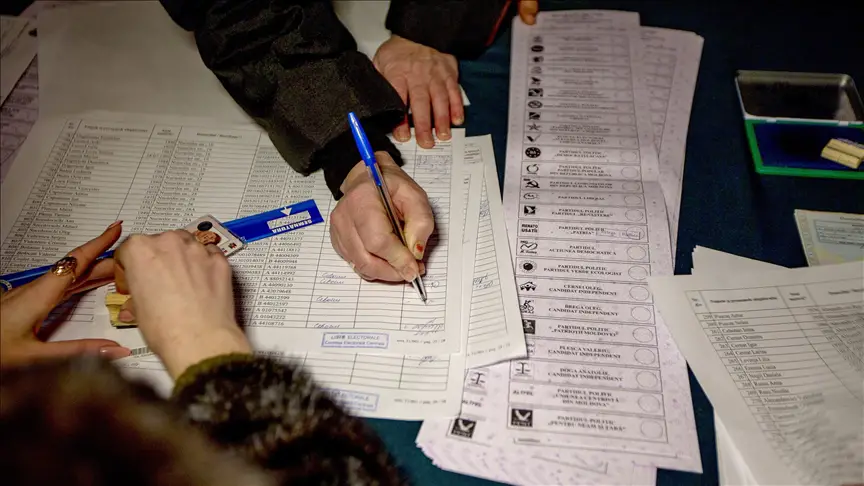
    On Sunday, citizens of Moldova will vote in a crucial presidential election and a referendum that could pave the way for the country's accession to the European Union. The polling stations will open at 7 a.m. local time and close at 7 p.m. (0400-1600 GMT), with over 1,100 local and 280 foreign observers monitoring the proceedings.

    The election is taking place against a backdrop of geopolitical tensions between the West and Russia, as Moldova, a former Soviet state, finds itself at the center of an ongoing power struggle. The outcome of the referendum and the election could significantly impact Moldova's future, determining whether the country leans toward Europe or renews its ties with Russia.

    Referendum on EU Membership

    Voters will be asked to decide on Moldova's future with the question, 'Are you for the accession of the Republic of Moldova to the European Union?' If the majority votes 'YES,' the outcome will amend the Constitution, making EU membership a constitutional goal. For the referendum to be valid, voter turnout must exceed 33%.

    Twelve political parties are campaigning in favor of Moldova's EU accession, while only two are advocating against it. The result of the referendum could set a historic precedent, potentially locking in Moldova's trajectory toward European integration.

    Presidential Election Amidst Economic Challenges

    At the same time, Moldovans will also elect a new president for a four-year term. The current pro-Western President, Maia Sandu, is running for a second term, hoping to win enough support to solidify her agenda of aligning Moldova with the European Union. Sandu's leadership has seen Moldova accelerate its efforts to distance itself from Moscow, especially amid the ongoing conflict between Russia and Ukraine.

    A total of 11 candidates are running for the presidency, including figures like former Baltsi Mayor Renato Usatii, ex-Prime Ministers Vasile Tarlev and Ion Chicu, and several independent candidates like former Interior Minister Andrei Nastase and journalists Natalia Morari and Victoria Furtuna. Among the candidates are two Gagauz Turks, Irina Vlah and Alexandr Stoianoglo, who represent the interests of the Gagauz minority and are more aligned with Russian interests.

    Geopolitical Tensions and the Russian Factor

    The election and referendum have been marked by allegations of external interference. Chisinau has accused Moscow of trying to destabilize Moldova by providing education in Russia to Moldovan citizens and blocking its efforts to integrate with the EU. In response, Russia has claimed that Moldova has taken 'unfriendly' actions against it, including restrictions on the Russian language, urging Moldova to maintain neutrality as required by its Constitution.

    The Russian-backed 'Victory' group has emerged as a vocal opponent of the current pro-EU government, intensifying the already tense political atmosphere.

    Transnistria's Role in the Election

    Voting is also being conducted in the breakaway region of Transnistria, where 30 ballot boxes have been set up. This Moscow-leaning region, which declared unilateral independence from Moldova, remains a point of contention, with around 2,000 Russian soldiers still stationed there. The political dynamics in Transnistria could play a critical role in the final vote tally.

    Likelihood of a Runoff

    According to a survey conducted by the Public Policy Institute in Moldova, President Sandu is expected to secure 29.5% of the vote, with her nearest rival, Renato Usatii, polling at 13.3%. Other significant contenders include Alexandr Stoianoglo with 11.6% and Vasile Tarlev at 6.1%. The results suggest that no candidate is likely to receive more than 50% of the vote, which means a second-round runoff is highly probable.

    Economic Concerns Dominate Campaign

    Economic issues have been a dominant theme in the campaign, with many candidates criticizing Sandu for Moldova's deepening economic crisis, rising inflation, and increased natural gas prices. The economic hardships are partly attributed to the impact of the Russia-Ukraine conflict, which has disrupted natural gas supplies and trade.

    What's at Stake?

    Since gaining independence from the Soviet Union, Moldova has oscillated between pro-Western and pro-Russian influences. Under Sandu's leadership, the country has made significant strides toward European integration, gaining 'candidate country' status and starting membership negotiations with the EU. However, the divide between pro-EU and pro-Russian factions remains a defining feature of Moldova's political landscape.

    As voters head to the polls, the decisions made in this election and referendum will shape Moldova's future for years to come, determining whether it moves closer to Europe or seeks to renew its ties with Moscow. The Moldovan Central Election Commission has announced that no exit polls will be conducted, adding a layer of uncertainty to the election's outcome.

    Moldova heads to the polls for presidential election and EU membership referendum
    Moldova heads to the polls for presidential election and EU membership referendum

    The post Moldova heads to the polls for presidential election and EU membership referendum appeared first on The Custom Reports.

    Source : https://thecustomreports.com/moldova-heads-to-the-polls-for-presidential-election-and-eu-membership-referendum/

  • Israeli strike on Gaza multi-storey residential building reportedly kills dozens #rwanda #RwOT

    An Israeli airstrike that hit several houses and a multi-storey residential building in the town of Beit Lahiya in northern Gaza caused dozens of casualties, doctors and officials said.

    The Hamas media office said at least 73 people had been killed in the strike on Saturday. No official figures were immediately available from the health ministry, however Medway Abbas, a senior health ministry official, said the figures were accurate.

    The Israeli military said it was looking into the incident but that the numbers issued by the Hamas media office were exaggerated. It said the figures did not align with its own information, the precise munitions used or the accuracy of the strike, which it said was directed at a Hamas target.

    Palestinian health officials said rescue operations were being hampered by the cut-off of telecommunication and internet services for a second day.

    Residents and medics on Saturday said Israeli forces had tightened their siege on Jabalia, the largest of the enclave's eight historic camps, which it encircled by also sending tanks to the nearby towns of Beit Hanoun and Beit Lahiya and issuing evacuation orders to residents.

    Israeli officials said evacuation orders were aimed at separating Hamas fighters from civilians and denied there was any systematic plan to clear civilians out of Jabalia or other northern areas.

    It came as Benjamin Netanyahu's house in the seaside town of Caesarea was hit by a drone on Saturday, causing superficial damage and no casualties.

    The Israeli government said that one of the prime minister's three homes was targeted by three drones, two of which were intercepted, and that neither Netanyahu nor his wife, Sara, were home at the time.

    'The attempt by Iran's proxy Hezbollah to assassinate me and my wife today was a grave mistake,' Netanyahu said in a statement, vowing that Iran and its proxies would 'pay a heavy price'.

    In Jabalia, residents said Israeli forces besieged several shelters housing displaced families before they stormed them and detained dozens of men. Footage on social media showed dozens of Palestinian men sitting on the ground next to a tank, while others were led by a soldier to a gathering site.

    Residents and medical officials said Israeli forces were bombing houses and besieging hospitals, preventing medical and food supplies from entering to force them to leave the camp.

    Health officials said they refused orders by the Israeli army to evacuate hospitals or leave the patients, many in critical condition, unattended.

    'Hospitals in northern Gaza suffer from stark shortages of medical supplies and manpower and are overwhelmed by the number of casualties,' said Hussam Abu Safiya, director of Kamal Adwan hospital.

    The United Nations' top aid official said Palestinians were living through 'unspeakable horrors' under siege by Israeli forces in northern Gaza and insisted that 'these atrocities must stop'.

    'In Jabalia, people are trapped under the rubble and first responders are blocked from reaching them,' the UN's acting humanitarian chief Joyce Msuya said on X.

    Earlier on Saturday, Israeli planes dropped leaflets over southern Gaza showing a picture of the dead Hamas chief Yahya Sinwar with the message 'Hamas will no longer rule Gaza', echoing language used by Netanyahu.

    US vice-president Kamala Harris repeated her call for a ceasefire in Israel's war in Gaza and said it was important to seize the opportunity provided by the killing of Sinwar.

    'This creates an opening that I believe we must take full advantage of — to dedicate ourselves to ending this war and bringing the hostages home,' the Democratic presidential candidate said on the campaign trail from Detroit.

    The 7 October attack Sinwar planned on Israeli communities a year ago killed about 1,200 people, with another 253 dragged back to Gaza as hostages, according to Israeli tallies.

    Israel's subsequent war has devastated Gaza, killing more than 42,500 Palestinians, with another 10,000 uncounted dead thought to lie under the rubble, Gaza health authorities say.

    Reuters contributed reporting

    The post Israeli strike on Gaza multi-storey residential building reportedly kills dozens appeared first on The Custom Reports.

    Source : https://thecustomreports.com/israeli-strike-on-gaza-multi-storey-residential-building-reportedly-kills-dozens/

  • 10 projects taking the biggest share of the 2026/27 infrastructure budget #rwanda #RwOT

    The funds will support projects in energy, roads, public transport, housing, health infrastructure and waste management, with the largest allocations going to two energy projects.

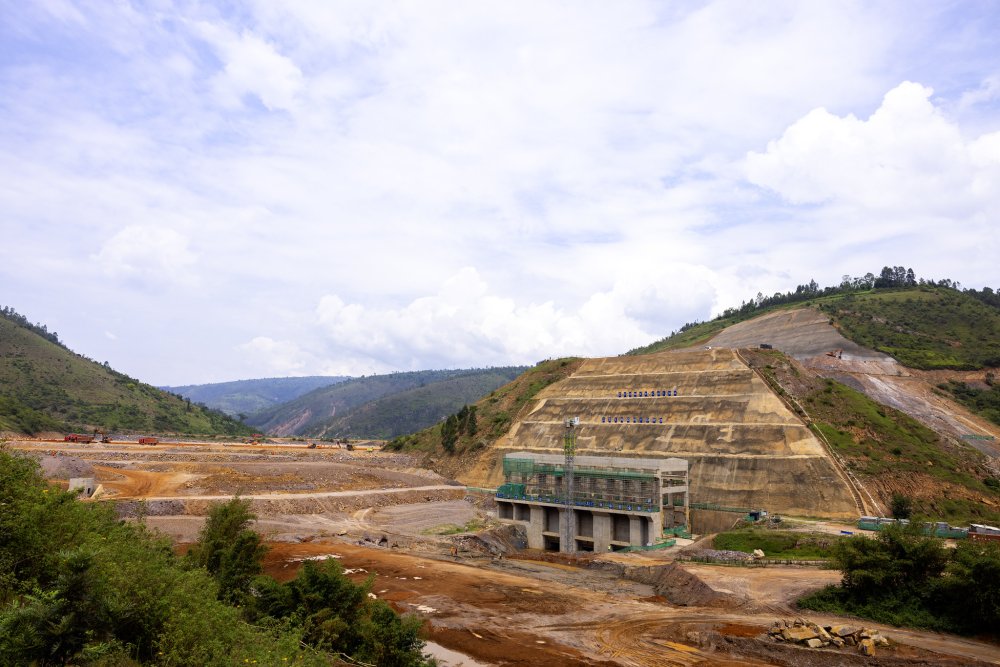
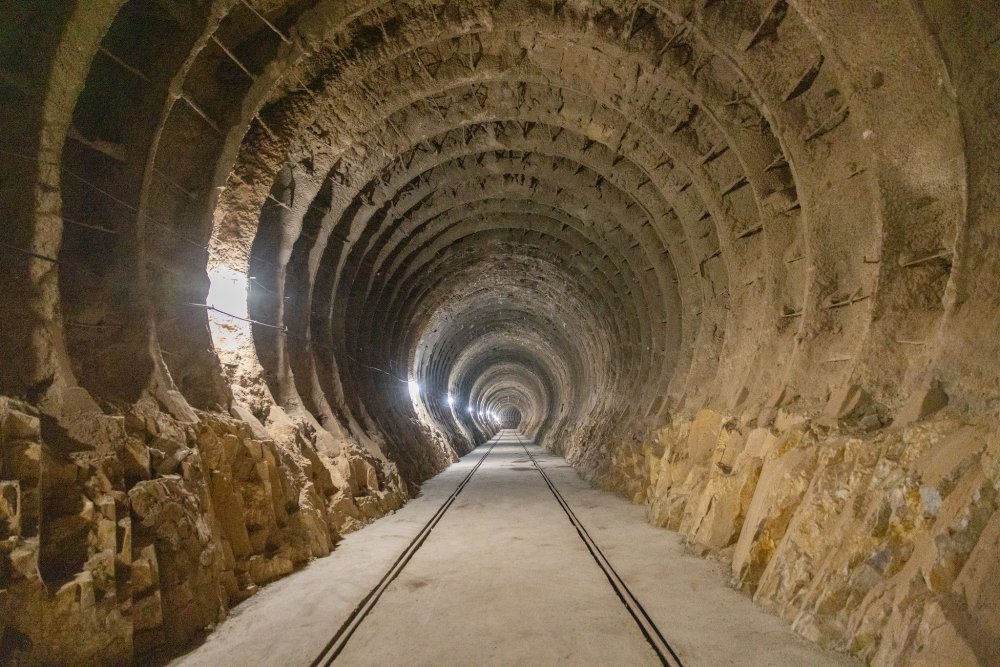
    The Nyabarongo II power plant, which is expected to generate 43.5 megawatts, has the largest allocation at Rwf 149.81 billion, equivalent to about 24.5% of the total infrastructure budget.

    Construction of the power plant is currently 73.82% complete and is expected to reach 75% in the first quarter, 80% in the second, 90% in the third and 95% by the end of the financial year.

    The planned activities include completing and approving the remaining construction designs for the powerhouse, spillway, switchyard and transmission lines. The project will also involve monitoring construction works, completing the third phase of land acquisition and developing a plan for an early warning system to alert residents in case of a problem.

    The second-largest allocation, Rwf 90.97 billion, will go towards connecting 199,487 new households to electricity. Baseline figures show that 2,348,087 households were already connected to the national grid.

    The Energy Development Corporation Limited (EDCL) plans to connect 40,487 households in the first quarter, 45,000 in the second, 52,000 in the third and 62,000 in the fourth. The work will include preparing surveys and designs, procurement, construction of medium- and low-voltage electricity networks, compensation payments and connecting households.

    Road maintenance in Kigali is the third-largest item, with Rwf 40 billion allocated to the project. The Rwanda Road Maintenance Fund (RMF) will review and approve contracts and invoices related to road maintenance works before payments are made.

    The implementation target is to have 25% of the funds disbursed in the first quarter, 50% in the second, 75% in the third and 100% by the end of the financial year.

    The rehabilitation and development of housing in Nyabisindu will receive Rwf 29.53 billion, making it the fourth-largest project by allocation. The project consists of 2,029 houses and is currently 23.36% complete, with the target of reaching full completion during the financial year.

    The Rwanda Housing Authority (RHA) is responsible for overseeing implementation, while the Rwanda Social Security Board (RSSB) will provide financing. The City of Kigali will work with residents, pay temporary rent for people relocated by the project and determine the beneficiaries of the houses. The Ministry of Defence is responsible for construction works.

    Another Rwf 22.26 billion has been allocated to the rehabilitation of the 10-kilometre Prince House–Giporoso–Masaka road. The works are expected to progress from 5% to 15% during the financial year.

    The project will involve compensation payments, relocating utility networks and other infrastructure along the project route, as well as mobilising construction materials and workers. The Rwanda Transport Development Agency (RTDA), City of Kigali, Ministry of Infrastructure and Ministry of Finance and Economic Planning are involved in its implementation.

    Public transport is also a major area of investment, with Rwf 21.45 billion allocated for the construction of 250 smart bus shelters. The facilities will include systems displaying bus arrival times, lighting, seating and infrastructure designed to make them accessible to people with disabilities.

    The target is to complete 10% of the shelters in the first quarter, 40% in the second, 40% in the third and all 250 by the fourth quarter.

    A further Rwf 21 billion has been allocated for 84 new electric buses. Fifty buses will be provided through the City of Kigali's RUMI project, while 34 will come through RTDA's KUTI project, alongside infrastructure for parking and charging the buses.

    The programme also includes completing the legal and financial arrangements for the wider project involving 300 electric buses and approving the timeline for the first batch of 100 buses to be delivered to Rwanda.

    The rehabilitation of Ruhengeri Referral Hospital has been allocated Rwf 12.5 billion. The project is expected to start from zero and reach 20% in the second quarter, 25% in the third and 30% by the end of the financial year.

    The Ministry of Infrastructure and RHA will procure the contractor and supervising consultant and oversee implementation, while the Rwanda Biomedical Centre (RBC) and Musanze District will have responsibilities related to financing, supervision and implementation.

    The first phase of the Kigali waste management project in Nduba will receive Rwf 12.03 billion. The project is currently 45% complete and is expected to reach 100% during the financial year.

    The Water and Sanitation Corporation (WASAC) is responsible for construction and supervision, while the City of Kigali will support land acquisition and monitor the works.

    The tenth project is the rehabilitation of the Masaka–Kabukuba–Riziyeri and Kabukuba–Nyamata/Gahembe–Kindama roads, which has been allocated Rwf 12 billion.

    The works are currently at 5% and are expected to reach 20% in the first quarter, 30% in the second, 45% in the third and 60% by the fourth quarter. Activities will include compensation for people affected by the project, construction works and meeting requirements for the release of funding from development partners.

    Together, the 10 projects account for Rwf 411.56 billion of the Rwf 610.84 billion infrastructure budget for the 2026/27 financial year, highlighting the concentration of spending on major energy, transport, housing and public infrastructure projects.

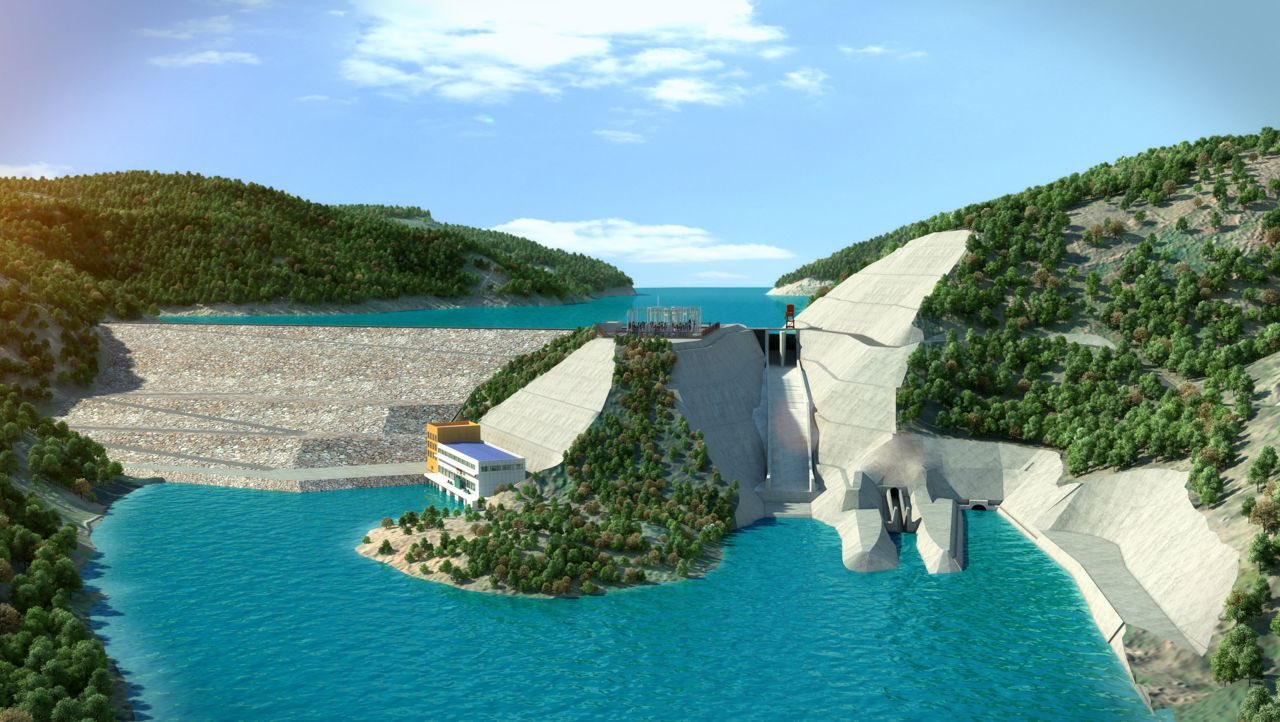
    Nyabarongo Dam is one of the projects allocated the largest amount of funding in this financial year.
    The dam is expected to reach 95% completion by the end of this financial year.
    This photo shows the artistic impression of Nyabarongo dam

    Source : https://new.igihe.com/english/10-projects-taking-the-biggest-share-of-the-2026-27-infrastructure-budget/

  • Rwanda begins construction of Smart Green Village for families in Volcanoes National Park expansion area #rwanda #RwOT

    The project, valued at more than $49 million, is expected to provide 547 families with modern homes, basic services and opportunities to improve their livelihoods.

    The Smart Green Village will combine climate-smart agriculture, renewable energy and tourism-related economic opportunities.

    The launch of the construction works coincided with the announcement of funds to be distributed to districts surrounding Volcanoes National Park under Rwanda's Tourism Revenue Sharing Programme.

    The two initiatives highlight Rwanda's approach of involving communities in environmental conservation and tourism development.

    The activities are part of events leading up to the 21st edition of Kwita Izina, the annual gorilla naming ceremony scheduled for September 4, 2026, under the theme, 'Conservation is Life: Sustaining the Future.'

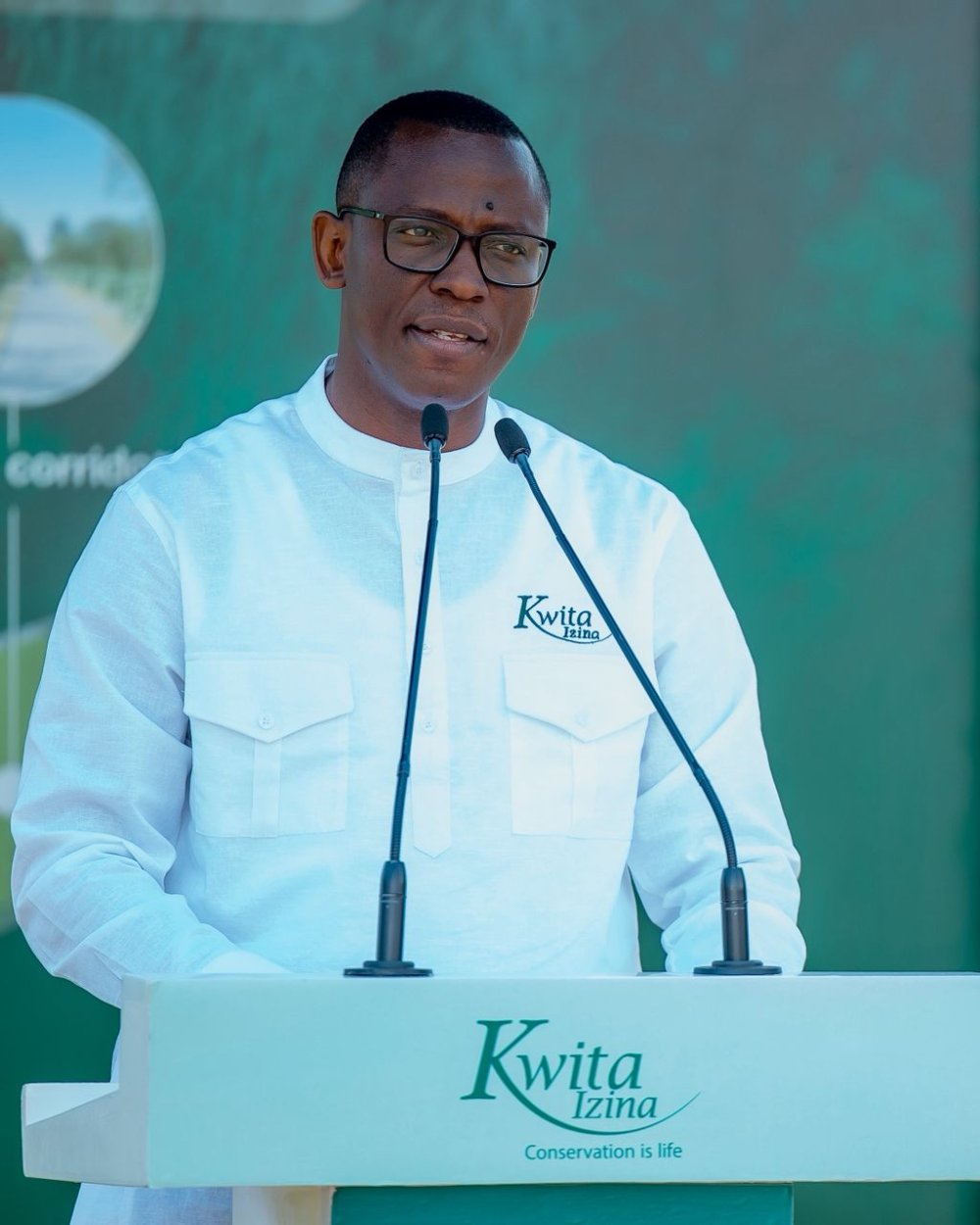
    Minister of Local Government Dominique Habimana said community development should go hand in hand with environmental protection.

    'This project demonstrates Rwanda's commitment to putting citizens at the centre of development, while building communities with good infrastructure, services, welfare, cleanliness and security.

    'The houses and infrastructure being built here belong to the people. I encourage residents to take ownership of them, participate in their development and protect them so that this village continues to be a clean, safe and sustainable place where families can prosper,' he noted.

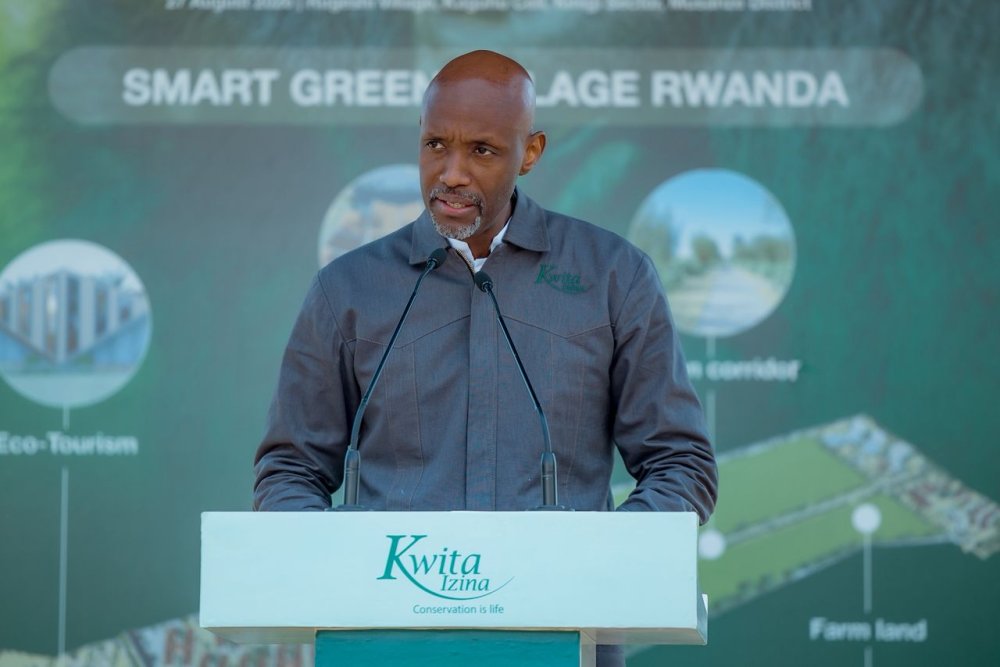
    Rwanda Development Board (RDB) Chief Executive Officer Jean-Guy Afrika said the village demonstrates that environmental conservation and community development should advance together.

    'It will provide families with good houses, modern infrastructure, basic services and economic opportunities, while promoting sustainable agriculture, resilience to climate change and environmental protection.'

    Project linked to Volcanoes National Park expansion

    The Smart Green Village is part of plans to expand Volcanoes National Park by nearly 3,740 hectares and establish a 6,620-hectare buffer zone.

    The wider programme is expected to improve the livelihoods of more than 17,000 people from nearly 3,400 families, increase wildlife habitat, conserve biodiversity, promote tourism and create new economic opportunities for communities living around the park.

    The programme is estimated to cost nearly $300 million and will be implemented over 10 years.

    The first phase covers nearly 450 hectares and will affect 547 families living in the area planned for the park expansion.

    The Government of Rwanda acquired 50 hectares in Rurembo where the Smart Green Village is being built. Compensation for the land has already been paid, while compensation for families living in the area to be incorporated into the park is also being paid.

    The families relocated to the new village are expected to benefit from improved access to basic services, safer living conditions and new opportunities for economic development.

    Esther Mukamakuza, one of the future beneficiaries, said the project had given residents a sense that they could set goals and make decisions that contribute to the development of their families.

    'We learned that this new village will bring positive changes to our lives. We will have schools, health centres, roads and clean cooking methods, which will make things easier for women and families. We are grateful to see a future where our needs are considered and where we can also contribute to the development of our families,' she said.

    Four districts receive nearly Rwf2 billion

    Every year, Rwanda shares part of tourism revenue with communities living around national parks that generate the revenue.

    Under the Tourism Revenue Sharing Programme, 10% of tourism revenue generated from national parks is invested in development projects benefiting surrounding communities.

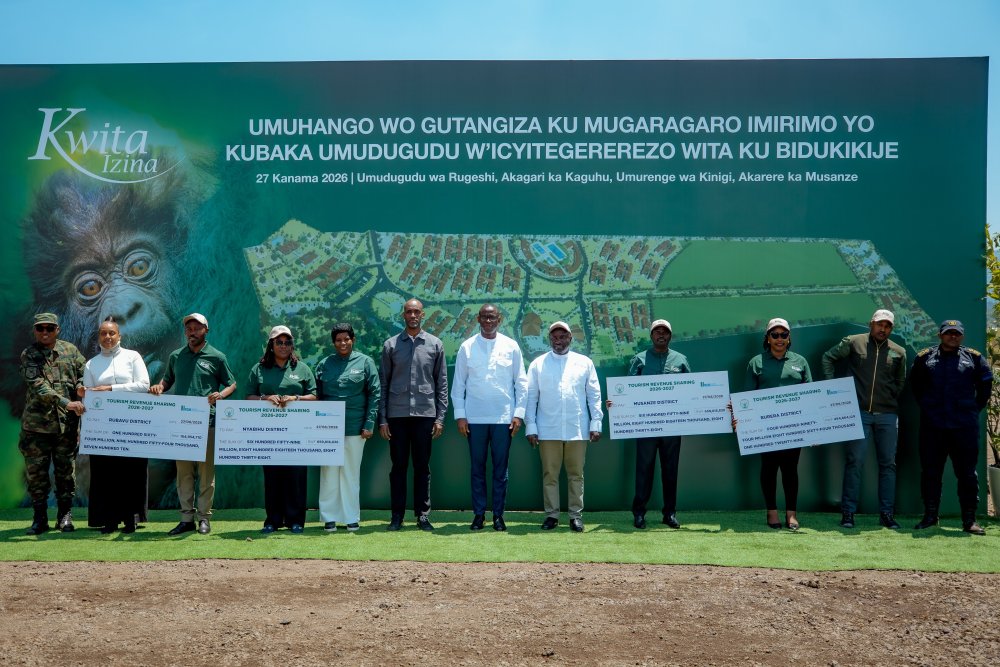
    The four districts surrounding Volcanoes National Park have been allocated more than Rwf1.98 billion.

    Burera District will receive Rwf495 million, Musanze Rwf659.8 million, Nyabihu Rwf659.8 million and Rubavu Rwf164.95 million.

    RDB said the funds will support community development activities in the four districts, ensuring that tourism revenue continues to reach people living around the park.

    Northern Province Governor Maurice Mugabowagahunde said benefits from Volcanoes National Park reach communities through employment, businesses and tourism revenue sharing.

    'Since this programme started, 838 projects worth Rwf8.6 billion have been supported, demonstrating that the park belongs to the people and contributes to their development.

    'The expansion of Volcanoes National Park and this project will help address the shortage of agricultural land while reducing conflicts between people and wildlife. They will provide people with more space to live and farm safely, while creating better ways of protecting the environment,' he noted.

    Over the past 20 years, more than Rwf23 billion has been invested in communities through the tourism revenue sharing programme, supporting projects in education, healthcare, access to clean water and social welfare.

    Kwita Izina is an annual ceremony that brings together Rwandans and friends of Rwanda to name newborn mountain gorillas, drawing from the longstanding Rwandan cultural tradition of naming children shortly after birth.

    Since 2005, Kwita Izina has grown into an international platform celebrating Rwanda's conservation efforts and recognising the role of communities and partners in protecting mountain gorillas and their habitat.

    The 21st Kwita Izina ceremony, during which 22 baby gorillas will be named, will take place on September 4, 2026, in Kinigi, Musanze District.

    Officials lay the foundation stone at the site where the Smart Green Village will be built.
    The four districts surrounding Volcanoes National Park have been allocated more than Rwf1.98 billion.
    Jean-Guy Afrika, RDB Chief Executive Officer, highlighted the importance of linking environmental conservation with community development.
    Dominique Habimana, Minister of Local Government, urged residents to take ownership of the infrastructure being developed in the Smart Green Village.

    Source : https://new.igihe.com/english/rwanda-begins-construction-of-smart-green-village-for-families-in-volcanoes-national-park-expansion-area/