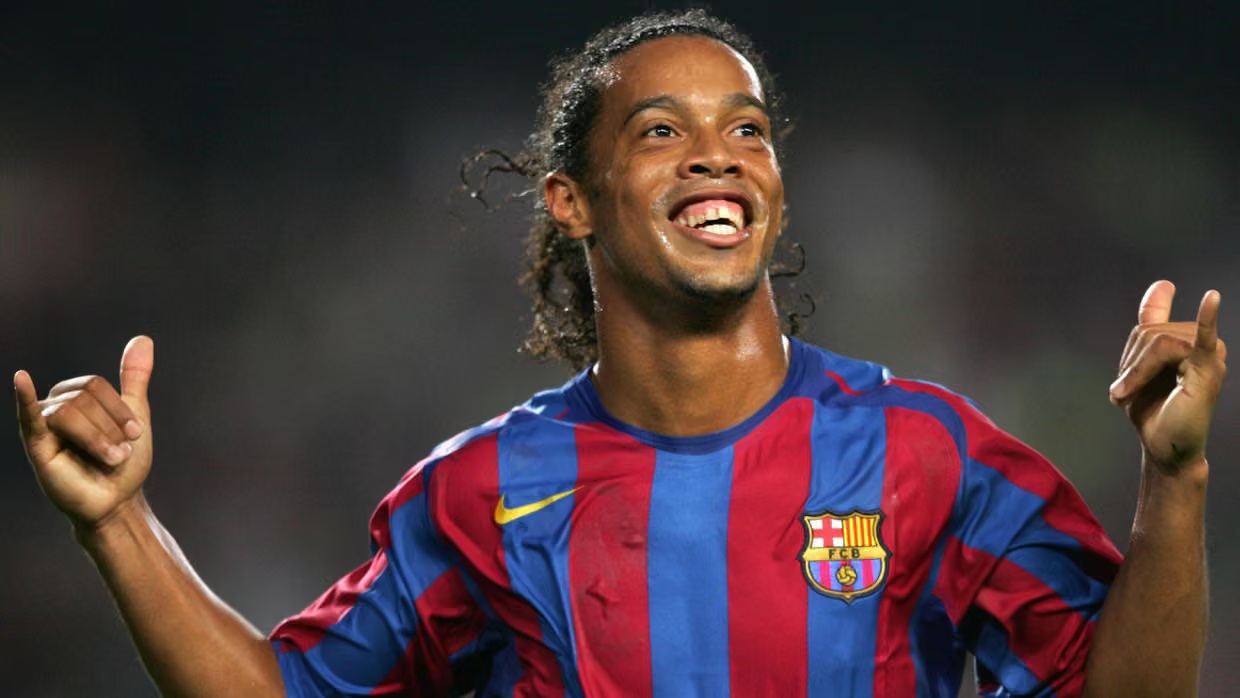
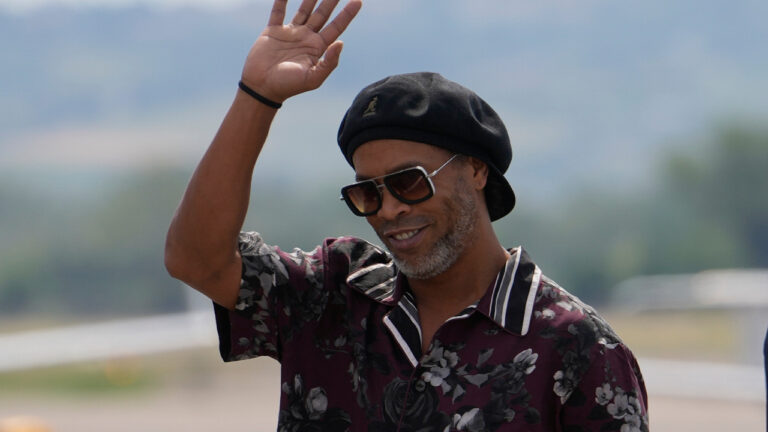
The former Ballon d'Or winner arrived in Italy on Thursday ahead of his official presentation, which is expected to be the centrepiece of a lavish 'Ronaldinho Day' celebration on the Adriatic coast.
Thousands of supporters are expected to attend the beach event, where Ravenna will unveil its squad ahead of the 2026-27 season.
Ronaldinho's return comes more than 11 years after his last competitive appearance for Fluminense in 2015. His decision to join Ravenna was announced in June as part of a wider agreement involving the club's ownership group.
Ravenna president Ignazio Cipriani, a member of the family behind the famous Cipriani restaurant and hospitality business, has stressed that Ronaldinho's involvement goes beyond publicity.
'This is not window dressing or a marketing stunt,' Cipriani said.
Ronaldinho has arrived in Italy ahead of signing for Ravenna!
The Brazilian legend will be officially unveiled tonight and has one final ambition in mind: to score the last professional goal of his career in a Ravenna shirt.
Ronaldinho is set to become a shareholder in the club and, remarkably, is also expected to take part in at least one official match during the season.
Cipriani has revealed the Brazilian has a particularly romantic ambition for his comeback: to score one final goal before bringing the curtain down on his playing career.
'His goal is to score his final goal in a Ravenna shirt,' Cipriani said.
It remains unclear exactly when Ronaldinho will take to the pitch. He has not been part of Ravenna coach Andrea Mandorlini's pre-season preparations, meaning he is unlikely to feature in the club's opening Serie C fixture against Reggiana.
Cipriani previously suggested Ronaldinho could play in a home league match, with his involvement dependent on his fitness and other circumstances.
The Brazilian enjoyed a glittering career that also included spells with Paris Saint-Germain, Barcelona, Atletico Mineiro and Mexican club Queretaro.
The comeback represents a remarkable second chapter in Italy for Ronaldinho, who spent two and a half seasons with AC Milan after joining the Rossoneri in 2008. He later moved to Flamengo in January 2011.
The Brazilian enjoyed a glittering career that also included spells with Paris Saint-Germain, Barcelona, Atletico Mineiro and Mexican club Queretaro.
At international level, Ronaldinho earned 97 caps for Brazil and was part of the team that won the 2002 World Cup. Three years later, he claimed the Ballon d'Or after a sensational spell at Barcelona.
Now, more than a decade after his final competitive appearance, one of football's most celebrated entertainers is preparing to lace up his boots again.
For Ravenna, the hope is that Ronaldinho can provide one last moment of magic, and perhaps score the final goal of a career that has already delivered countless unforgettable ones.
Former soccer star Ronaldinho acknowledges the media as he arrives at the airport ahead of the Ravenna Serie C 2026 soccer team presentation, joining the club as a technical coach and playing in one match in Ravenna, Italy.
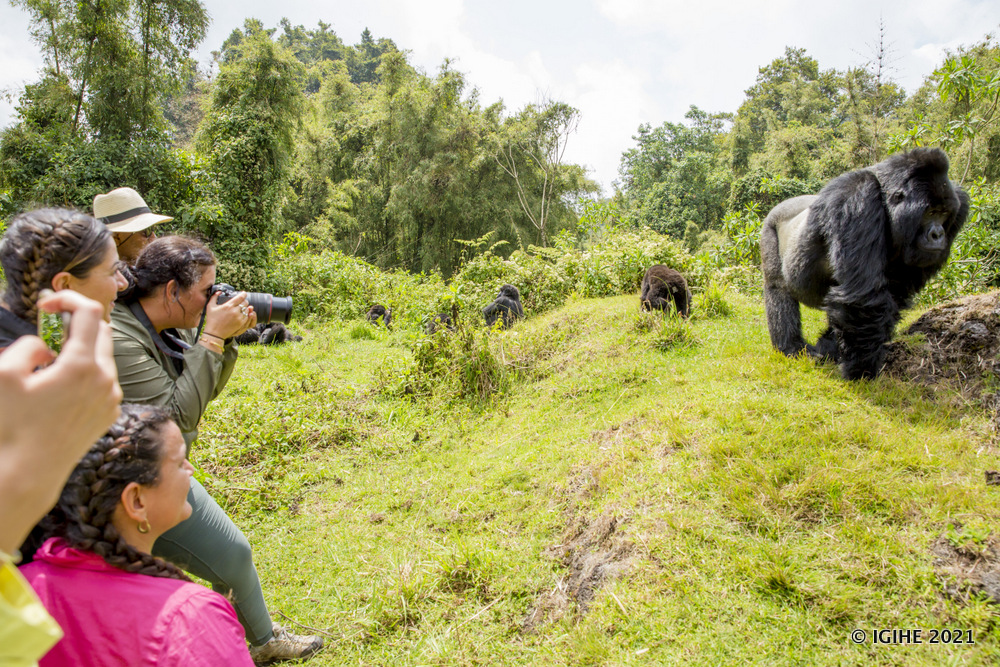
But there is much more to the experience than the famous one-hour encounter. Rwanda's mountain gorillas form part of the wider Virunga Massif, a transboundary ecosystem shared with different countries, meaning some of their characteristics and behaviours are shared across the population.
This article focuses on Rwanda's gorillas while celebrating the country's conservation success, brought to life each year through Kwita Izina, its annual gorilla naming ceremony that has attracted global figures and conservation champions since its launch in 2005.
Rwanda is preparing to name 22 baby mountain gorillas during the 21st Kwita Izina ceremony on September 4, 2026, in Kinigi, Musanze District, bringing the number of gorillas named through the annual ceremony to 460.
Drawing on decades of field research in Rwanda's Volcanoes National Park, including the long-running work of the Karisoke Research Center established by Dian Fossey, the Dian Fossey Gorilla Fund and other scientific studies, here are 10 fascinating things you may not know about Rwanda's mountain gorillas.
1. They rarely drink water
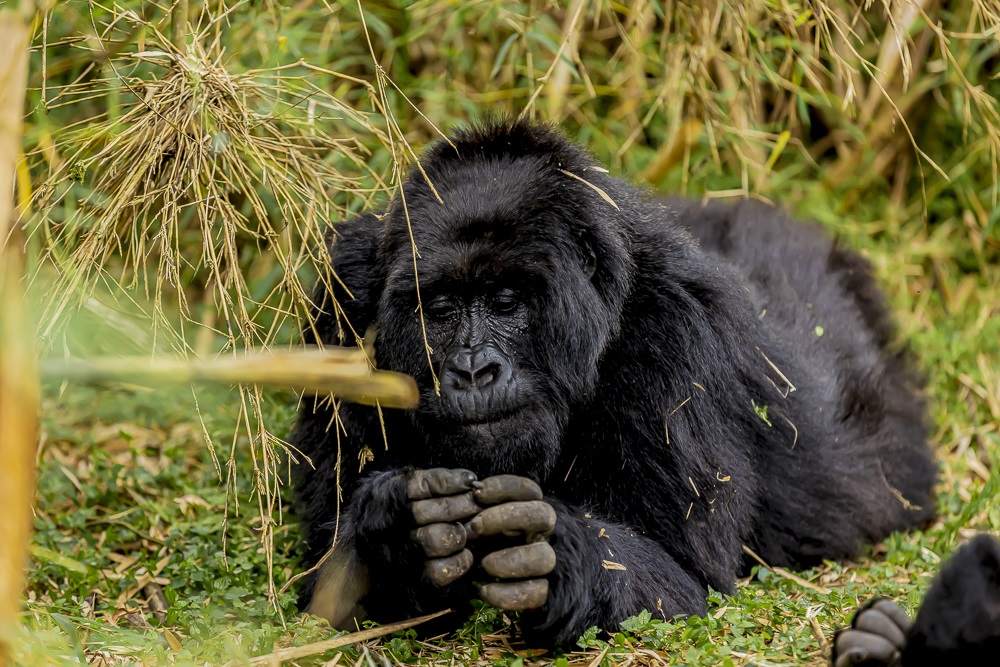
Mountain gorillas get much of the water they need from the plants they eat, meaning they rarely need to drink from streams, puddles or other free-standing water sources.
A study of mountain gorillas in Rwanda and Uganda found that the vegetation they consume typically contains 60% to 90% water. In Rwanda's Virunga population, researchers observed gorillas drinking water on just 0.6% of observation days.
Interestingly, the study also found that gorillas drink more frequently as temperatures rise, suggesting that hotter conditions could increase their reliance on free-standing water.
Mountain gorillas are among Rwanda's most remarkable wildlife treasures, offering visitors a rare glimpse into their complex social lives.
2. They can eat up to 30 kilograms of vegetation a day
Mountain gorillas spend a large part of their day feeding.
Tourism information show, an adult gorilla can consume up to about 30 kilograms of vegetation daily, including bamboo, leaves, stems and other plants.
3. Silverbacks are the leaders of their groups
The distinctive silver hair across an adult male's back is where the term silverback comes from.
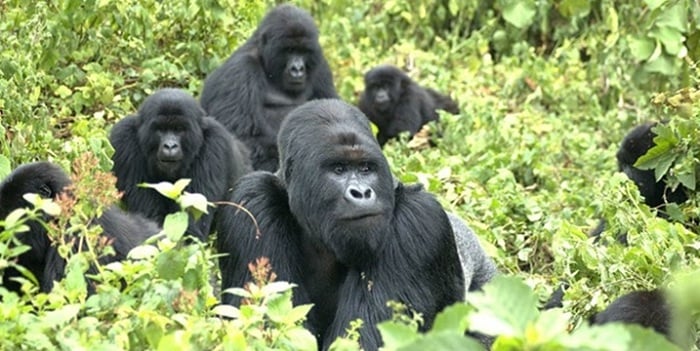
But a silverback is more than the most recognisable member of a gorilla family. Dominant silverbacks lead and protect their groups, while also playing an important role in maintaining social order.
Gorilla groups can also contain more than one adult male, making their social structures more complex than the typical image of a single male surrounded by females and young gorillas.
From their feeding habits to their family bonds, Rwanda's mountain gorillas have many fascinating traits that continue to captivate visitors and researchers.
4. They build a new bed almost every night
Mountain gorillas do not have permanent sleeping quarters.
Instead, they construct nests from vegetation where they settle for the night. The nests are generally rebuilt regularly, meaning a gorilla family's sleeping place can change from one night to the next.
For trackers, these traces can also provide clues when following a group through the forest.
5. Gorilla babies are tiny compared with adults
An adult male mountain gorilla can weigh well over 100 kilograms, yet newborns weigh only around 2 kilograms.
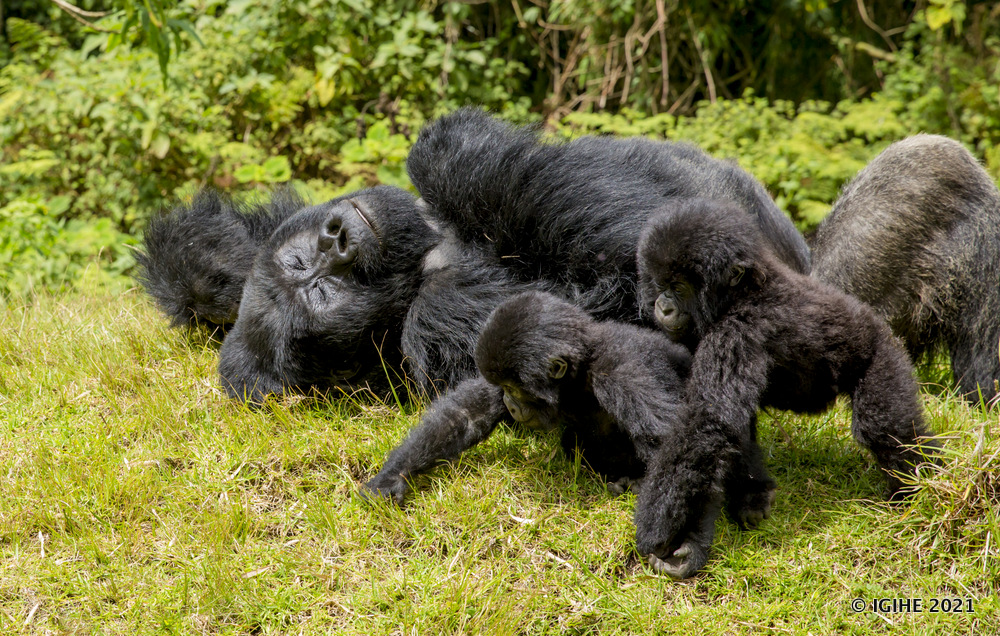
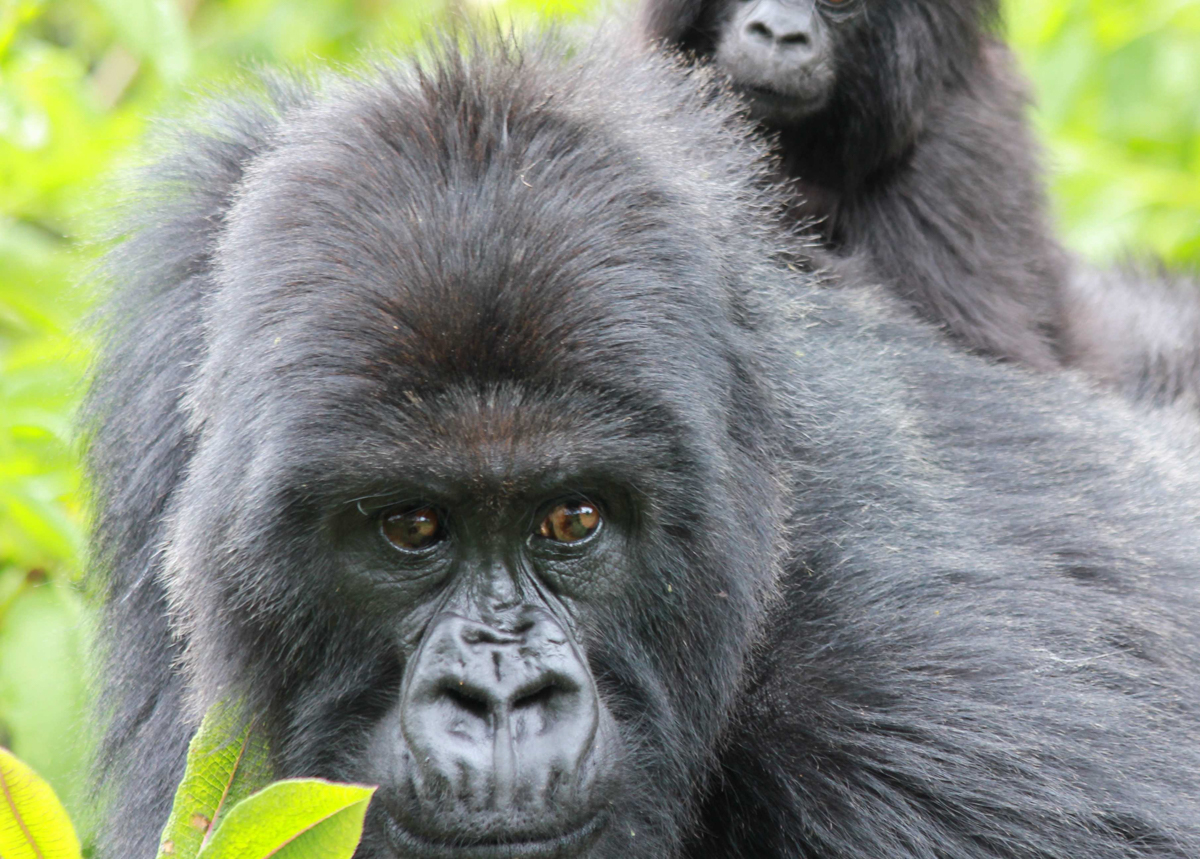
Young gorillas remain highly dependent on their mothers during their early years and gradually become more independent as they grow.
For visitors, seeing an infant clinging to its mother or playing around other youngsters can be one of the highlights of a trek.
6. They communicate in more ways than tourists might expect
Gorillas communicate through vocalisations, body movements and other behaviours.
Chest beating, for example, is one of the behaviours most associated with gorillas, but it does not always mean aggression. Depending on the situation, it can form part of social communication or display.
Experienced trackers become familiar with the different behaviours of individual animals and groups.
7. They are remarkably close to humans
Mountain gorillas share more than 98% of their DNA with humans, according to Rwanda's tourism information.
That biological connection is reflected in behaviours visitors can easily recognise; mothers caring for their young, juveniles playing and members of a group interacting with one another.
It is part of what makes watching them feel so strangely familiar.
Gorilla conservation has become an important part of Rwanda's tourism story, attracting visitors from around the world to Volcanoes National Park.
8. The gorillas tourists meet are still wild animals
The gorillas available for trekking have been habituated to the presence of humans, but they remain wild animals living in their natural habitat.
Rwanda therefore limits encounters to one hour, helping reduce prolonged human contact and disturbance.
Visitors are also required to follow strict rules during the encounter, making the experience as safe as possible for both people and gorillas.
9. Gorilla tourism has become a major part of Rwanda's tourism story
Gorillas are not only a wildlife attraction; they are central to Rwanda's tourism brand.
In 2025, Rwanda's tourism sector generated a record $685 million, up from $647 million in 2024, while receiving about 1.49 million visitors.
RDB says the growth was supported in part by gorilla trekking and experiences in the country's national parks.
The country is targeting $1.1 billion in annual tourism revenue by 2029, underlining the importance of high-value experiences such as gorilla trekking.
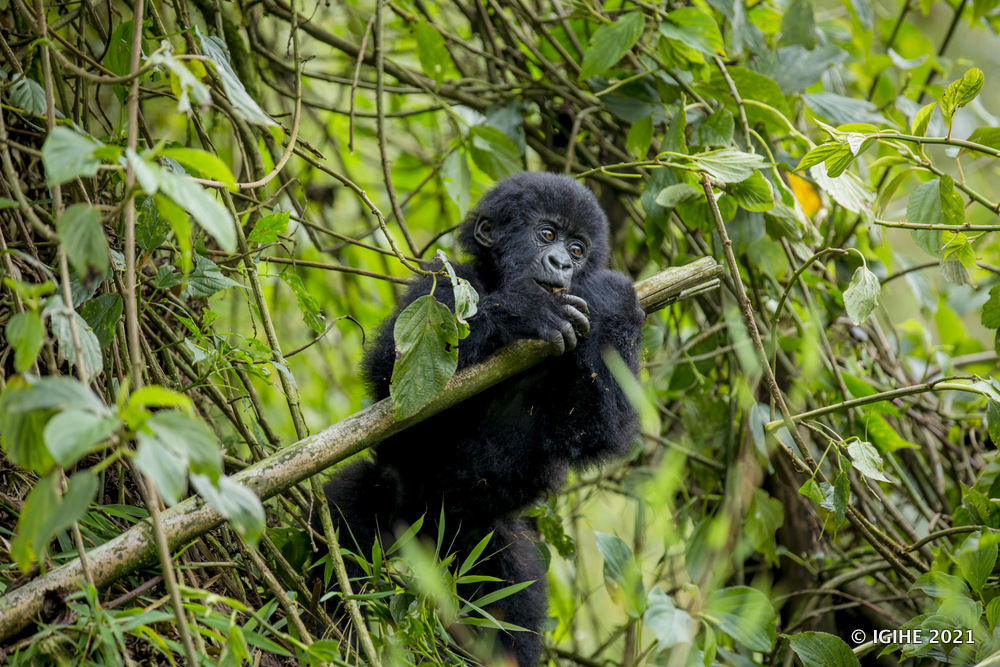
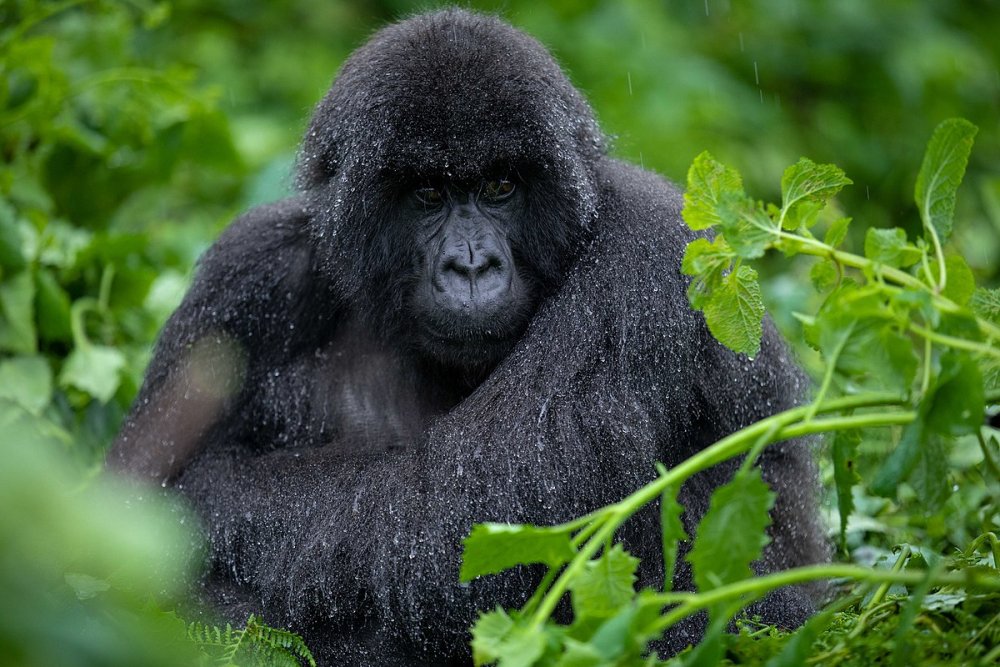
Mountain gorillas rarely drink water, yet they remain active in the dense forests of Rwanda's Volcanoes National Park.
10. Tourism money is also reaching communities around the gorillas
One of the less visible sides of gorilla tourism is what happens beyond the forest.
Rwanda's Tourism Revenue Sharing Programme allocates 10% of national park revenues to communities living around protected areas.
Since its creation in 2005, the programme has supported projects including schools, health facilities, water infrastructure and livelihood initiatives.
By 2025, RDB reported that more than Rwf 18 billion had been invested in more than 1,000 community projects through the programme.
This means that the value of a gorilla trek extends beyond the visitor and the animal. The tourism generated by the forest can also contribute to the communities living closest to it.
Beyond the gorillas, there is even more to discover. A trek in Volcanoes National Park can be the beginning of a longer Rwanda adventure, with visitors able to add Big Five safaris and boat trips in Akagera National Park, forest experiences in Nyungwe, or relaxing escapes around Lake Kivu.
With the help of local tour operators and guides, travellers can combine these experiences into a longer itinerary and discover why Rwanda offers much more than its famous mountain gorillas.
An adult mountain gorilla can consume up to about 30 kilograms of vegetation in a day, making feeding a major part of its daily routine.Chest beating may be the behaviour most people associate with gorillas, but their communication goes far beyond this famous display.A gorilla trek in Rwanda offers more than a close encounter with wildlife, revealing the behaviours and social bonds that make these animals so fascinating.
The figures were announced on Thursday by Dr. Bahati Bernard, Director General of the National Examination and School Inspection Authority (NESA).
A total of 276,579 students from 3,895 schools across the country sat for the primary school leaving examinations. Boys accounted for 44.35% of the candidates, while girls made up 55.65%.
According to NESA, 87.1% of girls who sat the examinations passed, compared with 89.59% of boys.
At the ordinary level of secondary education, 149,015 students sat for the national examinations, with 85.70% passing. This was a significant increase from the 64% pass rate recorded in 2024/25.
Among girls, the pass rate was 82.62%, while 89.8% of boys passed.
Placement of students
NESA said 17,412 students who qualified to progress to the next level were allocated places in boarding schools, while more than 226,546 will attend day schools.
Among students progressing to Senior Four in general education, 18,944 will study in boarding schools, while 57,276 will attend day schools.
In technical and vocational education and training (TVET), 26,098 students were allocated places in boarding institutions, while 17,000 will attend day programmes.
Meanwhile, 7,497 students will pursue professional education as boarding students, while 148 will attend day programmes.
Minister of State for Education Irere Claudette said students who sat the national examinations at both levels performed well overall, with the number of candidates increasing by more than 50,000 compared with the previous year.
'When the number of students increases, and their performance also improves, it is only natural that this affects the allocation of students to different schools,' she said.
However, Irere condemned cases of cheating and collusion among candidates, saying anyone found to have been involved would face disciplinary action in line with national examination regulations.
'Cases of cheating and students helping one another to cheat were reported. Anyone found to have been involved will be punished in accordance with the regulations governing national examinations. For students suspected of cheating, we do not release their results immediately. Instead, we first conduct a thorough investigation,' she noted.
NESA Director General Dr Bahati Bernard said students recorded stronger performance this academic year compared with the previous year.
In the primary school leaving examinations, for example, he said more than 10,000 students scored between 30% and 40% in 2024. This year, that number fell to about 4,000.
The number of students scoring between 40% and 50% also declined, from more than 41,000 last year to about 27,000 this year, Bahati said.
He attributed the overall improvement in results to a rise in the number of students achieving higher scores, particularly those scoring above 50%.
'This year, the number of students scoring between 50% and 60%, as well as those scoring up to 90%, increased. This means that some of the students who were previously scoring below 50% moved into the above-50% range,' he said.
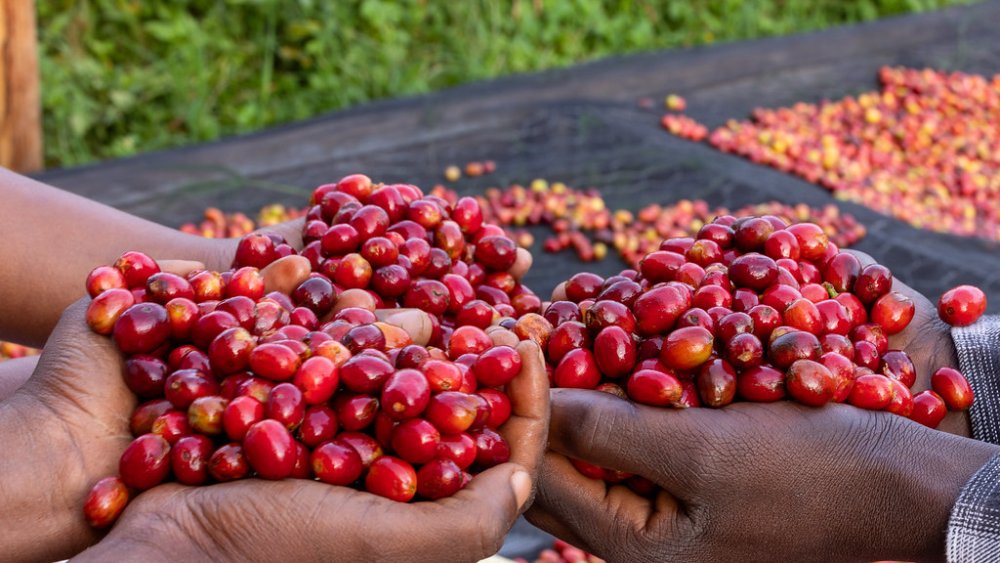
Coffee was the country's top agricultural export during the five-day period, with 816 tonnes shipped to international markets for $5.51 million, accounting for about 42.5% of total export earnings.
Other agricultural products generated $4.76 million from 7,404 tonnes exported, with major shipments destined for Bangladesh and several African countries.
Tea ranked third in export earnings, with Rwanda shipping 437 tonnes worth $1.27 million to international markets.
The country also exported 576 tonnes of vegetables, earning $563,649. The vegetables were shipped to markets in the United Kingdom, the Netherlands, India, France and several African countries.
Fruit exports generated another $472,759 from 443 tonnes shipped to the United Arab Emirates, China and African markets.
Livestock products earned $349,313 from 220 tonnes exported to various African countries.
Rwanda also exported five tonnes of flowers, generating $30,938, with shipments going to Nigeria, the Netherlands and the United Kingdom.
The figures highlight the growing contribution of agricultural exports to Rwanda's foreign exchange earnings, with the country continuing to expand markets for locally produced commodities.
Rwanda has set a target of generating $1.5 billion annually from agricultural and livestock exports by 2029, signalling ambitions to further increase production, processing and access to international markets.
Coffee was the country's top agricultural export during the five-day period, with 816 tonnes shipped to international markets for $5.51 million.
Fayulu made the remarks during a press conference in Brussels, Belgium, where he argued that the Banyamulenge are not Congolese.
He said ethnic groups in the Democratic Republic of Congo (DRC) have their own languages, but claimed that the Banyamulenge do not because they speak Kinyarwanda, which he used to argue that they originate from Rwanda.
'Which Congolese person does not have a language? Raise your hands. Is Kinyamulenge a language spoken in Congo? They speak Kinyarwanda,' Fayulu said.
He went on to question whether the Banyamulenge are among the ethnic groups that make up the DRC.
'Are the Banyamulenge Congolese? Look at the ethnic groups in Congo. There is no such ethnic group,' he said.
Amb. Nduhungirehe condemned Fayulu's remarks, drawing a comparison with rhetoric used by a section of Rwanda's political class in the years leading up to the 1994 Genocide against the Tutsi.
'Ethnic hatred, historical distortions and cynical remarks have reached a worrying level within the Congolese political class, including part of the opposition,' Amb. Nduhungirehe said.
'This strangely reminds me of a section of Rwanda's political class between 1990 and 1994 which, as part of a genocidal process of delegitimisation, claimed that Rwandan Tutsi were not true indigenous people,' he added.
In the years preceding the Genocide against the Tutsi, extremist propaganda sought to portray Tutsis as foreigners who had taken control of Rwanda.
In November 1992, Léon Mugesera, a prominent figure in the then-ruling MRND party, delivered an inflammatory speech in Kabaya, in the former Gisenyi Prefecture, in which he called for Tutsis to be sent back to 'Abyssinia' through River Nyabarongo.
Questions surrounding the citizenship and identity of the Banyamulenge have remained a longstanding source of political controversy in the DRC.
Human Rights Watch has documented how, particularly during the 1980s and 1990s, some politicians in then-Zaire sought to strip Banyamulenge of citizenship by portraying them as immigrants from Rwanda.
Amb. Nduhungirehe also criticised those who give platforms to politicians making such statements, warning that they could eventually be held responsible for doing so.
'At some point, those who roll out the red carpet for these unscrupulous politicians, instead of taking action against them, will also have to answer for it,' he said.
Minister Nduhungirehe likened Fayulu's remarks on the Banyamulenge to rhetoric used by a section of Rwanda's political class between 1990 and 1994 to delegitimise Tutsis.
Despite these efforts, the terrorist group has survived, rebuilt its ranks and continued to play a significant role in the conflicts that have plagued eastern DRC.
The Congolese government has once again pledged to dismantle the FDLR under agreements that would require its fighters to lay down their weapons, relocate to designated camps and eventually return to civilian life.
However, former members of the FDLR interviewed by IGIHE say similar promises have been made before without producing lasting results.
They allege that Kinshasa's previous efforts to neutralise the group were often accompanied by political manoeuvring and that the same pattern could continue under the latest arrangements.
Pastor Niyonzima Jean Damascène, who previously worked in intelligence and reconnaissance for the FDLR before returning to Rwanda in 2023, told IGIHE that the group's relationship with successive governments in Kinshasa dates back decades.
He said that when tensions escalated between the government of Laurent-Désiré Kabila and Rwanda, Kabila sought the support of former Rwandan government soldiers, commonly referred to as Ex-FAR, and Interahamwe militia who had fled to different African countries.
According to Niyonzima, the groups reached an agreement to cooperate militarily and pursue a common objective against Rwanda.
'At that time, they agreed to work together against the Tutsis. After defeating them, they would push them out and help them capture Rwanda. That agreement is still in place today because some forces have left the FDLR and joined the FARDC. They include generals, colonels and others who have joined,' he said.
Joseph Kabila succeeded his father, Laurent-Désiré Kabila, as president of the DRC in 2001.
Niyonzima said Joseph Kabila later sought to relocate FDLR fighters within the country because of disagreements with the group. In 2002, he said, the fighters were placed in camps but were not fully disarmed.
According to Niyonzima, a major development came in 2003 when Congolese forces pursued FDLR fighters who had been based in Kamina. The fighters subsequently moved towards eastern DRC, where they joined other members of the group.
Niyonzima alleged that Congolese forces sometimes staged operations against the FDLR while maintaining an understanding with its commanders.
He claimed commanders on both sides would communicate before an operation, allowing FDLR fighters to withdraw before Congolese troops arrived.
'If one commander had worked with another commander, and one of them was sent to the east to fight the FDLR, he could not actually fight us. He would tell us, 'We are going to attack this place. Leave because we are coming and we will burn it,'' he said.
He claimed that Congolese forces would then carry out the operation to create the impression that they had defeated the FDLR.
'They would actually come and burn the area, but because we had agreed beforehand, we would have already left. They would burn houses to show that they had carried out an operation, but they would leave equipment behind. When we returned, we would find the equipment they had left for us. That is what we used,' he said.
Maj. (Rtd.) Makuza Anastase, who worked closely with FDLR president Lt. Gen. Victor Byiringiro before returning to Rwanda in 2020, also claimed that the FDLR maintained relationships with successive governments in Kinshasa.
He said public announcements that the Congolese government was preparing to dismantle the FDLR did not always reflect what was happening on the ground.
'I think there was a time when you would hear Congo saying that it was going to dismantle the FDLR. That was simply a way of deceiving the international community. In reality, that is not how things happened,' he said.
Makuza alleged that Congolese forces would announce military operations, launch heavy bombardments and instruct FDLR fighters to leave targeted areas before troops arrived.
'They would tell us to leave, we would leave, and then they would arrive and burn things to make it appear as though they had taken control of the area. Afterwards, they would leave,' he said.
He further alleged that the troops sometimes left ammunition and food behind for FDLR fighters.
According to Makuza, messages were also allegedly left on trees for FDLR fighters, including one that read: 'Our enemy is one, it is Rwanda.'
Why Kinshasa continues to rely on the FDLR
The administration of President Félix Tshisekedi, which succeeded Joseph Kabila's government, has at times characterised the FDLR as a group largely composed of elderly fighters and therefore lacking the capacity to pose a serious security threat to Rwanda.
Makuza disputed that description, arguing that the FDLR has evolved over generations.
'An elderly person is someone who fled when he was already old. I am also getting older. But haven't I had children? Didn't others have children? We reached there and had children, those children grew up, and others are still being born. The FDLR is not made up of elderly people because it does not belong to one, two or three people. There are many of them. Those who went there as children and those who were born there are all part of the FDLR,' he said.
Makuza argued that elderly fighters represent only a small proportion of the group and claimed that its ranks increasingly include younger people who were born into families linked to its founders.
Niyonzima and Makuza both argued that the Congolese government has continued to rely on the FDLR because they consider its fighters more experienced and more willing to engage in combat than many Congolese troops.
Niyonzima said Kinshasa has particularly turned to the FDLR whenever its forces face significant military pressure.
'Kinshasa often turns to the FDLR, especially when it is under pressure. Since 1998, whenever it faced difficult situations, that is what happened. When M23 first emerged, Congo also relied on the FDLR, and it has done so again recently,' he said.
FDLR and Wazalendo cooperation
Niyonzima said cooperation between the Congolese government and the FDLR has become more visible in recent years, particularly through the broader alliance involving Wazalendo militia.
He claimed that FDLR-linked fighters and other armed groups have been deployed alongside Congolese forces in battles against AFC/M23.
'They fought during the first M23 rebellion, and now they are openly working together against the current M23. They have hidden behind the term Wazalendo. There are groups that the FDLR helped establish. Nyatura is one of them. The FDLR trained them and provided them with equipment,' Niyonzima said.
He said FDLR and Nyatura fighters are often deployed to areas where fighting is particularly intense because, in his view, they have more battlefield experience than regular Congolese troops.
'Where the FDLR and Nyatura are deployed, it becomes difficult for M23 to dislodge them. The Congolese government sees that these are fighters and thinks, 'If I remove these people, I will lose a lot. I will not have this kind of strength again,'' he said.
According to Niyonzima, when fighting intensifies, Congolese forces provide FDLR and other Wazalendo members with equipment to help them confront AFC/M23 fighters.
Maj. (Rtd.) Makuza Anastase said claims that the FDLR is made up only of elderly fighters are false, arguing that the group is predominantly composed of young combatants.Pastor Niyonzima said that whenever FARDC forces planned to attack the FDLR, they would warn the group in advance so its fighters could withdraw from their positions.
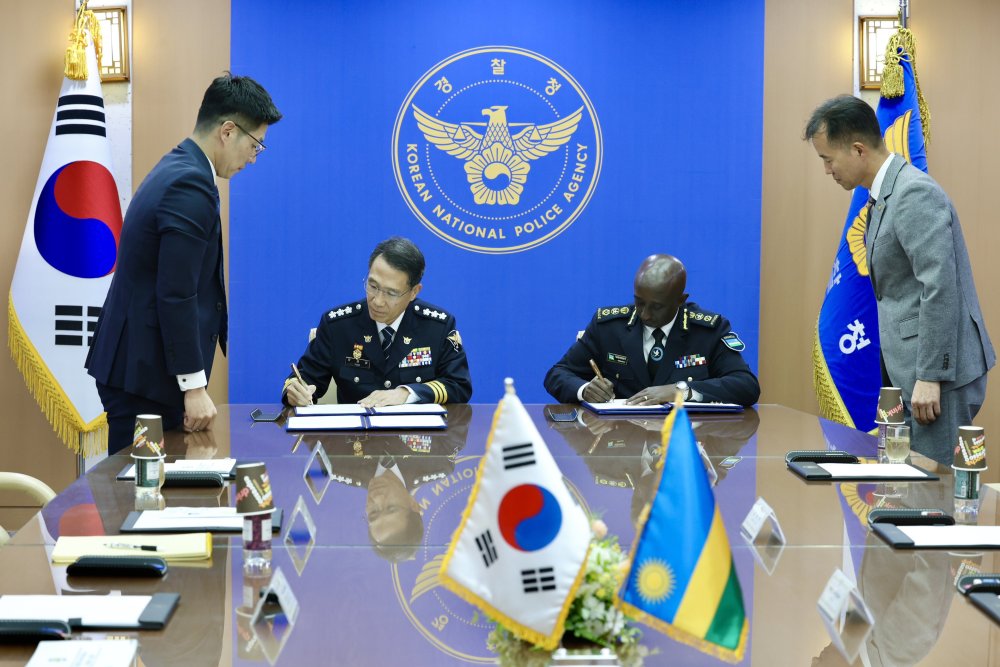
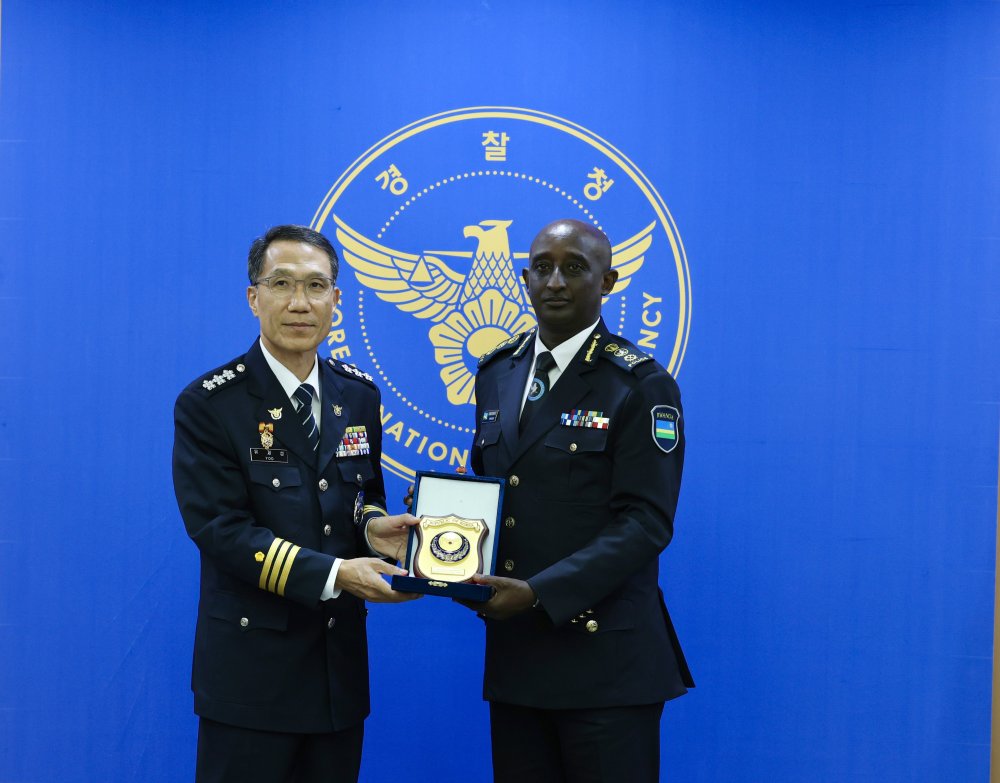
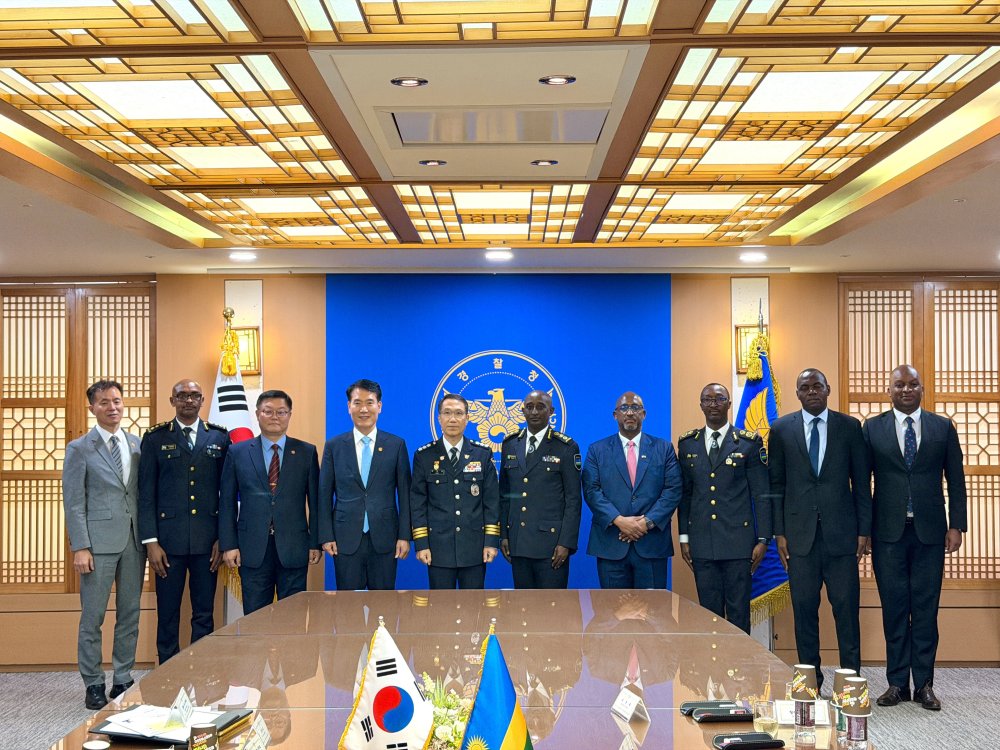
The agreement was signed in Seoul, South Korea, on Thursday, August 20, by Rwanda's Inspector General of Police, Felix Namuhoranye, and Yoo Jae-Sung, Commissioner General and Chief of the Republic of Korea National Police.
Rwanda's Ambassador to South Korea, Nkubito Manzi Bakuramutsa, witnessed the signing ceremony.
The MoU provides a framework for cooperation in combating transnational organised crime, sharing information and expertise, and strengthening the skills and capabilities of police officers in both countries.
The partnership will also facilitate joint training and other capacity-building programmes aimed at enhancing policing capabilities and strengthening cooperation between RNP and KNPA.
Rwanda established diplomatic relations with the Republic of Korea in 1963.
The relationship grew stronger with the opening of a diplomatic bureau in November 2008 and later upgraded to an embassy in February 2009.
Rwanda National Police Chief Felix Namuhoranye and his South Korean counterpart Yoo Jae-Sung sign a police cooperation agreement in Seoul on August 20, 2026.RNP Inspector General of Police Felix Namuhoranye and Commissioner General Yoo Jae-Sung exchange documents after signing a police cooperation MoU in Seoul.Rwanda and South Korea have agreed to strengthen police cooperation in combating transnational organised crime and sharing expertise.
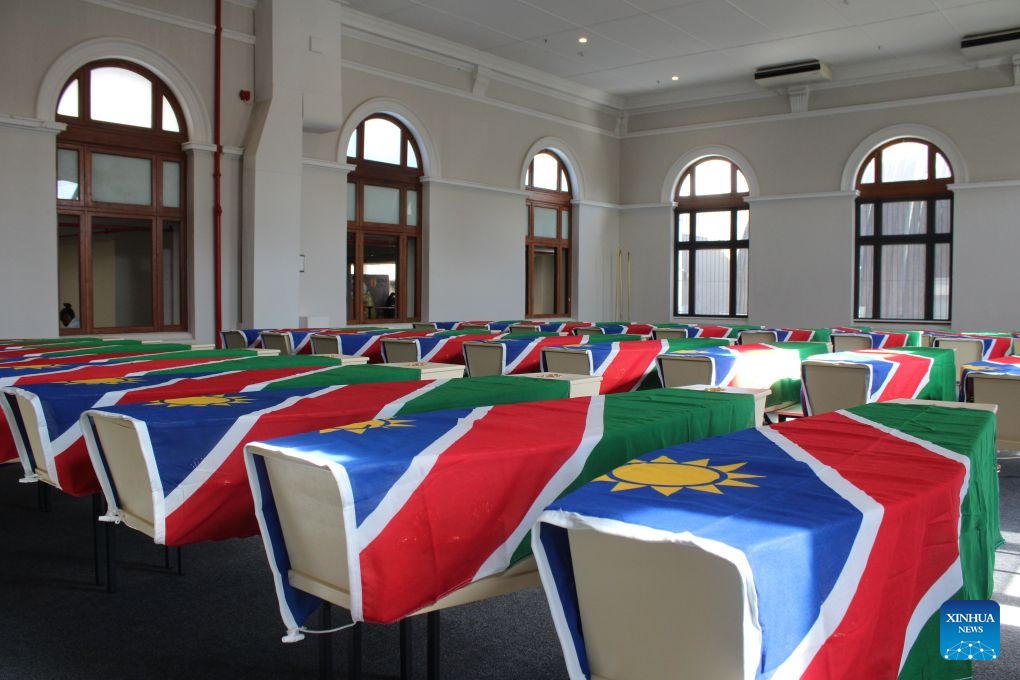
Two rooms were filled with ivory-colored coffins, side by side, each draped with the Namibian flag. The mortal remains of 84 indigenous people had been held at the Iziko South African Museum for more than 100 years and were said to have been used for 'scientific reasons.'
Chairperson of the Council of Iziko Museums of South Africa Marvin Mdhluli said: 'They entered the South African Museums as objects of race-based pseudo-scientific research,' aimed at portraying indigenous communities as having inferior attributes and status.
In a separate room stood two coffins containing the remains of political prisoners Festus Nehale, who died in 1971, and Simon Petrus Nileng, who died in 1974. Both had been imprisoned on Robben Island, South Africa's notorious prison where anti-apartheid and other political prisoners were detained during apartheid. They were buried in Cape Town.
Members of the Namibian delegation solemnly bowed their heads before the coffins before addressing guests at the ceremony.
The handover also included grave goods and body casts, including beads, ostrich eggs and jewelry with lineage to Namibia.
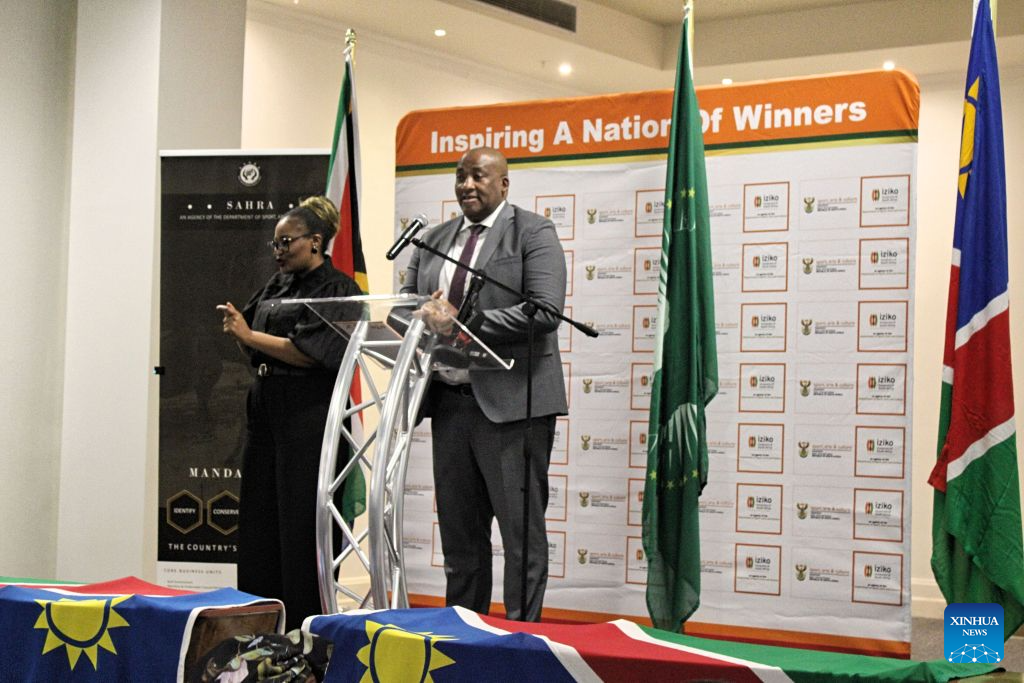
'For too many years, the remains of our freedom fighters and ancestors were kept far from the land they called home. This was an injustice to them, their families and their communities,' South African Minister of Sport, Arts and Culture Gayton McKenzie said in a statement.
'By bringing these political heroes and ancestors home, representing the Ovambo, Himba, San, Nama, Damara and Herero peoples, we restore their dignity, identity and rightful place in their homeland,' he said.
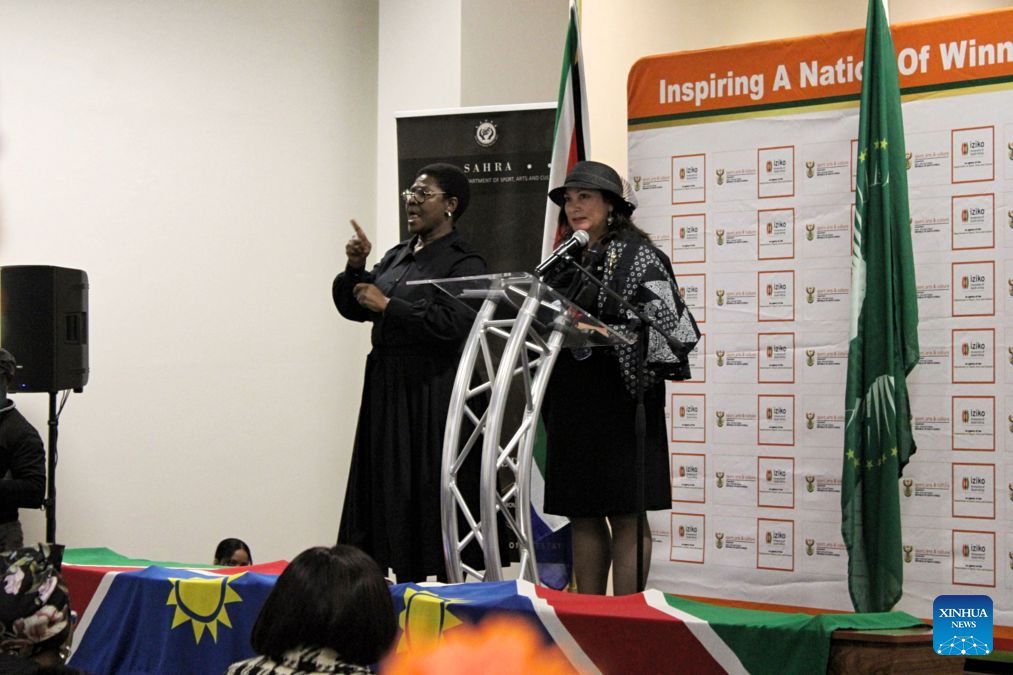
Namibia's Minister of Education, Innovation, Youth, Sports, Arts and Culture Sanet Steenkamp said the liberation heroes will be reburied at Namibia's Heroes' Acre on August 24.
'Now they return to a free and sovereign Namibia,' she said. 'Some of these ancestors were taken from their communities and became part of the colonial scientific and museum collections where they were treated as objects, rather as people.'
Two rooms were filled with ivory-colored coffins, side by side, each draped with the Namibian flag. The mortal remains of 84 indigenous people had been held at the Iziko South African Museum for more than 100 years and were said to have been used for 'scientific reasons.'South African Minister of Sport, Arts and Culture Gayton McKenzie (R) speaks during a repatriation ceremony at the Iziko South African Museum in Cape Town, South Africa, August 19, 2026. Namibia's Minister of Education, Innovation, Youth, Sports, Arts and Culture Sanet Steenkamp (R) speaks during a repatriation ceremony at the Iziko South African Museum in Cape Town, South Africa, August 19, 2026. TO GO WITH 'South Africa returns ancestral remains to Namibia for colonial redress, healing'.
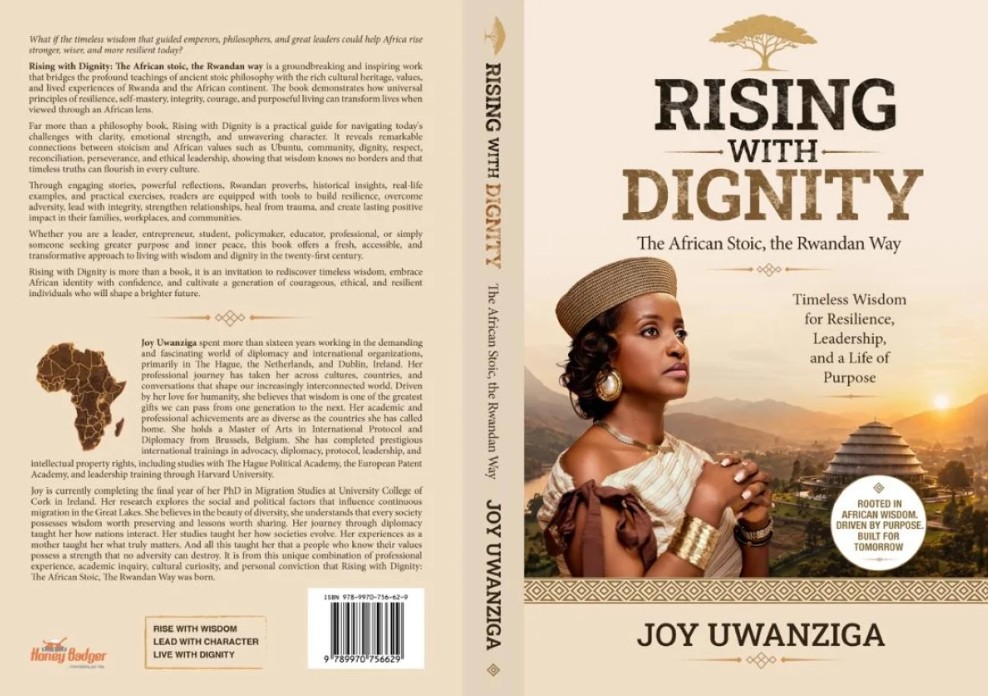
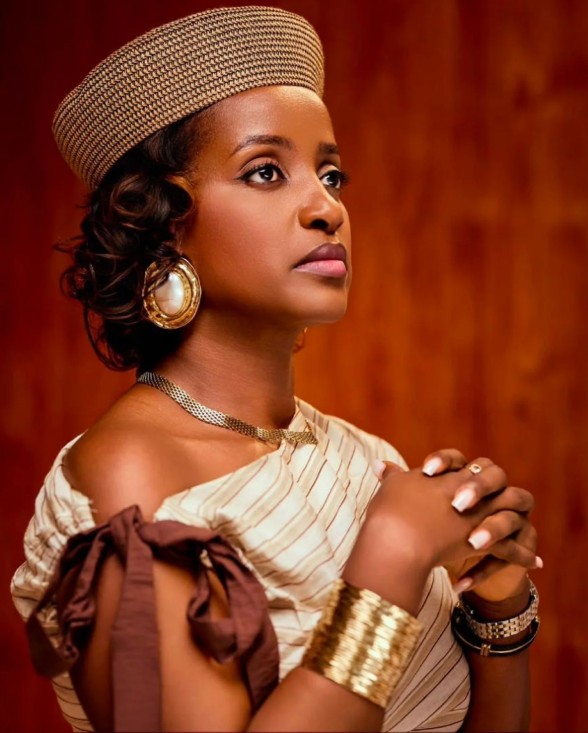
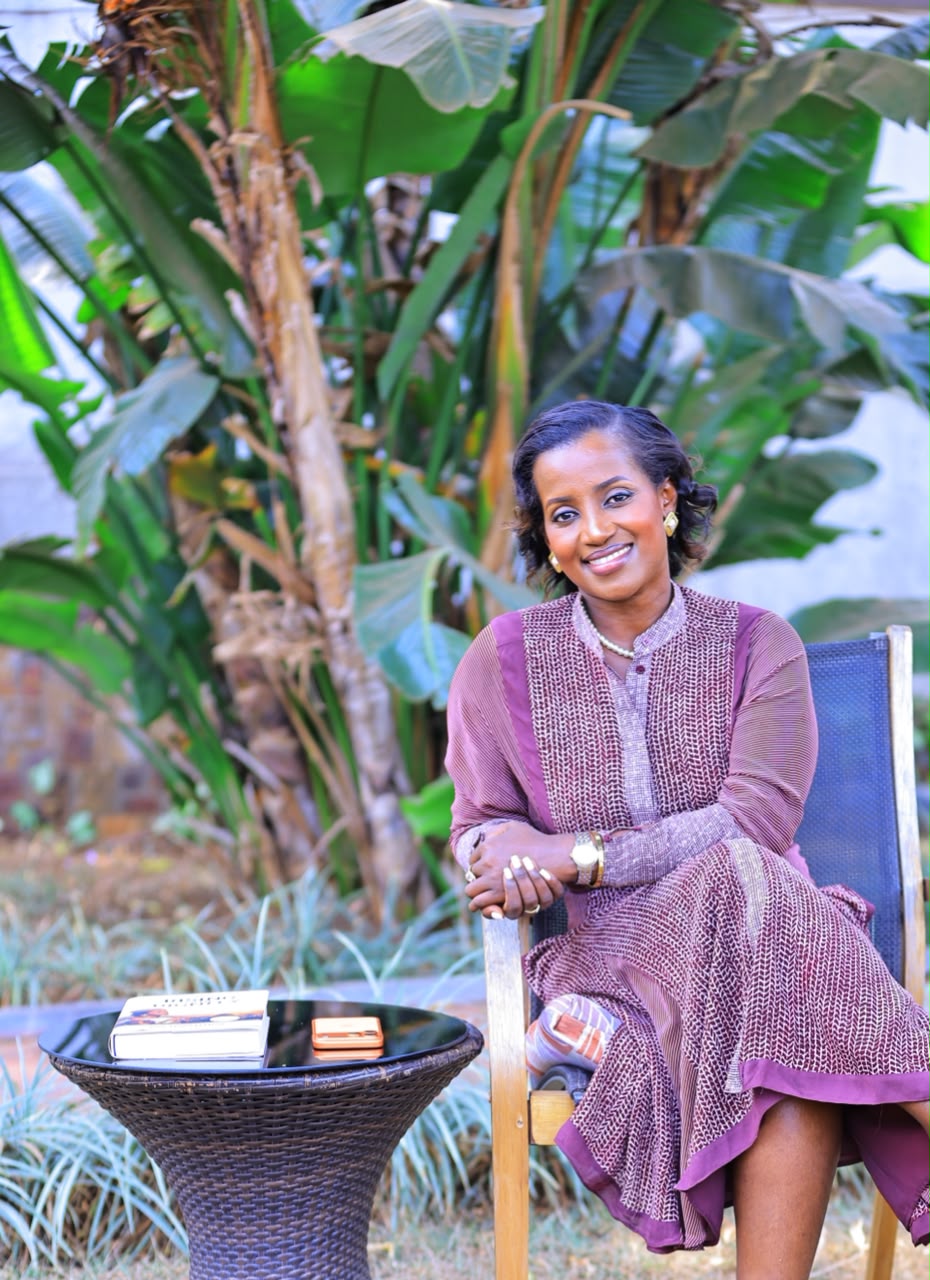
It is a small morning ritual, but it reflects the philosophy behind her new book, Rising with Dignity: The African Stoic, The Rwandan Way, a book about learning to manage what is within your control and respond thoughtfully to everything else.
For Uwanziga, Stoicism is not about becoming emotionless or simply enduring whatever life brings. It is a practical way of thinking about everyday life, how to deal with disappointment, manage anger, respond to pressure and, perhaps most importantly, how to get back up after falling.
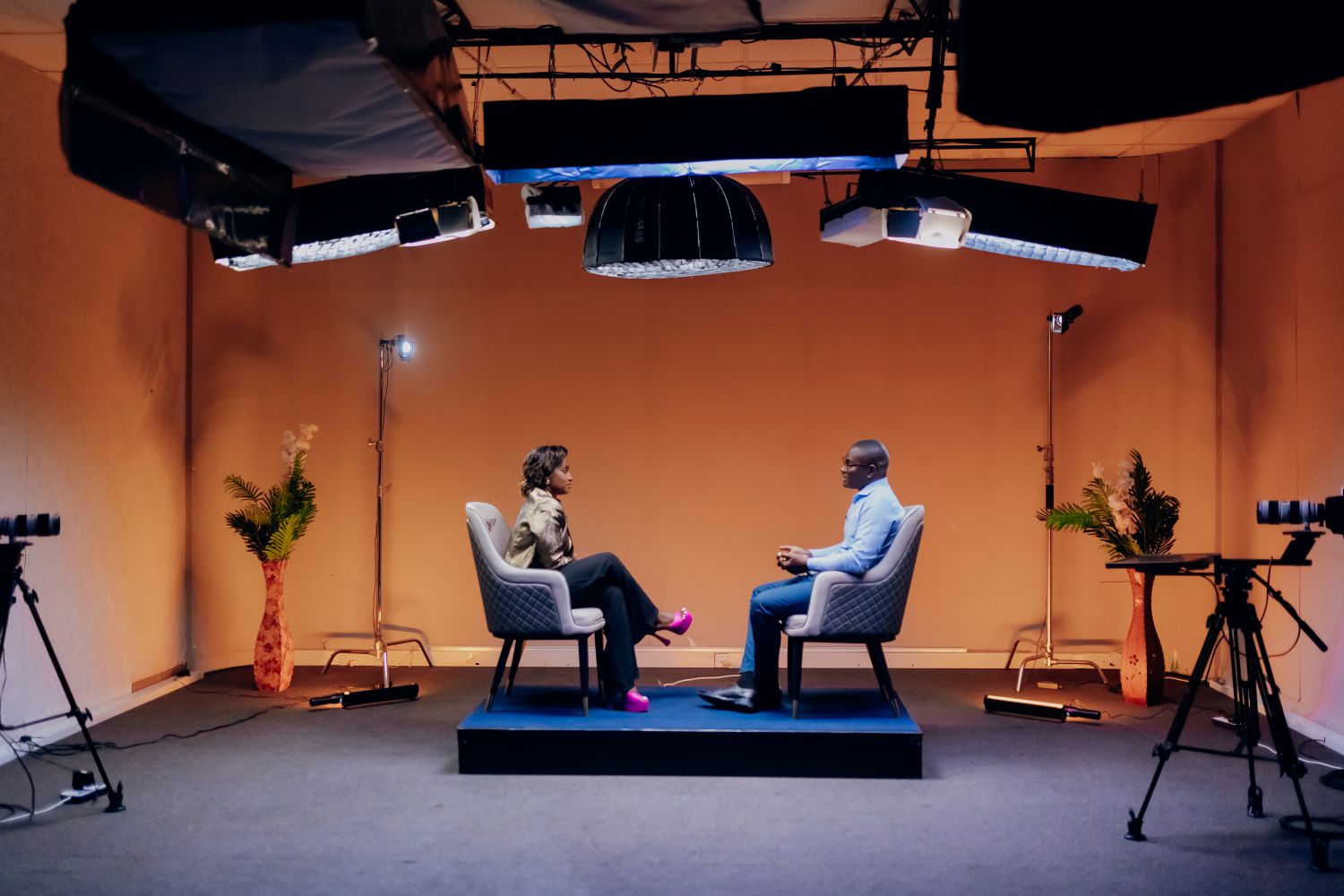
The more than 250-page book took five years to complete, but its beginnings were much more modest, she told IGIHE in a recent exclusive interview.
Joy Uwanziga will launch her new book at the Kigali Marriott Hotel on August 29.
Uwanziga started by writing notes to herself, passages and reflections from Stoic philosophy that resonated with her. Over time, she began sharing some of those ideas with friends and family, eventually realising they could become something larger.
The book launches at Marriott Hotel Kigali on August 29 and will later be available through Amazon and bookstores in Rwanda.
Uwanziga is currently completing a PhD in migration studies at University College Cork. Before moving to Ireland, she spent several years at the Rwandan diplomatic mission in The Hague as a consular affairs officer. Rising with Dignity is her third book, following Manners in Rwanda, published in 2015, and a 2018 book on parenting.
A philosophy Rwandans already know
Uwanziga's interest in Stoicism began with Marcus Aurelius's Meditations, the Roman emperor's private reflections that have remained influential centuries later.
What drew her in was a powerful principle centred on separating what we can control from what we cannot.
'You can't control external events, so don't let them control you by the way you react,' she says.
It is a principle that can easily be applied to ordinary situations. You can prepare for an examination, but you cannot control the questions. You can choose your words in a difficult conversation, but not how another person responds. You can decide how you begin your morning, but not everything that will happen before the day is over.
For Uwanziga, this way of thinking also has a familiar African dimension.
She points to the historical relationship between Greek philosophy and Egypt and argues that some values associated with Stoicism have parallels in African traditions that were passed down orally.
'When you put Emperor Marcus Aurelius and a Rwandan or African elder in a room, they would practise or say things about Stoicism, maybe with a different name,' she adds.
'We've been practising Stoicism without calling it Stoicism.'
She is careful not to present this as a claim that Africans invented Stoicism. Rather, she sees it as a recognition that different cultures can arrive at similar principles, including integrity, discipline, responsibility and resilience.
Uwanziga is currently completing a PhD in migration studies at University College Cork. Rising with Dignity is her third book.
What happens after failure?
For Uwanziga, one of the most important tests of character is what happens when things do not go according to plan.
She uses the example of a student preparing for an examination. The student can control the effort put into studying, but not the questions that appear on the paper or how it is marked.
What remains within her control is how she responds.
'Do we rise with dignity?' Uwanziga asks. 'Because we fail every day.'
That idea gives the book its title and connects philosophy with one of Rwanda's most recognisable qualities, resilience.
Uwanziga sees Rwanda's recovery after the 1994 Genocide against the Tutsi as a powerful example. She recalls how people were forced to take on responsibilities beyond their previous professions because the country needed to be rebuilt and there were not enough people with the necessary skills.
Seeing people start again and contribute to rebuilding Rwanda deeply influenced her.
But Uwanziga is careful not to romanticise suffering.
Resilience, she argues, should not mean pretending that pain is easy or expecting everyone to cope in exactly the same way. People process difficult experiences differently, and sometimes they need psychological or other forms of support.
'What's wrong with asking for help when you need it?' Uwanziga asks.
For her, rising with dignity does not mean denying pain. It means finding a way forward while accepting that support may be part of that journey.
The more than 250-page book took five years to complete, but its beginnings were much more modest, she told IGIHE in a recent exclusive interview.
Calm does not mean silence
Asked whether Stoicism means staying quiet in the face of injustice, Uwanziga pushed back on that idea.
'If you have to talk, talk with wisdom,' she stresses. 'But if being silent will help more until you calm down and think of a wiser response, then be silent.'
Asked how that applies beyond individual situations, she pointed to leadership in everyday life, parenting, teaching, leading a student group, even managing a WhatsApp group, saying the question in each case is whether a response will improve things or make them worse.
On anger, she gave a similar answer.
'You are allowed to be angry, but don't take a decision when you're angry,' she said. 'Think about it.'
Dignity, agaciro and strength
On whether a person can lose everything and still retain their dignity, Uwanziga connected the idea to the Rwandan concept of agaciro, self-worth expressed through conduct, and inyangamugayo, referring to a person of integrity. For her, dignity is not dependent on wealth, status or circumstances.
'Losing what you have, or the most valuable thing, and still living with dignity, we (Rwandans) are a good example,' she affirms.
She also challenged expectations around masculinity.
Uwanziga said boys are often taught to 'man up' when they are hurt, creating an idea of strength that can make men reluctant to acknowledge pain or seek help.
Her message carries a deeper truth that emotional honesty does not cancel out strength.
'Men are allowed to have feelings too,' she argues. 'You are human the same way everyone is.'
That is consistent with her broader understanding of Stoicism. The goal is not to stop feeling, but to recognise feelings without allowing them to dictate every decision.
Uwanziga's interest in Stoicism began with Marcus Aurelius's Meditations, the Roman emperor's private reflections that have remained influential centuries later.
Practising what she writes
Uwanziga does not claim to have mastered the philosophy she writes about.
She describes herself as 'a very emotional person' who cries easily, including at weddings, and says regulating her own emotions remains one of the most difficult parts of Stoicism for her.
That honesty is part of what makes her interpretation of the philosophy feel less like a set of rules and more like a practice.
Her morning routine is one example.
Rather than immediately reaching for her phone and allowing social media and the news to influence her mood, she tries to do something for herself first. Stretching, drinking water and making her bed create a small buffer between waking up and confronting the outside world.
She also tries to appreciate ordinary moments, a cup of tea, a hug from a loved one, rather than waiting for major achievements to provide happiness.
From personal notes to a reminder
The book eventually became a 12-chapter work, but Uwanziga still describes its message as less about discovering something new and more about remembering values that are already familiar.
She believes integrity, discipline, responsibility and resilience remain particularly important for young people navigating pressure, ambition and the temptation to look for shortcuts.
'We just want to live an easy life; we don't want to go the hard way,' she remarks. 'But then what are the results of the shortcuts?'
For Uwanziga, Rising with Dignity is ultimately an invitation to slow down before reacting, focus on what can be controlled and consider the kind of person one wants to be when circumstances are difficult.
Asked for the single most important lesson she hopes readers take from the book, Uwanziga offered a direct answer. 'To be a man or a woman of integrity.'
Watch the full video below to learn more about the book and what Uwanziga stands for.
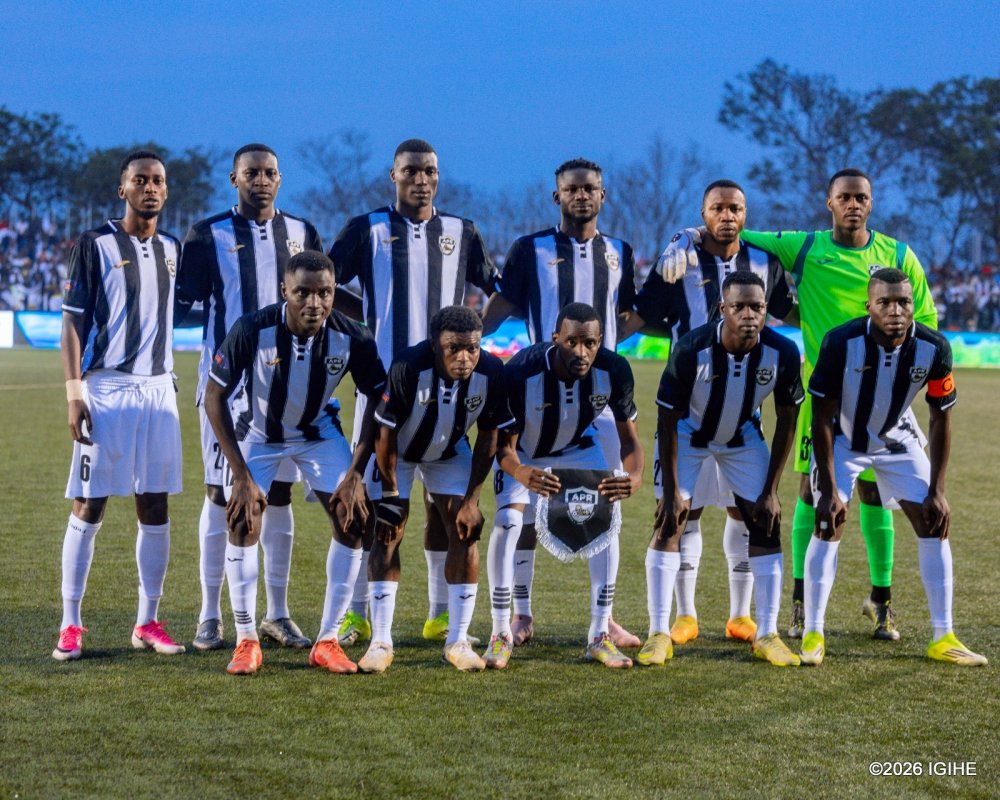
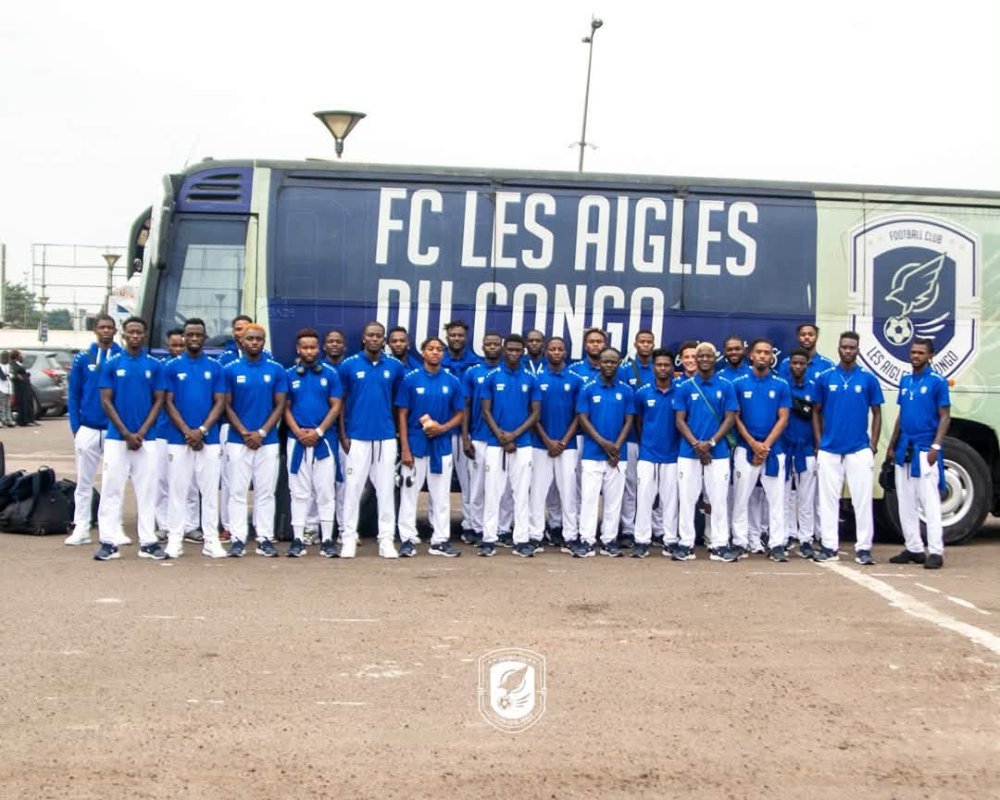
APR FC will face Les Aigles du Congo in the preliminary round of the 2026/27 CAF Champions League after the two sides were drawn against each other on August 6, 2026.
The Rwandan champions had written to CAF requesting that the first leg be moved from the DRC, citing security concerns and the Ebola outbreak, which had raised concerns over travelling with the squad to Kinshasa.
APR FC had asked for the match to be played at a neutral venue, with the possibility of moving both legs to another country.
However, IGIHE has learned that CAF rejected the request and informed APR FC that the match would proceed as scheduled in Kinshasa.
The first leg is set to be played at Stade des Martyrs in Kinshasa, despite the venue not being among the stadiums most recently listed by CAF as approved to host its competitions in the DRC.
The DRC currently has two stadiums approved for CAF competitions, TP Mazembe Stadium and Frédéric Kibassa Maliba Stadium, both located in Lubumbashi.
Before CAF's decision, APR FC head coach Abderrahim Taleb had raised concerns about travelling to the DRC, stressing that the health and safety of his players should be the club's priority.
Following APR FC's 2-1 friendly win over Etincelles FC on August 9, Taleb said, 'We cannot put our players at risk,' adding that the club's management was in discussions with CAF about potentially moving the match.
Les Aigles du Congo finished second in the 2025/26 DRC Premier League and will host APR FC in the first leg before travelling to Rwanda for the return fixture.
The winner of the tie will face the winner of the preliminary-round match between AS Port of Djibouti and Egyptian side Zamalek in the next stage of the competition.
APR FC will face Les Aigles du Congo in the preliminary round of the 2026/27 CAF Champions League after the two sides were drawn against each other on August 6, 2026.Les Aigles du Congo finished second in the 2025/26 DRC Premier League and will host APR FC in the first leg before travelling to Rwanda for the return fixture.
Ronaldinho has arrived in Italy ahead of signing for Ravenna!