The UN chief made the appeal at a press encounter, citing an update on El Nino forecasts released by the World Meteorological Organization (WMO).
According to the new forecasts, this summer's extremes — record-shattering heat domes, apocalyptic wildfires, thousands of lives lost in scorching conditions, record-high global sea-surface temperatures — are only a warm-up act, said Guterres.
El Nino is strengthening, adding fuel to a planet already on fire. The Pacific waters driving the phenomenon have never been this warm this early in an El Nino and temperatures are still rising, he said. 'At the same time, WMO's outlook shows that through October, nearly every land area on Earth is expected to be hotter than normal.'
El Nino does not bring heat alone; it profoundly affects the world's rainfall. India's monsoon is already running well below average. Hotter and drier conditions are forecast from Central America and the Caribbean to parts of South America, South Asia, the Southwest Pacific, Europe and Africa, warned Guterres.
'The verdict is clear: the climate crisis is in overdrive,' he said.
The UN chief called for action on four fronts: protect people before heat becomes deadlier, make work safer, build and retrofit for the coming heat, and stop fueling the climate crisis.
Extreme heat is a society-wide threat that demands a government-wide response. Every city and country should have heat-health action plans, early warning systems and public health measures that reach every community in time. And access to sustainable cooling must expand urgently and equitably, he said.
Governments and employers must set heat standards, adjust working hours, and protect incomes when work must stop. Protection from extreme heat must be designed into cities, homes, schools and hospitals, and factored into every plan and public budget, he said.
Guterres warned that every new fossil fuel project approved today makes tomorrow's heatwaves more dangerous, and the world less secure.
'Today's findings show that extreme heat is not a future threat. It is here. It is becoming more dangerous. And unless we act — to protect people and tackle the root cause of the crisis — it will become deadlier still,' he said. 'The warm-up act is over. We cannot afford to wait for the main event.'
El Nino is strengthening, adding fuel to a planet already on fire.
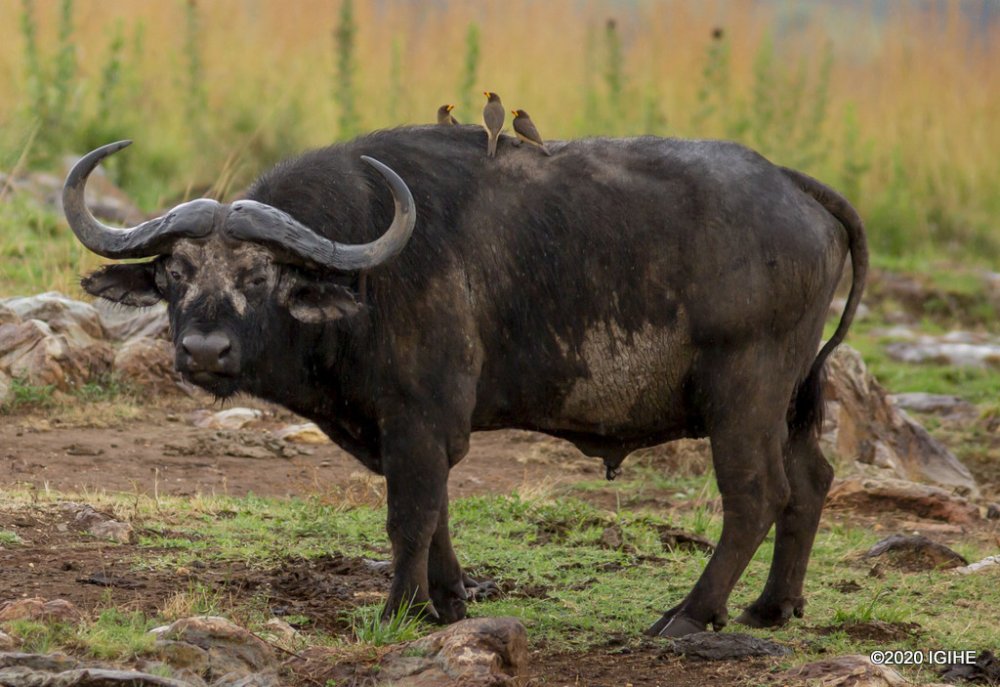
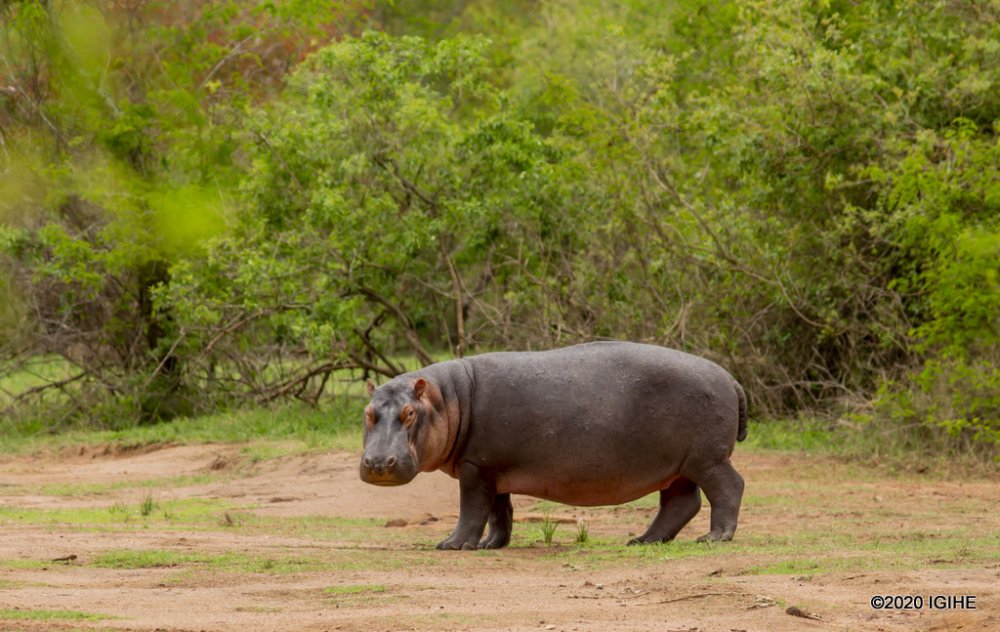
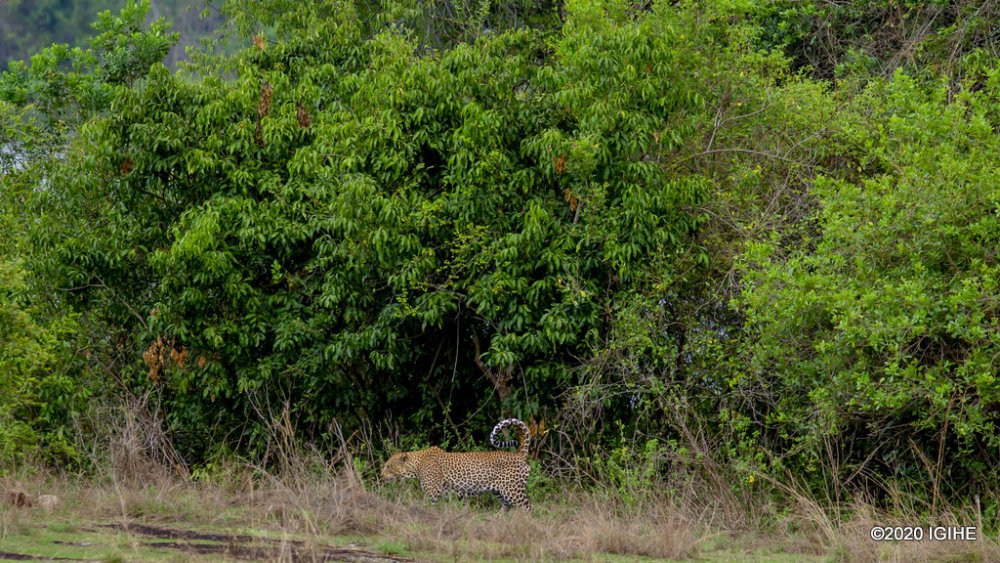
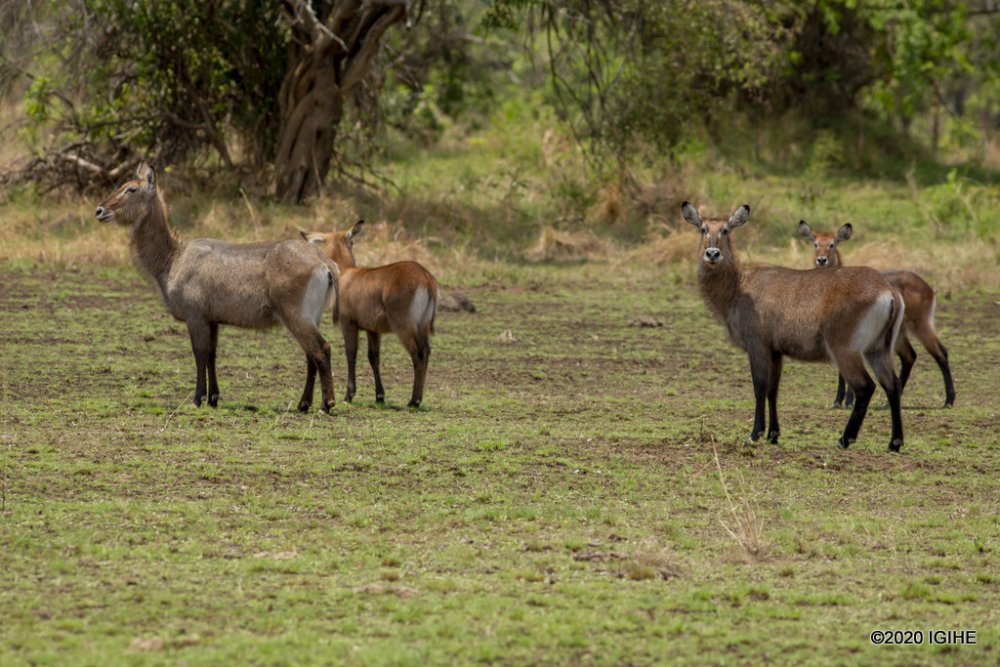
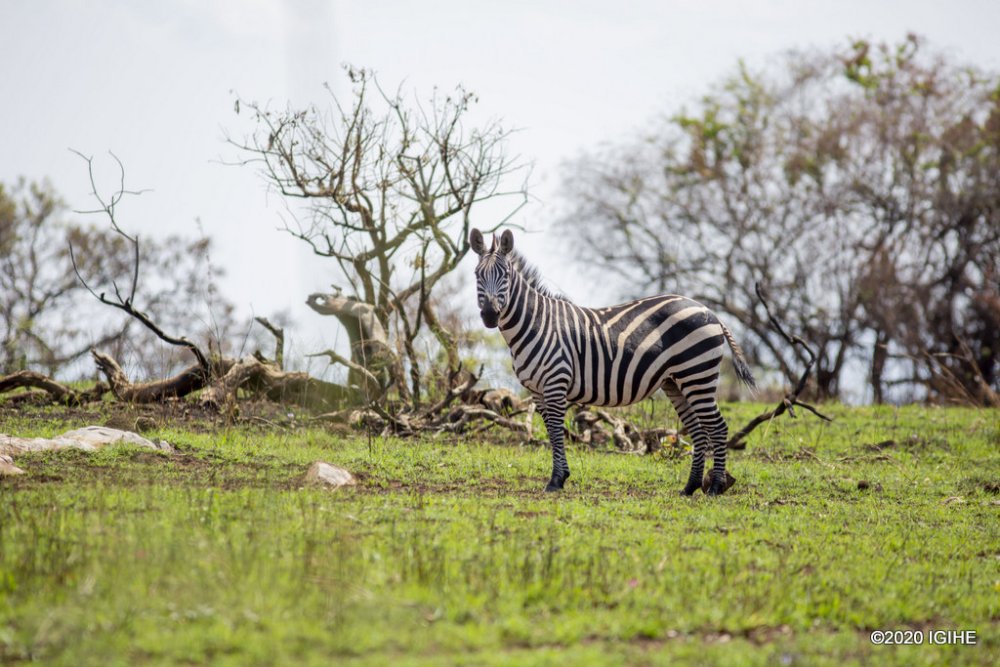
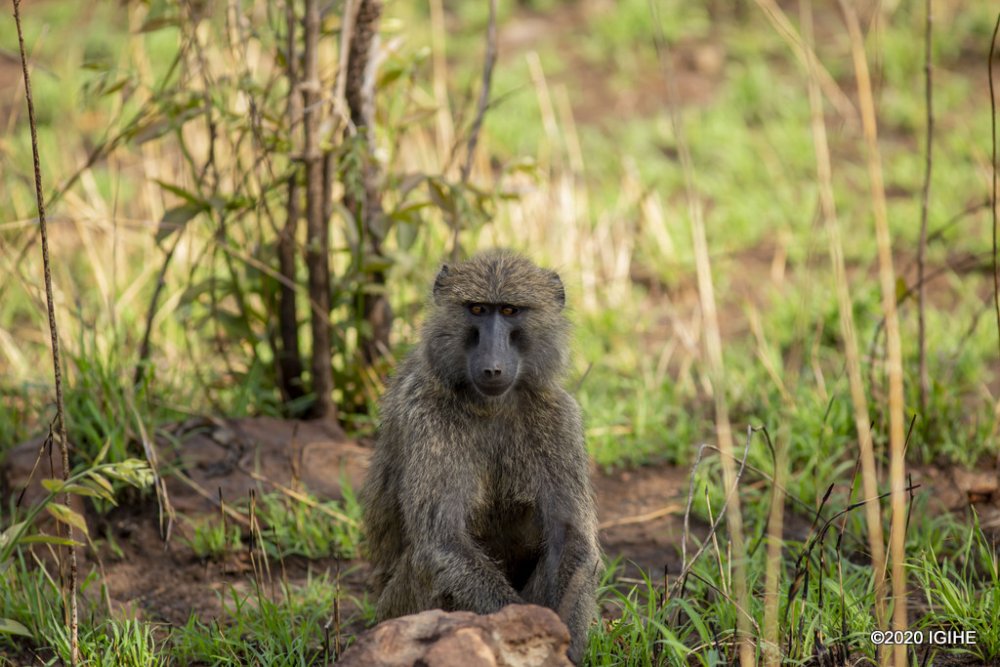
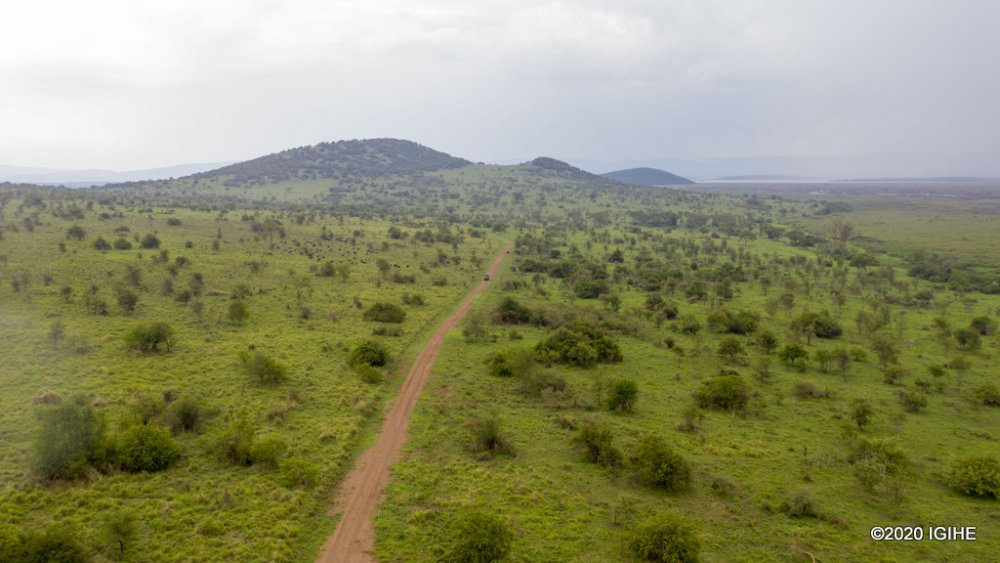
The park is one of Rwanda's leading tourist attractions, hosting more than 500,000 animals from different species, including some of the world's rarest wildlife. Visitors can also enjoy its lakes, lodges and numerous viewpoints overlooking the diverse landscape.
Between April and June 2026, Akagera National Park generated more than $1 million in tourism revenue from 8,919 visitors.
According to figures released by the park, this represented a 4% increase compared to the same period in 2025. On average, each visitor spent $108 during their stay.
For first-time visitors, there is more to know than simply booking a safari. Understanding the park's wildlife, why some lions are placed on birth control, how elephant families are organised, the park's strict conservation rules, penalties for violating them, and entrance fees can greatly enhance the experience.
Why lions are placed on birth control
Samuel Munyaneza, a tour guide who has worked in Akagera National Park for eight years, is well acquainted with the park's history, its wildlife and the regulations that govern visits. Among the species whose history he knows best are lions and rhinos, both of which disappeared from the park before eventually being reintroduced.
He explained that following the 1994 Genocide against the Tutsi, many Rwandans who had lived in exile since 1959 returned home. With limited land available, some settled in areas that had previously formed part of the park. As lions preyed on their cattle, some residents poisoned carcasses in retaliation, wiping out the lion population.
Rhinos, meanwhile, were driven to extinction in the park by poachers targeting their highly valuable horns for the illegal wildlife trade.
Lions were reintroduced to Akagera in 2015 after being translocated from South Africa. The population recovered rapidly, prompting park managers to introduce contraception to control reproduction.
The programme is intended to maintain a balanced ecosystem. An excessive lion population would increase predation pressure on other wildlife and threaten the ecological balance of the park. Munyaneza explained that predators are essential in maintaining healthy wildlife populations. Before lions returned, herbivore numbers increased significantly, raising the risk of inbreeding, which can weaken the genetic health of animal populations.
He noted that while Akagera once covered a much larger area, parts of the park were later allocated for human settlement, reducing its size. With a smaller habitat, allowing lions to reproduce unchecked could lead to territorial conflicts, increased competition for food and pressure on prey species.
In February 2026, five lions in Akagera National Park were placed on birth control as part of this population management strategy.
Wildlife surveys are conducted every two years using aircraft, drones, camera traps and ground counts. The most recent census took place in 2025. However, accurately counting species such as snakes and crocodiles remains difficult.
How female elephants lead their families
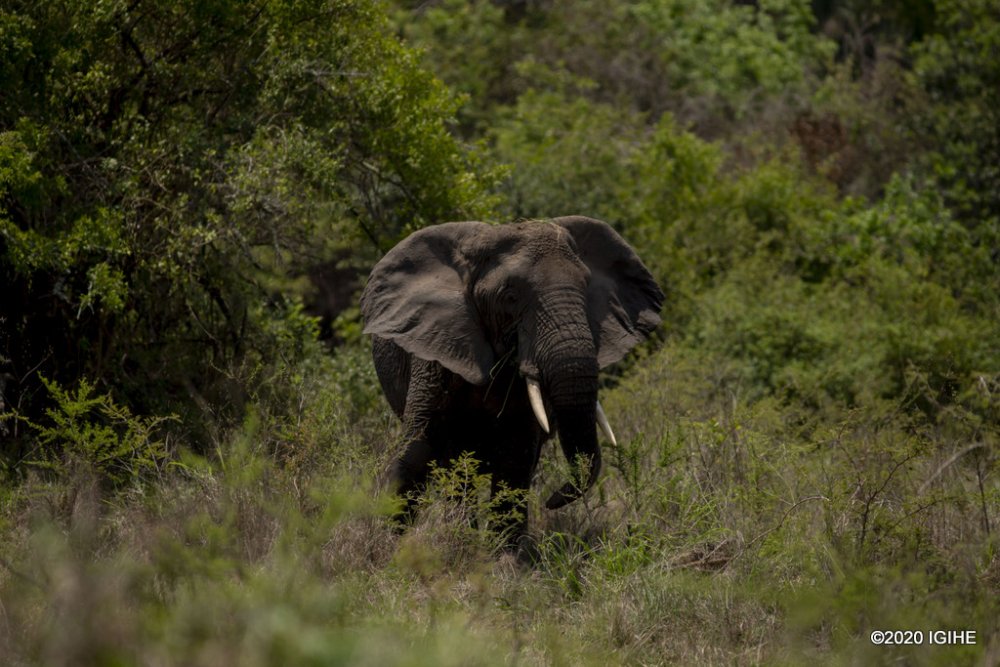
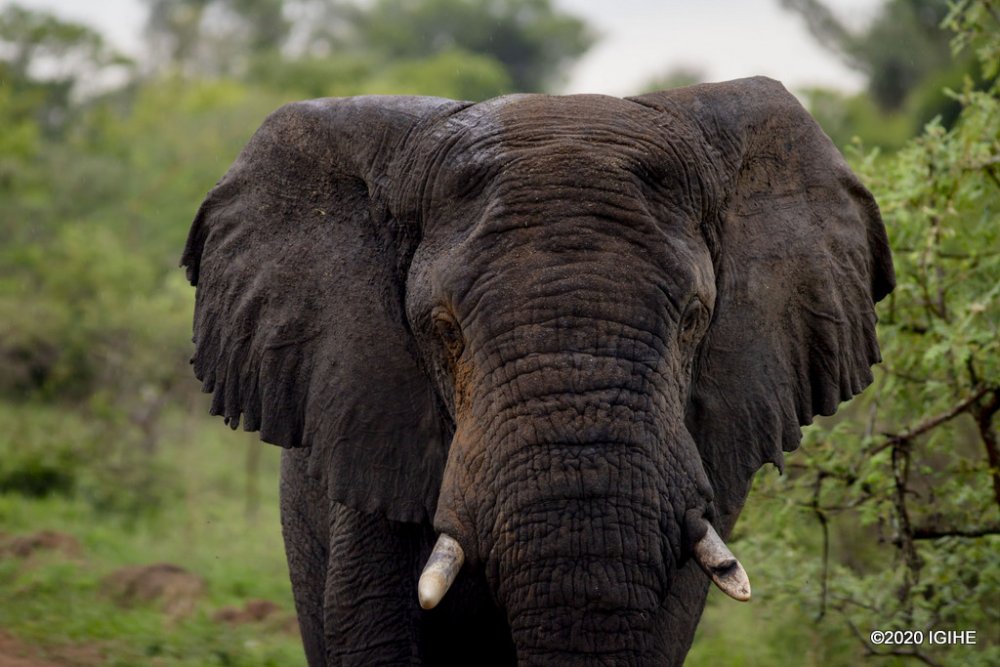
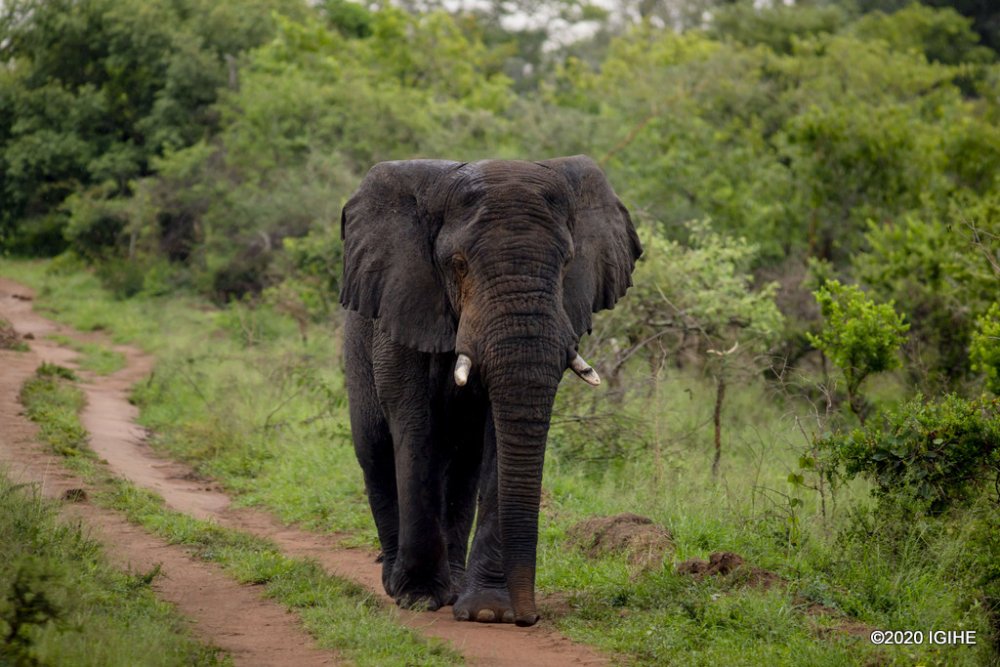
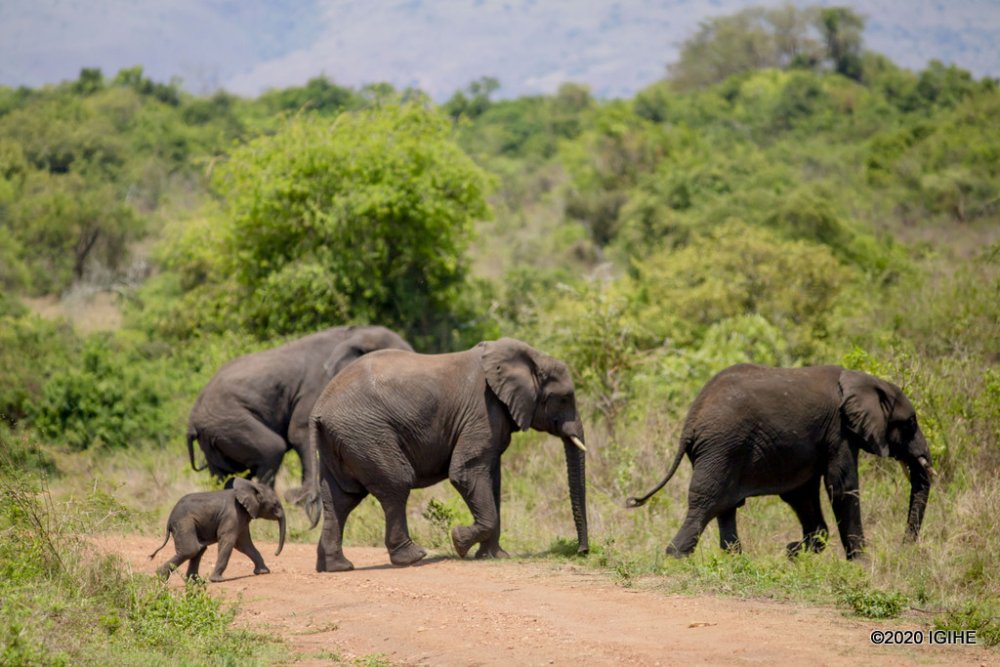
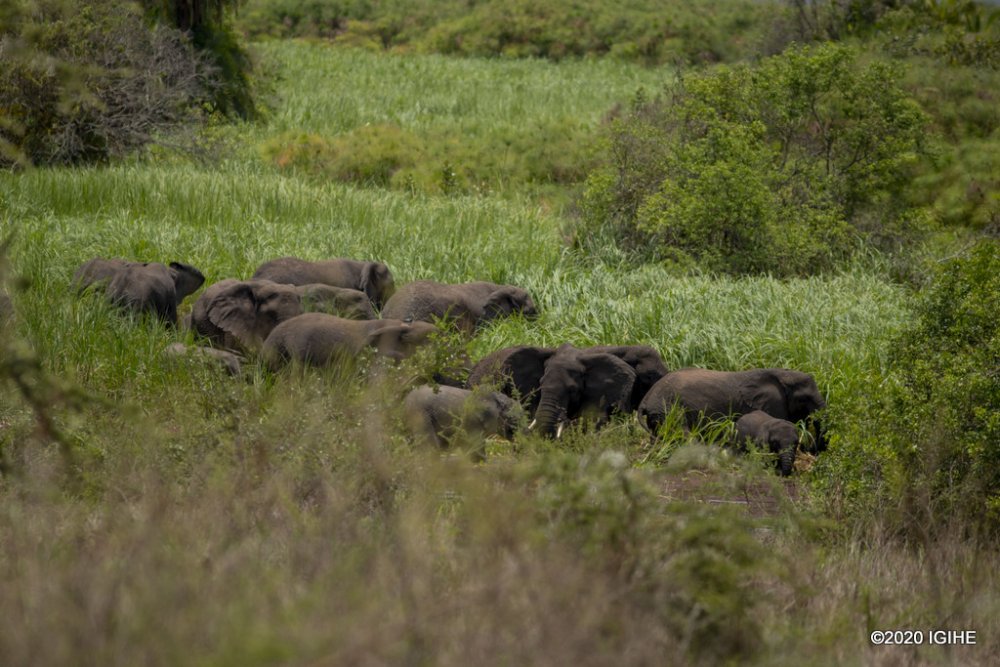
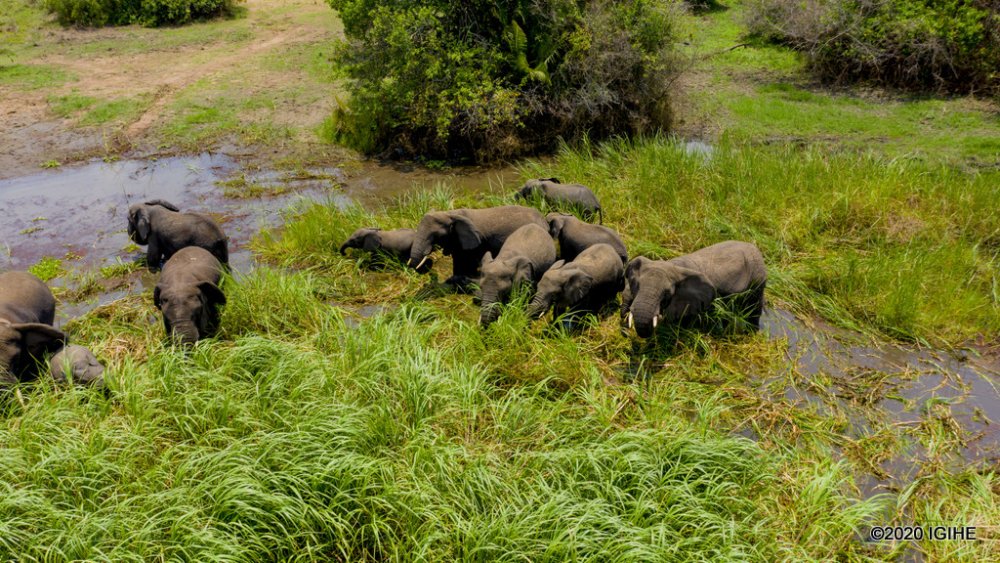
Akagera's elephants live in two large family groups, each led by the oldest female, known as the matriarch.
According to Munyaneza, adult males spend much of their time away from the family searching for mates. As a result, females remain with the calves, raising and guiding them.
The matriarch possesses years of accumulated knowledge, including where to find food and water during droughts, how to respond to changing weather conditions and how to avoid danger.
When an elephant family prepares to relocate, the matriarch first dispatches a few males to scout for water and feeding grounds.
Once they locate suitable resources, they communicate back to the herd using infrasound, low-frequency sound waves that humans cannot hear but which elephants can detect over distances of up to 12 kilometres.
This allows the scouting elephants to inform the herd that there is sufficient water and food before the rest of the family, including young calves, begins moving.
The matriarch also coordinates road crossings, signalling when it is safe for the group to proceed.
Bringing plastic into the park can result in a fine
Like other protected areas, Akagera National Park enforces strict rules aimed at protecting wildlife and ensuring visitor safety.
Single-use plastics, including plastic water bottles, disposable plates and similar items, are prohibited inside the park.
Munyaneza explained that discarded plastic prevents rainwater from penetrating the soil and poses a serious threat to wildlife, as animals that ingest plastic often die.
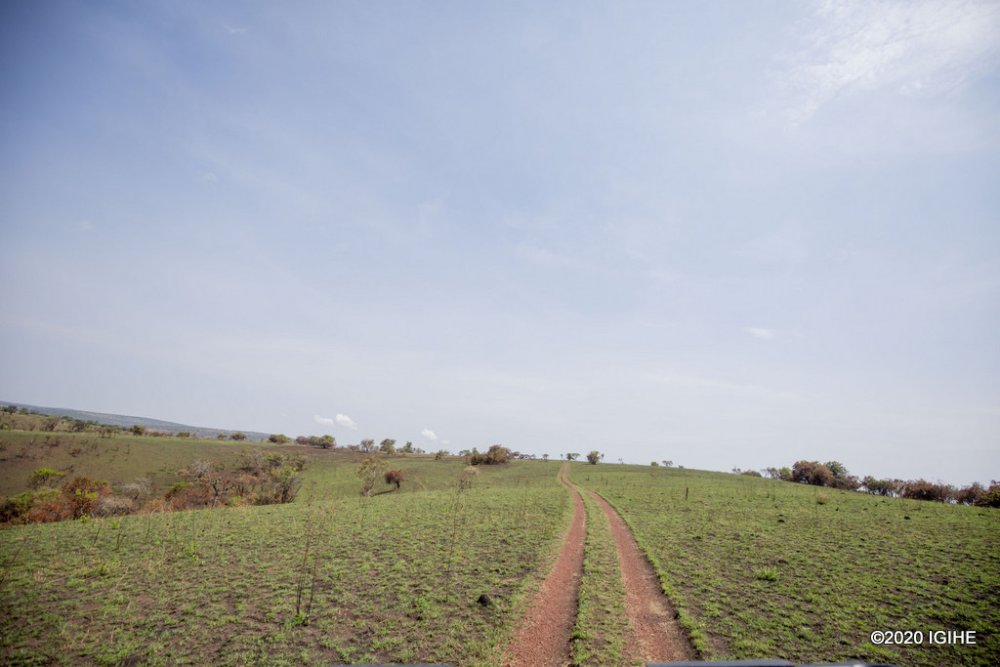
Visitors driving through the park must also remain on designated roads. Leaving the tracks can crush insects, destroy reptile eggs, damage vegetation and disturb fragile habitats. Even driving a short distance off-road can destroy thousands of small organisms that are invisible to the naked eye.
Visitors are also prohibited from approaching animals too closely or disturbing them while resting, as this can frighten wildlife and alter their natural behaviour.
Standing through a vehicle's sunroof or getting out of the vehicle is equally prohibited. Wild animals are unfamiliar with the full silhouette of a standing human and may either flee or react aggressively. Those who violate these regulations risk both their safety and financial penalties.
Munyaneza said visitors found standing outside or on top of their vehicles may be fined $150 (over Frw200,000) for disturbing wildlife and endangering themselves.
Entry fees and accommodation discounts
The cost of visiting Akagera National Park varies depending on the type of experience visitors choose. Some opt for a day trip, while others stay overnight at one of the lodges within the park. A Rwandan citizen pays Rwf15,000 for a standard day visit.
Vehicle entry fees are $10 for a small vehicle and $20 for a larger vehicle, while international visitors pay $100 for park entry.
The park encourages overnight stays by offering reduced entrance fees for additional nights. This helps spread visitor numbers over several days instead of concentrating them into a single day, reducing traffic and disturbance to wildlife.
Visitors staying overnight do not pay the full entrance fee each day. Instead, they only cover accommodation costs and a reduced conservation fee.
According to Munyaneza, visitors pay 100% of the entrance fee on the first night, 50% on the second, 25% on the third, while stays from the fourth to the seventh night receive free park entry. Established in 1934, Akagera National Park covers approximately 112,000 hectares.
Today, it employs 316 permanent staff and about 512 seasonal workers, reflecting its growing role in both conservation and Rwanda's tourism industry.
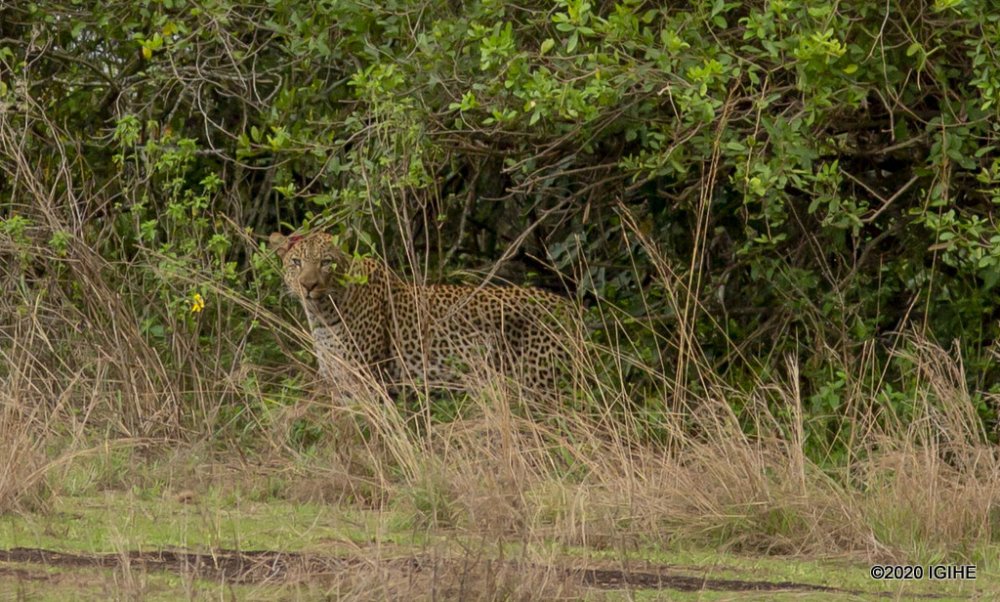
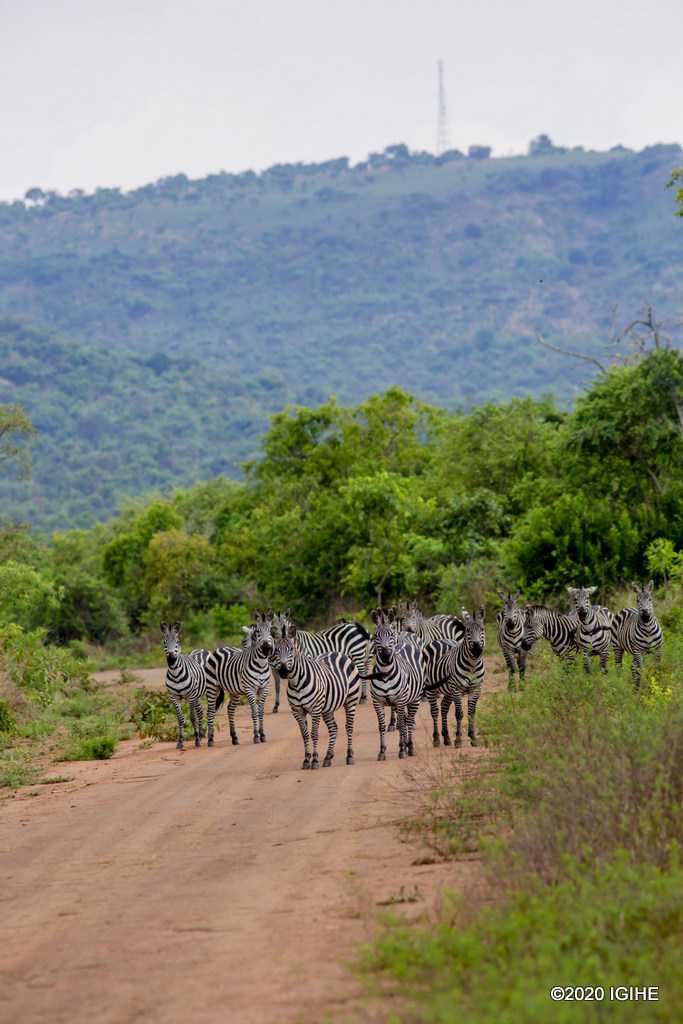
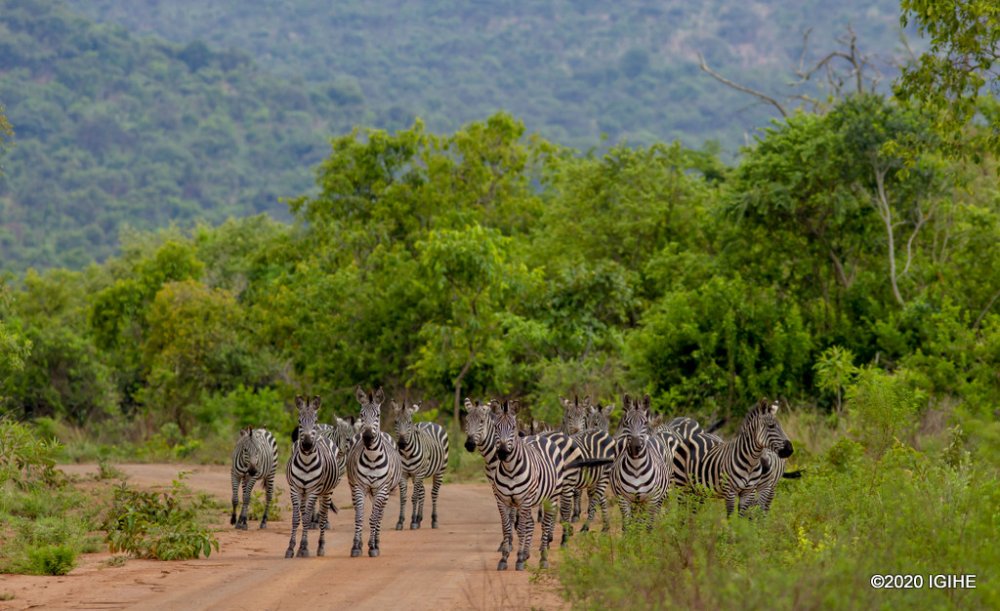
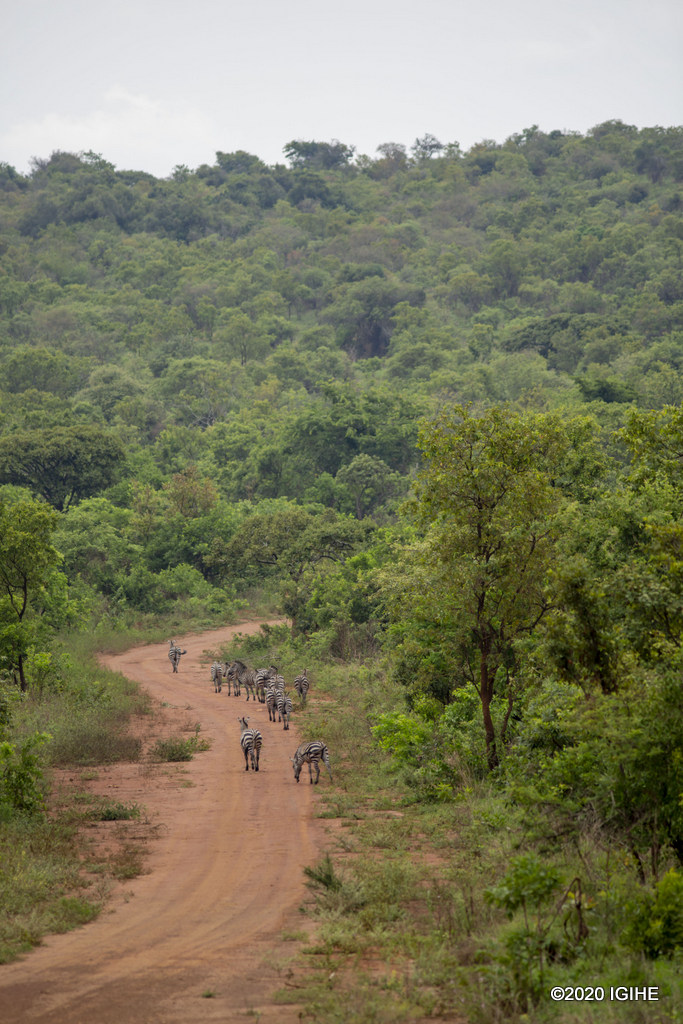
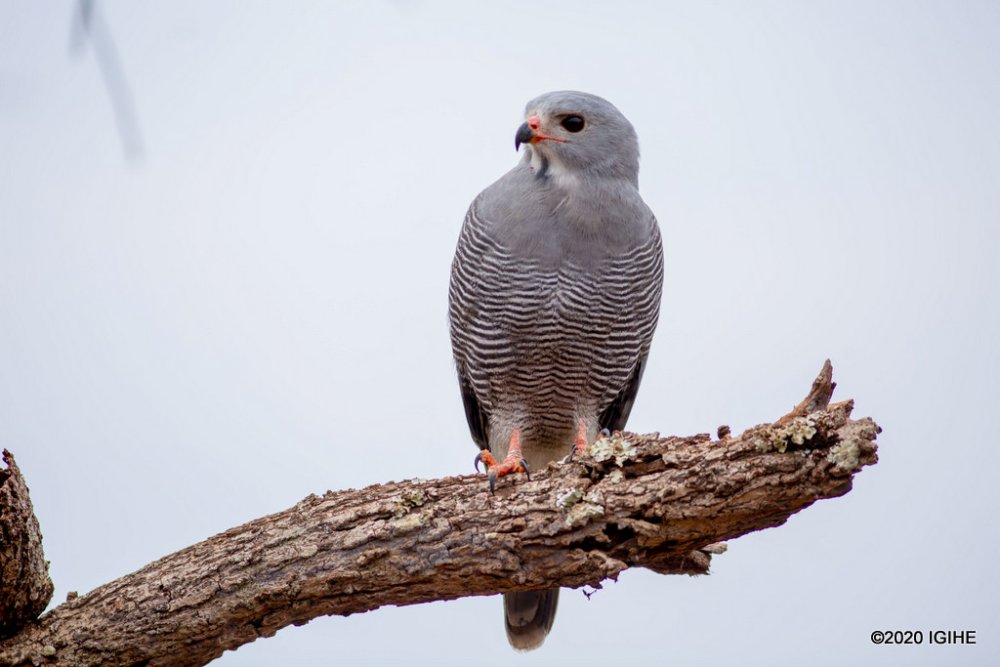
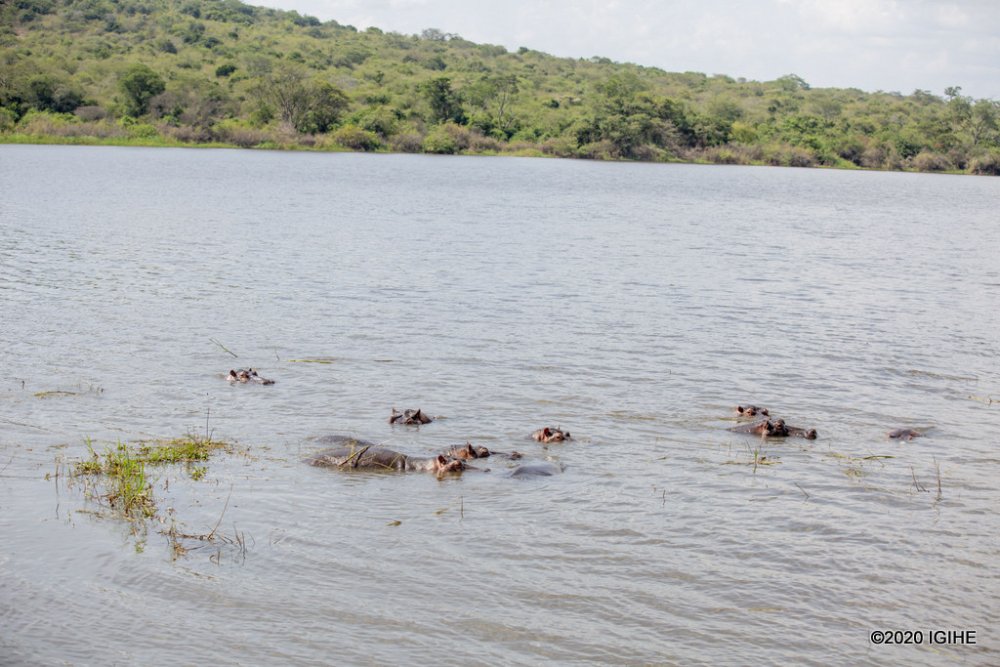
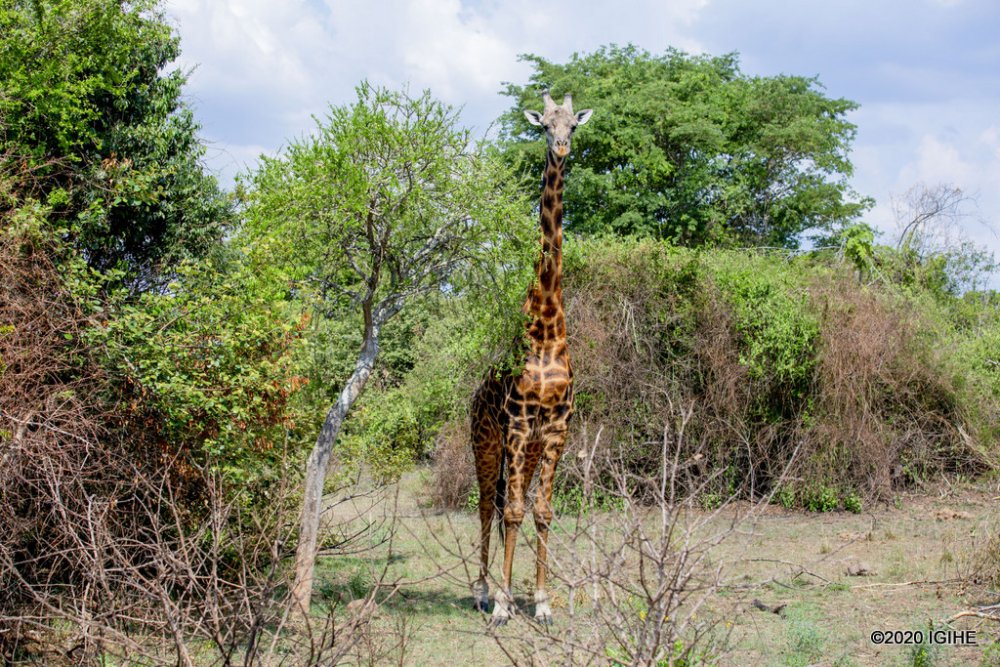
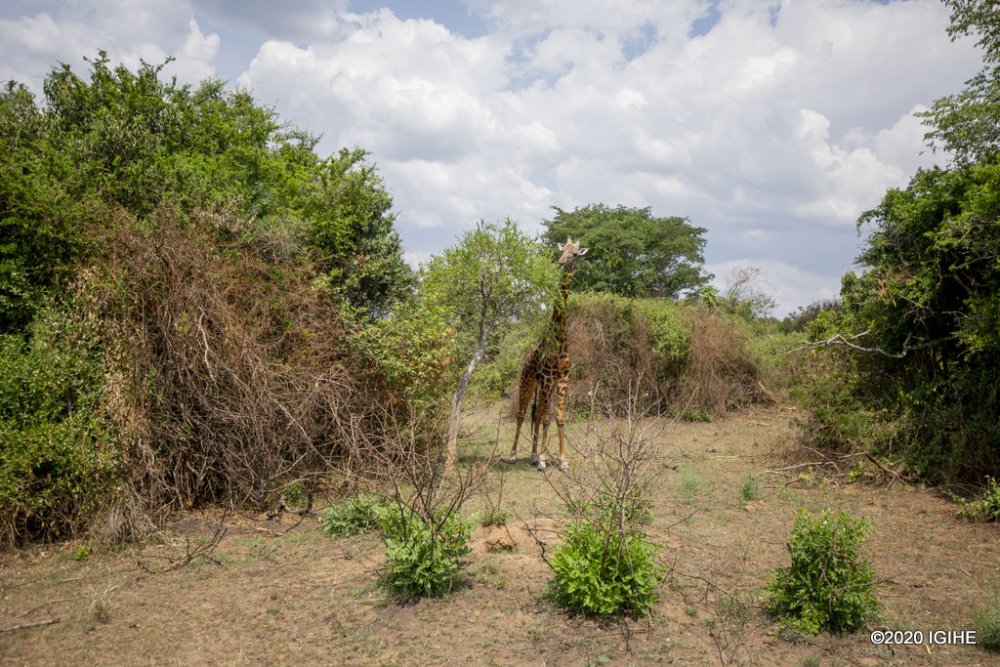
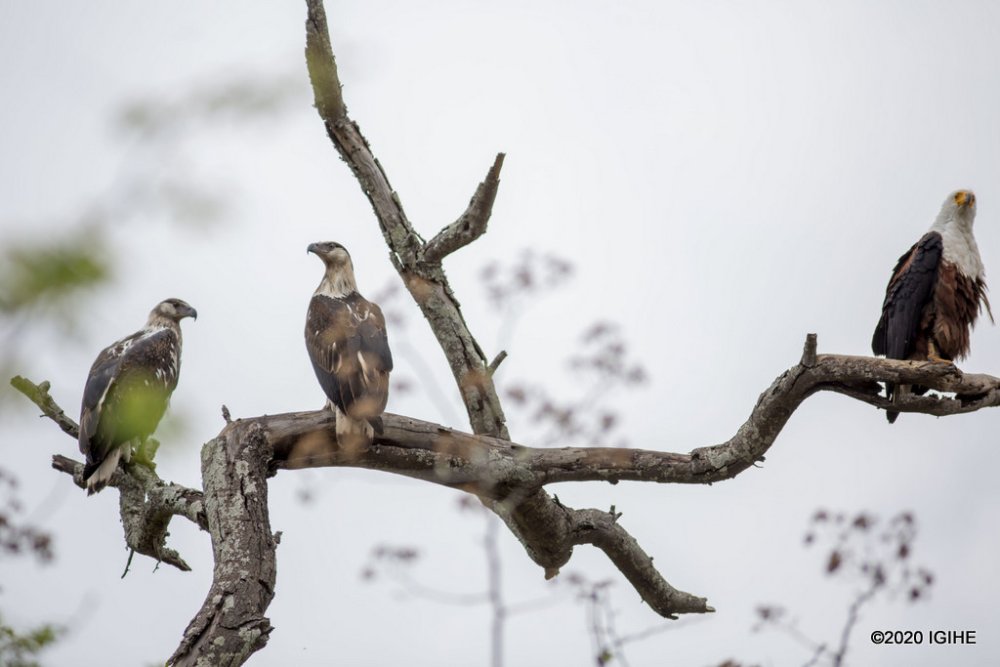
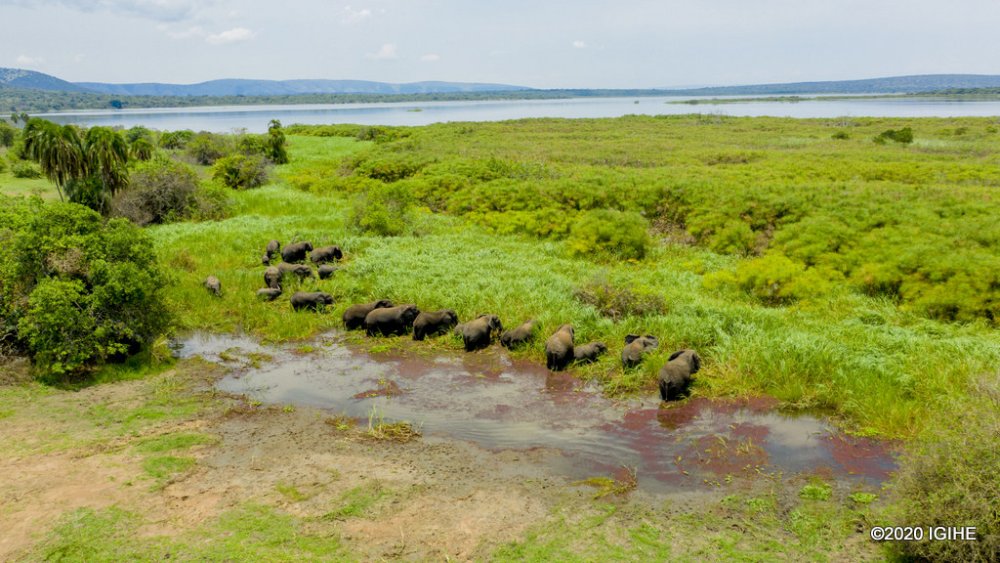
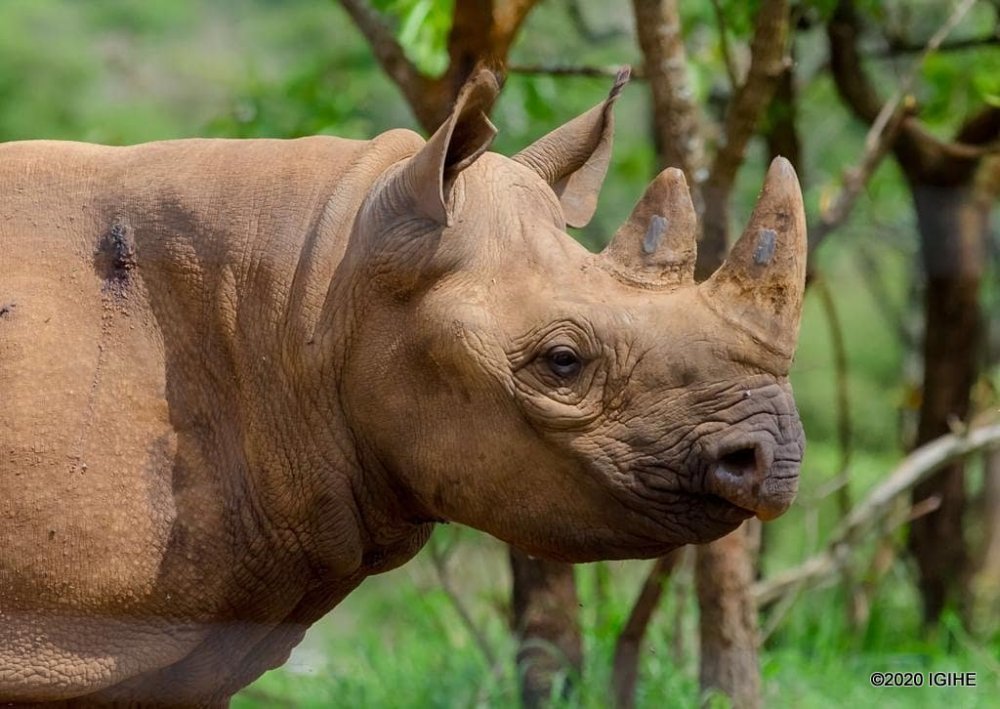
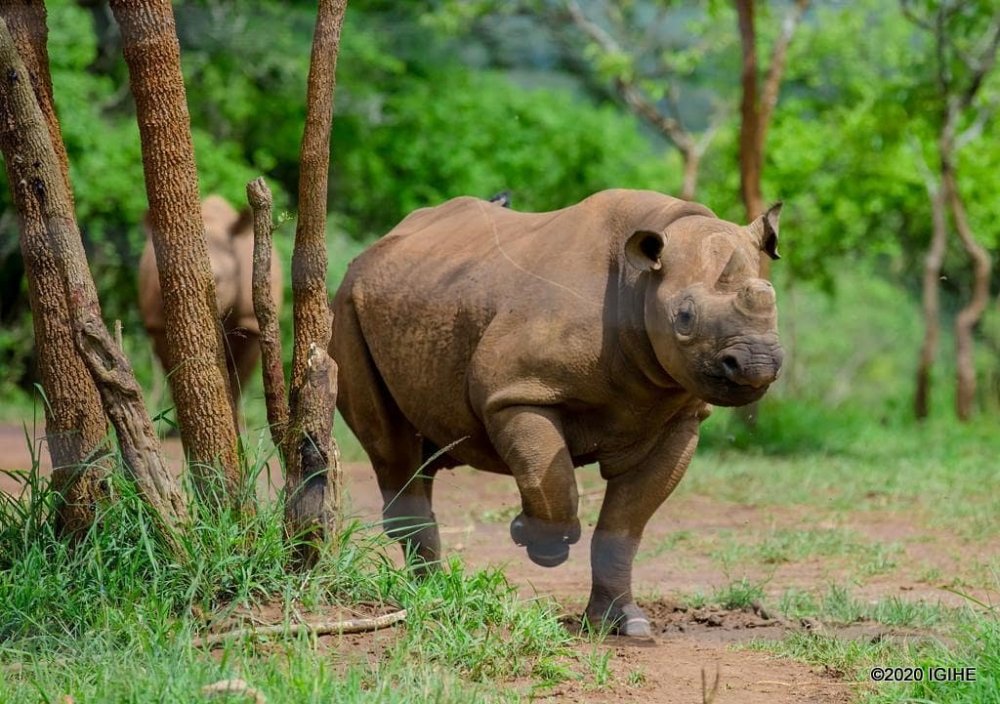
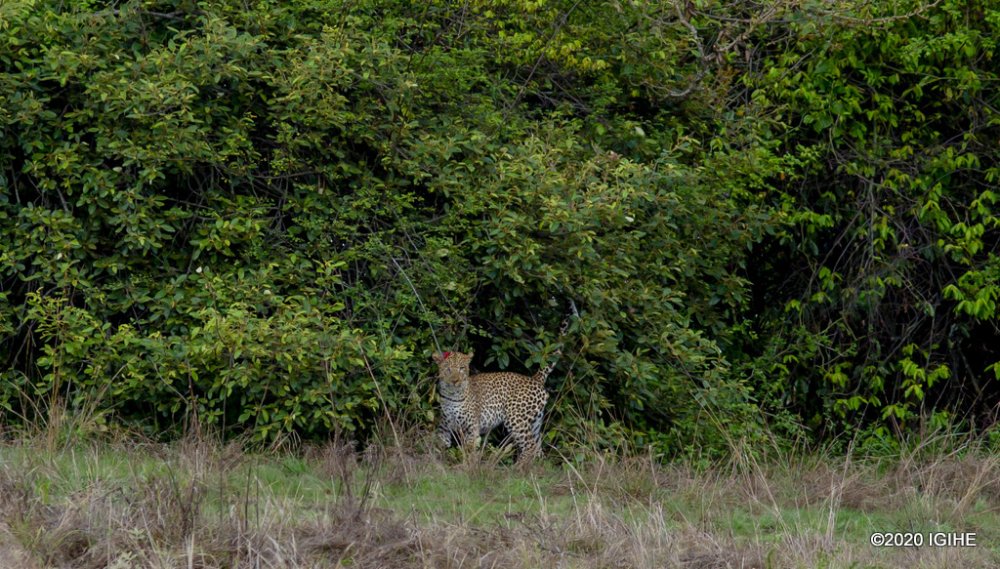
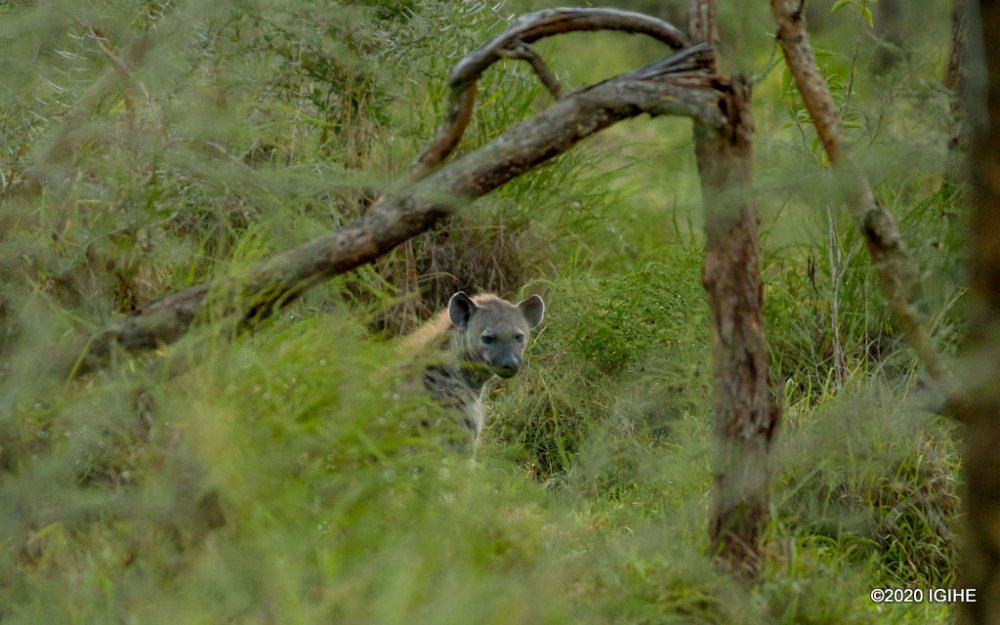
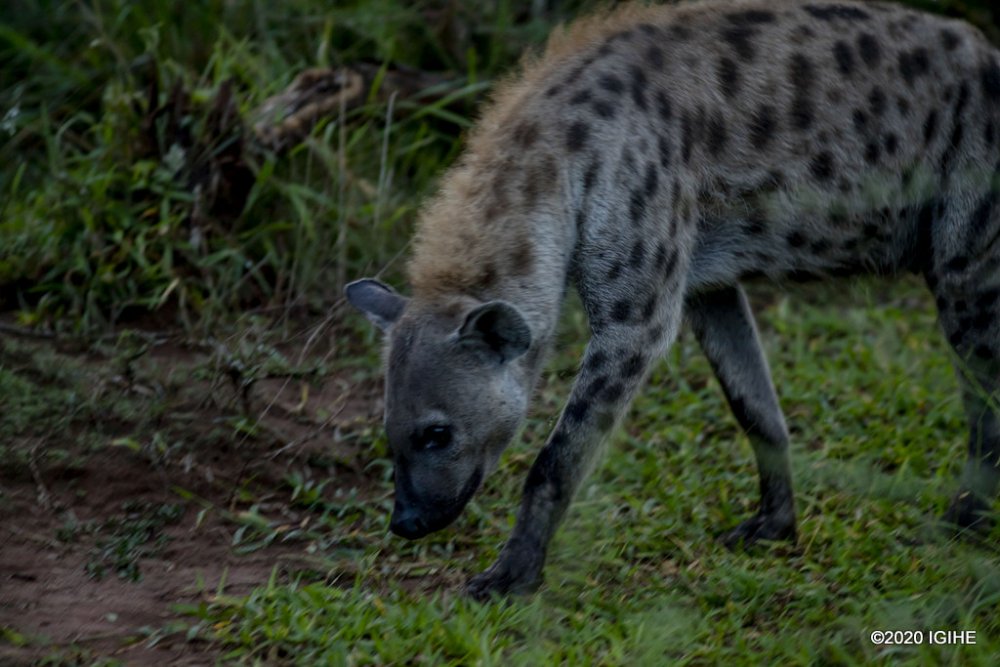
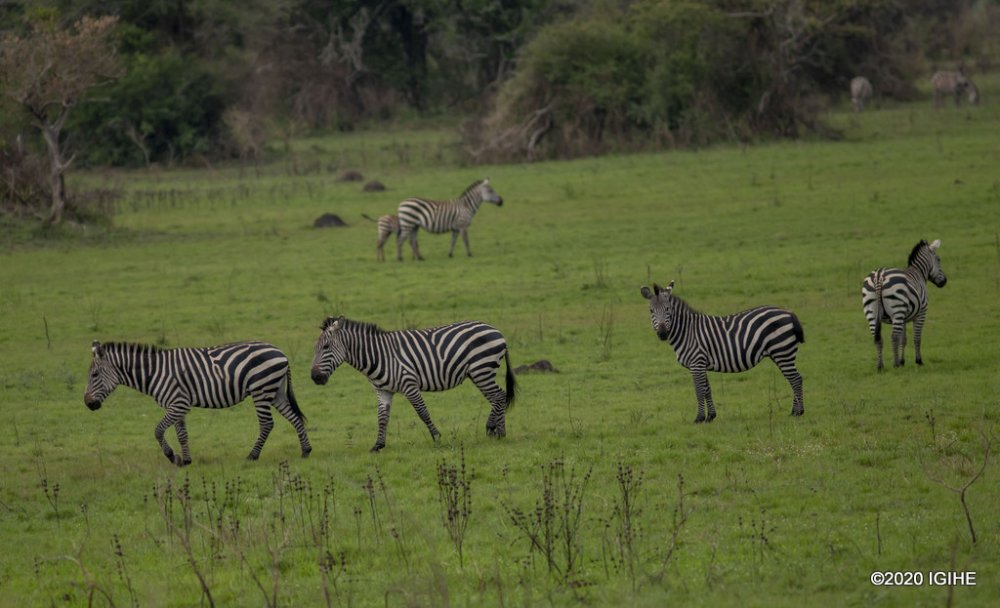
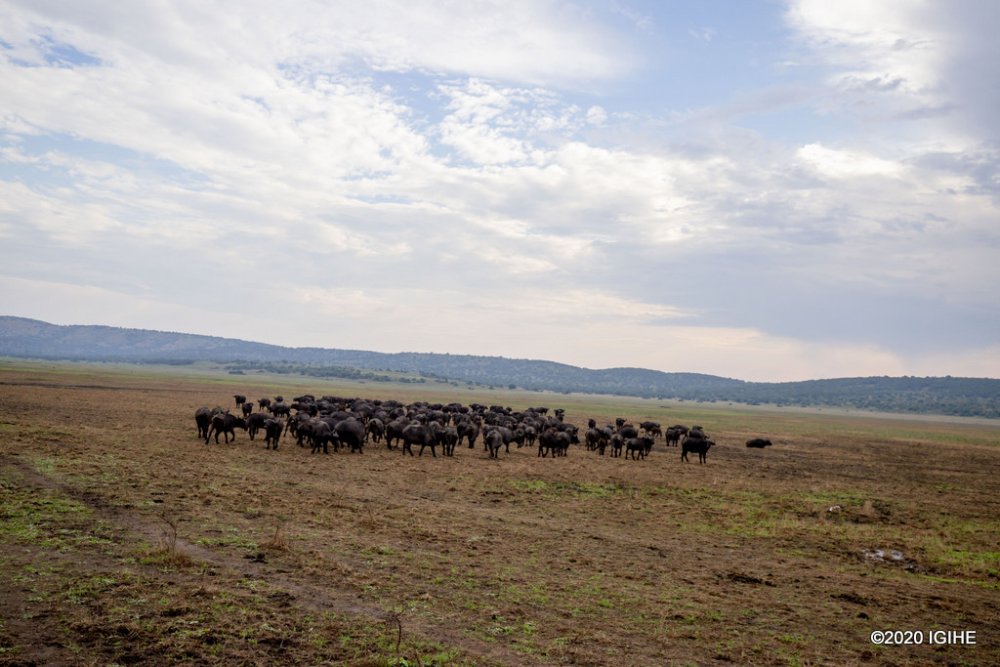
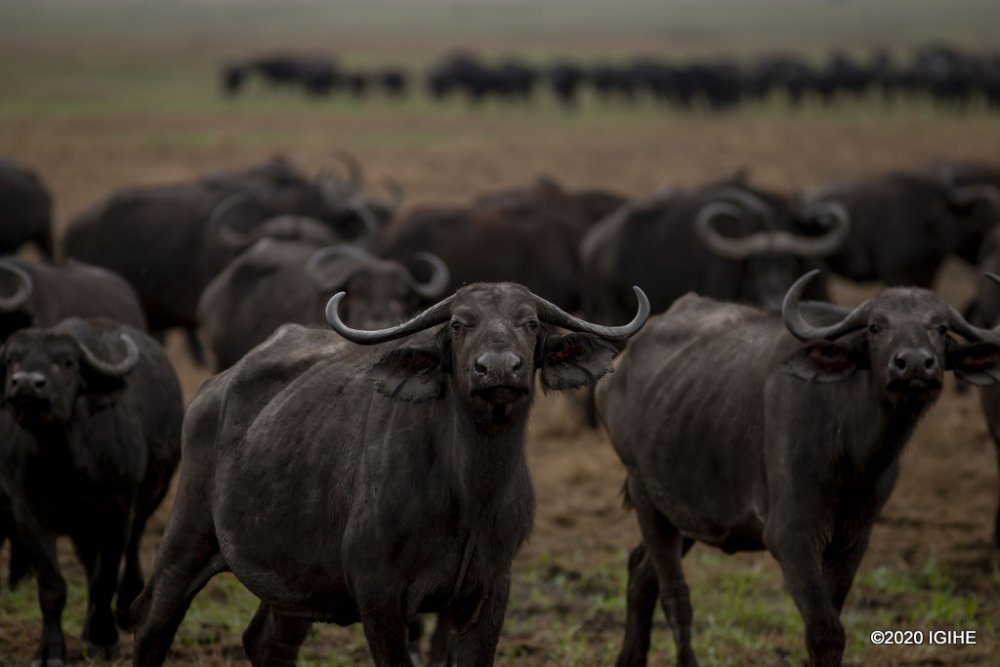
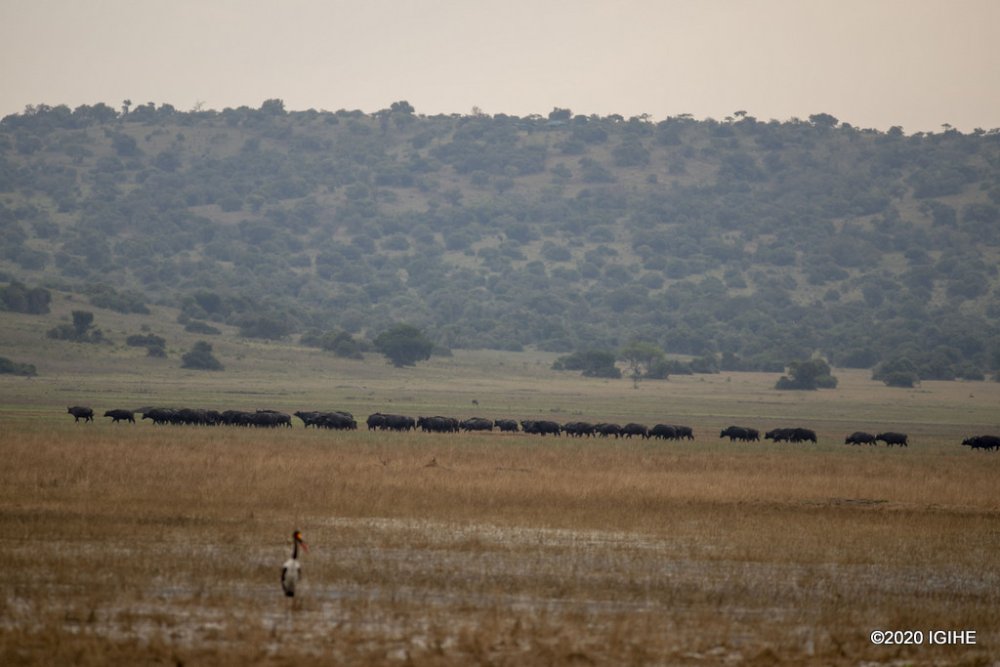
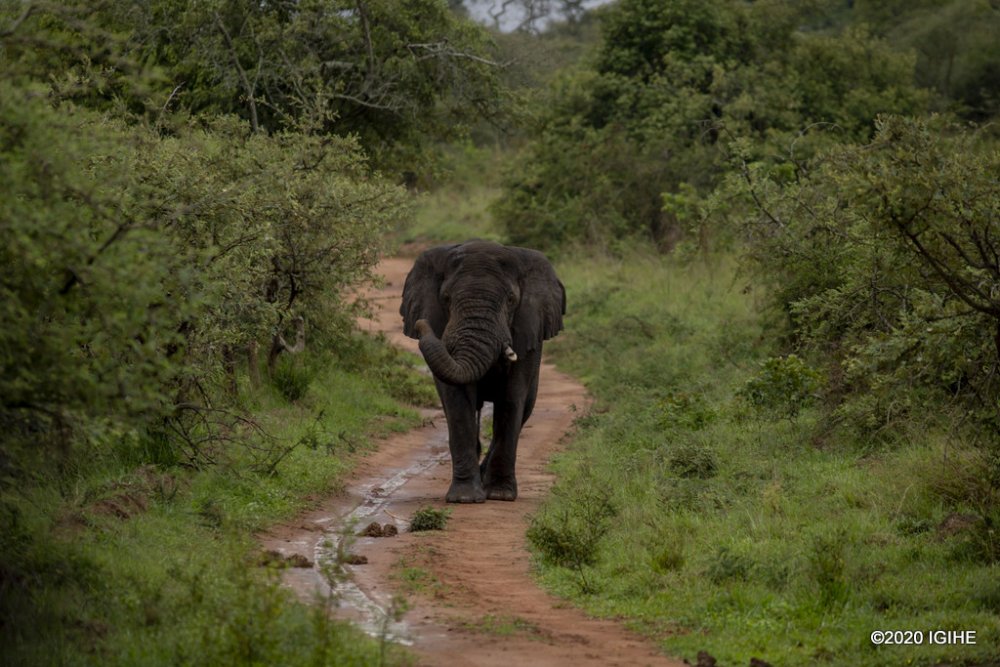
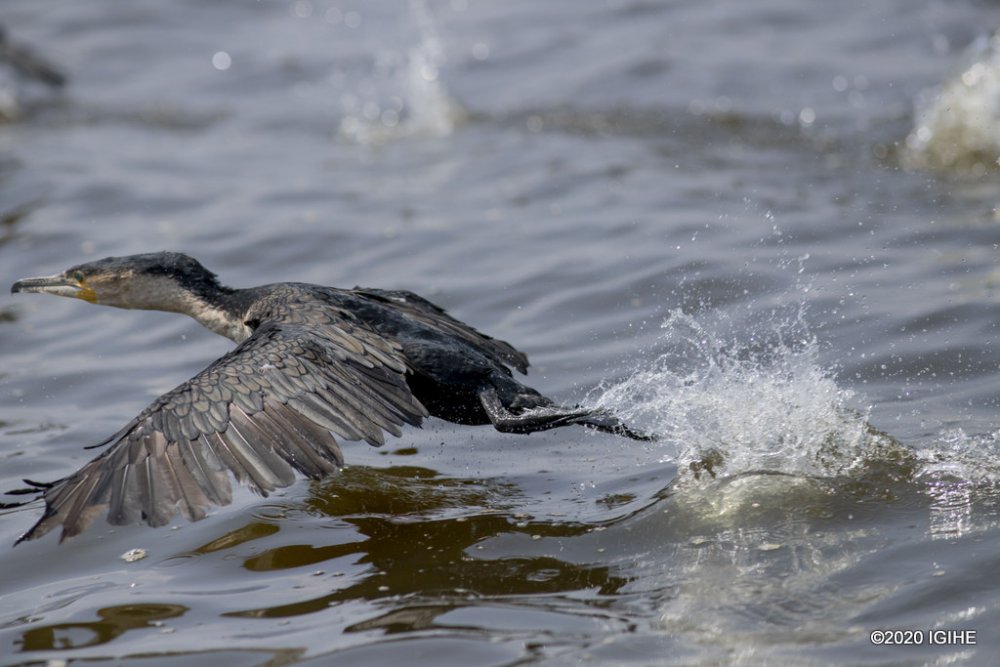
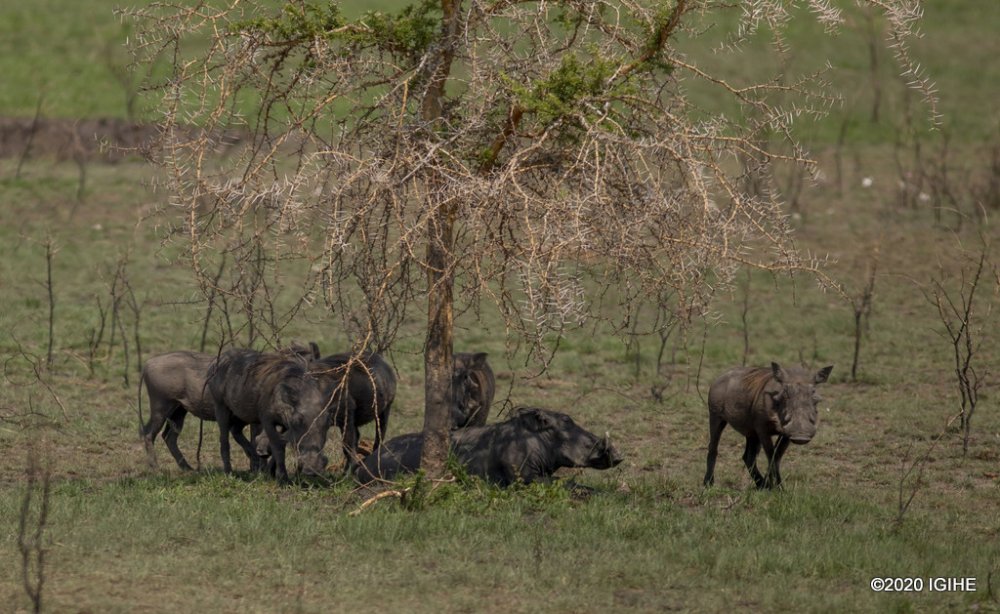
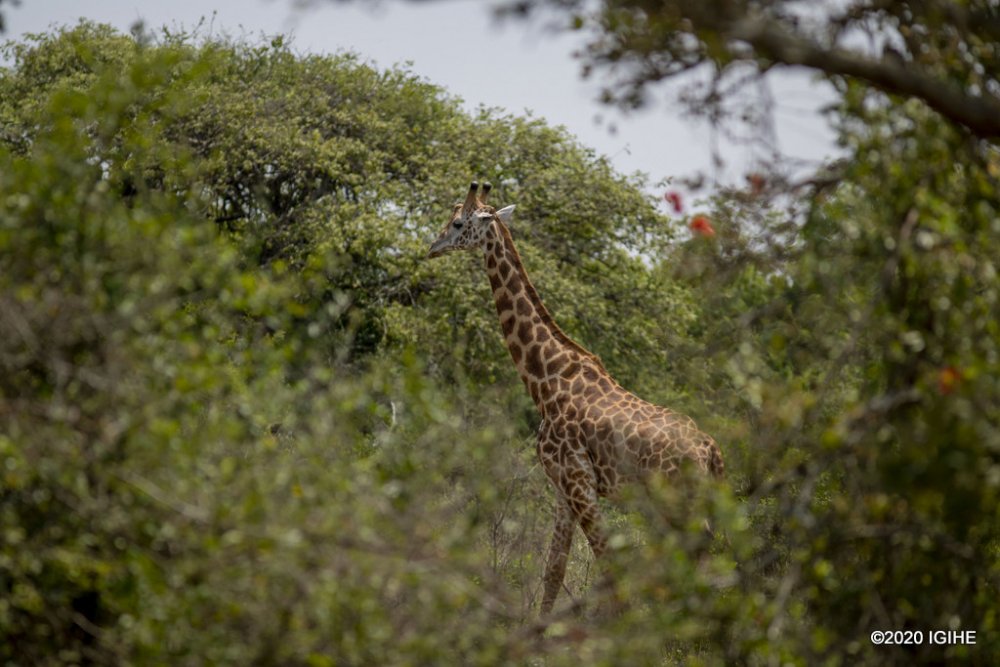
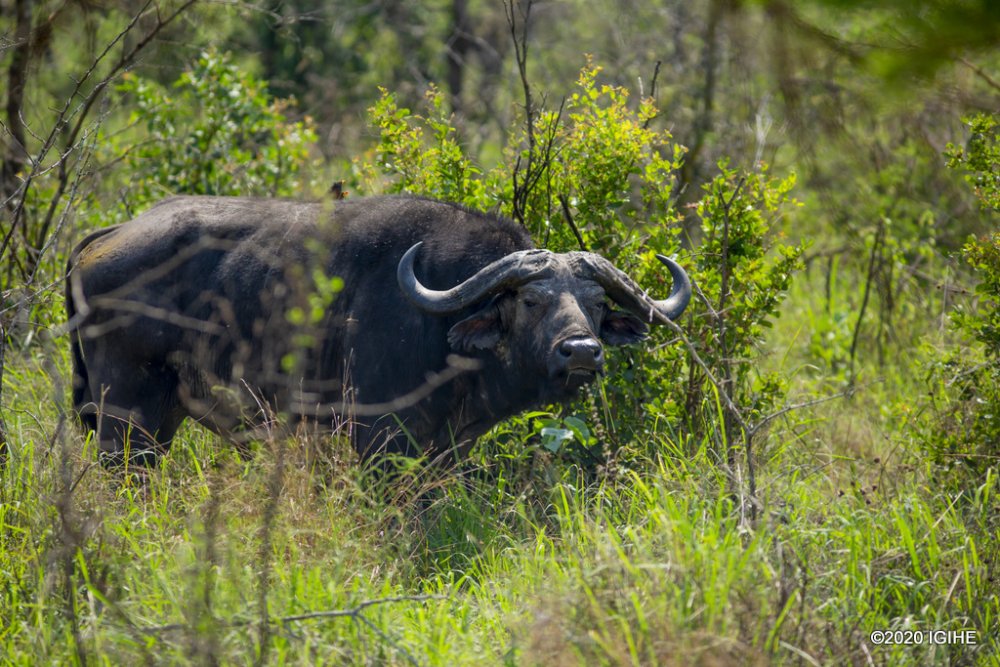
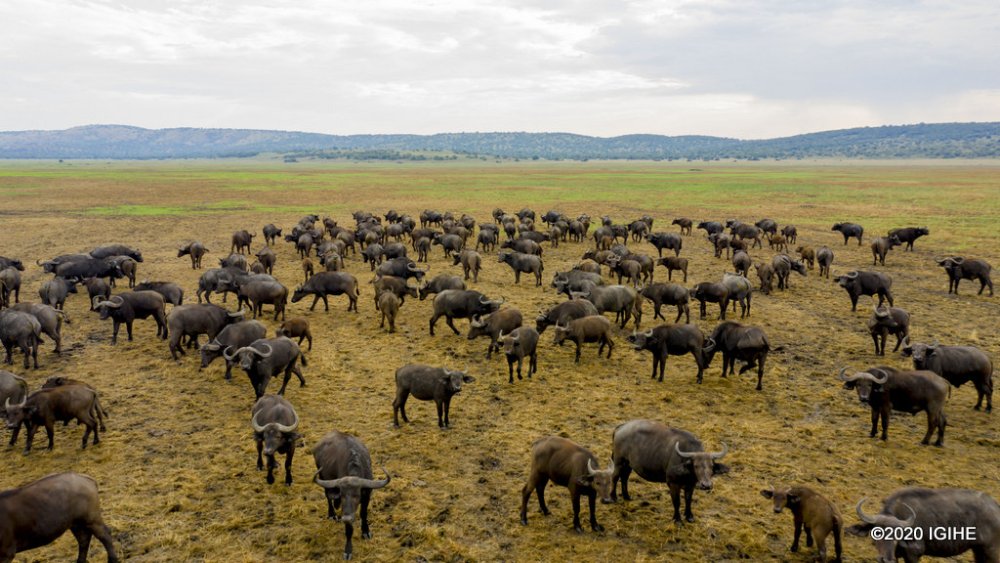
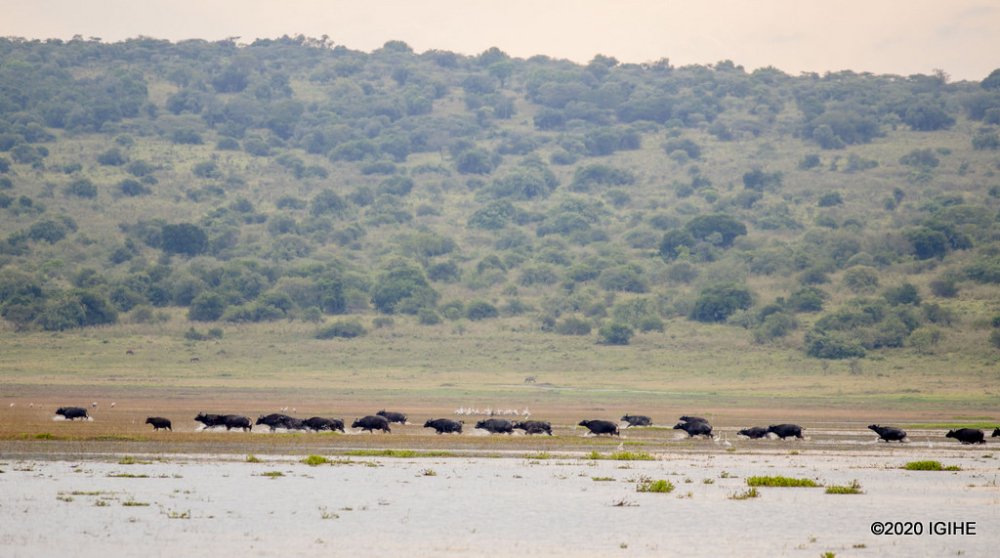
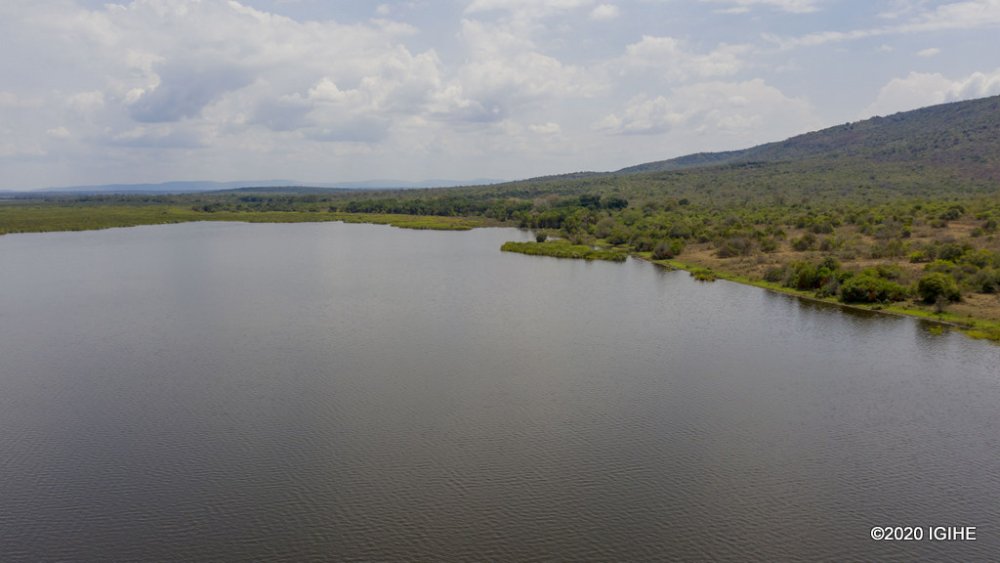
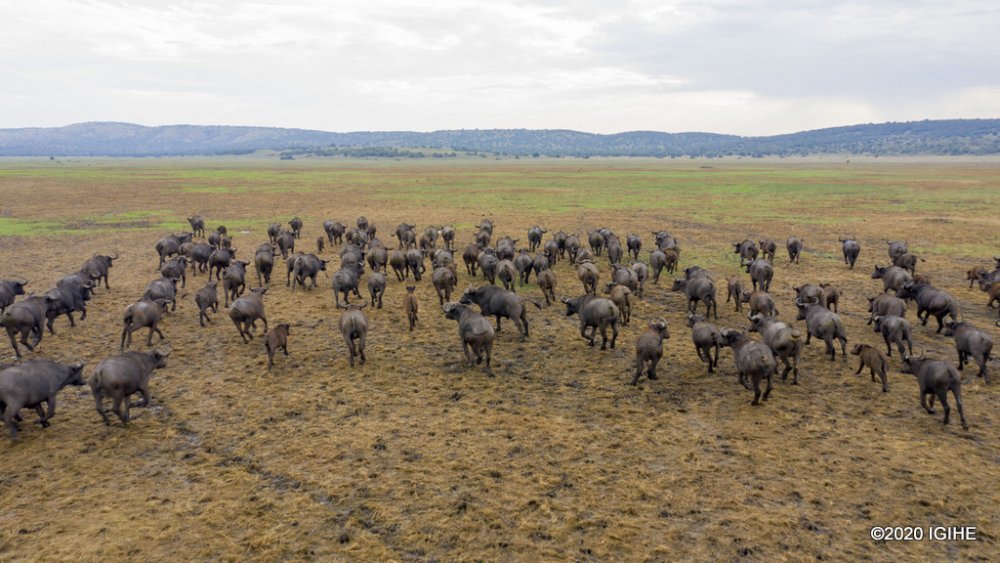
A hippopotamus has large, powerful teeth.Elephants have a remarkable ability to remember.One of the bird species found in Akagera, known as the Black-headed Gonolek.Old buffaloes often move alone.A hippo that left the water to graze on land.A leopard should not be approached carelessly, although spotting one is already a rare experience.Bush pigs, sometimes mistaken by some people pigs, are also found in Akagera National Park.Rhinos are strong animals with a horn on their nose, which they use for defence and fighting.Crocodiles are often hiddenHippos are powerful aquatic animals, although they also come out of the water to graze on land.Hyenas are often spotted in the evening.Without knowing it, one could mistake a buffalo for an unusual-looking cow.Akagera National Park is made up of plains, low hills and lakes.Elephants are among the most respected animals in the park.Elephants crossing the road, with their calf following behind.In the park, all wildlife moves freely, whether birds in the sky, aquatic animals in water, or land animals.Buffaloes are sometimes found gathered in large herds.A lion is known as the king of the jungle.
The study, led by researchers from the Wellcome Sanger Institute and published in Cancer Discovery, used long-term genetic tracking to understand how chronic blood cancers develop over time.
Researchers focused on myeloproliferative neoplasms (MPNs), a group of rare blood cancers that begin in the bone marrow, where blood cells are produced. These cancers often progress slowly and can remain stable for years before becoming more dangerous.
By analysing DNA from blood cells, scientists created genetic 'family trees' that allowed them to trace how cancerous cell populations evolved.
The research showed that patients whose conditions later became more severe had accumulated additional genetic changes long before doctors could detect major clinical changes.
The team followed 30 patients with chronic blood cancers and examined more than 450 samples through repeated genomic testing.
Some participants were monitored for up to 25 years, providing researchers with a rare long-term view of how these diseases progress.
The findings suggest that future cancer care could use regular genetic monitoring to identify high-risk patients earlier, allowing doctors to provide more personalised treatment and closer follow-up.
Researchers also found that some people who are currently diagnosed with certain blood cancer conditions may not actually have cancer. In patients without common mutations linked to MPNs, genetic patterns appeared more consistent with normal ageing rather than true cancer development.
Scientists say the discovery could help doctors avoid unnecessary treatments for some patients while ensuring that those at greater risk receive early medical attention.
Dr Daniel Leongamornlert, the study's first author, said that combining genome sequencing with long-term medical records helped researchers understand how blood cell populations change over time and why some cancers remain stable while others progress.
The researchers believe that advances in genomic technology could eventually transform how blood cancers are diagnosed, monitored and treated, moving healthcare closer to predicting disease progression before serious symptoms appear.
DNA changes could help predict which blood cancers will become dangerous
President Tshisekedi, on December 11, 2024, addressed both chambers of the Congolese Parliament, accusing Rwanda of repopulating North Kivu by replacing Congolese citizens with foreign nationals.
In an interview with DW, Minister Nduhungirehe expressed surprise at President Tshisekedi’s remarks, calling them dangerous and fueling xenophobia against Congolese Tutsi communities in Eastern DRC.
He questioned the logic behind the claim that Rwandans would leave their peaceful country to settle in North Kivu, a region where security is severely compromised by ongoing armed conflicts and violence from over 200 militia groups, including the FDLR and Wazalendo.
'It doesn’t make any sense to claim that Rwandan citizens would leave a country in peace for a war zone, where civilians are facing daily violence and ethnic persecution by a hundred local militias, including the Wazalendo, and by the FDLR genocidaires, supported by Kinshasa,' he noted.
Minister Nduhungirehe also deemed Tshisekedi’s statements irresponsible, especially on the eve of the Luanda talks scheduled for December 15.
These talks, aimed at addressing the security crisis in eastern DRC and the region, will be led by Angola’s President, who is also serving as the African Union (AU)-appointed mediator.
Both Tshisekedi and Rwanda’s President Paul Kagame are expected to participate in the discussions, with Angola emphasizing the potential for a lasting peace agreement.
Amb. Nduhungirehe clarified that the primary focus of the talks will be to ensure the DRC government is committed to engaging in direct negotiations with the M23, which represents the marginalized Congolese Tutsi community.
According to United Nations reports, over 1.45 million internally displaced persons have returned to North Kivu.
Rwanda has consistently rejected accusations from the DRC that it supports the M23 rebel group, calling such claims unfounded.
Instead, Rwanda has accused the DRC government of collaborating with the FDLR in the ongoing conflict in North Kivu, a group which poses a threat to Rwanda’s security.
Minister Nduhungirehe has rejected Tshisekedi’s claims of repopulating eastern DRC with Rwandans.
President Tshisekedi, on December 11, 2024, addressed both chambers of the Congolese Parliament, accusing Rwanda of repopulating North Kivu by replacing Congolese citizens with foreign nationals.
On a monthly basis, the general PPI rose 0.4 percent between May and June 2026.
The report, which tracks prices received by domestic producers across mining, manufacturing, and utilities, showed divergent trends between goods sold locally and those destined for export. The local PPI increased 20.6 percent year-on-year and 0.8 percent month-on-month, while the export PPI rose 29.2 percent annually but fell 3.3 percent from May to June.
Mining leads the surge
Mining and quarrying prices jumped 76.5 percent year-on-year and 2.9 percent month-on-month, making it the single largest driver of the overall increase despite accounting for only a small share of the general index by weight. In the export index, where mining carries a much larger weighting, the sector's growth was the dominant factor behind the annual gain.
A split picture for manufacturers
Manufacturing prices told two different stories depending on the market. For goods sold locally, manufacturing prices rose 19.3 percent year-on-year and 0.9 percent month-on-month, with beverages up 31.9 percent and food products up 20.3 percent over the year. Textiles were the exception, falling 7.2 percent annually.
For exporters, manufacturing prices moved in the opposite direction, falling 12.3 percent year-on-year and 9.8 percent month-on-month, with export food products down 15.2 percent annually.
Electricity, gas, steam and air conditioning supply prices rose 34.8 percent year-on-year, though they were unchanged on a monthly basis. Water supply and sewerage prices were flat both annually and monthly.
Why it matters
The Producer Price Index tracks the prices businesses receive for their goods before they reach consumers. Higher producer prices can eventually lead to higher prices for shoppers if companies pass on the extra costs.
The PPI is compiled using a monthly chained Laspeyres-type formula, with prices collected at the factory gate around the midpoint of each month. Weights are based on the value of output reported in the 2024 National Accounts.
Producer prices in Rwanda climbed 22.3 percent in June 2026 compared to the same month last year, driven largely by a sharp surge in mining prices, according to the latest Producer Price Index (PPI) report released by the National Institute of Statistics of Rwanda (NISR).
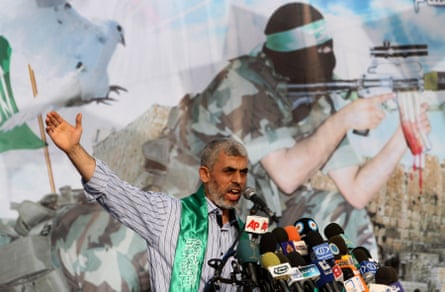
Yahya Sinwar, the Hamas leader who masterminded the 7 October attack on Israel that triggered the war in Gaza, has been killed by Israeli forces, Israel's foreign minister has said, ending a year-long hunt.
Katz confirmed reports on Thursday in a statement sent to counterparts around the world. The Israel Defense Forces (IDF) said almost immediately after Katz's statement was reported by Israeli media that Sinwar had been 'eliminated'.
His death represents a major boost to the Israeli military and the Israeli prime minister, Benjamin Netanyahu, after a string of high-profile assassinations of prominent leaders of its enemies in recent months.
The IDF said on Thursday afternoon it was checking whether Sinwar was one of three militants killed during a patrol in an unidentified area of Gaza, but that their identities could not yet be confirmed. By Thursday evening, it confirmed he had been 'eliminated', reportedly in Tel Sultan, a neighbourhood of Gaza's southernmost town, Rafah, on Wednesday.
The bodies were found by troops and taken to Israel for DNA and dental record testing.
Israel's Kan Radio reported that the Hamas leader had been killed 'by chance', and not as a result of intelligence gathering. The station also said the bodies were found with cash and fake IDs.
Graphic photos and video from the scene, broadcast on Israeli media, showed what appeared to be Sinwar's body, wearing fatigues, with a severe head injury, lying on a pile of rubble on the floor of a destroyed building.
Israel's Channel 12 reported that an infantry battalion, operating with a tank unit, had identified a group of men running into a building. The forces opened fire using tank shells, and the bodies were buried under the rubble.
It is not yet clear what impact Sinwar's killing would have on Israel's campaign in Gaza. Most analysts believe that Israel is now intent on a military occupation of the Strip for the foreseeable future.
It has long been believed that Sinwar had surrounded himself with Israeli hostages to lessen the likelihood of being killed. However, in a statement, the prime minister's office said that no hostages were believed to have been present.
Without citing a source, Israel's Channel 12 reported that Sinwar had been hiding with the six hostages whose bodies were recovered by the IDF in August after they were killed by their captors as Israeli troops approached.
Israel has spared no resources in its year-long hunt for Sinwar, engaging a taskforce of intelligence officers, special operation units, military engineers and surveillance experts under the umbrella of the Israeli Security Agency. Yet, in the end, he appears to have been killed by regular troops on patrol.
Sinwar considered himself an expert on Israel's military and politics. He spoke perfect Hebrew, learned during more than 20 years in Israeli prisons, and was the driving force behind Hamas's strategy of the past few years: to lull Israel into thinking the group had been deterred from fighting, before launching the surprise attack in which 1,200 people were killed and another 250 taken hostage.
Various western and Israeli intelligence assessments over the past year have suggested that Sinwar has long shunned electronic communication, relying on a network of couriers to communicate with the outside world from Hamas's vast network of tunnels beneath the Gaza Strip.
Those reports also said Sinwar had become 'fatalistic' after 12 months of intense warfare in which 42,000 Palestinians have been killed, believing he would die, but still hoping to ensnare Israel in a regional battle with Iran and allied groups around the Middle East, such as Lebanon's Hezbollah. It is unknown whether he thought or knew that the 7 October attack would trigger such a massive Israeli response.
Sinwar, 61, was born in the Khan Younis refugee camp in southern Gaza and grew up in poverty before studying at the Islamic University of Gaza, where he received a bachelor's degree in Arabic Studies.
Among his childhood friends were Mohammed Deif, Hamas's military chief, whom Israel claimed to have killed in an airstrike three months ago, and Mohammed Dahlan, an influential member of the secular Fatah party now living in exile in the UAE.
Sinwar joined Hamas at an early age, soon after the group's founding, spending much of his youth in and out of Israeli prison. He rose through the ranks as an infamous enforcer, in charge of finding and killing suspected Palestinian collaborators with Israel, and was instrumental in building the group's military capabilities.
In 1989, he was sentenced to four life sentences for the abduction and killing of two Israeli soldiers and four Palestinians he suspected of collaboration. He served 22 years, becoming a respected prison leader, and was treated for brain cancer in 2008.
Sinwar was released in the 2011 prisoner exchange in which Israeli soldier Gilad Shalit was returned for 1,000 Palestinians. He married on his return to Gaza and had three children.
The former prisoner was elected by other Hamas members in a secret ballot as Hamas's chief in Gaza in 2017, surviving several Israeli assassination attempts: famously, after the 2021 war between Hamas and Israel, he posed for photographs, grinning, on an armchair amid the ruins of his house. Unlike some senior Hamas leaders, he has never wavered from a belief that armed struggle is the only way to force the creation of a Palestinian state.
Israel said it came close to capturing or killing Sinwar in January, when it found DNA evidence of his presence in a bunker beneath Khan Younis, including clothing and more than 1m shekels (more than £200,000) in wads of banknotes. He was estimated to have left a few days before Israeli forces raided the bunker.
Israeli officials have suggested before that Sinwar has been killed, particularly after long stretches in which the leader went incommunicado. Last week, he reportedly made contact with Hamas members in Qatar after another period of silence.
In a statement, Israel's Hostage Families Forum said: 'The Forum commends the security forces for eliminating Sinwar, who masterminded the greatest massacre our country has ever faced, responsible for the murder of thousands and the abduction of hundreds.
'However, we express deep concern for the fate of the 101 men, women, elderly and children still held captive by Hamas. We call on the Israeli government, world leaders, and mediating countries to leverage the military achievement into a diplomatic one.'
The prosecutor's office of the international criminal court in The Hague announced it was seeking arrest warrants for Sinwar, Deif and Haniyeh in May. All three men are now believed to have been killed.
For months, frustrated American officials looking to end the war in Gaza have mused quietly about the one scenario they believed could loosen deadlocked ceasefire talks: the death of Hamas leader Yahya Sinwar, believed to be hiding deep underneath Gaza in the group's network of tunnels.
Whether that is what transpires over the coming days remains an open question.
Despite all the unknowns, the moment was viewed inside the White House and across President Joe Biden's administration as a momentous one.
Sinwar's killing has the potential to transform a conflict that long ago became a drag on Biden's political fortunes â” and by extension Vice President Kamala Harris's campaign.
Even with Sinwar's death, there is virtually no expectation the wider Middle East conflict will be resolved before Election Day on November 5, particularly as Israel prepares to retaliate against Iran's ballistic missile attack from earlier this month. For many voters, negative views of the conflict have hardened after a year of fighting. Yet any development that could allow for a lowering of the regional temperatures would be welcome, both inside the White House and at Harris' campaign headquarters.
In the end, after a year-long, multi-agency manhunt involving the latest technology, Israel's best special forces and American assistance, Yahya Sinwar appears to have been killed by regular soldiers who had stumbled into him and had no idea whom they had killed.
According to the initial reports, they were not there on an assassination operation and had no prior intelligence that they could be in the vicinity of the elusive Hamas leader, architect of the 7 October attacks, the man Israel most wanted to kill. It was only after they took a closer look at his face and found identity documents on him that the troops realised they had got Sinwar.
Along the way, Israel Defense Forces (IDF) have smashed much of Gaza and are estimated to have killed more than 42,000 Palestinians, driving two million from their homes, a humanitarian disaster Sinwar set in motion with the sheer brutality of the initial surprise assault a year ago, killing 1,200 Israelis and taking 250 hostage.
Sinwar's last reported sighting had been just a few days after the 7 October attack, when he appeared out of the subterranean gloom in a Gaza tunnel when a group of hostages were been held.
In fluent Hebrew, perfected over more than 22 years in an Israeli prison, Sinwar reassured them that they were safe and would soon be exchanged for Palestinian prisoners. One of the hostages, Yocheved Lifshitz, an 85-year-old veteran peace campaigner from the Nir Oz kibbutz, had no time for his show of concern for their welfare and challenged the Hamas leader to his face.
'I asked him how he wasn't ashamed to do something like this to people who had supported peace all these years?' Lifshitz told the Davar newspaper after her release following 16 days in captivity. 'He didn't answer. He was quiet.'
A video recorded on Hamas security cameras at about the same time, on 10 October, and found by the Israeli military some months later, shows Sinwar following his wife and three children through a narrow tunnel and disappearing into the murk.
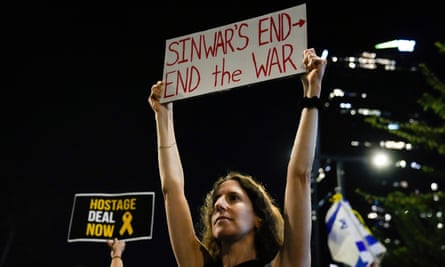
Protesters in Tel Aviv on Thursday call for a ceasefire deal and the immediate release of hostages held by Hamas. Photograph: Ariel Schalit/AP
The ferocious manhunt that ensued involved a mix of advanced technology and brute force, as his pursuers have shown themselves prepared to go to any lengths, including causing extremely high civilian casualties, to kill the Hamas leader and destroy the tight circle around him.
The hunters were a taskforce of intelligence officers, special operation units from the IDF, military engineers and surveillance experts under the umbrella of the Israeli Security Agency, more widely known by its Hebrew initials, or by the acronyms Shabak or Shin Bet.
Personally and institutionally, this team was seeking redemption for the security failures that allowed the 7 October assault to happen. But despite their motivation, they faced more than a year of frustration.
'If you'd told me when the war began he would still be alive [a year later], I would have found it amazing,' said Michael Milshtein, a former head of the Palestinian affairs section in Israeli Military Intelligence (Aman). 'But remember, Sinwar prepared for a decade for this offensive and IDF intelligence was very surprised by the size and length of the tunnels under Gaza and how sophisticated they were.'
Some in the Israeli defence establishment believed that Sinwar would be surrounded by hostages as human shields, though others maintained that would slow him down and make his entourage a bigger target. Certainly the risk of killing hostages did not stop the IDF dropping 2,000lb bombs on suspected Hamas leadership targets. In the end, the Israelis reported finding no sign of hostages in the vicinity of Sinwar when he was killed, who seems to have been in the company of just two other men.
There was no shortage of expertise among Sinwar's pursuers. Targeted killings have been a core tactic of Israel's military since the founding of the state. Since the second world war, Israel has assassinated more people than any other country in the western world.
Yahalom, a special section within the Combat Engineering Corps, has more experience in tunnel warfare than any of its counterparts in western armies, and has access to state-of-the-art US-made ground-penetrating radar. The clandestine signals intelligence unit 8200 is a global leader in electronic warfare and has been eavesdropping on Hamas communications for decades.
The Shin Bet lost many of its sources in Gaza after Israel pulled out of the territory in 2005, but worked hard to rebuild its network of informants after Israel launched its ground invasion last October, recruiting from among the desperate flows of Palestinians fleeing the onslaught.
Despite the capabilities of this formidable taskforce, it came close to catching Sinwar just once before Thursday's fatal encounter, in a bunker beneath his home town of Khan Younis in late January. The fugitive warlord had left behind clothing and more than 1m shekels (over £200,000) in wads of banknotes. This was seen by some as a sign of panic, though the Hamas leader was ultimately estimated to have left a few days before Israeli forces raided the bunker.
The assumption made by Sinwar's trackers was that he had abandoned using electronic communication, well aware of the skills and technology possessed by his hunters. It was not only Hebrew that Sinwar studied in Israeli jail but also the habits and culture of his enemy.
'He really understands the basic instincts and the deepest feelings of Israeli society,' said Milshtein, now at the Moshe Dayan Center for Middle Eastern and African Studies at Tel Aviv University. 'I'm quite sure every move he makes is based on his understanding of Israel.'
Throughout his year in hiding, Sinwar continued to communicate with the outside world, albeit with apparent difficulty. The long, fruitless negotiations over a ceasefire in Cairo and Doha were frequently paused while messages were sent to and from the subterranean commander. The dominant theory was that Sinwar uses couriers to remain in command, drawn from a small and shrinking coterie of aides he trusts, starting with his brother Mohammed, a senior military commander in Gaza.
Yahya Sinwar addresses a rally in Khan Younis, Gaza, in 2011. Photograph: Hatem Moussa/AP
The team hunting Sinwar hoped that his need for contact with couriers, to issue orders and control the hostage negotiations, would ultimately prove his undoing, just as a courier led American trackers over several years to Osama bin Laden's hideout in Abbottabad, Pakistan.
It is believed that it was a courier who led the Israeli hunters to their biggest scalp of the war before Sinwar. At 10.30am on 13 July, Mohammed Deif, Hamas's veteran commander who had topped Israel's most wanted list since 1995, emerged from a hiding place near a camp for displaced people at al-Mawasi to take in some air with a close lieutenant, Rafa'a Salameh. Within an instant, both men were killed by bombs dropped by Israeli jet fighters – at least, according to IDF accounts – along with scores of Palestinians. Hamas insists that Deif is still alive but he has not been seen since.
Many in the Israeli security establishment rued what they saw as a missed historic opportunity in September 2003 when they had planes ready to bomb a house where the entire Hamas leadership was holding a meeting. After furious argument in the military chain of command, the air force used a precision missile fired into the presumed meeting room rather than flattening the whole building with a hail of bombs, out of concern for civilian casualties. They picked the wrong room and the Hamas leaders survived.
By July this year, the likelihood of killing large numbers of civilians was no longer an obstacle. In targeting Deif, the air force used 2,000lb bombs, the very weapons the Biden administration had stopped sending in May because of their indiscriminate destructive force. Israel reportedly dropped eight of them on 13 July. Ninety Palestinians in the vicinity were killed and nearly 300 injured.
Yossi Melman, a co-author of Spies Against Armageddon and author of other books on Israeli intelligence, said Deif may have made a mistake that Sinwar had avoided.
'Deif was maybe more arrogant or maybe he told himself they tried to kill me so many times, and I lost an eye and an arm but I still survived, so maybe God is with me,' Melman said. 'The Shabak and the army were waiting just for this opportunity. All these targeted killings are about waiting for the one minor mistake by the other side.'
There was some talk over the negotiating tables in Cairo and Doha of the past year of cutting a deal in which Sinwar went into exile, and some suggested that he could have crossed the border, hiding in a tunnel on the Egyptian side of the town Rafah. Such theories underestimated the ideological zeal of a man who rose through Hamas ranks as the executioner of suspected informers.
Milshtein, whose job in the Aman military intelligence service was to study Sinwar and other Hamas leaders, predicted months before his eventual death: 'It is in his basic DNA to stay in Gaza and to fight until death. He will prefer to die in his bunker.'
In that case, Sinwar got his wish. His death was perhaps preordained by the sheer determination of both sides. He would never leave or surrender, and if the hi-tech intelligence-led hunt for him failed, Israel preferred to flatten Gaza until he was finally killed.
Whether his death will stop the war is another question.
Ram Ben-Barak, a former deputy director of the Mossad, had predicted that after Sinwar's fall 'someone else will come'.
'It is an ideological war, not a war about Sinwar,' Ben-Barak said.
Milshtein said: 'After almost 50 years of assassinations, we understand this is a basic part of the game. Sometimes it is necessary to assassinate a very prominent leader. But when you start to think it will be a gamechanger and that an ideological organisation will collapse because you kill one of its leaders, that is a total mistake.
Israeli media revealed Thursday that the Israeli army killed Yahya Sinwar, the political leader of Hamas, 'by chance' and during 'routine sweeps,' without relying on intelligence information.
Reports indicated that Sinwar, Israel's top target, was killed during a field confrontation, where he was dressed in full military uniform, contradicting previous Israeli claims that he had been hiding among Israeli prisoners in tunnels for months in tunnels in the Gaza Strip.
Earlier Thursday, the army said, in cooperation with the Shin Bet security agency, it carried out dozens of operations in recent months, which restricted Sinwar's movements and eventually led to his death.
It added that a unit from the 828 Brigade spotted and killed three Hamas members during a clash in southern Gaza. After completing DNA tests, it was confirmed that Sinwar was among the dead.
The army said Sinwar was killed Wednesday, but his body was only discovered after the area was searched Thursday.
Although the military did not specify the location of Sinwar's death, Israeli media reports suggested the operation took place in the southern city of Rafah.
'Killed in routine sweeps'
The Yedioth Ahronoth newspaper reported that a force from the army's Bislach unit was conducting a routine sweep in Rafah, where they suspected that figures were inside a building later found to be booby-trapped.
The report said the unit fired artillery rounds and heavy gunfire at the building, killing three Hamas members without knowing that Sinwar was among them.
After a while, the soldiers began to sweep the building. Two grenades were thrown â”one exploded, the other did not, according to the report.
'The troops pulled back and sent a drone, which detected an injured figure, face covered, sitting in a room and attempting to knock the drone out of the air with a stick.'
When soldiers approached the bodies of the Palestinian fighters, they noticed that one of them bore a strong resemblance to Sinwar, according to the newspaper.
The Haaretz newspaper echoed Yedioth Ahronoth's report, stating that Sinwar's death was 'by chance.'
'There was no intelligence indicating Sinwar's presence; what happened was by chance,' it said.
Â
Sinwar's belongings
Israel's Channel 12 shared a photo of Sinwar's belongings found after his death, which included prayer beads, two small prayer books, a passport, bullet, small flashlight, mint candy, nail clipper and cash.
There were no Israeli hostages with Sinwar, the channel reported, contradicting claims from Israeli security agencies.
Israeli media aired videos showing Sinwar after his death, dressed in full military uniform.
'Ready for combat'
Israel's official public broadcaster claimed that Sinwar's death followed increased military pressure on Hamas leaders in southern Gaza in recent weeks
The broadcaster alleged that the intensified pressure forced Sinwar to frequently move between locations in southern Gaza, leading him to be ready for a direct confrontation with Israeli forces.
It noted that Sinwar's constant movement explained his readiness for combat, as he was armed and wearing military gear.
Sinwar reportedly engaged Israeli forces from inside a building rigged with explosives, indicating he was ready for a direct confrontation, which contradicted previous intelligence claims that he had surrounded himself with Israeli hostages.
As of 1930 GMT, Hamas had not confirmed or denied the Israeli military's claims regarding Sinwar's death.
Israel's announcement of Sinwar's killing comes more than two months after he was selected as the leader of Hamas' political bureau.
On Aug. 6, Hamas announced that Sinwar was chosen to succeed Ismail Haniyeh as its political chief after Haniyeh was assassinated in Tehran on July 31, in an attack attributed to Tel Aviv, though Israel has not officially acknowledged responsibility.
Israel views Sinwar as the mastermind behind the Al-Aqsa Flood operation, carried out by Palestinian factions, including Hamas and Islamic Jihad, against Israeli settlements and military bases near Gaza on Oct. 7, 2023.
The attack caused significant human and military losses for Tel Aviv and tarnished the international reputation of its security and intelligence agencies.
As a result, Israel declared that eliminating Sinwar was a top priority in its current war on Gaza.
Earlier, Israel's Channel 12 revealed that Shin Bet had formed a special unit to assassinate Sinwar.
Israel has continued a brutal offensive on Gaza following a cross-border attack by the Palestinian resistance group, Hamas, last October, despite a UN Security Council resolution calling for an immediate cease-fire.
More than 42,400 people have since been killed, mostly women and children, and over 99,100 injured, according to local health authorities.
The Israeli onslaught has displaced almost the entire population of Gaza amid an ongoing blockade that has led to severe shortages of food, clean water and medicine.
Israel faces a genocide case at the International Court of Justice for its actions in Gaza.
The Texas supreme court has blocked the execution of a man on death row in a late-night ruling on the day of the scheduled lethal injection.
Robert Roberson, 57, was convicted of killing his two-year-old daughter more than two decades ago, but his supporters across the US and the lead detective on the case have insisted he is innocent and that the case rested on junk science.
A committee of more than 80 Texas lawmakers, including at least 30 Republicans, had asked the parole board and governor to stop the execution and had subpoenaed Roberson to testify next week in a last-ditch effort. A judge in Travis county, Texas, blocked the execution late on Thursday afternoon, less than two hours before it was scheduled to take place at the Texas state penitentiary in Huntsville, so Roberson could testify.
The Texas court of criminal appeals overturned that ruling late on Thursday evening, but the lawmakers appealed, and the state supreme court sided with them, issuing an injunction at about 10pm.
Roberson spent hours in a cell by the prison's death chamber as during his case appeal and his execution seemed imminent.
'He was shocked, to say the least,' said the Texas department of criminal justice spokesperson Amanda Hernandez, who spoke with Roberson after the court stayed his execution. 'He praised God and he thanked his supporters. And that's pretty much what he had to say.'
She said Roberson would be returned to the Polunsky unit, about 45 miles (72km) to the east, where the state's male death row is located.
Gretchen Sween, Roberson's lawyer, said he was celebrating the fact that he 'lives to fight another day'.
'The vast team fighting for Robert Roberson â” people all across Texas, the country, and the world â” are elated tonight that a contingent of brave, bipartisan Texas lawmakers chose to dig deep into the facts of Robert's case that no court had yet considered and recognized that his life was worth fighting for,' Sween said in a statement.
The Texas representatives Joe Moody and Jeff Leach, who orchestrated Roberson's subpoena and have championed his cause, praised the court's decision in a written statement. 'We look forward to welcoming Robert to the Texas capitol, and along with 31 million Texans, finally giving him â” and the truth â” a chance to be heard,' they wrote.
The case has drawn national outrage as Roberson's lawyers have insisted that no crime occurred and that medical records show his daughter died of pneumonia that progressed to sepsis.
Roberson brought his daughter Nikki Curtis to hospital in Palestine, Texas, on 31 January 2002. He told doctors that she was ill with fever and had fallen from a bed.
Curtis was 'not breathing and had a blue color to her skin', court documents cited by Time said, and was rushed to another hospital in Dallas, Texas. She was pronounced dead and doctors suspected abuse, finding that her injuries were in keeping with symptoms of shaken baby syndrome.
The syndrome is a condition in which a baby or small child is shaken repeatedly, resulting in their brain hitting the inside of their skull. Medics noted that Roberson was unemotional, further stoking abuse suspicions, and on 1 February 2002, authorities charged Roberson with capital murder.
The American Association of Pediatrics said in 2020 that shaken baby syndrome had been 'misinterpreted' by legal and health authorities. A neurosurgeon who helped create the hypothesis has said his work was distorted and that cases have been misdiagnosed. US civilian and military courts have exonerated at least 30 people in shaken baby syndrome cases since 1992, CNN reported.
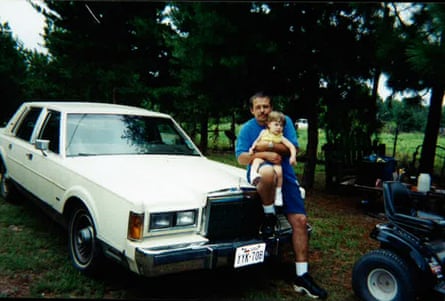
Robert Roberson with his daughter. Photograph: Courtesy of Gretchen Sween
Roberson's attorneys contend that his case is among the wrongful convictions. They cite medical experts who say Curtis's death stemmed from severe viral and bacterial pneumonia.
They say her dire medical condition worsened when she was given medication that is now considered improper for children. They contend that hospital staff's immediate shaken baby syndrome determination â” which they based on brain swelling and bleeding as well as bruises â” amounted to misdiagnosis.
Roberson's emotionless comportment was not a sign of culpability but rather due to his autism which was not diagnosed until 2018, his supporters also said. He insisted on his innocence in an interview with CNN.
'It wasn't a crime committed,' Roberson said. 'I was falsely, wrongly convicted of a crime â” they said it was a crime, but it wasn't no crime and stuff because I had a sick little girl, you know?'
Roberson received custody of Curtis two months before her death. He did not know about the girl until she was born, CNN said.
Curtis's maternal grandparents had had custody, but they ultimately agreed that he should have custody. Roberson said that he picked up Curtis from her grandparents' house and brought her home.
Roberson said he turned on a movie and that they both fell asleep in the same bed. But Roberson said he woke after hearing Curtis's cries and saw her on the ground.
There was blood on the girl's lips and a bruise below her chin, which Roberson cleaned up. Roberson said that he stayed awake for several hours to make sure the toddler was all right and fell asleep again. In the morning, she was not responsive, CNN quoted him as explaining.
'I carried her to the hospital and stuff, you know,' Roberson told the network. 'I didn't have nothing to hide.'
Texas lawmakers meet Robert Roberson at a prison in Livingston, Texas. Photograph: AP
Roberson's supporters include the Innocence Project, autism advocacy organizations and the celebrated legal novelist John Grisham, CNN notes.
Brian Wharton, the lead detective who testified against Roberson, has said he now believes the prosecution had been based on a fallacy. Last year, he told the Guardian: 'There was no crime scene, no forensic evidence. It was just three words: shaken baby syndrome. Without them, he would be a free man today.'
Roberson's lawyers had petitioned for his sentence to be commuted to a lesser punishment or that he be given a postponement to allow more time for litigating appeals.
But the Texas pardons and parole board on Tuesday failed to recommend that the Republican governor, Greg Abbott, grant clemency, Roberson's lawyers said in a statement. Abbott rarely grants clemency petitions. The US supreme court has rejected Roberson's appeals for a delay, though Justice Sonia Sotomayor has urged the governor to grant a 30-day delay.
In an interview last year, Roberson told the Guardian: 'I hope and pray that God gives them the knowledge for the people to make a righteous decision. I know I didn't do it. I'm not guilty. So I'm at peace with the Lord.'