The facility, named Ngoma Tomato Processing Plant, was established by Afrinet Solutions Group and is expected to address one of the biggest challenges facing tomato farmers: the lack of a reliable market, which has often resulted in large quantities of produce going to waste.
The plant is expected to begin operations in the coming months after obtaining the necessary regulatory approvals. It is currently undergoing final testing to ensure its processing systems are fully operational before commercial production begins.
Once operational, the factory will process 10 tonnes of fresh tomatoes every day, producing approximately one tonne of tomato paste. The paste will be used in the manufacture of a range of products, including tomato sauce, ketchup, tomato juice and other tomato-based products.
Residents living near the facility welcomed the investment, saying it will provide farmers with a dependable market for their harvests and help prevent tomatoes from spoiling due to limited demand.
One of the farmers, Hakizimana Elias, said producers previously had no choice but to transport their tomatoes to Kigali, where buyers often purchased only small quantities.
'Our harvests were good, but we struggled to find buyers. We had to take our tomatoes to Kigali, where only small amounts were bought. With this factory now in our area, our produce will finally have value. We have repeatedly raised concerns during community meetings about our harvests going to waste because there was no reliable market,' he said.
Another farmer and investor, Kamana Nicole, said the factory gives greater value to her investment in tomato farming by guaranteeing a ready market for the crop.
'We are constantly encouraged to invest in activities that contribute to the country's development. That is why I invested in tomato farming after returning from abroad. I believe this venture will improve my livelihood while also contributing to Rwanda's economic growth,' she said.
Members of the Senate Committee on Economic Development and Finance recently toured the plant and praised the progress made.
However, they urged its management to learn from the challenges that affected similar processing factories in the past.
The committee's chairperson, Fulgence Nsengiyumva, said farmers told the committee that although production had increased, they frequently failed to find buyers, leaving much of their harvest to rot in the fields.
He recalled that Sorwatom, a tomato processing factory, initially purchased tomatoes directly from local farmers before later switching to buying tomato paste from other suppliers. It eventually abandoned that approach as well and instead began importing packaged tomato sauce for sale on the Rwandan market.
Nsengiyumva emphasized that the new factory should avoid repeating that experience by maintaining direct purchases from local farmers, noting that providing a sustainable market for their produce is the plant's primary purpose.
So far, the factory has signed supply agreements with farmers from 24 cooperatives across the seven districts of Eastern Province, two large farming groups and about 30 individual farmers, bringing the total number of contracted suppliers to around 1,500.
The facility is also expected to create more than 50 permanent jobs once it becomes fully operational.
Eastern Province's first tomato processing plant has been completed in Ngoma, with capacity to process 10 tonnes daily.
Scientists have uncovered how two highly poisonous flowers produce complex chemical compounds that could one day contribute to the development of new medicines for conditions such as pain, malaria and cancer.
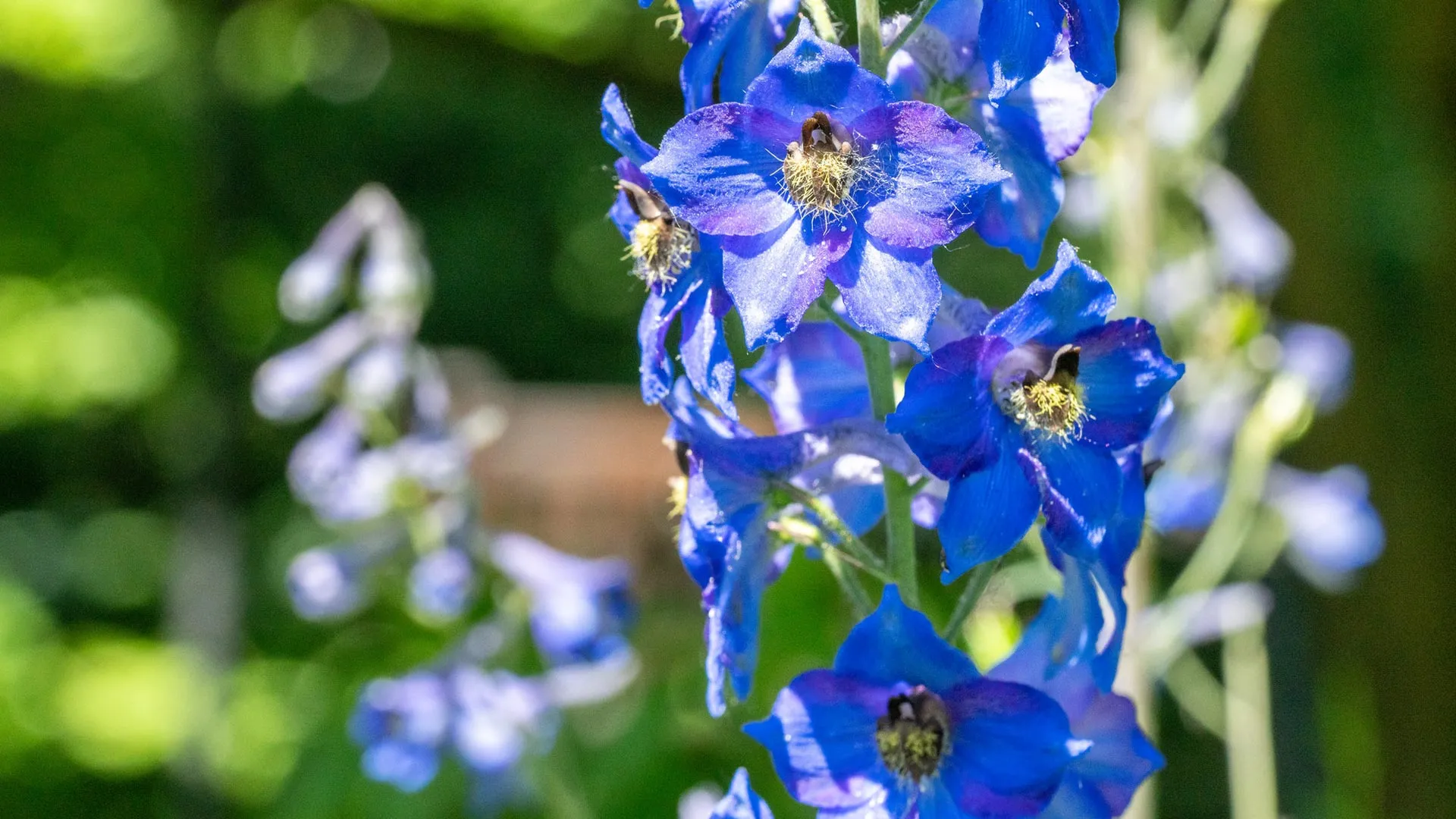
Researchers from Michigan State University and the Czech Academy of Sciences studied two toxic plants, wolfsbane and larkspur, to understand how they create powerful natural chemicals known as diterpenoid alkaloids.
Although these plants can cause severe nerve damage and paralysis when consumed in dangerous amounts, scientists say their chemical properties may also provide valuable opportunities for medical research.
The study focused on a compound called atisinium, which belongs to the diterpenoid alkaloid family. These natural substances have attracted scientific interest because of their potential biological effects, but their complicated structures have made them extremely difficult to produce and study.
To discover how these plants manufacture their chemicals, researchers analyzed thousands of genes from different species of wolfsbane and larkspur.
They identified six key enzymes that work together like a biological production line, allowing the plants to build atisinium.
Scientists then transferred the genetic instructions responsible for producing the compound into tobacco plants. The modified plants successfully recreated the chemical process, showing that they could potentially serve as 'living factories' for producing rare natural compounds.
Plants have long been a major source of medicines. Many widely used substances, including caffeine, menthol and some cancer treatments, are either directly obtained from plants or inspired by plant chemistry.
Researchers believe that understanding how poisonous plants create these compounds could help develop safer and more sustainable ways to produce them in larger quantities.
'Our vision is to provide green, sustainable tools that will allow us to harness these plants' natural power,' said Björn Hamberger, one of the researchers involved in the study.
The findings, published in the scientific journal Molecular Plant, could open new possibilities for studying plant-based chemicals and exploring their future applications in medicine and agriculture.
Researchers from Michigan State University and the Czech Academy of Sciences studied two toxic plants, wolfsbane and larkspur, to understand how they create powerful natural chemicals known as diterpenoid alkaloids.
His remarks come after the government of the Democratic Republic of Congo (DRC) announced that it had reached an agreement with the FDLR aimed at dismantling the group through a non-military process.
According to Congolese authorities, the agreement stems from a document prepared by FDLR president Victor Byiringiro, signed on May 30, 2026, and submitted to President Félix Tshisekedi.
The DRC government says the arrangement provides for the FDLR to lay down its arms, have its fighters placed in secured transit centres, and later be reintegrated into civilian life.
The FDLR has proposed that fighters who do not wish to return to Rwanda should be assisted in resettling in third countries.
Rwanda has rejected the agreement, arguing that it is not provided for under the peace agreement signed in Washington in 2025. Kigali has maintained that the FDLR should instead be dismantled in line with the commitments contained in that accord.
In a recent interview with BBC Gahuza, FDLR political spokesperson Cure Ngoma was asked whether the group had agreed on a timeline for implementing the agreement, including disarmament and the reintegration of its fighters. He said no timetable had been set.
'We have not established a timeline because there are also conditions we have raised that must first be addressed,' Ngoma said.
He added that the FDLR wants what it describes as 'Rwandan refugees' living in the DRC to be allowed to return home in a manner that guarantees both their dignity and security. Once those issues are resolved, he said, the group's remaining objective would be to participate in Rwanda's political process.
'The issue is ensuring that our refugees are guaranteed security and can return to the country with dignity. After that, we can compete on the political stage inside the country,' he said.
Speaking to IGIHE, Nduhungirehe dismissed the proposal for voluntary dissolution, insisting that no political space could be opened to the FDLR and reiterating Rwanda's position that the group must be dismantled.
'No political platform can be opened to genocidaires. The FDLR must be dismantled, as stipulated in the Washington agreement. Its fighters should be repatriated to Rwanda without any further conditions,' he said.
Some FDLR combatants have in recent years voluntarily returned to Rwanda, where they are received at the Mutobo Reintegration Centre operated by the Rwanda Demobilization and Reintegration Commission (RDRC) in Musanze District.
At the centre, former combatants undergo civic education and reintegration programmes designed to prepare them for civilian life. They also receive vocational training and starter kits to help them establish livelihoods after returning to their communities.
Although the DRC government says its agreement with the FDLR is intended to dismantle the group, information obtained by IGIHE indicates that the two sides have continued military coordination against the AFC/M23 coalition, which controls large areas of North and South Kivu provinces.
According to the information, FDLR leaders held a series of meetings with officers of the Congolese army (FARDC) in June 2026, including in Rutshuru and Walikale territories. The discussions reportedly focused on integrating FDLR fighters into the government-backed Wazalendo militias.
The same information indicates that, despite the announced agreement, the Tshisekedi administration has continued to engage with Rwandan opposition figures based abroad, with meetings reportedly being organised between some of them and FDLR leaders.
Those involved include Jean-Luc Habyarimana, son of former Rwandan President Juvénal Habyarimana; former priest Thomas Nahimana; Fabien Singaye, a brother-in-law of Félicien Kabuga; and Thaddée Kwitonda, a former member of the FDLR leadership.
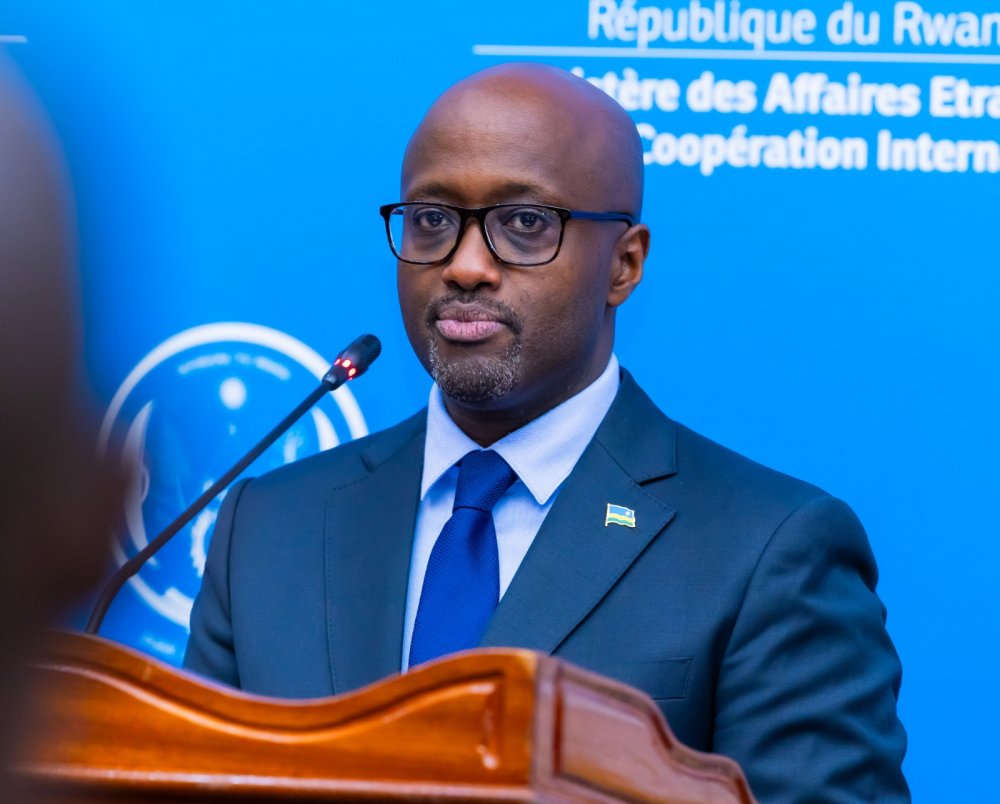
Minister of Foreign Affairs and International Cooperation Olivier Nduhungirehe dismissed the proposal for voluntary dissolution, insisting that no political space could be opened to the FDLR and reiterating Rwanda's position that the group must be dismantled.
Communication Minister and government spokesperson René Emmanuel Sadi said on Sunday that the 93-year-old leader was expected back soon, dismissing rumours surrounding his prolonged stay abroad.
'The president is alive. There is no power vacuum,' Sadi said in an interview with Radio France Internationale (RFI), without providing details on when Biya would return.
Biya has not been seen publicly since June 7, when he left Cameroon for what officials described as a 'brief private stay' in Switzerland. The absence, which has now lasted more than 50 days, has renewed questions about the health of the world's oldest serving head of state.
The government has repeatedly rejected reports suggesting that Biya is seriously ill. Sadi previously said the president was in good health and continuing to work from Geneva, where he has spent extended periods in recent years.
'Reports claiming otherwise are pure fantasy and malicious manipulation aimed at destabilising opinion,' Sadi said.
Other senior officials have also defended Biya's absence. Higher Education Minister Jacques Fame Ndongo said the president had continued to follow government matters through documents submitted by his aides.
Labour Minister Grégoire Owona offered a different explanation, describing Biya's absence as annual leave and arguing that the president, like any other citizen, had the right to take time off.
'Paul Biya, elected by the Cameroonian people and paid by them, is a worker who has the right to annual leave,' Owona said.
However, opposition figures have criticised the lack of clarity surrounding the president's whereabouts and the extended nature of his stay abroad.
Mamadou Mota, vice-president of the opposition Cameroon Renaissance Movement, said Biya's absence had created an 'institutional vacuum', arguing that the country could not be governed remotely while facing major social and economic challenges.
Concerns have also grown because Biya has yet to appoint a new government after being sworn in for his eighth consecutive seven-year term in November 2025. The presidential election that secured his latest mandate was disputed by opposition groups, which alleged irregularities and voter suppression.
Cameroon's authorities banned public discussion of Biya's health in October 2024 after another prolonged absence, but speculation has continued online, with social media users reviving jokes describing him as a 'remote-work president'.
The debate has also raised questions about succession arrangements. Parliament restored the office of vice-president in April as part of constitutional reforms, but the position remains vacant, leaving no designated deputy should the president become temporarily or permanently unable to perform his duties.
Meanwhile, political tensions have intensified within the ruling Cameroon People's Democratic Movement (CPDM), with senior party officials recently holding a rare meeting described only as an 'important working session'.
Biya, who first became president in 1982, has increasingly spent time outside Cameroon in recent years, particularly in Switzerland. His long absences have become a recurring source of debate over governance.
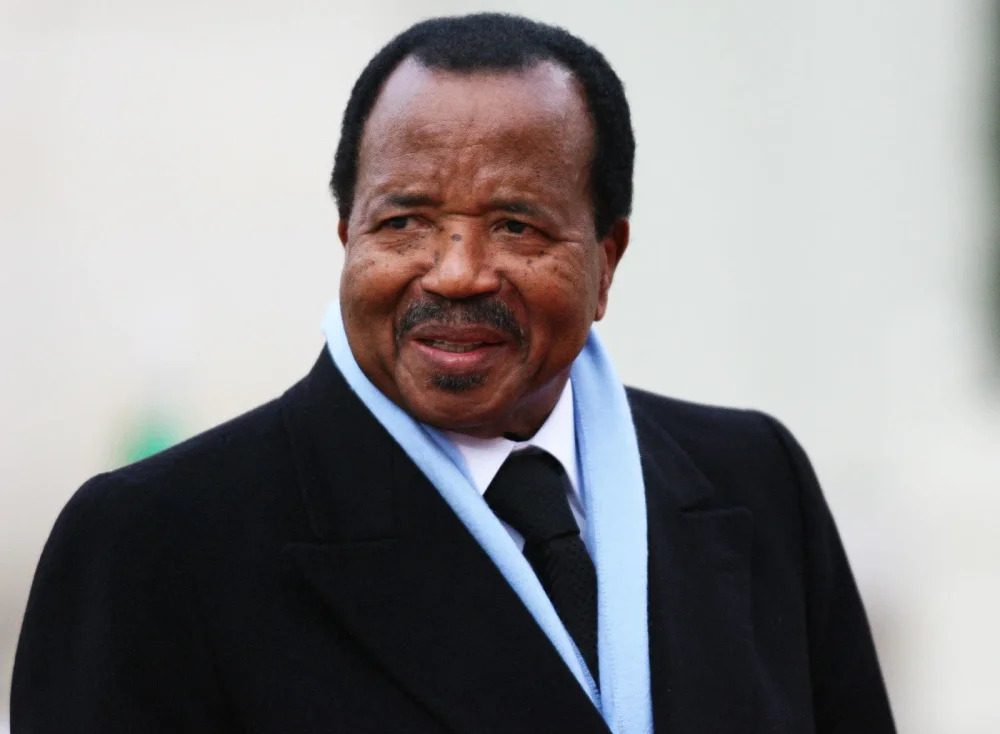
President Paul Biya has not been seen publicly since June 7, when he left Cameroon for what officials described as a 'brief private stay' in Switzerland.
His remarks come after the Rwanda Food and Drugs Authority (Rwanda FDA) suspended the operations of eight alcohol manufacturers following an inspection aimed at assessing compliance with regulations governing the production of fermented beverages.
The suspension, announced on August 2, 2026, specifically targeted manufacturers producing locally made spirits. Their products were immediately withdrawn from the market.
In a statement, Rwanda FDA said the decision was taken to protect public health and strengthen oversight of product quality on the market.
Speaking to RBA, Dr. Nsanzimana described the growing impact of substandard alcohol as a public health epidemic, citing the sharp rise in alcohol-related illnesses recorded across the country.
'We consider this a public health emergency based on the data we have. Since the beginning of this year, our hospitals have treated slightly more than 500 people who became ill after consuming these alcoholic drinks.
'In Ngoma alone, more than 100 people were hospitalized at once. We have also recorded cases in Nyagatare and the Southern Province. These are only the people who reached health facilities and were treated although some died. Others died before making it to hospital. So far, we have documented about 50 deaths,' he said.
The Health Minister added that the health consequences extend far beyond fatalities.
According to him, around 100 people have suffered permanent blindness, while others have developed long-term brain damage, liver disease and other serious medical conditions linked to the consumption of unsafe alcohol.
'The problem has been growing gradually. We used to know traditional drinks such as banana beer and sorghum beer. Then came alcoholic beverages with alcohol concentrations of 40 to 50 percent, far stronger than what many people had ever consumed. Now there are also those being produced through unsafe methods,' he said.
Dr. Nsanzimana warned that Rwanda must treat the issue as a public health emergency.
'This is an epidemic, and we must fight it as one. If we fail to act now, we will pay a much heavier price in the future.'
He further explained that while some investors establish legitimate factories to produce quality beverages, others secretly mix hazardous chemicals into alcoholic drinks before packaging and distributing them to consumers, exposing the public to severe illness and death.
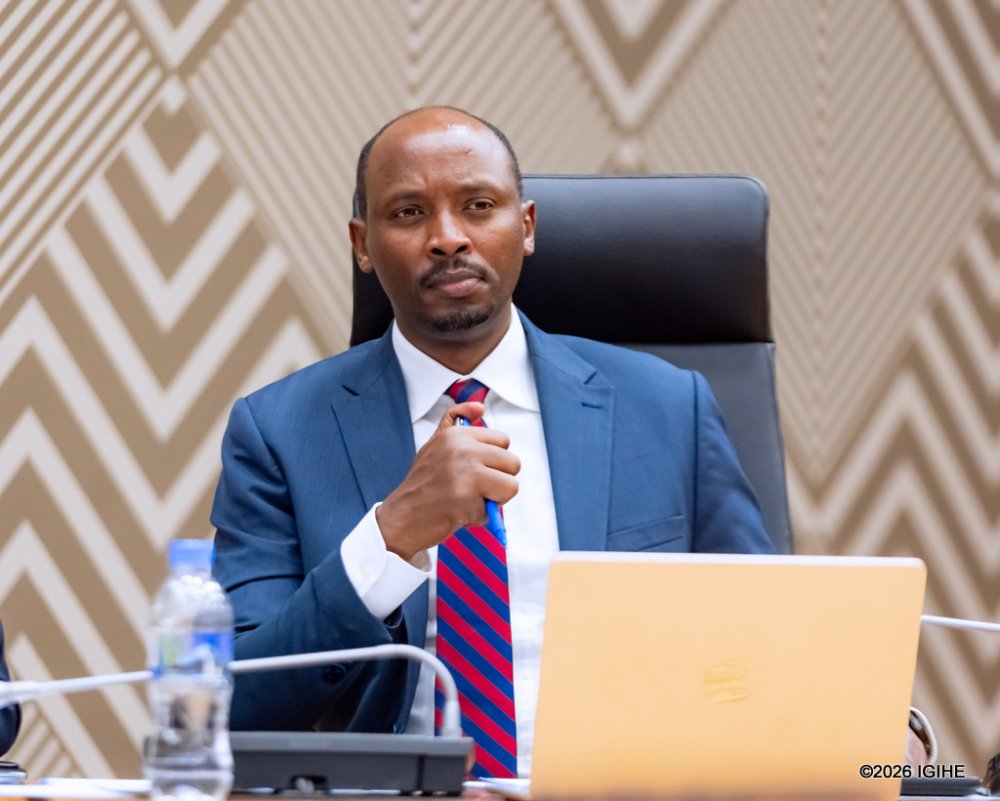
Health Minister Dr. Nsanzimana said substandard alcohol should be fought with the same urgency as other public health epidemics.
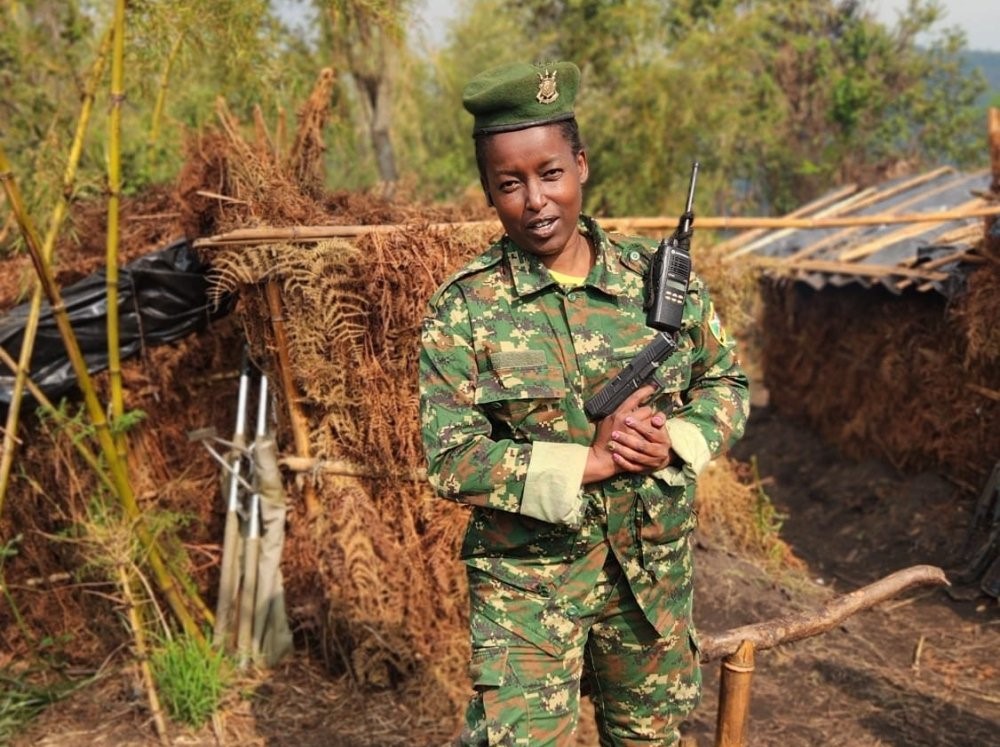
On August 2, 2026, RED-Tabara shared videos on social media showing two of its new fighters, who said they were proud of their decision to join the armed struggle to 'liberate' Burundi.
Among those featured was a Burundian woman who said she had left her job in Canada to join RED-Tabara, claiming she wanted to contribute to efforts to help Burundians.
'There may be another role I am needed for in the struggle. If I left my job, because I was working in Canada, and decided to stop it and say, 'I am going to the forest with others,' it is because I have confidence in this cause,' she said.
Reacting to the video, Minister Bizimana accused some countries of supporting instability in Burundi and the wider region, saying his government was monitoring diplomats allegedly involved in such activities.
'A Canadian fighter in RED-Tabara: some countries are encouraging disorder and divisions in Burundi and the region. The Ministry of Foreign Affairs of Burundi is closely monitoring all diplomats involved in hostile acts, and measures will be taken,' Bizimana said.
RED-Tabara emerged amid political tensions in Burundi in 2015, when then-President Pierre Nkurunziza sought a controversial third term in office.
The group claims that the time for the 'liberation' of the country is approaching.
Minister Bizimana said Burundi is closely monitoring all diplomats accused of seeking to fuel instability.The Burundian woman said she left her job in Canada to join RED-Tabara, claiming she wanted to help liberate Burundians.
The regulator announced on August 2, 2026, that the action followed regulatory inspections and compliance assessments, with the measures being taken 'in the interest of public health.'
Rwanda FDA said it had closed the affected manufacturing facilities, revoked their licences and ordered the withdrawal of all products from the market.
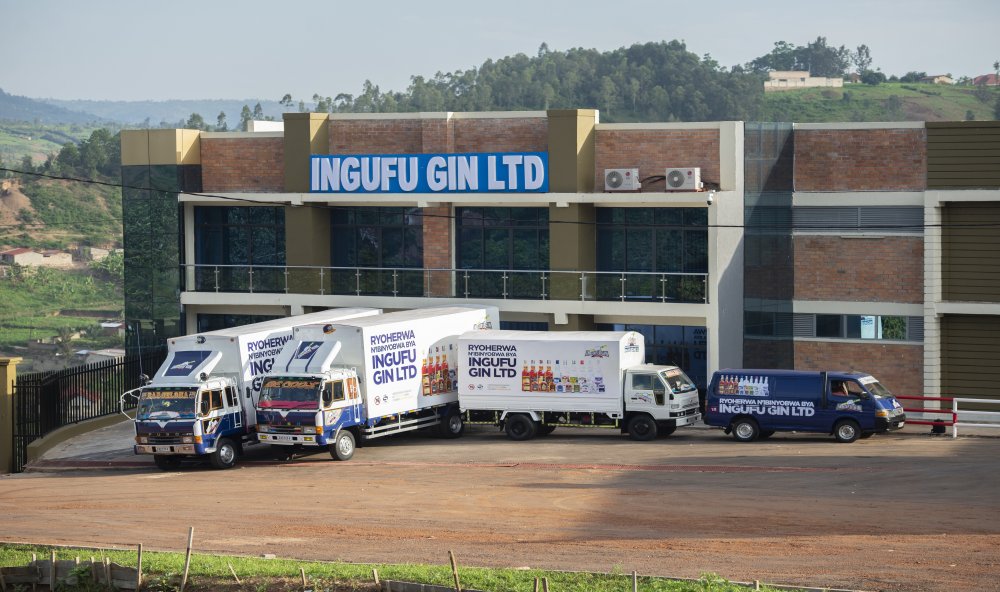
Among the affected companies is Ingufu Gin Ltd, whose products listed for recall include Red Waragi, Rabiant Gin, Ngufu Gin, King's Vodka, Royal Castle Gin, Medal Gin, G&S Rum, New House Potable Spirit, Club Potable Spirit and Hometown Potable Spirit.
NBG Ltd was also ordered to halt production, with products including United Flavoured Gin, Bombastic Coconut Flavoured Gin, Ingwe Flavoured Gin, Amerikaan Flavoured Gin, Maguma Gin and Fimbo Blended Banana Brandy subject to recall.
Other manufacturers affected include SKY Drop Industries Ltd, Africana Buffalo Ltd, NOPA Company Ltd, Roots Investment Group Ltd, Rugali Agro-processing Company and Zhonglu Industrial Liability Company Ltd.
The recalled products from the companies include various brands of gin, whisky, vodka, rum, brandy and other flavoured alcoholic beverages.
Rwanda FDA instructed the manufacturers to immediately begin a full recall process and direct their distributors to collect the listed products from clients and return existing stock to the manufacturers' premises.
The manufacturers have been given three working days to submit recall reports to the regulator.
Distributors and retailers were also directed to immediately stop selling or distributing the affected products and return remaining quantities to their suppliers, distributors or manufacturers.
'Non-compliance with all the above will result in measures under applicable regulatory provisions,' Rwanda FDA warned.
The authority further urged consumers to immediately stop consuming the listed alcoholic beverages.
Rwanda FDA said additional affected manufacturing facilities will be announced in due course as regulatory enforcement continues.
Rwanda FDA said it had closed the affected manufacturing facilities, revoked their licences and ordered the withdrawal of all products from the market.
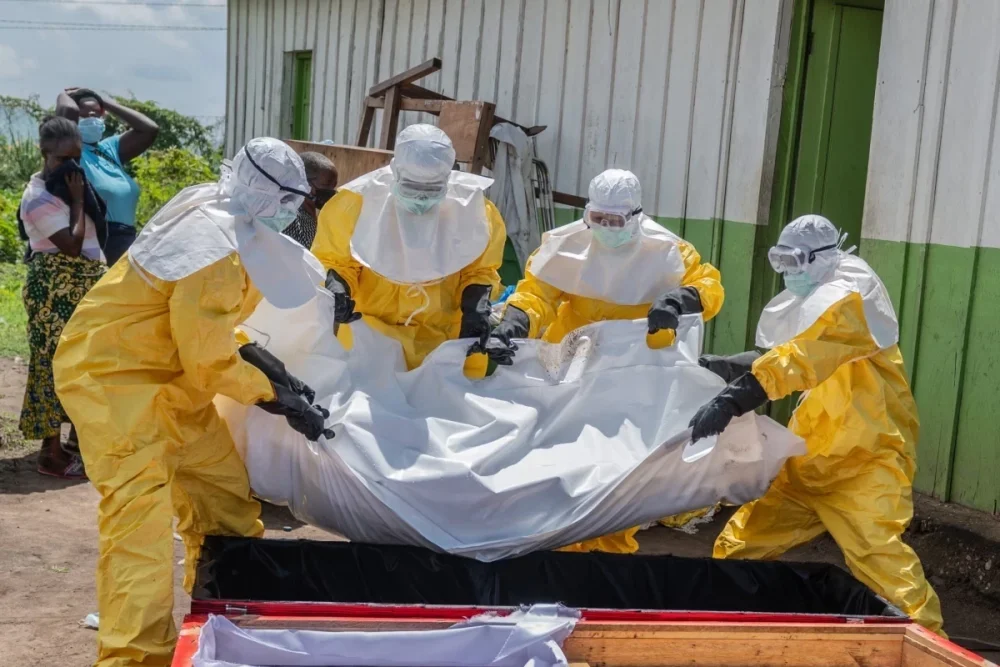
As of Thursday, the DRC had reported 3,605 confirmed cases of Ebola disease caused by the Bundibugyo virus, including 1,587 deaths, representing a case fatality rate of 44 percent, the WHO said in its latest disease outbreak report.
The previous largest outbreak, which struck the country's east between 2018 and 2020, recorded 3,317 confirmed cases.
The current outbreak, initially confined to the Mongbwalu health zone in the province of Ituri, has spread over the past two months to 49 health zones across five provinces: Ituri, North Kivu, South Kivu, Haut-Uele and Tshopo.
The outbreak has also taken a growing toll on health workers, with 151 infections and 44 deaths reported so far, highlighting persistent gaps in infection prevention and control at health facilities, the WHO said.
The agency warned that insecurity, population displacement, high mobility and cross-border movements were hampering surveillance and response operations, raising the risk of further spread.
The outbreak is unfolding in conflict-affected areas where access to health care, clean water, food and shelter remains limited. Attacks on health facilities have restricted access for response teams and increased the risk of transmission going undetected.
Assessing the risk within the DRC as 'very high,' the WHO said a substantial expansion of surveillance, testing, clinical care, infection control, community engagement and logistics was needed to get ahead of the outbreak.
The current outbreak, initially confined to the Mongbwalu health zone in the province of Ituri, has spread over the past two months to 49 health zones across five provinces: Ituri, North Kivu, South Kivu, Haut-Uele and Tshopo.
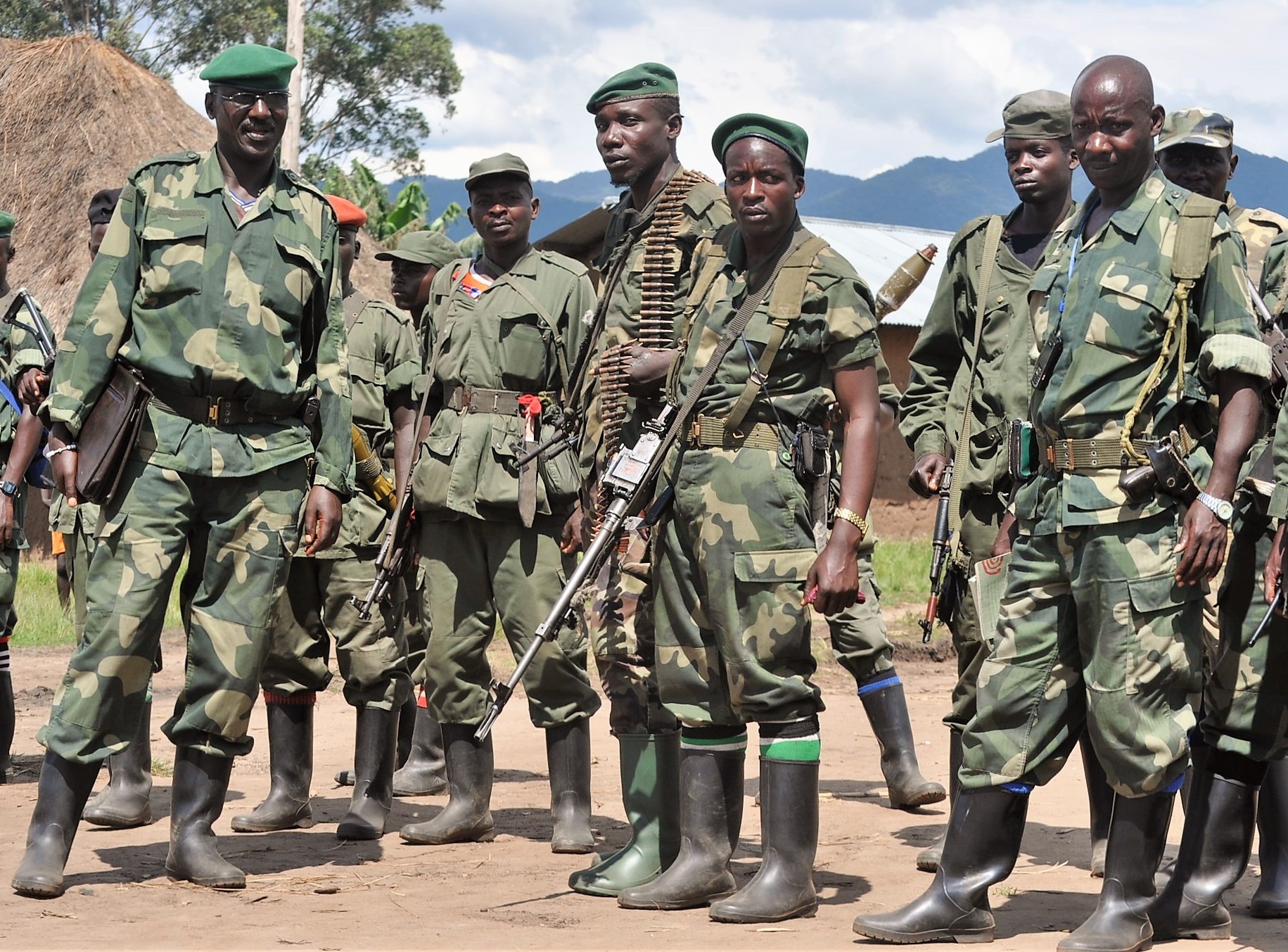
The FDLR was formed by individuals involved in planning and carrying out the 1994 Genocide against the Tutsi, including former political leaders, members of the defeated Rwandan Armed Forces (Ex-FAR), and fighters from the Interahamwe militia. Despite years of military operations against it, the group continues to recruit new members, particularly young fighters.
Operating from eastern DRC, the FDLR has long been cited by Rwanda as a direct threat to its national security because of its presence near the shared border. The Congolese government, however, has often argued that defeating AFC/M23 should take precedence over military action against the FDLR.
The group's presence has featured prominently in regional peace efforts, including mediation talks held in Pretoria more than two decades ago, negotiations in Luanda in 2022, and discussions in Washington beginning in early 2025.
The Washington Peace Agreement included commitments to dismantle the FDLR through measures outlined in the Concept of Operations (CONOPS). However, despite signing the agreement, the DRC has continued to send conflicting signals regarding how it intends to address the group.
From denial to acknowledgement
For years, officials in Kinshasa maintained that the FDLR no longer posed a meaningful threat to Rwanda, arguing that the movement had become too weak to destabilize the region.
Congolese authorities also accused Rwanda of exaggerating the threat in order to justify interference in the DRC's internal affairs and gain access to the country's mineral resources.
In March 2025, former Foreign Affairs Minister Christophe Lutundula questioned whether the group even existed.
'The time had come for us to eliminate those remaining FDLR fighters Rwanda keeps talking about, but I don't believe they exist. I don't even know who they are,' he said.
Lutundula, who consistently argued during his tenure as foreign minister that the FDLR was no longer a significant force, also suggested Rwanda itself had shifted its narrative.
'Is Rwanda still talking about the FDLR the way it used to? No. The real issue now is the economy,' he stated.
Following the signing of the Washington Peace Agreement in June 2025, DRC Minister for Foreign Trade Julien Paluku also dismissed the existence of the FDLR, describing it as a narrative created by Rwanda.
Paluku argued that references to the group had misled the international community for three decades and accused Rwanda of using the issue to justify military intervention and the exploitation of Congolese mineral resources.
'The real FDLR Rwanda is looking for in the DRC is Congo's minerals,' he said.
Rwanda's ambassador to Algeria, Vincent Karega, said such remarks were unsurprising given Paluku's previous role as governor of North Kivu Province, where the FDLR has long operated, including in Virunga National Park.
Official acknowledgement
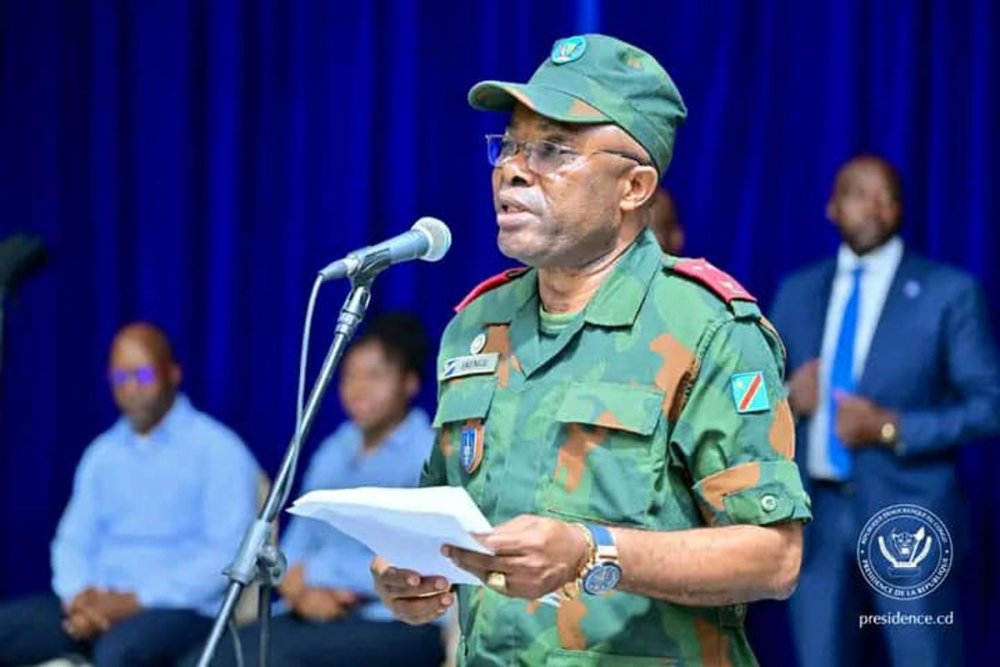
Despite these statements, the Congolese government had previously acknowledged both the existence of the FDLR and the threat it posed. On April 15, 2024, then FARDC spokesperson Maj. Gen. Sylvain Ekenge told Congolese state television that the FDLR was active in the country and had played a major role in violence against civilians.
'The FDLR attacks Congolese people and kills Congolese people. Of the more than 10 million people who have died over the past decade, the FDLR bears significant responsibility for those deaths,' he said.
On April 15, 2024, then FARDC spokesperson Maj. Gen. Sylvain Ekenge told Congolese state television that the FDLR was active in the country and had played a major role in violence against civilians.
Ekenge's remarks carried particular weight because he had previously served in North Kivu Province as military spokesperson for operations in the region and later as acting military governor.
His comments marked a significant departure from years of inconsistent messaging by the Congolese government regarding the FDLR.
In October 2025, the Congolese army issued a directive ordering its troops to end all cooperation with the FDLR. It also called on the group's fighters to lay down their arms, warning that those who refused would face military action.
Despite the announcement, cooperation between the FARDC and the FDLR continued. The armed group reportedly continued receiving weapons and ammunition, while the 90-day deadline for its dismantlement expired without any meaningful progress.
Shifting explanations
As pressure mounted over its failure to dismantle the FDLR, the Congolese government began advancing a different explanation. Officials argued that many of the group's fighters were based in areas controlled by AFC/M23, making it difficult for the army to carry out operations against them.
In late March 2026, the FARDC announced in Kisangani that it had launched operations targeting the FDLR. Two days later, however, the army reportedly delivered weapons and ammunition to FDLR fighters in Pinga, Walikale Territory, where the group was fighting alongside government forces against AFC/M23.
A report by the UN Group of Experts, published in late June 2026, stated that the Congolese army had assured the FDLR it would not move to dismantle the group and that both sides would continue working together as strategic partners.
According to reports from eastern DRC, FDLR fighters based in government-controlled territory were advised to relocate to areas under AFC/M23 control, creating the impression that military operations against the group could not be carried out.
On July 30, 2026, FDLR political spokesperson Cure Ngoma claimed that the group's fighters were now located exclusively in areas controlled by AFC/M23.
'We are based in eastern Congo, specifically in the areas occupied by M23 and Rwanda. That is where our forces are located,' he said.
However, discussions held under the Joint Security Coordination Mechanism (JSCM), which brings together representatives from Rwanda, the DRC and the United States, concluded that while some FDLR fighters were indeed present in AFC/M23-controlled areas, others remained in territory controlled by the Congolese government.
In June 2026, U.S. Senior Advisor for Africa Massad Boulos told the UN Security Council that the DRC had failed to fulfil its commitment to dismantle the FDLR, even in areas under its own control.
'Despite progress, the parties continue to fall short on their obligations. The DRC has not upheld obligations for the FDLR neutralization, at least in the areas that they control,' Boulos pointed out.
A new approach to the FDLR
In recent weeks, a document circulating in international media has added another dimension to the debate.
The document, reportedly signed by FDLR president Lt. Gen. Victor Byiringiro on May 30, 2026, and addressed to President Félix Tshisekedi, outlines a proposal for the group's fighters to disarm, undergo reintegration, and be placed in secure, supervised facilities.
The proposal has been presented as a roadmap for the group's voluntary dissolution.
Since July 13, DRC Minister for Regional Integration Floribert Anzuluni has circulated the document among governments in Africa and Europe, presenting it as evidence that Kinshasa had reached an agreement with the FDLR on voluntary disarmament.
Rwanda, however, maintains that such an arrangement falls outside the framework of the Washington Peace Agreement.
Foreign Affairs and International Cooperation Minister Ambassador Olivier Nduhungirehe has argued that the reported proposal is not provided for under the agreement, which requires the FDLR to be dismantled through the agreed CONOPS framework.
On July 29, Nduhungirehe reiterated that the FDLR was never a party to the Washington Peace Agreement but rather the security threat the agreement seeks to eliminate.
'The signing of this so-called 'protocol' between the father (the Congolese government), the son (the FDLR), and the evil spirit (the genocide ideology) is in no way consistent with the Washington Peace Agreement, which makes no provision for such an arrangement. For good reason: the genocidal FDLR is not a party to the agreement; rather, it is the subject of it,' he stressed.
The following day, DRC government spokesperson Patrick Muyaya defended Kinshasa's position, saying that if the FDLR had voluntarily agreed to disarm and enter a reintegration process, there would be no justification for launching military operations against it.
'You do not use force against people who have voluntarily chosen the path of peace,' Muyaya argued.
After years of downplaying the FDLR's capabilities, Patrick Muyaya openly stated that the DRC government could not launch military action against the group because it had chosen the path of peace.
Political analyst Prof. Bob Kabamba of the University of Liège has cautioned that even if the FDLR were officially declared dissolved, the organisation could simply re-emerge under a different name.
Before becoming the FDLR, the movement previously operated as RDR and later ALiR, while its military command, political leadership and objectives remained largely unchanged.
The evolution of Kinshasa's public position, from questioning the FDLR's existence, to acknowledging it as a security threat, and more recently supporting a voluntary disarmament process rather than military dismantlement, has become one of the central points of contention in the implementation of the Washington Peace Agreement.
The DRC government has for years changed its narrative on the FDLR, at times denying the group's existence and at other times portraying it as a weakened force made up of aging fighters.
Implementation means verifiable dismantlement, not theatre.
To understand why Rwanda's position admits no softening, one must first be honest about what the FDLR is — because the entire case for 'dialogue' rests on misdescribing it.
A project, not a party
The FDLR is not a rebel movement with grievances that negotiation could address. It is the organisational afterlife of the 1994 Genocide against the Tutsi. Founded in 2000 in the forests of eastern DR Congo, it gathered up the remnants of the ex-FAR — the army that planned and executed the genocide — and the Interahamwe militia that carried out the killing hill by hill. Its founding cadres did not flee Rwanda as dissidents; they fled as perpetrators, taking their command structures, their weapons and their ideology with them.
That ideology has never been retired. Senior FDLR officers have declared, repeatedly and on the record, that their return to Rwanda is conditioned on the country being 'cleansed' of its Tutsi population. This is not an accusation inferred from conduct; it is the group's own stated horizon. An organisation whose political programme is the completion of a genocide does not have a negotiating position. It has a confession.
Dialogue, in any meaningful sense, requires a shared floor: each party recognises the other's right to exist. The FDLR's foundational premise is the denial of exactly that right to an entire people. You cannot split the difference with extermination. There is no halfway point between a population living and a population erased, and any mediator who pretends otherwise is not advancing peace — he is laundering genocide ideology into the vocabulary of politics.
The victims Kinshasa forgets are its own
Here is the element too often missing from this debate: the FDLR's longest-suffering victims, after the Tutsi of Rwanda, are the Congolese themselves. For a quarter of a century this militia has fed on eastern DR Congo, taxing its minerals, burning its villages, and punishing its civilians for every military setback. United Nations investigators have documented its massacres of Congolese villagers and its campaigns of mass rape in the Kivus. UN Group of Experts reporting has likewise detailed the FDLR's embedding within Congolese armed structures and its battlefield cooperation with Wazalendo militias, the very integration that makes announcements of 'voluntary disarmament' ring hollow while its fighters remain on active front lines.
A Congolese official who offers the FDLR a seat at a political table is not merely offending Rwanda. He is telling the survivors of the militia's Congolese atrocities that the men who did it have been promoted from criminals to counterparts.
Nor has the menace stayed on one side of the border. Over the years the FDLR has run incursions into Rwanda's Western Province and been linked to grenade attacks that killed and maimed civilians in Kigali, each operation an attempt to export terror into a country that has spent three decades rebuilding itself from mass graves.
The law has already spoken
The second missing element is this: the question of what the FDLR is has already been answered, not by Kigali, but by the world's courts and councils. The group and its leaders have sat under UN Security Council sanctions for some two decades. The International Criminal Court issued an arrest warrant for its supreme commander, Sylvestre Mudacumura, for war crimes. A German court in Stuttgart convicted its president, Ignace Murwanashyaka, for atrocities his organisation committed — a genocidaire leadership run, for years, from European soil, prosecuted under universal jurisdiction.
This is the legal reality a 'political dialogue' would have to overturn. Negotiation confers standing; that is its nature. To seat the FDLR at a table is to walk back, by protocol, what sanctions committees, prosecutors and judges established by evidence: that this is not a political actor but a criminal enterprise animated by the gravest crime in international law.
The door that is already open
The third missing element demolishes the claim that Rwanda's refusal leaves the FDLR's fighters no way out. It leaves them exactly one, and thousands have taken it.
For more than twenty years, Rwanda has operated one of the most extensive demobilisation and reintegration programmes on the continent. Rank-and-file combatants who lay down their arms are received at the Mutobo demobilisation centre in Musanze, rehabilitated, and returned to their communities; many thousands of former fighters from armed groups in the DR Congo, the FDLR chief among them, have come home this way, alongside family members who followed them out of the forest. They were not negotiated with. They were welcomed, as individuals renouncing a criminal project, not as delegates of it.
That distinction is the whole argument. Disarmament, demobilisation and reintegration is a door for men. A political dialogue is a platform for an ideology. Rwanda has held the first open for two decades and will keep it open. The second it will never build, because the 'cause' the FDLR's leadership would bring to any table is the unfinished business of 1994.
What Washington actually requires
Which brings us back to the present moment. The peace framework the DR Congo and Rwanda signed in Washington in 2025 does not speak of accommodating the FDLR; it obligates its neutralisation, under a concept of operations both governments endorsed — irreversible, verifiable, and measured in dismantled command structures, not press conferences. A signed protocol with a militia that remains interwoven with the Congolese army and active in ongoing fighting is not neutralisation. It is choreography, and everyone in the region can tell the difference between a militia being dismantled and a militia being rebranded.
For that is the tactical truth beneath the diplomatic language: as military pressure and international scrutiny have shrunk its space, the FDLR has reached for the oldest trick of cornered armed movements — the costume change. Yesterday's genocidaires present themselves as today's 'political opposition in exile,' hoping the world's memory is shorter than its outrage. The rebranding must fail, and be seen to fail, because the precedent at stake reaches far beyond the Great Lakes. If an organisation founded on extermination can wait out the world and be repackaged as a dialogue partner, then every génocidaire on earth has been handed a strategy: survive, relocate, rename, negotiate.
The seat that is reserved
Rwanda's three decades of recovery were built on a covenant with its dead and its survivors: unity, accountability, and the refusal to barter either. To trade that covenant for the political blackmail of a genocidal militia would betray more than a million victims of the Genocide against the Tutsi and gamble the security of the millions now living in the peace they were denied.
So let the record state Rwanda's position without varnish. For fighters who abandon the FDLR, the road home through demobilisation remains open, as it has been for twenty years. For the organisation and the leaders who carry its exterminationist charter, there will be no concessions, no false symmetry, and no chair — not in Kigali, not in Kinshasa, not in any capital that takes the word 'genocide' seriously.
A seat is, in fact, reserved for them. It is in the dock, facing their judges. It is the only table at which the FDLR has ever had anything legitimate to say.
The FDLR is not a rebel movement with grievances that negotiation could address. It is the organisational afterlife of the 1994 Genocide against the Tutsi.