Category: Uncategorized

  • Prime Energy commended for issuing Rwanda’s first green bond #rwanda #RwOT

    This issuance offers investors a unique opportunity to participate in Rwanda’s first-ever green bond, adding a new asset class for enhanced portfolio diversification. The bond is open for reoffering until 17 October 2024 and will be listed on the Rwanda Stock Exchange.

    The green bond has undergone external verification by IBIS ESG Consulting Africa, which provided a Second Party Opinion (SPO) confirming that it meets the International Capital Market Association’s (ICMA) updated Green, Social, and Sustainability Bond Principles issued in June 2021.

    Speaking at the Prime Energy Investor Day held at the Rukarara Hydropower plant in Musanze District, Mr. Tsheole emphasized the significance of this milestone for Rwanda’s capital market, particularly in offering alternative financing options. He praised Prime Energy for their pioneering role, stating, “I am proud of this milestone by Prime Energy, as it reflects our collective commitment to sustainable development.”

    The transaction was supported by the International Finance Corporation (IFC), part of the World Bank Group, which worked closely with Prime Energy to structure the green bond. The IFC’s advisory support is part of a broader initiative to facilitate access to long-term local currency finance for key sectors in Rwanda.

    CEO Tsheole also emphasized CMA’s role in ensuring that Rwanda’s capital markets function transparently and efficiently, while protecting investors by enforcing disclosure requirements.

    'At CMA, we ensure that our capital markets operate efficiently and transparently, and we focus on protecting the interests of investors by ensuring the issuer complies with the requirements by making all the necessary disclosures to allow investors to make informed investment decisions. We are however taking a developmental approach to regulating capital markets,” he said.

    He further encouraged other sectors within Rwanda’s economy to explore the potential of green bonds as a means of attracting investments into renewable energy, sustainable agriculture, and other climate-friendly initiatives.

    Prime Energy currently operates four hydropower plants in Rwanda’s Western, Southern, and Northern Provinces, under 25-year concession agreements with the Government of Rwanda, and power purchase agreements (PPAs) with Energy Utility Corporation Limited (EUCL).

    IGIHE

    Source : https://en.igihe.com/news/article/prime-energy-commended-for-issuing-rwanda-s-first-green-bond

  • Kiev may have to accept loss of territory – Stoltenberg #rwanda #RwOT

    Ukraine may have to recognize the loss of some of its territory to Russia in order to achieve peace and security guarantees, Jens Stoltenberg said in his first long interview after stepping down as NATO secretary-general.

    Stoltenberg ended his ten-year tenure as the chief of the US-led alliance on October 1. In a conversation with the Financial Times published on Friday, he said that Kiev may be forced to rethink seeing the restoration of the 1991 borders as a prerequisite for any peace deal.

    Stoltenberg suggested that 'a kind of new momentum' would come after the US presidential election in early November, possibly ushering in 'ways to try to get movement on the battlefield combined with movement around the negotiating table.'

    The West should 'make the conditions' that would enable Ukraine to 'sit down with the Russians and get something which is acceptable… something where they survive as an independent nation.'

    Asked what he would propose to Ukrainian leader Vladimir Zelensky, the former NATO chief offered a comparison to the resolution of the Soviet-Finnish war nearly 85 years ago.

    'Finland fought a brave war against the Soviet Union in '39. They imposed much bigger costs on the Red Army than expected,' he said. 'The war ended with them giving up 10% of the territory. But they got a secure border.'

    Under the March 1940 treaty, Finland ceded a large portion of the Karelia region and Viipuri, its second-largest city at the time (known as Vyborg in Russia).

    Stoltenberg argued that Ukraine could obtain security guarantees from NATO even 'if there is a line that is not necessarily the internationally recognized border.' He noted that the US defense pact with Japan does not cover Tokyo's claim on the Kuril Islands, which are part of Russia, and that West Germany was admitted to NATO despite the fact that East Germany was controlled at the time by a separate, Soviet-aligned government.

    'When there is a will, there are ways to find the solution. But you need a line which defines where Article 5 is invoked, and Ukraine has to control all the territory until that border,' Stoltenberg said, referring to the section of the NATO treaty, which outlines the duty of member states to defend each other.

    Russia has said that it would not accept Zelensky's ten-point 'peace formula' and not relinquish control over Crimea and four other regions, which Kiev and its backers continue to view as Ukrainian territory under illegal occupation.

    Kiev's hopes of imposing its terms appear more distant after the failed 2023 counteroffensive and Russia's new victories in Donbass, where Moscow's troops have been making steady progress throughout 2024. During its renewed advances, the Russian Army pushed the Ukrainians out of several heavily fortified towns, including Avdeevka, which fell in February, and Ugledar, which was captured earlier this week.

    The post Kiev may have to accept loss of territory — Stoltenberg appeared first on The Custom Reports.

    Source : https://thecustomreports.com/kiev-may-have-to-accept-loss-of-territory-stoltenberg/

  • Rwanda to host Orbis Flying Eye Hospital in 2025 #rwanda #RwOT

    Global eye care charity Orbis International will for the very first time conduct a two-week training project in Rwanda, next year, on board the Orbis Flying Eye Hospital, the world's only fully accredited ophthalmic teaching hospital on a plane.

    Rwanda International Institute of Ophthalmology (RIIO) will host the Orbis Flying Eye Hospital, Dr. John Nkurikiye, the Chief Ophthalmologist and Director of RIIO,

    Asked what cutting-edge technologies are being introduced to revolutionise eye care in the country, Dr. Nkurikiye said: 'We are excited to announce that we will host the Orbis Flying Eye Hospital next year.

    'This state-of-the-art airplane is equipped with the latest simulators for teaching eye surgery and includes a modern eye theater for performing complex surgeries. The plane will be in Kigali for about 15 days, and we will share more details with the public as our plans develop.'

    Orbis International, an international non-profit non-governmental organization dedicated to saving sight worldwide, is well known for its Flying Eye Hospital, an ophthalmic hospital and teaching facility located on board a McDonnell Douglas DC-10, an American trijet wide-body aircraft.

    The Flying Eye Hospital brings training to doctors and nurses in developing countries with little access to professional development and training.

    Orbis International's programmes focus on the prevention of blindness and the treatment of blinding eye diseases in developing countries through hands-on training, public health education, advocacy and local partnerships.

    Dr. Nkurikiye also said that one of the advancements at RIIO is the introduction of ocular electrophysiology tests, which have improved the country's ability to investigate the causes of visual loss, especially in children. Visual electrophysiology is a collection of advanced techniques used to test the functioning of cells along the full visual pathway — from the retina to the optic nerve to the primary visual cortex in the brain.

    'This technology helps differentiate between various genetic causes of visual impairment,' he said, adding that: 'We are also rolling out the use of artificial intelligence in screening diabetic patients for eye complications.'

    'This technology is a game-changer, particularly given the shortage of retina specialists. It has been tested locally and has demonstrated high reliability.'

    The post Rwanda to host Orbis Flying Eye Hospital in 2025 appeared first on The Custom Reports.

    Source : https://thecustomreports.com/rwanda-to-host-orbis-flying-eye-hospital-in-2025/

  • Marburg virus: Gilead confirms remdesivir drug donation to Rwanda #rwanda #RwOT

    American biopharmaceutical company Gilead Sciences, on Thursday, October 3, announced that it will donate about 5,000 vials of its antiviral drug Remdesivir for emergency use in response to the Marburg virus disease outbreak in Rwanda.

    In a statement it issued on Thursday, Gilead said it will make the donation to the Rwanda Medical Supply in conjunction with Rwanda's Ministry of Health, and the Africa Centers for Disease Control (Africa CDC).

    'The recent Marburg outbreak in Rwanda is one of the largest in history and while the country has built a strong public health system, filoviruses like Marburg can lead to significant morbidity and mortality,' said Anu Osinusi, Vice President of Clinical Research for Hepatitis, Respiratory and Emerging Viruses at Gilead.

    'With Gilead's broad experience in virology, we are committed to helping support the response to this outbreak as efficiently as possible. Our immediate focus is working closely with government and health authorities to provide access in Rwanda to remdesivir for emergency use.'

    During a press briefing on the Marburg virus outbreak, which was co-hosted by Africa CDC Director Dr Jean Kaseya, Rwanda's Health Minister Dr Sabin Nsanzimana said that the country was expecting around 5,000 doses of Remdesivir for emergency treatment of patients that are highly in need.

    Dr Kaseya said Africa CDC was working closely together with Rwanda and Gilead to get the therapeutics for the haemorrhagic fever disease.

    He pointed out that even if Remdesivir was not 100 per cent confirmed as an effective drug for Marburg virus, 'we have evidence that this drug is treating the disease.'

    Remdesivir is being provided for the treatment of Marburg Virus Disease in Rwanda following the authorisation for emergency use by the Rwanda Food and Drugs Authority (Rwanda FDA), Gilead said in the statement.

    Meanwhile, it informed that remdesivir is not approved for the treatment of MVD anywhere globally, and the safety and efficacy of this use is not known.

    As of October 3, the Ministry had confirmed 37 cases of the viral disease. Of those cases, 11 people had died of the disease.

    21 were in isolation and receiving treatment, while five had recovered, according to the ministry.

    According to the World Health Organization (WHO), Marburg virus disease is a severe, often fatal illness in humans — its average case fatality rate is around 50 per cent, with case fatality rates having varied from 24 per cent to 88 per cent in past outbreaks depending on virus strain and case management.

    There is no licensed treatment proven to neutralise the virus so far, but a range of blood products, immune therapies and drug therapies are currently under development, WHO indicated, adding that early supportive care with rehydration, and symptomatic treatment improves survival.

    'We will continue to partner closely with the Rwanda Ministry of Health and other local and global groups and we're hopeful that early intervention and treatment with remdesivir could be helpful in responding to this Marburg outbreak,' said Johanna Mercier, Gilead's Chief Commercial Officer.

    The post Marburg virus: Gilead confirms remdesivir drug donation to Rwanda appeared first on The Custom Reports.

    Source : https://thecustomreports.com/marburg-virus-gilead-confirms-remdesivir-drug-donation-to-rwanda/

  • Transforming eye care in Rwanda: Expert sheds light on country's plans to improve vision health #rwanda #RwOT

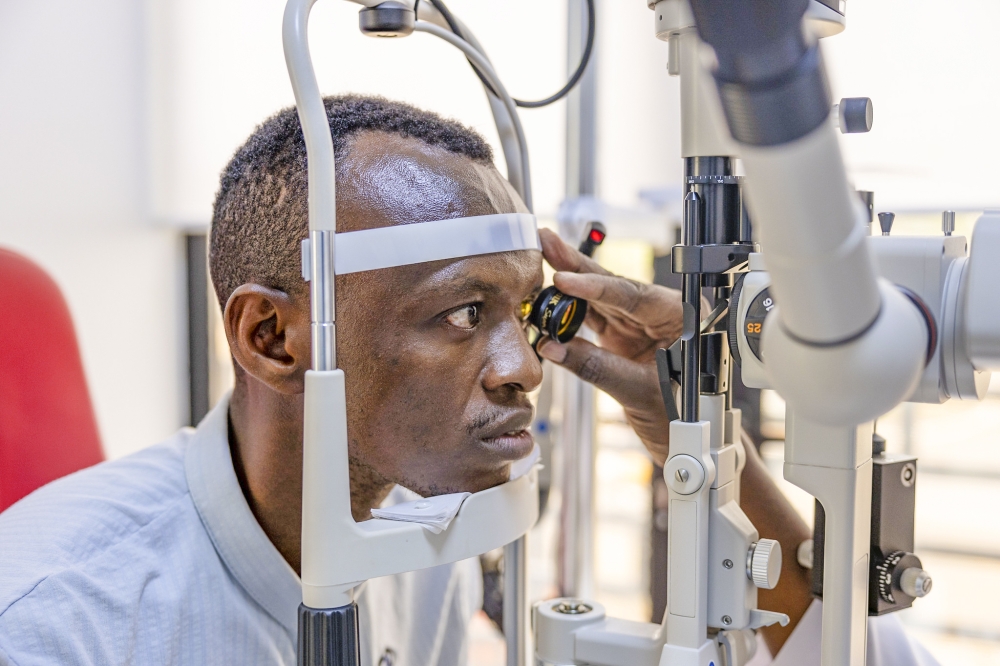
    Rwanda is making progress in enhancing ophthalmic services, with the number of locally trained and practicing eye care specialists now reaching 30 following the graduation of four others last week.

    In an exclusive interview, Dr. John Nkurikiye, the Chief Ophthalmologist and Director of Rwanda International Institute of Ophthalmology (RIIO), shared insights on the state of eye care in the country, ongoing efforts to raise awareness, and the future of ophthalmology in the country.

    The excerpts;

    What eye care services are currently available in Rwanda, and how can people efficiently access these treatments and resources in their communities?

    Over the past 15 years, eye care services in Rwanda have significantly evolved. Today, we no longer need to refer any ophthalmic cases abroad for specialised treatment. Our facilities are equipped to handle the majority of eye diseases, including surgical care.

    The RIIO iHospital is a new player in the market, offering the latest surgical and imaging technologies. Other notable centers providing comprehensive eye care services include Kabgayi Eye Unit and Kibagabaga Eye Clinic, in the public sector, as well as Rwanda Charity Eye Hospital and Dr. Agarwal's Eye Hospital, in the private sector.

    What strategies can be implemented to prevent vision loss, and what proactive measures must be taken at individual and community levels to safeguard eye health?

    Many causes of vision loss are preventable or treatable. For instance, vitamin A deficiency can be avoided through a balanced diet rich in vitamin A. Infections like trachoma can lead to blindness in some countries, but this is not a big issue in Rwanda, where face washing remains a key preventive measure.


    Brigadier General Prof John Nkurikiye  Prof John Nkurikiye, the Medical Director at RIIO iHospital Rwanda during an interview.
    Brigadier General Prof John Nkurikiye Prof John Nkurikiye, the Medical Director at RIIO iHospital Rwanda during an interview.

    Eye injuries are common causes of unilateral blindness in young people and can be prevented by wearing protective eyewear during activities such as welding or working with chemicals. It's crucial to advise children against playing with sharp objects.

    I also want to stress the importance of avoiding traditional medicine. Many herbal remedies can cause irreversible damage to the eyes. Some medications, particularly those for malaria, tuberculosis, and steroids, can have side effects that adversely affect eye health.

    Complications from diseases like diabetes, hypertension, and glaucoma can lead to blindness, but early detection can prevent this. Babies can be born with various eye conditions that may cause blindness, yet early detection can help preserve their vision. Regular eye checks are essential for detecting diseases early and preserving sight.

    Is there adequate awareness among Rwandans regarding eye health, regular check-ups, and hygiene?

    Unfortunately, no! Very few Rwandans seek regular health checks when they are not sick, and this includes eye health. There is a need for health education to raise awareness about the importance of eye care.

    What is the current prevalence of blindness in Rwanda, and how does this data reflect the broader challenges and opportunities in addressing vision health?

    Approximately 2% of individuals over the age of 50 experience blindness, while around 0.5% of the general population is affected. Cataracts are the leading cause of blindness, accounting for 56% of cases, yet this condition can be effectively treated through a simple 10-minute surgery.

    What key reforms and innovations are needed to transform Rwanda's eye care services, and how can these actions lead to improvements in patient outcomes?

    To transform eye care in Rwanda, we need to train more specialists, aiming for at least one ophthalmologist per district to achieve a ratio of 1 to 250,000 people. Individuals must take responsibility for their health, demanding quality services and being willing to pay for high-standard care.


    The hospital was founded to address the gaps in the provision of eye care services in Rwanda
    The hospital was founded to address the gaps in the provision of eye care services in Rwanda

    Eye care relies heavily on technology, which is often expensive. Service providers should be able to recover their investments to sustain quality services.

    What challenges are holding back Rwanda's eye health services, and what urgent measures are needed to bridge these gaps and ensure accessible, high-quality care for all?

    The biggest challenge we face is a shortage of human resources. We also need the capacity to maintain our medical equipment, which requires training local biomedical engineers to handle the specialised technology used in eye care. Moreover, public hospital tariffs often do not meet the actual cost of services, leading to further difficulties in providing adequate care.

    What strategies can be implemented to reduce the country's reliance on foreign funding for eye care, and how can sustainable, locally-driven solutions be developed to ensure long-term success?

    Public facilities' tariffs do not adequately cover service costs, not just in eye health, but across various healthcare services. The government could subsidise expensive super-specialty services to make them more accessible in the public sector.

    Currently, many big hospitals can only provide these services with the support of NGOs. While this model works while NGOs are present, it becomes unsustainable once they leave, as local tariffs often cannot support the necessary costs. For example, retina surgery in a public hospital may only cost about $30 from the Community Based Health Insurance (Mutuelle de santé), which is just a fraction of the total cost.

    What cutting-edge technologies are being introduced to revolutionise eye care and how are these innovations shaping the future of vision health in the country?

    One of our advancements at RIIO is the introduction of ocular electrophysiology tests, which have improved our ability to investigate the causes of visual loss, especially in children. This technology helps differentiate between various genetic causes of visual impairment.

    We are also rolling out the use of artificial intelligence in screening diabetic patients for eye complications. This technology is a game-changer, particularly given the shortage of retina specialists. It has been tested locally and has demonstrated high reliability.

    We are excited to announce that we will host the Orbis Flying Eye Hospital next year. This state-of-the-art airplane is equipped with the latest simulators for teaching eye surgery and includes a modern eye theater for performing complex surgeries. The plane will be in Kigali for about 15 days, and we will share more details with the public as our plans develop.

    The post Transforming eye care in Rwanda: Expert sheds light on country's plans to improve vision health appeared first on The Custom Reports.

    Source : https://thecustomreports.com/transforming-eye-care-in-rwanda-expert-sheds-light-on-countrys-plans-to-improve-vision-health/


  • President Kagame, First Lady attend dinner hosted by Macron #rwanda #RwOT

    The summit’s opening session took place at the historic Villers-Cotterêts castle in France on October 4. A closed-door meeting of Heads of State is scheduled for Saturday, October 5.

    The summit is being held under the theme, 'Creating, Innovating, and Entrepreneurship in French.'

    Earlier, on October 3, Foreign Ministers from Francophonie member states convened to discuss issues affecting member countries.

    Topics of discussion included the ongoing war in Lebanon, which is currently engaged in conflict with Israel and security challenges in Haiti among others.

    It was agreed that the next Francophonie Foreign Ministers’ meeting would be held in Kigali, Rwanda, in 2025, with Rwanda being the only nation that applied to host the event.

    Several Heads of State who had initially confirmed their participation did not attend.

    These included King Mohammed VI of Morocco, who was represented by Prime Minister Aziz Akhannouch, and Tunisia’s President Kaïs Saïed, who was represented by Prime Minister Kamel Madouri.

    Other included Cameroon’s President Paul Biya, Senegal’s President Bassirou Diomaye Faye, Congo’s President Denis Sassou Nguesso, Djibouti’s President Ismaïl Omar Guelleh, Togo’s President Faure Essozimna Gnassingbé, Angola’s President João Lourenço, Equatorial Guinea’s President Teodoro Obiang Nguema Mbasogo, and Comoros’ President Azali Assoumani, who recently survived a knife attack.

    Guinea’s President Mamadi Doumbouya also did not attend, despite Guinea recently being released from sanctions previously imposed by the Organisation Internationale de la Francophonie (OIF).

    The International Organization of La Francophonie (OIF) comprises 88 member states, united by the shared goal of promoting the French language.

    President Kagame and First Lady Jeannette Kagame arriving at the Élysée Palace to attend the dinner hosted by French President Emmanuel Macron and his wife.

    A closed-door meeting of Heads of State attending the 19th Francophonie Summit is scheduled for Saturday, October 5.

    President Kagame exchanging greetings with Macron upon arrival in Paris.

    IGIHE

    Source : https://en.igihe.com/news/article/president-kagame-first-lady-attend-dinner-hosted-by-macron

  • US launches strikes against Yemen #rwanda #RwOT

    Ships and fighter jets of the US Central Command have bombarded more than a dozen sites in Houthi-controlled parts of Yemen, including the capital Sanaa and the port of Hodeidah.

    The Houthis are a Shia group styling themselves as the Yemeni government and who control the northwest of the country. They have been interdicting Israeli and Western shipping in the Red Sea for almost a year, to pressure Israel to stop attacking Gaza.

    According to the US military, the strikes targeted 15 Houthi targets on Friday afternoon, going after 'offensive military capabilities' in order to 'protect freedom of navigation and make international waters safer and more secure for US, coalition, and merchant vessels.'

    Prior to the official statement from CENTCOM, unnamed US officials told AP that the strikes had taken place against 'weapons systems, bases and other equipment' at five locations.

    According to Yemeni media, there were seven strikes at the Hodeidah airport and the military base at Katheib. Two explosions were reported in Dhamar province, and three in Bayda province, southeast of Sanaa. Four more strikes targeted the capital itself.

    Friday's bombing was the first US operation against the Houthis since June. Israeli jets struck Hodeidah last week, after the Houthis fired a ballistic missile at Israel.

    The Yemeni group has fired missiles or drones at more than 80 merchant ships since last October, when Israel declared war on Hamas in Gaza, following a series of deadly raids by the Palestinian group into Israeli territory. Initially, the Houthis targeted just vessels 'linked to' Israel but expanded their interdictions to US and UK vessels after the Anglo-American airstrikes in January.

    Washington sent several warships into the region as part of 'Operation Prosperity Guardian,' an effort to keep the Bab el-Mandeb Strait open. The US Navy has not been able to deter the Houthis, however, causing most Western shipping companies to avoid the Suez Canal and route their vessels around Africa instead.

    Over the weekend, the Houthis released a video of one of their sea drones striking the Panamanian-flagged tanker Cordelia Moon in the Red Sea.
    The Houthis have shot down nearly a dozen US surveillance and strike drones. They have also fired on US warships multiple times. CENTCOM maintains that all of the incoming missiles and drones have been successfully intercepted.

    The US has accused the Houthis of being a proxy of Iran, which the group has denied. Earlier this week, Iran launched a massive missile barrage at Israel, in retaliation for the recent killings of Hamas and Hezbollah leaders, as well as a senior general of Iran's Islamic Revolutionary Guard Corps (IRGC) in Lebanon.

    The post US launches strikes against Yemen appeared first on The Custom Reports.

    Source : https://thecustomreports.com/us-launches-strikes-against-yemen/

  • Moscow to remove Taliban from terrorist list #rwanda #RwOT

    Moscow will remove the Taliban from the list of terrorist organizations, Zamir Kabulov, Russia's presidential envoy to Afghanistan, told journalists on Friday. The change was also confirmed by Aleksandr Bortnikov, the head of the Federal Security Service (FSB), which is responsible for combating terrorist threats.

    Russia was among the first nations to establish contacts with the Taliban after it seized power in Afghanistan in 2021. Russia has not formally recognized the group as the governing force in the country, however.

    The group took power in Kabul during the last stage of the hectic withdrawal of US troops, which ended the 20-year Western occupation of Afghanistan. The Washington-backed government of President Ashraf Ghani fled the country, as did many citizens who helped the Americans.

    In May, Kabulov described the Taliban as 'definitely not our enemies.' Speaking to reporters on Friday, the senior diplomat stated that the Russian Foreign Ministry and the FSB are working with other government agencies to formalize the Taliban's removal from the national terrorist list

    'A fundamental decision on this issue has already been made by the Russian leadership,' he said, adding that all legal procedures need to be allowed. It would require 'scrupulous work by the lawyers, the parliament and other state agencies,' Kabulov said. He expressed hope that 'the final decision will be announced in the nearest future.'

    The FSB chief said on Friday that Moscow is finalizing the removal of the Taliban from the blacklist. According to Bortnikov, the move would pave the way for 'pragmatic cooperation' with the group, including the fight against organized crime and ISIS-K, a regional offshoot of Islamic State (IS, formerly ISIS).

    ISIS-K has claimed responsibility for several attacks in Russia this year, including the storming of a music venue outside Moscow in March which left 145 people dead.

    Russia blacklisted the Taliban in 2003. The authorities said at the time that the group was linked with an Islamist insurgency in the northern Caucasus and was responsible for the hijacking of a Russian civilian aircraft in 1995.

    Moscow's attitude towards the group began to change after the insurgents were largely defeated at home. The shift was further bolstered by the rise of IS in the mid-2010s.

    President Vladimir Putin said in July that the Taliban was de facto controlling Afghanistan. 'In this sense, the Talibs are our allies in the fight against terrorism,' Putin stated, adding that Moscow received a 'certain signal' that the group was ready for cooperation.

    Foreign Minister Sergey Lavrov said in June that Russia would not recognize the Taliban government until it fulfills several conditions, including a commitment to fighting the drug trade and terrorism, and 'the respect for basic rights of all nations of Afghanistan.'

    The post Moscow to remove Taliban from terrorist list appeared first on The Custom Reports.

    Source : https://thecustomreports.com/moscow-to-remove-taliban-from-terrorist-list/

  • Dozens of Ukrainian troops surrendered in Ugledar #rwanda #RwOT

    Several dozen Ukrainian troops have surrendered in the Donbass city of Ugledar, which was captured earlier this week, the Russian Defense Ministry has said.

    In a statement on Friday, the ministry said that as many as 83 Ukrainian troops surrendered across the front line over the past week, without providing details on the circumstances. Officials added that 44 surrendered during the 'mop-up operation' in Ugledar.

    The heavily fortified town in the southern sector of the front was a linchpin of Ukrainian defenses in the area, with fighting raging there since August 2022. Ugledar also sits on a hill and consists almost entirely of high-rise concrete buildings, allowing for fire control of the surrounding terrain.

    On Wednesday, TASS reported, citing sources, that some Ukrainian units in Ugledar suffered 'huge losses' after failing to get out of the town in time.

    On Thursday, the Defense Ministry confirmed that the city was captured, later saying that Russian forces have generally taken 'more advantageous' positions in that sector of the front.

    The post Dozens of Ukrainian troops surrendered in Ugledar appeared first on The Custom Reports.

    Source : https://thecustomreports.com/dozens-of-ukrainian-troops-surrendered-in-ugledar/

  • Police explain 'Russian spy' whale's death #rwanda #RwOT

    A beluga whale that the Western media once half-seriously branded a 'Russian spy' likely died of an infection, Norwegian police have announced, ruling out initial suspicions that the celebrity animal had been shot.

    The sea mammal, nicknamed Hvaldimir, was found dead in Risavika Bay in southern Norway in late August. The animal rights groups OneWhale and NOAH then filed a complaint with Norwegian police, arguing that multiple circular holes in the whale's body indicated that shots had been fired at it.

    However, an autopsy carried out by the Norwegian Veterinary Institute suggested that no foul play was involved in Hvaldimir's demise, police said on Friday.

    The cetacean likely passed away due to a bacterial infection, which developed in a wound caused by a stick that got stuck in the creature's mouth, Amund Preede Revheim, who heads the North Sea and Environment Section of the police in south-west Norway, said.

    As for the circular holes, they were likely made by the birds that consumed the whale's carcasses, he explained.

    'As there is nothing in the investigations to indicate that Hvaldimir was killed in an illegal manner, the police see no reason to start a probe into the whale's death,' the officer said. The complaint by the activists has been dropped, he added.

    Revheim also complained that it was 'difficult' for the Norwegian Veterinary Institute to carry out the autopsy because 'many of the whale's organs were very rotten.'

    The celebrity white beluga whale was first spotted off the coast in Norway's far-northern Finnmark region back in 2019. At the time of its discovery, the animal allegedly wore an action camera harness labeled 'Equipment St. Petersburg.' This fact led to wild speculation in the Western media that the sea creature was actually a 'Russian spy whale' on a mission. Some, however, suggested the animal was actually a trained 'therapy whale' that had somehow escaped its enclosure.

    The whale was nicknamed 'Hvaldimir' — a play on the Norwegian word for whale (hval) and the name of Russian President Vladimir Putin. The marine mammal was known for being friendly to humans and was often seen approaching boats and interacting with those aboard.

    The post Police explain 'Russian spy' whale's death appeared first on The Custom Reports.

    Source : https://thecustomreports.com/police-explain-russian-spy-whales-death/