These ancient trees, standing at what was once the entrance to the king’s palace, are more than mere botanical giants.
They are living relics of a time when Rwanda’s monarch ruled over the land, symbols of the grandeur that greeted visitors as they approached the royal residence.
The ficus trees, believed to have been deliberately planted at the palace gates, have stood for generations, their roots entwined with the stories of Rwanda’s past.
A nearby signpost erected by the Rwanda Culture and Heritage Academy (RCHA) provides further insight into the historical importance of this location, which sits just a few meters from the shores of Lake Kivu.
The choice of this location was not merely for its scenic beauty but for its strategic role in the military expeditions of the time. King Kigeli IV Rwabugiri, who reigned from 1853 to 1895, used his royal palacesâ”particularly those near Lake Kivuâ”as staging grounds for military expeditions.
Nyamasheke holds a special place in this royal history. It was here that King Rwabugiri resided when he received the German explorer Von Gotzen in May 1894.
After this historic meeting at Kageyo in Ngororero, the king returned to Nyamasheke to celebrate the Umuganura festival in June, a traditional Rwandan harvest festival symbolizing unity and prosperity.
Following the celebrations, he embarked on one of his most significant military expeditions. Tragically, King Rwabugiri’s fate was sealed during one of these expeditions. While on his way to the battlefield in Bunyabungo, he was poisoned at Iyamabini Island.
Although efforts were made to return him to his residence, he died in a boat before reaching Nyamasheke. His body was received at his residence and later transported to Riture in Gicumbi, where he was laid to rest.
The peninsula of Mivura, near the residence, served as grazing land for the king’s cattle, adding another layer to the significance of this area.
Today, the royal residence may have faded into history, but the ficus trees continue to stand as enduring guardians of King Rwabugiri’s legacy.
As you stand beneath the broad branches of these ancient trees, it’s easy to imagine the grandeur that once defined this royal site.
The royal residence now survives only in whispers of the past, marked by two tall ficus trees, known locally as 'ibigabiro’.
A nearby signpost erected by the Rwanda Culture and Heritage Academy (RCHA) provides further insight into the historical importance of this location.
Nyamasheke holds a special place in this royal history.
The former residence of King Kigeli IV Rwabugiri is located near Groupe Scolaire Saint Jseph.
Nyamasheke Catholic Church Parish is located just a few meters away from the iconic ficus trees.
The residence sits just a few meters from the shores of Lake Kivu.
As you stand beneath the broad branches of these ancient trees, it’s easy to imagine the grandeur that once defined this royal site.
Under the global theme, 'Make Room For Life’, Bralirwa, Rwanda’s leading beverage company, joined efforts with the cooperatives working along the shores of Lake Kivu in Nyamyumba sector in clean-up activities and discussions on waste management, in commemoration of the global cleanup day.
In December 2023, the United Nations General Assembly resolutions proclaimed 20th September as World Cleanup Day, with the purpose of raising awareness of the role that clean-up efforts play in sustainable development.
The community was thrilled to engage in the activities and awareness discussions on how to conserve the natural environment through a shared sense of responsibility.
Bralirwa Head of Corporate Affairs and Communications, Mrs. Rosette Mutoni, explained how environmental sustainability is one of the pillars under the company’s Brew a Better World agenda.
'Sustainability and responsibility are an integral part of how operate as a business. While the road to a waste-free world is long, initiatives like World Cleanup Day serve as a platform to foster environmental awareness and advocate for sustainable practices that are crucial to achieve a healthier and cleaner planet,' she said.
Yoram Maniraguha, a representative from one of the cooperatives working at the shore of Lake Kivu, appreciated the learnings from the day’s activities and pledged his commitment in promoting environmental healthy practices.
'Participating in the cleanup activities today made me realize how much of a difference we can make together. It’s not just about picking up trashâ”it’s about taking ownership of our community and setting an example for future generations to care for the environment,' said Yoram.
In his appreciation remarks, the Mayor of Rubavu, Mr. Prosper Mulindwa commended Bralirwa for the great initiative as well as donation of garbage collection bins to the cooperatives and called upon residents to be more vigilant in keeping the shores and the city clean.
'Healthy practices are a result of continuous awareness that effects long term behavior change. Today, we are reminded that the health of our planet is in our hands. Each small act of care contributes to a cleaner and more sustainable environment â” let’s together thrive for a cleaner city,' said Mr. Mulindwa.
Bralirwa Plc, part of the HEINEKEN Company, marked the World Cleanup Day through engaging in clean-up activities around the shores of Lake Kivu in partnership with Rubavu district and donation of hygiene materials.
Bralirwa Head of Corporate Affairs and Communications, Mrs. Rosette Mutoni, explained how environmental sustainability is one of the pillars under the company’s Brew a Better World agenda.
The community was thrilled to engage in the activities and awareness discussions on how to conserve the natural environment through a shared sense of responsibility.
The Mayor of Rubavu, Mr. Prosper Mulindwa commended Bralirwa for the great initiative as well as donation of garbage collection bins.
The event also featured discussions on waste management.
Bralirwa staff in a group photo with community members after the activity.
Bralirwa Plc marked the World Cleanup Day on Friday, 20th September 2024.
Recognizing this power, the Mustard Seed Institute (MSI) and Ishami Foundation recently partnered to leverage football as a tool for promoting social cohesion and harmony in Rwanda, a country once reduced to ashes during the 1994 Genocide against the Tutsi. Through this initiative, they aim to deepen understanding of Rwanda’s core values of forgiveness, tolerance, and unity.
Ishami Foundation, is an organization that uses football as a tool to promote tolerance, unity and reconciliation among Rwandan youth.
This collaboration came to life during the celebration of International Peace Day on September 21, 2024. To mark the occasion, the Ishami Foundation, in partnership with MSI, and with support from the Former Amavubi Players Association (FAPA) and Coaches Across Continents (CAC), organized a week-long football program in Murambi Sector, Gatsibo District.
The Mustard Seed Institute (MSI) and Ishami Foundation recently partnered to leverage football as a tool for promoting social cohesion and harmony in Rwanda.
The initiative brought together people of all ages and backgrounds, using sport as a medium to foster community spirit and peace.
The celebration in the area was not by coincidence. Murambi, now part of Gatsibo District, has a tragic history. Formerly part of the Murambi Commune in Byumba Prefecture (today’s Eastern Province), it was a significant site of mass killings during the genocide, under the notorious leadership of the then Bourgmestre Jean Baptiste Gatete.
In this area, new militia groups were introduced, ensuring widespread participation of the local Hutu population in exterminating the Tutsi.
These groups formed alliances known as “Imboma,” a name derived from insecticide tablets used to kill cockroachesâ”a dehumanizing term used to refer to Tutsis.
Women and children were also conscripted into the genocide. Female militias were known as “Interamwete,” while children were referred to as “Imiyugiri.”
Particularly, the Interamwete initially encouraged their husbands to avoid any contact with Tutsi women and their families and assisted the Interahamwe by identifying hiding Tutsis or singing songs to boost morale among the killers.
Despite this dark past, Murambi has transformed into a community committed to unity and reconciliation. MSI, a grassroots organization founded by genocide survivor Jean Nepomoscene Sibomana and his wife, Sabrina Joy Smith, has played a pivotal role in this transformation. Established on Sibomana’s family land in 2015, MSI employs former genocide perpetrators or their descendants, fostering peaceful coexistence and promoting forgiveness.
Sibomana’s efforts were recognized in 2022 when he was honored with the Protectors of the Friendship Covenant award (Umurinzi w’Igihango) by Rwanda’s First Lady, Mrs. Jeannette Kagame, for his contributions to national unity. Building on the power of sport, MSI, with support from the Ishami Foundation, is now integrating football into its programs to further advance peace and unity in Murambi.
Games such as Ndi Umunyarwanda, Kwibuka, and Kubaka Amahoro were played, highlighting how sports can foster resilience and peacebuilding within communities.
The International Peace Day activities featured a 3-day training session for 14 youth football coaches, led by CAC’s East Africa Regional Instructor, Salim T. Blanden, alongside Community Impact Coach, Evariste Habimana. The training focused on Rwanda’s Home-Grown Solutions and aligned with the United Nations Sustainable Development Goals (SDGs).
The week culminated in a showcase event on September 21, where the public witnessed the unifying power of football. Games such as Ndi Umunyarwanda, Kwibuka, and Kubaka Amahoro were played, highlighting how sports can foster resilience and peacebuilding within communities. The youth coaches, who had completed their training, led the games ahead of the finals, which saw thrilling matches between local teams.
The girls’ final between Rwimitereri Cell and Rwankuba Cell, and the boys’ final between Rwankuba Cell and Murambi Cell, were played in a lively atmosphere with hundreds of fans from the community cheering on the teams.
Winning teams were awarded trophies, and all participants received certificates commemorating International Peace Day.
It was unanimously agreed that this event will now become an annual tradition, with sports and other activities promoting community engagement, especially among the youth, to encourage peaceful coexistence in Murambi and beyond.
Following the matches, local authorities and organizers delivered messages of peace and unity, emphasizing the importance of collaboration and shared values.
Eric Murangwa Eugène, Founder and CEO of Ishami Foundation and President of the Former Amavubi Players Association, highlighted the transformative power of sport.
“International Peace Day in Murambi is not just a commemoration; it’s a powerful reminder of our journey from tragedy to triumph. Through sport, we are weaving a new narrative of unity and reconciliation, transforming a place once marked by violence into a community that embodies hope and collaboration,” he said.
Jean Nepomoscene Sibomana, co-founder of MSI and the main organizer of the Peace Day activities, noted the importance of leveraging sport for social change.
“Through the power of sport and community engagement, we are transforming Murambi into a beacon of reconciliation and opportunity. Together, we are rewriting our story from one of tragedy to a legacy of hope, healing, and harmony,” he stated.
Simpenzwe Gaspard, a Community Youth Football Coach, expressed how participating in the training opened his eyes to football’s potential as a tool for social change. “It’s not just about the game; it’s about fostering understanding, building friendships, and empowering our youth to be champions of peace and unity in our community,” he said.
Jean Claude Ndayisenga, Executive Secretary of Murambi Sector, also praised the initiative for shaping a future where unity and collaboration define the community’s identity.
The International Peace Day activities featured a 3-day training session for 14 youth football coaches.
The week culminated in a showcase event on September 21, where the public witnessed the unifying power of football.
The week-long football program in Murambi Sector, Gatsibo District brought together people of all ages and backgrounds, using sport as a medium to foster community spirit and peace.
Players posing for a photo at a football pitch in Murambi.
Sport promotes inclusivity, teamwork, fair play, and empathy, while breaking down stereotypes and prejudices.
Sport has an unparalleled ability to transcend cultural, social, and geographical boundaries, fostering harmony and unity among diverse groups.
The man behind Project 2025, the rightwing policy manifesto that includes calls for a sharp increase in immigrant deportations if Donald Trump is elected, told university colleagues about two decades ago that he had killed a neighborhood dog with a shovel because it was barking and disturbing his family, according to former colleagues who spoke to the Guardian.
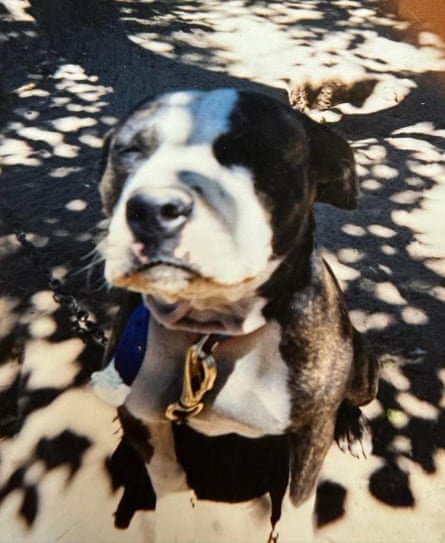
Kevin Roberts, now the president of the Heritage Foundation, is alleged to have told colleagues and dinner guests that he killed a neighbor's pit bull around 2004 while he was working as a still relatively unknown history professor at New Mexico State University.
Loca, a female pit bull that belonged to Roberts's neighbors, in Las Cruces, New Mexico. Loca's owners say she went missing in 2004, the year that Roberts is alleged to have said he killed his neighbor's dog. Photograph: Courtesy of Daniel Aran
'My recollection of his account was that he was discussing in the hallway with various members of the faculty, including me, that a neighbor's dog had been barking pretty relentlessly and was, you know, keeping the baby and probably the parents awake and that he kind of lost it and took a shovel and killed the dog. End of problem,' said Kenneth Hammond, who was chair of the university's history department at the time.
Two other people â” a professor and her spouse â” recall hearing a similar account directly from Roberts at a dinner at his home. Three other professors also said they heard the account at that time from the colleagues who said they had heard it directly from Roberts.
None recall Roberts ┠who worked at the university as an assistant professor from 2003 to 2005 ┠ever saying that the dog he allegedly said he killed was actively threatening him or his family.
In a statement to the Guardian, Roberts denied ever killing a dog with a shovel. He did not answer questions about why several people say he told them that he had.
'This is a patently untrue and baseless story backed by zero evidence. In 2004, a neighbor's chained pit bull attempted to jump a fence into my backyard as I was gardening with my young daughter. Thankfully, the owner arrived in time to restrain the animal before it could get loose and attack us.'
The people who say they heard Roberts talk about killing a dog at the time said they found the apparent admission to be unsettling and said they did not ask Roberts â” who as a conservative Republican was already seen as something of an outsider among the university's mostly liberal academic staff â” to provide any more detail about the incident.
'I think that probably people were not eager to engage with him over this. It sounded like a pretty crazy thing to do and people didn't want to get into it at that point,' Hammond said.
News of Roberts's alleged comments to colleagues comes as Trump, the Republican nominee for president, and his running mate, JD Vance, have engaged in a racist and false propaganda campaign to demonize Haitian immigrants living in Springfield, Ohio, by claiming that they have been killing and eating people's pets. The xenophobic claims, which are probably meant to strengthen support among white, racist and anti-immigrant voters, have incited multiple bomb threats that have disrupted the Springfield community.
Project 2025, which was written by the Heritage Foundation under Roberts's watch, has become a focal point of the 2024 presidential election as Democrats warn that its radical policy prescriptions ┠such as the eradication of the Department of Education and imposing further restrictions on abortion ┠will serve as a blueprint for Trump's administration if he is elected. Both Trump and Vance have sought to distance themselves from the 900-page report, with Trump claiming he had not read it. But in a foreword to Roberts's book written by Vance, the vice-presidential nominee praises Roberts's 'depth and stature within the American Right' and says that, 'in the fights that [lie] ahead, these ideas are an essential weapon'.
Roberts is one of the most prominent rightwing voices in Washington. He has close ties to Opus Dei, the Catholic group, and has spoken openly about how he considers the outlawing of birth control to be one of the 'hardest' political battles facing conservatives in the future.
Twenty years ago, Roberts â” now a staunch supporter of Trump â” was an academic who may have been uneasy among fellow professors who were not politically aligned with him. Yet, Hammond said, colleagues treated him with respect and kindness â” including bringing food to his home after his wife had a baby â” and were happy to have him working at the university.
One former colleague remembers being reprimanded by Roberts after she used her university email account to tell colleagues she was going to help campaign for John Kerry, the then Democratic nominee for president, because she recalled him saying ┠rightly, she now admits ┠that it was inappropriate. But relations were generally good.
Marsha Weisiger, a colleague of Roberts at the time who is now an environmental history professor at the University of Oregon, recalled being invited to dinner at Roberts's home with her husband, and Roberts telling both of them the story about how he had hit a neighbor's pit bull with a shovel and killed it.
'My husband and I were stunned. First of all, that he would do such a thing. And second of all, that he would tell us about it. If I did something horrific, I would not be telling my colleagues about it,' she said.
To make matters worse, she recalled Roberts saying that the neighbor in question also had puppies and that he had considered killing them, too. Weisiger's husband, who asked not to be named, recalled Roberts saying he had complained about the dog to the police, who were not responsive, and that the dog sometimes got into his yard.
Roberts, public records confirm, was living with his wife and young family in a modest and mostly immigrant community in Las Cruces at the time, in a historic neighborhood lined with traditional adobe homes and chain-link fences.
In his statement, Roberts claimed that the city later arrived and removed 'more than ten dogs' from his neighbor's property, citing animal abuse. He said he was 'incredibly grateful' to animal control for rescuing the 'abused animals' and was grateful that he and his daughter did not have physical contact with the dog.
Roberts also identified the man who he called the 'animal owner': a native of Las Cruces named Daniel Aran who, a spokesperson for Roberts pointed out in an email, was sentenced to 78 months in prison for cocaine trafficking in 2017, more than a decade after the alleged incident occurred.
Public records and the Guardian's reporting confirm that Aran and his mother lived nextdoor to Roberts at the time that Roberts lived there.
The Guardian could not independently verify whether Roberts actually killed a dog or whether Roberts's account of his interactions with his neighbor's dog was accurate. The Guardian has repeatedly sought out public records to try to verify the alleged accounts. The city of Las Cruces, the police and animal control authorities said public records were not available for the time frame in which the alleged incident occurred.
But the Guardian did track down Daniel Aran, whose mother Norma Noriega still lives in the adobe home next to where Roberts previously lived in Las Cruces.
Noriega's family moved into their home in about 2002 with her husband and children â” Denise Aran, who was about seven at the time, and Daniel, who was about 16.
Daniel Aran, who has been released from prison and is now the owner of a small construction company, spoke to the Guardian from the front yard of the small stone house. Aran is lean and muscular, with a chiseled face and hardened stare.
'When I was younger, I was wild. But I gave respect to get respect. Now I'm more about work and family,' he said, dusting off his clothes from a day of construction. 'And I've always been a dog lover, an animal lover, since I was a little kid. I've always had dogs.'
Aran said he was diligent about watching his dogs â” small pit bulls â” which he bred, selling the pups as a way of making money for his family's household.
When asked if he had a dog disappear around 2004, he said: 'Yes, definitely, my dog, Loca, my little female'. She had been his favorite, he said.
'I had one female, and that was her. She was a little, little thing like this,' he said, holding up his hands in an affectionate gesture. 'She was a tiny, cute little thing.'
When he was asked by the Guardian about comments Roberts allegedly made to colleagues about killing a neighborhood pit bull with a shovel, he grimaced. 'Man, you never know what's inside someone's head.'
'I'm not here to make up stories or to say he did it,' he said. 'But it was right around 2004 when all that happened, that Loca was missing,' he said. 'I wish I could say, yeah, I know this fool did that. But I can't tell you that. But what I can tell you is that my dog went missing, and we never found her. She wasn't at the dog catchers.'
Aran also denied Roberts's claim that dogs had been taken away from the property.
'We had three dogs that we kept, and then there were puppies occasionally that I would sell,' he said.
His mother, 53-year-old Norma Noriega, sitting out in the front yard, also disputed Roberts's account.
'That never happened,' she said in Spanish. '[Animal services] never came and took dogs. Sure, [the dogs] would get out on occasion, and we'd go find them and bring them back. But there was never an incident where our dogs were taken, for abuse or whatever, that is simply not true.
'It was only with Loca that we could never figure out what happened. She disappeared, and we always knew it was strange that we simply never saw her again. [Daniel] went out looking for her, but she was never found,' said Noriega.
The family has had a number of pit bulls over the years â” Brownie and Casper were their longtime pets â” but it was the disappearance of Loca that had always distressed the family.
'She's the one that disappeared. We went out looking for her, we went out to the dog catchers, and we never found her,' Aran said quietly. 'And I know the dog catchers never got her.'
Asked about his recollection of Roberts, Aran said: 'Well, it's been more than 20 years,' and he did acknowledge that his dogs could be noisy.
'I'm pretty sure he had to have some patience,' said Aran. 'But, as far as I can remember, he never came across as disrespectful,' he said.
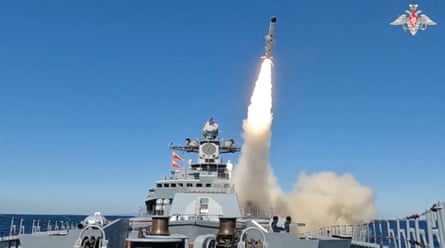
Japan said its fighter jets used flares for the first time to warn a Russian reconnaissance aircraft to leave its airspace, the defence ministry in Tokyo said, as tensions rise over increasing Russian and Chinese military cooperation in the region.
An undisclosed number of F-15 and F-35 warplanes were scrambled and fired flares on Monday after the Russian II-38 maritime patrol aircraft apparently ignored their radio warnings, Japan's defence minister, Minoru Kihara said.
Kihara said it was also the first publicly announced airspace incursion by a Russian aircraft since June 2019, when a Tu-95 bomber entered Japanese airspace in southern Okinawa and around the Izu Islands south of Tokyo.
He said the Russian plane had breached Japan's airspace above Rebun Island, just off the coast of the country's northernmost main island of Hokkaido,three times during its five-hour flight in the area.
'The airspace violation is extremely regrettable and today we lodged a very serious protest with the Russian government via diplomatic channels and strongly urged them to prevent a recurrence,' Kihara added.
The Japanese prime minister, Fumio Kishida, told government officials to respond 'firmly and calmly' to the incident and work with the US and other nations, the chief cabinet secretary, Yoshimasa Hayashi, said.
'We will refrain from giving any definitive information on the intent and purpose of this action, but the Russian military has been active in the vicinity of our country since the invasion of Ukraine,' Hayashi added.
Kihara said the use of flares was a legitimate response to airspace violation and 'we plan to use it without hesitation'.
Russian and Chinese warships take part in the 'Ocean 2024' naval drills in the Sea of Japan on 16 September, 2024. Photograph: Russian Defence Ministry/Reuters
The incursion came a day after a joint fleet of Chinese and Russian warships sailed around the Japanese northern coast. Kihara said the airspace violation could be related to a joint military exercise that Russia and China announced earlier this month.
Japanese defence officials are concerned about growing military cooperation between the China and Russia, and China's increasingly assertive activity around Japanese waters and airspace. It led Tokyo to significantly reinforce defences of south-western Japan, including remote islands that are considered key to Japan's defence strategy in the region.
The Chinese aircraft carrier Liaoning, accompanied by two destroyers, sailed between Japan's westernmost island of Yonaguni and nearby Iriomote, entering close to Japan's waters.
Japan's air self-defence force said it had scrambled jets 669 times between April 2023 and March 2024, about 70% of the time against Chinese military aircraft, although that number did not include airspace violations.
Japan and Russia are in a territorial dispute over the Northern Territories, a group of Russian-held islands that the former Soviet Union seized from Japan at the end of the second world war. The row has prevented the two countries from signing a peace treaty formally ending hostilities.
Bilateral tensions have also risen over Japan's support for Ukraine. Tokyo has offered Kyiv financial and material support and imposed sanctions on Russian individuals and organisations.
The origins of the carvings trace back to the early Tang Dynasty, with work continuing through the Five Dynasties and flourishing during the Northern and Southern Song Dynasties. These carvings, now protected as UNESCO World Heritage sites, were constructed in stages throughout the Ming and Qing Dynasties, ultimately earning their place as the final chapter in the history of Chinese rock art.
To visit the Dazu Rock Carvings is to embark on a journey through time. Alongside other famous rock carving sites like the Dunhuang Mogao Caves, Yungang Grottoes, and Longmen Grottoes, Dazu reveals the full narrative of China’s rock carving legacy. These magnificent carvings not only reflect religious beliefs but also showcase the vibrant culture of Bashu, the ancient name for the Sichuan and Chongqing regions.
The true magic of the Dazu Rock Carvings lies in their detailed craftsmanship and striking innovation. The artistry is unlike any other, as these carvings seamlessly blend ethnic, secular, and lifestyle influences to reflect the daily life of ancient China. Each carving tells a story, whether it’s a religious teaching or a secular scene, providing visitors with an intimate look into the lives, values, and beliefs of the past.
This art form did not remain static; it evolved over time. From the 9th to the 13th century, the carvings reflect the changing styles and beliefs of the people, incorporating both traditional Chinese values and religious philosophies such as Buddhism, Taoism, and Confucianism. The craftsmanship reached new heights with intricate designs and renovations, moving Chinese grotto sculpture into a new artistic stage.
Mount Baoding, Mount Beishan, Mount Shizhuan, Mount Nanshan, and Mount Shimen are just a few of the spectacular sites where these cliff-side carvings stand. Declared a World Heritage Site by UNESCO in 1999, these carvings are celebrated not just for their historical significance, but also for their artistic mastery. The scientific and aesthetic value of the Dazu Rock Carvings is unmatched, showcasing a brilliant fusion of art, architecture, and spirituality.
As you journey through the sprawling mountains and immerse yourself in the wonders of Dazu, you’ll find that the experience leaves a lasting impression. For travelers, historians, and adventurers alike, the Dazu Rock Carvings that stood the test of time offer an unforgettable experience. Standing before these ancient cliffs, one can’t help but be captivated by their beauty and depth. They are more than just an artistic featâ”they are a testament to human creativity and resilience.
The carvings reflect the changing styles and beliefs of the people, incorporating both traditional Chinese values and religious philosophies such as Buddhism, Taoism, and Confucianism.
Mount Baoding, Mount Beishan, Mount Shizhuan, Mount Nanshan, and Mount Shimen are just a few of the spectacular sites where these cliff-side carvings stand.
The craftsmanship reached new heights with intricate designs and renovations, moving Chinese grotto sculpture into a new artistic stage.
The true magic of the Dazu Rock Carvings lies in their detailed craftsmanship and striking innovation.
Declared a World Heritage Site by UNESCO in 1999, these carvings are celebrated not just for their historical significance, but also for their artistic mastery.
Standing before these ancient cliffs, one can’t help but be captivated by their beauty and depth.
Dazu reveals the full narrative of China’s rock carving legacy.
The historical site attracts a large number of local and international tourists to witness Chinese rock carving art legacy.
Each carving tells a story, whether it’s a religious teaching or a secular scene, providing visitors with an intimate look into the lives, values, and beliefs of the past.
The origins of Dazu Rock Carvings trace back to the early Tang Dynasty, with work continuing through the Five Dynasties and flourishing during the Northern and Southern Song Dynasties.
Visiting Dazu Rock Carvings offer an unforgettable experience.
João Crisante de Pina, a journalist from Cape Verde posing for a photo at Dazu Rock Carvings.
These magnificent carvings not only reflect religious beliefs but also showcase the vibrant culture of Bashu, the ancient name for the Sichuan and Chongqing regions.
Mohamed Ibrahim, spokesman of the ministry, said that the injured had been transferred to Al-Nao and Sawaed hospitals, adding that the death toll could be higher as the rescue team could not reach and identify some victims.
The RSF has not yet commented on the attack.
Since April 15, 2023, Sudan has been embroiled in a violent conflict between the Sudanese Armed Forces and the RSF, resulting in at least 16,650 deaths and the displacement of millions of people, according to UN estimates.
As confirmed by Rwanda’s Ministry of Foreign Affairs through X account, the visa waiver agreement was signed on Monday, September 23, 2024, in New York, on the sidelines of the 79th United Nations General Assembly.
This MoU marks a significant step in enhancing diplomatic relations between Rwanda and The Bahamas.
In July 2023, President Paul Kagame was honored with the Order of Excellence, the highest accolade in The Bahamas, in recognition of his strong friendship with the Bahamian Government and its people.
He received this honor during the celebration of The Bahamas’ 50th Independence Anniversary, which was attended by leaders from across the Caribbean.
The Order of Excellence is one of the highest honors in The Bahamas, ranking just after the Order of National Hero and the Order of the Nation.
The Bahamas, located in the Caribbean Sea, is an archipelago covering a land area of 13,878 km² with a coastline stretching 3,542 km. Geographically important, The Bahamas ranks as the 28th largest country in the Americas and 161st globally by area.
On July 10th, 1973, The Bahamas peacefully gained independence after 300 years as a British colony.
Since then, July 10th has been celebrated as a national holiday throughout the archipelago and in Bahamian foreign missions.
The Bahamas is now a member of the Commonwealth, as is Rwanda, which joined in 2009.
Minister Nduhungirehe exchanging documents with his counterpart of The Bahamas.
The visa waiver agreement was signed on Monday, September 23, 2024, in New York, on the sidelines of the 79th United Nations General Assembly.
In July 2023, President Paul Kagame was honored with the Order of Excellence, the highest accolade in The Bahamas, in recognition of his strong friendship with the Bahamian Government and its people.
The Bahamas boasts stunning natural beauty, including pristine beaches.
The Bahamas, located in the Caribbean Sea, is an archipelago covering a land area of 13,878 km².
The Bahamas is geographically close to countries such as Cuba, Jamaica, and the United States of America.
Nassau is the capital and largest city of The Bahamas.
Normally, stunting manifests in delayed physical growth, impaired cognitive development, and increased vulnerability to illness. Prevention involves proper maternal nutrition, exclusive breastfeeding, good hygiene, and ensuring access to nutritious foods and healthcare during early childhood.
In Rwanda, efforts to address stunting and promoting maternal and child health through antenatal and early childhood interventions are intensely underway with an ambitious stunting prevention trial set to begin in 2025.
This impending trial is seen as a significant step forward in combatting stunting and improving maternal and child health especially in rural Rwanda by assessing whether providing comprehensive antenatal and postnatal care can reduce stunting and significantly enhance health outcomes for mothers and their children.
A recent stakeholders’ meeting held in Kigali disclosed that the trial, involving 60 health centers in rural areas, will compare two groups; one receiving current antenatal and postnatal care and the other receiving a more comprehensive package, which includes advanced tools for pregnancy monitoring and additional nutritional support for children.
According to Dr. Edgar Kalimba, a senior consultant pediatrician at King Faisal Hospital and one of the key organizers of the trial, the study will focus on the first 1,000 days of lifeâ”a crucial period for child development.
Health State Minister Dr Yvan Butera interacts with a participant in a recent stakeholders meeting as Dr. Edgar Kalimba (C), a senior consultant pediatrician at King Faisal Hospital looks on.
“We aim to measure various outcomes, including maternal weight gain during pregnancy, the prevalence of preterm births, low birth weight, and the number of children who are stunted by the age of two,” Kalimba elaborated.
The trial will also monitor children’s cognitive and social development, alongside maternal health indicators such as hemoglobin levels and pregnancy duration. A unique aspect of the trial will be its sub-studies investigating the predisposing conditions of stunting, such as epigenetic factors and diving into the root causes to gain deeper insights.
It is planned that prenatal interventions will follow both national and international guidelines and include low-dose aspirin, calcium, omega-3 fatty acids, and L-arginine supplementation. Early enrollment in antenatal care will be strongly advocated to ensure timely intervention for pregnant mothers.
Postnatal care will align with the latest World Health Organization (WHO) and UNICEF recommendations which stipulate nine scheduled visits, including a home visit from birth to 24 months. These visits will include health assessments, growth monitoring, and family support, supplemented by small-quantity lipid-based nutrient supplements for children aged 6 to 18 months.
“This trial could transform how we address stunting and maternal health in rural areas, potentially serving as a model for broader healthcare improvements across the country,” Kalimba noted.
This initiative reinforces the importance of collaborative efforts to tackle stunting and improve maternal and child health in Rwanda. The results could shape future policies and interventions, offering a blueprint for stunting prevention not just in Rwanda but across similar settings globally according to officials from the Ministry of Health.
Dr. Aline Uwimana, Head of the Maternal, Child, and Community Health Division at the Rwanda Biomedical Center (RBC) says that Rwanda’s intensity in combating child stunting is part of its National Strategy for Transformation 2 (NST2), which aims to reduce stunting rates from 33% to 15% by 2029.
Dr. Aline Uwimana, Head of the Maternal, Child, and Community Health Division at the RBC says that the upcoming trial is a good step in the right direction.
One of the key initiatives is the upcoming stunting prevention trial, which is expected to bring significant advancements in understanding and addressing the root causes of stunting. The trial will focus on nutrition, maternal health, and innovative approaches to combat the socioeconomic inequalities that contribute to stunting.
'This upcoming stunting prevention trial will provide critical insights into the effectiveness of various interventions we have implemented. It will allow us to fine-tune our strategies, particularly in addressing the gaps that still exist among the most vulnerable communities,' she said.
Multiple Micronutrient Supplements (MMS), which have already shown promising results in other regions will be included and this is viewed as a game-changer for pregnant women and young children in Rwanda.
'The MMS has been proven to reduce adverse pregnancy outcomes, including low birth weight and preterm births. By starting this trial, we aim to gather concrete data that will help us scale up this intervention nationwide, ensuring that all pregnant mothers have access to the necessary supplements to protect their health and that of their children,' she explained.
The trial is also expected to benefit from Rwanda’s multi-sectoral approach, which combines nutrition, healthcare, education, and water and sanitation improvements.
According to her, it’s not about just distributing supplements; it’s about creating an environment where every child has access to nutritious food, clean water, and quality healthcare. This will provide the evidence needed to strengthen these connections and improve the overall well-being of the Rwandan child.
One of the key goals of the trial is to address the socioeconomic inequalities that have contributed to stunting in Rwanda. Research shows that intergenerational transfer, including maternal health and nutrition, accounts for 31% of the inequality in stunting. Uwimana pointed out that the trial would focus on closing this gap.
'By targeting the most affected groups, we can ensure that the benefits of our programs reach every corner of the country. This trial will help us identify the most effective ways to reduce stunting, particularly among children whose families have been hardest hit by socioeconomic disparities,' she explained.
Dr. Uwimana is confident that this project will pave way for more extensive and sustainable programs not only for Rwanda but other countries facing challenges of child stunting.
'By investing in cutting-edge research and evidence-based strategies, we are ensuring that future generations of Rwandan children will grow up healthier, stronger, and ready to contribute to the country’s development,' she emphasized.
The 2025 stunting prevention trial represents a crucial step in Rwanda’s ongoing battle against child stunting. Through innovative approaches and a commitment to data-driven strategies, the country is setting a strong foundation for a healthier and more prosperous future.
A stakeholders’ meeting held in Kigali last week disclosed that the trial involves 60 health centers in rural areas of Rwanda.
“I dispel this rumour, especially as it has never been confirmed by the authorities, ourselves or the Security Council. We are currently in a consultation phase, and the humanitarian situation remains very worrying. We have met with members of the civil society, who have all asked us to stay in Ituri in particular,” Mr Lacroix said in Kinshasa.
Congolese authorities recently asked Monusco to reconsider its withdrawal plan, even as the mission had already begun its disengagement, particularly in South Kivu, where it withdrew completely and handed over to the Congolese army.
By all accounts, the disparities in this Congo crisis are as predictable as they are expected, proving why the DRC remains one of the most conflict-ridden nations in the world and probably change may never be seen anytime soon (God forbid).
Despite its vast natural resources, the country has grappled with instability and violence for decades with many pointing to various external and internal reasons as the causes of this enduring conflict. At the onset, there is a complex web of interests that prevent lasting peace.
From Western exploitation of DRC’s mineral wealth to internal governance failures and Rwanda’s ongoing security concerns, this piece unravels the reasons why Congo remains a battlefield. It also explores what Rwanda can do to protect itself from the continuous threats emanating from its neighbor.
Western exploitation: The silent force behind DRC’s instability
One of the most significant yet often overlooked drivers of this enduring chaos is the involvement of Western powers. Congo’s natural resources, including cobalt, gold, and Colton, are indispensable to global industries. This mineral wealth has drawn the attention of foreign powers, who have historically prioritized profit over peace.
Belgian based Congolese artist, Thsiani Baloji once criticized post-colonial governance in his song Le Jour d’Après, calling it an extension of Western dependence rather than true independence. In his 2011 release, he pointed out how the errors of youth and political choices continue to bind the DRC to neo-colonialism, resource plundering, and debt.
This historical narrative still stands if you go by some observations and accounts by different historians and activists.
'Western nations and multinational corporations have long sought control over Congo’s mineral wealth, often by funding and arming rebel groups to destabilize the region and keep the government weak,' noted Dr. Samuel Mbikayi, a political analyst and medical practitioner based in South Africa.
According to him, by keeping DRC in a perpetual state of conflict, these powers can exploit its resources at minimal costs, without dealing with a strong state that would demand fairer trade deals.
Experts argue that Western countries have little incentive to promote stability in Congo because a peaceful, prosperous Congo would threaten their economic interests.
'Congo’s wealth is more valuable to foreign powers in chaos than in peace. The instability allows them to extract resources at low costs, with no accountability for the human or environmental toll,' explains Lisa Nyambura, a Nairobi based global relations expert and advocate in women’s leadership and youth empowerment.
This reality underscores the disturbing fact that the more unstable DRC remains, the more some foreign actors stand to gain. It is a system built on the exploitation of chaos, with devastating consequences for the Congolese people.
Not even the Congolese Army (FARDC) has been able to bring peace in their own country
A fragile state: The failures of the Congolese government
While external interference is a critical factor, DRC’s internal problems are equally responsible for its endless conflict. The Congolese government has been plagued by corruption, inefficiency, and an inability to assert control over its vast territory and this has led to a weak state that cannot provide basic services or security to its citizens.
Analysts say that instead of serving the Congolese people, much of the political elite in Kinshasa have prioritized personal enrichment over national progress. Corruption has eroded the foundations of governance, leaving regions like eastern Congo in the hands of militias and rebel groups.
The government’s failure to secure its borders and territories has had severe consequences, not just for DRC but for neighboring countries as well. Rebel groups operating freely in the country’s jungles have turned the eastern regions into a lawless zone, with civilians caught in the crossfire. This failure has also provided a staging ground for hostile forces targeting Rwanda, perpetuating regional instability.
For nearly 30 years, rebel groups targeting the Rwandan government have found refuge in eastern DRC. The most notorious of these is the Democratic Forces for the Liberation of Rwanda (FDLR), formed by remnants of the Interahamwe militia responsible for the 1994 genocide against the Tutsi. These groups have consistently used the existing instability to launch cross-border attacks on Rwanda.
Former Minister of Foreign Affairs, Dr. Vincent Biruta in June 2021 during a press briefing on regional security said that The continued presence of armed groups, including FDLR and others, in eastern DRC, poses a serious threat not only to the region but also to Rwanda’s security. 'We have continuously called for a comprehensive solution to this problem,” he said.
Beyond rebel groups, some foreign powers opposed to Rwanda’s influence in the region have used DRC as a proxy battleground. Regional security experts say that certain foreign actors have funded and supported rebel groups to counter Rwanda’s growing economic and political influence thus deepening the complexity of the conflict.
What Rwanda must do: A blueprint for security
Given the ongoing instability in Congo and the persistent threats from rebel groups, Rwanda must take a multi-pronged approach to ensure its security. While military readiness remains crucial, Rwanda must also intensify diplomatic efforts and regional cooperation.
President Paul Kagame during the National Dialogue in 2013 addressed the nation during a period when Rwanda was facing increased threats from the FDLR rebel group. “Rwanda will not sit idly by as its security is threatened. The issue of armed groups, particularly the FDLR, remains a problem in the DRC, and it is something we will address to ensure our citizens’ safety,” he said.
Diplomatic engagement is a key tool for Rwanda in addressing the Congo crisis. By participating in regional peace initiatives and building stronger alliances with neighbors like Uganda, Tanzania, and the African Union, Rwanda can push for collective security solutions.
Additionally, Rwanda must work with the international community to hold the Congolese government accountable for allowing rebel groups to operate within its borders. Compelling DRC to take responsibility for its internal security and governance failures will be a critical step in reducing the threat posed by these groups.
In general, this continued instability is a product of both external exploitation and internal governance failures. Western powers have long benefited from DRC’s chaos, using the conflict to gain access to the country’s rich mineral resources.
Meanwhile, the Congolese government’s inability to provide basic security has allowed rebel groups to flourish, with Rwanda bearing the brunt of cross-border attacks. For Rwanda, securing its borders requires a combination of military preparedness, diplomatic pressure, and regional cooperation.
By working to address both the internal and external factors driving Congo’s instability, Rwanda can help prevent future bloodshed and ensure long-term peace for itself and the region. In the meantime, we are neighbors, and our security is intertwined. DRC must find peace for the entire region to prosper.
The unyielding battleground in the DRC has led to a humanitarian crisis in the country