The research initiative, supported by the Rwanda Water Resources Board (RWB) in collaboration with the Albertine Rift Conservation Society (ARCOS) Network, involved 18 students. Six of these students were distinguished for their exemplary work and received prizes.
Evariste Nsabimana, Deputy Director General of RWB, highlighted the significance of the students’ research in enhancing water resource conservation efforts across Rwanda.
“At the Rwanda Water Resources Board, our daily mission is to conserve the natural water resources of our country. Utilizing the information, we gather from various rivers is crucial to our conservation work.” He said.
Dr. Sam Kanyamibwa, CEO of ARCOS Network, emphasized the competition’s goal of advancing students’ knowledge in environmental conservation.
“These competitions are designed for young students, aiming to support their knowledge, particularly in conserving our water resources, because water is essential,' he remarked.
One of the recipients of the awards, Marie Claudine Umutoniwase from the University of Rwanda, received one million Rwandan Francs for her project on River Pfunda, which feeds into River Sebeya in Rubavu District.
Her project developed a technology to predict future floods.
“When I saw the announcement, I thought of creating a device to help predict future floods. By feeding upcoming rainfall data into the program I developed, we can anticipate and prevent floods,' she explained.
Emmanuel Singirankabo, also a student at the University of Rwanda, secured second place and was rewarded with Rwf800,000.
He shared his project’s focus: “My project addressed the issues of erosion and landslides on River Mbirurume due to deforestation. It aims to repair these damages.”
The research initiative organized by the Rwanda Water Resources Board attracted over 76 participants, with 18 completing the research and six getting awarded for their exceptional contributions.
Marie Claudine Umutoniwase was awarded for her outstanding research achievements.
RWB and ARCOS Network awarded outstanding researchers in Rwanda for their contributions to water conservation.
Singirankabo Emmanuel presents his innovative water conservation project and its potential impact.
Exceptional researchers awarded for their top performance.
University students from diverse institutions were awarded for their research excellence and encouraged to pursue further advancements.
Major General John Baptist Ngiruwonsanga, Commandant of the RDF General Headquarters represented General Mubarakh Muganga, the Chief of Defence Staff at the celebrations.
The PLA, established and led by the Communist Party of China (CPC), has grown over the past 97 years into a formidable armed force committed to the liberation and well-being of the Chinese people, the independence and rejuvenation of the Chinese nation, and international peace and cooperation.
The army’s contributions to global peace and stability kicked off when China first sent military observers to the United Nations (UN) in 1990. Over 50,000 Chinese peacekeepers have since taken part in peacekeeping missions in more than 20 countries.
Currently, 1,700 Chinese peacekeepers are on duty in six missions across Africa and the Middle East with 17 Chinese peacekeepers recorded as having lost their lives in overseas UN missions.
China is the second-largest contributor to peacekeeping efforts in terms of financial assistance and UN membership fees and the largest troop-contributing country. The Chinese naval hospital ship ‘Peace Ark’ is currently visiting several African countries to meet the medical needs of local people.
Before the end of August 2024, the PLA plans to conduct the ‘Peace Unity-2024’ joint exercise with the Tanzanian and Mozambican armed forces to enhance the ability of the participating parties to jointly respond to terrorism and maintain maritime security.
Military cooperation between Rwanda and China is a significant aspect of their bilateral relations. Both countries are dedicated to maintaining peace and are important contributors to international peacekeeping operations.
China’s Defence Attaché to Rwanda, Senior Captain (Navy) Li Dayi says that his institution and the RDF share common interests thereby learning from each other’s experiences in military construction and development.
Dayi expressed his commitment to strengthening this cooperation: 'I personally assure you that I will spare no effort to continue to promote the pragmatic cooperation between PLA and RDF to a new level in the future and help the China-Rwanda friendly and cooperative partnership achieve new results,' he said.
Major General Ngiruwonsanga echoed these sentiments, highlighting the shared values and historical struggles for liberation between the two countries. He noted that the PLA’s journey of fighting for justice and protecting individual rights serves as an inspiration.
'The legacy of the PLA is not merely a reflection of past achievements but a guiding light for the future. Our collective efforts, grounded in mutual respect and understanding, will continue to advance the shared goals of peace, security, and prosperity,' he stated.
In his keynote address, China’s Ambassador to Rwanda, Amb. Wang Xuekun, reaffirmed the PLA’s dedication to world peace and stability and reflected on the growing relationship between China and Rwanda since the establishment of diplomatic relations.
He highlighted the upcoming Forum on China-Africa Cooperation (FOCAC) summit as an important opportunity to further strengthen these ties. 'It’s high time to push our relations to a new level,' he noted.
Senior Captain Li Dayi was recently appointed as the first ever defence attaché to Rwanda, a strong indicator of enhancement of bilateral relations and cementing the existing bond of friendship.
'China is always ready to work with Rwanda to bolster the relations between our two armies and two countries,' Amb. Wang said.
The longstanding relations between Rwanda and China span 75 years, marked by substantial cooperation. China remains one of the primary sources of Rwanda’s imports, underscoring the depth of their economic ties.
China and Rwanda militaries recommitted to deeping cooperation further.
Defence attachés to Rwanda who attended the event in a group photo with Senior Captain (Navy) Li.
It was glamor as China celebrated the 97th anniversary of People’s Liberation Army in Kigali.
The celebration took place at Kigali Marriott Hotel.
Major General John Baptist Ngiruwonsanga, Commandant of the RDF General Headquarters represented General Mubarakh Muganga, the Chief of Defence Staff at the celebrations.
China’s Defence Attaché to Rwanda, Senior Captain (Navy) Li Dayi says that his institution and the RDF share common interests thereby learning from each other’s experiences in military construction and development.
The Ambassador of Pakistan to Rwanda, Naeem Khan (left) was among members of the diplomatic corps who graced the event.
Amb. Wang said reaffirmed China’scommittment to working with Rwanda to bolster bilateralrelations.
In his keynote address, China’s Ambassador to Rwanda, Amb. Wang Xuekun, reaffirmed the PLA’s dedication to world peace and stability.
Available statistics show that there are 101 known species of snakes in Rwanda, seven of which are extremely venomous and considered life-threatening. Six of the venomous species can be viewed at the Kandt House Museum.
Named after Richard Kandt, a German physician, explorer, and writer believed to be the first European to have thoroughly documented the geography and wildlife of Rwanda, Kandt House Museum is located at his former residence in the heart of Kigali.
A snake and crocodile exhibition at the facility is regularly held to help educate the general public about human-wildlife interaction.
A snake exhibition at Kandt House Museum.
A large section of the museum is dedicated to showcasing Rwandan life in all aspects â” social, economic, and political way even before the colonial times.
Richard Kandt is famous for using his explorations to serve as the first resident of Rwanda under German colonial rule and his administration laid the groundwork for the German colonial presence in the region.
Here are the venomous snakes housed at the Kandt House Museum:
1. Puff Adder
Puff adders are highly venomous snakes found in savannahs, grasslands, and rural farmland in Rwanda and most parts of Africa.
Puff adders are found in savannahs, grasslands, and rural farmland in Rwanda.
Hendrik Hinkel, a snake curator at the Richard Kandt House Museum, says that puff adders are responsible for most snakebite fatalities in Africa due to various factors, such as wide distribution, frequent occurrence in highly populated regions and their aggressive disposition.
“One thing that makes puff adders common is their tolerance to humans, unlike other snakes that live primarily in rainforests,” Hinkel explained during a visit by iGIHE.
A puff adder snake in a cage at the Kandt House Museum.
He revealed that puff adders possess cytotoxic venom, which damages cells and tissues at the bite site, causing pain, swelling, blistering, and tissue destruction. In severe cases, this can lead to necrosis (tissue death) and potential loss of limbs, such as fingers or toes.
These snakes vary in colour ranging from sight yellow to dark brown, synonymous with their habitats. They have characteristic 'V' shaped markings that run from top downwards the snake’s rib cage. Their heads are triangular in shape, a common characteristic for most venomous snakes.
Puff adders possess cytotoxic venom.
When endangered, the snake powerfully exhales, creating a loud hissing sound.
Puff adders are ambush predators that feed on a variety of prey including birds, mammals, lizards, frogs or any remains of animal flesh.
2. Forest twig snake
The Forest twig snakes possess hemotoxic venom, which affects the blood and tissues. The venom can either coagulate the blood or liquefy it, causing severe bleeding.
Forest twig snakes have a slim, brown coloured body with dark marks in the shape of a twig. The head is also often slim with a pointed snout and glittering eyes. The top of the head is usually green and the bottom orange for males and cyan/white for females.
When threatened they puff up their throat and are usually seen hanging in branches vertically with their heads facing downwards.
Their prey of choice are lizards and chameleons but they also eat frogs, fellow snakes and wild birds.
3. Black mamba
The black mamba is a species of highly venomous snake belonging to the family Elapidae. The snake is known for its aggressive nature when endangered. It often rears up and strikes multiple times.
A black mamba possesses a highly potent neurotoxic venom.
A black mamba possesses a highly potent neurotoxic venom that attacks the human central nervous system. The venom delivery is rapid due to long fangs and powerful muscles.
Ironically, the black mamba is not black in colour. Normally, it’s typically grey or dark brown, with a lighter underside. Its name originates from the black interior of its mouth.
A black mamba can grow up to 4.3 meters (14 feet)
This is one of the longest venomous snakes in the world and can grow up to 4.3 meters (14 feet). Its preferred habitat is thick savannas, woodlands, and rocky hills.
The black mamba primarily feeds on small mammals, birds, and reptiles.
4. Rhinoceros viper
The Rhinoceros viper derives its name from the distinctive horn-like scales on its snout. The snake’s venom is basically hemotoxic, although it also exhibits some cytotoxic properties.
The Rhinoceros viper derives its name from the distinctive horn-like scales on its snout.
These types of snakes are heavily coloured and patterned, with shades of green, yellow, blue, red, and black in various shapes and lines. Most notably, they have a pair of small horn-like structures protruding at the top of their snout.
The Rhinoceros Viper are heavily coloured and patterned.
Their heads are triangular in shape, a common characteristic of most vipers. When in danger, the snake powerfully exhales, creating a loud hissing sound.
Rhinoceros vipers are extremely rare and are only found in a few places in the rainforests of western Rwanda, such as Nyungwe Forest. They are usually camouflaged in the leaf litter. Rhinoceros vipers are typically ambush predators that feed on a wide variety of prey, including birds, mammals, lizards, fellow snakes, and frogs.
5. Forest cobra
The forest cobra, also known as the black cobra or black and white-lipped cobra, is a large and highly venomous snake found in Rwanda. It has a very strong neurotoxic venom similar to but not as strong as that of the black mamba.
The forest cobra has a very strong neurotoxic venom.
Whereas black mamba venom may kill you within four to five hours, the effects of forest cobra venom can last for 12 hours or more.
Bites from the forest cobra are rare because the snakes are 'very shy' and tend to hide or move away when they cross roads with humans. The snakes are common near water sources such as Lake Muhazi or Lake Kivu. They are very good swimmers and enjoy spending time inside the water.
These types of snakes feed on a wide range of prey including fish, frogs, birds and their eggs, rodents, lizards and other water bodies.
6. Gaboon viper
Gaboon vipers are heavily coloured and patterned, with a variety of brown, white and purple colours. They grow impressively large.
Gaboon vipers are heavily coloured and patterned.
Their heads are triangular in shape, powerfully exhale and create a loud hissing when in danger. They are considered extinct in Rwanda.
The last sightings of Gaboon vipers were near the foot of Muhabura in the 1930s. These snakes are highly vulnerable and typically die when their forest habitat is destroyed.
These snakes are believed to have the longest fangs in the world measuring about 3.5 centimetres long. They also have the biggest stock of venom compared to most snakes in the universe.
If bitten by a Gaboon viper, it’s usually not the venom itself that kills, but rather a condition called anaphylaxis where the body can no longer handle the amount of foreign toxic substances and simply shuts down.
Apart from the venomous snakes, there are five non-venomous snakes at the Kandt House Museum. The species include the Dasypeltis atra, also known as the egg eater, the Angola bush snake, the Python, the brown house snake and the spotted bush snake.
An egg eater snake is one of the most common and widespread snakes spread in Africa. It is a species of nonvenomous snake in the family Colubridae.
Hendrik Hinkel, a snake curator at the Richard Kandt House Museum, explains features and characteristics of an egg eater.
Watch the video below to learn more facts about the snakes found in Rwanda.
Throughout Twagirayezu’s trial, following extradition from Denmark late in 2018, eyewitnesses vouched that he was a participant in acts of Genocide as a member of the notorious Coalition for the Defence of the Republic (CDR) political party at the height of the 1994 Genocide against the Tutsi.
The 56-year-old Twagirayezu, formerly a teacher in a vocational school in Rubavu District is said to have participated in several killings in Gisenyi town between April 7 and April 9, 1994.
These massacres, in which the suspect is said to have been a ringleader, took place mainly between the areas of Busasamana and Gacamena. There, the Tutsi were slaughtered in thousands.
Prosecution appealed his acquittal relying on the significant evidence that was overlooked in the initial trial.
On January 11, 2024, Presiding Judge Timothee Kanyegeri, of the Nyanza-based High Court Chamber for International Crimes (HCCIC), ruled that there wasn’t sufficient evidence to prove Twagirayezu’s role in the crimes he is accused of.
During the hearing of the case, witnesses for Prosecution included one Etienne Gasenge, himself a participant in the genocide at the same time and place (as he testified) with Twagirayezu.
Gasenge said that on the seventh of April, they started the killings in Mudende and that on the following day, they proceeded to Busasamana.
The witness said that Twagirayezu was with them as they dumped bodies in a pit, and that he (Twagirayezu) had an R4 gun.
Another witness who is a survivor, Jean Ruzibiza, said that he saw the suspect, on April 8, at a school in Mudende where many had fled the massacres.
Ruzibiza said Twagirayezu was among the Interahamwe militias that attacked the school that day, and that he had a gun, and a spiked club of the kind the militias used as one of the crudest, most sadistic killing instruments.
Another witness, code-named DTA, said that on April 10, he saw Twagirayezu seemingly asking for the identity documents (which in those days was for the purpose of establishing an individual’s ethnicity) of two women, and one young man who were trying to cross into the Congo, then Zaire.
DTA testified that when the three people couldn’t produce their documents, the defendant killed them on the spot. The witness continued that Interahamwe dumped the bodies of the victims in a pit under an avocado tree, in a place called Munyazogeye.
Two of the judges, including presiding judge Kanyegeri, and Fidele Nsanzimana, did not find this, and similar evidence of enough preponderance to convict Wenceslas Twagirayezu.
Subsequently, they chose to acquit him on grounds that the Prosecution failed to prove beyond reasonable doubt that the suspect actually was in Gisenyi at the time of the crimes he is accused of.
The presiding judge said court reached its decision based on, among other things, documents the suspect produced, claiming they showed he was in DRC on the 7th, 8th, and 9th of April, 1994. Additionally, the judges said, they 'identified inconsistencies in several testimonies from different witnesses.'
When Twagiramungu was seeking asylum in Denmark years ago, he told immigration officers in the European country that between January, and July 1994 he was in Gisenyi. 'He (the defendant) only started making claims that he was in DRC when prosecutors were questioning him in 2018.
This initiative demonstrates the urgent need for humanitarian intervention and reaffirms the UAE’s steadfast commitment to supporting the people of Gaza amidst the catastrophic situation. The UAE’s various lines of communication continue to facilitate the humanitarian efforts to assist the people of Gaza, and extend a helping hand during their time of need.
Reem Al Hashimy, Minister of State for International Cooperation, said: 'At this critical time, the urgency of our mission to evacuate injured Palestinians to Abu Dhabi cannot be overstated. This unprecedented route reflects the gravity of the situation and our resolute commitment to alleviating the suffering of the people of the Gaza Strip and to ensure the arrival and distribution of relief through all available means, including land, sea and air. This initiative stands as a testament to the UAE’s enduring and historic support for the Palestinian people, guided by our unwavering dedication to providing immediate relief and advancing peace in the face of immense adversity.'
She underlined that to date, the UAE has welcomed 709 patients from Gaza, along with 787 of their family members, to receive medical treatment. This follows the directives of His Highness Sheikh Mohamed bin Zayed Al Nahyan, UAE President, to provide care for 2,000 injured and cancer patients from Gaza.
'This significant scale-up in our efforts demonstrates our solidarity with the Palestinian people and our determination to alleviate their suffering and ensure urgent, sustainable, unhindered delivery of aid, at a wide scale and through all possible means. We remain resolute in our collaboration with international partners to ensure that our aid reaches those in desperate need,' she added.
'For his part, Dr. Tedros Adhanom Ghebreyesus, Director-General of the World Health Organisation, said: 'We are thankful to the UAE for supporting the evacuation of sick and injured people from Gaza to receive the urgent care they need. We hope this paves the way for the establishment of evacuation corridors via all possible routes, including the Kerem Shalom and Rafah crossings to Egypt and Jordan, and from there to other countries. We also call for evacuations to the West Bank, including East Jerusalem, to be restored. Thousands of sick people are suffering needlessly. Above all, and as always, WHO calls for a ceasefire.'
Notably to date, the UAE has provided over 40,000 tonnes of crucial aid, including food, relief, and medical items, through 8 aid ships, 337 flights, 50 airdrops, and 1,271 trucks. The fourth UAE relief ship arrived in Al-Arish this week, marking the eighth shipment of aid, which carried 5,340 tonnes of humanitarian supplies, and is the largest shipment since the launch of the relief operations.
The UAE’s various lines of communication continue to facilitate the humanitarian efforts to assist the people of Gaza, and extend a helping hand during their time of need.
As part of its unwavering humanitarian commitment to the brotherly Palestinians in the Gaza Strip, the United Arab Emirates, in partnership with World Health Organisation (WHO), has announced an urgent initiative to evacuate 85 sick and severely injured Palestinians.
To date, the UAE has provided over 40,000 tonnes of crucial aid, including food, relief, and medical items, through 8 aid ships, 337 flights, 50 airdrops, and 1,271 trucks.
The traders were angered that for a second time, President Yoweri Museveni called off a meeting he had scheduled to discuss their grievances. The July 31, 2024 date had been chosen after an earlier one that had been expected on June 20 was postponed.
The presidency explained that Kololo Ceremonial Grounds â” the planned venue for the meeting â” was being renovated.
But traders were unhappy that Minsa Kabanda, the Minister for Kampala Capital City and Metropolitan Affairs, had communicated President Museveni’s decision to call off the meeting via WhatsApp instead of issuing an official communication signed by the president.
Ahead of the shop shutdown strike, Kampala Capital City Traders Association (KACITA) spokesperson Issa Ssekitto was aware that there would be divided opinion on whether to go on strike again or not.
Thus, he urged those who see sense in closing their shops [to] remain peaceful' and not to 'cause chaos.
'Yes, the communication was an act of unprofessionalism and disrespect but we are responsible citizens. Just lock and go home. We shall not be responsible for anybody who causes problems to the rest,' Sekito said.
With this manner of communication, and unwilling to endure another postponement, the city traders resolved to close their shops in protest until the president has found time and an alternative venue or mechanism of addressing their concerns.
What are the traders’ grievances?
Mainly, the traders are opposed to three things:
Firstly, the taxes on imports which they say are high, especially as President Museveni and his government move to promote local industry in their import substitution strategy; Secondly, the rollout of the EFRIS) by tax collector Uganda Revenue Authority (URA). And lastly, foreigners dominating local trade.
'People want answers to all the three issues: Efris, taxation and the foreign traders that are dealing in petty businesses at the detriment of Ugandans whereby they [foreigners] become the factory, manufactures, wholesalers, retailers and hawkers,' Ssekitto said.
The traders’ shutdown strike closes a tough month for Museveni and his government.
In the last weeks of July 2024, youth protesters started anti-corruption protests demanding for the resignation of Parliamentary Speaker, Hon Anita Among, which the president has now blamed on funding from foreign agents.
As they threatened, several city businessmen were seen outside their closed shops as the strike entered its first day. The strike remains peaceful.
The traders were angered that for a second time, President Yoweri Museveni called off a meeting he had scheduled to discuss their grievances.
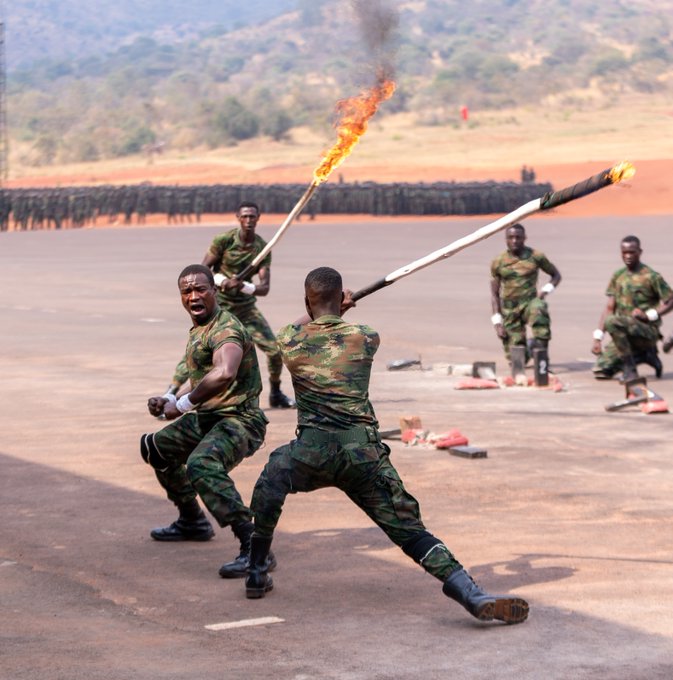
The Rwandan Defence Force (RDF) has earned widespread acclaim for its professionalism, discipline, and operational effectiveness, establishing itself as one of Africa's most respected military forces. This prestigious reputation is built on several key factors, including rigorous training programs, strategic leadership, successful peacekeeping missions, advanced technological integration, and strong civil-military relations.
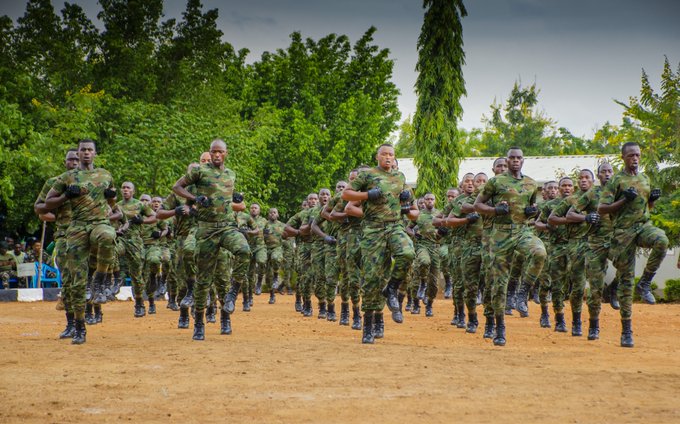
One major element is the RDF's rigorous training programs. Soldiers receive extensive training focused on physical fitness, tactical skills, and mental resilience. This comprehensive preparation is often enhanced with international programs, providing valuable experience and exposure to global military standards.
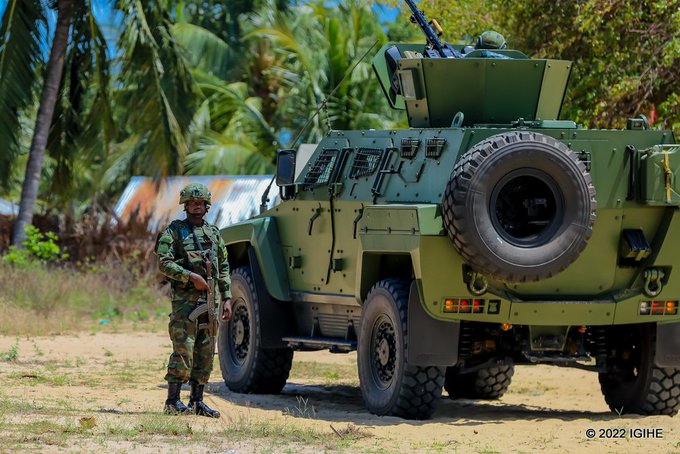
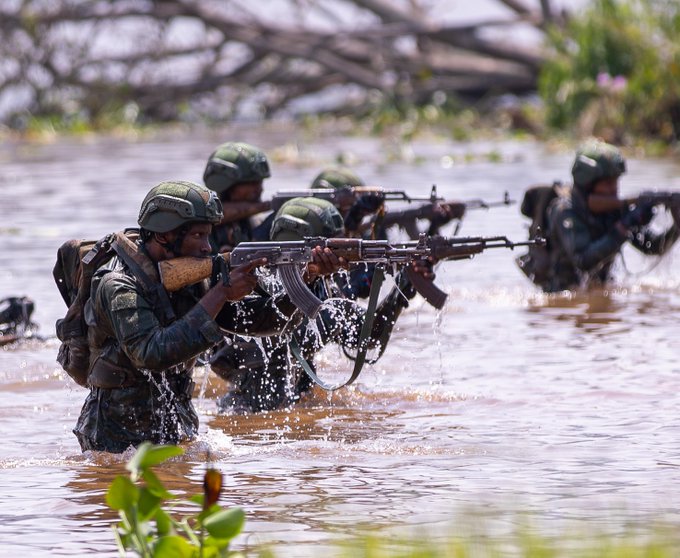
RDF personnel are well-equipped to handle various operational challenges.
Leadership within the RDF plays a critical role in its success. The force is led by highly skilled, strategically minded individuals who have been pivotal in Rwanda's history, especially during and after the 1994 genocide against Tutsi. These leaders emphasize duty, discipline, and national pride, fostering a cohesive and motivated military force.
The RDF's involvement in international peacekeeping missions also significantly boosts its reputation. As one of the largest contributors to United Nations peacekeeping operations, RDF troops are deployed in conflict zones across Africa and beyond. Their professionalism and dedication to protecting civilians have earned them international acclaim.
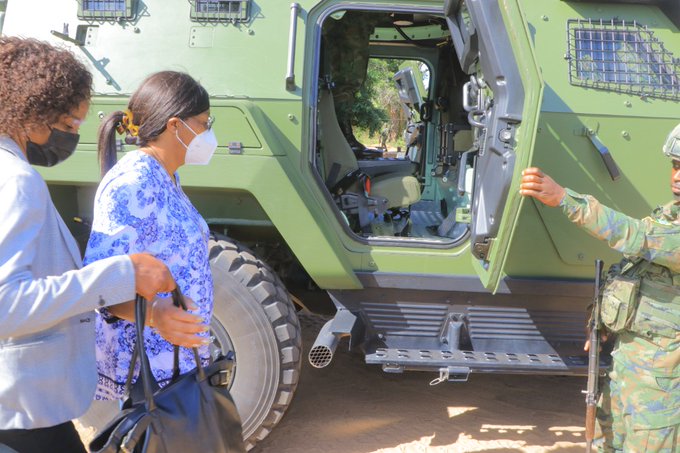
Technological advancement is another crucial factor in the RDF's development. Investments in modern equipment, communication systems, and surveillance technology have enhanced the RDF's operational efficiency and effectiveness. Continuous upgrades and the adoption of innovative technologies ensure the RDF remains at the forefront of modern warfare.
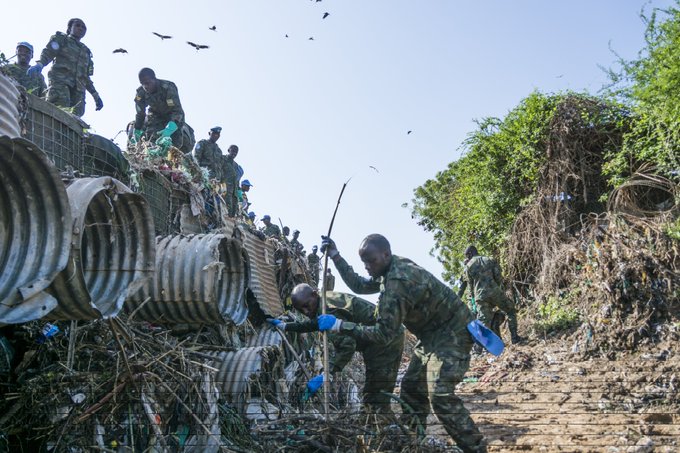
The RDF's approach to civil-military relations further sets it apart. By participating in community service projects, infrastructure development, and social programs, the RDF fosters trust and cooperation between the military and civilian populations. This integration reinforces the RDF's role as a protector and builder of the nation.
RDF's commitment to high ethical standards and respect for human rights underscores its professionalism. Stringent codes of conduct and accountability mechanisms ensure soldiers operate within the bounds of international humanitarian law, enhancing the RDF's reputation and setting a benchmark for other African militaries.
Â
RDF's esteemed status as one of Africa's best militaries results from rigorous training, strategic leadership, international peacekeeping experience, technological advancement, strong civil-military relations, and adherence to ethical standards. These factors collectively contribute to the RDF's operational effectiveness, professionalism, and reputation on the continent and beyond. As Rwanda continues to evolve, the RDF's role in ensuring national security and contributing to global peace remains paramount.
On Tuesday, July 31, a pivotal meeting was held in Luanda, Angola, to address the ongoing regional security concerns with representatives from both Rwanda and the DRC in attendance.
Foreign Affairs Minister Olivier Nduhungirehe, represented Rwanda while the DRC was represented by Foreign Minister, Thérèse Kayikwamba. The meeting was mediated by Angola’s President João Lourenço.
Shortly after the meeting, Amb. Nduhungirehe revealed some of the resolutions made. “The 2nd Ministerial Meeting on the Security and Peace Situation in the Eastern DRC, held in Luanda, Angola, concluded successfully. The meeting agreed to a ceasefire between the warring parties in Eastern DRC starting August 4, under the supervision of an enhanced ad hoc mechanism,” he said in a statement, shared on his social media handle.
“Rwanda remains committed to achieving lasting peace in the region by addressing the root causes of the conflict,” Nduhungirehe emphasized.
He expressed satisfaction with the meeting’s outcome, noting that it was conducted with a constructive spirit.
Tensions between Rwanda and its western neighbor escalated in 2022 when the DRC government accused Rwanda of supporting the M23 rebels in the ongoing military conflict with the Congolese Army.
Rwanda strongly denied the allegations and counter acted by blaming DRC of collaborating with the Democratic Forces for the Liberation of Rwanda (FDLR), a terrorist group comprised of dissidents of perpetrators of the 1994 Genocide against the Tutsi, with intentions to destabilize the country.
Rwanda and DRC representatives met in Angola earlier this year in a move to help each other implement measures to restore security in North Kivu province.
In March 2024, it was anticipated that these talks would pave way for a landmark meeting between Rwandan President Paul Kagame and his DRC counterpart Félix Tshisekedi under Angola’s stewardship. Both leaders had expressed interest in a face-to-face meeting.
DRC had previously expressed commitment to eliminate the FDLR from the jungles of eastern DRC but recently Christophe Lutundula, the former Minister of Foreign Affairs, told the media in Kinshasa that his government knows nothing regarding the rebels’ whereabouts.
Leaders who attended the Luanda talks aimed at resolving the security problem in the Democratic Republic of Congo (DRC) have unanimously agreed that the warring parties should halt their fighting with effect from August 4, 2024.
Both Iran and Hamas have pointed blame towards Israel for the shocking assassination that could escalate the already existing conflict with Israeli leadership.
“Brother, leader, mujahid Ismail Haniyeh, the head of the movement, died in a Zionist strike on his headquarters in Tehran after he participated in the inauguration of the new (Iranian) president,” Hamas said in a statement.
Iran’s Revolutionary Guards said Haniyeh’s residence in Tehran was “hit” and he was killed along with a bodyguard.
Haniyeh had travelled to Tehran to attend Tuesday’s swearing-in ceremony of Iranian President Masoud Pezeshkian.
Iran’s Supreme Leader Ayatollah Ali Khamenei has threatened 'harsh punishment' against Israel for the assassination' of Haniyeh.
“With this action, the criminal and terrorist Zionist regime prepared the ground for harsh punishment for itself, and we consider it our duty to seek revenge for his blood as he was martyred in the territory of the Islamic Republic of Iran,” Khamenei was quoted by the country’s official news agency, IRNA.
The strike comes against the backdrop of Iran’s support for the Palestinian Hamas militant group, whose assault on Israel on October 7, 2023, triggered Israel’s invasion of Gaza.
Israeli Prime Minister Benyamin Netanyahu had earlier vowed to destroy Hamas and bring back all hostages taken during the October 7 attack, which sparked the war in the Gaza Strip.
Hamas leader Ismail Haniyeh was killed by a predawn airstrike in the Iranian capital on Wednesday, July 31, 2024, Iran and the militant group have announced.
This stable stance reflects confidence in the country’s economic trajectory and growth prospects.
A statement released by the agency last week shows that Rwanda’s rating indicates a balance between the country’s vulnerability to balance-of-payments and efforts to improve fiscal position, sustained growth, and continued access to concessional financing.
According to S&P Global, Rwanda’s advantageous debt profile is visible, characterized by concessional loans with extended repayment terms. This debt structure has significantly reduced the country’s debt servicing costs compared to its peers.
With projected interest payments accounting for only 9.1% of government revenue between 2024 and 2027, S&P Global predicts that Rwanda will outpace regional economies over the next five years, driven by substantial public investments.
Rwanda’s economy grew by 8.2% in 2023 with year-on-year growth accelerating to 10% in the fourth quarter of 2023 and maintaining a similar pace in the first quarter of 2024.
Although agricultural output grew slowly in 2022 and early 2023, favourable weather conditions are expected to normalize production. Additionally, ongoing growth in the services sector is expected to boost private sector engagement from its current level.
While acknowledging Rwanda’s economic progress, S&P Global also highlighted the country’s vulnerability to climate change impacts, such as the severe flooding experienced in 2023.
The rating agency also lauded the government’s swift response to the floods through the implementation of infrastructure rehabilitation projects and enhanced preparedness measures to mitigate potential future shocks over the coming four years.