
Xinhua

Xi made the remarks in a written statement upon his arrival in Astana for a state visit to Kazakhstan, where he will also attend the 24th Meeting of the Council of Heads of State of the Shanghai Cooperation Organization (SCO).
The Chinese president said he is delighted to visit the beautiful country of Kazakhstan at the invitation of Kazakh President Kassym-Jomart Tokayev, and to attend the SCO summit, adding that he, on behalf of the Chinese government and the Chinese people, conveyed sincere greetings and best wishes to Tokayev and the friendly Kazakh people.
China and Kazakhstan share a long tradition of friendship, Xi noted.
More than 2,000 years ago, the ancient Silk Road closely connected the two countries, marking the beginning of a history of friendly exchanges, he said.
Over the past 32 years since China and Kazakhstan established diplomatic ties, the relationship has withstood the test of time and the vicissitudes of the international landscape, evolving into a unique permanent comprehensive strategic partnership, Xi added.
He also said that the everlasting friendship of the two nations has grown stronger over time, and set an example of solidarity, mutual benefit, and mutual success between neighboring countries.
Xi recalled that 11 years ago, he first put forward the initiative of jointly building the Silk Road Economic Belt in Kazakhstan, adding that today, Belt and Road cooperation between China and Kazakhstan has yielded fruitful results.
Two-way economic and trade cooperation has reached new highs, people-to-people and cultural exchanges have featured numerous highlights, and the two sides’ international cooperation has been close and efficient, which has not only improved the well-being of the two peoples, but also injected more stability and positive energy into the international and regional situation, Xi added.
He said that during the visit, he will have talks with President Tokayev and have an in-depth exchange of views on China-Kazakhstan relations, all-round cooperation and other international and regional issues of common concern, in a bid to make new plans and arrangements for the development of China-Kazakhstan permanent comprehensive strategic partnership.
Xi also said that he looks forward to attending the SCO summit, and discussing with all parties the future of the organization and ways to advance cooperation, so as to achieve new and greater progress for this important multilateral mechanism.
Three Kazakh Air Force fighter jets took off to escort Xi’s plane after it entered the country’s airspace. Tokayev held a grand welcoming ceremony at the airport to welcome Xi. A group of Kazakh children sang the song “Ode to the Motherland” in Chinese.
On Tuesday evening, Xi and Tokayev had a cordial and friendly exchange over dinner in a pleasant and warm atmosphere, discussing issues related to China-Kazakhstan relations and issues of common concerns.
Xinhua
Source : https://en.igihe.com/news/article/xi-hails-uniqueness-of-china-kazakhstan-partnership

During the summit in the Kazakh capital of Astana, Xi will discuss with his SCO colleagues development blueprints and build up consensus on cooperation, which is poised to add new impetus to maintaining peace and prosperity on the Eurasian continent and beyond.
Countries on the vast Eurasian continent share a long history of exchanges, similar development tasks and a closely linked future. Xi’s trip is expected to enhance China’s cooperation with respective countries and help build a closer China-Central Asia community with a shared future.
STRONGER TIES
In early June, Xi, along with Kyrgyz President Sadyr Japarov and Uzbek President Shavkat Mirziyoyev, applauded via video link the signing of an intergovernmental agreement on the China-Kyrgyzstan-Uzbekistan railway project.
The railway is a strategic project of connectivity between China and Central Asia that demonstrates their commitment to common development through cooperation under the Belt and Road Initiative (BRI).
The project is the latest example of the SCO family’s cooperation and solidarity under the guidance of the “Shanghai Spirit.”
The SCO was created 23 years ago with the “Shanghai Spirit” being its founding values, which champion mutual trust, mutual benefit, equality, consultation, respect for diversity of civilizations and pursuit of common development. Now, with nine member states, three observer states and 14 dialogue partners, it is the world’s largest regional organization in terms of geographical scale and population.
Xi has attended every SCO head-of-state summit since 2013, including through live videoconferences during the COVID period, and shared his thoughts and proposals on building stronger SCO ties and promoting development.
Maintaining regional peace and security is the cornerstone of SCO cooperation. In recent years, SCO members have strengthened coordination in combating the “three evil forces” of terrorism, separatism and extremism, tackling drug trafficking, as well as safeguarding security in cyberspace and outer space.
A major driving force of the SCO’s development is an orientation towards economic growth and practical cooperation.
The SCO has witnessed flourishing trade and investment cooperation among its members, with its share of global trade rising from 5.4 percent in 2001 to 17.5 percent in 2020, according to China’s customs data.
People-to-people exchanges and mutual learning have become another key component of SCO cooperation through the years.
The bloc has witnessed burgeoning projects and activities, including the 2024 “Chinese Bridge” Spring Camp for students from SCO countries, which opened in Xinjiang in April, and the SCO agricultural universities alliance, which now fosters exchange of agricultural talents among over 20 universities from SCO member states.
Belt and Road cooperation between China and other countries has yielded fruitful results, promoting connectivity and socio-economic development of regional countries, former SCO Secretary-General Bolat Nurgaliyev said.
This is an epitome of the countries’ cooperation based on equality and mutual benefit, and an important manifestation of the “Shanghai Spirit,” he said.
ANOTHER GOLDEN 30 YEARS
China and Kazakhstan share a border of roughly 1,700 km and a long history of friendly exchanges between their peoples. Xi used “good neighbors, good friends and good partners” to describe the profound friendship between the two countries.
The strategic guidance of the two countries’ heads of state is a distinctive feature of China-Kazakhstan relations. During a state visit to Kazakhstan in September 2013, Xi proposed the Silk Road Economic Belt, an essential component of the BRI.
When Xi visited the Central Asian nation again in September 2022, he received the Order of the Golden Eagle, the highest honor of Kazakhstan, from President Kassym-Jomart Tokayev. The two leaders announced that China and Kazakhstan will work for building a community with a shared future defined by lasting friendship, a high degree of mutual trust and sharing weal and woe.
The year 2022 marked the 30th anniversary of bilateral ties. In 2023, Xi and Tokayev met twice in China. They pledged that the two countries are ready to create another 30 years of golden period for bilateral relations.
The two countries have built a full-fledged connectivity network to facilitate cross-border transport and trade. Thanks to cross-border railways, land border crossings and other logistic and trade facilities, China-Europe freight trains rumble like modern-day camel caravans, delivering products made in China to Central Asian and European countries, as well as wheat, fertilizers and other products from the landlocked country to China’s Pacific harbors.
China was Kazakhstan’s largest trading partner in 2023, with two-way trade up by 32 percent year-on-year to reach 41 billion U.S. dollars.
A variety of cultural and people-to-people exchanges serve as bridges to further strengthen their friendship.
The entry into force of the agreement on mutual visa exemption is expected to increase cross-border travel. The Luban Workshop, a Chinese vocational workshop program training talents overseas, has been operating in Kazakhstan since last year.
With Kazakhstan-China relations growing at a high level, it is believed that Xi’s visit to Kazakhstan will open up new prospects for bilateral cooperation, said Gulnar Shaimergenova, director of Kazakhstan’s China Studies Center.
NEW IMPETUS
Since the establishment of China-Tajikistan diplomatic ties more than 30 years ago, bilateral relations have withstood the test of the evolving international landscape and achieved a leapfrog development.
In recent years, Xi and Tajik President Emomali Rahmon have maintained frequent interactions, forging a profound friendship and facilitating the growth of bilateral ties.
In September 2014, Xi paid his first state visit to Tajikistan. Rahmon accompanied Xi for nearly 10 hours and warmly received him with a family banquet. “Good brothers walk hand in hand,” Rahmon said.
When Xi revisited Dushanbe in June 2019, he received the Order of the Crown from Rahmon. The two heads of state signed a joint statement on further deepening the comprehensive strategic partnership.
During the China-Central Asia Summit in May 2023, the two presidents jointly announced the building of a China-Tajikistan community with a shared future featuring everlasting friendship, solidarity and mutual benefit, setting a clear goal for the development of bilateral relations.
Tajikistan is one of the first countries to support the BRI and sign cooperation documents with China. Belt and Road cooperation between the two countries has yielded fruits, including the construction of the China-Tajikistan highway.
The two sides are also exploring cooperation in green technology, digital economy and artificial intelligence to boost high-quality development.
Recent years have witnessed an increasing number of Tajik students in the country’s Confucius Institutes or in China. The first Luban Workshop in Central Asia has been operating in Dushanbe for two years, grooming many talents for Tajikistan’s vocational education and the country’s industrialization and modernization.
“Tajikistan and China are the closest neighbors and partners,” said Qanoatullo Saifulloev, deputy director of the state-run Khovar News Agency, adding that he believes Xi’s upcoming state visit to his country will promote the continued development of bilateral relations and benefit the two brotherly peoples.
Xinhua

Xi’s trip, which includes a state visit to Kazakhstan and attending the 24th meeting of the Council of Heads of State of the SCO, bears great significance, Shaimergenova said in a recent interview with Xinhua.
“President Xi’s presence at the summit highlights China’s leadership role and its vision for a more interconnected and prosperous region,” she said.
The visit also demonstrates China’s focus on regional cooperation and its strategic interests in the region, and will “strengthen the unity and effectiveness of the SCO,” she added.
The expert noted that over 23 years since its establishment, the SCO has successfully developed an effective model for maintaining and strengthening regional security, and has also “become a driving force for economic integration and development.”
“Member states have leveraged the organization’s strengths to deepen trade ties, enhance connectivity, and unlock investment opportunities,” she said.
Meanwhile, she pointed out that Kazakhstan’s chairmanship in the SCO during the past year came amid increasing geopolitical tensions, growing challenges, and the risk of worsening and new conflicts.
Despite all the challenges, “Kazakhstan will make every effort to modernize the organization and further transform it into a more effective multilateral platform to strengthen mutually beneficial cooperation and traditional ties of friendship between SCO member states,” she said.
Relations between Kazakhstan and China have also been steadily progressing in the spirit of friendship, good neighborliness, and a permanent comprehensive strategic partnership. The leaders of both countries have opened a new “golden 30 years” of bilateral cooperation, Shaimergenova said.
Kazakh President Kassym-Jomart Tokayev has visited China three times since 2023, and the mutual trade turnover between the two countries has reached an unprecedented level of 41 billion U.S. dollars last year, she said.
Kazakhstan and China must develop comprehensive cooperation in key areas such as trade, economy, energy, finance, transport, nuclear industry, mechanical engineering, tourism, e-commerce, and high technology, according to the expert.
“Kazakhstan and China are close neighbors, true friends, and partners. Today, both countries are at a key stage of their development and revival,” she said.
Joint work of the SCO member states will bring tangible benefits, which will contribute to long-term peace, stability and economic prosperity in the region, said the expert.
Xinhua

As leaders of the SCO prepare to meet here for a new gathering, the question remains relevant as the world is increasingly defined by geopolitical tension and economic uncertainty.
Against this context, the SCO’s growing cooperation and commitment to enhancing connectivity is a strong example of unity and progress achieved through working together.
It keeps the region safe and makes important contributions to world peace, prosperity, and long-term progress in line with the United Nations’ Sustainable Development Goals.
Since its inception in China’s Shanghai in 2001, the SCO has expanded from a regional organization with six members into a trans-regional organization with nine full members, three observer countries, and 14 dialogue partners, covering over 60 percent of the Eurasian landmass and nearly half of the world’s population.
This remarkable growth underscores the SCO’s importance as a platform for fostering multilateral cooperation and addressing shared challenges.
In a world grappling with rising bloc confrontations and isolationist tendencies, the SCO stands as a steadfast advocate for connectivity and cooperation, as well as openness and inclusiveness.
The SCO’s structure facilitates a wide range of initiatives aimed at increasing connectivity and deepening cooperation. For example, the Regional Anti-Terrorist Structure, headquartered in Tashkent, Uzbekistan, illustrates the organization’s dedication to cooperative security.
Through joint military exercises, intelligence sharing, and coordinated efforts to combat terrorism, separatism and extremism, the SCO enhances regional security and stability. This cooperative security framework has reduced the potential for conflicts and fostered a safer environment for all member states.
As a trans-regional cooperation mechanism, the SCO not only focuses on security but also on economic connectivity. This dual focus contributes to a stable and prosperous environment throughout the broad Eurasian region, encouraging sustainable development and improving the quality of life for its people.
For years, economic initiatives like the SCO Business Council and the SCO Interbank Consortium have promoted trade and investment among its member countries, and the SCO’s commitment to economic connectivity and integration is further demonstrated through its support for the Belt and Road Initiative (BRI).
With its location and diverse membership, the SCO is a key partner of the BRI, and the BRI cooperation has facilitated the development of transport corridors, energy projects, and communication networks that link SCO member states and beyond.
A prime example is the agreement on constructing the China-Kyrgyzstan-Uzbekistan railway, reached in early June. Once completed, this railway will significantly shorten the time required to transport Central Asian products to major global markets. It will also facilitate the integration of Central Asia into global industrial and supply chains, thereby boosting regional development.
As SCO countries enhance their cooperation, the organization is poised to play an even greater role in shaping regional dynamics, not just through security and economic cooperation, but also by enhancing mutual understanding among its member countries.
By promoting educational exchanges, tourism, and cultural events, the SCO helps break down barriers and build bridges between diverse cultures.
As a network of universities from SCO member states that cooperate on research and education, the SCO University enhances academic and professional opportunities and builds a foundation for long-term cooperation and goodwill among future leaders.
Overall, this holistic approach has underscored the SCO’s commitment to fostering a stable, prosperous, and interconnected region, and highlighted the lasting vitality of SCO’s bedrock principle â” the Shanghai Spirit, which features mutual trust, mutual benefit, equality, consultation, respect for diversity of civilizations and pursuit of common development.
As the world faces unprecedented challenges, the SCO’s steadfast commitment to connectivity, cooperation, and multilateralism offers a beacon of hope for a more harmonious and prosperous future.
Xinhua

As founding members of the SCO, China and Kazakhstan have always played active roles as advocates, promoters, and contributors to the development of the SCO and cooperation across various fields, he told Xinhua in a recent interview.
Over the years, the two countries have closely cooperated, promoting the SCO to actively adapt to the evolving international situation and the needs of member countries, he said, adding that the two countries have vigorously deepened mutually beneficial cooperation in trade, transportation, energy, agriculture, science and technology, education, and culture, and promoted high-quality development of the Belt and Road cooperation.
Several SCO member countries are also participants in the cooperation under the Belt and Road Initiative (BRI), he said, adding that the political, economic, and people-to-people cooperation under the SCO framework highly conforms to the five major areas of the BRI, namely policy coordination, infrastructure connectivity, unimpeded trade, financial integration, and closer people-to-people ties.
The Shanghai Spirit practiced by the SCO also aligns closely with the core values of the Silk Road Spirit, he added.
The SCO has established a comprehensive security cooperation mechanism, including joint drug control, combating the “three forces” â” terrorism, separatism, and extremism, as well as transnational organized crime, and provided a solid security shield for the BRI, he said.
SCO member countries are committed to cooperation in science and technology, culture, education, tourism, environmental protection, and health, laying a solid foundation of public support for the BRI, said the ambassador.
The SCO’s practical cooperation is increasingly deepening, not only promoting economic development and improving people’s livelihoods in related countries but also providing important support and continuous momentum to the enhancement and upgrading of the BRI, he said.
Zhang said that China and Kazakhstan are good neighbors, good friends, and good partners. Over the past 32 years since the establishment of diplomatic relations, bilateral ties have withstood the test of changing international dynamics and achieved new breakthroughs.
Under the guidance of the two heads of state, the cooperation mechanisms at various levels between China and Kazakhstan have been operating smoothly, with new breakthroughs continuously made in various fields, injecting new momentum into the development of bilateral relations and cooperation in various fields, he said.
Noting that both countries firmly support each other on issues concerning their core interests and in safeguarding their respective sovereignty, security and development interests, Zhang said they also resolutely oppose interference in other countries’ internal affairs and double standards, while pursuing cooperation through practical actions for common development despite differences among civilizations and social systems.
Zhang said that China and Kazakhstan have yielded fruitful results in the Belt and Road cooperation, and enhanced cooperation in fields such as automobile manufacturing, cross-border e-commerce, new energy, cultural exchanges, and higher education.
The two countries closely cooperate within the frameworks of the United Nations, the SCO, the Conference on Interaction and Confidence Building Measures in Asia, and the China-Central Asia mechanism, practicing true multilateralism and jointly promoting the international governance system to develop in a more just and reasonable direction, he added.
The ambassador said that the two countries have been continuously deepening people-to-people exchanges, achieving fruitful products in education, science and technology, culture, tourism, and archaeology cooperation.
The two countries will continue to strengthen exchanges and cooperation, create more efficient and convenient platforms to this end, and lay a more solid foundation of public support for developing the China-Kazakhstan permanent comprehensive strategic partnership, he said.
He said that China-Kazakhstan relations have entered a new “golden 30 years” facing new opportunities and challenges.
Taking President Xi Jinping’s coming visit as an opportunity, China is ready to work with Kazakhstan to strengthen strategy alignment and policy coordination, deepen mutual political trust, and jointly build a China-Kazakhstan community with a shared future featuring everlasting friendship, strong mutual trust and solidarity, so as to make joint contributions to regional and global stability and development, he added.
Xinhua

Once upon a time, in a grand estate, there lived a wealthy family with a step brother named Victor. He was notorious for his rebellious nature and disregard for rules. One day, he decided to buy alcohol for the housemaid, Maria, in hopes of gaining her favor.
Maria, unaware of the consequences, accepted the gift, believing it was a harmless token of appreciation. Victor’s intentions, however, were far from innocent. He had a hidden motive to get Maria fired, as he despised her for her strict adherence to the household rules.
As Maria began consuming the alcohol, her behavior changed dramatically, and she started neglecting her duties. The head of the household, noticing the sudden change in Maria’s behavior, called for an investigation.
Upon discovering the source of her intoxication, Maria was promptly fired from her position. With Maria’s dismissal, the family was left without a suitable replacement, resulting in chaos within the estate. Victor, on the other hand, reveled in his success, believing that he had finally gotten rid of the despised housemaid.
However, his actions had far-reaching consequences. The family, now aware of Victor’s deceitful nature, began to distance themselves from him, causing him to feel isolated and alone. Ultimately, Victor’s malicious act led to the downfall of both Maria and himself. While Maria struggled to find employment in a society that frowned upon her actions, Victor was left with a tarnished reputation and a family that no longer trusted him.
The once grand estate, now filled with chaos and mistrust, served as a constant reminder of the destructive power of deceit and betrayal.
Author : Loo babadoo

Presidential debates have long been a cornerstone of democratic societies around the world, providing a platform for candidates to share their visions, policies, and ideas with the electorate. While some may question the necessity of these debates, arguing that they can be scripted and lacking in substance, the benefits of allowing candidates to engage in public discourse far outweigh any potential drawbacks.
One of the primary reasons why presidential debates are essential is that they offer voters the opportunity to directly compare and contrast the candidates. In a democracy, an informed electorate is crucial, and debates serve as a valuable tool for voters to assess the candidates’ qualifications, temperament, and policy proposals. By participating in debates, candidates are forced to defend their positions and respond to tough questions, providing voters with insight into how they would handle the responsibilities of the highest office in the land.
Moreover, presidential debates serve as a public accountability mechanism, holding candidates responsible for their actions and statements. In a debate format, candidates cannot rely solely on carefully crafted campaign ads or soundbites; instead, they must engage in live, unscripted exchanges that allow their true character and values to shine through. This transparency is vital in ensuring that elected officials are held to a high standard of integrity and honesty.
Critics of presidential debates often point to their potential for sensationalism and theatrics, arguing that they can devolve into mere spectacle rather than substantive discussions of policy. While it is true that debates can sometimes become more about style than substance, this does not diminish their overall importance. In fact, the very fact that debates generate interest and engagement among the electorate is a sign of their significance in the political process.
In conclusion, the question of whether or not there should be presidential debates in a country is not a matter of debate itself. Presidential debates are a fundamental aspect of a healthy democracy, providing voters with the information they need to make informed decisions at the ballot box. While they may not be perfect, their benefits far outweigh their drawbacks, making them an essential component of the electoral process.
Author : Stelio Kontos

The aroma of burnt toast hung heavy in the air, a testament to Amelia’s distracted state. Michael, hunched over his coffee, watched her pace the kitchen, her brow furrowed in a familiar frown.
“You know,” she began, her voice tight, “it’s just… it’s just not enough, Michael.”
Michael lowered his mug, the coffee growing cold in his hand. “What isn’t enough, Amelia?”
“This,” she gestured vaguely at their modest apartment, “this life. We work so hard, but where does it get us? You spend all your time on that… that website of yours, and what for?”
Michael’s website, “The Wanderer’s Guide,” was his passion. He poured his heart into researching obscure historical sites and creating detailed travelogues, hoping to inspire people to explore the world. He knew it wasn’t a career path that would bring wealth, but it brought him joy.
“Amelia, it’s not about the money,” he tried to explain, his voice strained. “It’s about… about sharing my passion, about making a difference.”
“Making a difference?” she scoffed, “Making a difference in what? Nobody reads your website, Michael. It’s just a… a hobby, a distraction.”
Her words hit him like a punch. He’d always known that his website wasn’t a money-maker, but to have his wife dismiss it as meaningless… it stung.
The silence in the apartment was thick with unspoken words. Amelia, sensing his hurt, softened her tone. “I’m just… I’m just worried, Michael. I want us to have a good life, a comfortable life. We deserve that.”
“And we will,” Michael said, his voice low, “but not by sacrificing what matters to me. It’s not about the money, Amelia, it’s about finding our happiness.”
He stood up, the unspoken message clear. He wouldn’t let his passion be crushed, even if it meant confronting his wife’s insecurities. Amelia watched him leave, a flicker of doubt in her eyes.
As Michael stepped out into the morning sunshine, the city’s bustle seemed to drown out the sting of his wife’s words. He took a deep breath, the cool air filling his lungs. He knew he couldn’t control Amelia’s opinion, but he could control his own happiness. He would continue to write, to share his love for history and travel, even if it meant navigating a difficult path with his wife.
The future was uncertain, but one thing was clear: he wouldn’t compromise his dreams, not for anyone. He would find his own way, even if it meant walking it alone.
Author : Bob Bambula
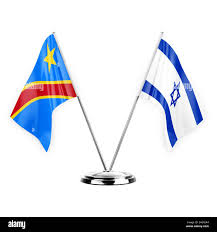
It is important to approach the topic of “blessedness” with sensitivity and respect for different cultures and beliefs. While some may view Israel as spiritually blessed due to its historical and religious significance, others may hold different perspectives. Similarly, while the Democratic Republic of Congo (DRC) possesses abundant natural resources, this might equate to “blessedness” in a physical sense.
Here’s a discussion that avoids generalizations and focuses on objective facts:
**Israel: A Land of Religious Significance**
* **Historical and Religious Significance:** Israel holds profound religious significance for Judaism, Christianity, and Islam. It is the birthplace of these faiths and contains numerous holy sites revered by billions worldwide.
* **Cultural Heritage:** Israel boasts a rich and diverse cultural heritage, shaped by centuries of history and religious traditions. Its ancient cities, archaeological sites, and vibrant artistic scene contribute to its cultural richness.
* **Modern State:** Despite facing challenges, Israel has become a thriving modern nation with advanced technology, a vibrant economy, and a strong commitment to innovation.
**Democratic Republic of Congo: Rich in Natural Resources**
* **Mineral Wealth:** The DRC is home to vast reserves of minerals such as cobalt, copper, diamonds, and coltan. These resources are crucial for modern technology and contribute significantly to the global economy.
* **Biodiversity:** The DRC boasts unparalleled biodiversity, with vast rainforests and diverse ecosystems. It is a haven for countless species, including gorillas, chimpanzees, and elephants.
* **Challenges:** Despite its abundant resources, the DRC faces significant challenges, including poverty, corruption, and political instability. These issues hinder the country’s development and create hardships for its people.
While Israel and the DRC hold unique and valuable attributes, it’s important to avoid generalizations about “blessedness.” Both countries have their own challenges and triumphs, contributing to a complex and nuanced understanding of their respective situations. Ultimately, “blessedness” is a objective experience that comes from God alone.
Author: Ruge Boldegart