The club confirmed on Thursday, July 2, 2026, that it had completed the signing of several players, including foreign recruits Moussa Limane, Keffa Tangara, Mzungu Japhet, and Iddrisu Shaibu, as well as defender Rushema Chris, who joins from Rayon Sports.
Among the new arrivals is 26-year-old Ghanaian defender Iddrisu Shaibu, who has signed a two-year contract after joining from Sofapaka FC. The left-sided defender is expected to strengthen Police FC’s backline following the departure of Ishimwe Christian, who returned to his former club APR FC.
The club further reinforced its defence with the acquisition of 25-year-old centre-back Rushema Chris on a two-year deal. The former Rayon Sports player opted to terminate his contract in search of more playing time.
In attack, Police FC secured the services of 24-year-old forward Moussa Limane on a two-year deal from Ghanaian side Asante Kotoko S.C., as part of efforts to boost its offensive options.
The club also added Keffa Tangara from Mali, who arrives from Djoliba AC on a two-year contract, while Kenyan midfielder Japheth Mzungu joins from Sofapaka FC on similar terms.
The signings follow the appointment of Rutsindura Antoine ‘Mabombe’ as Police FC’s Head of Technical Direction. Police FC has also recruited Byishimo Valua and Rugwiro Kevin, while extending contracts for Nsabimana Eric ‘Zidane’, Iradukunda Simeon, Niyongira Patience, and David Chimezie.
Defender Rushema Chris joins Police FC from Rayon Sports.
Kenyan midfielder Japheth Mzungu joins from Sofapaka FC on similar terms.
Among the new arrivals is 26-year-old Ghanaian defender Iddrisu Shaibu.
Keffa Tangara joins Police FC following his departure from Djoliba AC.
In attack, Police FC secured the services of 24-year-old forward Moussa Limane on a two-year deal from Ghanaian side Asante Kotoko S.C., as part of efforts to boost its offensive options.
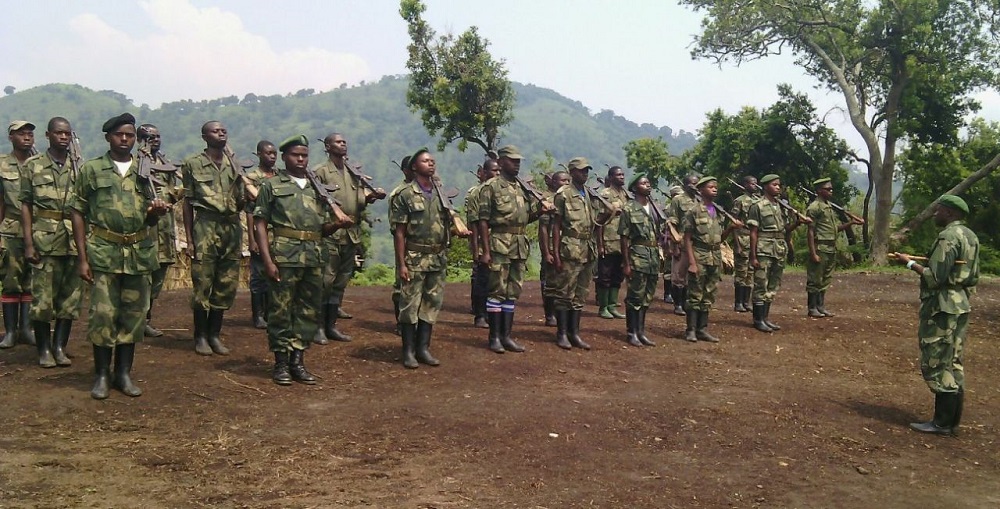
A report by United Nations experts on the Democratic Republic of the Congo identifies the Democratic Forces for the Liberation of Rwanda (FDLR) as a persistent armed group contributing to insecurity in eastern DRC and posing a continued security concern for Rwanda.
The report, released at the end of June, provides detailed estimates of the group’s structure, leadership, and manpower, highlighting significant discrepancies in figures reported by different sources.
According to the findings, the FDLR is organized into three main factions: FDLR-FOCA, FDLR-RUD, and FDLR-FPP. These factions have reportedly adopted alternative names in an effort to conceal their affiliation with the broader movement. FDLR-FOCA operates under the name ‘Bataillon Jungle,’ FDLR-RUD uses the designation ‘FDP-R,’ while FDLR-FPP also refers to itself simply as ‘FPP.’
The report notes that while these factions operate with a degree of autonomy, they remain part of a coordinated structure. It identifies Pacifique Ntawuguka, also known as Gen Omega Israel, as the military commander of FDLR-FOCA. Lt. Gen. Gaston Iyamuremye, alias Victor Byiringiro, serves as the group’s political leader. Brig. Gen. Emmanuel Nsengiyumva, also known as Faida Hakimu, leads FDLR-RUD, while Col. Dan Hategekimana, known as Dan Simplice, commands FDLR-FPP.
Despite this apparent fragmentation, Gen Omega is described as the overall coordinating authority, playing a central role in strategic decisions and inter-factional coordination.
The report highlights major inconsistencies regarding the group’s manpower. The FDLR itself claims to have more than 10,000 fighters, with nearly half engaged in active military operations. The CRAP unit further claims a strength exceeding 20,000 combatants.
However, UN experts and intelligence assessments dispute these figures, estimating the FDLR’s actual strength at between 3,500 and 4,500 fighters. The Washington peace framework had previously placed the figure at between 3,000 and 3,500, suggesting that the group may be inflating its numbers to project greater military capacity.
The report also details the geographical presence of the FDLR factions across eastern DRC. FDLR-RUD operates primarily in Bwisha and Bwito in Rutshuru, as well as in Jomba, Binza, Busanza, and Bukoma. FDLR-FPP is also active in Rutshuru. The largest faction, FDLR-FOCA, maintains a broader presence across North Kivu, particularly in Nyiragongo, Masisi, Rutshuru, and Walikale.
In addition, the FOCA-linked CRAP unit is reported to claim operational presence on the outskirts of Goma, with observations that some of its elements have infiltrated the city.
Given Goma’s proximity to the Rwandan border, these claims raise significant security concerns, suggesting that the group linked to the 1994 Genocide against the Tutsi may still retain the capacity to operate within strategically sensitive urban areas.
The report further cites ongoing battlefield activity involving the FDLR in North Kivu, including instances where its fighters have operated independently or alongside elements of the Armed Forces of the DRC (FARDC) and local militia groups known as VDP/Wazalendo.
On 29 March 2026, FARDC announced the launch of operations against the FDLR. The following day, it deployed specialized units, including ‘Hiboux’ and ‘Jungle Battalion’ forces from Kisangani, to Walikale.
However, the report questions the effectiveness and sincerity of these operations, noting that some officials in Kinshasa and FARDC officers in eastern DRC privately assured FDLR leaders that military action against the group would not be fully implemented.
It further claims that on 7 April 2026, a confidential meeting took place in Pinga, Walikale, involving senior FARDC generals and representatives of FDLR-FOCA, during which continued cooperation between the two sides was reportedly discussed and agreed upon.
The report also notes that in late March 2026, a FARDC helicopter delivered weapons to Pinga intended for FDLR-FOCA fighters. These supplies were reportedly destined for units under Maj. Gen. Uzabakiriho Cyprien, also known as Kolomboka Niyo Tedium Mugisha, operating in Masisi. The equipment was allegedly received by the FDLR-CRAP unit before being transported onward to frontline positions.
According to the report, similar incidents occurred in late 2025, when FDLR elements operating in Bwito reportedly traveled to Pinga to collect weapons and ammunition.
Under the Washington peace framework, the FDLR was designated for dismantlement. A high-level meeting held on 17â18 March 2026 identified six priority areas for operations aimed at neutralizing the group, five in North Kivu and one in South Kivu.
These locations were designated as Named Areas of Interest (NAIs), including zones such as PingaâMpetiâLukweti in North Kivu highlands.
The report notes that operations were scheduled to begin on 31 March 2026 in NAI-1, specifically in the PingaâLukweti area, as part of efforts to implement the agreed peace framework.
The United Nations estimates that the actual strength of the FDLR is over 4,500 combatants.
UN experts indicate that the FDLR has split into three factions as part of an effort to conceal its identity and operations.
Speaking in an interview with Radio France Internationale (RFI), Nduhungirehe said Rwanda also informed Washington that Jean Luc Habyarimana, the son of former Rwandan President Juvénal Habyarimana, and Fabien Singaye had been received in Kinshasa.
‘We gave the mediator all the information showing the continued cooperation between President Félix Tshisekedi, his army and the FDLR,’ Nduhungirehe said.
‘We also shared information about a political movement trying to operate through individuals such as Jean Luc Habyarimana and Fabien Singaye, who have arrived in Kinshasa. Jean Luc Habyarimana, for example, was photographed in Kinshasa.’
Singaye previously served as second secretary at the Rwandan Embassy in Switzerland. Rwandan authorities have accused him of acting as an intelligence operative under the Habyarimana government, monitoring Tutsi exiles opposed to the regime who were preparing to return to Rwanda.
Nduhungirehe further argued that despite the peace agreement signed between Rwanda and the DRC last year under US mediation, the government in Kinshasa has not demonstrated the political will to implement its commitments.
He said the DRC had failed to dismantle the FDLR as required under the Washington peace agreement and instead continued to provide the group with military support.
To support the claim, Nduhungirehe cited events of March 29, 2026, when the Deputy Chief of Staff of the Armed Forces of the DRC (FARDC), Lt Gen Jacques Ndulu Ychaligonza, travelled to Kisangani in Tshopo Province and announced the start of operations to dismantle the FDLR.
‘However, two days later, on March 31, they sent two helicopters to Walikale carrying weapons, ammunition and money to the FDLR. We shared this information with the Americans,’ he said.
On June 27, Massad Boulos, the US President’s Senior Adviser for Africa, told the United Nations Security Council that the DRC had failed to fulfil its commitment to dismantle the FDLR, at least in areas under its control.
Nduhungirehe said it was significant that the US mediator had publicly acknowledged the DRC’s failure to dismantle the armed group. He argued that, if the mediation process is to remain impartial, pressure should be exerted on Kinshasa to ensure compliance with the peace agreement.
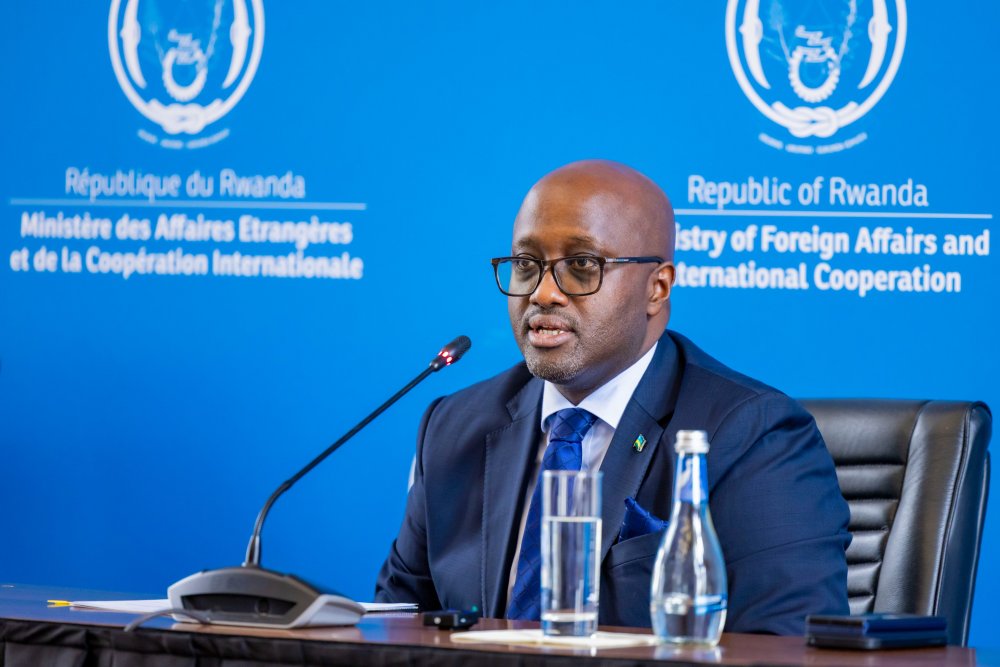
Rwanda’s Minister of Foreign Affairs and International Cooperation, Ambassador Olivier Nduhungirehe, has said Kigali provided the United States with information demonstrating continued cooperation between the government of the Democratic Republic of Congo (DRC) and the FDLR militia group linked to the 1994 Genocide against the Tutsi.
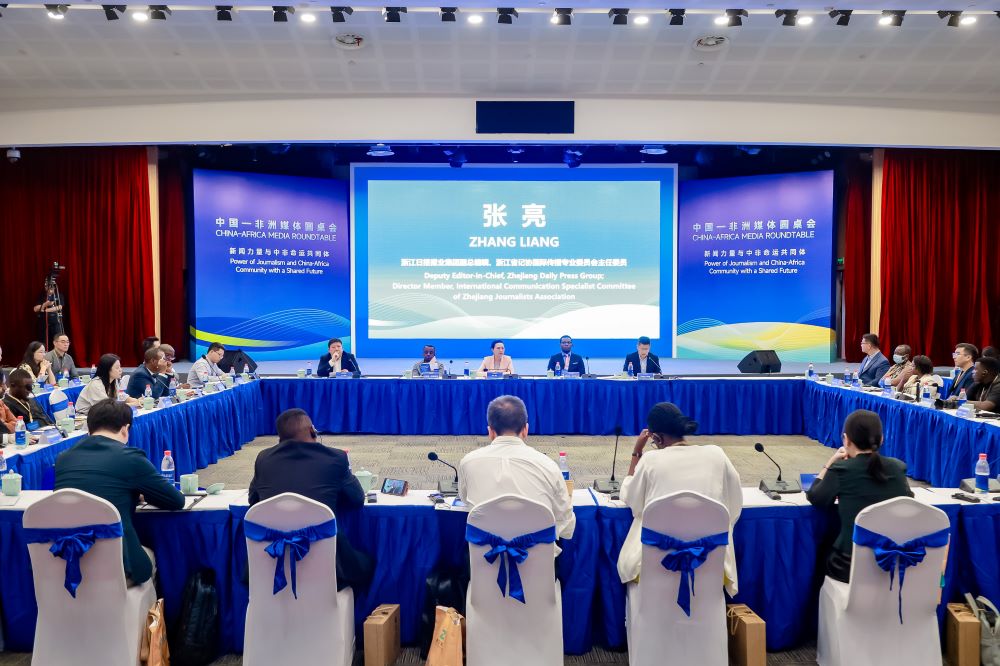
That question was at the heart of a recent roundtable held in Hangzhou, China’s Zhejiang Province, where journalists from Rwanda and Ethiopia joined Chinese media professionals and researchers to discuss the future of journalism and ChinaâAfrica cooperation in an AI-driven world.
Organized by the All-China Journalists Association under the theme ‘The Power of Journalism and the ChinaâAfrica Community with a Shared Future,’ the discussions focused on a growing challenge facing both media and technology sectors; ensuring that artificial intelligence reflects the realities of Africa and China rather than reproducing incomplete or externally shaped narratives.
While participants touched on broader ChinaâAfrica cooperation, including trade and economic ties, the conversation quickly turned to a different kind of exchangeâone involving data, knowledge, and representation.
This year marks a significant milestone in relations between China and Africa. Over the past decades, the partnership has demonstrated that sustainable development is not built on charity, but on mutual respect and equal cooperation.
Zhang Qiaowen, Deputy Director of the Institute of African Studies at Zhejiang Normal University, briefly highlighted the depth of ChinaâAfrica engagement, noting that Zhejiang accounts for around a quarter of China’s trade with Africa and hosts thousands of businesses involved in Africa-related commerce.
Under the framework of the Forum on ChinaâAfrica Cooperation (FOCAC), economic ties have evolved from a focus on aid and basic infrastructure to a more balanced model driven by trade and investment.
Trade between China and Africa has grown dramatically, rising from US$10 billion in 2000 to nearly US$350 billion today. Since 2009, China has remained Africa’s largest trading partner for 16 consecutive years and has also become one of the continent’s fastest-growing sources of investment, even as the global economy faces a growing wave of protectionism.
However, she stressed that the next stage of cooperation is not only about trade volumes but also about how African realities are understood and communicated.
‘These are the real stories waiting to be told,’ Zhang said, referring to the experiences of African businesses, farmers, entrepreneurs, and communities navigating a rapidly changing global environment.
Participants at the June 24, 2026, Hangzhou roundtable examined emerging AI tools such as Ubuntu AI and their role in improving knowledge exchange and narrative balance between Africa and China.
From trade partnership to knowledge partnership
That concern forms the foundation of Ubuntu AI, a platform introduced during the discussions as a new tool designed to improve how Africa-related knowledge is collected, interpreted, and shared.
Developed jointly by the Zhejiang International Communication Center (ZICC), Zhejiang Normal University’s Institute of African Studies, and other partners, Ubuntu AI is described as China’s first intelligent application dedicated to African studies and ChinaâAfrica knowledge exchange.
According to Yang Jidong, Director of the Converged Media Innovation Hub at Zhejiang Daily Press Group, the project emerged from a recognition that many existing large AI models are trained predominantly on Western datasets and information systems.
‘The core point of this smart application is that many big models today are based on traditional or Western database training,’ Yang explained.
Ubuntu AI seeks to address that imbalance by building a knowledge base rooted more directly in African realities, cultures, research, and experiences.
‘The main purpose of Ubuntu is to train local African-related cultures,’ Yang said, adding that the platform is designed to ensure that ‘our database can represent local African cultures.’
Unlike general-purpose AI systems that pull information from vast and often inconsistent online sources, Ubuntu AI relies on what Yang described as a ‘clean and authoritative database’ specifically curated around African studies.
‘Ubuntu AI is very different from traditional big models because big models are more susceptible to AI hallucinations,’ he said.
AI hallucinations refer to instances where artificial intelligence systems generate information that appears credible but is inaccurate or entirely fabricated.
According to Yang, Ubuntu AI addresses this challenge through its underlying architecture, which combines specialized databases with Retrieval-Augmented Generation (RAG) technology. Rather than generating responses solely from a model’s internal training, the system first retrieves verified information from its knowledge base before producing an answer.
‘This allows me to search for the information I want to understand from my clean database and then generate the corresponding answer through big models,’ Yang explained.
For journalists covering Africa, he believes the implications are significant.
‘When journalists are collecting data, they can get very authoritative and core information, which can help the media produce content,’ he said.
Yang Jidong is the Director of the Converged Media Innovation Hub at Zhejiang Daily Press Group
Building an AI model rooted in African realities
The platform supports multiple languages and draws from a wide range of sources, including academic research, media archives, and policy materials. Its goal is not simply to provide information, but to improve context and accuracy in reporting and research.
For African journalists in particular, the initiative raises the prospect of having AI tools that better reflect local realities rather than relying exclusively on datasets developed elsewhere.
Yang argued that Ubuntu AI’s greatest strength lies not in the technology itself but in the quality of the knowledge that powers it.
‘I think the core of Ubuntu AI is its database,’ he said. ‘With the expansion of the database, Ubuntu’s ability will become stronger.’
He also emphasized that the project’s long-term success will depend on collaboration.
‘I hope that Chinese research institutions, local African media, and database research institutions can work together to build this database,’ Yang said.
Why Ubuntu AI could matter for the future of journalism
That vision aligns closely with the philosophy behind the platform’s name. Derived from the African concept of Ubuntuâoften translated as ‘I am because we are’âthe system is intended to function as a shared knowledge ecosystem rather than a one-sided technological product.
Participants at the roundtable repeatedly emphasized that despite advances in AI, journalism remains fundamentally a human profession.
Technology can assist with research, translation, analysis, and content production, but journalists remain responsible for verification, context, and ethical judgment.
As artificial intelligence becomes increasingly embedded in global information systems, initiatives such as Ubuntu AI reflect a growing effort to ensure that Africa is not merely represented in those systems but actively helps shape them.
For both Africa and China, the challenge ahead is not simply building smarter technologies. It is building technologies that understand people, cultures, and societies on their own terms.
And in an era where algorithms increasingly influence how the world sees itself, that may be one of the most important stories of all.
This breakthrough, published in the U.S. scientific journal Proceedings of the National Academy of Sciences, is expected to significantly accelerate medical research and reduce costs in drug discovery and biotechnology, the researchers said.
Proteins are essential to biological functions and underpin medical advances such as the diabetes drug Ozempic.
However, despite the existence of billions of proteins in nature, scientists have identified the functions of only a small fraction, largely due to years of costly lab work.
‘BetaDescribe’ works like a specialized translator, turning raw biological data into clear, detailed descriptions of a protein’s function, metabolic role, and medical potential, according to the researchers.
The AI’s ability to rapidly generate evidence-based hypotheses about the functions of unknown proteins could significantly shorten the path from basic discovery to medical and industrial applications, the researchers concluded.
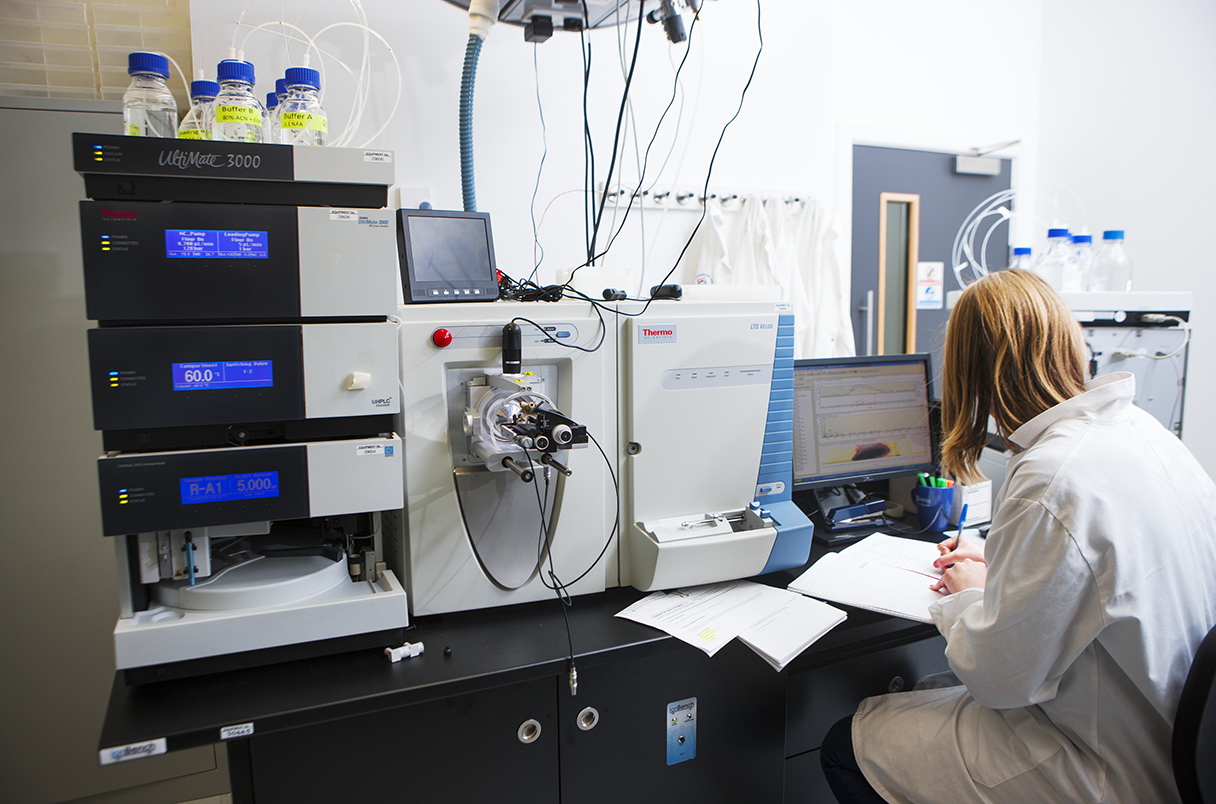
A researcher using a mass spectrometer to analyse proteins. Researchers have developed an AI system called ‘BetaDescribe’ that translates complex protein sequences into readable natural-language descriptions, the Israel Institute of Technology said in a statement on Thursday.
REMA Director General Juliet Kabera disclosed this on Tuesday, June 30, while briefing the Senate Committee on Foreign Affairs, Cooperation and Security on disaster risk reduction strategies.
She said the introduction of drone technology will strengthen environmental monitoring and improve enforcement of regulations on waste management.
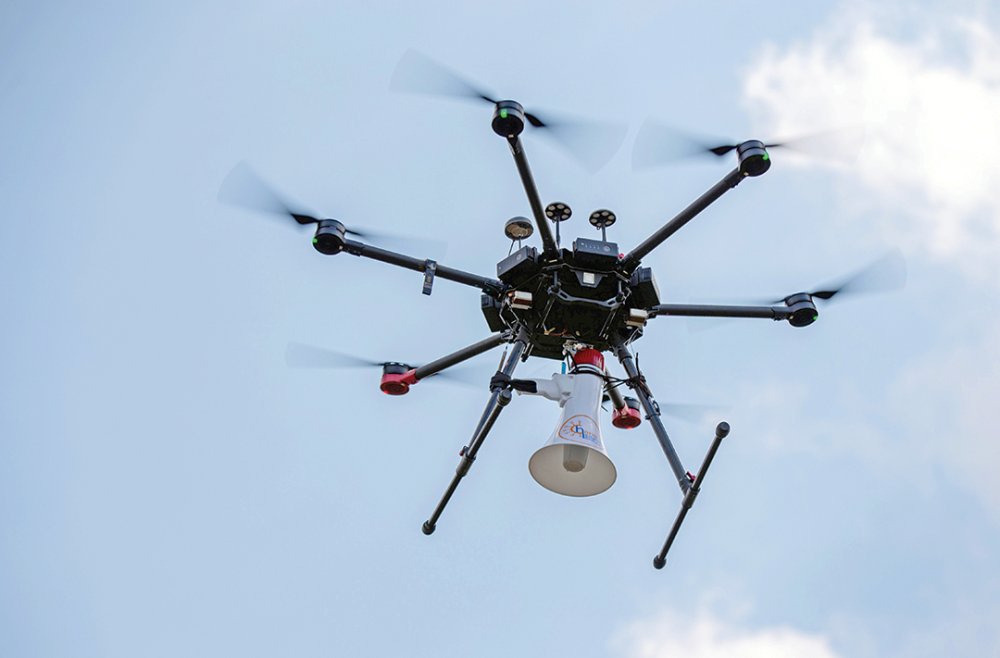
‘We are introducing new technology, and by the end of August we will have the first drones that will help us monitor those illegally burning waste. This will help us catch those who do it at night,’ she said.
Kabera noted that the technology will also be used to detect the burning of hazardous waste, including waste generated by health facilities, which is often difficult to identify through routine inspections.
‘There is also hazardous waste that people burn, such as that from health facilities. It is difficult to detect through normal inspections, but technology will help us address that,’ she said.
She further highlighted that the deployment of drones is expected to address staffing constraints within the agency’s inspection system.
According to Kabera, REMA currently has only 13 environmental inspectors, supported by a broader workforce of about 120 staff members engaged in different projects.
‘We will continue strengthening the use of technology, and working with service providers will also help us as we continue to look for sustainable solutions,’ she added.
The initiative forms part of broader government efforts to strengthen air quality monitoring and improve compliance with environmental protection laws.
REMA is also working to expand its air pollution monitoring framework beyond vehicle emissions to include industries and other sources of pollution, as part of ongoing measures to reduce air contamination.
In recent years, Rwanda has increasingly adopted drone technology across multiple sectors.
Drones are currently used to monitor illegal mining activities and support the Rwanda National Police in traffic surveillance. They also play a key role in the health sector, delivering blood, medicines, and other medical supplies to health facilities, as well as in agriculture, where they support various field operations.
The Rwanda Environment Management Authority (REMA) plans to deploy drones by August 2026 to detect and prevent illegal waste burning, with a particular focus on nighttime offenders.
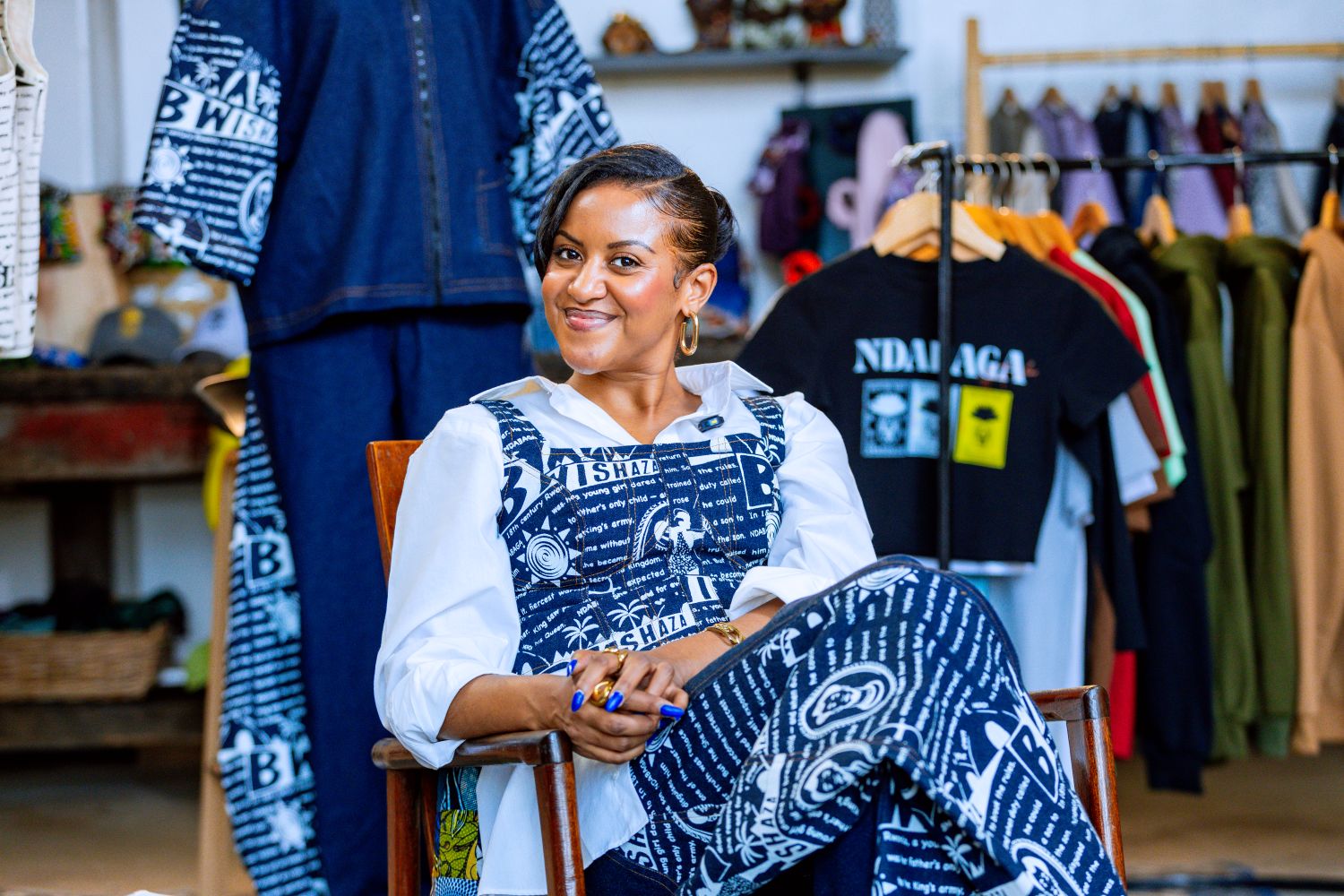
Born of a multicultural background and shaped by experiences across France, Cameroon, the United Kingdom, and Rwanda, Elodie describes herself as someone whose identity has always been deeply connected to fashion.
‘I literally used to dress myself from the age of three⦠I was very much of a tomboy when I was young,’ she recalls, explaining that her creative instincts started early and were influenced by a mix of cultures and personal expression.
Before Ndabaga Streetwear became an independent brand, it began as a collection under her earlier fashion label, Izubaa. It was during her design exploration in Rwanda that Elodie discovered the inspiration that would define her next chapter.
While researching Rwandan cultural narratives, she encountered the story of Ndabaga, a legendary female warrior whose courage and sacrifice deeply resonated with her.
‘It was just an animation that I found on YouTube, but I strongly connected with it, and I knew from the moment that I connected with it, I had to do something with it,’ she explains.
That emotional connection became the foundation of what is now Ndabaga Streetwear. Initially a collection, it later evolved into a standalone brand in 2025, driven by growing demand and a clear creative direction.
For Elodie, streetwear is not just fashion; it is accessibility, identity, and everyday expression.
Why streetwear?
Elodie’s shift into streetwear was not accidental; it was informed by consumer behavior and her own design instincts.
‘When I released the collection⦠we realised that our best sellers were our t-shirts,’ she says, referring to early designs that resonated strongly with young audiences.
She adds that streetwear felt like the most natural evolution: ‘When I think of something that is modern, I think about streetwear⦠everybody wears jeans, hoodies⦠it’s very now, it’s just who I am.’
For Elodie, streetwear is not just fashion; it is accessibility, identity, and everyday expression.
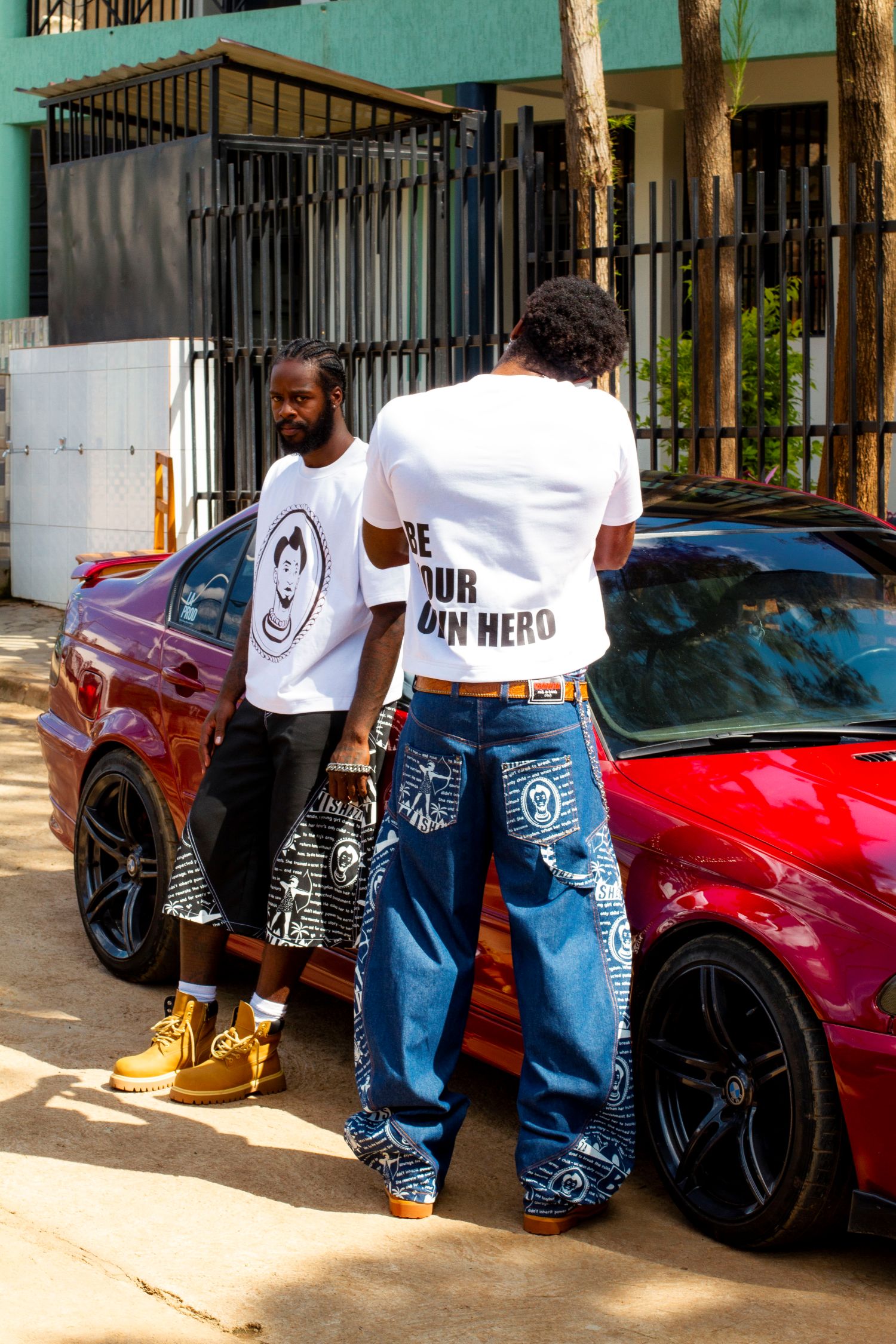
At the core of Ndabaga Streetwear is a deeper philosophy that goes beyond garments. Elodie emphasizes that the brand is not just about clothes, but about meaning: ‘Ndabaga is more than fashion; it’s a story of resilience, it’s a story of courage and strength, and we want to inspire everybody to be their own heroes.’
This idea of personal empowerment runs through every design. The brand encourages people to see themselves as ‘their own heroes,’ regardless of their background or challenges.
The brand encourages people to see themselves as ‘their own heroes,’ regardless of their background or challenges.
A creative process rooted in storytelling
Elodie’s design process is highly narrative-driven. Each collection begins with a story before evolving into visuals and garments.
‘For me, it starts with storytelling⦠what am I saying through the clothing?’ she explains.
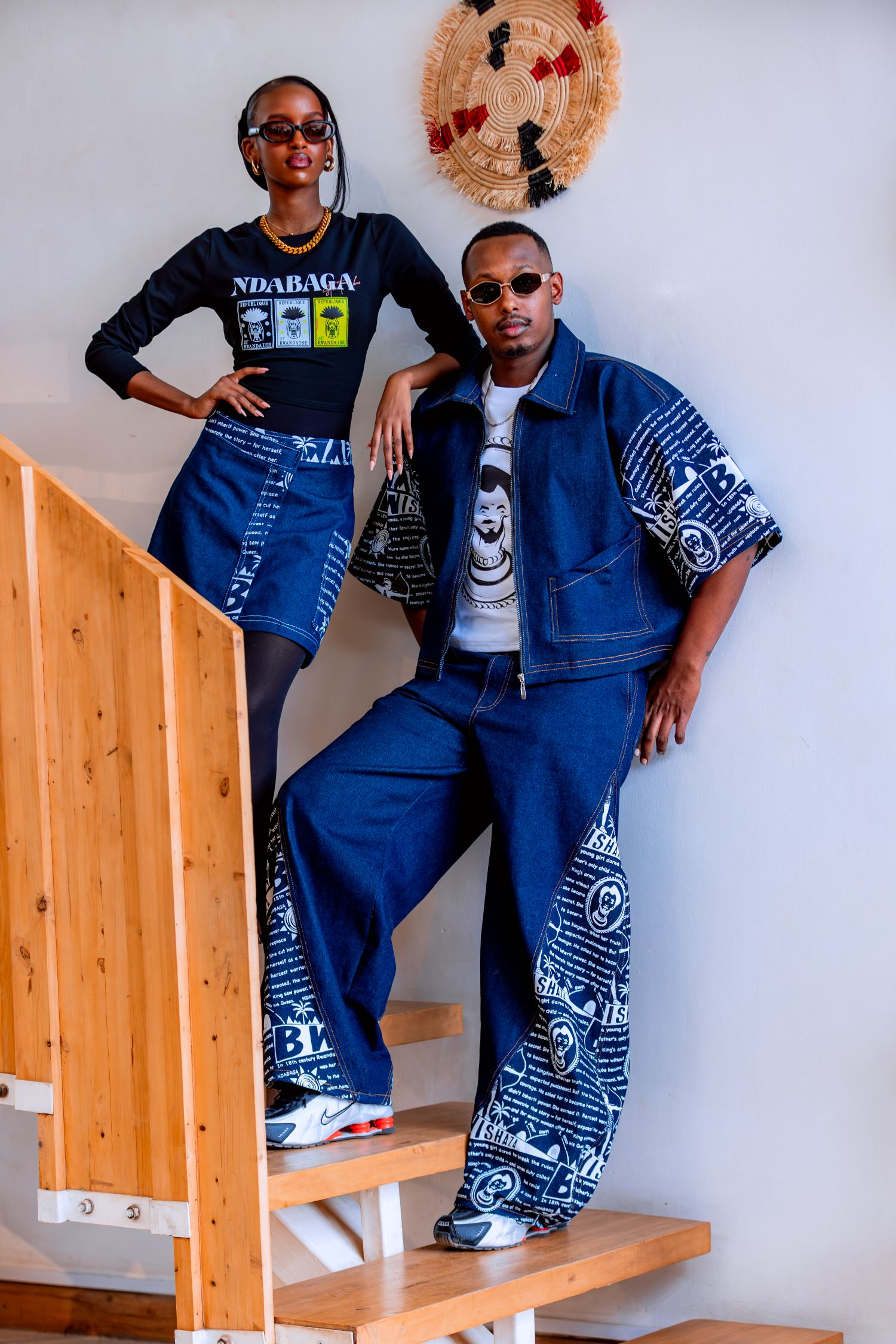
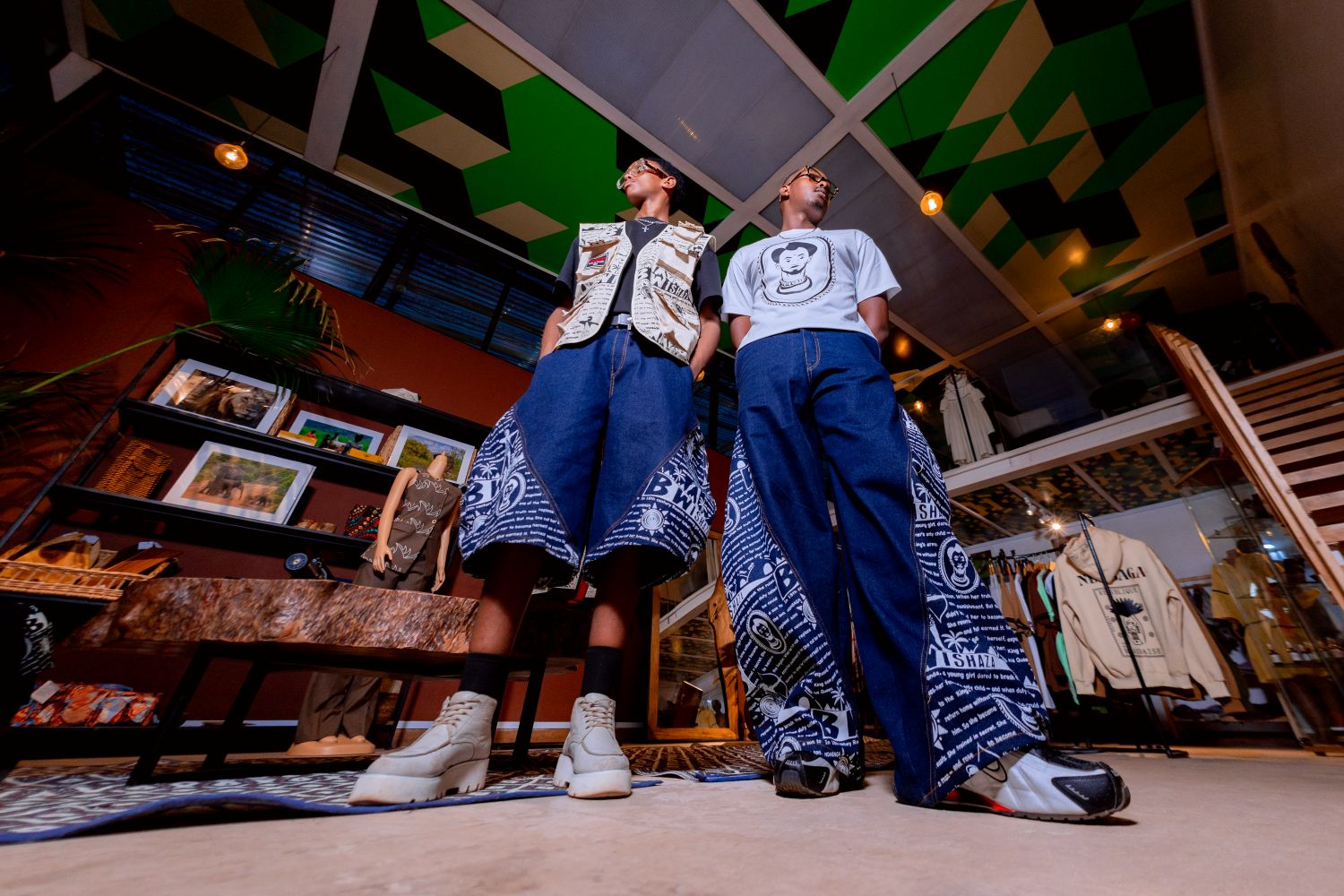
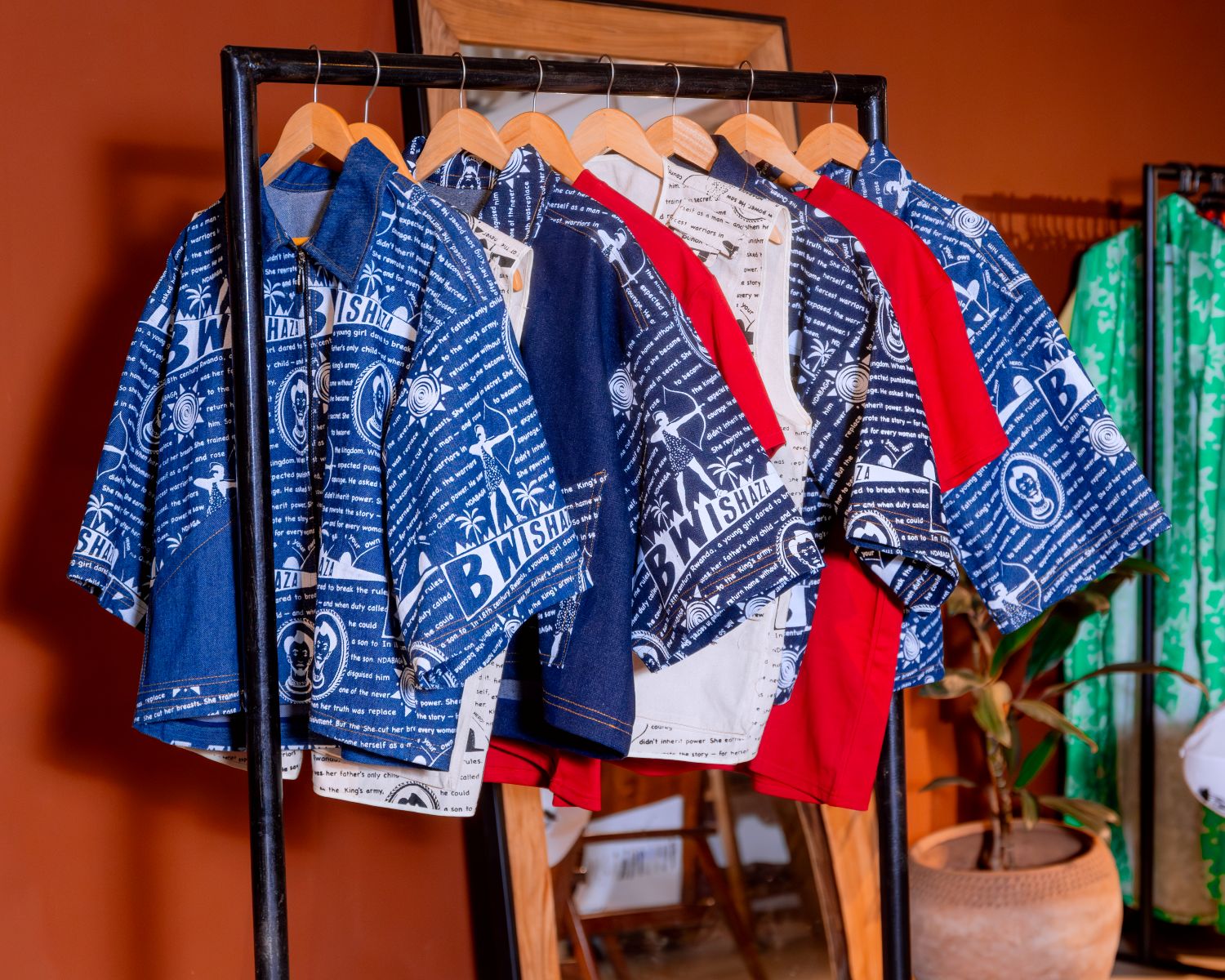
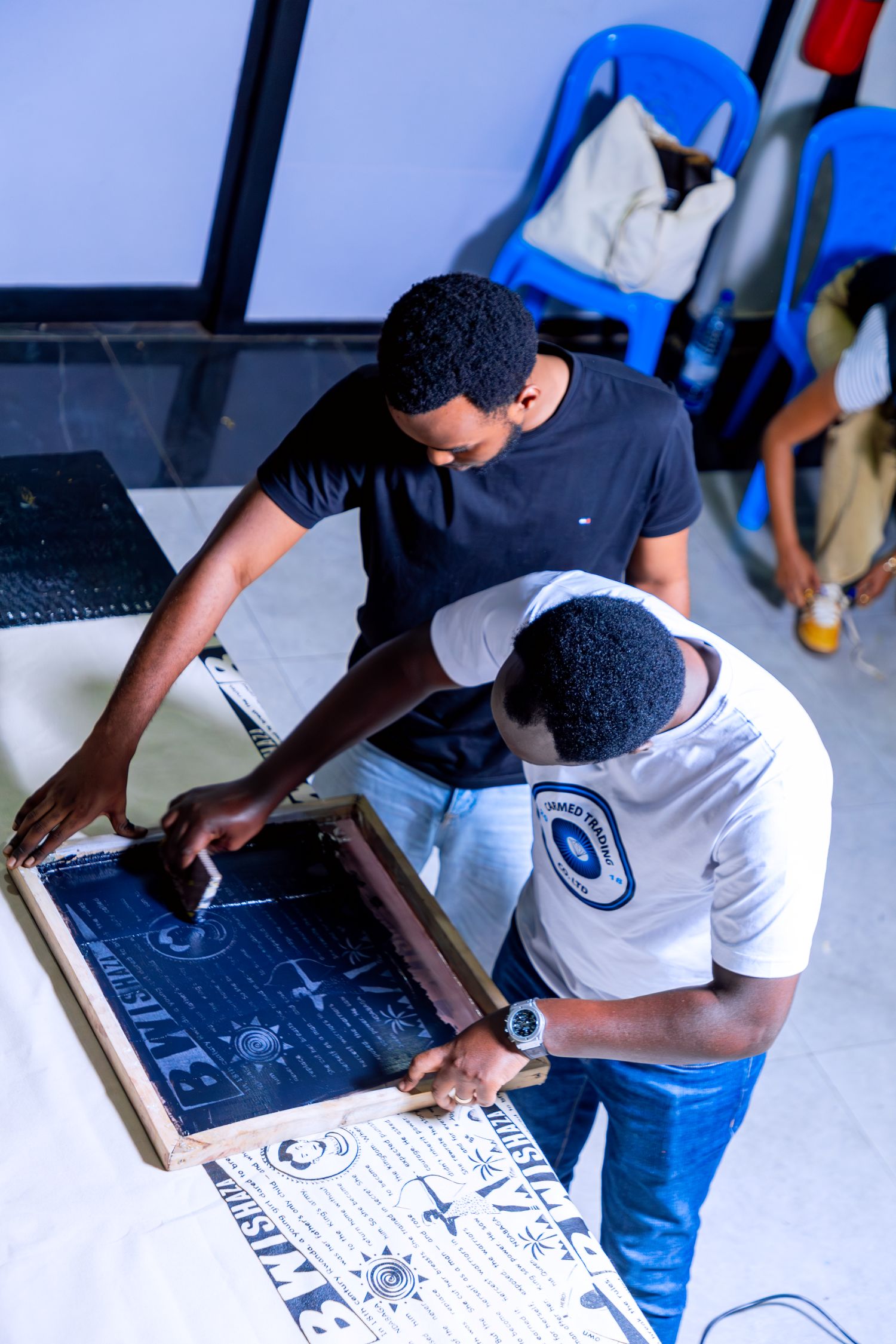
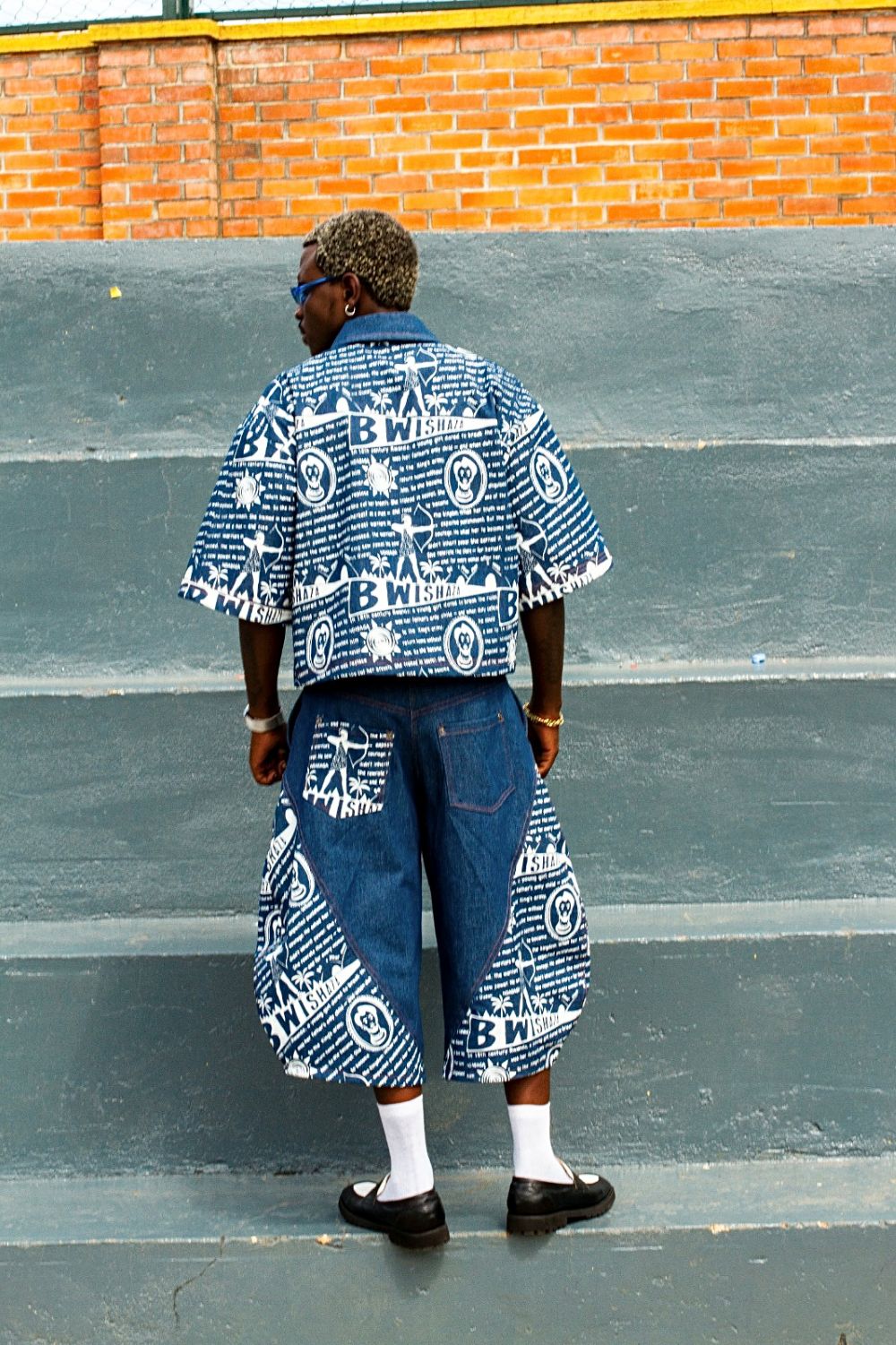
One of her most notable collections, Ndabaga: The Story, takes consumers through the life of the warrior figure through printed visuals and written elements directly on garments.
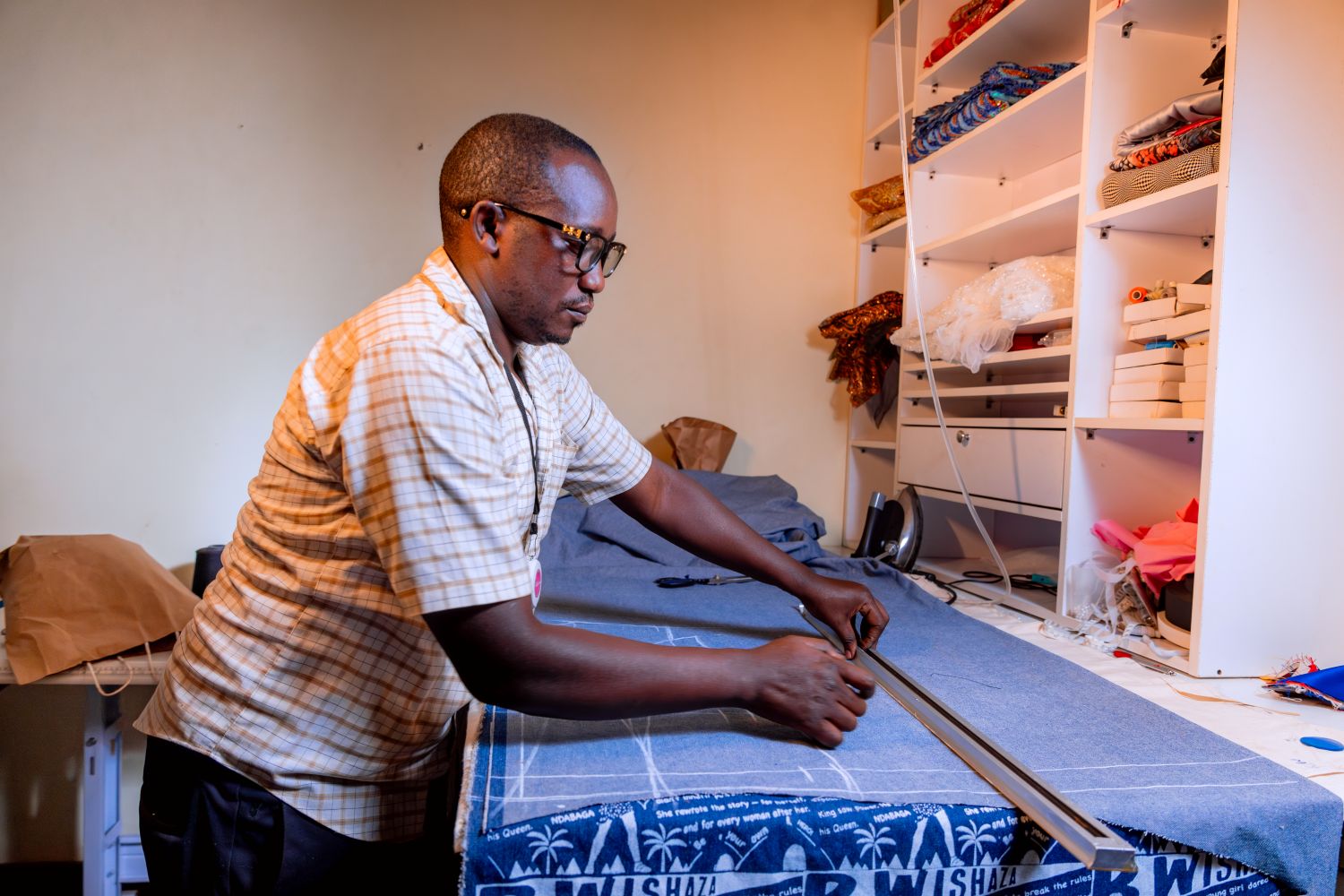
Every piece is designed and produced in Rwanda using premium materials and meticulous craftsmanship, reflecting the brand’s commitment to quality as much as storytelling.
She describes how personal history also influences her work. One of the prints, she explains, was inspired by a shirt her father used to wear in Burundi. That emotional link helped shape the visual identity of the collection, merging personal memory with cultural storytelling.
While deeply connected to Rwanda, Elodie’s ambition extends far beyond local borders. She sees Ndabaga Streetwear becoming a global African fashion brand.
Her international ambitions are already taking shape. Earlier this month, Fromenteau collaborated on the creative design of the Visit Rwanda × Paris Saint-Germain (PSG) ‘Ici C’est Paris’ collection, further strengthening her growing international profile.
‘Our vision is quite simple. We want to go global⦠to establish Ndabaga Streetwear as one of the biggest African fashion brands globally,’ she says.
Her expansion goals include establishing stores in major fashion capitals such as New York, London, Paris, Belgium, South Africa, and Kenya. She also envisions collaborations with artists across music, sports, and creative industries.
Rwanda’s fashion industry: growing, but full of potential
Elodie is optimistic about the current state of Rwanda’s fashion ecosystem. She believes it is still in its early stages but filled with opportunity.
‘It is very exciting to be a designer in Rwanda at the moment⦠there’s still a lot of opportunities for new upcoming designers,’ she notes.
She also highlights the growing appreciation for locally made products, particularly among young people, saying there is a rising pride in ‘Made in Rwanda’ fashion.
Looking ahead, Elodie sees Ndabaga Streetwear contributing not only to fashion but also to broader creative and economic growth.
‘As we grow, we’re going to hire a lot more people⦠and collaborate with artists, connecting global creatives with local talent,’ she explains.
For her, the brand is part of a bigger ecosystem: one where storytelling, identity, and collaboration drive both cultural and economic impact.
‘Go big or go home’
Reflecting on her journey so far, Elodie expresses gratitude for the rapid growth and emotional connection people have formed with the brand.
‘We’ve received so much love⦠people really connect with the story,’ she says.
That emotional connection, she believes, is what has fueled the brand’s early growth. ‘People don’t just buy the clothes, they buy into the story,’ she says.
And when asked about her long-term ambition, her response is direct: ‘We want to go big. And that’s it. That’s the only way.’
From a personal inspiration discovered in cultural research to an emerging African fashion label with global ambition, Ndabaga Streetwear is positioning itself as more than a brand; it is a narrative of identity, resilience, and creative evolution led by Elodie Fromenteau.
Watch the full video below to learn more about Elodie Fromenteau’s journey building Ndabaga Streetwear.
Born of a multicultural background and shaped by experiences across France, Cameroon, the United Kingdom, and Rwanda, Elodie describes herself as someone whose identity has always been deeply connected to fashion.
Elodie sees Ndabaga Streetwear contributing not only to fashion but also to broader creative and economic growth.
July 1 also holds special significance for Rwanda, as it is celebrated as Independence Day. While the two countries have different histories, both have travelled remarkable paths of resilience, recovery, and development.
Over the decades, China and Rwanda have each overcome immense challenges to build and develop their nations, a shared spirit that continues to underpin the growing friendship and mutual trust between the two countries.
It is against this backdrop that Nanhu Lake takes on a deeper meaning. Widely known for its calm waters, cultural beauty, and rich heritage, the lake is also home to one of the most important sites in modern Chinese historyâthe Nanhu Revolutionary Memorial Hall, where visitors can retrace the origins of a movement that would go on to shape the course of a nation.
The memorial hall stands as a key site for understanding the early history of the Communist Party of China, especially its founding period in 1921. It is here, beside Nanhu Lake, that history is preserved and retold in a way that connects past political ideas with present national identity. For many visitors, the site is not just a museum, but a place where the origins of CPC philosophy and political thought are remembered and reflected upon.
Nanhu Lake itself is among the most well-known lakes in eastern China. Alongside West Lake in Hangzhou and Xuanwu Lake in Nanjing, it forms part of the cultural and historical landscape of the Yangtze River region. Its natural beauty, shaped over centuries, has long attracted attention, but its modern significance is closely tied to the revolutionary events that unfolded in Jiaxing more than a century ago.
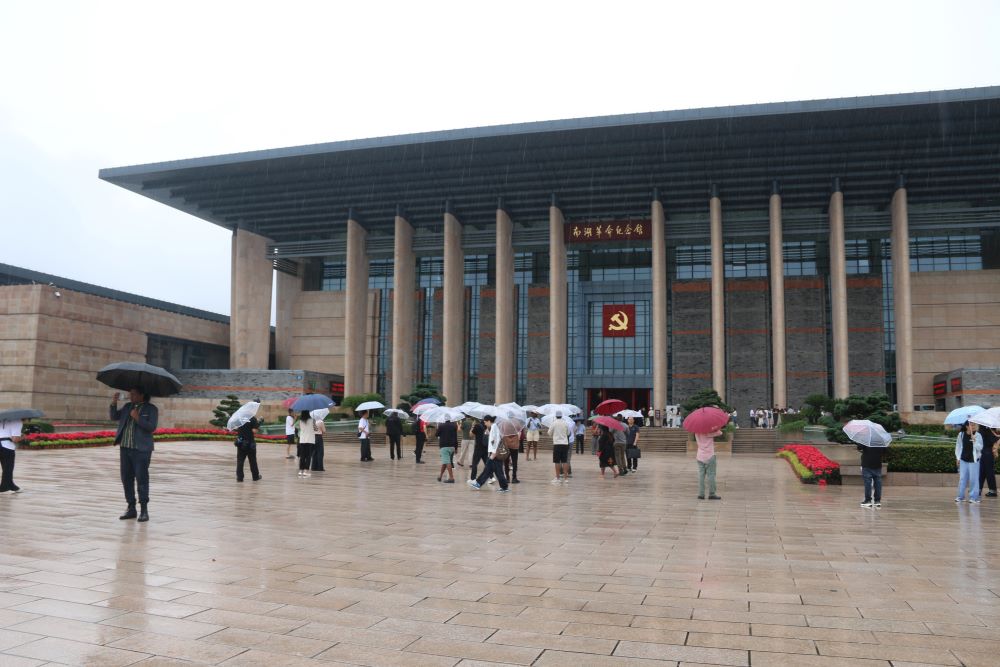
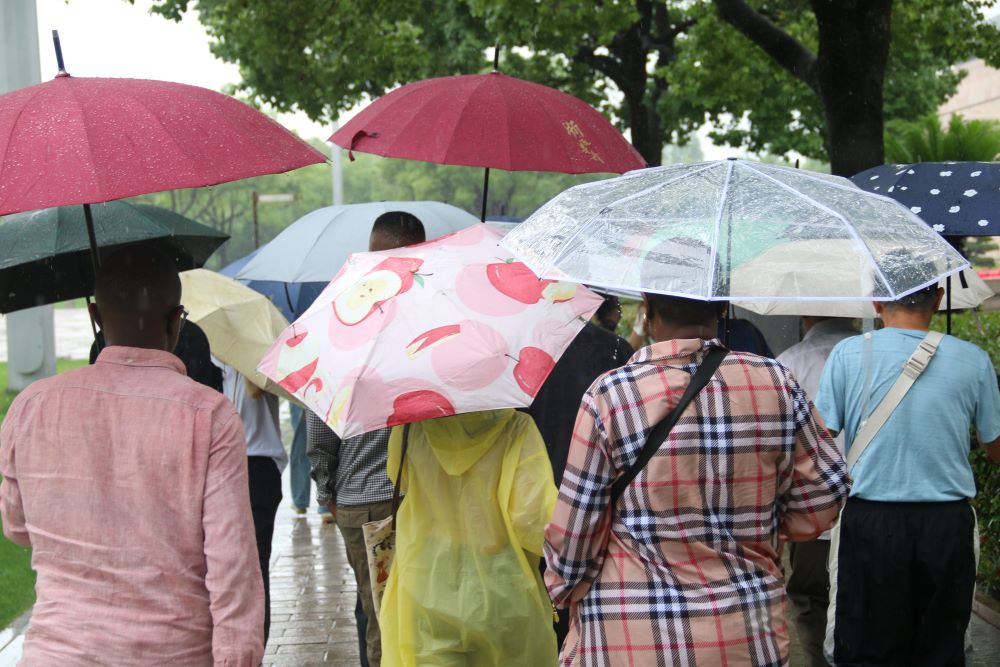
Visitors are seen carrying umbrellas while touring the Nanhu Revolutionary Memorial Hall, where the story of the Communist Party of China’s founding continues to attract people from across the country and abroad.
The Nanhu Revolutionary Memorial Hall was established in 1959 and later expanded in 2011 to preserve and present this history in greater depth. Today, it spans more than 19,000 square meters and contains over 10,000 historical artifacts, including documents, photographs, artworks, and rare revolutionary materials connected to the early development of the CPC.
The exhibitions inside the hall trace the formation of the Communist Party of China from its early beginnings under difficult social and political conditions to its gradual development into a major political organization. The displays are arranged to guide visitors through different historical stages, combining physical relics with modern storytelling techniques such as visual projections and immersive presentations.
At the heart of the memorial’s historical narrative is the idea that Nanhu played a symbolic role in the shaping of early CPC ideology.
While the Party was officially founded during its First National Congress in 1921, Nanhu Lake in Jiaxing became the place where the meeting concluded after being relocated from Shanghai due to external disruptions. This moment is widely remembered as a defining chapter in the Party’s early history.
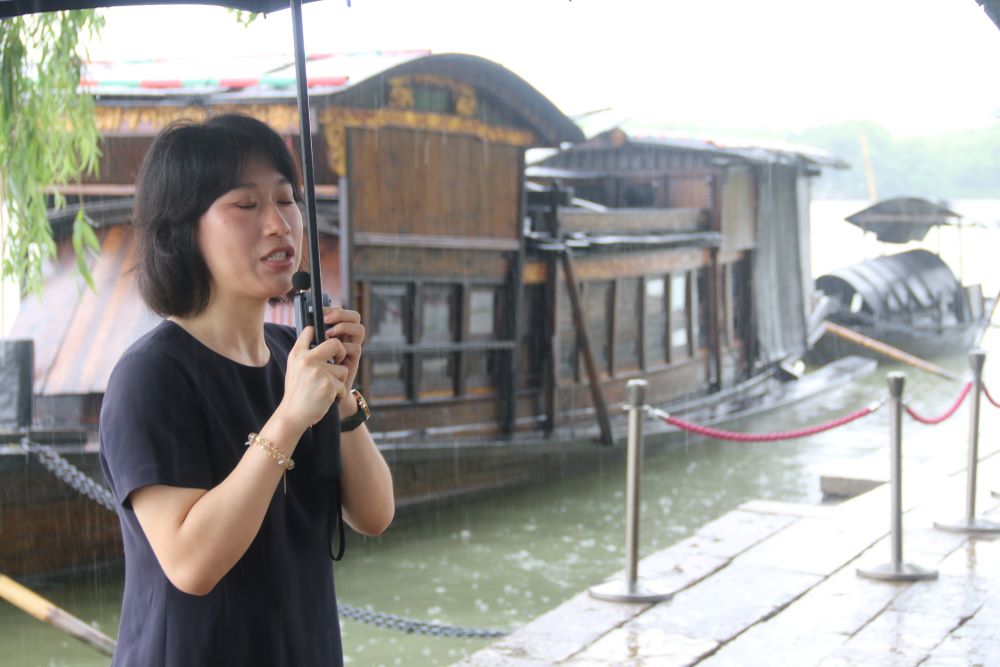
Boats line the shores of Nanhu Lake, offering visitors a closer view of the historic waters linked to the Red Boat and the founding history of the Communist Party of China.
A short walk from the exhibition area leads to the lakeside, where the famous Red Boat is anchored near Yanyu Tower. The boat is a carefully preserved replica built in 1959, modeled after the vessel that became central to the concluding moments of the First National Congress of the Communist Party of China in 1921.
Historical accounts show that the First National Congress was initially held in Shanghai, but it was interrupted by French police during the final stages of the meeting. In response to the disruption, the meeting was relocated to Jiaxing, a move made possible through the assistance of Wang Huiwu, who helped arrange the transfer of delegates and ensured the continuation of the congress. The final discussions were completed on a boat on Nanhu Lake, an event that later became one of the most symbolic moments in CPC history.
Among the delegates involved was Dong Biwu, one of the 13 representatives who attended the founding congress. His accounts, along with historical records, helped verify and preserve the memory of how the meeting concluded on the Red Boat.
Today, the replica Red Boat is carefully maintained using traditional methods and remains one of the most visited landmarks in the memorial area, symbolizing the birthplace of the CPC’s concluding declaration.
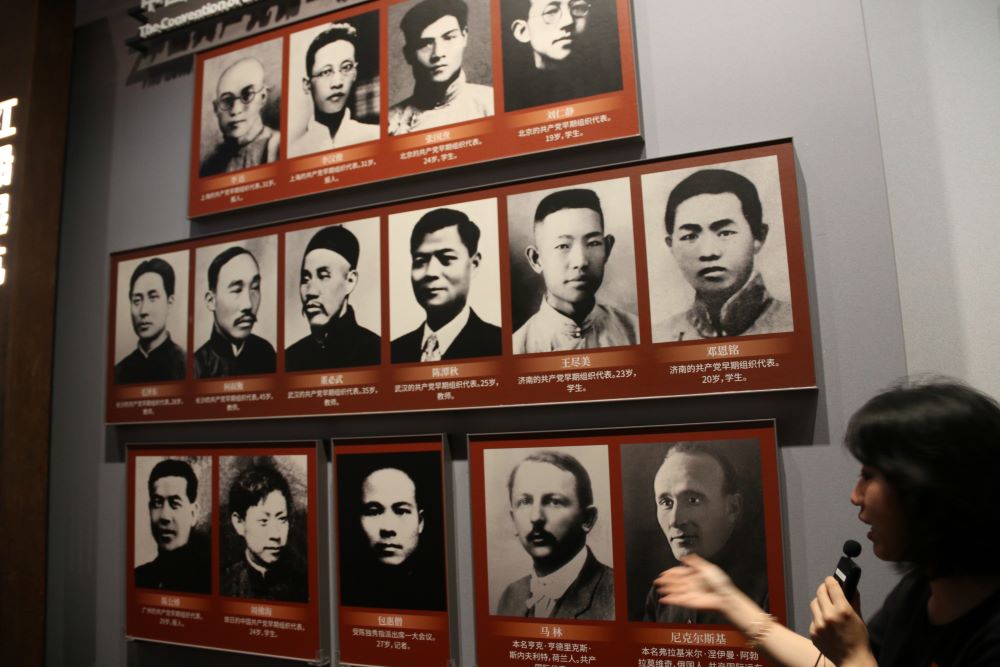
This section of the exhibition highlights some of the key figures who contributed to the founding of the Communist Party of China during its First National Congress in 1921.
The Nanhu Revolutionary Memorial Hall now welcomes more than one million visitors each year. During peak holidays, visitor numbers rise significantly, with families and young people forming a large share of those who come to explore the site. Many visit not only for tourism but also to understand the historical roots of the CPC and its development over time.
Curators at the memorial emphasize that the purpose of the site is educational as much as it is historical. Over the years, the museum has expanded its exhibitions and introduced modern display techniques to make history more accessible. This includes interactive visuals and structured storytelling designed to engage younger generations while preserving the authenticity of historical materials.
Beyond being a museum, Nanhu blends natural scenery with political history, reflecting both Jiaxing’s beauty and the enduring memory of the early days of the Communist Party of China.
As I leave the lakeside on this special date, China’s Party anniversary and my own country’s Independence Day, I carry with me a subtle lesson: that nations, like boats, are steered by the resolve of those who board them in times of uncertainty. And that memory, whether preserved in a museum or carried in people’s heart, is the anchor of every lasting journey.
Historical displays at the Nanhu Revolutionary Memorial Hall showcase prominent individuals whose contributions helped shape the early history of the Communist Party of China.
Tour boats navigate the calm waters of Nanhu Lake, taking visitors around the area where the iconic Red Boat remains a symbol of a defining moment in modern Chinese history.
Nanhu Lake in Jiaxing, Zhejiang Province, is known for its scenic beauty and historical significance, attracting visitors interested in both culture and history.
Guides at the Nanhu Revolutionary Memorial Hall lead visitors through the story of the Communist Party of China’s founding, helping bring more than a century of history to life.
Rain doesn’t stop visitors from exploring the Nanhu Revolutionary Memorial Hall, with many carrying umbrellas as they continue their journey through one of China’s most significant historical sites.
The figure, drawn from HIV serology testing of nearly 13,000 women and men, confirms a steady decline in the country’s epidemic: prevalence held at 3.0% from 2005 through 2014â15, before easing to 2.7% in the 2019â20 RDHS and now 2.2% in 2025. The report describes the drop between 2019â20 and 2025 as statistically significant.
But the national average masks wide disparities that the survey’s authors say still call for targeted intervention, by sex, by geography, and by wealth and education.
A persistent gender gap
Women continue to bear a heavier burden of HIV. The survey found prevalence among women aged 15â49 at 2.8%, nearly double the 1.5% recorded among men.
This gap persists even though women account for a slight majority of Rwanda’s population. The 2022 Rwanda Population and Housing Census recorded 13,246,394 people, comprising 6,817,067 females (51.5%) and 6,429,326 males (48.5%).
Compared with the 2019â20 survey, HIV prevalence among women declined from 3.5% to 2.8%, a statistically significant reduction, while prevalence among men decreased slightly from 1.7% to 1.5%, a change that was not statistically significant.
The gap widens further with age. Among women aged 45â49, prevalence reaches 7.8%, compared with 3.5% among men in the same age bracket, and 4.3% among men aged 50â59. Prevalence generally climbs with age for both sexes, from under 1% among teenagers to its peak in the 40s and 50s.
Marital and relationship status also shapes risk. Widowed respondents have the highest prevalence of any group at 10.9%, followed by those who are divorced or separated at 7.3%. Women in polygynous unions show notably higher prevalence (6.5%) than those in non-polygynous unions (2.3%).
Male circumcision continues to show a protective association: HIV prevalence is 1.2% among circumcised men, compared with 2.5% among men who are not circumcised or do not know their status.
Cities carry a heavier burden than the countryside
Geography remains one of the sharpest dividing lines in Rwanda’s HIV epidemic. Prevalence in urban areas stands at 3.3%, almost double the 1.7% recorded in rural areas, a pattern consistent with previous rounds of the survey and with the country’s broader urbanârural health disparities.
The provincial breakdown tells a similar story. The City of Kigali has the highest prevalence in the country at 3.7%, more than triple the 1.0% recorded in the Northern Province, which posts the lowest rate nationally. Southern Province (2.3%), Western Province (2.2%), and Eastern Province (2.0%) fall in between.
Education levels also showed clear differences in HIV prevalence. The survey found HIV prevalence was highest among people with no formal education (4.9%), followed by those with primary education (2.4%), secondary education (1.6%), and more than secondary education (0.9%). By household wealth, the poorest quintile recorded the highest prevalence (3.3%), though the pattern across the remaining wealth groups was less consistent.
Testing coverage remains high
The survey’s underlying data quality is bolstered by near-universal participation: 99% of eligible women and 97% of eligible men consented to HIV testing and provided a blood sample for the survey’s testing algorithm, carried out through Rwanda’s National Reference Laboratory. Fewer than 1% of eligible respondents refused testing outright.
Rwanda has been widely recognized as a regional leader in HIV control, having met the UNAIDS 95â95â95 targets for diagnosis, treatment, and viral suppression ahead of the 2025 deadline.
With prevalence now confirmed at 2.2% nationally, the survey gives policymakers a clearer map of where continued gains are still to be made, particularly among older women, urban populations, and the City of Kigali, building on a strategy that has already brought the country this far.
Meanwhile, the HIV findings sit alongside a wider set of health gains captured in the 2025 RDHS. Fertility has continued its long decline, with the total fertility rate now at 3.7 children per woman. Child survival has also improved: under-5 mortality has fallen to 36 deaths per 1,000 live births, down from 45 in the previous survey, while infant and neonatal mortality have declined in tandem.
Chronic child malnutrition is down too, 27% of children under five are stunted, compared with 51% two decades ago, and contraceptive use among married women has climbed to 69%, with the government sector remaining the primary source of family planning services nationwide.
Women continue to bear a heavier burden of HIV. The survey found prevalence among women aged 15â49 at 2.8%, nearly double the 1.5% recorded among men.
In a message, Xi said that over the past 50 years since the establishment of diplomatic relations, China and Seychelles have consistently trusted each other, and firmly supported each other regardless of changes in the international landscape, with the friendship between the two countries remaining rock solid.
Xi said he firmly believes that as long as both sides uphold the original aspiration behind the establishment of diplomatic relations and move forward side by side, the path of China-Seychelles ties will grow even broader and the prospects for bilateral cooperation become even brighter.
Noting that he attaches great importance to the development of China-Seychelles relations, Xi said he is willing to work with Herminie to take the 50th anniversary of diplomatic relations as a new starting point to carry forward the traditional friendship.
Xi also pledged joint efforts with Herminie to deepen mutually beneficial cooperation within the frameworks of high-quality Belt and Road cooperation and the Forum on China-Africa Cooperation (FOCAC), and promote common development, so as to elevate the China-Seychelles strategic partnership to higher levels, and bring greater benefits to both peoples.
Herminie, in his message, said that over the 50 years since the establishment of diplomatic ties, Seychelles-China relations have steadily developed on the basis of mutual respect, mutual trust and common development.
China has always been a valuable partner for Seychelles, providing extensive support to improve the well-being of its people and achieve the country’s national development goals, he added.
Herminie said Seychelles firmly adheres to the one-China principle and stays ready to strengthen cooperation within the frameworks of the Belt and Road cooperation and the FOCAC to continuously deepen bilateral relations.Â