The figure represents a 24.3 percent increase from the previous financial year, highlighting Rwanda's continued efforts to strengthen the agricultural export sector, build resilience and expand access to international markets.
Agricultural and livestock exports generated $839.21 million in 2023/24, rising to $893 million in 2024/25 before exceeding $1.1 billion in 2025/26.
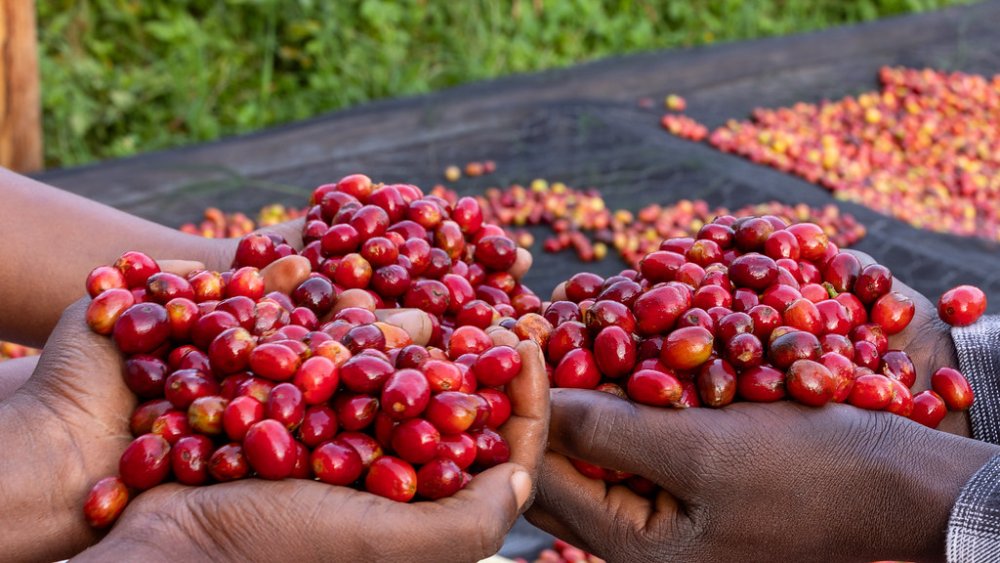
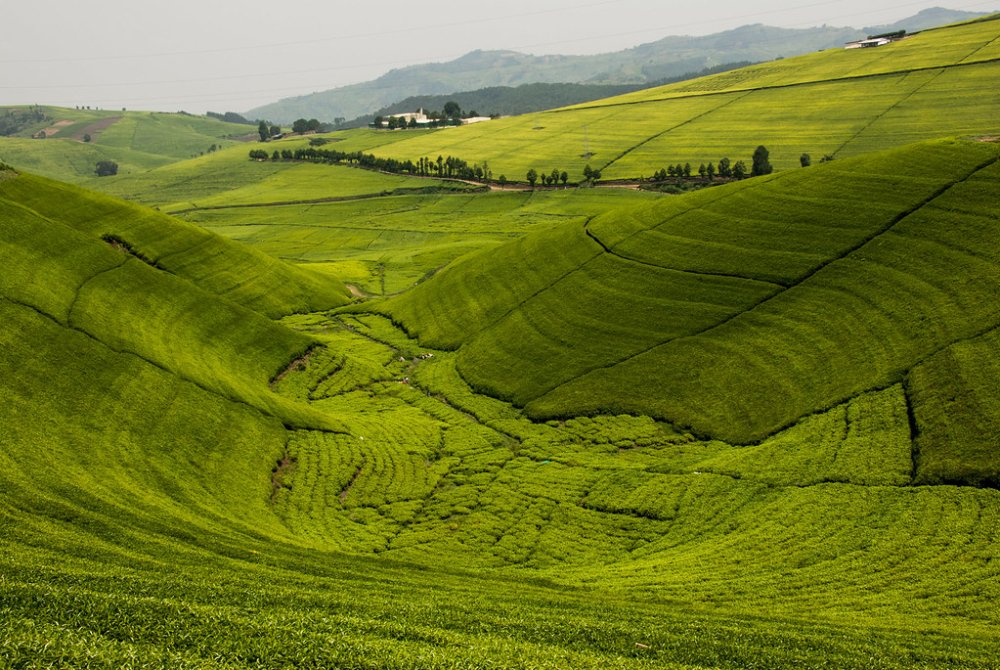
During the 2025/26 financial year, coffee, tea and pyrethrum generated $264.88 million in export revenues, while flowers, fruits and vegetables brought in $86.83 million.
Livestock products generated $204.79 million, while other agricultural and livestock-related products accounted for $554.28 million.
Rwanda exports agricultural and livestock products to markets including the United Arab Emirates, Qatar, China and other countries in Asia, as well as the United States, Europe and various African countries.
NAEB Director General Claude Bizimana told IGIHE that surpassing $1.1 billion was a reflection of the government's continued investment in developing agricultural exports.
'Generating $1.1 billion for the first time in history demonstrates the efforts the country continues to make to develop the agricultural and livestock export sector and expand international markets,' Bizimana said.
The achievement comes as Rwanda seeks to increase the contribution of agriculture to economic development by boosting production, developing infrastructure to maintain the quality of exports and strengthening compliance with international standards, all aimed at expanding access to global markets.
Infrastructure as a pillar of export growth
Bizimana said the milestone was achieved as the government continued to invest in infrastructure designed to address challenges facing the agricultural export sector.
'Through NAEB, the government has developed various infrastructure, including coffee and tea processing and testing facilities, as well as facilities for maintaining the quality of produce before export, including sorting and storage facilities,' he said.
Rwanda currently has a laboratory at NAEB that has received international accreditation, enabling it to conduct tests whose results are recognised internationally.
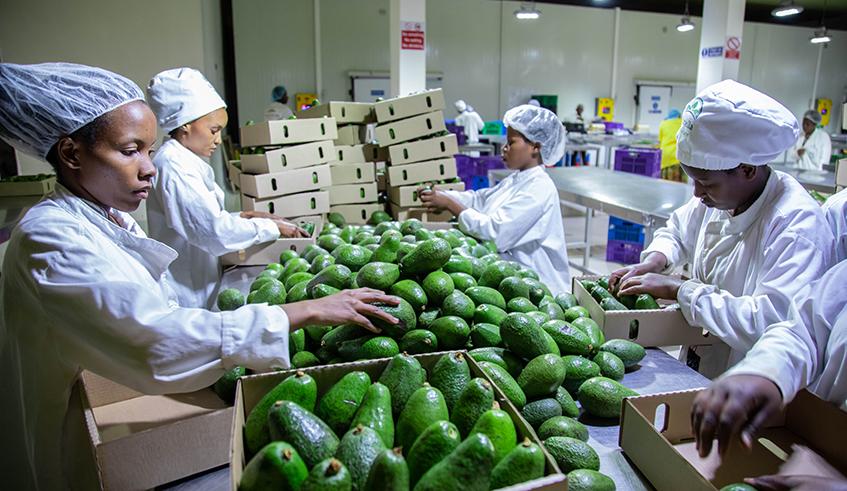
The country also has facilities for sorting and storing coffee, as well as facilities for processing and cold storage of fruits and vegetables.
Focus on quality and traceability
Quality and traceability are among the key requirements in international agricultural markets, with buyers increasingly seeking information about the quality and origin of products. NAEB says Rwanda has developed systems to maintain export quality and provide international buyers with information about the products being exported.
The government also supports the promotion of Rwanda's agricultural and livestock exports through international trade fairs and by connecting exporters with buyers, with NAEB playing a key role in facilitating these engagements.
As part of efforts to promote innovation and expand markets, NAEB has also introduced the annual Best of Rwanda coffee competition. Top-performing Rwandan coffees are sold through auctions, helping increase their value, expand markets and improve farmers' earning potential.
NAEB has also increased the use of digital systems to speed up service delivery and make it easier for exporters to conduct business.
Increasing production and strengthening farmers' capacity
One of the strategies for increasing foreign exchange earnings from agricultural and livestock exports is to increase both the volume and quality of production.
Bizimana said various programmes and projects have been introduced to support this goal, including helping farmers access high-quality seedlings that are resilient to climate change, providing technical support and conducting campaigns aimed at increasing productivity.
Rwanda is continuing efforts to meet the targets set under the second National Strategy for Transformation (NST2) and the fifth Strategic Plan for Agriculture Transformation (PSTA5).
NAEB says it is working with various partners to increase foreign exchange earnings from agricultural and livestock exports and expand Rwanda's presence in international markets.
The country aims to increase revenues from agricultural and livestock exports to $1.5 billion by 2029.
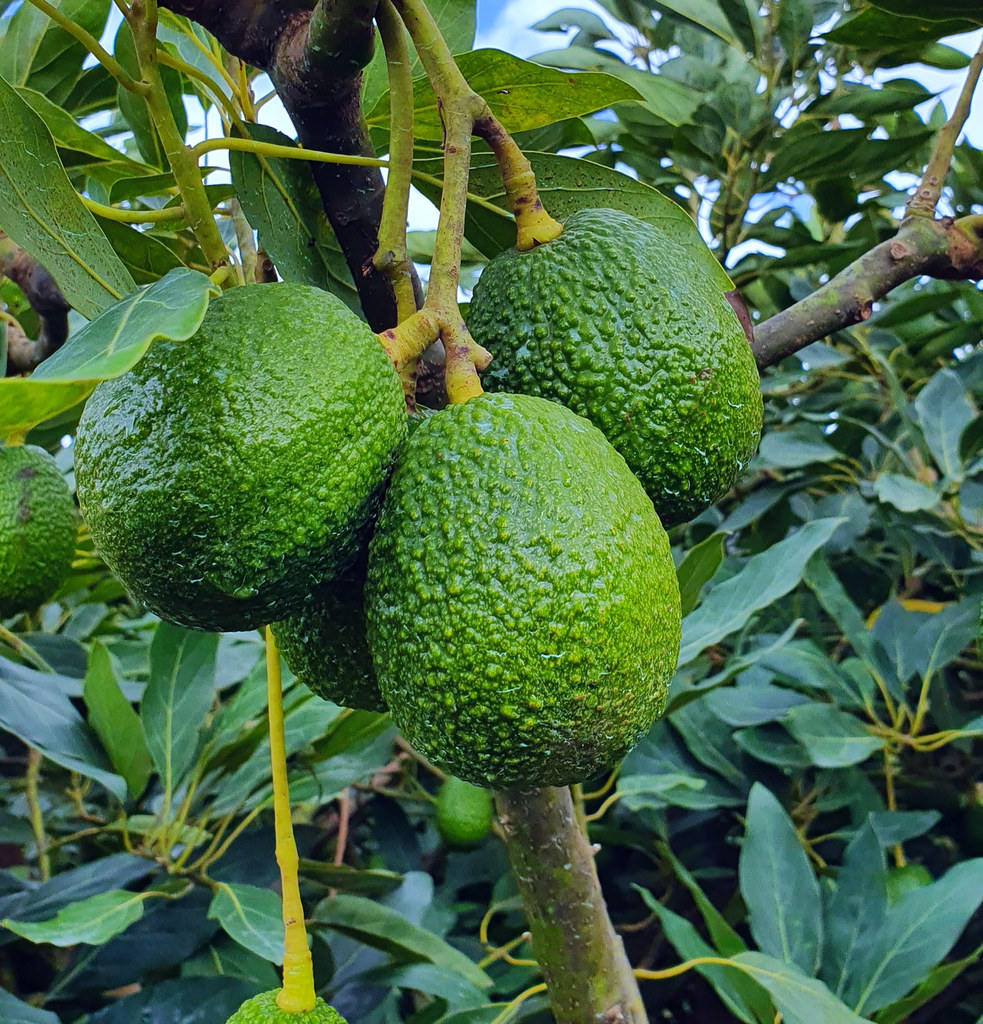
Coffee is one of Rwanda's top foreign exchange earners.Tea is among Rwanda's long-established export crops and remains a major source of export earnings.Fruit farming is becoming a lucrative venture for farmers.Rwanda has coffee tasting facilities that help ensure its coffee retains its distinctive flavour before export.Avocado farming is expanding in Rwanda.
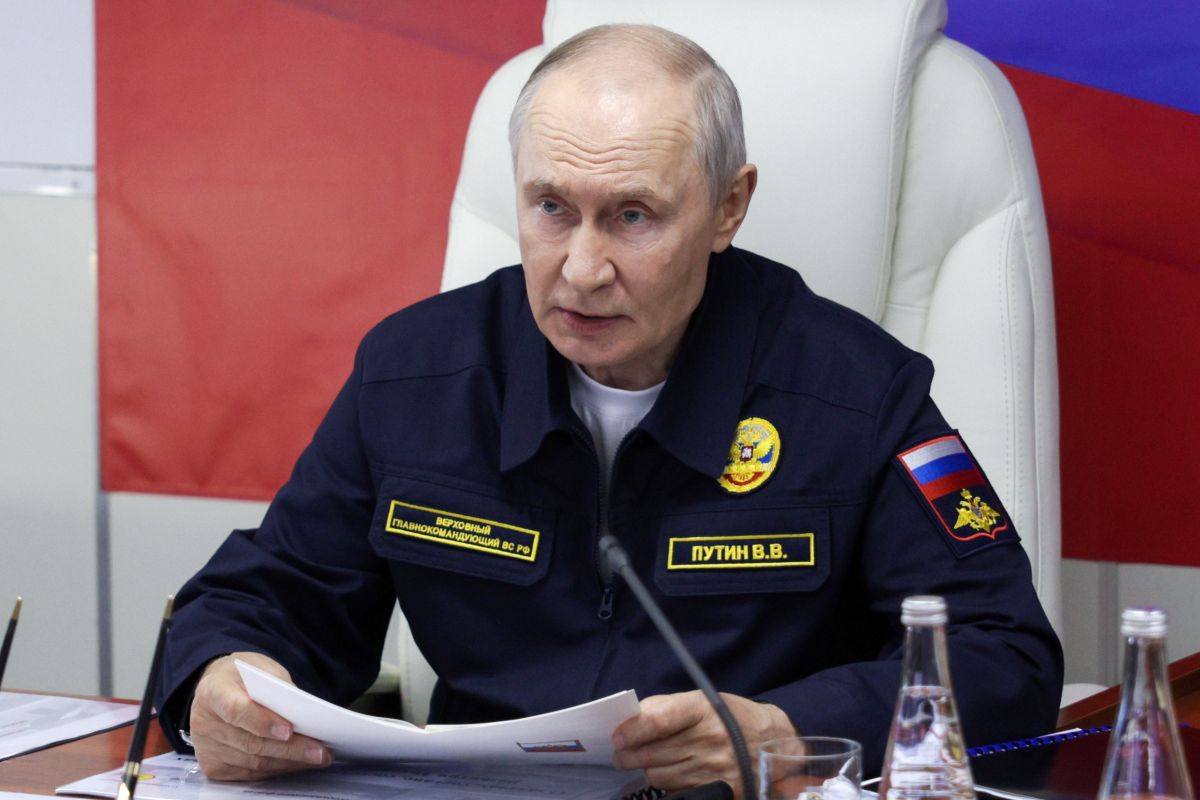
'We see that the authorities of some countries, in violation of international maritime law, are trying to restrict the movement of our economic operators' vessels, peaceful vessels, I want to emphasize,' Putin said during the final stage of the Pacific Fleet's exercises.
Putin's remarks come against the backdrop of recent interceptions and inspections of 'shadow fleet' ships by European naval forces, including Italian-led European Union (EU) operations in the Mediterranean. At the end of July, the EU also adopted a port access ban on 41 more 'shadow fleet' vessels and introduced mandatory notification requirements for the sale of liquefied natural gas tankers to Russia.
Putin has also voiced his concern over increasing tensions in the Asia-Pacific region due to 'unprovoked' sanctions against Russia introduced by Japan. 'Unfortunately, we are seeing changes in positions, and I would like to emphasize that these changes were not provoked by anything on our part,' said Putin.
Russian President Vladimir Putin warned on Wednesday that Russia would respond in kind if Western countries seize its merchant ships.
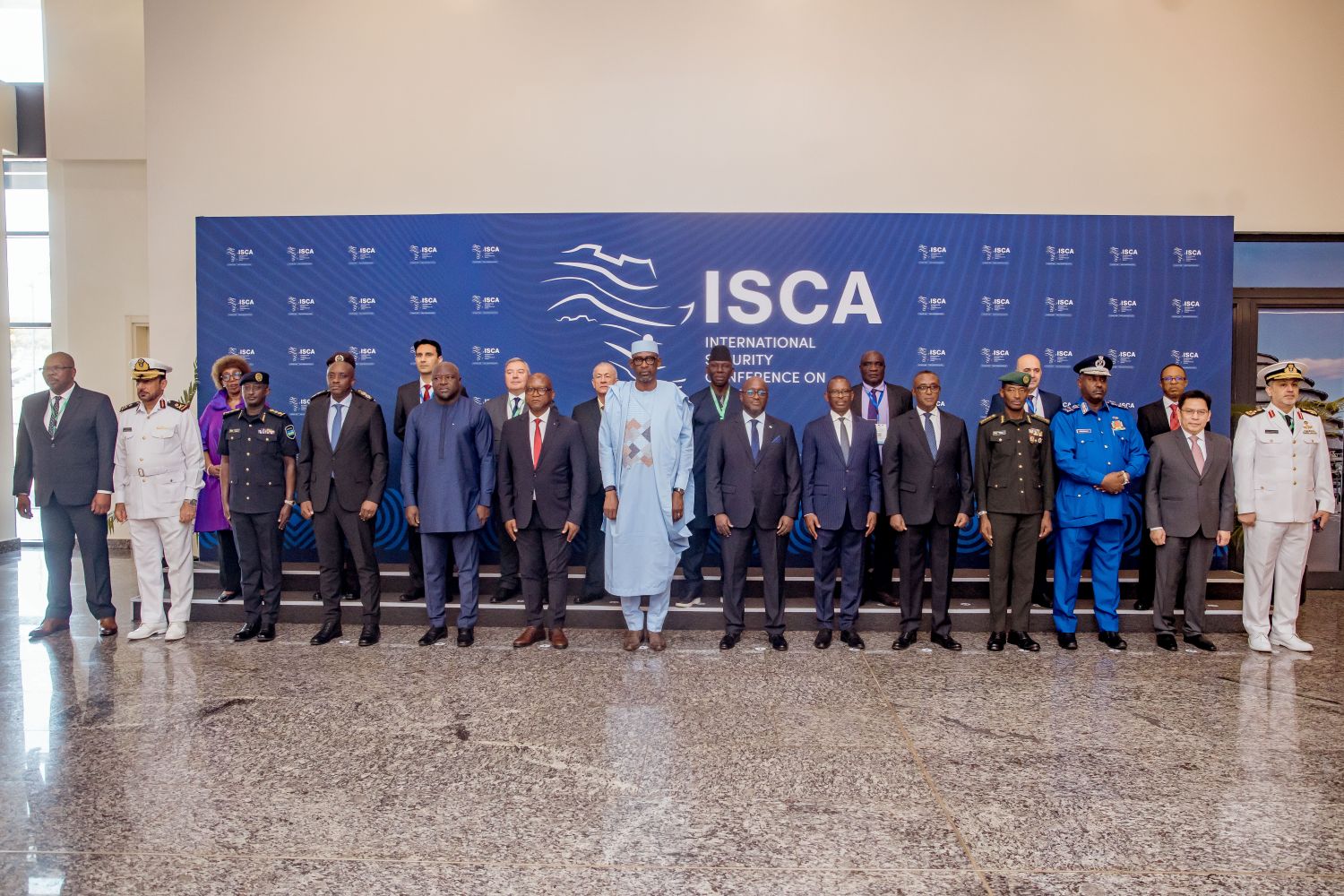
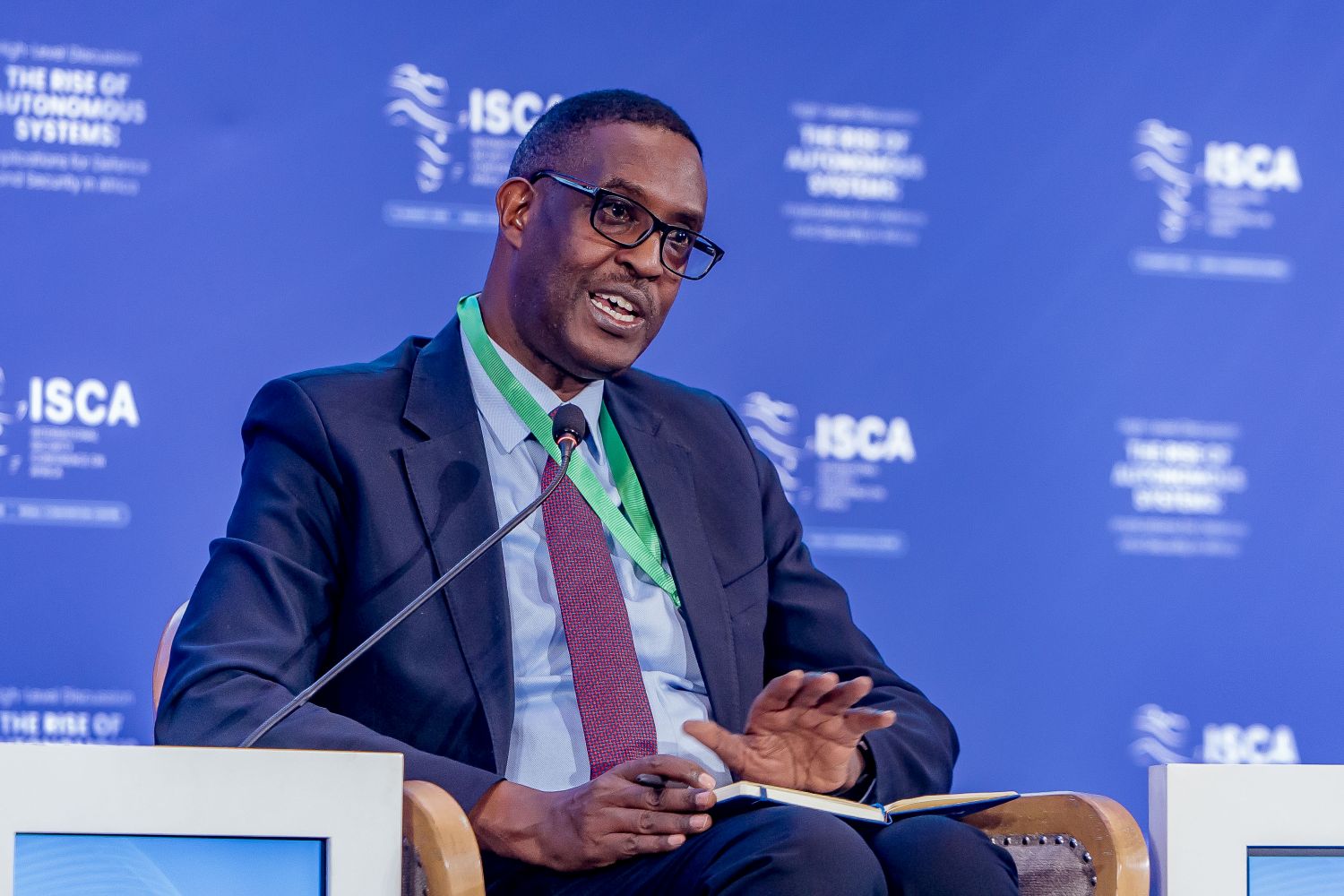
Speaking to journalists on the sidelines of the ISCA High-Level Discussion in Kigali on Wednesday, Dr. Ndushabandi said Rwanda's governance, security institutions, research capacity and investment in education give it an advantage as African countries confront a rapidly changing technological and security environment.
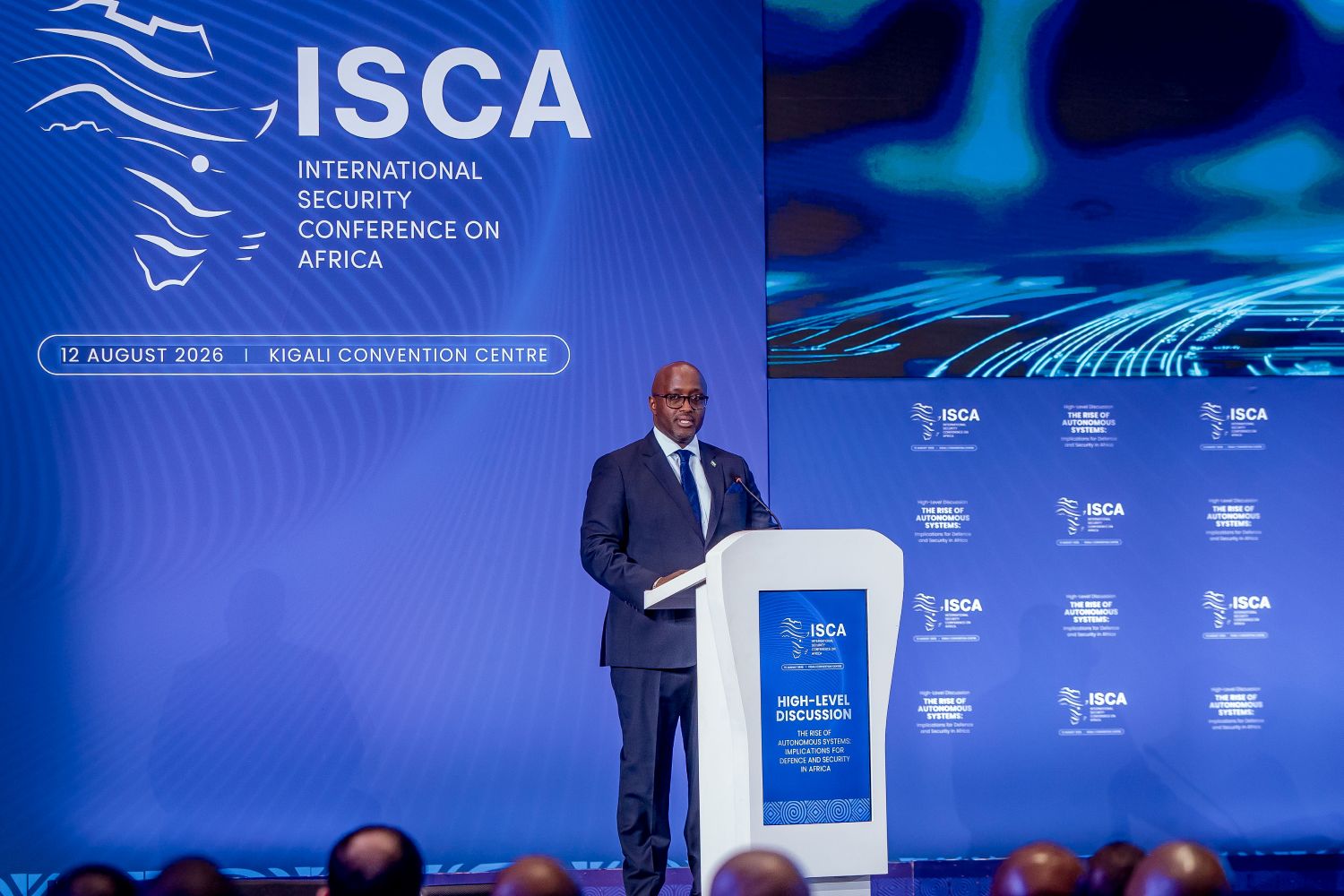
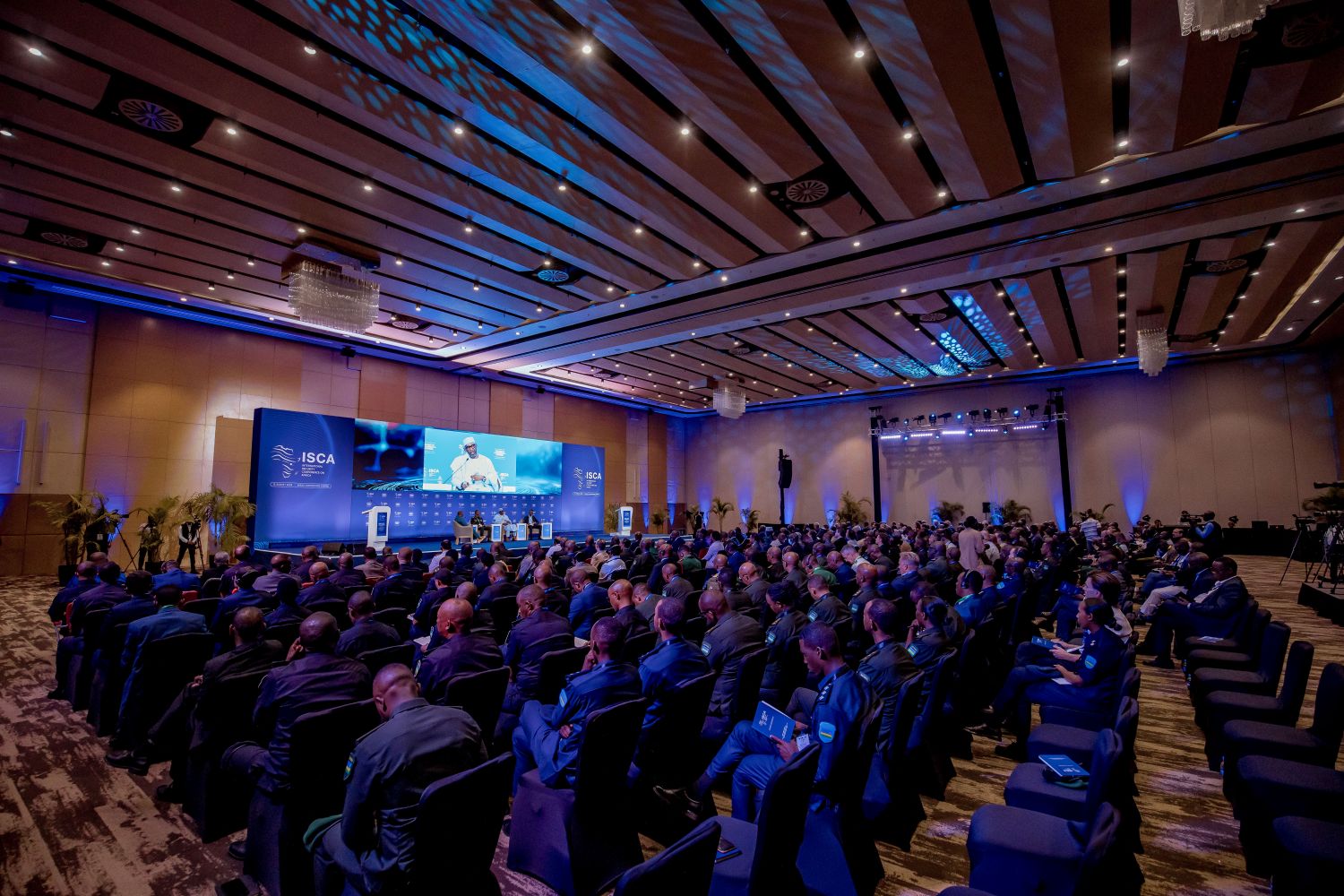
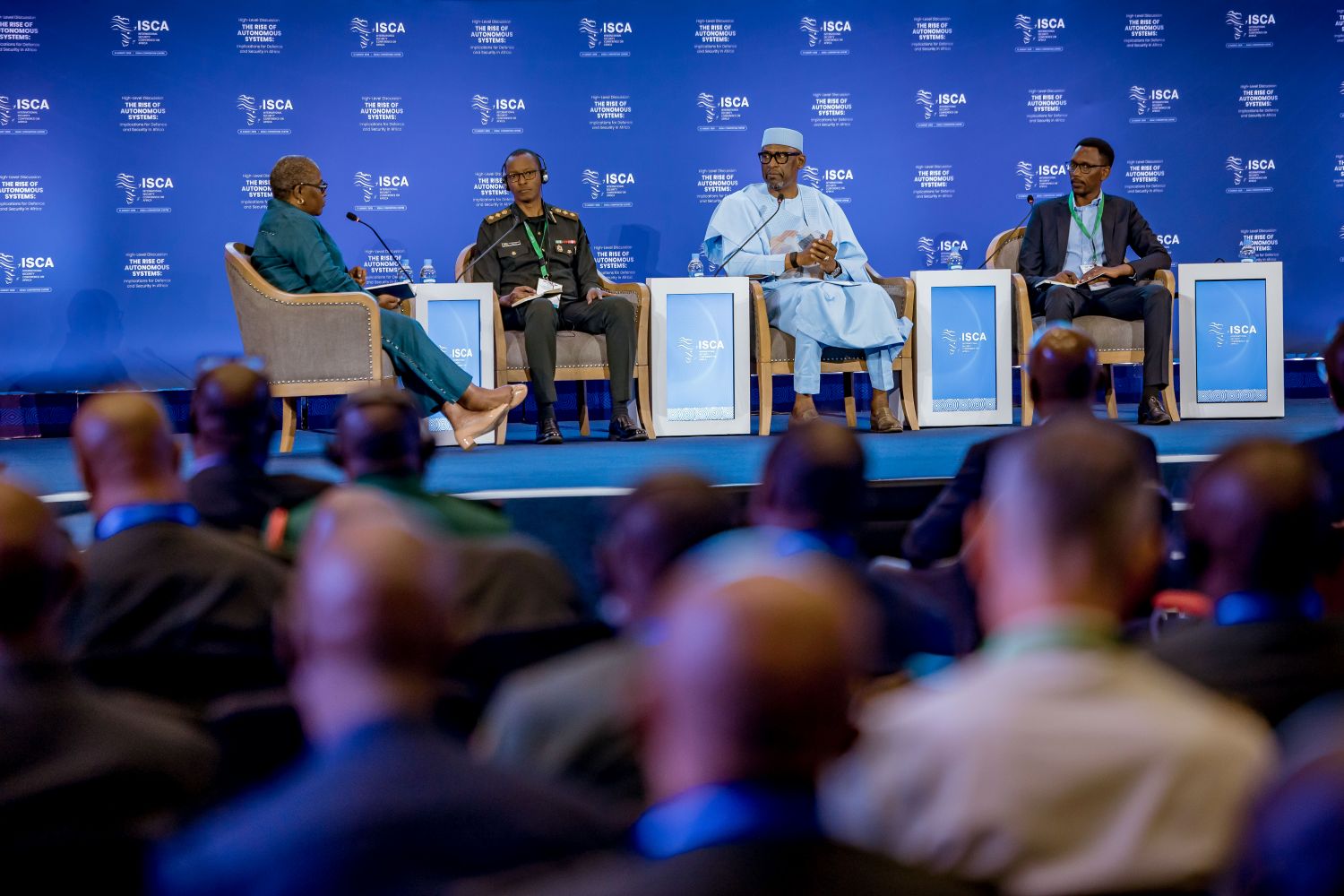
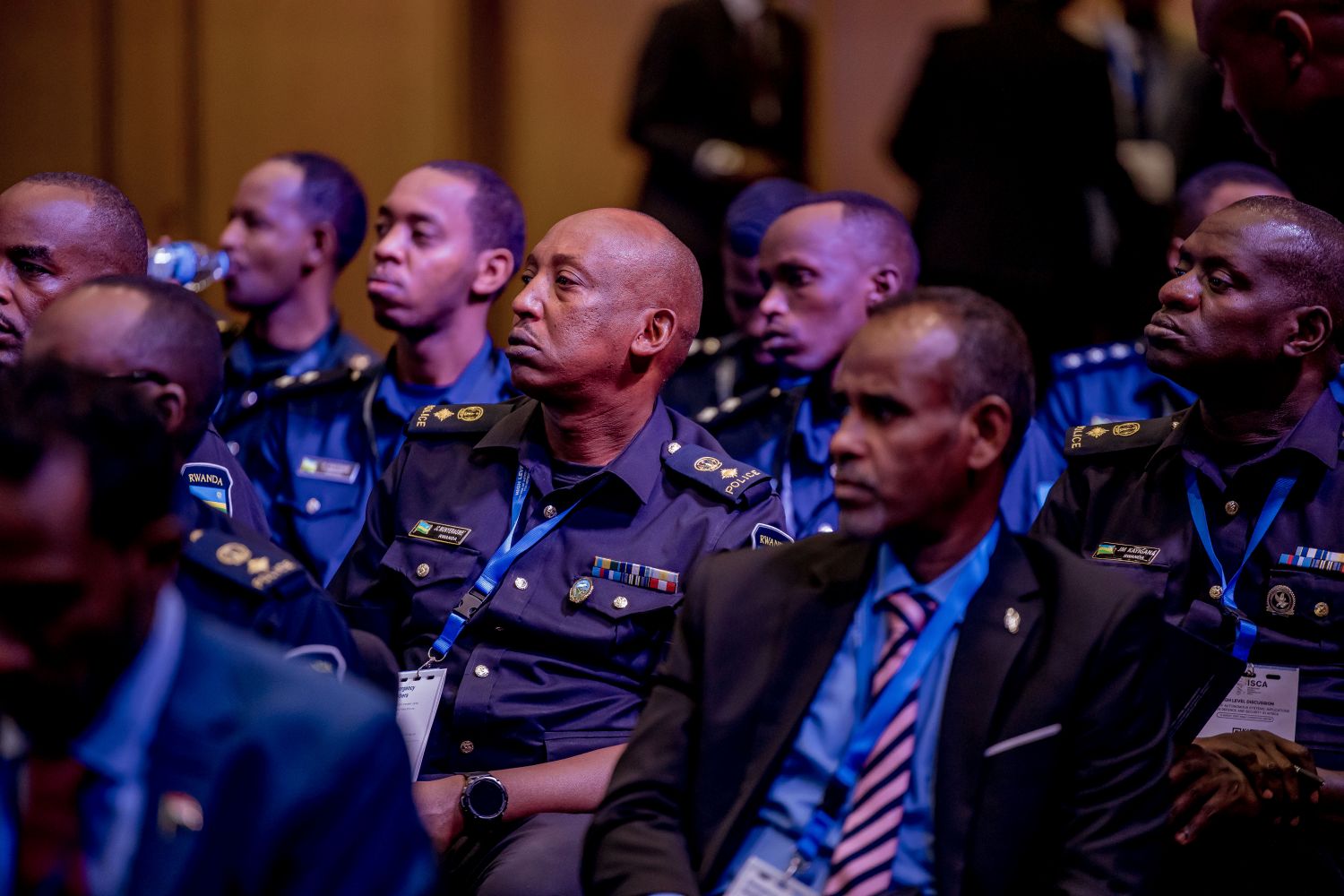
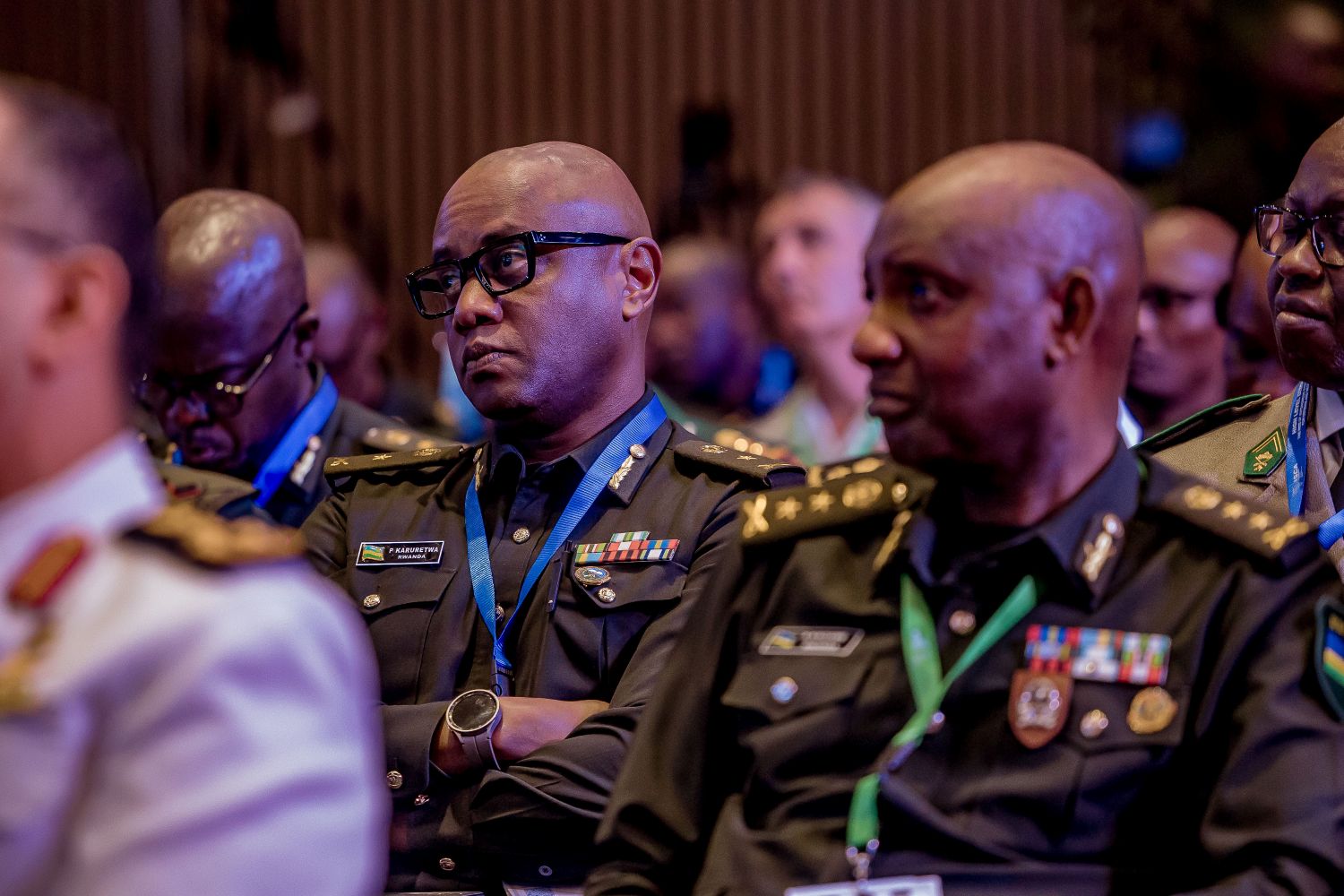
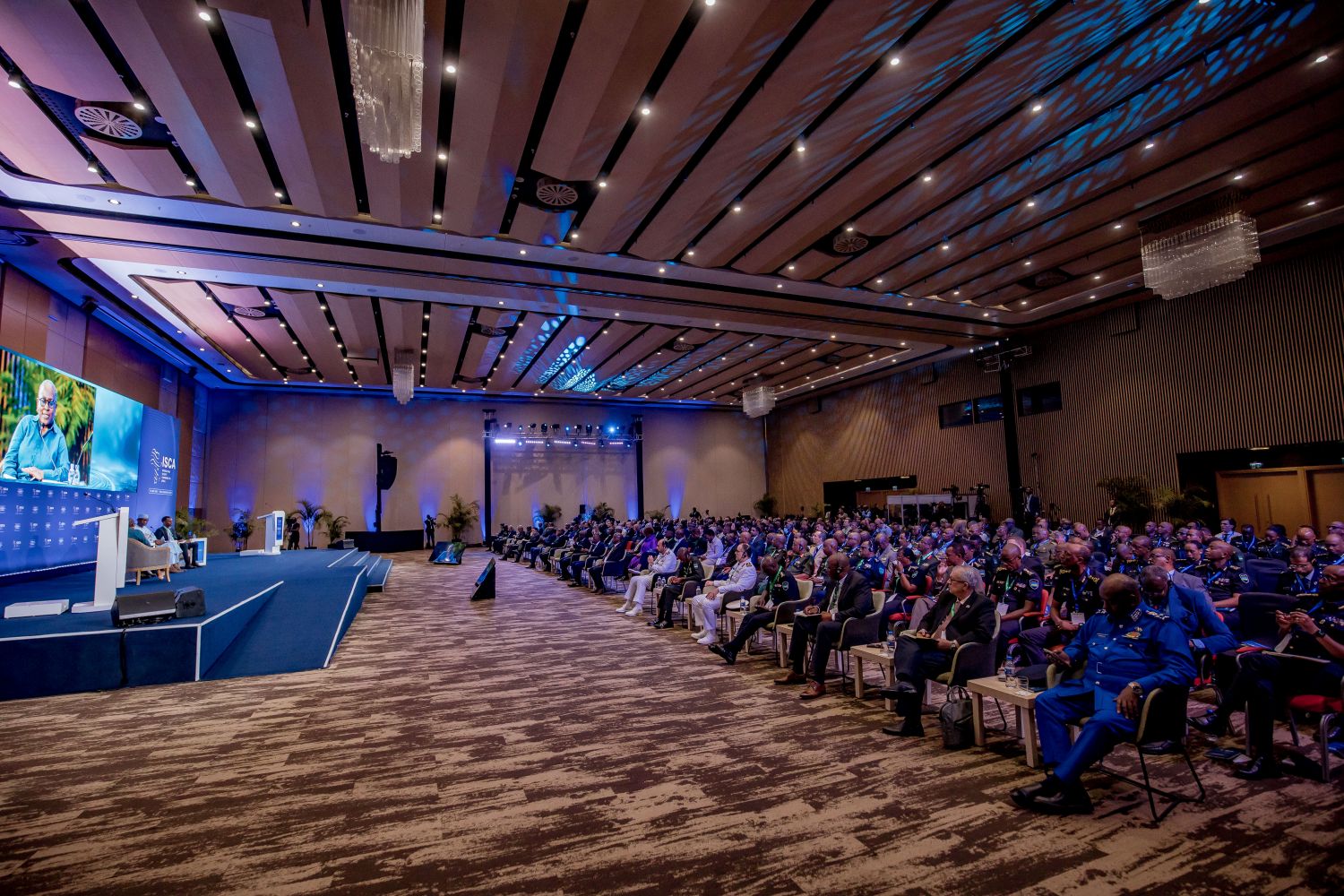
The high-level discussion, held at the Kigali Convention Centre under the theme 'The Rise of Autonomous Systems: Implications for Defence and Security in Africa,' brought together more than 300 delegates from 50 countries, including policymakers, defence and security officials, researchers, technology experts and international partners.
Dr. Ndushabandi said the discussions had demonstrated that autonomous systems are no longer a distant technological development but are already changing the nature of conflict and security across Africa.
'Something is happening. The conflict, the landscape is changing,' he said, summarising one of the key conclusions emerging from the discussions.
He said autonomous systems are reshaping issues ranging from border security and military operations to cybersecurity, cross-border crime and immigration management, forcing African states to reconsider their doctrines, institutions and capabilities.
Rwanda's advantage
According to Dr. Ndushabandi, Rwanda stands out in three key areas: governance and leadership, information and security capabilities, and human-centred development.
'From a research perspective, I could highlight three dimensions. The first one is governance and leadership,' he said, arguing that Rwanda's experience in institution-building, governance and security provides lessons that could be relevant to other African countries.
He pointed to Rwanda's participation in peace operations and counterterrorism efforts, including in Mozambique and the Central African Republic, as examples of the country's developing security and military capabilities.
He also highlighted Rwanda's ability to monitor and assess emerging security challenges, arguing that information capabilities will become increasingly important as autonomous technologies transform the security environment.
The third dimension, he said, is development, particularly education and the development of human capabilities.
'Capabilities goes with resources, capability, development of education systems,' Dr. Ndushabandi said, stressing that Africa's response to autonomous technologies cannot be separated from investment in people.
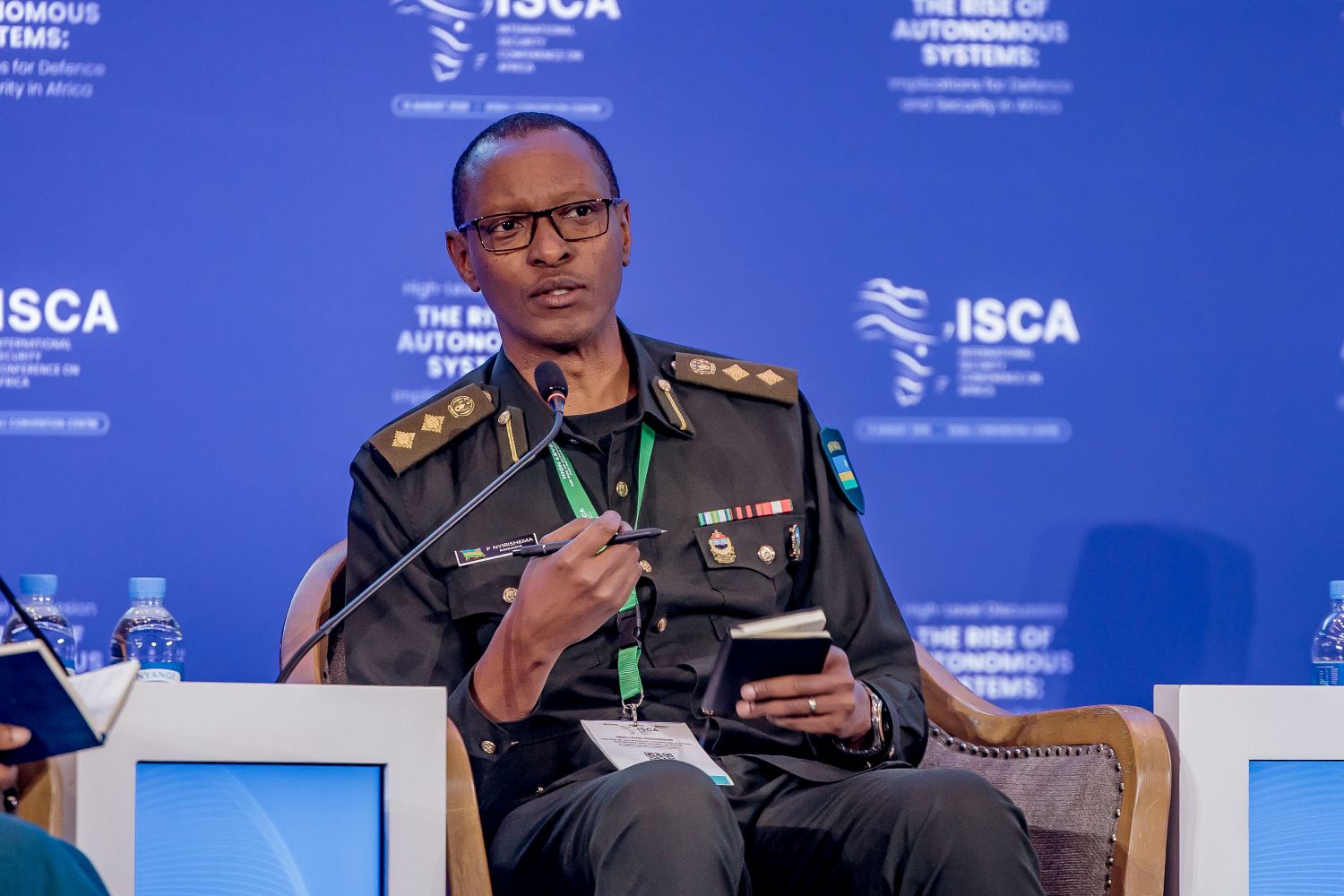
His assessment echoes comments made during the conference by Col. Patrick Nyirishema, Head of Defence Research and Development at the Rwanda Defence Force, who argued that Rwanda has a particular advantage because of its leadership's emphasis on anticipating future security challenges.
Nyirishema said Africa faces a fundamental choice: whether to remain primarily a consumer of technologies developed elsewhere or to build the capabilities needed to shape and adapt them.
For him, the starting point is talent.
'Build talent. Build talent. Build talent,' Nyirishema told the panel, arguing that African countries need to develop technology ecosystems extending beyond defence institutions to universities, private companies, young innovators and other parts of society.
From buying technology to building capability
The conference repeatedly stressed that autonomous systems cannot simply be treated as another procurement item.
Col. (Rtd) David Kanamugire, Chief Executive Officer of Rwanda's National Cyber Security Authority, said Africa could not 'buy autonomy' because effective autonomous capability depends on much more than acquiring equipment.
He identified data, computing power, talent and adaptable institutions as essential components of the technology ecosystem.
'Autonomous-ready means you control the entire technology stack,' Kanamugire said, highlighting the importance of controlling sensors, communications, cybersecurity and other supporting systems.
This concern was also central to Dr. Ndushabandi's assessment.
He said Africa should welcome technological opportunities coming from outside the continent, but should simultaneously develop the capacity to adapt and eventually develop technologies that respond to African needs.
'The objective is not simply going to be to regulate what comes from outside,' he said. 'It is about being open to and aware of the opportunities these technologies offer.'
However, he stressed that imported systems must be adapted to local cultures, institutions and security realities.
The African context matters
The conference heard that technologies developed elsewhere may not perform in exactly the same way when deployed in African environments.
Moise Busogi, Assistant Teaching Professor at CMU-Africa, gave the example of artificial intelligence models used for image recognition. A model trained in one country can perform differently when deployed in another environment because of differences in terrain, infrastructure and other local conditions.
That, he argued, makes contextualisation and local innovation essential.
Nyirishema said autonomous systems designed for desert environments would need to operate differently from those deployed in forests, mountainous terrain or other settings, underscoring the need for African countries to develop the talent and institutions required to adapt such technologies to local conditions.
Security risks are also increasing
While autonomous systems offer opportunities in border surveillance, agriculture, infrastructure protection, intelligence gathering and military operations, speakers warned that their increasing accessibility also creates new security risks.
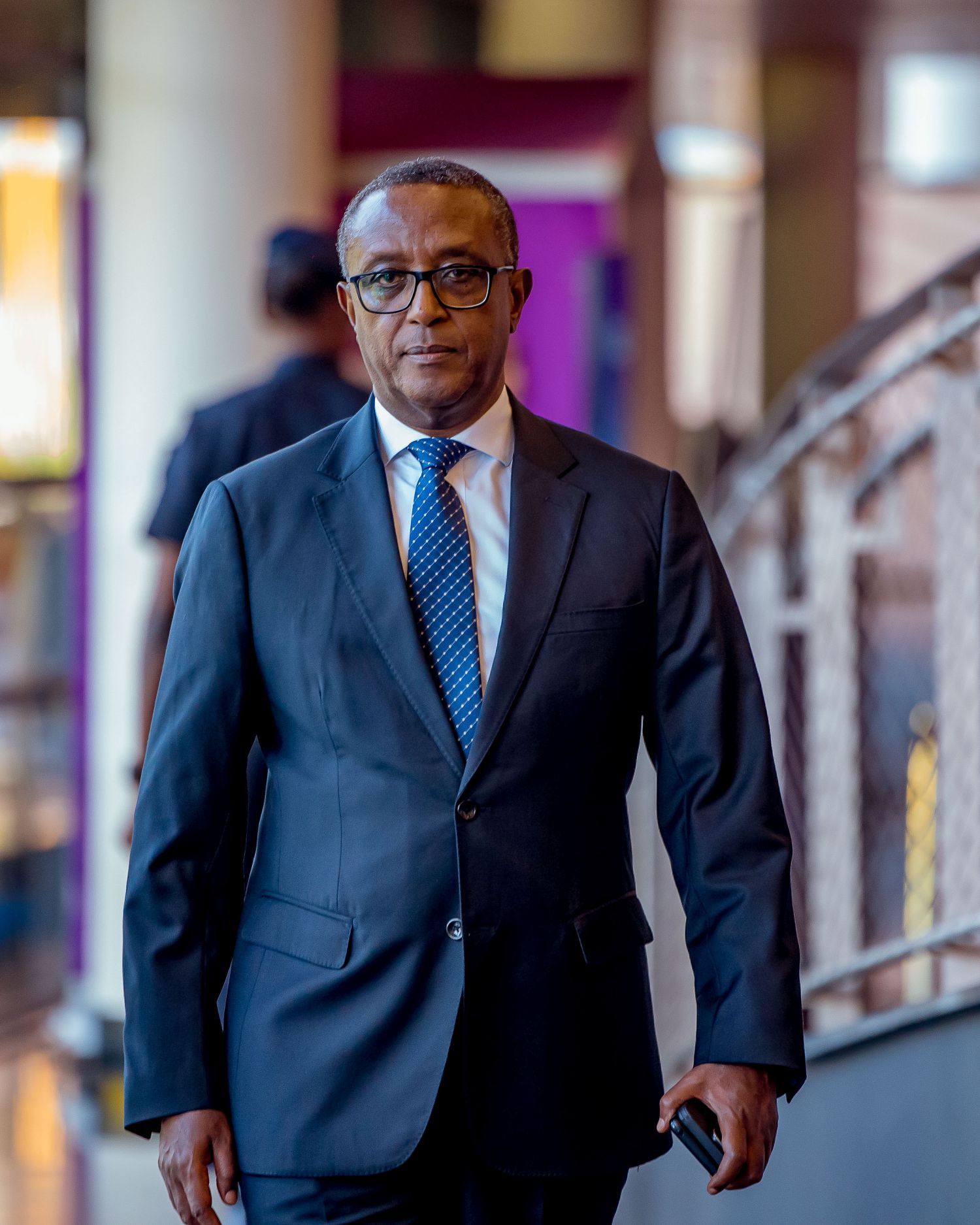
Rwanda's Foreign Minister Olivier Nduhungirehe said autonomous systems and artificial intelligence are becoming increasingly accessible, including to non-state actors.
'Africa cannot afford to fall behind as these technologies continue to evolve,' Nduhungirehe said.
Dr. Ndushabandi similarly warned that autonomous technologies could become particularly problematic in countries affected by unresolved conflicts, weak governance or limited state control over territory.
He said the decreasing cost of autonomous systems could make them increasingly accessible to non-state groups, including armed groups, potentially intensifying existing conflicts.
Sovereignty and strategic autonomy
Another major concern emerging from the discussions was sovereignty.
Dr. Ndushabandi said autonomous systems can challenge traditional concepts of state sovereignty, particularly when systems operate across borders or when states become dependent on technologies, data or infrastructure controlled elsewhere.
The question for Africa, he said, is how to benefit from international technological cooperation while maintaining sufficient strategic autonomy.
Dr. Paul Simon Handy, Regional Director for East Africa and Representative of the African Union/Institute for Security Studies, argued that strategic autonomy should not mean that every African country manufactures every component of an autonomous system.
Instead, he said, it should mean having the knowledge and political freedom to understand, sustain and make decisions about the technologies countries acquire.
He also urged African states to rethink military doctrines rather than simply inserting new technologies into existing structures.
A continental opportunity
The discussions also pointed to greater cooperation between African countries.
Handy said no African state could independently develop the entire range of technologies required for autonomous systems, making regional cooperation and an intentional division of labour essential.
Dr. Ndushabandi said the ISCA platform had provided an opportunity for governments, security institutions, researchers, universities and international partners to begin developing such cooperation.
He noted that the discussions were also timely because technology is expected to feature prominently on the African Union agenda in 2027.
For Dr. Ndushabandi, Africa's preparedness will ultimately depend on whether governments can translate the current debate into practical policies, stronger institutions, education programmes and technological capabilities.
Dr. Ndushabandi also urged young Africans to use growing access to AI and other technologies to develop specialised skills rather than focusing primarily on entertainment. 'AI is giving opportunity for young people to access knowledge,' he said, stressing the importance of education and professionalisation as Africa prepares for the changing security and technological environment.
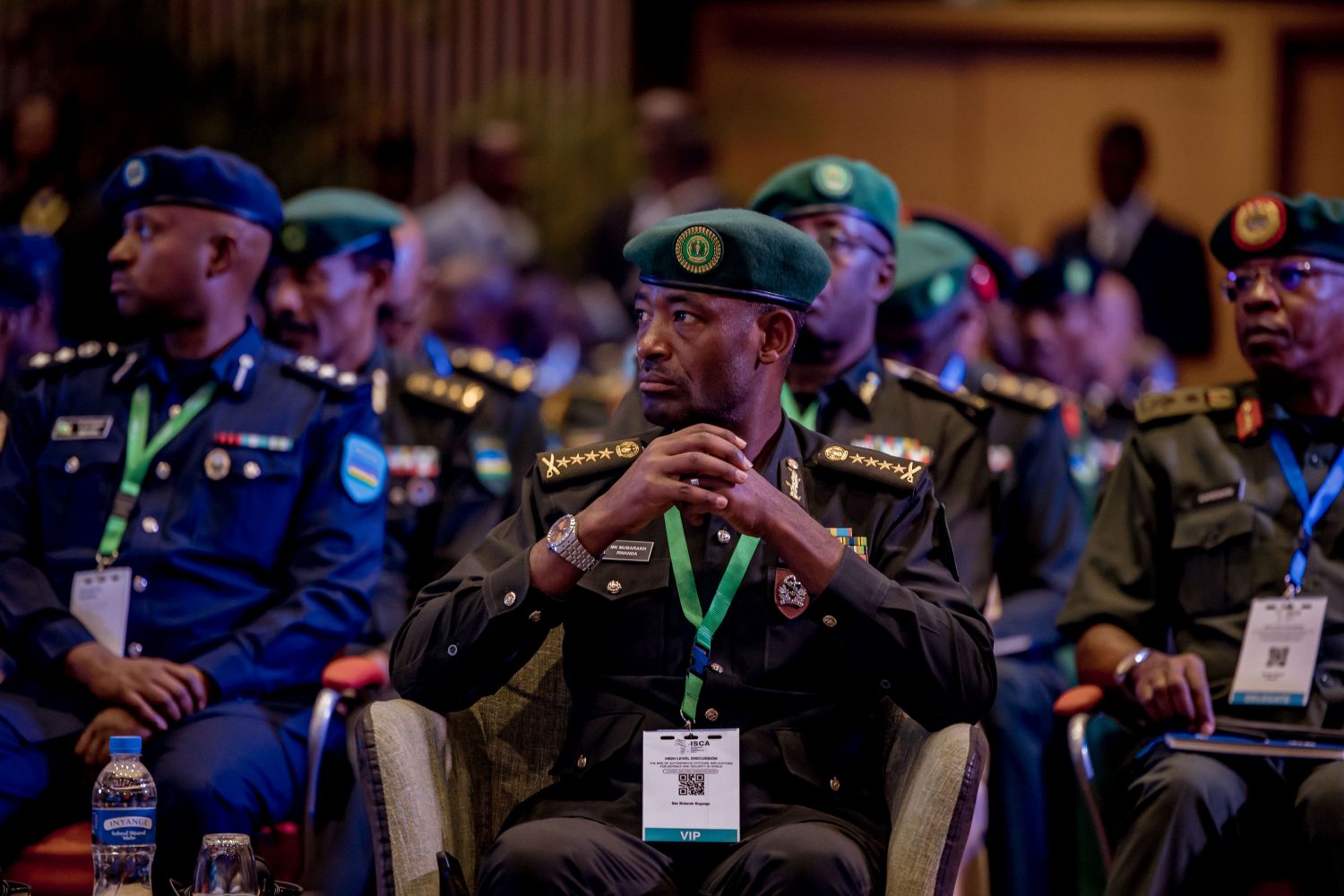
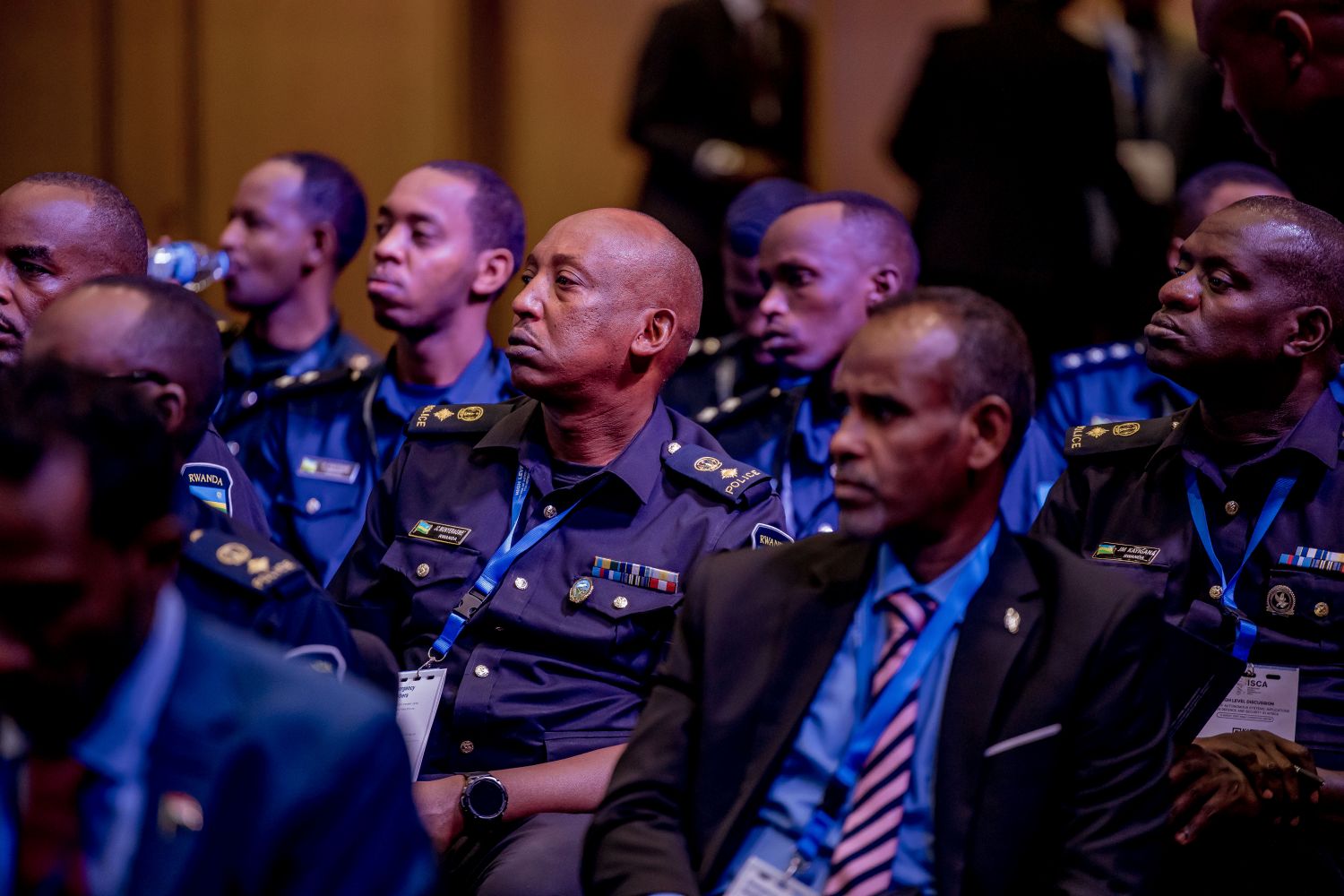
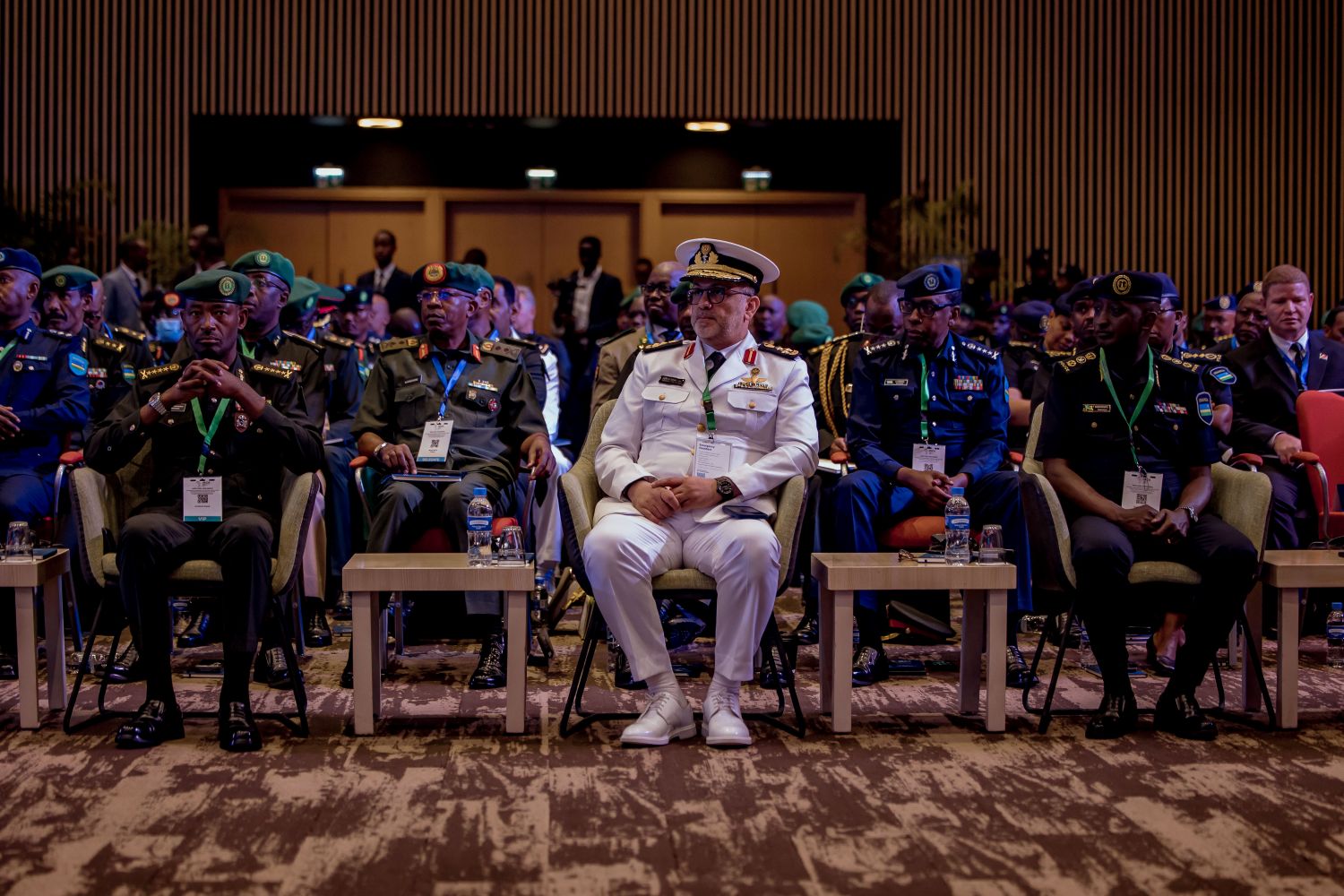
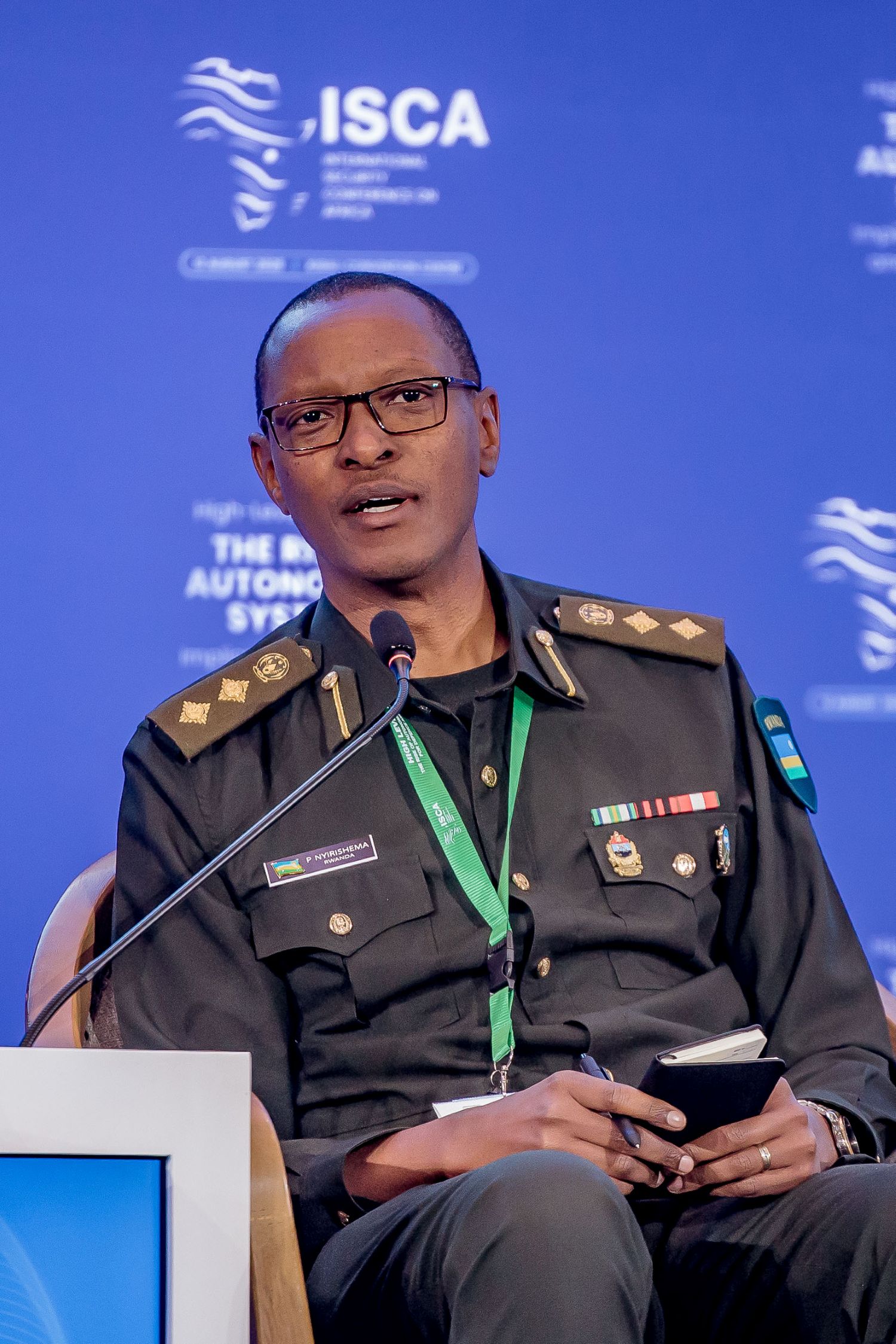
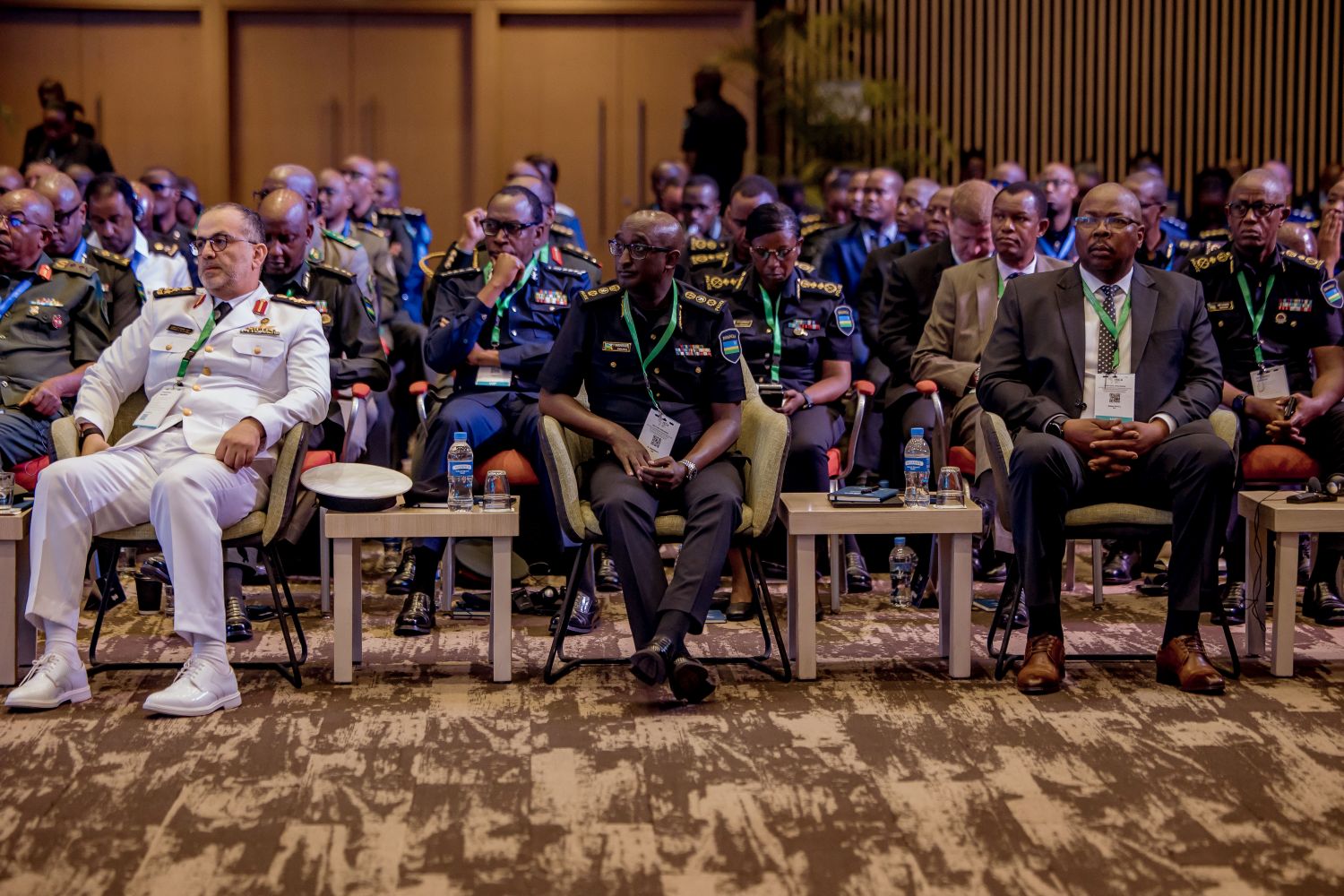
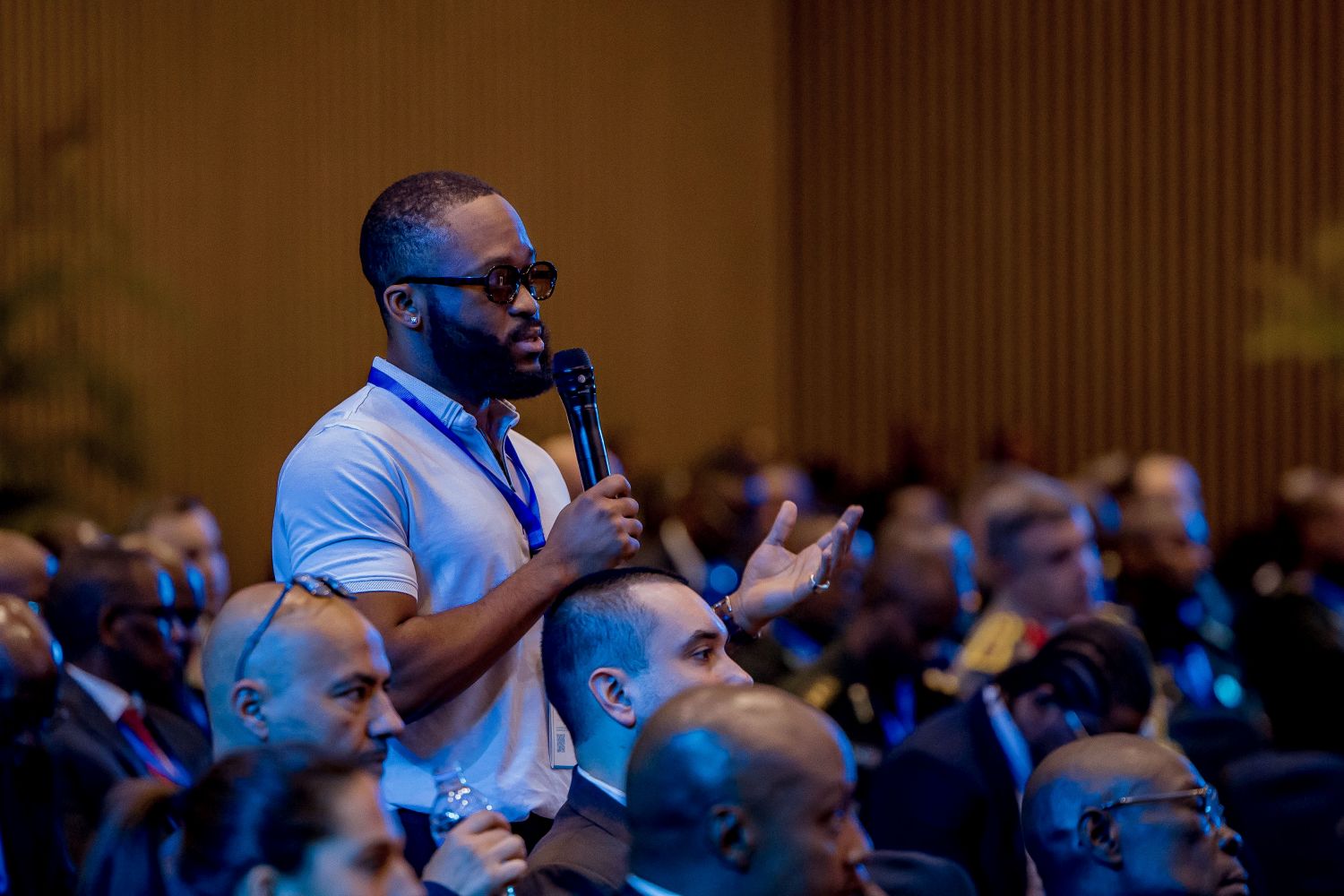
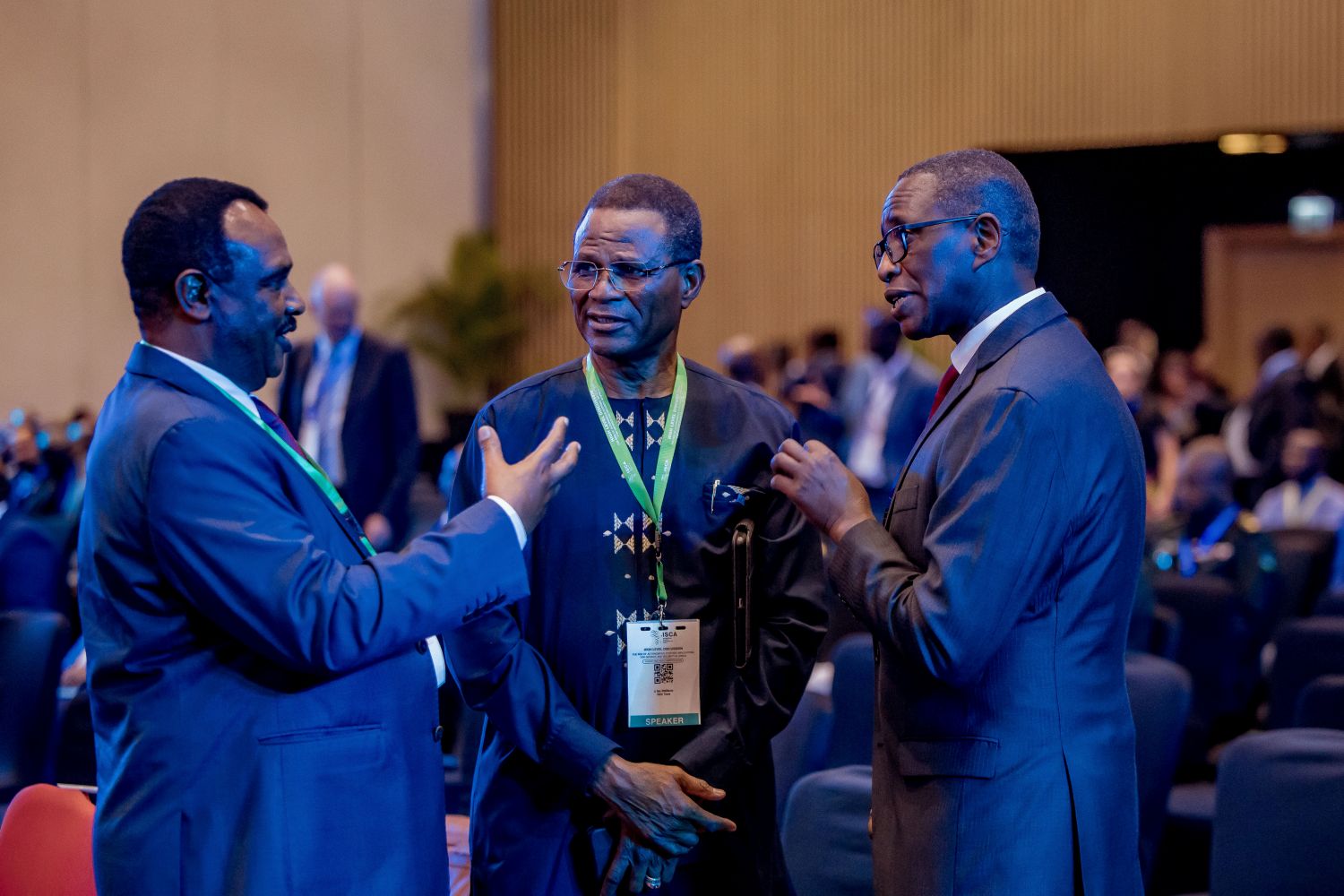
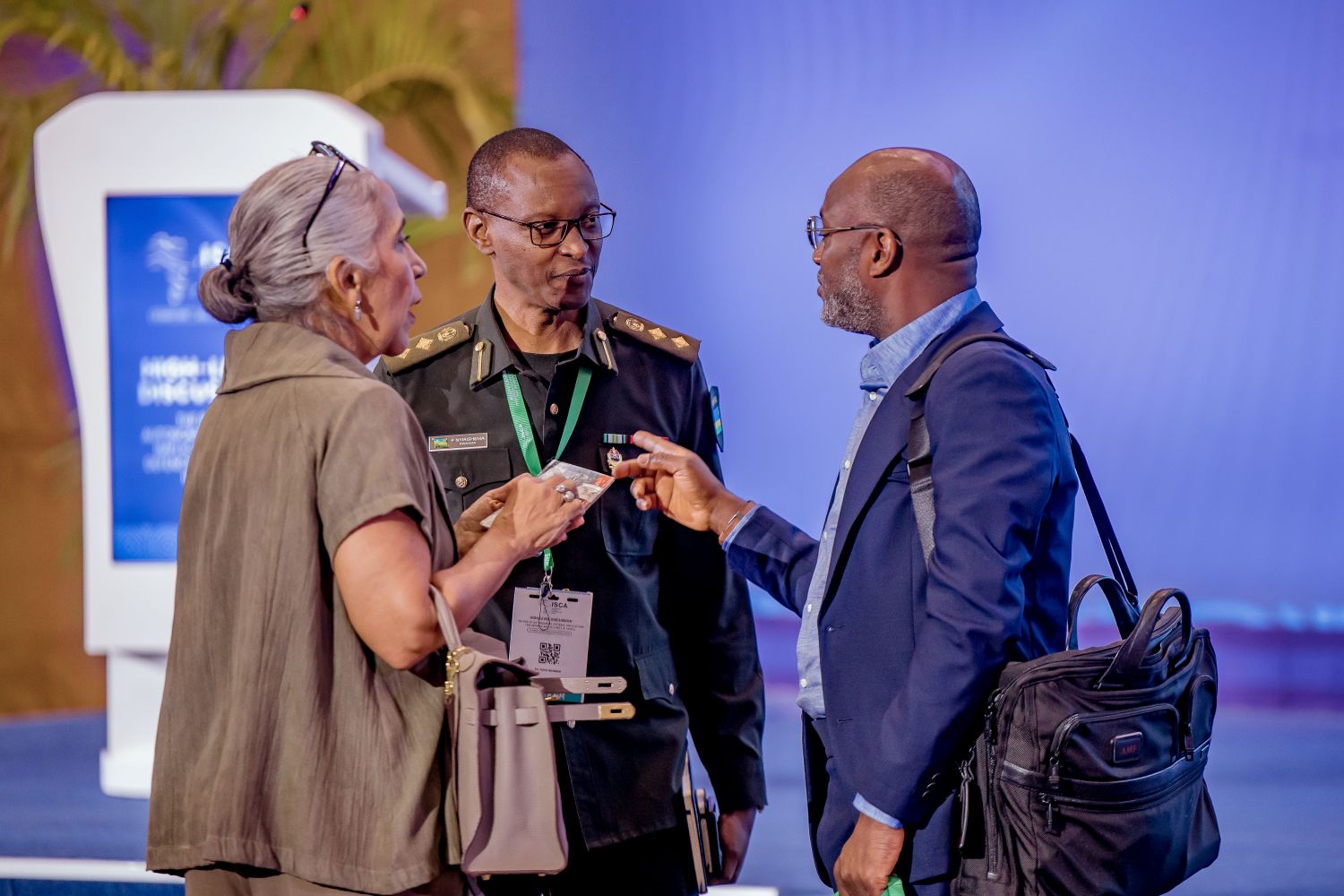
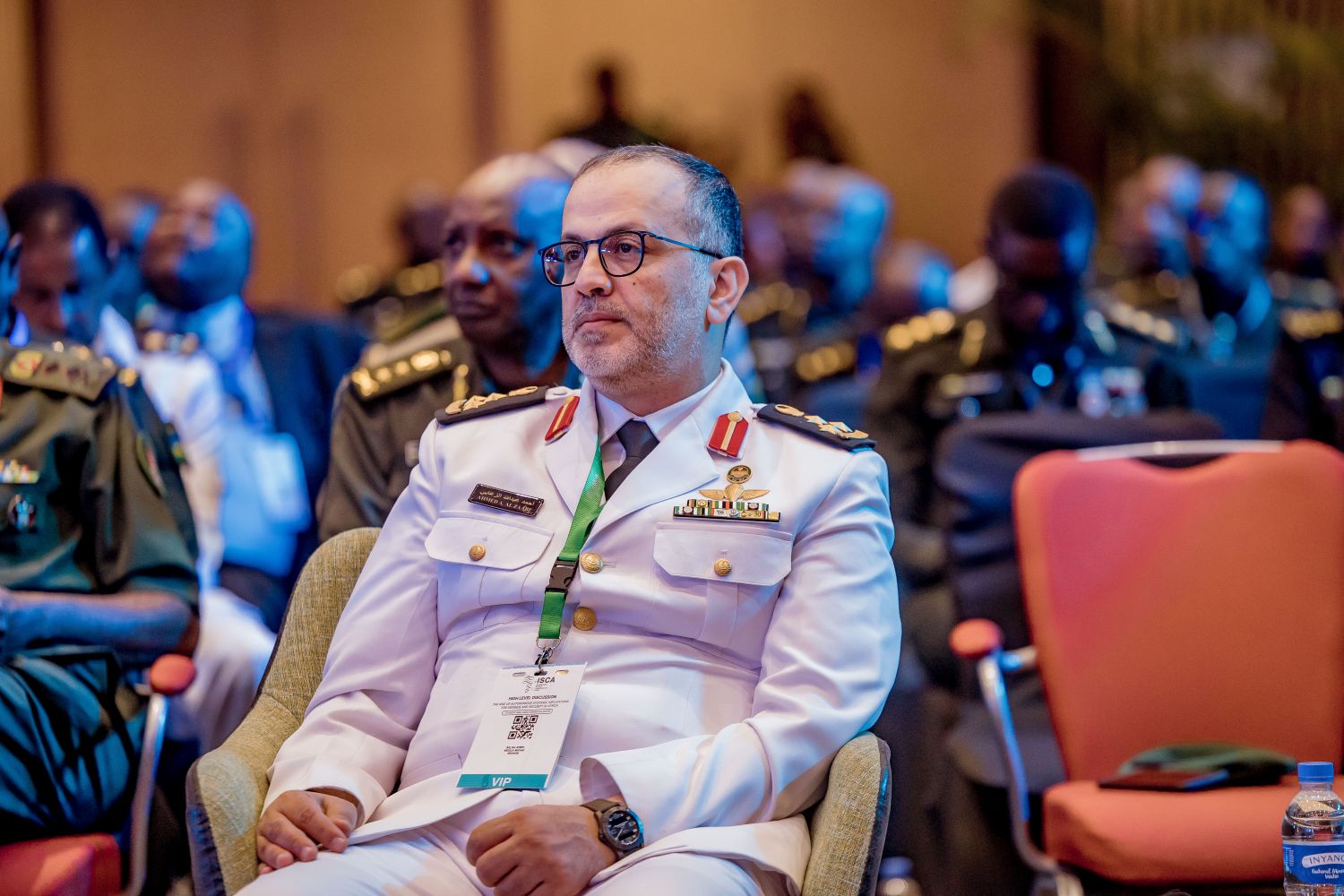
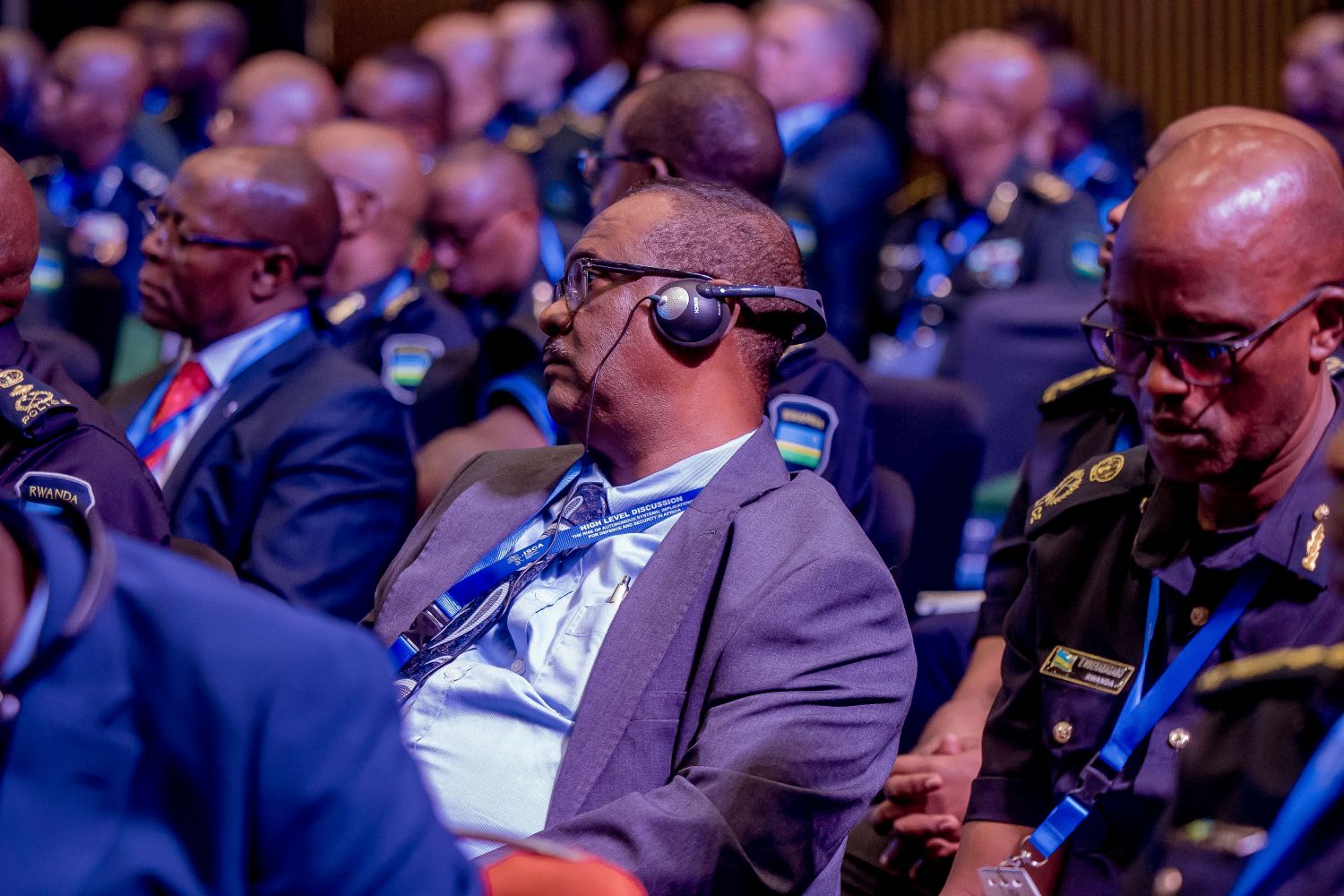
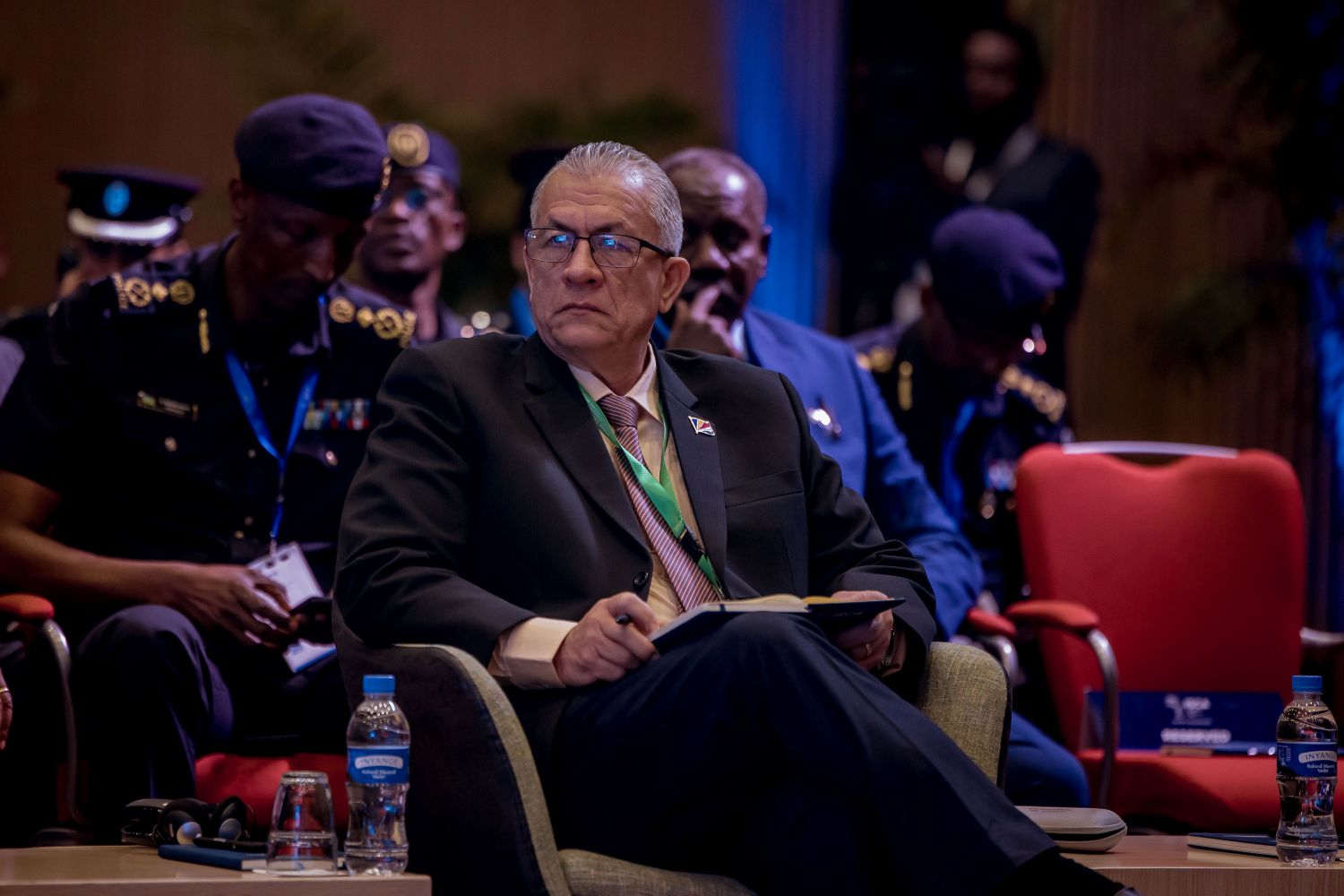
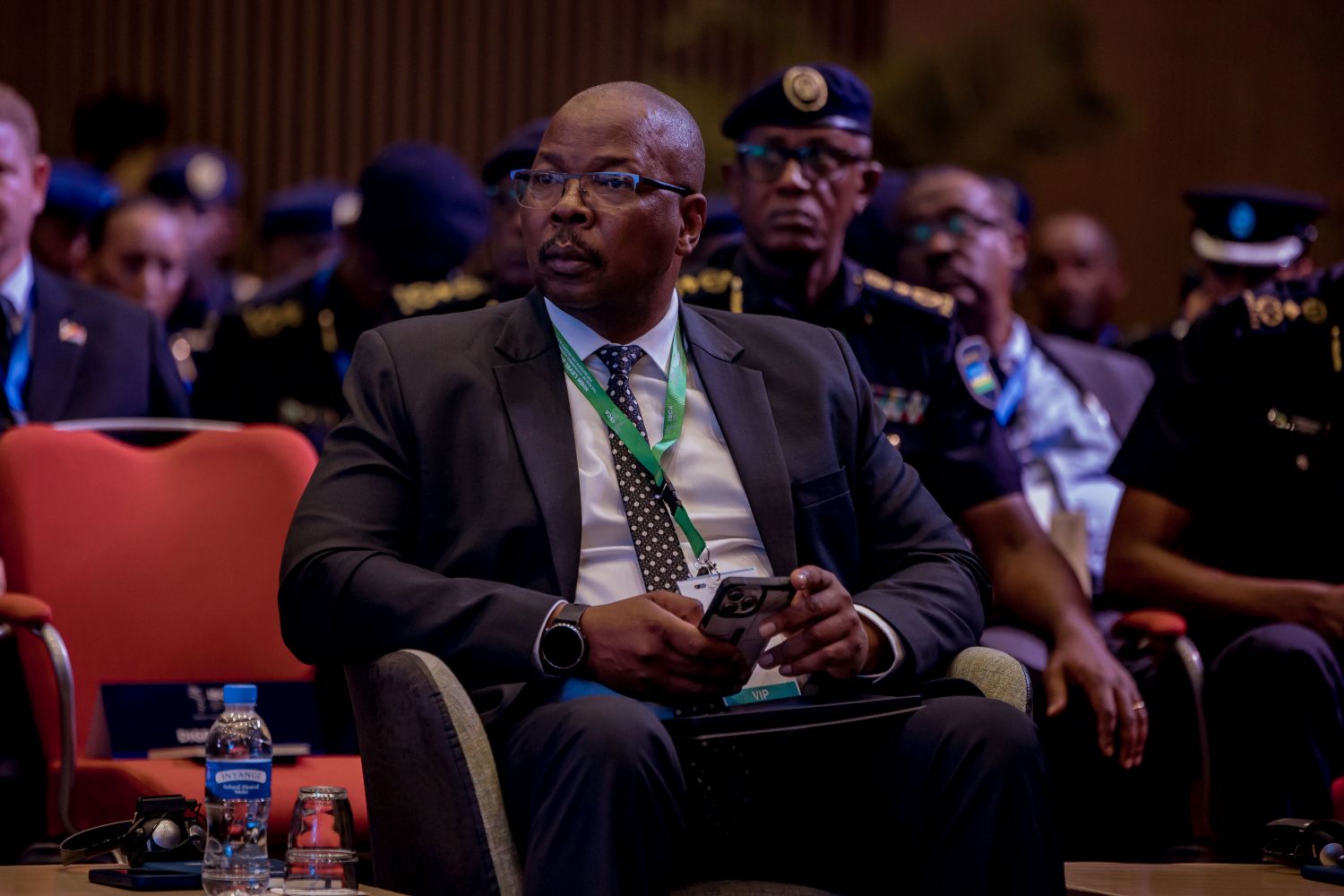
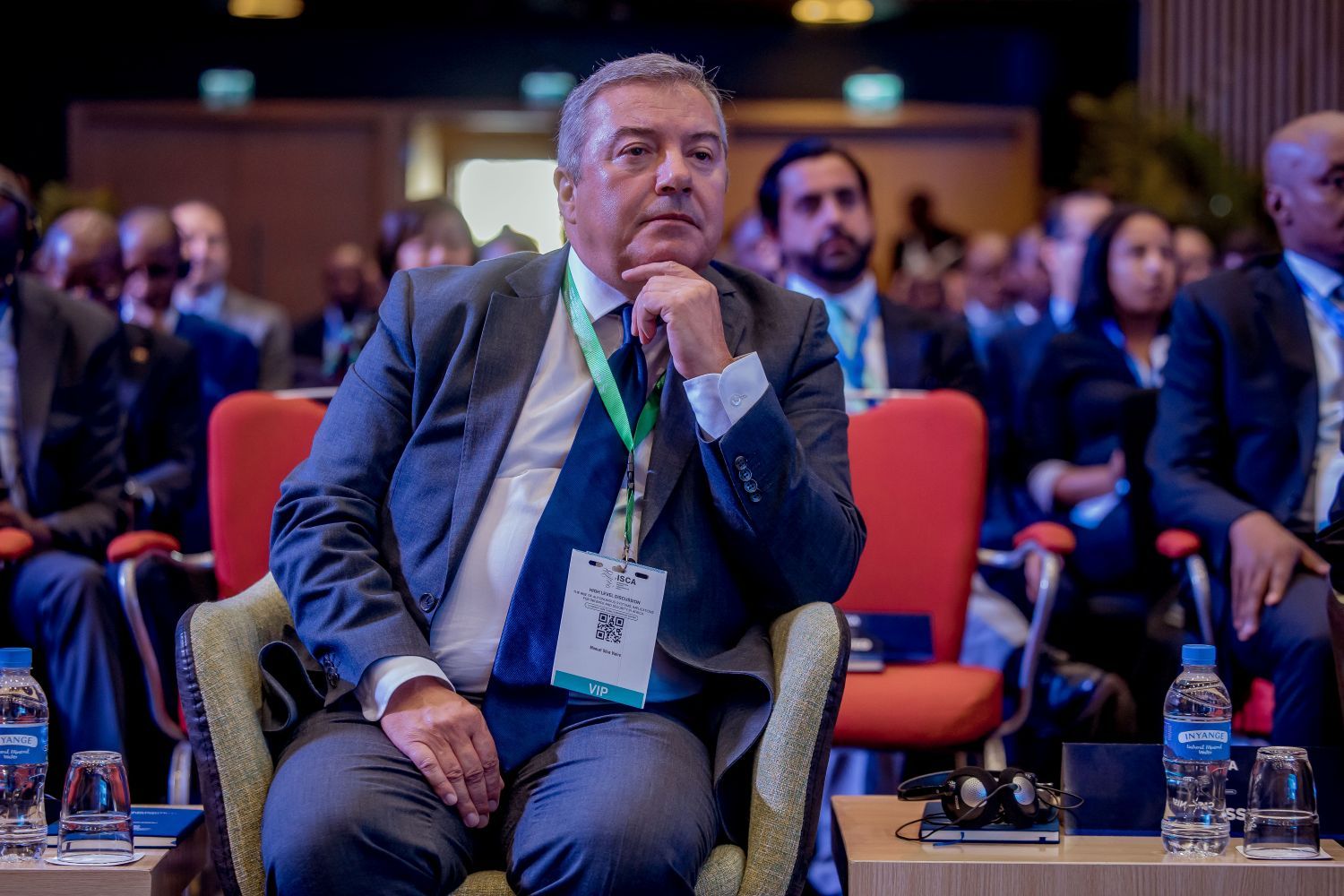
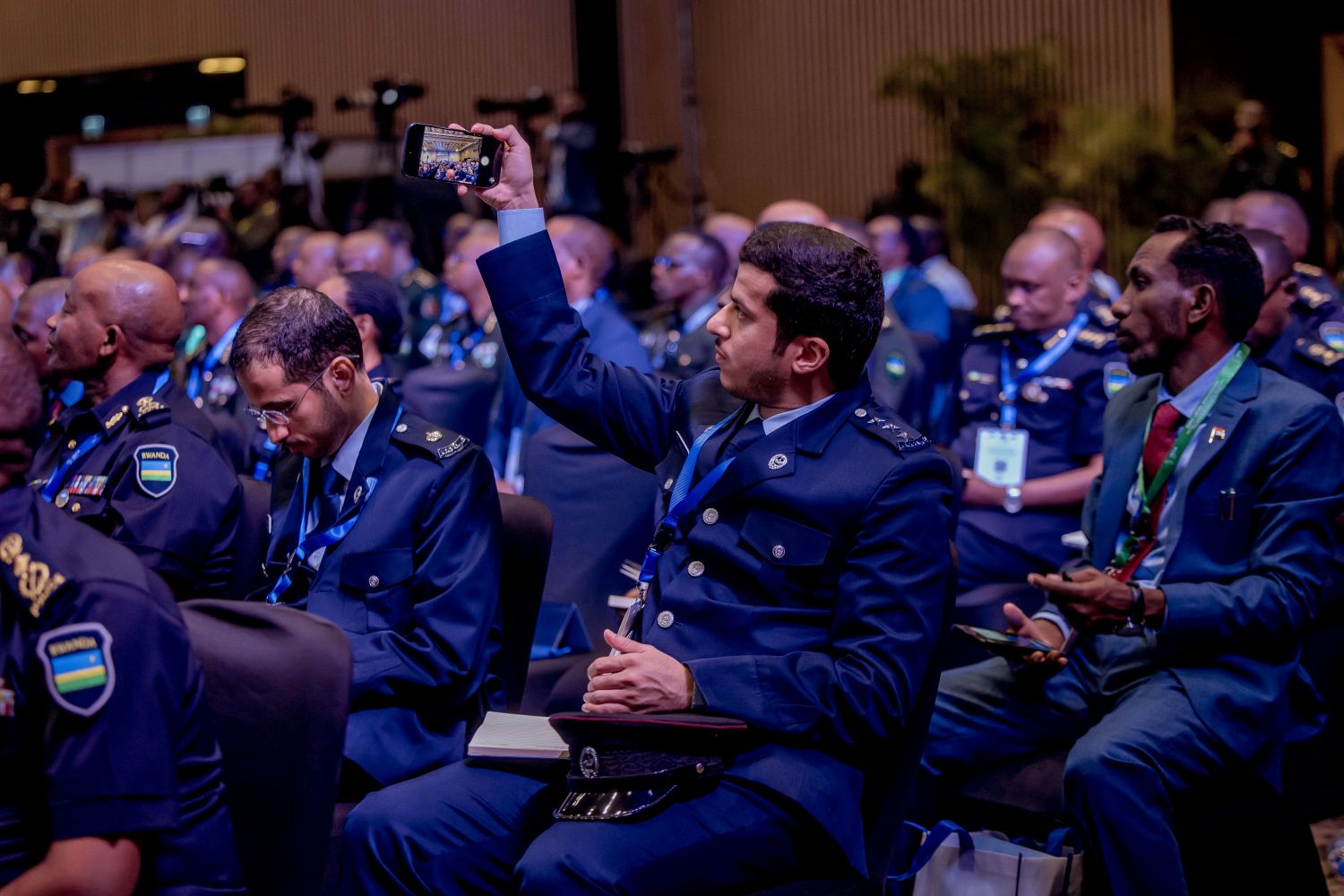
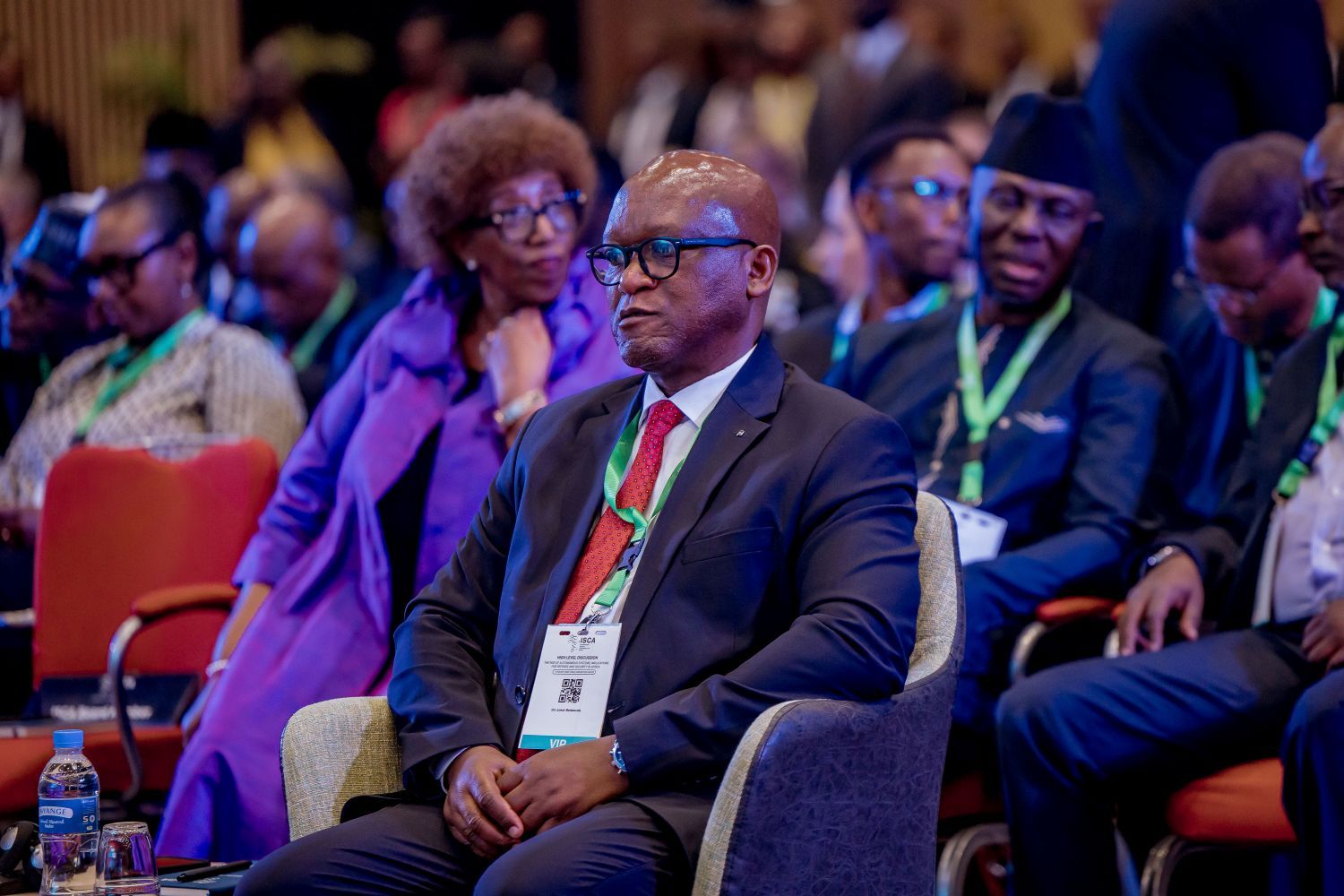
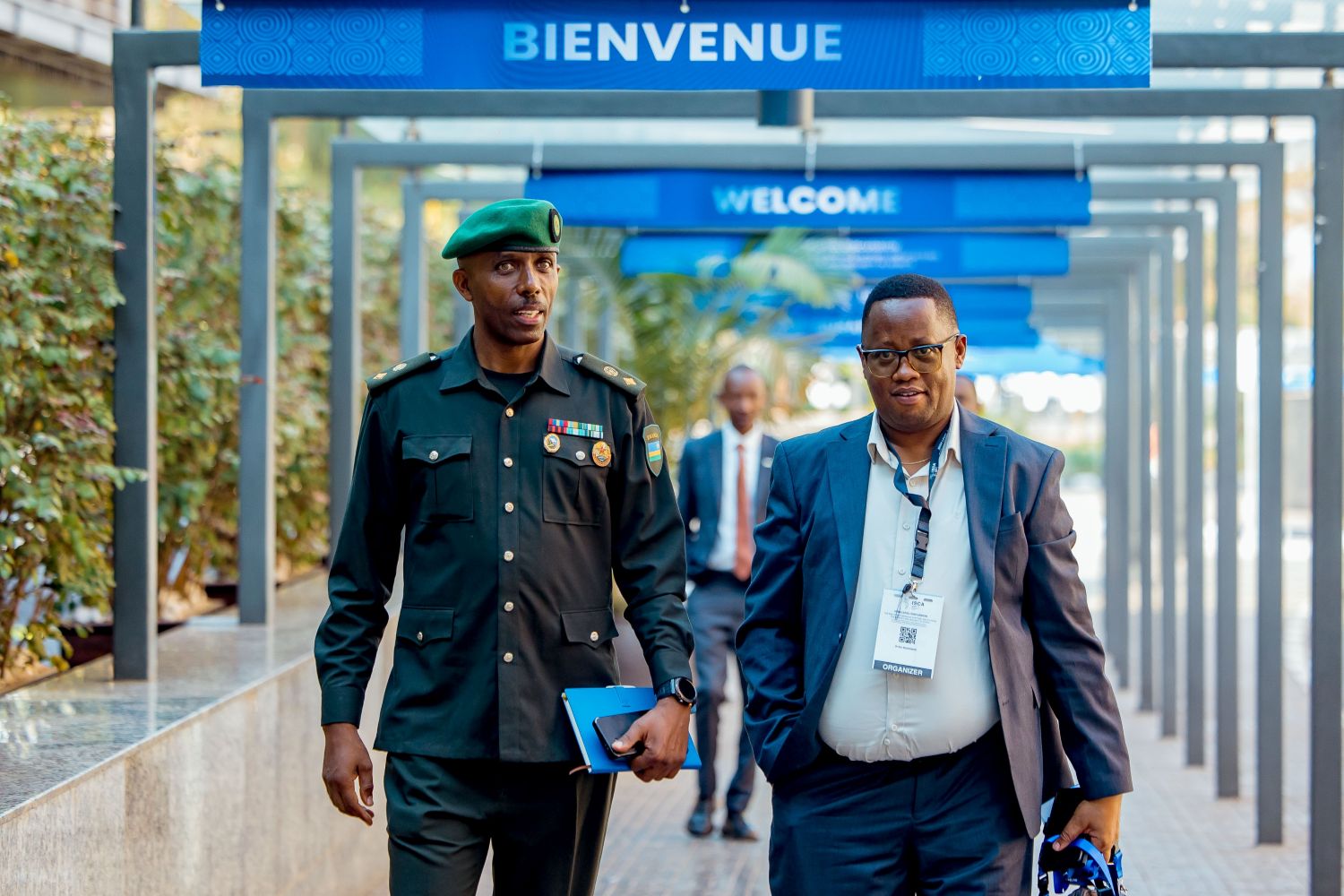
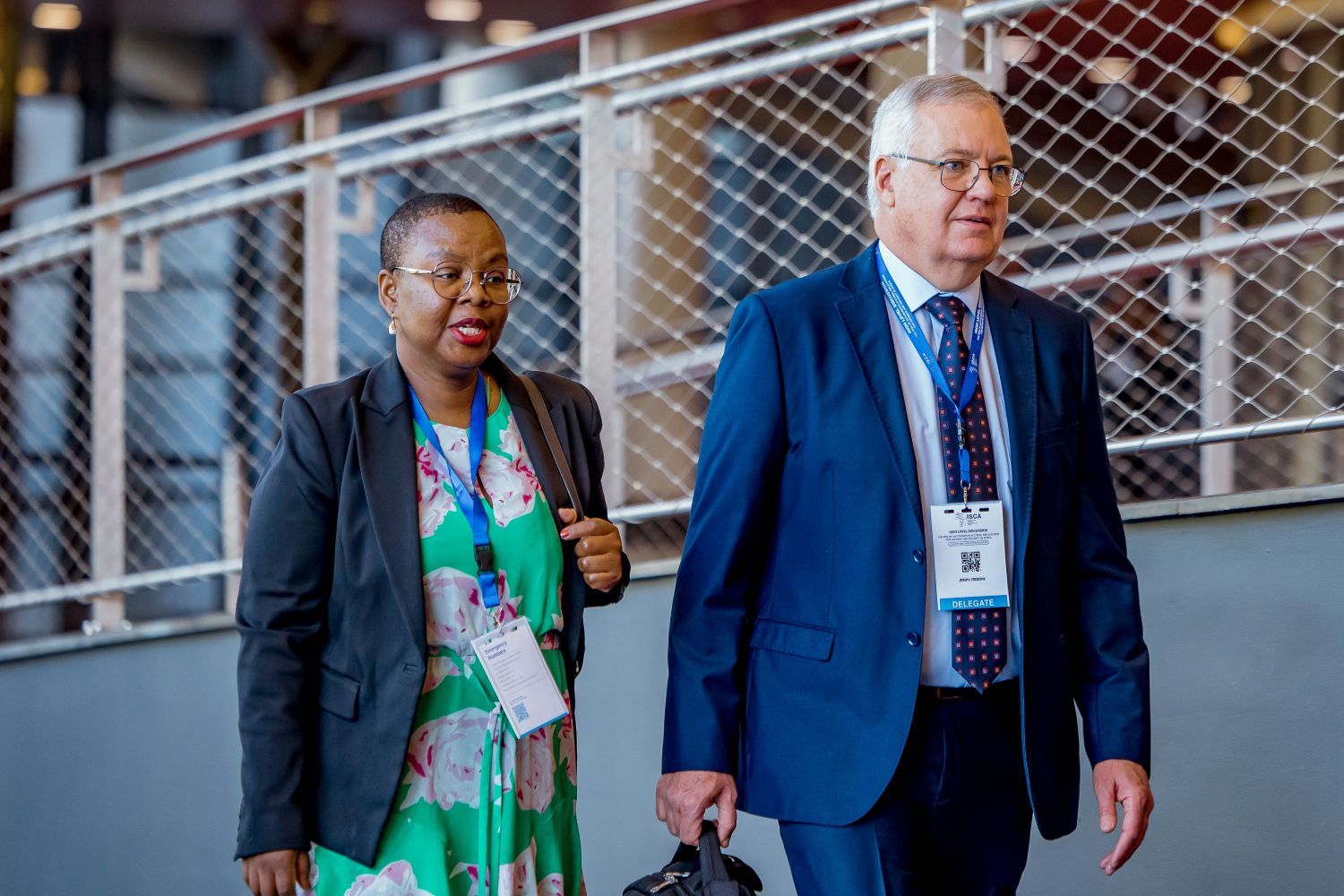
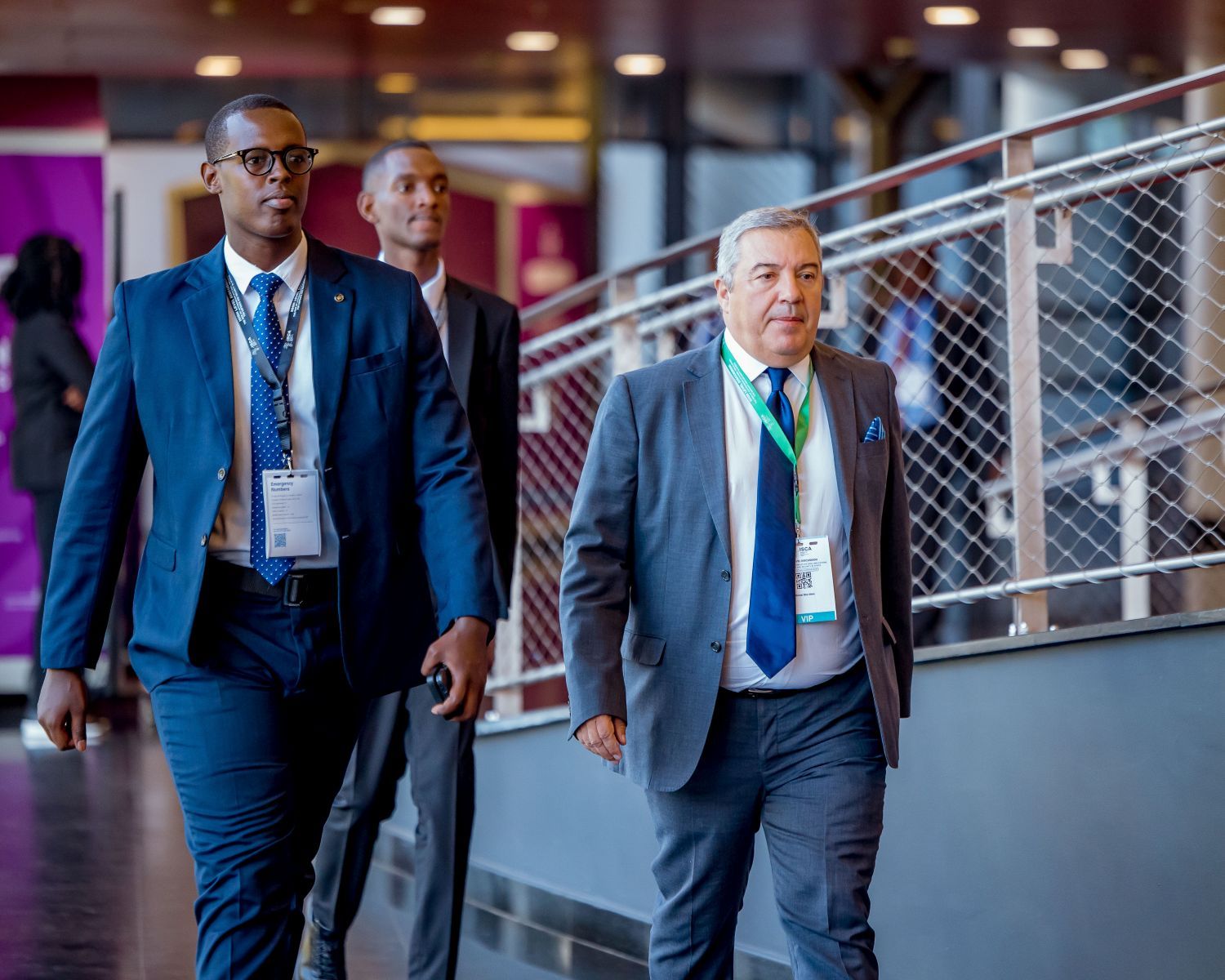
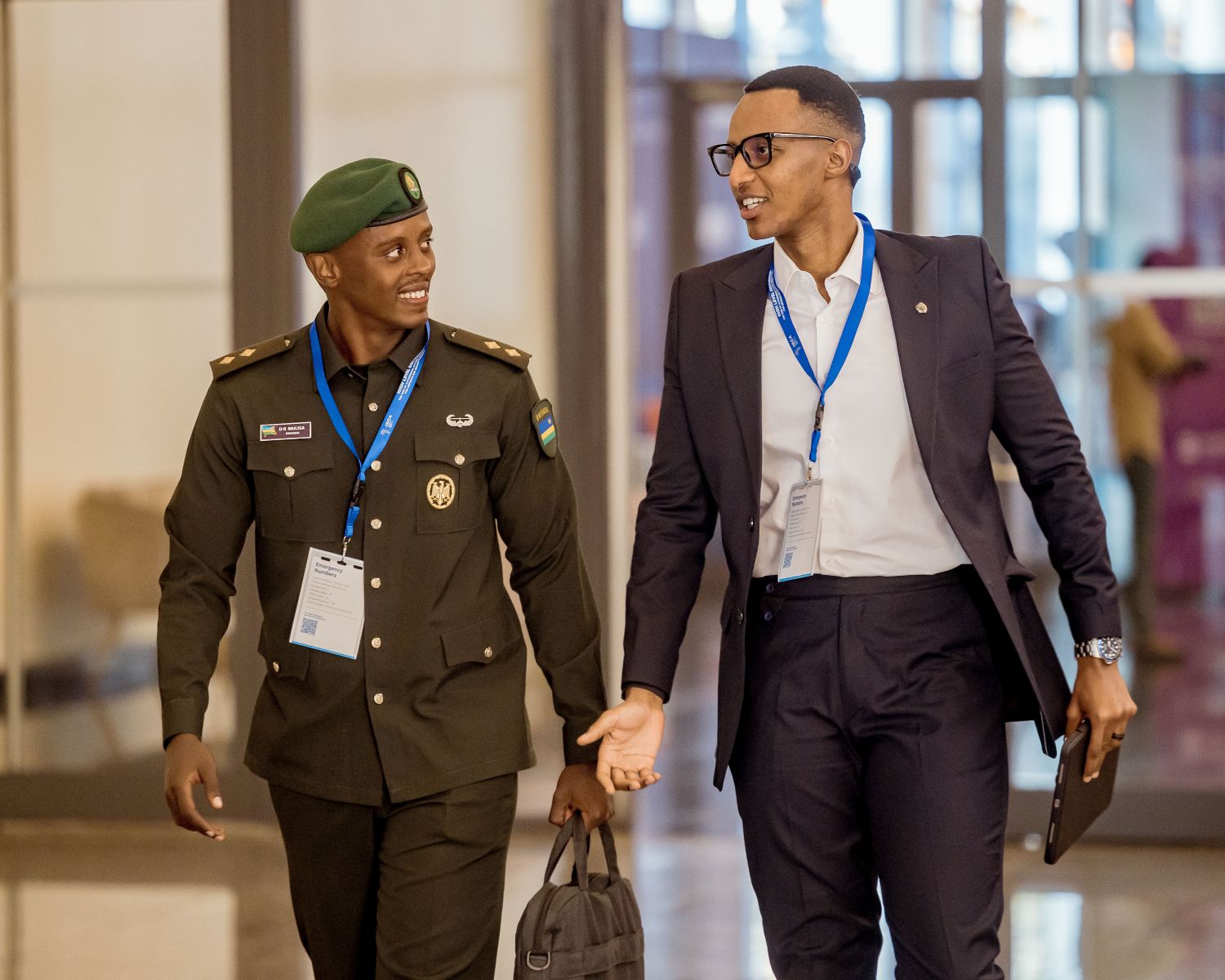
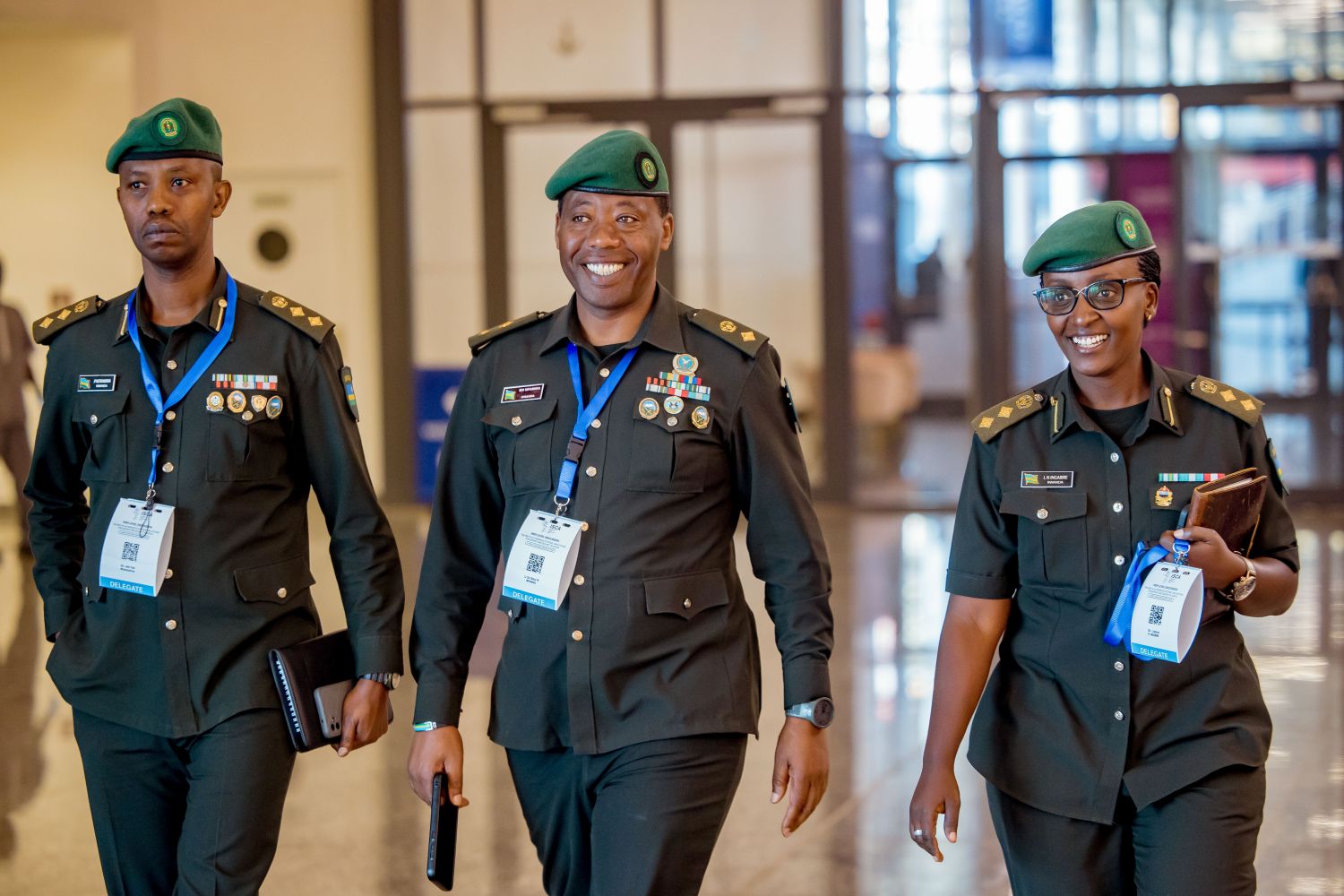
The high level convening brought together more than 300 delegates from 50 countries.Rwanda's Foreign Minister Olivier Nduhungirehe said autonomous systems and artificial intelligence are becoming increasingly accessible, including to non-state actors.Chief of Defence Staff (CDS) of the Rwanda Defence Force, General Mubarakh Muganga, follows the discussions. The conference repeatedly stressed that autonomous systems cannot simply be treated as another procurement item.Col. Patrick Nyirishema, Head of Defence Research and Development at the Rwanda Defence Force, argued that Rwanda has a particular advantage because of its leadership's emphasis on anticipating future security challenges.
Held under the theme 'The Rise of Autonomous Systems: Implications for Defence and Security in Africa,' the discussion brought together more than 300 delegates from 50 countries to examine how artificial intelligence and autonomous systems are changing warfare, border security and national defence.
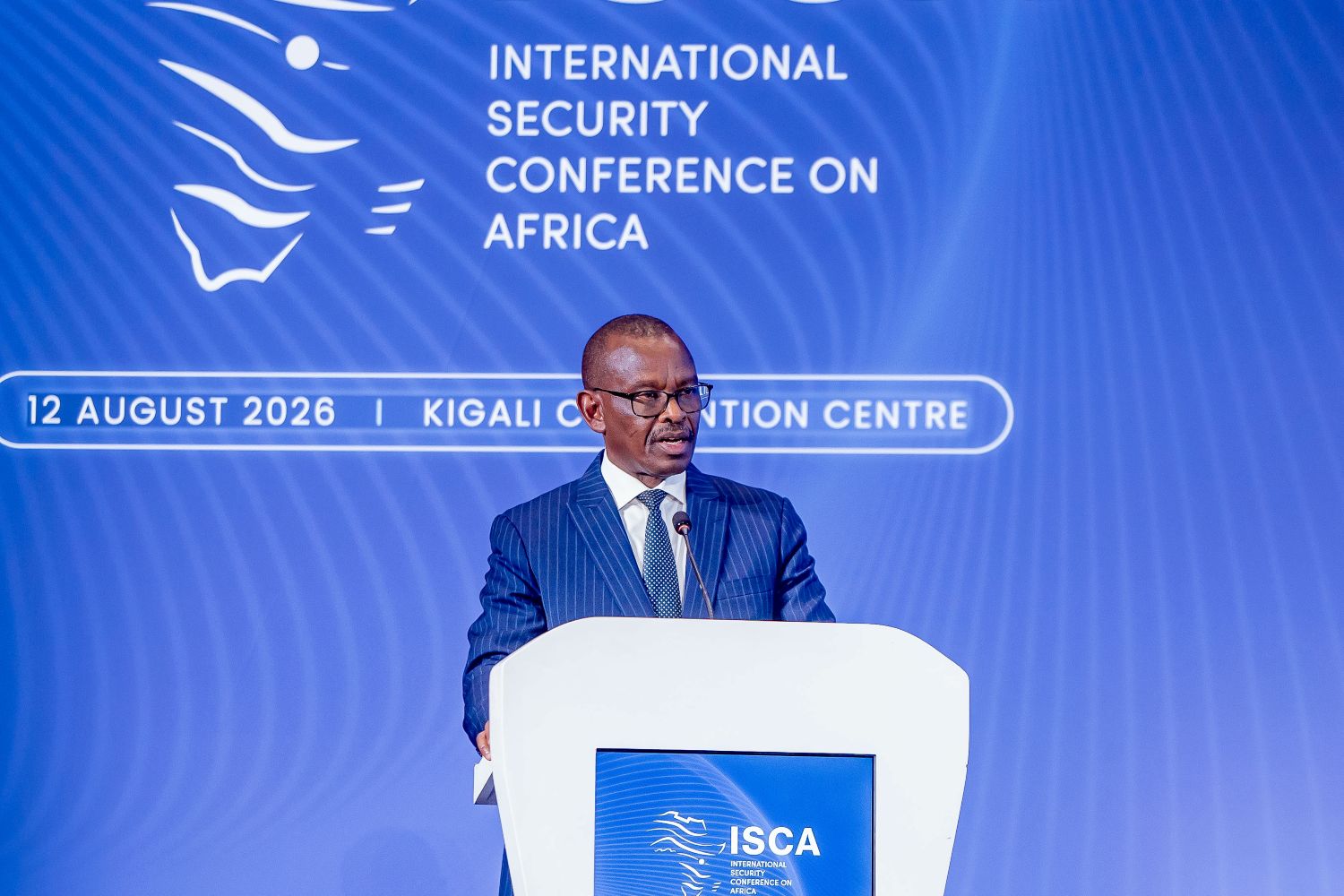
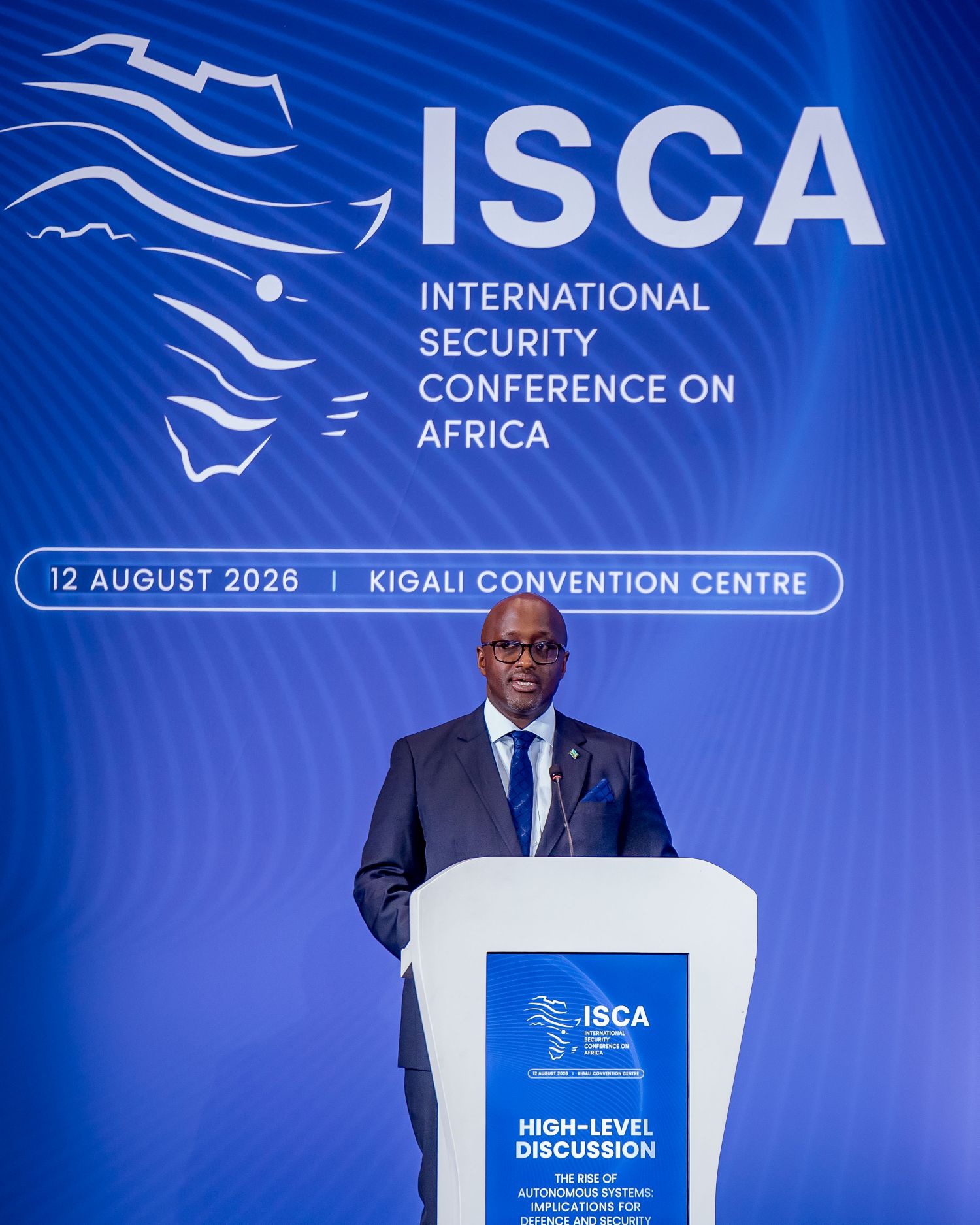
Opening the discussion, ISCA Executive Director Lt. Gen. (Rtd) Frank Mushyo Kamanzi noted that advances in artificial intelligence and autonomous aerial, maritime and ground systems are already reshaping warfare, border security, peace support operations and national defence.
He highlighted their potential to strengthen intelligence gathering, border surveillance, maritime security and protection of critical infrastructure, while raising concerns about human oversight, accountability and possible misuse by non-state actors.
'These questions demand collective leadership and cooperation,' Kamanzi maintained, urging African governments, regional organisations, research institutions, industry and international partners to develop policies and capabilities suited to the continent's security priorities.
The discussion brought together more than 300 delegates from 50 countries to examine how artificial intelligence and autonomous systems are changing warfare, border security and national defence.
Rwanda's Foreign Affairs Minister Olivier Nduhungirehe warned that artificial intelligence and autonomous systems are becoming increasingly accessible, including to non-state actors.
'Africa cannot afford to fall behind as these technologies continue to evolve,' Nduhungirehe cautioned.
He called for greater investment in African skills, institutions and technological capacity while stressing the implications of autonomous systems for sovereignty and strategic autonomy.
Minister Nduhungirehe called for greater investment in African skills, institutions and technological capacity.
Mali's experience
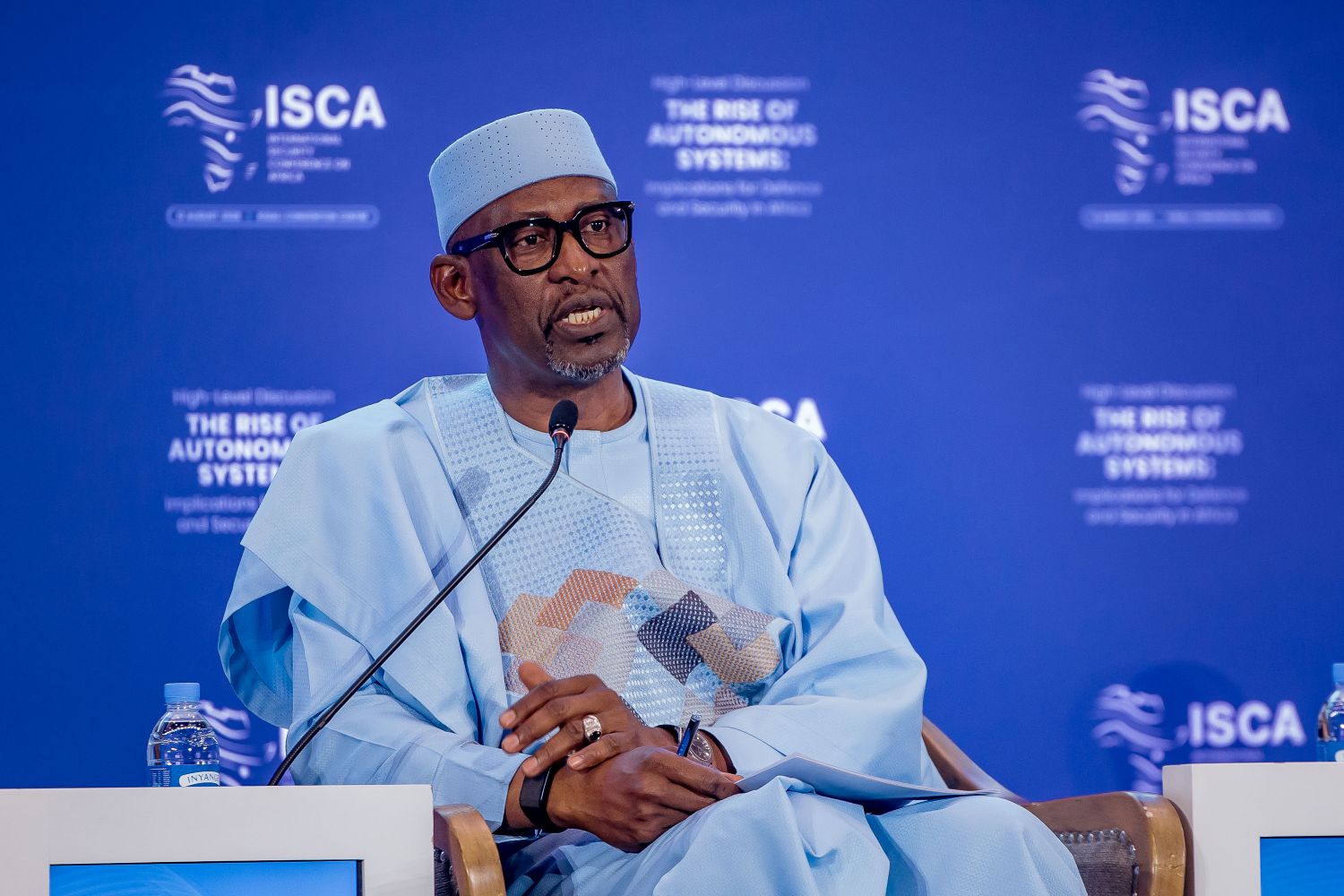
Mali's Foreign Affairs Minister Abdoulaye Diop placed the debate within the broader question of sovereignty and Africa's ability to provide for its own defence.
Mali, he noted, faces terrorism, separatism, inter-community conflicts and other threats across a territory of about 1.2 million square kilometres bordered by seven countries.
Diop explained that drones and other autonomous technologies have consequently become an increasingly important part of Mali's security architecture. Mali, he indicated, had almost no drones five years ago but now has dozens, approaching hundreds, operated by Malian defence and security personnel.
He stressed that training and technology transfer are essential if African countries are to avoid replacing one form of dependence with another.
'It is a bit like cutting the logic of dependence,' he remarked, describing Mali's efforts to strengthen its own defence capabilities.
Minister Diop revealed that drones and other autonomous technologies have consequently become an increasingly important part of Mali's security architecture.
Mali has incorporated training and technology transfer into defence agreements and established a national artificial intelligence centre where young people receive training for applications in defence, medicine, energy and other sectors.
But Diop also warned that autonomous technologies are increasingly available to terrorist groups, adding another layer to asymmetric threats.
'We are not only in an asymmetrical war, but the autonomous system also brings a level of asymmetry that competes with the state,' he observed.
From consumers to technology builders
Col. Patrick Nyirishema, Head of Defence Research and Development at the Rwanda Defence Force, argued that autonomous systems are changing the traditional understanding of military power.
'For centuries, military power was determined by who had more soldiers… But we've entered an era where machines can see. Machines can analyse. Machines can make decisions. And machines can act with diminishing human intervention,' he noted.
Col. Patrick Nyirishema, Head of Defence Research and Development at the Rwanda Defence Force, argued that autonomous systems are changing the traditional understanding of military power.
African countries now face a choice between remaining consumers of emerging technologies or investing in capabilities that allow them to shape them.
'The question is whether Africa can position itself so that this rise of autonomous systems and other related technologies and capabilities can be converted into a strategic advantage. Or whether it becomes a strategic vulnerability,' Nyirishema remarked.
He placed particular emphasis on talent.
'I think the starting point is talent. Build talent. Build talent,' he stressed, calling for national technology ecosystems in which young people can experiment, innovate and develop dual-use applications.
Such technologies, he noted, could support border surveillance, cross-border crime prevention, agriculture and other civilian activities in addition to defence.
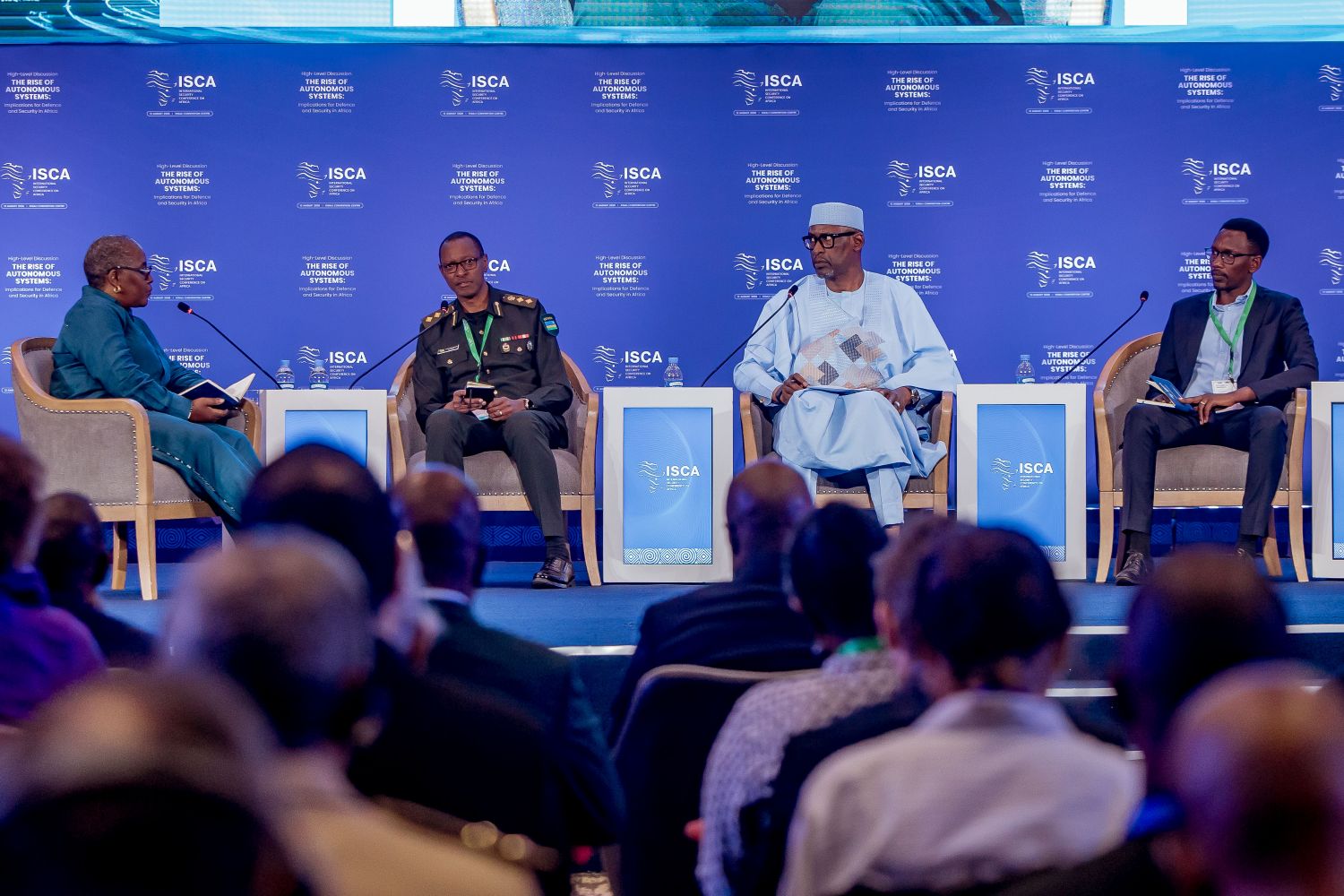
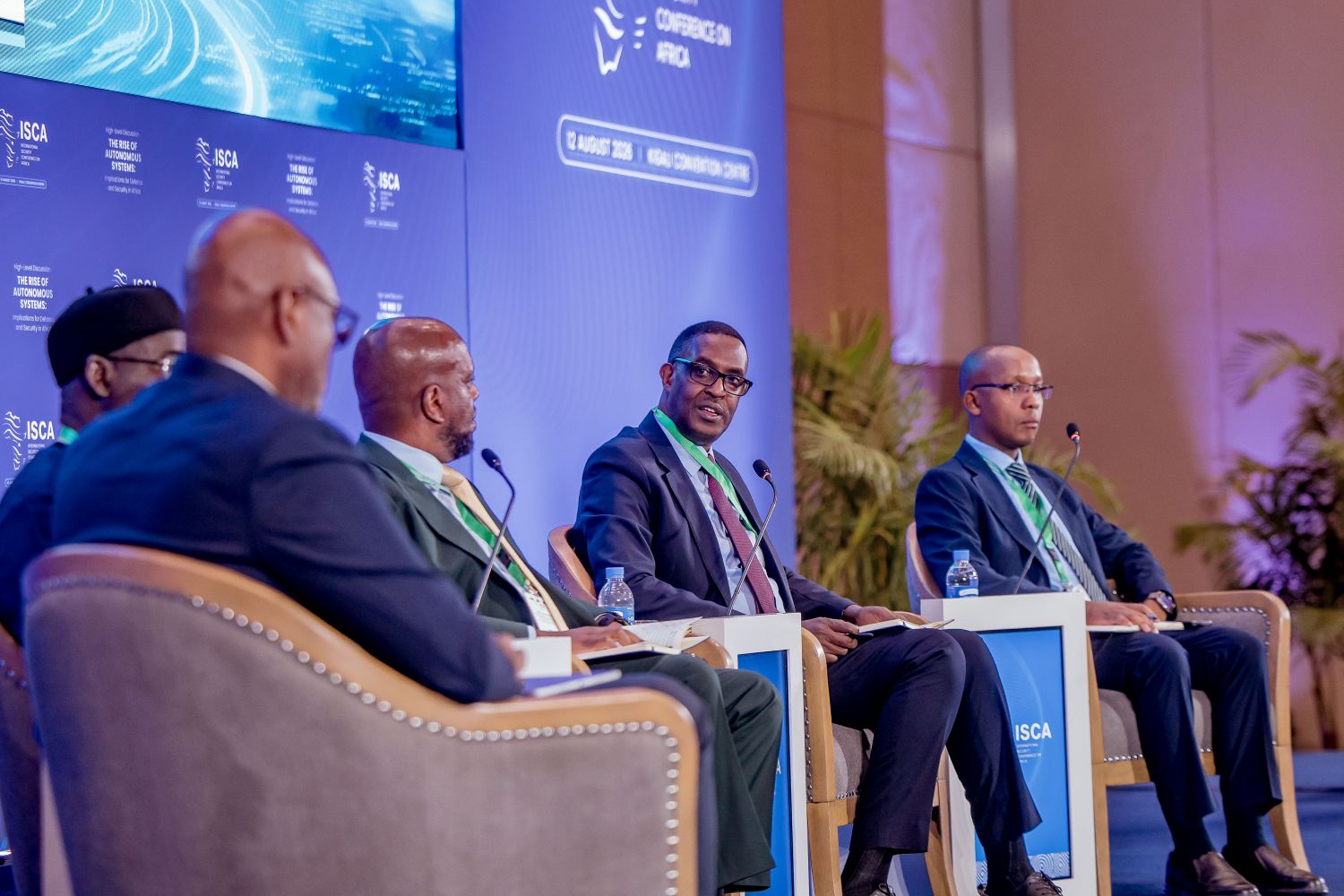
Panellists during a discussion focused on Africa's evolving security environment in autonomous defence and security systems.
Buratai praises Rwanda, urges African defence fund
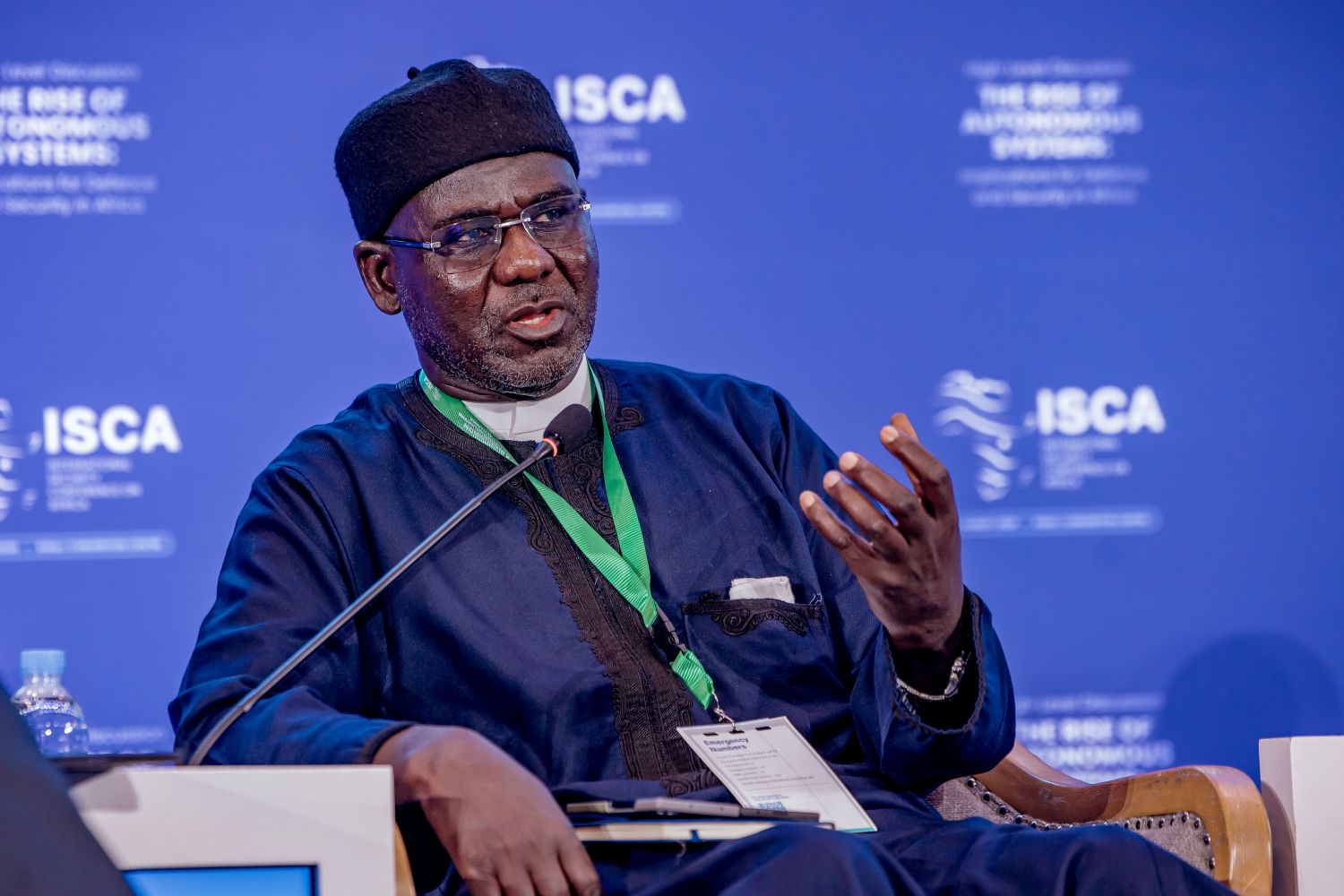
Former Nigerian Chief of Army Staff Lt. Gen. (Rtd) Tukur Yusuf Buratai linked autonomous systems to the wider questions of governance, independence and indigenous technological capacity.
Buratai praised Rwanda for its leadership in advancing African defence and security solutions, recalling his participation in the country's Armed Forces Commanders Conference the previous year.
'The Rwandan government has been in the forefront with projecting African defence and security solutions,' he noted, describing Rwanda's approach as evidence of leadership and commitment to African security knowledge.
Former Nigerian Chief of Army Staff Lt. Gen. (Rtd) Tukur Yusuf Buratai linked autonomous systems to the wider questions of governance, independence and indigenous technological capacity.
He argued that autonomous systems must be considered at the strategic level rather than simply as tactical military equipment, while emphasising the importance of indigenous technology and investment in Africa's young innovators.
Buratai also called for a dedicated African defence fund to help the continent respond to existing and emerging security threats.
Funding, he maintained, has been a longstanding challenge for the African Union and regional organisations, with external financing sometimes influencing African security priorities.
He further linked security to governance and socio-economic development, noting from Nigeria's experience that counter-insurgency efforts must be accompanied by measures addressing unemployment, education and other conditions that contribute to insecurity.
Technology must fit African realities
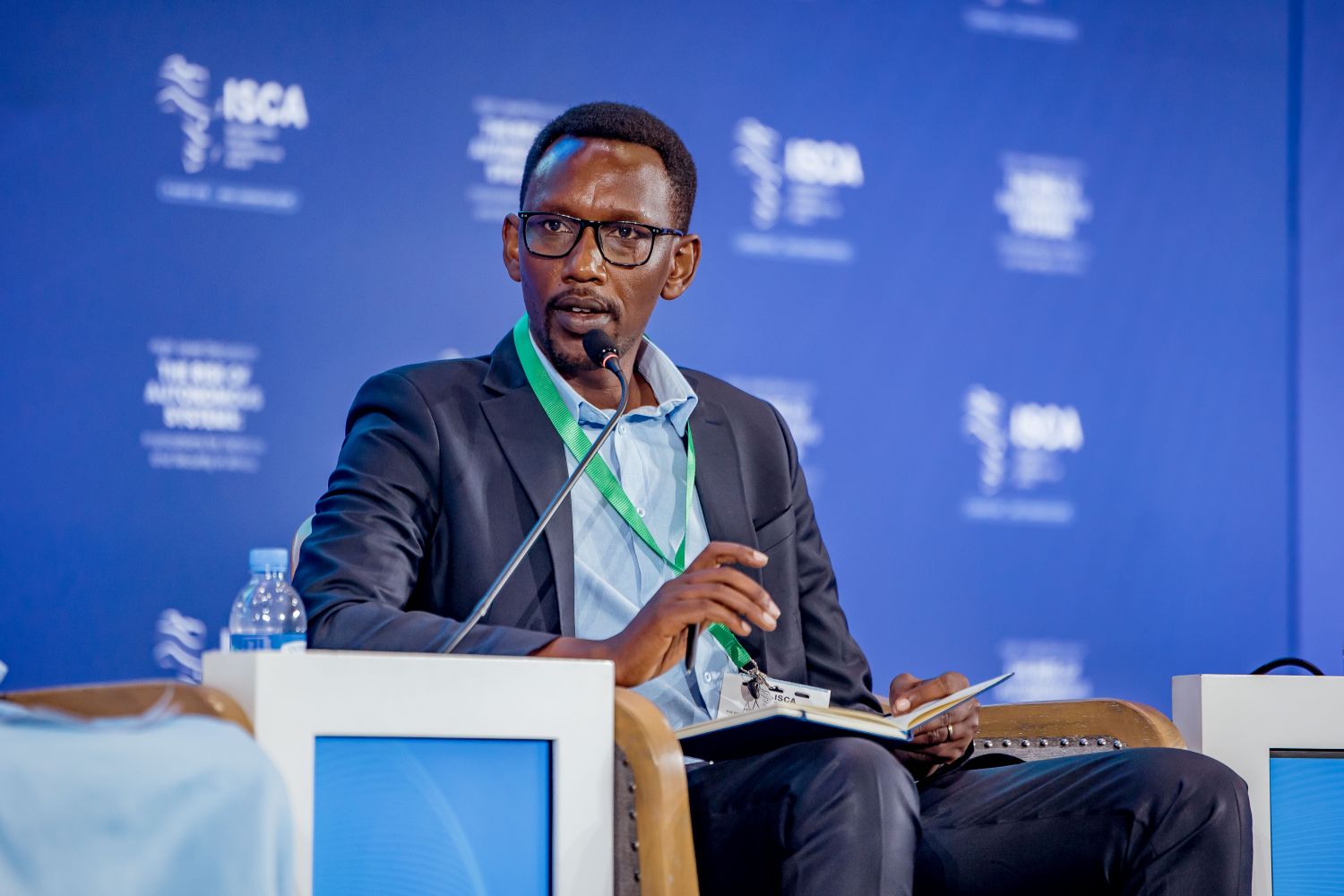
Moise Busogi, an Assistant Teaching Professor at CMU-Africa, cautioned that technologies developed elsewhere cannot automatically be expected to perform effectively in African environments.
'Many of these technologies are global, but usually the environment is very local,' Busogi noted.
Moise Busogi, an Assistant Teaching Professor at CMU-Africa, argued that technologies developed elsewhere cannot automatically be expected to perform effectively in African environments.
Drawing from his work in computer vision, he explained that AI models can perform differently when moved from one environment to another, making local expertise and contextualisation essential.
He also encouraged African institutions to give locally developed technologies greater opportunities to mature, arguing that African innovation cannot grow if funding and confidence consistently favour foreign products.
Rethinking doctrine and strategic autonomy
Dr. Paul-Simon Handy, Regional Director for East Africa and Representative to the African Union at the Institute for Security Studies, argued that autonomous systems should not simply be inserted into existing military structures.
'Adopting this technology is not just a matter of automating existing doctrines,' Handy maintained. 'Actually, we should rethink doctrines in light of this development.'
African states, he argued, need to identify the security problems they are trying to solve, determine which decisions can legitimately be delegated to machines and establish where meaningful human control must remain.
Handy also cautioned that countries should prepare to defend themselves against autonomous systems, not merely acquire them. A country that obtains drones without investing in counter-capabilities, he observed, may become more technologically equipped without necessarily becoming more secure.
He called for stronger regional cooperation, noting that no single African country can develop every component required for autonomous technologies. Strategic autonomy, he argued, does not mean manufacturing everything domestically but retaining sufficient knowledge, capacity and political freedom to understand and sustain critical systems.
Autonomy cannot simply be bought
Col. (Rtd) David Kanamugire, CEO of Rwanda's National Cyber Security Authority, warned against treating autonomous capability as a procurement exercise.
'We can't look at autonomy as a procurement problem. You can't buy autonomy. That's not possible,' Kanamugire stressed.
Col. (Rtd) David Kanamugire, CEO of Rwanda's National Cyber Security Authority, speaks during the second panel discussion, which focused on 'Africa's Strategic Response: Adaptation, Governance, and Development of Strategic Capabilities.
He identified data, computing power, talent and adaptable institutions as the foundations of genuine autonomous capability. Countries, he argued, need the ability to control and understand the wider technology stack, including sensors, communications and protection against cyber and electronic threats.
The discussions underscored that autonomous systems present Africa with both an opportunity and a growing security challenge. While they could strengthen surveillance, intelligence, border management, agriculture and other civilian services, they are also becoming accessible to non-state actors.
For the panellists, the central question is no longer whether autonomous technologies will transform African security, but whether African states will develop the talent, institutions, infrastructure and strategic cooperation required to shape that transformation on their own terms.
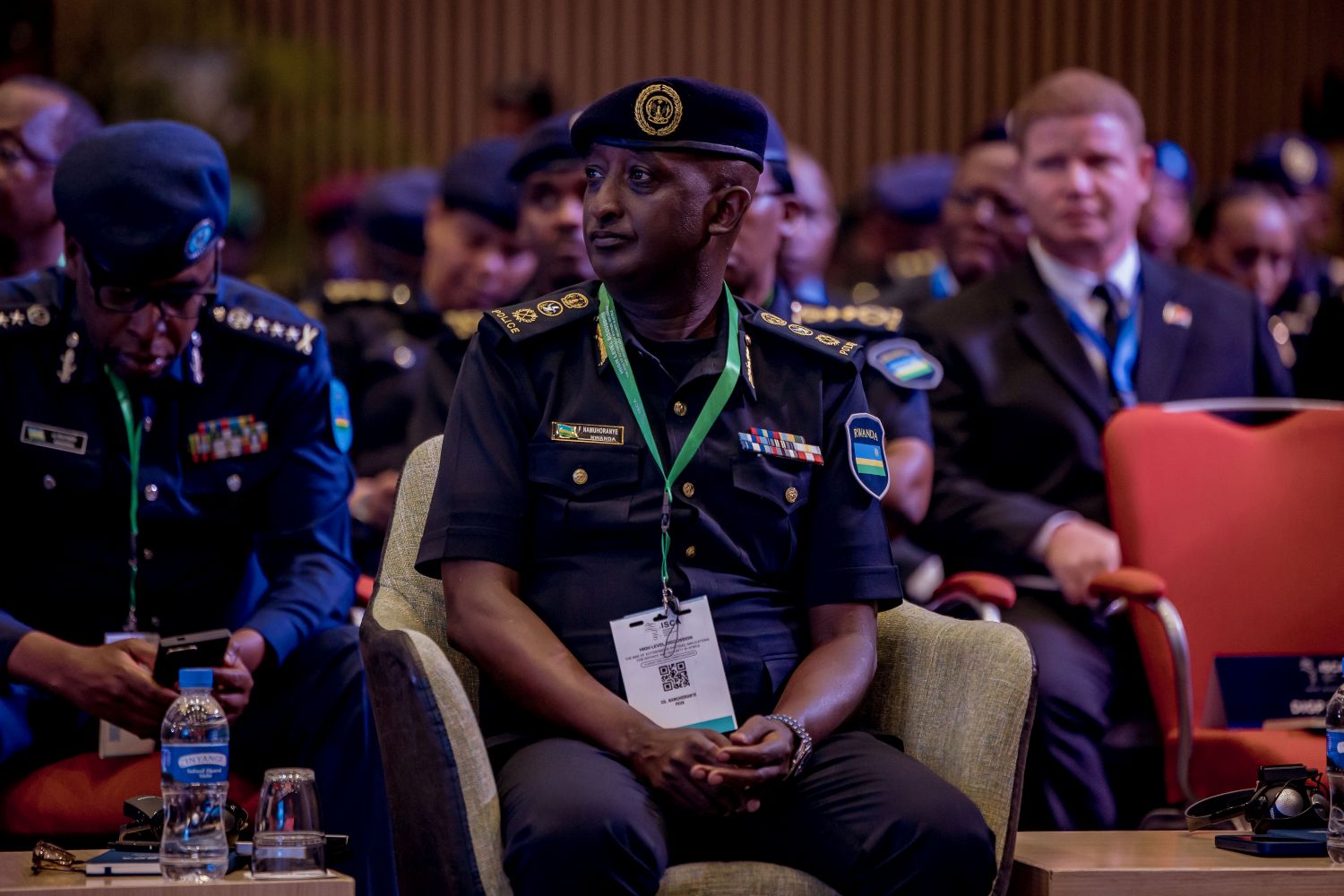
Rwanda's Foreign Affairs Minister Olivier Nduhungirehe warned that artificial intelligence and autonomous systems are becoming increasingly accessible, including to non-state actors.The event brought together more than 300 delegates from 50 countries to examine how artificial intelligence and autonomous systems are changing warfare, border security and national defence.Chief of Defence Staff (CDS) of the Rwanda Defence Force, General Mubarakh Muganga, follows the discussions.Inspector General of Police (IGP) Felix Namuhoranye also attended the event.Rwanda's Minister of Defence, Juvenal Marizamunda, follows the discussions.Rwanda's Minister of Interior, Dr. Vincent Biruta, attended the event.
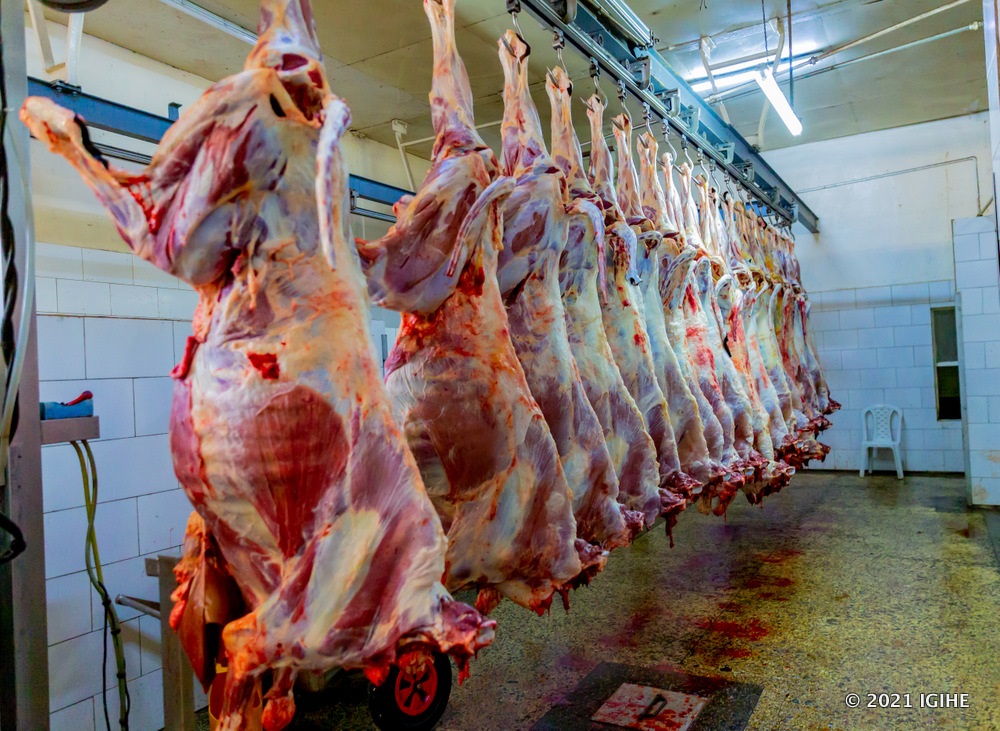
Minister of Agriculture and Animal Resources Dr Telesphore Ndabamenye said the government has put measures in place to restore the normal supply of livestock, particularly cattle, which is expected to ease pressure on meat prices.
He made the remarks during an interview with Rwanda Broadcasting Agency (RBA) on August 11, 2026, amid a sharp rise in meat prices over the past two months.
The increase followed an outbreak of livestock diseases affecting animals brought into Rwanda, including cattle, goats and sheep. In response, authorities imposed quarantines in different parts of the country to allow infected animals to be treated and others to be vaccinated.
The measures reduced the supply of meat on the market, pushing prices higher. In Kigali, the price of a kilogramme of beef has nearly doubled to about Rwf13,000.
The shortage has also contributed to higher prices of other types of meat, including chicken.
However, Dr. Ndabamenye said the situation is expected to improve as vaccinated animals develop immunity and livestock gradually returns to the market.
'Controlling livestock epidemics takes time, but after about one or two months, things return to normal,' he said.
The minister explained that all livestock targeted for vaccination have now been vaccinated, although animals require about one month to develop sufficient immunity after receiving the vaccine.
The nationwide vaccination campaign was conducted in June and July 2026. By the end of August, animals vaccinated later in the campaign will also have completed the required period for developing immunity.
Dr. Ndabamenye said the government is also looking beyond cattle to address the wider shortage of meat, including increasing the production of smaller livestock, particularly poultry.
He noted that chicken consumption has increased significantly in recent months, making increased poultry production an important part of efforts to boost the overall supply of meat.
'We have a programme to increase the number of small livestock, particularly chickens, because people have been consuming them heavily in recent days. Increasing their numbers would help supplement beef supply,' he said.
He added that the government plans to increase investment in livestock production to ensure that future disease-control measures do not result in meat shortages.
'People can be assured that the meat prices we are seeing today will gradually come down as livestock becomes available following the vaccination programme we have carried out,' he said.
The latest figures from the National Institute of Statistics of Rwanda (NISR) show that consumer prices increased by 0.9% in July 2026 compared with June 2026.
The increase was largely driven by a 1.5% rise in prices of food and non-alcoholic beverages and a 1.3% increase in transport-related costs.
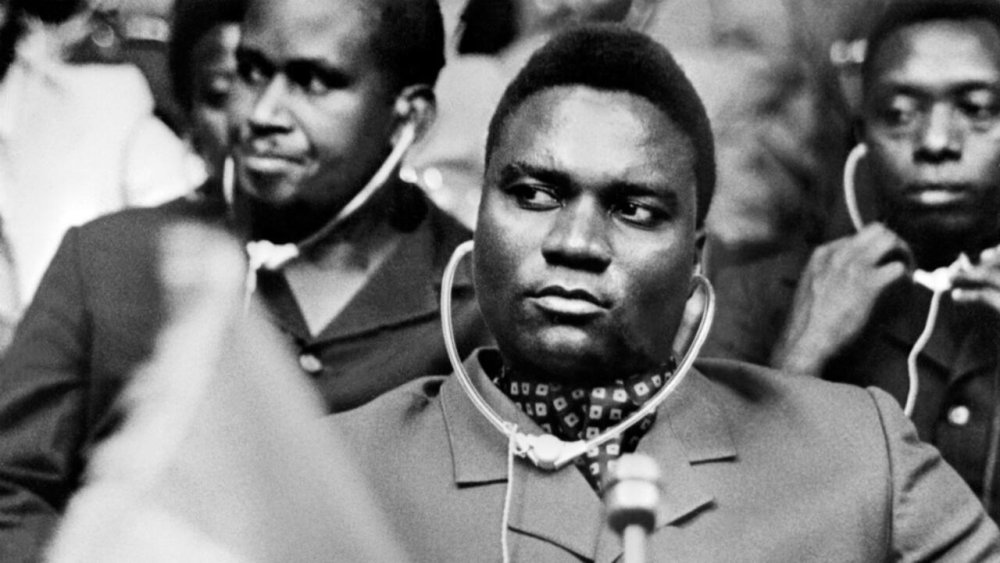
Amb. Ngarambe argues that Habyarimana's involvement in the ideology that ultimately contributed to the 1994 Genocide against the Tutsi began decades before the genocide itself.
Speaking to IGIHE, Amb. Ngarambe drew on his book, Le génocide contre les Tutsi au Rwanda en 1994. Conséquences inéluctables des politiques criminelles et des crimes politiques de 1959 à 1994, in which he examines the political developments and violence that preceded the genocide.
Habyarimana was born in 1937, nearly two decades before the publication of the document commonly known as the 'Hutu Manifesto.'
According to Amb. Ngarambe, the young Habyarimana grew up in an environment increasingly influenced by ideas promoted through the manifesto, which advocated for what its authors presented as Hutu interests.
Amb. Ngarambe said that in 1960, a year after the beginning of what became known as the 'Hutu Revolution,' Habyarimana joined the military through a programme associated with Belgian colonial official Colonel Guy Logiest.
He argues that Logiest was seeking to establish a predominantly Hutu military force and that Habyarimana was among the young recruits shaped by that environment.
'In this army, Logiest saw Habyarimana as someone who could represent this Hutu youth, which had been prepared to kill Tutsis without hesitation. He had been exposed to this ideology when he was around 20 years old, during his military training,' Amb. Ngarambe said.
From military service to political power
Amb. Ngarambe said that after completing his military training, Habyarimana became involved in military operations against attacks by forces known as the Inyenzi in 1962 and 1963.
He alleges that alongside military operations against the insurgents, Tutsi civilians were also killed in retaliatory violence.
Between 1963 and 1964, according to Amb. Ngarambe, Habyarimana rose to positions of increasing authority within the national army and security structures.
He argues that during this period, violence against Tutsis continued, with the support of the PARMEHUTU political movement.
'Generally speaking, we can say that the genocidal ideology in Habyarimana did not emerge in the 1990s or the 1980s. It began with the establishment of PARMEHUTU and the dissemination of the Hutu Manifesto,' Amb. Ngarambe said.
He added that while anti-Tutsi violence had already occurred during the government of President Grégoire Kayibanda, Habyarimana inherited and maintained elements of the political system and ideology that had emerged during that period.
Amb. Ngarambe also portrays Habyarimana as a politically ambitious young officer who sought power at an early age.
He said Habyarimana was only 26 when he became commander of Rwanda's armed forces and that he already had ambitions of eventually becoming Head of State.
'At the age of 26, when he became commander of Rwanda's army, he already had ambitions to become Head of State. From that point, he began to become deceptive and sought to control those around him, using lies to steer them in the direction he wanted,' Amb. Ngarambe said.
Consolidating power
Following the overthrow of Kayibanda in 1973, Habyarimana assumed power and established a new political order.
Amb. Ngarambe argues that after the coup and the subsequent killing of Kayibanda and politicians from southern Rwanda, Habyarimana sought to consolidate his support among Hutus from the region.
Although Colonel Théoneste Lizinde was later prosecuted by a military court in Ruhengeri in connection with the killing of politicians from southern Rwanda, Amb. Ngarambe maintains that the operation could not have taken place without Habyarimana's knowledge.
'Lizinde played a role, but his superior was Colonel Ntibitura, who supported Habyarimana and reported to him on a daily basis,' Amb. Ngarambe said.
He further linked the killings to the leadership of Ruhengeri Prefecture at the time, arguing that the political hierarchy made it unlikely that such actions could have occurred without the knowledge of senior authorities.
The rise of Hutu Power
Amb. Ngarambe said that the political mobilisation intensified particularly from 1993, as Habyarimana and his allies sought to strengthen what became known as Hutu Power.
According to him, mobilisation efforts extended to local administrative structures, where individuals were encouraged to portray Tutsis as a common enemy.
'He implemented a systematic and organised approach aimed at spreading genocidal ideology among Rwandans, particularly Hutus, preparing them from childhood and from primary school,' Amb. Ngarambe said.
The outbreak of war on October 1, 1990, when the Rwandan Patriotic Front (RPF) launched an armed invasion from Uganda, further transformed Rwanda's political environment.
Amb. Ngarambe argues that Habyarimana used the conflict to intensify calls for Hutu unity and anti-Tutsi mobilisation.
'When the war began, Habyarimana appeared to see it as an opportunity. He said, 'I am going to solve the problem now; I am going to unite the Hutus,'' Amb. Ngarambe said.
He described Habyarimana and his political allies as being at the centre of a campaign that increasingly portrayed the conflict with the RPF as a broader struggle between Hutus and Tutsis.
Amb. Ngarambe also identified Ferdinand Nahimana, Jean-Bosco Barayagwiza and others as key figures in the propaganda campaign that promoted anti-Tutsi narratives.
According to him, the messaging portrayed Rwanda as having been attacked by Inyenzi who had come from Uganda alongside Ugandans, encouraging Hutus to believe they needed to defend themselves against the perceived threat.
From decades of division to genocide
Habyarimana was killed on April 6, 1994, when the plane carrying him and Burundian President Cyprien Ntaryamira was shot down near Kigali.
The following day, organised killings began in Kigali and rapidly spread across the country.
Over approximately 100 days, more than one million Tutsis were killed.
The Genocide against the Tutsi remains one of the most devastating crimes against humanity of the 20th century.
Amb. Ngarambe's account places Habyarimana's political trajectory within a much longer history of ethnic discrimination, political violence and extremist mobilisation, arguing that the Genocide against the Tutsi in 1994 was not an isolated event but the culmination of years of ideological preparation, institutionalised discrimination and escalating violence.
Habyarimana was the first commander of Rwanda's army established under Belgian rule.
Before venturing into the creative industry, Dufatanye was a primary school teacher, where he taught English.
Speaking to IGIHE, he said he completed his education up to university level, where he trained as a teacher before joining the education sector.
When the Covid-19 pandemic disrupted economic activities and led to the loss of many jobs, Dufatanye was among those who were affected. Faced with the challenge of finding a new source of income, he began looking for a skill he could turn into a livelihood.
'I started by making face masks. I watched videos online to learn how they were made, then made them by hand. Fortunately, I found someone who ordered 1,000 masks from me at Rwf200 each. The money I earned from that work became the capital I used to start looking for something else to do,' he said.
She later turned to weaving, a skill he already had. Together with some of his relatives, she began making woven products from home and selling them to customers.
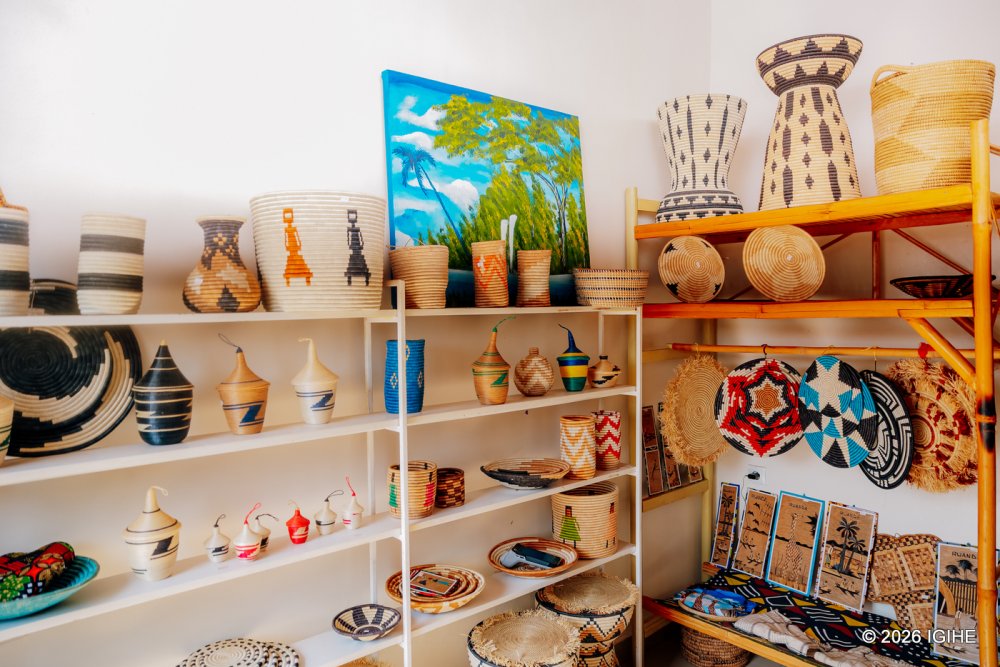
In 2021, Dufatanye established his own business, Izuba. He initially operated from premises used by other artisans before eventually seeking an independent workspace.
A major turning point came in 2026, when he secured financing from Numida Technologies, enabling him to establish a dedicated workplace and expand his operations.
'We met Numida when they found me where I was working. They explained their services to me, and I decided to give them a try. I took the loan and repaid it successfully. They later gave me another loan, which enabled me to move to this place and expand my business,' he said.
Today, Dufatanye has three permanent employees and works with about 30 casual workers whenever he receives large orders. All of them are women.
His ambition is to grow the business further and create more employment opportunities.
'Over the next five years, I hope to have the capacity to employ at least 300 women and to start exporting my products to international markets,' he said.
Numida supports small businesses
Hakizimana Cyprien, an employee of Numida Technologies, said the company provides financing to entrepreneurs at different stages of business development.
'At Numida, we provide loans to everyone, including men, women and young people who have businesses. We support businesses ranging from small and medium enterprises to those that are beginning to grow into larger businesses and want to expand further,' he said.
Numida Technologies was established in 2016. It expanded its operations to Uganda in 2023, entered Kenya in 2026 and began operating in Rwanda the same year.
The company provides loans ranging from Rwf100,000 to Rwf12 million, depending on the nature and stage of a borrower's business.
First-time borrowers, however, can access loans of up to Rwf2 million, according to the company.
For Dufatanye, what began as a search for an alternative source of income during a period of economic uncertainty has grown into a business with ambitions of employing hundreds of women and reaching international markets.
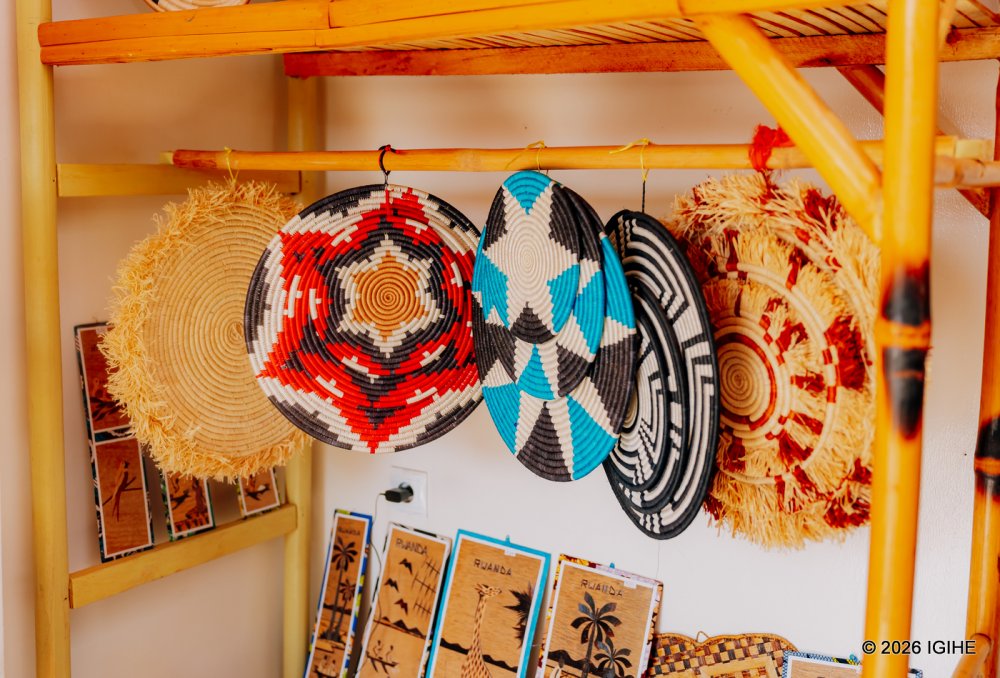
Izuba craft shop showcases a wide range of locally made products from Rwanda.Karitasi Dufatanye creates a variety of locally made products in Rwanda.Dufatanye says she can provide work for up to 30 women when she receives large orders.Covid-19 inspired Karitasi Dufatanye to establish Izuba, a homegrown crafts business.Dufatanye says additional capital would enable him to expand his clothing production.
In 2007, more than 100 million votes were cast in a global campaign to select seven modern wonders from a list of iconic landmarks around the world.
The campaign, organized by the New7Wonders Foundation, brought global attention to seven extraordinary sites: Christ the Redeemer in Brazil, Chichén Itzá in Mexico, the Colosseum in Italy, Petra in Jordan, Machu Picchu in Peru, the Great Wall of China and the Taj Mahal in India.
Each carries a unique story of human creativity, determination and cultural heritage.
Christ the Redeemer, Brazil : Rising above Rio de Janeiro, the iconic monument has become a global symbol of Brazil and Christian faith.
Christ the Redeemer, Brazil
Standing above Rio de Janeiro on Corcovado Mountain, Christ the Redeemer is among the world's most recognizable monuments.
The Art Deco statue of Jesus Christ stands about 30 metres tall, with its outstretched arms spanning approximately 28 metres.
Construction began in the 1920s and the monument was officially inaugurated in 1931. Its position high above Rio has made it one of Brazil's most important cultural and religious symbols.
The statue is also exposed to lightning because of its location, requiring regular maintenance to preserve the monument.
Chichén Itzá, Mexico: The ancient Maya city stands as a remarkable testament to the civilisation's architectural and astronomical achievements.
Chichén Itzá, Mexico
In Mexico's Yucatán Peninsula lies Chichén Itzá, one of the most important archaeological sites associated with the ancient Maya civilization.
Its most famous structure, El Castillo, also known as the Temple of Kukulcán, demonstrates the Maya's sophisticated understanding of architecture, mathematics and astronomy.
During the equinoxes, sunlight creates a striking shadow effect along the pyramid's staircase, producing an appearance associated with Kukulcán, the feathered serpent.
The phenomenon has helped make Chichén Itzá one of the world's most fascinating archaeological destinations.
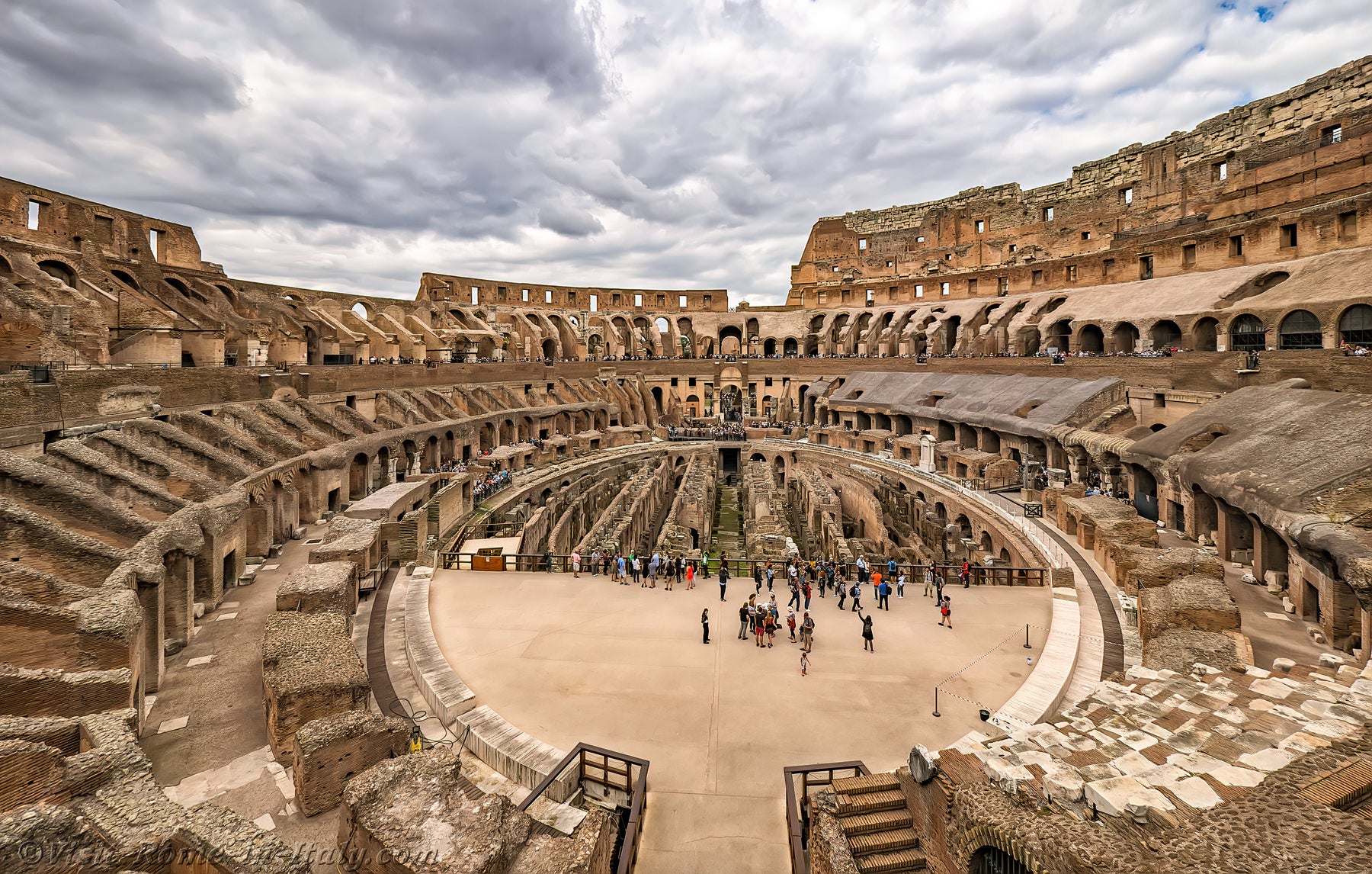
The Colosseum, Italy: Built nearly 2,000 years ago, the iconic amphitheatre remains a powerful reminder of ancient Rome's legacy.
The Colosseum, Italy
In the heart of Rome stands the Colosseum, a massive amphitheatre completed around AD 80 during the reign of Emperor Titus.
The structure could accommodate tens of thousands of spectators who gathered to watch gladiatorial contests, animal hunts and other public spectacles.
Beyond its entertainment history, the Colosseum demonstrates the engineering and architectural capabilities of ancient Rome.
Nearly 2,000 years later, its remains continue to attract visitors from around the world.
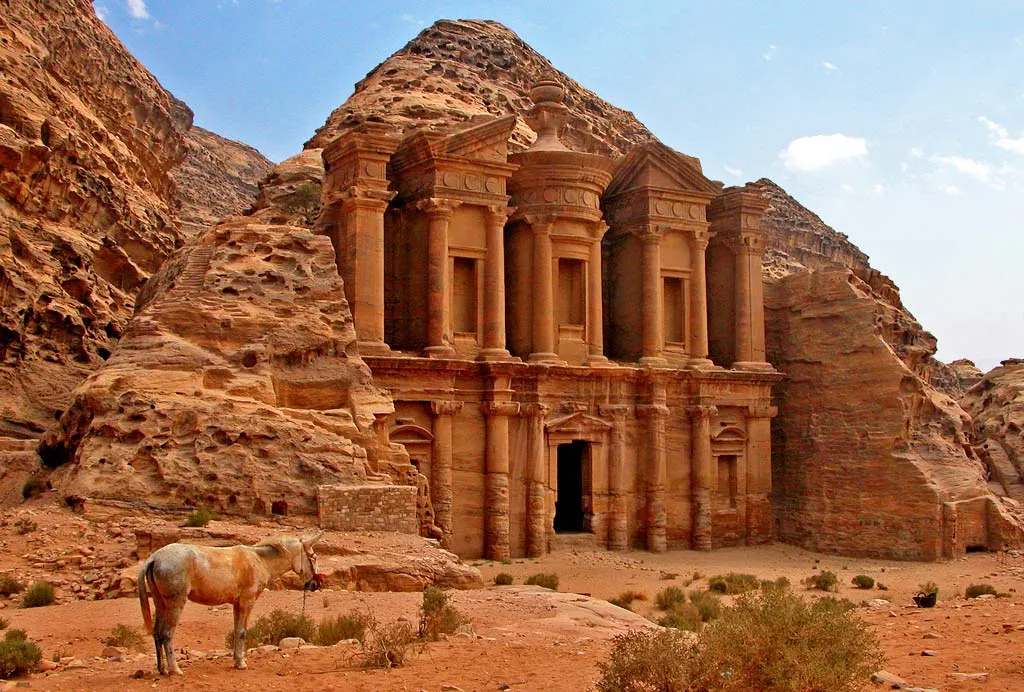
Petra, Jordan: Known as the Rose City, Petra captivates visitors with its extraordinary architecture carved into the surrounding sandstone mountains.
Petra, Jordan
Known for its spectacular rock-cut architecture, Petra was once a major trading centre of the Nabataean civilization.
The ancient city is located in a valley surrounded by mountains and is famously reached through the narrow Siq.
Among its most recognizable structures is Al-Khazneh, commonly known as the Treasury, which was carved directly into the sandstone.
Petra's dramatic landscape and architecture have earned it a reputation as one of the world's most extraordinary archaeological sites.
Machu Picchu, Peru: Perched high in the Andes, the ancient Inca citadel continues to amaze the world with its precision and remarkable setting.
Machu Picchu, Peru
High in the Andes Mountains of Peru lies Machu Picchu, the remarkable 15th-century Inca site that continues to attract historians, archaeologists and travellers.
The settlement contains temples, terraces and residential structures constructed with sophisticated stonework.
One of its most impressive features is the precision with which stones were fitted together, often without mortar.
Although Machu Picchu is sometimes described as a 'lost city', nearby Indigenous communities were aware of the site's existence long before it became internationally known.
Today, it stands as an important symbol of Inca civilization and engineering.
The Great Wall of China, China: Stretching across mountains and valleys, the historic fortification reflects centuries of engineering, defence and perseverance.
The Great Wall of China
Stretching across mountains, valleys and deserts, the Great Wall of China represents centuries of construction and military planning.
Rather than being one continuous wall built at one time, it consists of fortifications constructed, rebuilt and expanded by different Chinese dynasties over many centuries.
The total length of the various sections is estimated at more than 21,000 kilometres.
The wall was primarily constructed for defence and border control, although it also served purposes including communication and transportation.
One popular myth claims that the Great Wall can easily be seen from the Moon with the naked eye. Scientists have repeatedly explained that this is not the case.
Nevertheless, its enormous scale remains a powerful reminder of the resources and labour invested in its construction.
The Taj Mahal, India: Built in memory of Mumtaz Mahal, the magnificent monument remains one of the world's most enduring symbols of love and architectural beauty.
The Taj Mahal, India
The final wonder is the Taj Mahal in Agra, India, one of the world's most famous monuments to love.
Mughal Emperor Shah Jahan commissioned the white marble mausoleum in memory of his wife, Mumtaz Mahal, who died in 1631.
Construction began soon after her death and the principal mausoleum was completed in the 17th century, with additional work continuing later.
The monument is celebrated for its symmetrical design, large marble dome, intricate decoration and carefully designed gardens.
Beyond its architectural beauty, the Taj Mahal has become globally associated with Shah Jahan's devotion to Mumtaz Mahal.
A legacy of human achievement
The New Seven Wonders are more than famous tourist destinations. They represent different civilizations, historical periods and approaches to architecture and engineering.
From the stonework of Machu Picchu to the scale of the Great Wall and the symbolism of the Taj Mahal, each wonder demonstrates what human beings have achieved through creativity, knowledge and determination.
For millions of visitors, these landmarks are not simply places to see. They are reminders that some of humanity's greatest achievements can survive for centuries and continue inspiring generations.
According to the 2025 Rwanda Demographic and Health Survey (RDHS), 54% of unmarried women aged 15 to 49 use a contraceptive method.
The survey shows that 52% of unmarried women use modern contraceptive methods, while 2% rely on traditional methods.
The findings mean that more than half of unmarried women in the country are taking steps to prevent unintended pregnancies.
Although contraceptive use remains higher among married women, the difference between the two groups is relatively modest.
Among married women aged 15 to 49, 69% use contraception. Of these, 64% use modern methods, while 5% use traditional methods.
The figures suggest that family planning is no longer viewed solely as a concern for married couples. Unmarried women who are sexually active are also increasingly using contraceptive methods as part of efforts to prevent unintended pregnancies.
Condoms remain the most widely known method
The RDHS 2025 indicates that awareness of contraception is nearly universal among Rwandans aged 15 to 49.
About 99% of both women and men reported knowing at least one modern contraceptive method. Traditional methods were known by 94% of women and 89% of men.
Women generally demonstrated slightly higher levels of knowledge about contraceptive methods than men.
The male condom was the most widely known contraceptive method, with 98% of both women and men reporting that they were familiar with it.
Emergency contraception, which is used after unprotected sexual intercourse to reduce the risk of pregnancy, was the least widely known method among those included in the survey.
Nevertheless, awareness of emergency contraception remained relatively high, with 71% of women and 66% of men reporting that they knew about the method.
The findings provide an insight into changing attitudes and practices surrounding contraception in Rwanda, showing that awareness and use of family planning methods extend beyond married couples.
Unmarried women are increasingly turnig to family planning in Rwanda.
Gaps persist in reproductive health knowledge
Despite widespread awareness of contraception in Rwanda, the 2025 Rwanda Demographic and Health Survey (RDHS) shows that important gaps remain in women's understanding of reproductive health, particularly when it comes to fertility and the timing of ovulation.
Only 24% of women were able to correctly identify the period during the menstrual cycle when they are most likely to become pregnant. In other words, only about one in four women have an accurate understanding of their most fertile period.
The survey also identified misconceptions among women who rely on fertility awareness methods to prevent pregnancy. About 44% of users believed that the fertile period occurs after menstruation has ended, which is not correct.
Contraceptive use is particularly low among married adolescent girls. Only 38% of married women aged 15 to 19use a contraceptive method, representing the lowest rate among married women across all age groups.
When women aged 15 to 49 are considered regardless of marital status, adolescents aged 15 to 19 again record the lowest level of contraceptive use, at just 4.9%.
Among married women aged 20 to 24, 66.8% use at least one contraceptive method, while 65.8% use modern methods.
The highest level of contraceptive use is recorded among married women aged 25 to 29, with 74.6% using any contraceptive method and 73.1% using modern methods.
Among married women aged 30 to 34, 72.9% use any contraceptive method, while 70.3% use modern methods.
Women aged 35 to 39 record a contraceptive use rate of 74%, including 68.8% who use modern methods.
Among married women aged 40 to 44, 71.1% use contraception. The rate declines to 52.6% among those aged 45 to 49.
Implants remain the most popular method
Among married women who use modern contraceptive methods, implants are the most widely used option in Rwanda.
According to the survey, implants account for 34.3% of modern contraceptive use among married women, making them the leading modern method.
Injectable contraceptives rank second, accounting for 14.3%, followed by contraceptive pills at 6.6%.
Male condoms and intrauterine devices (IUDs) each account for 2.4% of modern contraceptive use among married women.
Implants are also the most commonly used contraceptive method among unmarried women, accounting for 25% of contraceptive use in this group.
Injectable methods account for 13.7%, while male condom use among unmarried women stands at 7.5%, significantly higher than the 2.4% recorded among married women.
Overall, 2% of women have undergone sterilisation as a permanent method of contraception. The average age of women who have undergone the procedure is 35.
The findings highlight both the progress Rwanda has made in expanding access to contraception and the need to strengthen accurate reproductive health information, particularly among adolescents and young women.
Implants are the most widely used contraceptive method in Rwanda.
Rwanda's three decades of progress in family planning
Rwanda has made significant progress in expanding access to family planning over the past three decades, with the latest figures showing a substantial increase in the use of modern contraceptive methods among married women.
The findings of the 2025 Rwanda Demographic and Health Survey (RDHS) come after more than 33 years of sustained efforts to strengthen family planning programmes and improve access to reproductive health services across the country.
The proportion of married women using modern contraceptive methods increased from 12.9% in 1992 to 64.2% in 2025, marking a major change in contraceptive uptake over the period.
The most significant increase occurred after 2000. At the time, only 5.7% of married women were using modern contraceptive methods.
By 2005, the figure had risen to 10.3%, before increasing sharply to 45.1% in 2010.
The rate continued to rise, reaching 47.5% in 2014–2015, 58.4% in 2019–2020, and 64.2% in 2025.
The progress has also been reflected in the decline in unmet need for family planning, referring to women who want to use contraception but are not accessing a method that meets their needs.
In 1992, the unmet need stood at 38%. By 2025, it had fallen to 9%, indicating a substantial improvement in access to family planning services.
Northern Province leads in modern contraceptive use
The Northern Province records the highest proportion of married women using modern contraceptive methods, at 72.1%, according to the survey.
The Eastern Province follows at 64%, while the Southern Province records 63.7%.
In Kigali City, modern contraceptive use among married women stands at 61.3%, while the Western Province records 61%.
The figures show that the use of modern contraception remains relatively high across all parts of the country, although the Northern Province records the highest rate.
Public health facilities remain the main source
Government health facilities continue to play a central role in providing family planning services in Rwanda.
Overall, 91% of users of modern contraceptive methods obtain their methods through public-sector facilities.
Public health centres account for the largest share, providing services to 67% of users, while district and provincial hospitals account for 13%.
Private medical facilities account for only 6% of users, while 3% obtain contraceptive methods from other sources.
The role of public facilities is particularly pronounced in the provision of long-acting and permanent contraceptive methods.
According to the survey, public facilities provide 99% of implants, 91% of injectable contraceptives, and 80% of IUDs used by women. They also account for 97% of permanent contraceptive procedures.
Among women who use contraceptive pills, 84% obtain them from public health facilities.
Male condoms, however, follow a different distribution pattern. About 40% are obtained from public-sector sources, while 18% come from private medical facilities and 42% are obtained from other sources.
Among condoms obtained outside health facilities, shops and bars account for approximately 40% of those sources.
Microgynon, Microlyte, Prudence and Love dominate commonly used brands
The survey also provides insight into the contraceptive brands most commonly used in Rwanda.
Among women who use contraceptive pills, 97% use either Microgynon or Microlyte, making the two brands the dominant choices in this category.
For male condoms, 92% of users report using Prudence, Plaisir or Love.
The figures reflect Rwanda's substantial progress in expanding access to modern family planning methods over more than three decades. They also show the continued importance of public health facilities, which remain the primary source of contraceptive services for the vast majority of users.
Plaisir condoms rank among the most widely used brands in Rwanda.
Emergency contraception remains limited
Overall, 3% of women aged 15 to 49 reported using emergency contraception during the 12 months preceding the survey.
Emergency contraception is used after unprotected sexual intercourse to reduce the risk of an unintended pregnancy.
Its use is most common among women living in Kigali City and those with education beyond secondary school.
The survey also examined why women discontinue contraceptive methods. The leading reason is the desire to have another child, accounting for 32% of women who stop using contraception.
Another 28% discontinue a method because of side effects or concerns about their health, while 15% stop because they want to switch to a method they consider more effective.
Radio remains a leading source of family planning information
The 2025 Rwanda Demographic and Health Survey examined a range of channels through which people receive information about family planning, including radio, television, newspapers, mobile phones, social media, community meetings, health facilities, schools, religious institutions and workplaces.
Among women, radio is the most widely reported source of family planning information, reaching 57%, compared with 67% among men.
Health facilities are another major source of information for women, reaching 55%.
Other important sources for women include information received at workplaces, from friends or family members, reaching 53%, while community meetings and activities reach 47%.
Among men, community meetings and other community-based activities are also an important source of information, reaching 60%.
Social media, however, has a relatively limited reach. Only 10% of women reported receiving family planning information through social media.
Mobile phones also recorded a low reach, with family planning messages reaching 7% of both women and men through this channel.
The survey further found that 20% of women and 14% of men had not been exposed to any family planning messages through any of the eight main communication channels assessed during the 12 months preceding the survey.
The findings highlight the continued importance of traditional communication platforms, particularly radio and health facilities, in delivering family planning information, while newer channels such as social media and mobile phones remain less widely used for this purpose.
Family planning continues to gain ground across Rwanda.
In an Instagram post, DeGeneres said she was pleased to be back in Rwanda and highlighted the growing number of visitors to the campus since it opened four years ago.
'Portia and I are in Rwanda. The Ellen DeGeneres Campus of the Dian Fossey Gorilla Fund has seen over 100,000 visitors since we opened four years ago,' she wrote.
DeGeneres said she had met many visitors from around the world who told her about their experiences at the campus.
'I've had so many people come up to me that are visiting here from all around the world talking about how incredible the campus is and how incredible it is to see gorillas so close up in their element,' she said.
She added that she was grateful to play a role in raising awareness about gorilla conservation.
The Ellen DeGeneres Campus of the Dian Fossey Gorilla Fund, located in Rwanda's Northern Province, was opened in 2022 as a permanent home for the organisation's conservation, research and education activities.
The campus has since become an important destination for visitors interested in mountain gorilla conservation and the work of the Dian Fossey Gorilla Fund.
DeGeneres, 68, is widely known as a comedian, television host and actress. She gained international recognition through The Ellen DeGeneres Show, which premiered in 2003 and featured celebrities and other prominent figures.
Produced by Telepictures and broadcast on NBC in the United States, the show became internationally popular and was aired in countries including Singapore, Indonesia, the Philippines, Myanmar, Malaysia, Thailand, Vietnam, India, the United Kingdom and South Africa.
DeGeneres has maintained a close connection with Rwanda through her involvement in mountain gorilla conservation.
Her foundation and the Dian Fossey Gorilla Fund have supported efforts to protect gorillas and advance research into their health and wellbeing.
In 2018, DeGeneres and de Rossi visited Rwanda, where they also met President Paul Kagame.
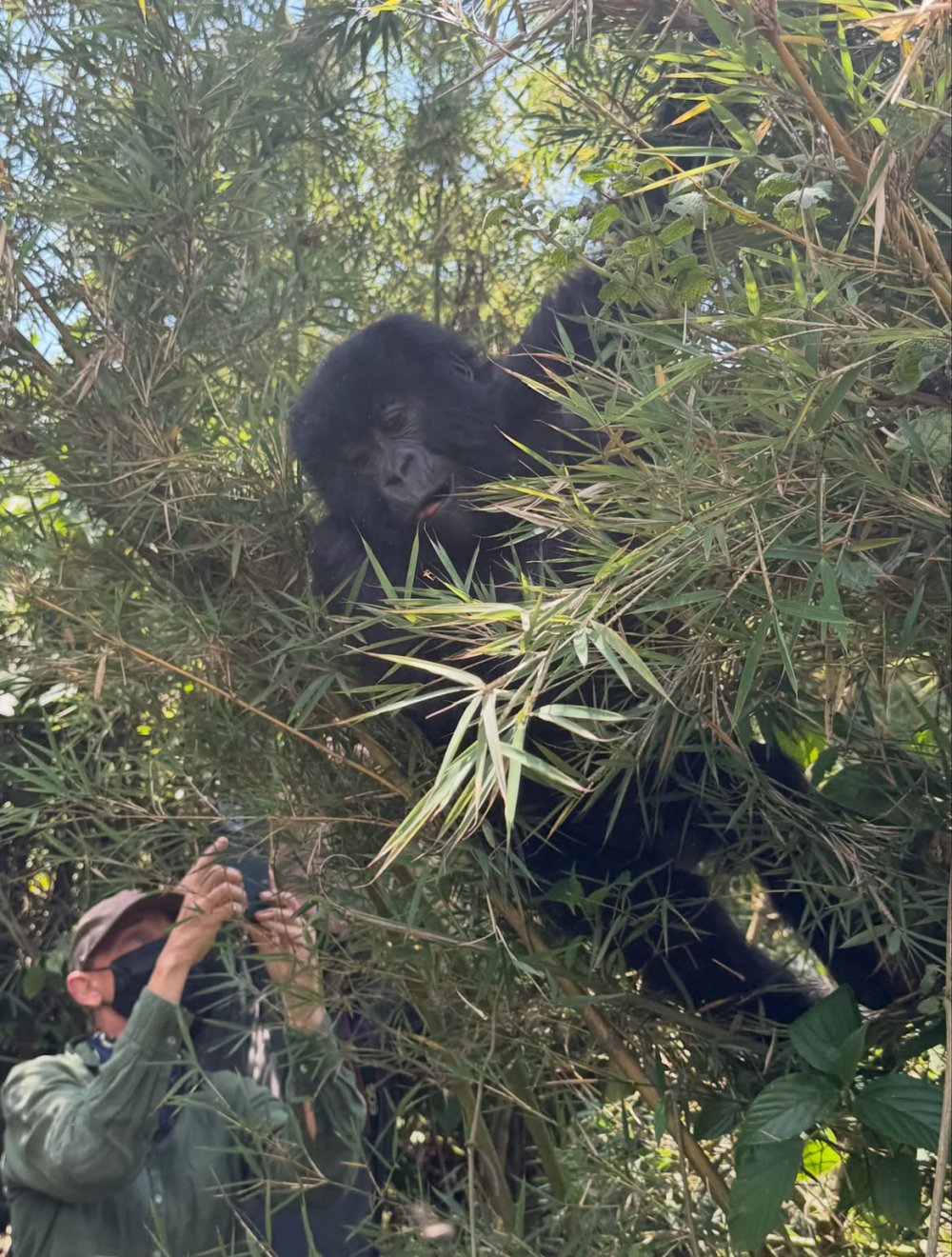
Ellen DeGeneres and Portia de Rossi are in Rwanda Ellen DeGeneres and her partner, Portia de Rossi, visited the Ellen DeGeneres Campus of the Dian Fossey Gorilla Fund.Ellen DeGeneres also took time to visit the mountain gorillas in Volcanoes National Park.